

What do you think?
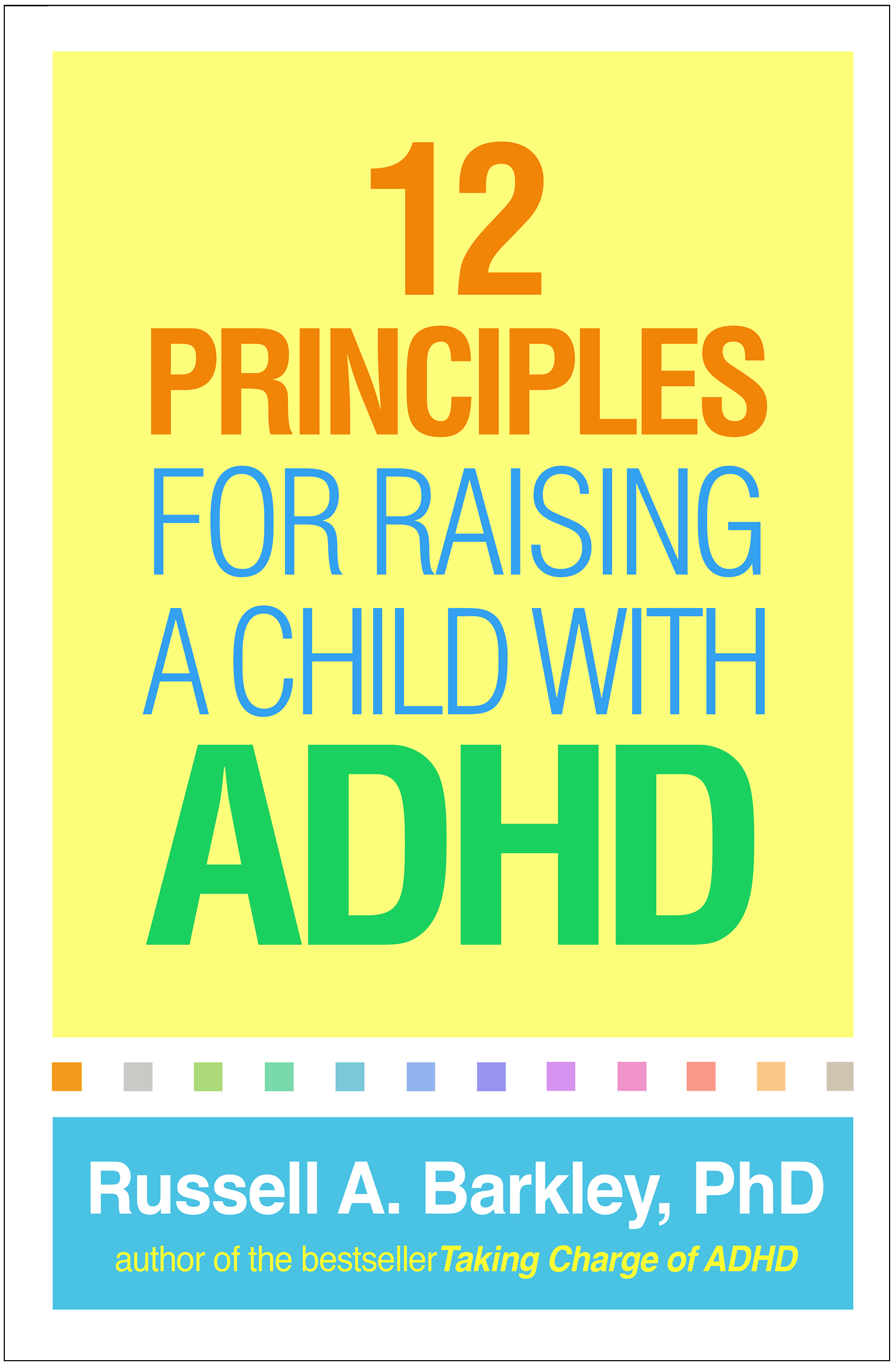
12 Principles for Raising a Child with ADHD
Over decades of research and work with thousands of families, Russell A. Barkley has become a leading authority on attention-deficit/hyperactivity disorder (ADHD) in kids and teens. He has learned what a huge difference parents can make in supporting their children's success--as well as how overwhelming it can be. This concise guide presents 12 key parenting principles for dealing with common behavioral, emotional, and school challenges. By cultivating a mindset of acceptance and compassion--together with an understanding of the executive function deficits of ADHD--you can strengthen your loving connection with your child and help your whole family thrive. Filled with practical suggestions and quick-reference lists and tips, this is the perfect book to read cover to cover or pick up any time you need extra support.
205 pages, Hardcover
Published October 11, 2020
About the author
Russell A. Barkley
73 books504 followersRussell A. Barkley (born 1949) is a clinical psychologist who is a clinical professor of psychiatry at the Medical University of South Carolina and an author of books on ADHD. Involved in research since 1973 and a licensed psychologist since 1977, he is an expert on attention-deficit hyperactivity disorder (ADHD) and has devoted much of his scientific career to studying ADHD and related problems in children. His research interests include childhood defiance.
Ratings & Reviews
Friends & Following
Create a free account to discover what your friends think of this book!
Community Reviews
Displaying 1 - 30 of 98 reviews
September 6, 2022
I will start with the good. Barkley writes some great, accessible descriptions of executive functioning deficits that are helpful to understanding ADHD and why a seemingly capable child all of a sudden is struggling. There are some helpful strategies and solutions to address EF challenges. His 12 overall principles are helpful and on point. He often does encourage parents to be more loving, compassionate snd accepting and to work with the child they actually have and not the child they think they should have. But there is a lot in this short text that makes me bristle and give it 2 stars. 1) He writes this text as a leading researcher who has shaped and defined our understanding of ADHD and who does not have lived experience as an ADHDer. He thoroughly pathologizes ADHD and is vehement that it is a disorder with deficits and disabilities and not just a neurodivergence or difference. Yes, ADHD brings challenges that many would not choose but it is also not all doom and gloom. He talks about modifying the immediate environment but he never questions whether our larger environment and society is actually creating unnecessary hardship for ADHDers. 2) He encourages parents / guardians to micromanage children’s environment for their best opportunities for success. The best schools, after school activities, use grocery delivery, etc. and it reeks of privilege that is inaccessible to many. He acts completely oblivious to inequities that exist and never addresses how race and class can create different social responses and outcomes for children with ADHD. I find that unforgivable, especially in light of the years of study and research he has been privy to. 3) He really ignores the range of functioning within the spectrum of ADHD and really is writing this book with one version of ADHD in mind - the highly impulsive, hyperactive child - and in doing so ignores the many people who quietly struggle with their ADHD and often go undiagnosed and untreated. 4) His advice on using timeout, particularly in public spaces where it is highly “effective”, is outdated, overly punitive, and shame-inducing for children and has a likelihood of being traumatic and/or negatively impacting a child’s self esteem and emotional well-being. Removing your child from a situation for bad behavior and helping them to emotionally regulate and process the incident in a more private location? Fantastic. But forcing a child to stand in time out facing a wall in a public place or threatening your child with a picture of them in timeout at home like he advises? Absolutely not okay and emotionally damaging to your child’s developing sense of self and their relationship with you. His advice to do this contradicts everything else he writes about how to parent an ADHDer. 5) Last but not least… a small detail that irked me very much. When he recommended resources for finding chore lists for kids online he recommended using the Focus on the Family website. Focus on the Family is a fundamentalist Christian organization that opposes women’s and LGBTQ+ rights and I find it incredibly problematic that in 2021 he sees no problem in recommending their site to all families reading his book.
So in summary, I don’t recommend this book unless you want to borrow it from the library, skim and pull out the good nuggets of information and return it. There really needs to be better resources out there for parents of ADHDers and people with ADHD. We desperately need more books on ADHD from people with lived experience of having ADHD who also have read the research, the actual “experts.”
So in summary, I don’t recommend this book unless you want to borrow it from the library, skim and pull out the good nuggets of information and return it. There really needs to be better resources out there for parents of ADHDers and people with ADHD. We desperately need more books on ADHD from people with lived experience of having ADHD who also have read the research, the actual “experts.”

May 9, 2021
This book is far more accessible than the author's classic, Taking Charge of ADHD. I ordered that book when my son was first diagnosed 3 years ago and I still haven't managed to finish it. (He's not the only one with ADHD!) But this book gets right to the point. It doesn't waste time trying to convince you to get your child diagnosed. It starts with the assumption that your child and you are struggling and gives straight to the point advice for what to do about it. Much of what he says isn't rocket science; a lot of these tips I've figured out on my own by trial and error over the last 7 years of raising my child. But for someone that's overwhelmed by their ADHD child, this is a fantastic book. I'll be getting my own copy to mark up and loan to others.

August 20, 2024
Detailed Summary of "12 Principles for Raising a Child with ADHD" by Russell A. Barkley
Introduction: Understanding ADHD
In the introduction of "12 Principles for Raising a Child with ADHD," Russell A. Barkley immediately addresses a common misconception that many parents and even individuals with ADHD may hold—that ADHD is a gift. Barkley argues that this perspective, though well-intentioned, can be misleading. He contends that ADHD is fundamentally a disability, not a gift, and this distinction is crucial for understanding the support that children with ADHD truly need.
This perspective initially struck me as harsh, but Barkley makes a compelling case. While it’s true that individuals with ADHD can develop coping mechanisms and strategies to leverage their strengths, this does not negate the fact that ADHD is a genuine disability that requires appropriate accommodations. I’ve often grappled with the idea of ADHD being a gift, but Barkley’s explanation clarified the distinction: it can’t be both a gift and a disability. Those with ADHD deserve the same level of support and understanding as those with other disabilities, without the stigma that they must excel or be treated differently just because of occasional strengths that come with the condition.
Barkley also emphasizes that ADHD is more about the development of the brain and its prioritization processes than anything else. He likens ADHD to being on autopilot, where making course corrections—adjusting behavior or focus—is inherently challenging. This resonated with my own understanding that ADHD fundamentally impacts how a person functions, especially in situations requiring sustained attention and inhibition.
Principle 1: Use the Keys to Success
Barkley begins with a crucial principle: success doesn’t come merely from talent or interest but from consistent effort and practice. This is particularly important for children with ADHD, who often struggle with sustained commitment unless they are deeply interested in the activity. The author advises parents to pay close attention to their child’s unique talents and interests, encouraging them to nurture these areas over time.
This aligns with my thoughts that parents must support their child’s passions, even if they don’t follow conventional career paths. Children with ADHD may excel in non-traditional areas, and it’s vital that parents recognize and encourage these talents. I also reflected on how schools often fail to support children with ADHD due to budget constraints and a focus on more visible disabilities, which limits the help available for children with high intelligence but behavioral challenges.
The importance of professional diagnosis and a supportive environment cannot be overstated. Barkley’s assertion that ADHD can affect lifespan due to risky behaviors also adds gravity to the need for early intervention and consistent support. I found it particularly thought-provoking when Barkley mentioned that society often highlights the success of famous individuals with ADHD in one area, while potentially ignoring struggles in other areas of their lives—reminding us that success in one field doesn’t mean all aspects of life are easy for those with ADHD.
Principle 2: Remember That It’s a Disorder!
This principle underscores the importance of acknowledging the 30% developmental gap in executive functioning that children with ADHD often face. Barkley suggests that instead of comparing children with ADHD to their peers, parents should focus on what they can do to support their child in achieving similar goals. This is a principle I strongly agree with, as I’ve observed firsthand how chunking tasks into smaller, manageable pieces can significantly help a child with ADHD.
Barkley also advises against rushing milestones, such as obtaining a driver's license, emphasizing that maturity in executive functioning must guide such decisions. This reminded me of the importance of gradual development rather than pushing children into situations they’re not ready for, which could lead to frustration or failure.
Principle 3: Be a Shepherd, Not an Engineer
Barkley’s metaphor of parents as shepherds rather than engineers encapsulates the idea that while parents can guide and protect, they cannot control every aspect of their child’s development. This is especially true for children with ADHD, whose unique characteristics require a nurturing environment more than rigid control.
I reflected on how this principle applies to my own experiences. For instance, while my daughter doesn’t struggle with overeating, she shows little interest in food, which contrasts with the typical issues Barkley describes. However, the principle of providing a healthy, supportive environment remains crucial. Barkley’s emphasis on physical activity and community involvement resonated deeply, as these are aspects that can greatly benefit children with ADHD by providing them with structured, positive outlets for their energy.
Principle 4: Get Your Priorities Straight
Barkley makes an interesting point about how individuals with ADHD are often more attentive to the present moment, which can be both a strength and a challenge. This principle reminds parents to focus on the present needs and strengths of their child, rather than worrying excessively about the future. I found this principle particularly insightful, as it aligns with the idea that people with ADHD can excel in activities that demand full engagement in the present, such as sports, music, or creative work. This concept also challenges the traditional notion of success, encouraging a broader perspective on what it means to thrive with ADHD.
Principle 5: Mindful Parenting: Be There and Be Aware
Barkley advocates for mindful parenting, which involves being fully present with your child, especially during interactions. This is a principle that I’ve always tried to practice, but Barkley’s emphasis on it being especially crucial for children with ADHD was a strong reminder. He stresses that when spending time with your child, it’s important to engage with them fully, rather than being distracted by other concerns. This not only strengthens the parent-child bond but also helps the child feel valued and understood.
Mindfulness, though often seen as a fluffy concept, has practical applications that can make a significant difference in the life of a child with ADHD. I reflected on how easy it can be to fall into the trap of being physically present but mentally elsewhere. Barkley’s advice reinforces the need to consciously focus on the present moment with your child, which can foster a deeper connection and better understanding of their needs.
Principle 6: Promote Your Child’s Self-Awareness and Accountability
Encouraging self-awareness and accountability is key in helping children with ADHD develop independence and self-regulation. Barkley suggests regular reflection times where children are prompted to think about their actions and their outcomes. This could involve checking in with them frequently or reviewing their day before bedtime to discuss what went well and what could have been better.
I found this principle particularly relevant to my own practices. My family often engages in reflection before bed, which has been beneficial in helping my daughter understand her day’s events and her reactions to them. Barkley’s suggestion to use video recordings as a reflection tool is also intriguing, as it provides a concrete way for children to see their behavior and learn from it without feeling criticized.
Barkley also emphasizes the importance of cues for self-reflection, which I’ve found effective. Setting random timers to check in on your child’s behavior can help them develop the habit of self-monitoring. This principle aligns with my belief that building self-awareness in children with ADHD is a gradual process that requires consistent effort and positive reinforcement.
Principle 7: Touch More, Reward More, and Talk Less
Barkley highlights the need for physical closeness and positive reinforcement when communicating with children with ADHD. He advises parents to get close, make eye contact, and use physical touch when giving instructions or praise. This principle is based on the idea that children with ADHD respond better to immediate, tangible cues than to abstract or distant communication.
I’ve seen the benefits of this approach in my own interactions with my daughter. Barkley’s advice to limit verbal commands and instead use physical and emotional connections is something I’ve found particularly effective. Overloading children with ADHD with too many instructions can lead to them tuning out, so keeping communication simple and direct is crucial.
Principle 8: Make Time Real
Time management is a significant challenge for individuals with ADHD, and Barkley stresses the importance of making time tangible for them. This can be done through the use of calendars, to-do lists, and visual timers, which help children understand the passage of time and the importance of deadlines.
I strongly agree with Barkley on this point. My daughter often struggles with keeping track of time, so we’ve found that external visual aids are invaluable. Barkley’s advice to persist in teaching time management skills, even when it’s difficult, aligns with my belief that these skills are essential for long-term success.
Principle 9: Working Memory Isn’t Working: Offload It and Make It Physical!
Working memory deficits are a hallmark of ADHD, making it difficult for individuals to hold onto information and use it effectively. Barkley recommends externalizing information—writing things down, using lists, and creating physical reminders to help manage tasks and responsibilities.
This principle resonates with my own observations. My daughter often needs reminders and visual aids to stay on track with tasks. Barkley’s emphasis on making problem-solving concrete, by writing things down or using physical tools, is something we’ve incorporated into our daily routines with great success.
Principle 11: Make Problem-Solving Concrete
Children with ADHD often struggle with abstract thinking and problem-solving. Barkley advises making these processes physical by using tools like writing, drawing, or manipulating objects. This helps children with ADHD to externalize their thoughts and work through problems more effectively.
In my experience, this principle is particularly important in education. For instance, when my daughter is learning new concepts, having the information physically in front of her—whether it’s a times table or a writing outline—makes a significant difference in her ability to understand and retain the material.
Principle 12: Be Proactive: Plan for Difficult Situations at Home and Away
Barkley concludes with a principle that encourages proactive planning for challenging situations. He acknowledges that while children with ADHD may struggle with self-control in certain scenarios, it’s essential to teach them coping strategies and give them the credit they deserve for their efforts.
Introduction: Understanding ADHD
In the introduction of "12 Principles for Raising a Child with ADHD," Russell A. Barkley immediately addresses a common misconception that many parents and even individuals with ADHD may hold—that ADHD is a gift. Barkley argues that this perspective, though well-intentioned, can be misleading. He contends that ADHD is fundamentally a disability, not a gift, and this distinction is crucial for understanding the support that children with ADHD truly need.
This perspective initially struck me as harsh, but Barkley makes a compelling case. While it’s true that individuals with ADHD can develop coping mechanisms and strategies to leverage their strengths, this does not negate the fact that ADHD is a genuine disability that requires appropriate accommodations. I’ve often grappled with the idea of ADHD being a gift, but Barkley’s explanation clarified the distinction: it can’t be both a gift and a disability. Those with ADHD deserve the same level of support and understanding as those with other disabilities, without the stigma that they must excel or be treated differently just because of occasional strengths that come with the condition.
Barkley also emphasizes that ADHD is more about the development of the brain and its prioritization processes than anything else. He likens ADHD to being on autopilot, where making course corrections—adjusting behavior or focus—is inherently challenging. This resonated with my own understanding that ADHD fundamentally impacts how a person functions, especially in situations requiring sustained attention and inhibition.
Principle 1: Use the Keys to Success
Barkley begins with a crucial principle: success doesn’t come merely from talent or interest but from consistent effort and practice. This is particularly important for children with ADHD, who often struggle with sustained commitment unless they are deeply interested in the activity. The author advises parents to pay close attention to their child’s unique talents and interests, encouraging them to nurture these areas over time.
This aligns with my thoughts that parents must support their child’s passions, even if they don’t follow conventional career paths. Children with ADHD may excel in non-traditional areas, and it’s vital that parents recognize and encourage these talents. I also reflected on how schools often fail to support children with ADHD due to budget constraints and a focus on more visible disabilities, which limits the help available for children with high intelligence but behavioral challenges.
The importance of professional diagnosis and a supportive environment cannot be overstated. Barkley’s assertion that ADHD can affect lifespan due to risky behaviors also adds gravity to the need for early intervention and consistent support. I found it particularly thought-provoking when Barkley mentioned that society often highlights the success of famous individuals with ADHD in one area, while potentially ignoring struggles in other areas of their lives—reminding us that success in one field doesn’t mean all aspects of life are easy for those with ADHD.
Principle 2: Remember That It’s a Disorder!
This principle underscores the importance of acknowledging the 30% developmental gap in executive functioning that children with ADHD often face. Barkley suggests that instead of comparing children with ADHD to their peers, parents should focus on what they can do to support their child in achieving similar goals. This is a principle I strongly agree with, as I’ve observed firsthand how chunking tasks into smaller, manageable pieces can significantly help a child with ADHD.
Barkley also advises against rushing milestones, such as obtaining a driver's license, emphasizing that maturity in executive functioning must guide such decisions. This reminded me of the importance of gradual development rather than pushing children into situations they’re not ready for, which could lead to frustration or failure.
Principle 3: Be a Shepherd, Not an Engineer
Barkley’s metaphor of parents as shepherds rather than engineers encapsulates the idea that while parents can guide and protect, they cannot control every aspect of their child’s development. This is especially true for children with ADHD, whose unique characteristics require a nurturing environment more than rigid control.
I reflected on how this principle applies to my own experiences. For instance, while my daughter doesn’t struggle with overeating, she shows little interest in food, which contrasts with the typical issues Barkley describes. However, the principle of providing a healthy, supportive environment remains crucial. Barkley’s emphasis on physical activity and community involvement resonated deeply, as these are aspects that can greatly benefit children with ADHD by providing them with structured, positive outlets for their energy.
Principle 4: Get Your Priorities Straight
Barkley makes an interesting point about how individuals with ADHD are often more attentive to the present moment, which can be both a strength and a challenge. This principle reminds parents to focus on the present needs and strengths of their child, rather than worrying excessively about the future. I found this principle particularly insightful, as it aligns with the idea that people with ADHD can excel in activities that demand full engagement in the present, such as sports, music, or creative work. This concept also challenges the traditional notion of success, encouraging a broader perspective on what it means to thrive with ADHD.
Principle 5: Mindful Parenting: Be There and Be Aware
Barkley advocates for mindful parenting, which involves being fully present with your child, especially during interactions. This is a principle that I’ve always tried to practice, but Barkley’s emphasis on it being especially crucial for children with ADHD was a strong reminder. He stresses that when spending time with your child, it’s important to engage with them fully, rather than being distracted by other concerns. This not only strengthens the parent-child bond but also helps the child feel valued and understood.
Mindfulness, though often seen as a fluffy concept, has practical applications that can make a significant difference in the life of a child with ADHD. I reflected on how easy it can be to fall into the trap of being physically present but mentally elsewhere. Barkley’s advice reinforces the need to consciously focus on the present moment with your child, which can foster a deeper connection and better understanding of their needs.
Principle 6: Promote Your Child’s Self-Awareness and Accountability
Encouraging self-awareness and accountability is key in helping children with ADHD develop independence and self-regulation. Barkley suggests regular reflection times where children are prompted to think about their actions and their outcomes. This could involve checking in with them frequently or reviewing their day before bedtime to discuss what went well and what could have been better.
I found this principle particularly relevant to my own practices. My family often engages in reflection before bed, which has been beneficial in helping my daughter understand her day’s events and her reactions to them. Barkley’s suggestion to use video recordings as a reflection tool is also intriguing, as it provides a concrete way for children to see their behavior and learn from it without feeling criticized.
Barkley also emphasizes the importance of cues for self-reflection, which I’ve found effective. Setting random timers to check in on your child’s behavior can help them develop the habit of self-monitoring. This principle aligns with my belief that building self-awareness in children with ADHD is a gradual process that requires consistent effort and positive reinforcement.
Principle 7: Touch More, Reward More, and Talk Less
Barkley highlights the need for physical closeness and positive reinforcement when communicating with children with ADHD. He advises parents to get close, make eye contact, and use physical touch when giving instructions or praise. This principle is based on the idea that children with ADHD respond better to immediate, tangible cues than to abstract or distant communication.
I’ve seen the benefits of this approach in my own interactions with my daughter. Barkley’s advice to limit verbal commands and instead use physical and emotional connections is something I’ve found particularly effective. Overloading children with ADHD with too many instructions can lead to them tuning out, so keeping communication simple and direct is crucial.
Principle 8: Make Time Real
Time management is a significant challenge for individuals with ADHD, and Barkley stresses the importance of making time tangible for them. This can be done through the use of calendars, to-do lists, and visual timers, which help children understand the passage of time and the importance of deadlines.
I strongly agree with Barkley on this point. My daughter often struggles with keeping track of time, so we’ve found that external visual aids are invaluable. Barkley’s advice to persist in teaching time management skills, even when it’s difficult, aligns with my belief that these skills are essential for long-term success.
Principle 9: Working Memory Isn’t Working: Offload It and Make It Physical!
Working memory deficits are a hallmark of ADHD, making it difficult for individuals to hold onto information and use it effectively. Barkley recommends externalizing information—writing things down, using lists, and creating physical reminders to help manage tasks and responsibilities.
This principle resonates with my own observations. My daughter often needs reminders and visual aids to stay on track with tasks. Barkley’s emphasis on making problem-solving concrete, by writing things down or using physical tools, is something we’ve incorporated into our daily routines with great success.
Principle 11: Make Problem-Solving Concrete
Children with ADHD often struggle with abstract thinking and problem-solving. Barkley advises making these processes physical by using tools like writing, drawing, or manipulating objects. This helps children with ADHD to externalize their thoughts and work through problems more effectively.
In my experience, this principle is particularly important in education. For instance, when my daughter is learning new concepts, having the information physically in front of her—whether it’s a times table or a writing outline—makes a significant difference in her ability to understand and retain the material.
Principle 12: Be Proactive: Plan for Difficult Situations at Home and Away
Barkley concludes with a principle that encourages proactive planning for challenging situations. He acknowledges that while children with ADHD may struggle with self-control in certain scenarios, it’s essential to teach them coping strategies and give them the credit they deserve for their efforts.
November 13, 2022
Good ideas but a conservative world view peeps through
December 21, 2020
I have read many books on this subject, and after finishing this book, I had a really good understanding of my sons condition. The author really let's you see ADHD from a different perspective, and I like that the author highly recommends compassion and forgiveness for parents and the child. Overall, a concise well written book for those parents trying to get a better handle on their child's condition.

October 13, 2024
For me it was very helpful to have the science of ADHD broken down and I felt the author kept it straightforward. I don’t necessarily agree that looking at ADHD through such a rigid, scientific lens is always the way to go because there are positive, exciting, and creative parts to ADHD as well. I do think the author wrote this book with the nuclear and more wealthy family in mind so I also would have liked more variation and understanding in that area.

January 10, 2024
I almost stopped reading this pretty early on, but decided to give it another chance and ultimately, I think that was the right choice.
The things that bothered me in the beginning were:
The introduction felt like a really long commercial for his other book. I think that he made up for this later in the book, particularly in the closing credits, as it became clear that he is proud of his life’s work in this topic, and truly cares about helping parents and children with ADHD.
There was an insinuation that parents and children should have a normal BMI in order to capably manage ADHD. Having recently read Fat Talk: Parenting in the Age of Diet Culture, his comments about preventing obesity, stood out like a sore thumb and rubbed me the wrong way. For me, the dietary and health advice felt like another thing to worry about, obsess about, and feel guilty about. I feel grateful when my child with ADHD eats literally anything; worrying about his weight could quickly lead to obsession over his diet and undue stress.
I’m glad I didn’t give up on the book because it had some great tips for managing a child’s ADHD, in a compassionate way, while helping that child to learn how to manage symptoms on his or her own as well.
The things that bothered me in the beginning were:
The introduction felt like a really long commercial for his other book. I think that he made up for this later in the book, particularly in the closing credits, as it became clear that he is proud of his life’s work in this topic, and truly cares about helping parents and children with ADHD.
There was an insinuation that parents and children should have a normal BMI in order to capably manage ADHD. Having recently read Fat Talk: Parenting in the Age of Diet Culture, his comments about preventing obesity, stood out like a sore thumb and rubbed me the wrong way. For me, the dietary and health advice felt like another thing to worry about, obsess about, and feel guilty about. I feel grateful when my child with ADHD eats literally anything; worrying about his weight could quickly lead to obsession over his diet and undue stress.
I’m glad I didn’t give up on the book because it had some great tips for managing a child’s ADHD, in a compassionate way, while helping that child to learn how to manage symptoms on his or her own as well.

November 7, 2022
He had some good thoughts and encouragements. My own child has a very mild case of ADHD, so the way he described children with ADHD felt very extreme at times, with strong comparisons to autism, which I just don’t see or necessarily agree with. He also talked about how consequences don’t work for kids with ADHD, but then would repeatedly discuss ideas for how to punish them when they didn’t fall in line with desired behaviors.
I think if you’re researching ADHD and wanting to figure out how to help your kid, this can be in your array of resources. But I would not read this and stop.
I think if you’re researching ADHD and wanting to figure out how to help your kid, this can be in your array of resources. But I would not read this and stop.

December 3, 2024
If you have a child with ADHD, this book is a must…plain and simple. It completely changed my perspective on how to think about kids with ADHD and gave me tools to help me support my step-daughter with her ADHD.

July 11, 2025
So good! I'm grateful this was written. I might need to buy it, because once I suggested and reserved it at the library, I made the mistake of telling others about it so I can't renew it now, haha.

April 21, 2022
With the amount of pages I dog eared, along with my intent to go back and actively highlight the passages on those pages that spoke to me, I knew I had to rank this book highly. It’s concise and straight forward frank talk about how to raise a child with ADHD with grace and forgiveness in mind. Of course I was considering my own 5-year old as I read, but also I thought of my current and former students I’ve taught over the years. I didn’t really fully embrace all that is ADHD until my own son’s diagnosis this past year, but my world has opened up to it and I have no choice but to learn all that I can to be a better parent, advocate, and shepherd for my son. I’m very grateful my husband sought out and shared this book with me. I intend to give a copy to my parents next.

December 11, 2023
My child just got diagnosed with ADHD. And although I have had an inkling for a while that he had this disorder, I honestly did not know what all it entailed. I’m so glad that I chose this book to be the first that I read on ADHD. I have learned so much! Dr. Barkley (who has other books on this subject as well) does a really good job of giving an overview of exactly how ADHD affects the brain, and he spends a lot of time stressing that this is a disorder—my kid cannot control these symptom. And then he goes on to give practical ways to help your child thrive. I can already tell this book will be a good resource for me to consult again and again. I’ve already recommended it to friends who are in similar situations to mine.

November 22, 2021
Super helpful!

March 23, 2023
"Krijg JIJ voldoende slaap, zodat je niet een duffe, geïrriteerde, emotioneel instabiele of afwezige schaapsherder bent?"

December 6, 2023
I read this book because a family member who has a child who has ADHD recommended it to me. I'm really glad I read it. I learned a lot. I'm going to copy and paste from some emails I wrote to the family member about quotes I like, quotes that made me think, and ideas from the book that are helpful to me. This may be a long review in the end, but I want to have easy access to my responses.
----Edit from 1st email
I agree with the author that the name of the disability is not exactly accurate. It should be "executive function disability disorder" or something like that. I can't remember exactly what he calls it.
I really appreciate reading a description of the disability. I see the importance of taking it seriously and labeling it for what it is so that people can receive the support and understanding they need.
I do feel like the author contradicts himself somewhat. One minute he's talking about all the things parents can do to improve the child's environment and opportunities. The next minute he's talking about compassion, forgiveness, and prioritizing. But I guess both things are true. It's just overwhelming. It's like saying, "Don't feel like a failure," but if you don't do this and that then you're failing your child. But maybe that's just me and my perfectionism reacting and being tired right now.
Page 34 "His message was to acknowledge their condition yet treat them with dignity, have compassion not only for disabled children but also for their parents, and to embrace acceptance of their disability as just a part of the unique totality of that person."
Page 35 "With a disability perspective as our mindset, we can extend compassion instead of blame (and while we're at it, extend a little compassion to ourselves)."
----Edit from the 2nd Email
Page 63 "The point is that only you can make the decisions that feel right for your child with ADHD, for you, and for the family as a whole. I've found over and over again, however, that flexibility and compromise are critical to setting priorities that serve everyone best."
Page 65 "The pleasure in life is often in appreciating the now and getting out of our own heads and our own way...Because people with ADHD are more involved in and attentive to the now and not the future, we seem to find that they have far less trouble and may even be at an advantage in a crisis."
I love the idea of mindfulness and being in the now. It's something I've worked at. I'm a worrier.
Page 69-70 "Our thoughts and their associated emotions often are our own worst enemies and greatest sources of distress. When you're constantly focused on how your child with ADHD should behave or what you should do to keep your household running, you can't see the uniquely lovable child before you or enjoy the wonder of being that child's parent."
I think this might be true.
The author talks about mindfulness and meditation in Chapter 5: Mindful Parenting. I've read quite a bit about meditation and mindfulness from self-help-type books. Most helpful to me is what's called walking meditation which is awareness, mindfulness, and joy in the moment while walking.
The author talks about picture cues starting Page 85. He says teachers tape pictures onto tongue depressors or popsicle sticks. I really like that idea.
Page 86 "Pictures of a small stop sign, big eyes, and big ears pasted on the ends of these sticks. The teacher simply holds it up, waving it back and forth a bit in the visual field of a particular child to cue her to stop and monitor what she's doing."
Page 98 Talking about household rules: "The real trick here is to enforce them consistently. There can be no accountability or responsibility when rules are applied sporadically or with favoritism, or can be avoided or escaped through arguing with a parent."
Ugh. This is the part of parenting that was most difficult for me. I really didn't like being a policeman, so that made enforcing rules extremely difficult for me. As a result, I did tend to be inconsistent. But I'm going to have compassion for myself about this one.
Page 99 "Setting up and reviewing the rules of a situation or activity with your child or teen just before starting into that activity clearly helps improve accountability and compliance.... Providing frequent feedback throughout the activity is another way to strengthen accountability in a child or teen with ADHD."
Page 102 "Touch more, talk less."
I like this idea a lot. I do tend to talk too much when giving direction. I know some people's eyes glaze over when there's too much talk. So using non-verbal communications is a great thing even if it's looking directly in the eyes while giving a few words.
---From 3rd Email
Page 124 "Use your imagination and your knowledge of what's diverting for your child, but do it before the child has a chance to get irritable or whiny."
I love the idea of prevention and preparation for situations.
Page 126-127 "Sadly, some parents and other authorities draw the conclusion that the child must simply be irresponsible, malicious, just plain 'bad.' That's why reminding yourself that your child's behavior is not a matter of 'won't' but of 'can't' is so powerful in promoting a lasting positive relationship with your child-- one that enables you to help your child to the full extent of your abilities."
I agree with that quote a hundred percent. It reminds me of the book Good Inside by Dr. Becky Kennedy. I highly recommend that book if you haven't already read it. I think it's important to remember people are good inside and assume the best. There's a section of the book in these pages that talks about not rewarding for everything. It talks about intrinsic rewards versus reward systems.I think intrinsic rewards are awesome. I also believe in intrinsic punishments.
Page 129 "For a child with ADHD, you may need to break down each chore into its very specific steps."
Breaking everything down into steps is excellent. It's great for everyone. I can see how it's even more important for people who have ADHD.
Speaking of steps, I like that the book says, "Make a picture sequence. You can also find many such picture sequences already created on the Internet." Page 129.
Page 148 "Your goal is to give your child the time to develop mental problem-solving abilities without becoming so discouraged that he gives up."
It's important to say, "Try again."
Page 151 "Freely associated ideas are kind of like flying ducks or butterflies-- you need to catch them as they fly by or they will fly right out of your mind and be hard or impossible to get back again,."
I love the image of thoughts as being like butterflies. I need to capture my good ones more often.
I like the "SOAPS" method on Page 152:
"State the situation and break it down. List the Options. Note the Advantages. Then note the disadvantages or Problems with each. Then see if a Solution is evident."
Page 157 "ADHD creates more stress within a family than nearly any other child psychological disorder, including autism."
I think this is an interesting, bold statement. I'm sure it matters the personality and situation of the individual. I know autism has a spectrum that can be extremely challenging. I assume ADHD also has a spectrum? It seems like there is a lot of overlap between the two challenges.
On Page 162 there are things about "Using Time-Out." For some reason, I'm very troubled by this section. Dr. Becky Kennedy says time out does not teach and isn't effective with deeply feeling kids. I hate the idea of making a child stand alone against a boring place or in a corner. What does that teach? I was sent to my room a few times as a child and felt it was damaging, not helpful or educational. It didn't teach me how to regulate my behavior or my emotions. It just made me sad and scared. But maybe it's more necessary to punish children who have ADHD? I need to think about this.
---Edit from Last email
I think the "Six Places to Head Off Emotion Dysregulation" chart is interesting and probably helpful on Page 168. I like the idea that the sooner intervention happens the easier, but also that adults can typically intervene for themselves later in the sequence.
Situation: "Choose the situation" "Modify the situation"
Attention: "Focus or redirect attention"
Appraisal: "Change the child's thinking about it"
Response: "Modify the child's response" "Alter the consequences."
Page 169 "There is no strong emotion that needs to be self-regulated if it is never provoked or triggered to begin with."
Prevention is often easier than the cure.
Page 169 "Biologically based problems are unlikely to just go away because we've taught the person skills intended to show her how to do something better. Instead, avoid exposing your child to a triggering event when you can."
I think it helps to remember it's biologically-based.
Page 173 "Then be patient: it can take time for this type of training to succeed in improving your child's emotional control. However, it is unlikely to completely eliminate what is a largely biologically based problem with emotional self-regulation."
It's a marathon, not a sprint.
Page 175 "In this book my goal has been to give you a helpful mindset and a toolbox full of strategies to help you cope with and manage your child's disorder but also-- and just as important-- to cultivate and maintain a good relationship with your child so that your child thrives, conflict is minimized, and your family functions smoothly and happily."
This is so excellent. I like that quote a lot. I like how he states this important purpose.
Page 176 "But there will be times when you will have to practice forgiveness-- with your child, with yourself, and maybe even with those in your child's world who don't understand ADHD."
So true. The following quote is related:
"Forgiveness is not a gift you grant to others as much as it is a gift you give to yourself...It is a means of dispersing the mentally poisonous toxins that can accumulate in your mind from anger, hurt, grief, resentment, humiliation, and just plain old stress." Page 179- 180
Page 182 "The secret to raising well-adjusted children is not to avoid making any mistakes-- that's impossible. It is to strive to get it right the next time that situation comes around again. It is to seek to be a better person as a result of mistake making."
I like this. It's about who we are all becoming.
Page 185 "Psychological treatments can take a lot longer to produce benefits than can medications, they produce less improvement than medication, and they require consistent implementation from an adult that may not be possible in all settings."
I think that's an interesting argument for using medication. I like that he addresses myths about medications. I know medications can be very helpful
----Edit from 1st email
I agree with the author that the name of the disability is not exactly accurate. It should be "executive function disability disorder" or something like that. I can't remember exactly what he calls it.
I really appreciate reading a description of the disability. I see the importance of taking it seriously and labeling it for what it is so that people can receive the support and understanding they need.
I do feel like the author contradicts himself somewhat. One minute he's talking about all the things parents can do to improve the child's environment and opportunities. The next minute he's talking about compassion, forgiveness, and prioritizing. But I guess both things are true. It's just overwhelming. It's like saying, "Don't feel like a failure," but if you don't do this and that then you're failing your child. But maybe that's just me and my perfectionism reacting and being tired right now.
Page 34 "His message was to acknowledge their condition yet treat them with dignity, have compassion not only for disabled children but also for their parents, and to embrace acceptance of their disability as just a part of the unique totality of that person."
Page 35 "With a disability perspective as our mindset, we can extend compassion instead of blame (and while we're at it, extend a little compassion to ourselves)."
----Edit from the 2nd Email
Page 63 "The point is that only you can make the decisions that feel right for your child with ADHD, for you, and for the family as a whole. I've found over and over again, however, that flexibility and compromise are critical to setting priorities that serve everyone best."
Page 65 "The pleasure in life is often in appreciating the now and getting out of our own heads and our own way...Because people with ADHD are more involved in and attentive to the now and not the future, we seem to find that they have far less trouble and may even be at an advantage in a crisis."
I love the idea of mindfulness and being in the now. It's something I've worked at. I'm a worrier.
Page 69-70 "Our thoughts and their associated emotions often are our own worst enemies and greatest sources of distress. When you're constantly focused on how your child with ADHD should behave or what you should do to keep your household running, you can't see the uniquely lovable child before you or enjoy the wonder of being that child's parent."
I think this might be true.
The author talks about mindfulness and meditation in Chapter 5: Mindful Parenting. I've read quite a bit about meditation and mindfulness from self-help-type books. Most helpful to me is what's called walking meditation which is awareness, mindfulness, and joy in the moment while walking.
The author talks about picture cues starting Page 85. He says teachers tape pictures onto tongue depressors or popsicle sticks. I really like that idea.
Page 86 "Pictures of a small stop sign, big eyes, and big ears pasted on the ends of these sticks. The teacher simply holds it up, waving it back and forth a bit in the visual field of a particular child to cue her to stop and monitor what she's doing."
Page 98 Talking about household rules: "The real trick here is to enforce them consistently. There can be no accountability or responsibility when rules are applied sporadically or with favoritism, or can be avoided or escaped through arguing with a parent."
Ugh. This is the part of parenting that was most difficult for me. I really didn't like being a policeman, so that made enforcing rules extremely difficult for me. As a result, I did tend to be inconsistent. But I'm going to have compassion for myself about this one.
Page 99 "Setting up and reviewing the rules of a situation or activity with your child or teen just before starting into that activity clearly helps improve accountability and compliance.... Providing frequent feedback throughout the activity is another way to strengthen accountability in a child or teen with ADHD."
Page 102 "Touch more, talk less."
I like this idea a lot. I do tend to talk too much when giving direction. I know some people's eyes glaze over when there's too much talk. So using non-verbal communications is a great thing even if it's looking directly in the eyes while giving a few words.
---From 3rd Email
Page 124 "Use your imagination and your knowledge of what's diverting for your child, but do it before the child has a chance to get irritable or whiny."
I love the idea of prevention and preparation for situations.
Page 126-127 "Sadly, some parents and other authorities draw the conclusion that the child must simply be irresponsible, malicious, just plain 'bad.' That's why reminding yourself that your child's behavior is not a matter of 'won't' but of 'can't' is so powerful in promoting a lasting positive relationship with your child-- one that enables you to help your child to the full extent of your abilities."
I agree with that quote a hundred percent. It reminds me of the book Good Inside by Dr. Becky Kennedy. I highly recommend that book if you haven't already read it. I think it's important to remember people are good inside and assume the best. There's a section of the book in these pages that talks about not rewarding for everything. It talks about intrinsic rewards versus reward systems.I think intrinsic rewards are awesome. I also believe in intrinsic punishments.
Page 129 "For a child with ADHD, you may need to break down each chore into its very specific steps."
Breaking everything down into steps is excellent. It's great for everyone. I can see how it's even more important for people who have ADHD.
Speaking of steps, I like that the book says, "Make a picture sequence. You can also find many such picture sequences already created on the Internet." Page 129.
Page 148 "Your goal is to give your child the time to develop mental problem-solving abilities without becoming so discouraged that he gives up."
It's important to say, "Try again."
Page 151 "Freely associated ideas are kind of like flying ducks or butterflies-- you need to catch them as they fly by or they will fly right out of your mind and be hard or impossible to get back again,."
I love the image of thoughts as being like butterflies. I need to capture my good ones more often.
I like the "SOAPS" method on Page 152:
"State the situation and break it down. List the Options. Note the Advantages. Then note the disadvantages or Problems with each. Then see if a Solution is evident."
Page 157 "ADHD creates more stress within a family than nearly any other child psychological disorder, including autism."
I think this is an interesting, bold statement. I'm sure it matters the personality and situation of the individual. I know autism has a spectrum that can be extremely challenging. I assume ADHD also has a spectrum? It seems like there is a lot of overlap between the two challenges.
On Page 162 there are things about "Using Time-Out." For some reason, I'm very troubled by this section. Dr. Becky Kennedy says time out does not teach and isn't effective with deeply feeling kids. I hate the idea of making a child stand alone against a boring place or in a corner. What does that teach? I was sent to my room a few times as a child and felt it was damaging, not helpful or educational. It didn't teach me how to regulate my behavior or my emotions. It just made me sad and scared. But maybe it's more necessary to punish children who have ADHD? I need to think about this.
---Edit from Last email
I think the "Six Places to Head Off Emotion Dysregulation" chart is interesting and probably helpful on Page 168. I like the idea that the sooner intervention happens the easier, but also that adults can typically intervene for themselves later in the sequence.
Situation: "Choose the situation" "Modify the situation"
Attention: "Focus or redirect attention"
Appraisal: "Change the child's thinking about it"
Response: "Modify the child's response" "Alter the consequences."
Page 169 "There is no strong emotion that needs to be self-regulated if it is never provoked or triggered to begin with."
Prevention is often easier than the cure.
Page 169 "Biologically based problems are unlikely to just go away because we've taught the person skills intended to show her how to do something better. Instead, avoid exposing your child to a triggering event when you can."
I think it helps to remember it's biologically-based.
Page 173 "Then be patient: it can take time for this type of training to succeed in improving your child's emotional control. However, it is unlikely to completely eliminate what is a largely biologically based problem with emotional self-regulation."
It's a marathon, not a sprint.
Page 175 "In this book my goal has been to give you a helpful mindset and a toolbox full of strategies to help you cope with and manage your child's disorder but also-- and just as important-- to cultivate and maintain a good relationship with your child so that your child thrives, conflict is minimized, and your family functions smoothly and happily."
This is so excellent. I like that quote a lot. I like how he states this important purpose.
Page 176 "But there will be times when you will have to practice forgiveness-- with your child, with yourself, and maybe even with those in your child's world who don't understand ADHD."
So true. The following quote is related:
"Forgiveness is not a gift you grant to others as much as it is a gift you give to yourself...It is a means of dispersing the mentally poisonous toxins that can accumulate in your mind from anger, hurt, grief, resentment, humiliation, and just plain old stress." Page 179- 180
Page 182 "The secret to raising well-adjusted children is not to avoid making any mistakes-- that's impossible. It is to strive to get it right the next time that situation comes around again. It is to seek to be a better person as a result of mistake making."
I like this. It's about who we are all becoming.
Page 185 "Psychological treatments can take a lot longer to produce benefits than can medications, they produce less improvement than medication, and they require consistent implementation from an adult that may not be possible in all settings."
I think that's an interesting argument for using medication. I like that he addresses myths about medications. I know medications can be very helpful

May 25, 2025
A lot of great suggestions and techniques in here.
Warning to audiobook listeners:
The narrator of this book was insufferable (at least for me).
I've never thought that I would want to punch a book so badly, but here we are.
Warning to audiobook listeners:
The narrator of this book was insufferable (at least for me).
I've never thought that I would want to punch a book so badly, but here we are.

August 13, 2023
This was such a great book, with so much warmth, I feel like giving a big hug and thanking the author. Btw, this book was written for parents to read and not for kids, but apparently my parents mostly follow a permissive parenting style ;)
Anywhoo, I want to share an excerpt I really liked,
"I know how important this is because in virtually every instance of success by the children with ADHD I have known, many of whom I’ve followed to adulthood, a key to their healthy adjustment and success was the fact that they had at least one parent or other loved one who never gave up on them. That person was always in their corner and never quit believing in them in terms of accepting the child for who he or she was and not what others wanted the child to be. Sometimes children with ADHD just need someone to be on their side and not just the side of conventionality, obedience, authority, righteousness, or decorum. This person should also be open to the nontraditional and unconventional routes to success illustrated in the examples above. Undoubtedly you’re already that person. This book is intended to help you stay in that role.
In my experience, this parent or other relative or caregiver provided a support system for the child and not just a financial one. More important was the emotional support system or “bank account” set up with the child, into which the parent made “deposits” of affection, approval, respect, encouragement, and other signs of love and support (in the words of Stephen Covey, author of The 7 Habits of Highly Effective People). To quote a divorce attorney describing the one thing he felt made marriages succeed or fail: Love is a verb! You have to do it frequently to have it and to get it from others. Daily kindnesses add up to create close and strong relationships. Making daily deposits into your child’s emotional bank account gives you plenty of “savings” to help maintain your relationship when you have to make withdrawals (constructive criticism, etc.). And those credits make it more likely that your child will listen to your advice."
Anywhoo, I want to share an excerpt I really liked,
"I know how important this is because in virtually every instance of success by the children with ADHD I have known, many of whom I’ve followed to adulthood, a key to their healthy adjustment and success was the fact that they had at least one parent or other loved one who never gave up on them. That person was always in their corner and never quit believing in them in terms of accepting the child for who he or she was and not what others wanted the child to be. Sometimes children with ADHD just need someone to be on their side and not just the side of conventionality, obedience, authority, righteousness, or decorum. This person should also be open to the nontraditional and unconventional routes to success illustrated in the examples above. Undoubtedly you’re already that person. This book is intended to help you stay in that role.
In my experience, this parent or other relative or caregiver provided a support system for the child and not just a financial one. More important was the emotional support system or “bank account” set up with the child, into which the parent made “deposits” of affection, approval, respect, encouragement, and other signs of love and support (in the words of Stephen Covey, author of The 7 Habits of Highly Effective People). To quote a divorce attorney describing the one thing he felt made marriages succeed or fail: Love is a verb! You have to do it frequently to have it and to get it from others. Daily kindnesses add up to create close and strong relationships. Making daily deposits into your child’s emotional bank account gives you plenty of “savings” to help maintain your relationship when you have to make withdrawals (constructive criticism, etc.). And those credits make it more likely that your child will listen to your advice."

June 30, 2022
This book was a big disappointment. I’ve heard so frequently how the author is an expert in ADHD and was excited to read this.
Diagnosed myself as an adult, I’m still trying to learn more about how my brain works and the best ways to help my child thrive. I did not find much of that here.
If you are a gentle/attached parent I think you’ll find you are already doing a lot of this stuff intuitively. The rest of it will just feel gross- are we seriously still recommending time outs (in public no less?!) in 2022? I mean, give me a break. The book is also heavy on rewards and consequences.
The one positive thing is the book is concise, so easy to get through. I absolutely do not recommend it unless you are a believer of more traditional parenting methods.
Diagnosed myself as an adult, I’m still trying to learn more about how my brain works and the best ways to help my child thrive. I did not find much of that here.
If you are a gentle/attached parent I think you’ll find you are already doing a lot of this stuff intuitively. The rest of it will just feel gross- are we seriously still recommending time outs (in public no less?!) in 2022? I mean, give me a break. The book is also heavy on rewards and consequences.
The one positive thing is the book is concise, so easy to get through. I absolutely do not recommend it unless you are a believer of more traditional parenting methods.
This entire review has been hidden because of spoilers.

September 18, 2023
This book does an excellent job of straddling the line between too little and too much information.
It's exactly the right amount of data and supporting evidence per point. Broken into 12 easily manageable steps.
Kids with ADHD, in all likelyhood, come from parents with ADHD. So your target audience (myself as a prime example) have a hard time focusing on any one thing for extended periods of time. So a book broken into manageable sections is exactly what the reader needs in order to compartmentalize one section at a time.
It's exactly the right amount of data and supporting evidence per point. Broken into 12 easily manageable steps.
Kids with ADHD, in all likelyhood, come from parents with ADHD. So your target audience (myself as a prime example) have a hard time focusing on any one thing for extended periods of time. So a book broken into manageable sections is exactly what the reader needs in order to compartmentalize one section at a time.

August 3, 2024
I started this but decided to stop. I really didn't like the way he was speaking about neurotypical brains as being a negative thing. I get it, two people that I would die for have ADHD but, honestly, I love they way their brains work. It's not their job to suppress who they are. It's my job to support them as they are.

Read
November 2, 2024This book was like a warm hug for parents of kids with adhd. It was straight to the point, gave actionable items and had tons of resources for each section. One hundred percent recommend.

April 7, 2025
This is the best book on ADHD out there. I do not read non-fiction written by men, but I've read enough on ADHD and watched enough of Barkley's lectures on ADHD that I knew there truly isn't a book written by a woman that is as good, empathetic and helpful as Barkley's. The empathy for the struggle of ADHD in this book made me cry multiple times.
Because let's be clear, you guys - ADHD is not a gift. It's not fun. It's not a superpower. It is a debilitating neurological disorder. It is a disability.
And yes, people with ADHD can be incredibly intelligent, talented, creative, and successful. And yes, there are people with mild symptoms, who lead mildly affected lives. But all that is DESPITE the ADHD, not because of it. We aren't less in any way, or less capable, but we do need more accommodation than people without ADHD. Stop fucking sugarcoating. We can't create the right accommodation without calling it what it is: a disability caused by a disorder. OK? Moving on.
Having said all that - it only makes sense that raising a child with ADHD is wayyyy more stressful and difficult than raising a child with no disabilities and books like these are so fucking helpful. The 12 principles Barkley explains are super clear, easily implemented, and made a lot of things a lot better within only days (!) in our household. This book explains what ADHD entails and how it affects your child's development. It encourages you to emphasize your child's strong points and positive interactions, reminds you to accept your child for who they are and to consider yourself your child's guide rather than their designer. On top of that, it hands you countless strategies to support your child in the areas where their development is stunted as a result of ADHD.
I'm sure I'm going to use this book A LOT the coming decade and I honestly feel better equipped to raise my children than before. 🩷 Bring it on.
Because let's be clear, you guys - ADHD is not a gift. It's not fun. It's not a superpower. It is a debilitating neurological disorder. It is a disability.
And yes, people with ADHD can be incredibly intelligent, talented, creative, and successful. And yes, there are people with mild symptoms, who lead mildly affected lives. But all that is DESPITE the ADHD, not because of it. We aren't less in any way, or less capable, but we do need more accommodation than people without ADHD. Stop fucking sugarcoating. We can't create the right accommodation without calling it what it is: a disability caused by a disorder. OK? Moving on.
Having said all that - it only makes sense that raising a child with ADHD is wayyyy more stressful and difficult than raising a child with no disabilities and books like these are so fucking helpful. The 12 principles Barkley explains are super clear, easily implemented, and made a lot of things a lot better within only days (!) in our household. This book explains what ADHD entails and how it affects your child's development. It encourages you to emphasize your child's strong points and positive interactions, reminds you to accept your child for who they are and to consider yourself your child's guide rather than their designer. On top of that, it hands you countless strategies to support your child in the areas where their development is stunted as a result of ADHD.
I'm sure I'm going to use this book A LOT the coming decade and I honestly feel better equipped to raise my children than before. 🩷 Bring it on.

September 3, 2025
This is helpful for anyone working with children. There are some principles useful in the classroom, such as various discreet cues (paperclip or some other small item to place on desk as an on task check-in), touch-eye-contact and talk less, making process steps physical rather than relying on memory, modeling and inculcating self-check-ins (self-awareness), breaking down tasks into smaller steps, reward systems for immediate gratification and positive reinforcement (accountability), and simplifying priorities.
I balked a bit at his insistence on the futility of building skills since viewing it as a disorder necessitates letting go on attempting to build up skills. He certainly offers a deficit model, but it seems to come from a place of genuinely wanting to help the children and their caretakers have effective structures in place for the sake of improving their lives and relationships. He certainly holds ample experience, so I wonder if me balking is unwarranted.
Principle 1. Use the Keys to Success
Principle 2. Remember That It’s a Disorder!
Principle 3. Be a Shepherd, Not an Engineer
Principle 4. Get Your Priorities Straight
Principle 5. Mindful Parenting: Be There and Be Aware
Principle 6. Promote Your Child’s Self- Awareness and Accountability
Principle 7. Touch More, Reward More, and Talk Less
Principle 8. Make Time Real
Principle 9. Working Memory Isn’t Working: Offload It and Make It
Physical!
Principle 10. Get Organized
Principle 11. Make Problem Solving Concrete
Principle 12. Be Proactive: Plan for Difficult Situations at Home and
Away
I balked a bit at his insistence on the futility of building skills since viewing it as a disorder necessitates letting go on attempting to build up skills. He certainly offers a deficit model, but it seems to come from a place of genuinely wanting to help the children and their caretakers have effective structures in place for the sake of improving their lives and relationships. He certainly holds ample experience, so I wonder if me balking is unwarranted.
Principle 1. Use the Keys to Success
Principle 2. Remember That It’s a Disorder!
Principle 3. Be a Shepherd, Not an Engineer
Principle 4. Get Your Priorities Straight
Principle 5. Mindful Parenting: Be There and Be Aware
Principle 6. Promote Your Child’s Self- Awareness and Accountability
Principle 7. Touch More, Reward More, and Talk Less
Principle 8. Make Time Real
Principle 9. Working Memory Isn’t Working: Offload It and Make It
Physical!
Principle 10. Get Organized
Principle 11. Make Problem Solving Concrete
Principle 12. Be Proactive: Plan for Difficult Situations at Home and
Away
November 18, 2025
This had some interesting information but completely lost me by the end. What worked: the idea that a kid with ADHD has an actual age or maturity that is 30% less than their biological age. That helps me reframe my thinking a bit. A lot of the advice I have already read in regular parenting books or Instagram, but its fine to have that repetition. What didn't work and why this book has only 2 stars though through most of it I was thinking 3.5 maybe: First, the token system that he keeps mentioning over and over as some sort of solution to control the kid is in my opinion just not sustainable. Then the whole life revolves around tokens and when do I give them or not and everything is a discussion or fight about tokens. But okay, whatever. Not for me. Maybe it will work for other people. Then at the end he kept mentioning punishments. Everything I've read says we should have consequences not punishments, but who knows when this book was written. Then he starts actually mentioning the punishments. Time outs. Time outs everywhere. At the store, at a friend's house, during a car ride which you apparently stop on the side of the road so they can...sit more? Be on the look out constantly for a place you can make your kid face the wall and stare at as punishment for their bad behavior. If there is no place to do a time out, feel free to mark up your kid with some tallys of shame so you'll both remember when you get home that there will be humiliation. Trash. I'm convinced that the ratings must be so high because either no one got to the end or only Boomers read it. There must be better books out there.

July 24, 2025
For understanding what ADHD is and how it manifests, this book was terrific. Barkley says that he thinks that ADHD should be renamed "Executive Function Disorder," and that makes sense. He goes through each executive function in detail, and now I finally understand them. The introduction was great and the chapters on time and working memory were also excellent.
The book falls short on practical recommendations for parents although it has some decent basic advice like using visible timers and making instructions visible. Eventually, though, Barkley's patriarchal authoritarianism comes out and gets really ugly on the two pages where he tells parents how to do time-outs in public. I'm not a researcher with a ph.d., but I live parenting every single day, and I know that punishments and time-outs do not work, especially when dealing with neurodivergence and sensory overwhelm and meltdowns. He even recommends making a mark on your child's hand with a marker for every time they misbehave in public so that you can punish them adequately when you get home. WTF. That is humiliating and disrespectful of the child's body. Does Barkley's supervisor make a mark on his body when he does something wrong or when he's tired and not having a great day?
When he says "discipline," he means "authoritarianism." It's a shame, because the clinical information in this book is good, but he goes and ruins it with his outdated and ineffectual authoritarian parenting advice.
The book falls short on practical recommendations for parents although it has some decent basic advice like using visible timers and making instructions visible. Eventually, though, Barkley's patriarchal authoritarianism comes out and gets really ugly on the two pages where he tells parents how to do time-outs in public. I'm not a researcher with a ph.d., but I live parenting every single day, and I know that punishments and time-outs do not work, especially when dealing with neurodivergence and sensory overwhelm and meltdowns. He even recommends making a mark on your child's hand with a marker for every time they misbehave in public so that you can punish them adequately when you get home. WTF. That is humiliating and disrespectful of the child's body. Does Barkley's supervisor make a mark on his body when he does something wrong or when he's tired and not having a great day?
When he says "discipline," he means "authoritarianism." It's a shame, because the clinical information in this book is good, but he goes and ruins it with his outdated and ineffectual authoritarian parenting advice.

June 8, 2023
Goh,
Wel wat waardevolle dingen. Het aanraken, het prioriteiten stellen, je kind visueel en concreet helpen met structuur enzo. Het vergeven uiteraard en nog wat dingen van opvoeden vanuit emotionele connectie.
Werd er wel iets te vaak behoorlijk lastig bij. Kwam wat hooghartig over, zei zowat 1000 keer dat het toch wel een neurologische ontwikkelingsstoornis is, een beperking hier en daar. na keer 10 voelt dat al deterministisch en hopeloos en verder ook te ongenuanceerd amerikaans ofzo. Met hun medicatiecultuur. Pillen duwen in wat niet normaal is. Mocht wat bescheidener. Misschien is er iets met de maatschappij? De ratrace. De scholen die gefocuste eenheidsworsten leveren ipv inzetten op neurodiversiteit. Maar niets daarvan.
Alleen maar stoornis en proberen te redden wat er te redden valt. Wel, misschien zijn de adhders niet de gestoorden, maar de immer gereguleerde ordelijke perfectionisten.
Totally lost me on the time outs ook. Wat een ouderwetse, wij zij denker.
Als hij de titel "principles for raising a child with severe adhd" had gekozen, dan volg ik wel veel meer met dat stoornisgedoe en proberen schade beperken. Maar er zijn er teveel die gewoon offended gaan zijn met dit boek.
Wel wat waardevolle dingen. Het aanraken, het prioriteiten stellen, je kind visueel en concreet helpen met structuur enzo. Het vergeven uiteraard en nog wat dingen van opvoeden vanuit emotionele connectie.
Werd er wel iets te vaak behoorlijk lastig bij. Kwam wat hooghartig over, zei zowat 1000 keer dat het toch wel een neurologische ontwikkelingsstoornis is, een beperking hier en daar. na keer 10 voelt dat al deterministisch en hopeloos en verder ook te ongenuanceerd amerikaans ofzo. Met hun medicatiecultuur. Pillen duwen in wat niet normaal is. Mocht wat bescheidener. Misschien is er iets met de maatschappij? De ratrace. De scholen die gefocuste eenheidsworsten leveren ipv inzetten op neurodiversiteit. Maar niets daarvan.
Alleen maar stoornis en proberen te redden wat er te redden valt. Wel, misschien zijn de adhders niet de gestoorden, maar de immer gereguleerde ordelijke perfectionisten.
Totally lost me on the time outs ook. Wat een ouderwetse, wij zij denker.
Als hij de titel "principles for raising a child with severe adhd" had gekozen, dan volg ik wel veel meer met dat stoornisgedoe en proberen schade beperken. Maar er zijn er teveel die gewoon offended gaan zijn met dit boek.
October 28, 2024
I saw this book on Christianbook.com for reasources for children with ADHD. It is interesting because this book does not come from a Christian perspective at all, except for one mention of a chore chart from the Focus on the Family website. In one of the chapters he talks about mindfulness and meditation, Buddhism, etc which Christians don't practice. So that was a drawback for me.
While my children don't have diagnoses, I suspect either one or both may have it. I thought he was well informed and I learned about certain characteristics of ADHD and he did say that it is a spectrum, and your child/children might not have the same characteristics of it. While I liked some of his points, such as "Touch more and talk less" and the rewards systems, there were other things I disagreed with in terms of parenting (mainly because I coming from a Christian perspective). I would have liked if he had touched on homeschooling, instead of assuming all children go to school. And like some others said, he did seem to come from a place of entitlement; not everyone can afford sports programs, grocery pickup, medications, etc to help their child. So while I overall thought it was insightful, I think I will be looking for a different book that has a Christian/homeschooling perspective.
While my children don't have diagnoses, I suspect either one or both may have it. I thought he was well informed and I learned about certain characteristics of ADHD and he did say that it is a spectrum, and your child/children might not have the same characteristics of it. While I liked some of his points, such as "Touch more and talk less" and the rewards systems, there were other things I disagreed with in terms of parenting (mainly because I coming from a Christian perspective). I would have liked if he had touched on homeschooling, instead of assuming all children go to school. And like some others said, he did seem to come from a place of entitlement; not everyone can afford sports programs, grocery pickup, medications, etc to help their child. So while I overall thought it was insightful, I think I will be looking for a different book that has a Christian/homeschooling perspective.

October 9, 2026
3.5 stars, rounded up to 4.
Overall, this book is well-written and informative. However, there are aspects of it that I don’t necessarily agree with, particularly the suggestion that ADHD is not a “superpower” or something that comes with unique gifts and strengths. While I recognize that ADHD is a serious disorder with very real challenges, I also believe there is beauty within ADHD. I think there is room for nuance in acknowledging both of those truths without minimizing either one.
Additionally, throughout the book, there are several instances where the author provides extensive lists of specific strategies for various situations. I found these lists to be a bit excessive and repetitive, without adding much value to the overall content. In my opinion, a shorter list of practical suggestions would have been just as effective.
Overall, I found the book valuable and informative, particularly for those parenting children with ADHD. Even though I didn’t agree with every perspective presented, I would recommend it as a good starting point for parents, caregivers, and others who regularly interact with children with ADHD.
Overall, this book is well-written and informative. However, there are aspects of it that I don’t necessarily agree with, particularly the suggestion that ADHD is not a “superpower” or something that comes with unique gifts and strengths. While I recognize that ADHD is a serious disorder with very real challenges, I also believe there is beauty within ADHD. I think there is room for nuance in acknowledging both of those truths without minimizing either one.
Additionally, throughout the book, there are several instances where the author provides extensive lists of specific strategies for various situations. I found these lists to be a bit excessive and repetitive, without adding much value to the overall content. In my opinion, a shorter list of practical suggestions would have been just as effective.
Overall, I found the book valuable and informative, particularly for those parenting children with ADHD. Even though I didn’t agree with every perspective presented, I would recommend it as a good starting point for parents, caregivers, and others who regularly interact with children with ADHD.

March 19, 2026
I know that Barkley is one of the most respected experts on ADHD in the field, but after reading several more positively written books on ADHD, I found this one pretty depressing. He has some good ideas in there if you’ve never heard them before, but to me, they seemed fairly basic. I also just didn’t really appreciate his attitude towards ADHD. I know he is an expert, but I felt I got more out of and enjoyed books by people with ADHD or at least those that had a more positive tone toward those who do. I liked both the books ADHD 2.0 and ADHD is Awesome! I just found them more helpful and less negative overall. I know my kid has some struggles because of his ADHD, but he’s also pretty amazing in a lot of ways too, and this book just seems to only focus on the negative. I guess some of the science he included behind ADHD was helpful and again, some of his suggestions were OK. I just liked the suggestions in ADHD 2.0 a lot better!
March 10, 2024
Our (nearly) 6 year old was recently diagnosed with ADHD, due largely to behavior issues at school. This book was recommended to us by the principal. While I agreed with the diagnosis, the book describes a child who seems far more disadvantaged than ours. Barkley is very doom-and-gloom about ADHD, which on the one hand helped me to take the diagnosis more seriously, but also it comes off like "well, your kid is screwed, but here's how to help him be a little less screwed." Listing celebs who struggled with ADHD doesn't help when one of them is Glenn Beck. I just don't see our kid manifesting many of the behaviors listed here. Still, many of the tips and strategies are helpful and relevant. Points off for 1) fat hysteria and 2) recommending a resource from Focus on the Family. 3/5
Displaying 1 - 30 of 98 reviews