Jump to ratings and reviews
Rate this book

Dobry

Rate this book
A Bulgarian peasant boy must convince his mother that he is destined to be a sculptor, not a farmer.

176 pages, Paperback

First published November 1, 1934

12 people are currently reading
3134 people want to read

About the author

Monica Shannon

20 books4 followers
Monica G. Shannon Wing was a Canadian-born American children's author. Her book Dobry, published in 1934, received the Newbery Medal in 1935.
Shannon was born in Canada to Irish immigrants Patrick and Eliza Keena Shannon, but moved to the United States before her first birthday. They lived in Seattle first before settling in Montana's Bitter Root Valley, where she grew up on the ranches her father supervised. The stories told by her father's Bulgarian ranch-hands influenced her writing, as did her love for nature. Even as a child Shannon's writing reflected her love for nature and the shepherds on her family's ranch. For one elementary school assignment to write about her favorite Bible character, Shannon chose Joseph of the Old Testament, who was a shepherd as a young boy. The story so impressed her teacher that Shannon won a special award for it.

Shannon moved to California and worked at the Los Angeles Public Library from 1915 to 1925, and later lived at Three Rivers, California.

Shannon's first book, California Fairy Tales, was published by Doubleday in 1926. It includes stories from the US, Spain, and Ireland. Dobry was published in 1934. It tells the story of a young peasant boy who longs to be a sculptor. Dobry's father is dead, and his mother wants him to work the land. His grandfather, however, supports his dream and encourages him to follow his dreams. Some of Dobry's experiences come from the life of Atanas Katchamakoff, the Bulgarian-born sculptor who illustrated the book.

Ratings & Reviews

What do you think?
Rate this book

Friends & Following

Create a free account to discover what your friends think of this book!

Community Reviews

5 stars
243 (19%)
4 stars
255 (20%)
3 stars
393 (32%)
2 stars
218 (17%)
1 star
112 (9%)
Displaying 1 - 30 of 179 reviews
Profile Image for Wendy.
952 reviews174 followers
September 13, 2008
You know how there's often an excerpt of the book on the cover--something to make the book sound exciting so people will want to read it? This is what's on the back cover of DOBRY:

BREADMAKING
Roda, the mother, baked bread in the courtyard ovens. First she built up wood fires in the ovens until their openings glowed redder than their tile roofs. When the ovens were hot enough Roda raked out the coals and put in the loaves of bread, well wrapped in horseradish leaves which Dobry brought.

When the first bread was baked from the new flour the miller had ground from their own wheat, that made a day of thanksgiving and neither Dobry nor his grandfather nor his mother would taste a bite of the new bread until everybody who went by their house had eaten some. Bread made from the new flour would be piled into bowls outside their front door with hunks of cheese and butter in the middle of each loaf. Everybody would stop, eat, and say from his heart:

"God bless this house and give it daily bread. Bless the people who live here, bless their wheat fields with twice as many sheaves and with even thicker beards."


Yeah, that didn't even make ME want to read it, and I'm INTERESTED in breadmaking. The book goes on this fashion for many pages. Granted, there are a couple of more interesting bits they could have chosen for the jacket matter, like when Dobry's grandfather wins a who-can-melt-the-most-snow-with-his-own-body-heat contest--it involves icicles on chest hair (I think if I were of Bulgarian heritage, this might have been a 3-star book...).

I can't believe they ever thought any children would read this voluntarily. Or under torture.
Profile Image for Cheryl.
13k reviews484 followers
October 31, 2020
Though I have no idea of Shannon's qualifications to write of Bulgarian peasant life, I do remember enjoying this beautifully written story when I read it for the Newbery club:

I don't think I would have enjoyed it as a child, though, as it's so subtle and quiet.

I particularly liked bits of wisdom like this:

"When we eat the good bread we are eating months of sunlight, weeks of rain and snow from the sky, richness out of the earth. We eat everything now, clouds even. It becomes part of us.... We should be great, each of us radiant...."

The illustrations are marvelous, too. Some are careful and realistic, some look like more casual sketches, and some are almost like abstract art, focused on the shapes and lines of the scene. I'll have to look for more by Atanas Katchamakoff.

edit: I did find that he's actually an artist, not 'just' an illustrator... I maybe should look again.
Profile Image for Michael Fitzgerald.
Author 1 book64 followers
March 9, 2017
Bulgaria

Apparently, this book is based on the life of the artist Atanas Katchamakoff (whose illustrations are included in the edition I read).

http://bnr.bg/en/post/100125994/bulgarian-sculptor-atanas-kachamakov-and-the-amercian-bestseller-dobry

I really wish this fact were better publicized. The book really deserves a preface and an afterword that talk more about Katchamakoff and how much of the story is true. One would think that Newbery Medal Books 1922-1955 would provide this kind of information. Alas, no. Shannon's Newbery acceptance paper is a rambling non-sequitur that does not mention Bulgaria or Kachamakoff at all. The biographical note by a friend of Shannon's is equally irrelevant. A shame.

This book seems very much of a piece with a number of other books: Kate Seredy's pair on Hungary (The Good Master and The Singing Tree), some of Meindert DeJong's like Journey from Peppermint Street, and even American ones like Caddie Woodlawn. They all present fairly ordinary life in a place/time that is foreign to the reader. There are episodes - some funny, some exciting, some poignant - and we are also introduced to some of the local folklore through stories. This book has a little more direction due to the development of Dobry as a budding young artist. I liked the characters, especially grandfather. I just wish there were more that expanded from this book to other things - songs, images, recipes, etc.
48 reviews
May 3, 2016
PRE-SCRIPT: My eldest helped me to see that Dobry's name may be a diminuitive-type name, based on the Croatian (and we're thinking, surely, Bulgarian) word "dobro," which means "good."
Makes me smile. How about you?

I love Dobry! I loved learning so much about the culture of a small village in Bulgaria. (I'm hoping there was some historical/cultural accuracy.) I enjoyed the descriptions of day-to-day life and the seasonal goings-on in the village. A gypsy bear that gives massages and lets the people know when the river is the right temperature for their (annual?) baths! Interesting!

It is beautiful to watch the discovery of artistic ability in a young person. (That is something I especially love about Lois Lowry's Gathering Blue, as well--the attentiveness to and nurturing of giftings.) I appreciated how self-assured Dobry was--and how passionate he is about life. (Gets me every time, I suppose. Maybe because I feel myself to be very passionate, as well.)

An added bonus for me was that there was a hand-written card left in my used copy of Dobry. I felt I was reading something from a time capsule (though the date was not so long ago--2001). It made me smile to read a note a father had written to his married daughter. Anyway, I received an added blessing as I read the back of the card. The art on the front was identified as "Fraisier a Bouquets. Fragaria." Painted by PIERRE REDOUTE! :) The man who painted best what he loved most.
Profile Image for Katie.
753 reviews55 followers
March 29, 2015
I am beginning to think my quest to read all the Newbery winners is a colossal waste of time. I'm not sure if children were really boring in 1934, or easier to please than today's children, or if the Newbery committee just did an awful job choosing the books back then, but this book was so boring. It is about a young boy living in Bulgaria and his daily life.

Maybe it was not acceptable back then to write books about the real challenges kids face, or to have complex characters, or to make kids really think or feel something, because it seems all the early Newbery winners are that way. I guess it is similar to all those black and white tv shows that didn't necessarily address what the real world was like.

It makes me wonder if the changing Newbery choices reflect actual cultural shifts, or if it has merely become more acceptable to talk about the dark underbelly that has always been there.

Thankfully this is the lowest rates Newbery on goodreads, so hopefully they will be better from here on out.
9 reviews
December 6, 2012
Young Dobry lived with his mother and grandfather in the mountains of Bulgaria. He was a very talented artist who painted, drew, and sculpted incredible pieces of artwork. Though extremely gifted, his mom’s expectation was for him to work on the family farm. Dobry’s passion, however, was not to become a farmer, but rather to attend art school and become a successful artist.

Dobry shared his simple country life with Neda, his best friend. Together they shared all the exciting events of Bulgarian culture. From simply lying in the grass and watching clouds go by, to the excitement of when the Gypsy’s came into town. With his optimistic view on life’s everyday events, Dobry was able to look beyond the outward appearance. Neda on the other hand, saw things for what they were. So, Dobry taught Neda how to view the world through art.

This book wasn’t the most enjoyable, for me. Most of the book was just a drag. Towards the middle, it talked about how the main character was skilled at art. In my opinion, this was the best part of the book since it portrayed his artistic ability in an interesting way. There was also lots of Bulgarian history incorporated in the book which too was fascinating.

I would not recommend this book to anyone who likes action or drama. If your preference is for books that unfold slowly, Dobry is a good read for you.
Profile Image for Benji Martin.
874 reviews66 followers
August 7, 2014
This Newbery winner, more than any other that I've read so far has me feeling very conflicted. I can see that it's a charming book. (Any book that starts with a boy sick in bed because he ate too many tomatoes has got to be at least a little charming right?) I liked the simpleness of the story, I loved the illustrations, and I loved the Bulgarian setting. I knew practically nothing about Bulgaria before reading Dobry, and I'm certain that I've never read a novel set in Bulgaria before.

Unfortunately, the charming aspects end there. There is virtually no plot at all, nothing is at stake, it's incredibly boring and really the only thing that makes the book at all readable is its Bulgarianness. It seems pretty obvious to me that the the book was written simple for its setting, and a book has to have more than an unusual setting and pretty illustrations to be a great book. That's why this one hasn't stood the test of time.

Profile Image for Magda.
1,222 reviews38 followers
February 13, 2015
I was a bit surprised at the lovely little bits of Orthodoxy found here. It's more slow-paced than I had expected, but a sweet little book nonetheless, with an overall optimistic and happy tone.
Profile Image for Kristen.
2,033 reviews39 followers
April 6, 2016
Newbery Medal Winner--1935

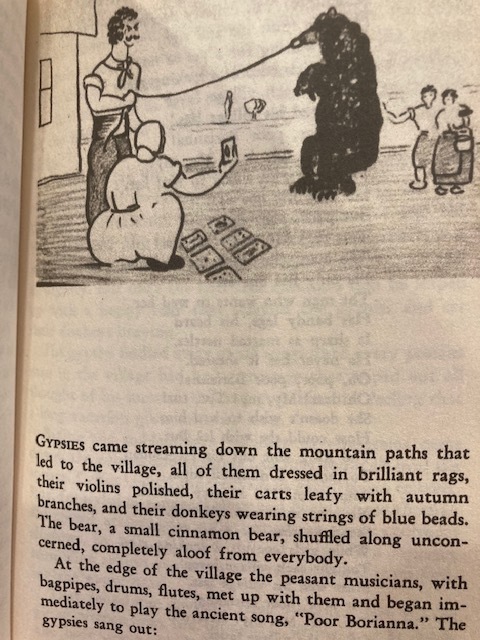
The tiny blurb for this one reads "a Bulgarian peasant boy must convince his mother that he is destined to be a sculptor, not a farmer." Well...kind of. The first hundred pages barely mention any art--it's mostly picking vegetables and wheat. Oh...and waiting for the Gypsies to come with their gypsy bear. Who gives massages. (This was a real thing--I looked it up.) The second half has a little more action and we see Dobry get more involved with drawing and clay. There are some stories mixed in--a few of which were actually more entertaining than narrative.

Still waiting for an older Newbery winner to really catch my attention, but it's been pretty slow going.
Profile Image for Jill.
411 reviews22 followers
January 21, 2011
A real yawn fest, this on. I didn't care for it at all and don't think I would have spent the time finishing it if it weren't part of my goal of reading all the Newberys. It has no plot! No conflict! I just have a hard time believing that everyone in a poor farming community in Bulgaria would be upbeat, carefree and contented all the time. I just don't buy it. Yes, it's interesting to learn things about Bulgarian life and culture such as how they nod their heads for no and shake their heads for yes but beyond that there's not much to recommend here. Pulled a few quotes that were interesting but that's about all.

'"You eat too much at once," the grandfather said, "too many tomatoes, too many stories...everything is good but not too much of it. The fire, it feels good, doesn't it? And you saw how it baked the bread that you made well. But too much fire in the wrong place will burn everything up. The water--good to drink, good to grow the tomatoes, good to wash in--but too much water out of place carries everything away."'

"today seems brighter, the way our house looks after a good cleaning. It's the same feeling I have when the whole house shines when guests are coming. My kitchen seems bewitched then. Garlic and onions dance on their strings, paprika is powdered fire, coffee excites itself, boiling, and pours out with more smell."

"people are not all the same, any more than the vegetables, fruits, trees and animals are all the same. A fox lives one way; the buck another way. Both have different needs. A pine tree will die where a poplar tree will grow. Grapes need sun; celery needs shade and more water. Some plants need to be moved; other plants die if you move them."

"You are too anxious. And a too anxious person bites his own tongue, sticks his finger in his own eye, trips himself up, and misses his luck altogether. If you hold a wish too tight it can't fly, any more than a stork can fly if you hold him tight. Just enjoy your bread and some day, without knowing how, you'll bite right into luck."
Profile Image for Ensiform.
1,524 reviews148 followers
July 9, 2010
Winner of the 1935 Newbery, this is the tale of a young Bulgarian peasant lad who lives with his mother and story-telling grandfather. A fledgling artist, a primitivist, and quasi-mystic, Dobry lives in the moment of every day, enraptured equally at the falling of snow, the flight of storks, the babble of a river, the baking of good bread with cheese and butter, a snow-melting contest, or a massage by a tame gypsy bear. As he lives and works through the months and seasons, he develops his art as well as his affection for Neda, a neighbor girl whom he plans to wed.

Well. The ALA really does seem to show undue favor to books set in another place or time, that open a cultural window. It's a decent enough book, perhaps a bit over-subtle in its message of positivity and carpe diem – but it lacks drama, conflict, suspense. Dobry's mother is a simple peasant women who doesn’t understand his artistic streak, but agrees to send him to Sofia for art school. There is no question that Neda will wait for his return, and they'll be wed. Though poor, Dobry gets the money for art school through a physical feat which there is never any doubt he'll manage. I think kids would like reading about the alien and outdated customs, and perhaps the characters' relentless cheerful nativist fatalism would resonate with children, but I found it boring.
Profile Image for Alisha.
832 reviews
September 18, 2011
Newbery winner. 1935

I wanted to give this book more stars just so my review started in stark contrast to all the 2 & 3 star ones that really hated it. Why give a book ANY stars if you disliked it that much? Oh the weirdo social implications of rating a book. I don't think I'd recommend this book, but I certainly wouldn't defame it like The Wheel on the School or Miss Hickory. (One of the plus points on reading others reviews was seeing that someone else agreed that this book had some WTF moments--their words not mine, though appropriate. Seriously-- a bear that gives massages to the old men of the village every year? Jumping into an ice hole cut out for the purpose of retrieving a crucifix purposely thrown in? )

With all that considered, context on this book is key-- height of the depression... the kid always had enough to eat and money/ methods to get it to follow his aspirations-- and eventually, the full support of his family and community. A completely appropriate tale for 1935. The bits of culture weren't bad either and this was a pleasant read without any evil, malice or deep- rending conflict.
Profile Image for Kati Atwood.
598 reviews10 followers
January 22, 2016
1.75
Must. Keep. Going. Even the massaging gypsy bear couldn't make this book less painful. Yes. A massaging gypsy bear.

One day I will look back and proudly say 'I have read all of the Newbery award winners'. No pain. No gain.
Profile Image for Phil J.
789 reviews64 followers
August 7, 2021
The plot description is really misleading. There is as much plot about a "gypsy bear" in this book as anything else.

Plot summary

Part 1 Waiting for the bear
Pages 1-90 are spent mostly wondering when the "gypsy bear" will arrive. At no point does the author tell you what this means, other than that it has something to do with massages.

Also in Part 1:
* A telling of the creation story in which God tries out a race of giants who are too big to enjoy bread, then a race of little people who get blown around on the wind before settling on humans who are heavy enough to stay on the ground but small enough to enjoy bread. Bread is our purpose.
* p. 67: "Dobry saw the flour as the climax to a story."
* There is a Muslim living in the town and everybody is cool with it.
* Descriptions of bread and daily Bulgarian life

Part 2 The bear arrives!
Behold:
description

The bear is important partly for walking on people's backs and partly for wading in the river. When the bear wades in the river, then it is safe for humans to start taking baths in the river after a long, smelly winter.

Part 3 Fond memories of the bear, and wishing it will come back
The bear's visit inspires Dobry to do various things such as make carvings and flirt with the girl next door by flattering her goat and winking at her in church.

Part 3 also includes the infamous snow melting contest. This is a contest in which grown men take off their coats, open their shirts, and lay down in the snow. The first one to sink into the snow wins. It is believed that the person with the strongest muscles and the hottest blood will sink first. It is a sign of manliness to have icicles form on your chest hair.
p. 129 describes Grandfather practicing by walking around with his shirt open until "the sweaty hair on his chest frozen stiff with icicles. The icicles clinked all the time he was at work on the timber."
p. 131 Dobry envied the men their icicles and whispered... "I wish I were a MAN full grown. I'd be proud of the day I could stride in here, clinking at the chest. It's a noise I love even better than I love the noise of sleigh bells."

Ultimately, Dobry gets a chance to go learn carving at the art school in Sofia. But first, he has to take a bath, so the book is right back to waiting for the bear to show up.

Side comment:
If you are offended by the term "gypsy," then this is not the book for you. I would say that the Roma people are portrayed very positively in this book. It is true that they are praised for somewhat stereotypical things- bold fashion sense, fortune telling, etc.- but they are seen as an important part of Bulgarian life.

There is no reason to read this book unless you are trying to read all the Newbery winners. If so, you should do what I did and read all the good ones first. It's not the worst book that ever won the award (ahem, Daniel Boone), but you could live a full and happy life without it.
Profile Image for Jenny.
803 reviews4 followers
May 13, 2021
This a nice family story that takes place in Bulgaria. Unfortunately this feels a bit more outdated than some of the other early Newbery's that I've read. The illustrations are traditional Bulgarian drawings which feel antiquated and just plain strange at times. I enjoyed it while I was reading, but don't have any strong feelings one way or the other about it.
Profile Image for Jen.
282 reviews1 follower
March 12, 2011

Everything is different, each leaf, if you really look. There is no leaf exactly like that one in the whole world. Every stone is different. No other stone exactly like it. That is it, Dobry. God loves variety... He makes a beautiful thing and nothing else in the whole world is exactly like it... In odd days like these ... people study how to be all alike instead of how to be as different as they really are.

This is another of the out-of-print Newberys. It's definitely not the best of what we've read so far, but not the worst either. Why is that you can easily find new copies of The Cat Who Went to Heaven at your nearest Barnes and Noble? The Cat may have been a quicker read, but it was also stranger. And probably offensive to Buddhists.

Dobry, while somewhat erratic narratively and sorely lacking in chronological transitions, is a sweet book. It's a coming-of-age story about a young Bulgarian peasant boy who is more interested in art than farming. His mother disapproves. His sweetheart inspires. His grandfather encourages.

If a boy is something, it doesn't matter what kind of work he chooses. If the boy is strong, [like] live and good yeast, the work he chooses will rise, become great, nourish everybody.

There are a number of these wise sayings of Grandfather. I don't know if they are taken from Bulgarian folklore or if they were dreamed up in Monica Shannon's head, but I like them.

The story is not without its oddities, though. During the winter games (in which the men compete to see who will be the fastest to lie down and melt the snow beneath them with their body heat), the weather is described as so cold that the sweat in the men's chest hair freezes and turns to tiny icicles. Dobry says,

I wish I were a MAN, full grown. I'll be proud the day I can stride in here, clinking at the chest. It's a noise I love even better than the noise of sledge bells on our oxen.

Really, don't we all love that noise better than sleighbells? "Jingle Bells" got it all wrong.

I'll leave you with one last quote from this oddly endearing story and a question to ponder: in which season do you feel most like yourself?

"Snow is the most beautiful silence in the world. And in winter we are more like ourselves. Lots of blood!" In winter these peasants had hot blood in their cheeks and hands, livelier eyes, fingers like sausages, and more color to their clothes.


Profile Image for Alicia Farmer.
829 reviews
March 12, 2015
(From my review of this book here: http://newberryproject.blogspot.com/2...)

I chose this book more or less randomly. When one is planning to read all Newbery books sooner or later, there is no wrong selection. They all "count" toward the end goal (and I am nothing if not goal oriented).

Yet the two things that drew me to the book once it was in my hands were the title and the cover illustration. The book had no jacket-cover preview. I was left to discern what I could from its appearance.

To this former student of the Russian Language, Dobry meant "Good." That word, above the amateurishly drawn domestic scene promised a sweet tale about what is good in peasant life. In that regard, the book did not disappoint. It was, in fact, about the simple yet satisfying work and rites of the people in a Bulgarian village.

[spoilers below]

Surprisingly, Dobry turns out to be the protagonist's name. I don't know Bulgarian to know if it is also the word for "good," or if it is simply a name. The book gives us two years in Dobry's life. The first is when he's a boy of maybe 7-10 years. He helps around the house, relishes the outdoors, and displays a talent for art.

The second section of the book takes place when Dobry is an adolescent. His artistic skills have blossomed into a rare gift the whole village recognizes.

What I found rewarding about the book were its accounts of everyday life in a mountain village before electricity or modern culture. Each chapter revealed something about how seasons were celebrated, traditions observed and relationships maintained.

Beyond that charming and no doubt rosified view, the book was not very good. It reminded me of the one Lois Lensky book I read, where very little happens and one is not given a reason to care about the characters. And ironically, the illustrations in this story about a budding artist, are bad. I can only guess they were supposed to look like folk art and have that unpolished composition. On more than one occasion, however, I could not tell what was happening in a photo until after I finished the chapter to which it corresponded.

Reading this book was like looking through a viewmaster. Each chapter was a different snapshot, and it didn't really matter where one began.
Profile Image for Falina.
555 reviews19 followers
June 26, 2018
The premise of this book is fairly boring, but Dobry is such a lively character that he made it enjoyable for me. He embodies mindfulness and what it can do to create happiness even in very humble circumstances.
Profile Image for Joan.
2,480 reviews
July 17, 2023
This is a Newbery that I never have heard of and I can see why. It is sweet but very forgettable. One good thing this could be used for is if a child has to read a book based in Bulgaria. Otherwise I can’t think of many uses for the title. It is about an artistic child in a tiny mountain village who grows up to become an artist after his mother is finally convinced to let him be an artist. I got to say that this book is more a testament to the wisdom of letting books die than to the value of keeping a title because it’s a Newbery. While understated, there was a slightly disparaging tone to the mention of gypsies. The preferred word by the group is Roma. Gypsy is considered derogatory. While I didn’t hate this book, it just didn’t seem to have any particular purpose to this story. 1935 Newbery Award.
Profile Image for Gale.
1,019 reviews21 followers
February 11, 2014
“The Peasant Boy who Would be an Artist”

Set in the mountains of 1913 Bulgaria this rambling story covers some 4 years in the life on a strapping peasant boy. Nestled at the foot of the many mountains of Bulgaria his village carries on the rhythm of life closely aligned with the seasons. His Grandfather is an admired storyteller, proud of his strength like an ox and ability to withstand the cold (Polar Bear-like plunge in the River and the annual Snow Melting Contest). His mother, Roda, a widow who lost 4 children before Dobry was granted to her, makes excellent bread from the wonderful wheat which they grow. An admired cook she often reminds him that they are all part of the land because the bread results from their combined efforts—human and Nature’s blessings.

But Dobry discovers that he has artistic talent and wants to fashion objects out of wood, then clay. If only he had the money to travel to distant Sofia to study art there seriously. His grandfather encourages his talent--as does Kolu, the master Jamal maker--but Roda frets that her son cares more for imaginary animals than the ones he is supposed to tend: oxen, goats, then cows. His best friend is a little girl named Neda who grows up shyly nearby, but seems to have her heart set on him. Won’t it break if he goes off to the capital to study to become a famous artist—will he still care for a modest peasant girl from a mountain village?

In simple vocabulary with easy syntax (and occasional Bulgarian terms to add the spice of authenticity) Shannon recounts the daily life of a pre War Bulgarian village: where they await the annual arrival of the gypsy Bear who can relieve their winter-long aches and pains. Where Easter, Christmas and New Year’s customs are solidly engrained and faithfully observed. As the seasons turn so does Dobry grow in stature and reputation—especially the night he fashions a manger scene out of snow, where devout villagers come to worship. Modern teens will have to slow down their pace and craving for action and slick repartee, for these modest pages transport readers back into a simpler, gentler time. An era when a homogenous people accepted the fact that they were both superstitious yet pious. Young Dobry matures to realize in joyful content that he is an integral part of the earth and the mountains. That he has a place in the grand scheme of things. And that his heart will always have a home.

(February 11, 2014)
Profile Image for Timothy.
Author 1 book7 followers
May 1, 2012


Dobry is a young boy living in the Balkan highlands of Bulgaria. The story is about his coming-of-age and self-discovery. Dobry is different from the rest of the peasant villagers. Yes, he can work the land and manage the livestock like his fellow villagers, but Dobry is an artist. He never falters in his desire to be who he is, even though his mother thinks his aspirations are impractical. Thanks to Dobry's wise and understanding grandfather, Roda, Dobry's mother, comes to realize that she must support Dobry.

Dobry is not a book to be read quickly. It must be absorbed slowly. I took the time to try and smell the bread baking, to imagine the coldness of the tomatoes kept in snow and to feel the changes in season which are given such importance in the culture, as depicted here.

What I loved about this book is the great detail that is given to the simple way of life, the customs and the importance of the land and how it provides everything the peasants need.

The relationship between Dobry and his grandfather is special. The grandfather is probably my favorite character in the book. He is a story-teller and his diversions are a welcome addition to the book, giving the reader a taste of traditional Bulgarian folklore.

The relationship between Dobry and his childhood friend, Neda is very sweet. We get to see their relationship evolve from friendship into the early stages of love.

Unlike much of the literature preceding and contemporary to Dobry, the gypsies are depicted as kindly and helpful. Most of the time, gypsies are portrayed as thieves and swindlers. I felt it was beneficial to see a different perspective.

I don't think this is a perfect book, but there were no faults that caused me to dislike it. The only stumbling block for me was the use of strange syntax in the dialog where the writer was trying to emulate the Bulgarian way of speaking.
Profile Image for Erin.
4,577 reviews56 followers
July 6, 2010
This is a slow-paced book with an old-fashioned, slightly foreign feel. It reminded me a little of parts of the Betsy-Tacy books. It's a good story, with lots of description, but I had a hard time getting through it. This is one of those styles of writing that I have to be in the mood for, and when trying to review 100 books, a slow pace is just killer. I would consider going back to it, but overall this is one of those Newberys that is not going to appeal to everyone.
I don't think this would appeal to either boys or girls particularly. The main character is a boy - Dobry - which might add a slight increased interest for boys. This would not be a recommendation for someone who isn't already pretty invested in reading. It might be a good read-a-loud, especially since it is set in Bulgaria and some of the folk customs might need explaining along the way. The pictures are intriguing.
Profile Image for Janelle.
560 reviews11 followers
April 25, 2018
This is seriously the perfect book to read before falling asleep!
There is absolutely no plot or conflict or character development. It is about a Bulgarian peasant boy named Dobry, his grandfather, his mother, and some townspeople. While I found Dobry's joie de vivre sweetly amusing and I enjoyed the wisdom of his grandfather, the lack of story line would make it difficult for any ready to want to finish the book.

My sole motivation for reading the book in its entirety was that I am two books shy of reading all the John Newbery Medal Award books. I doubt I could convince even my most avid middle school readers to check out this book. And the illustrations are creepy-looking. Most 12 year olds could illustrate better.
Profile Image for Mitchell Friedman.
5,850 reviews230 followers
July 31, 2017
And the Newbery read/re-read continues. I don't remember this one at all. It kind of starts off stilted and awful. We are in a Bulgarian mountain village following a young boy, who eventually grows to be a young man. Much of that book has that untrusted feel to it - it shows us detailed of life in a place and a time that I want to think are true and real but I'm not sure that it is. There is a mixture of stories woven into the book that also seems to get better as the book goes on. In the end the book is interesting but not especially insightful, perhaps it was an off year.
Profile Image for Thomas Bell.
1,903 reviews18 followers
September 23, 2012
Well, if you like books about kids who grow up and everything goes well for them and they win everything and everyone is happy for them then that's great. If not, maybe you'll like a little taste of what the Bulgarian mountain peasants were like back in the 1920's. That's what this book is.
Profile Image for Caitlin.
1,502 reviews8 followers
February 13, 2017
A good book, but I didn't love it. Interesting because the setting is different than any other Newbery I've read.
Profile Image for Stephanie.
925 reviews
December 20, 2021
I had to give "Dobry" 4 stars to offset all the 1 star reviews. The chapters are short and marked by illustrations rather than numbers or chapter titles. The illustrator, Atanas Katchamakoff, is a Bulgarian who emigrated to the US whose childhood stories and desire to be an artist inspired Shannon to write "Dobry". I also read that she was raised among Bulgarian immigrants on her father's farm in Montana, from whom she learned about Bulgarian customs and legends included in this 1935 Newbery Medal winner.

I am glad I waited to winter to read this because there was a lot of snow in Dobry's Bulgarian mountain village; and I found the chapter about Christmas to be very moving. I also really enjoyed many of grandfather's bits of wisdom about things like how "God loves variety. ... He makes a beautiful thing and nothing else in the world is exactly like it." And how "Everything in the world is good." and how because everything is different it has different needs...A pine tree will die where a poplar tree will grow. Grapes need sun; celery needs shade and more water. Some plants need to be moved; other plants die when you move them. ... What seems an easier life to you would seem a harder one to Dobry. He needs to draw, to paint, and Dobry is going to be a great man just as his father said he would be."

So, if you like books about pastoral cultures and art, don't be afraid to give this one a try.
Profile Image for Rebecca.
2,756 reviews36 followers
June 11, 2024
I loved this. It is sweet and fascinating. I enjoyed how soaked in the time and place the narrative felt. I loved Dobry and his outlook on life and getting to see him grow up and find his calling. I absolutely adored his grandfather and wanted to highlight so many of his wise sayings.
I was not a fan of the artwork - I just didn't like the style, but moreso I was frustrated with the placement of the artwork within the text. It was often pages before the incident it illustrated, which was really distracting.
A note: the term "gypsy" is used throughout the book, but it is not used in any negative way. Just as the term used at the time. In fact, the main characters view the "gypsies" as a big part of their way of life and celebrate them and their coming to town each year.
Profile Image for Heidi.
357 reviews1 follower
June 23, 2022
I’m always hoping I’ll be hooked on the newbery books, but tbh I only read this one out of a sense of obligation. I feel nothing for it. Lol story of mankind and Smokey I actively disliked, but this one didn’t even warrant my disdain. It was like nothing? Idk but I feel a negative sort of apathy to this one

ALSO I understand that this was written a hot minute ago, but can we please stop saying g*****??
Displaying 1 - 30 of 179 reviews

Can't find what you're looking for?

Get help and learn more about the design.