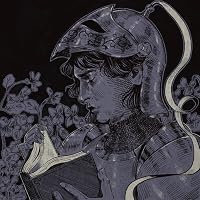
John Fletcher and Philip Massinger's comedy Love's Cure, or The Martial Maid (1615) is an innovative and provocative play that explores the struggle of two transgender siblings, Lucio and Clara, who have been brought up as members of their opposite genders. After twenty years of separation, they are forced to switch around their gender identities, facing fierce scrutiny from their family and the cruelly heteronormative society of early modern Seville. This Revels Plays volume is the first fully annotated, single-volume critical edition of the play ever to be published. The text has been modernised and is accompanied by full commentary. The introduction presents ground-breaking research on the play's remarkable engagement with its Spanish literary sources, and it provides a full discussion of its dating, authorship, and reception by literary critics and in the theatre.
John Fletcher (1579-1625) was an English playwright and one of the most prolific and influential dramatists of the early seventeenth century, whose career bridged the Elizabethan theatrical tradition and the drama of the Stuart Restoration. He emerged as a major figure in London theatre in the first decade of the 1600s, initially writing for the Children of the Queen’s Revels and soon becoming closely associated with the King’s Men. Fletcher’s early education at Corpus Christi College, Cambridge, appears to have prepared him for a clerical career, but like many of the university-trained writers of his generation he gravitated instead toward the commercial stage. His rise was closely tied to his celebrated partnership with Francis Beaumont, with whom he developed a distinctive form of tragicomedy that proved enormously popular. Their collaboration produced several of the period’s most successful plays, including Philaster, The Maid’s Tragedy, and A King and No King, works that helped define Jacobean taste through their blend of romance, political tension, and emotional intensity. Following Beaumont’s withdrawal from writing, Fletcher became increasingly central to the King’s Men and, after the death of William Shakespeare, effectively succeeded him as the company’s principal playwright. During this period he collaborated with Shakespeare on plays such as Henry VIII and The Two Noble Kinsmen, while also producing a large body of work either alone or with other dramatists, most notably Philip Massinger. Fletcher’s drama is marked by technical fluency, flexible verse, and a keen sense of theatrical pacing, and he showed particular mastery in tragicomedy and comedy of manners, genres that would dominate the Restoration stage. Although some of his early experiments, such as The Faithful Shepherdess, initially failed to find an audience, he quickly adapted his style and achieved sustained popularity, with multiple plays performed at court and revived frequently after his death. During the Commonwealth, scenes from his works circulated widely as short theatrical drolls, and following the reopening of the theatres in 1660, Fletcher’s plays were staged more often than those of any other playwright. Over time, however, his reputation declined as Shakespeare’s stature grew, and by the eighteenth century only a handful of his comedies remained in regular performance. Modern scholarship has emphasized both the scale of Fletcher’s output and the complexity of authorship within his canon, which reflects extensive collaboration and has prompted detailed stylistic analysis. Despite fluctuations in critical standing, Fletcher remains a key transitional figure in English drama, whose influence shaped both his contemporaries and the theatrical traditions that followed.
“Life’s but a word, a shadow, a melting dream / Compar’d to essential, and eternal honor.”
In the wreckage of a Romeo and Juliet-style family feud, Lucio’s mother raises him as a woman to hide him from the family’s enemies. His sister Clara goes into exile with their father, who raises her as a boy—the “martial maid” of the title. When the curtain rises, Clara has won renown in battle, her father’s banishment is finally lifted, and the whole family is reunited in Seville, where the parents endeavor to “help wrong’d nature, to recover / her right in either of them, lost by custom.” To see “who soonest can / Turn this man woman or this woman, man.” Love, as the play’s subtitle suggests, is the cure.
The Martial Maid lacks the frisson of playful defiance that gives the gender play in Galatea—or for that matter, Twelfth Night or As You Like It—its edge. And the play is misogynist at its core (made worse, I suspect, by the unfortunate influence of Philip Massinger, who revised Beaumont and Fletcher’s original). But Clara and Lucio’s transformation into a “real woman” and “real man” is so abrupt, so hetero, so basically ridiculous, that the play feels almost absurdly camp. Which considering it was written by three probably straight dudes in 1615 or whatever is kind of amazing.
Simultaneously subversively trans and also rigidly enforcing bioessentialism. This was a really fascinating early modern play about a brother and sister who have spent most of their life (~20 years) passing as a woman and man respectively. When their family is reunited from their father’s banishment, they’re expected to return to their “original” gender roles. The play goes on to hold questions and discussions about nature vs nurture until, ultimately, heterosexual love gives the siblings the power to fulfill their traditional gender roles.
I think there’s something inherently trans still about the fact that this “love’s cure” is overtly campy and magical. The brother, having been raised entirely as a woman suddenly becomes a skilled sword fighter and master of courtly masculine manners with the kiss of a singular woman, for example. So its campiness, in requiring a benefit of doubt from the audience, does sort of argue for stubborn nurture over nature. Or you could argue that it reaffirms and comforts the audience about the power of nature to keep people cisgender. Either way, very funky and fun play with a lot to unpack and analyze.
I did a presentation on this for my Renaissance class about themes of gender and it really straddled the line between being genuinely subversive and coming full circle back to stereotypical to the point where I couldn't suss out where I stood on it myself - have to give it credit for its fabulous insults such as "whey-blooded milksop" and "scallion-faced rascal", bring that stuff back because I would be bowled over if someone pulled one of these out on me!
this is the second early modern comedy about all-but-textually-trans characters i’ve read this year. historical trans people i'd die for you. but unfortunately this one is kind of about how heterosexuality makes you cis. it’s a better and more interesting play than the roaring girl but it’s also a lot less based.
Third time of reading this and frankly I'm still baffled. Possibly it's because Philip Massinger rewrote it after Fletcher's death and made some odd "improvements" that alter the "morality" of the play. Partly it's the astonishing sexism of Vitelli, the romantic hero (?) of the play, who is basically a big shit.
Is this play a satire on men's desire for vengeance? At the end, only the women (and the trans, NB, non gender conforming characters) threatening suicide brings the men to their senses (and that scene is very funny).
Also, this time through it is apparent how very old Alvares is, which means that his "love" for his wife might well be a bit May-December (or even a bit ephebophile?), which increases the creep-quotient.
The super-masculine Clara and super-feminine Lucio are very funny, and the realisation of their own heterosexuality is both ludicrous (deliberately?) and silly (probably deliberately?).
But the sixteenth century thought so differently from us.
***
Well, Love's Cure is an odd one, and I'm not 100% sure I know what to think. It starts promisingly: Alvares' two children have been brought up different genders from their birth genders, so you have the "Martial Maid" Clara and the rather effete Lucio who only realise their "true" genders aged about eighteen, and then fall in love with their family's mortal enemies. So far, so Romeo and Juliet-As You Like It-Galatea.
Then, in the middle, you get one of those scenes (a la Two Gentlemen of Verona) where you think: they don't think like us. Clara sees her beloved Vitelli (is he a sex addict?) try to dump his seduced then abandoned mistress Malroda, for some sort of "goodbye sex". Because she wants neither the goodbye nor the sex, she resists, so he first tries to pay, then attempts to rape her. Clara, having watched all this, then declares her undying love for him. I mean, we all like a bad boy, but seriously?
This leaves such a bad taste in the mouth that it's hard to take the rest of the play, which (without this sequence) would be quite funny, but it is difficult to recover from an attempted rape scene in a comedy.
Fletcher being Fletcher (I did not know Massinger was supposed to have written this as well), the women are the ones with consciences, and the men (the camp Lucio apart) are feckless, unpleasant narcissists, and Malroda has quite clearly been strung along by Vitelli, and was a virgin till he seduced her. She is no more a whore than any woman with a crap ex-boyfriend (are there any women out there who don't have a crap ex-boyfriend? maybe only the ones with a crap current boyfriend).
So, readable, but really not one of Fletcher's masterpieces. Sorry.
Read as part of the Shakespeare Institute online "Extra Mile" readathon in the Covid-19 autumn of 2020.
Privileged to read an advance copy with the editor participating - and I would recommend this edition to any reader.
It's a weirdly modern play considering it's over 400 years old, dealing as it does with gender roles and identity, with some surprisingly genderfluid characters. The funny bits have lost a certain amount in the intervening centuries, but it would be fascinating to see this on stage now. Apart from the comic buffoons in the Watch (echoes of Dogberry) most of the characters are likeable, and the climax, in which testosterone poisoning is thoroughly put in its place works particularly well.
Read again in 2026 as part of the REP group investigating the repertoire of the King's Men. Somehow it felt a lot more creepy this time round, with a father advocating his son should prove his manhood by assaulting the first man he meets or raping the first woman.
A delight of Fletcherian dramaturgy and plotting! (I know Massinger was heavily involved, especially in the play's revision/revival, but he was a younger writer when this was first written, and the play is stamped by Fletcherian linguistic flourishes, his interest in Spanish source material, and his particular fascination with cross-dressing.) This new Revels volume is a great edition, too, although one does wish Díez made a little more sense of the ideas related to transgender that he purports to discuss, especially as the gender dysphoria (?) experienced by Lucio and Clara is "cured", as the play's title claims, by love. In this way, the play's use of gender as the same thing as sexuality becomes quite interesting, it seems to me. In any case, this is an absolute pleasure of a tragicomedy. The stakes are very, very high, but the end is pure love.