A brilliantly realised account of the most famous archeological dig in British history, now a major motion picture starring Ralph Fiennes, Carey Mulligan and Lily James.
In the long hot summer of 1939 Britain is preparing for war. But on a riverside farm in Suffolk there is excitement of another kind: Mrs Petty, the widowed farmer, has had her hunch proved correct that the strange mounds on her land hold buried treasure. As the dig proceeds against a background of mounting national anxiety, it becomes clear that this is no ordinary find...
John Preston's recreation of the Sutton Hoo dig - the greatest Anglo-Saxon discovery ever in Britain - brilliantly and comically dramatizes three months of intense activity when locals fought outsiders, professionals thwarted amateurs, and love and rivalry flourished in equal measure.
This beautifully composed short novel by John Preston may be most notable for its simplicity and understatement. In restrained tones that recall J.L. Carr’s A Month in the Country, we are treated to Edith Pretty, aged and wealthy owner of Sutton Hoo estate, who determines to discover if there is anything inside the earthwork mounds that dot her riverside Suffolk property. It is 1939 and the threat of a German invasion is everywhere discussed.
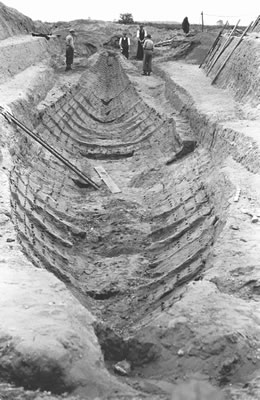
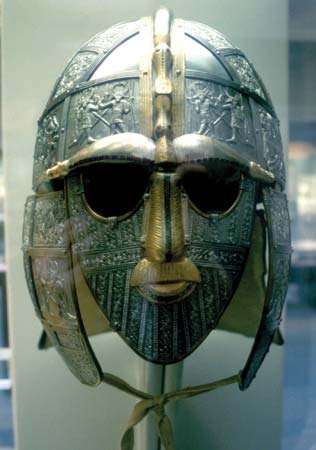
Preston’s fiction would be wonderful even if it didn’t describe a real event: the discovery in 1939 of an Anglo-Saxon burial ship for a king, long turned to sand, containing jewels and helmets, coins and gold trinkets, silver bowls and implements. When it was discovered, the find redefined Britain’s Dark Ages for what it showed of human capability and development.
I read the novel not knowing of the truth of the matter, and was completely captivated by Preston’s characterizations and narrative arc. The pace of his story allows us to meditate on themes he does not explicitly state: the impermanence of life and the pathos inherent in missed opportunities for a long and life-giving love.
That the author John Preston is rumored to be related to at least one of the characters in the real-life drama just makes the novel more intriguing. The Epilogue of the novel gives the viewpoint of the heir to Sutton Hoo estate many years later, who at the time of the discoveries was a young boy. He has the distance of many years from which to view events at that time and his thoughts on the “fragile shell” of a turned-to-sand body discovered in a pit nearby the hull of the ship makes us feel the churn of history, even the personal histories of individuals, very keenly.
As a novel, this is an exquisite gem. As a fictionalized version of an important archeological discovery, it is a must-read. At the time, the discovery was hailed as Britain’s Tutankhamun. Many historical societies and university departments vied for the opportunity to manage the dig, shouldering one another aside until a court decision put ownership of the find squarely in Edith Pretty’s hands.
Just two weeks before British involvement in World War II, Edith Pretty donated the find to the British Museum, making her the largest donor in history. Now artifacts from the find are beautifully displayed in the British Museum, giving resonance and meaning to life at the time of Beowulf.
An odd sort of novel, which lost its way completely at the halfway point, when the three main characters were suddenly usurped by an entirely new cast of characters and then promptly forgotten. It's not John Preston's fault, as such - the book is based on actual events, and the shift in personnel really did happen. But why, then, did Preston choose to focus so closely on his characters rather than simply offering a study of the dig itself? I can't answer that one, but the decision seems odd to me, and it certainly made this a more frustrating read than I would have liked.
I quite enjoyed this book even though it was quite different from what I expected. If you are envisioning a scientific, empirical novel, this is not for you. Instead, it is a poignant novel narrated by 3 main characters who all revolve around the archaeological dig at Sutton Hoo. As the mounds are unearthed by Basil Brown, and later by "professionals", we see the layers of each character peeled back. Edith Pretty hires Basil Brown, a self taught archeologist, to dig up the mounds as her late husband always felt there was something there. As the finds are realized and their intrinsic value is brought to light, additional players are brought in to oversee. One of these is Peggy Piggott, who along with her husband, comes to realize that her marriage doesn't quite fit her. The backdrop, and impetus to hurry things along, is the impending war with Germany. Although not long, there is a lot to this book. John Preston did a wonderful job of his re-envisioning the 6 months from the time Edith hires Basil, to the major find that Sutton Hoo is mostly known for.
I enjoyed the first half of the book. It is slow. No big action throughout the boom. It was engaging. Second half switched lead characters. It was like the author started the book, put it down and came back to it years later forgetting what he was writing. It just did not really fit together. The end tied some of it up but did not toe it together. Too many leads just dropped and forgotten.
I found this to be a very disappointing fictional treatment of an exciting archaeological event -- the discovery of the Anglo-Saxon ship burial at Sutton Hoo in Suffolk, UK in 1939. The book has received good reviews on both sides of the Atlantic, and I want to emphasize that my rating is based solely on my personal reaction to this book.
The story seems to focus on the drudgery of the actual physical labour and the annoying bickering among the various archaeologists and museum officials. The atmosphere (with the exception of a few brilliant descriptions of natural surroundings) is glum. The characters are preoccupied with the various challenges of their personal lives rather than awestruck over the wonder hidden in the dirt. The artefacts are described perfunctorily and then whisked away to a secure location in London. The likelihood of the outbreak of war hangs like a shroud over the entire dig site.
Where is the excitement that ought to surround such a discovery? Is this the reality of the nitty-gritty work of archaeology? Was this really the way it unfolded? Maybe so. Perhaps I missed the author's point.
On another personal note, added to my feeling of disappointment with this book is a growing dislike for historical fiction. I believe that authors walk a fine line when attempting to weave a fictional story around main characters who were real people. In the case of this particular book, the author did state in the Author's Note that
This novel is based on events that took place at Sutton Hoo in Suffolk in the summer of 1939. Certain changes have been made for dramatic effect.
I am grateful for this bit of information. Nonetheless, it leaves the reader who likes to know the historical facts still in the dark. I am left wondering which details are factual and, in an effort to sift the real from the imaginary elements in the story, I am drawn away from the story to fact-based resources (in which case I might just as well read a history book). If the book had not been so short, I would have abandoned it at the halfway point.
Serious fiction these days is often so complex and allusive, that it is a real pleasure to read a novel that tells a story absolutely straight, with plenty of human interest, yet without slighting the considerable intellectual value of the subject. The Dig is an account of the 1939 excavations at Sutton Hoo, Suffolk, on the east coast of England. The intricacy of the artifacts from the largest of these, a ship-burial datable to the late sixth century, completely altered the prevailing view of the so-called Dark Ages as a period devoid of culture.
I knew about the excavation before reading the book, and have seen the artifacts in the British Museum. I found, though, that my memory had been affected by reading Angus Wilson's Anglo-Saxon Attitudes, which starts with a scandal at a parallel excavation obviously based on Sutton Hoo. But author John Preston has no need of nefarious plots to make his story exciting; the book reads like a thriller as it is. First there is the sheer interest of the painstaking work involved, looking less for solid objects than minute changes in color or texture of the soil. Then there is the excitement of the first finds. And then, as the news gets out, the struggle for control between the local people who first began the work, and the sometimes-overbearing national authorities. All taking place under the threat of impending war, on the very coastline that for two millennia has been a landing-ground for continental invaders.
Preston's genius is to make you forget it is a true story, and give you the surprise of pure fiction. Yet if you look up Sutton Hoo on Wikipedia, you will see that everything of significance in the novel is true; Preston does not make up names or alter facts. At the same time, he shows exactly why fiction can be more effective than non-fiction in telling such a story—because he puts you there, seeing through the eyes of people who are as involved with their emotions as with their hands. Preston has the good fortune of being able to rely on narrators who are closely involved in the dig, but are in some sense amateurs. There is Edith Pretty, the owner of Sutton Hoo House, whose interest in the other world stems from her grief at her husband's death. There is Basil Brown, a self-taught archaeologist, recommended by the local museum as someone who knows more about Suffolk soil than anyone else alive. And there is Peggy Piggott, a graduate student married to her professor, and brought along during their rather strange honeymoon because she is light enough not to disturb the fragile site. For all three of these, but especially Peggy, Preston invents an enigmatic emotional life that enriches their stories without ever contradicting the facts. But he also has the sense to leave loose ends poignantly untied, so that the made-up stories do not overwhelm the real one. It is a quietly amazing feat.
This is a simple, unpretentious book, yet it is as satisfying to read as many a longer tome with grander goals. It may not make my Great Books of the Year, but it is certainly one of the ones I have enjoyed the most.
I'd only found out about this novel and the fascinating true story concerning the archaeological dig at Sutton Hoo during 1939 thanks to Netflix.
The reason why this find was so important is due the vast amount of Anglo-Saxon treasures unearthed whilst the impending war adds pressure on the team to excavate the site.
The novel is structured strongly with those who played a vital role narrate the events. Using the likes of landowner Edith Pretty helps set the tone.
It's satisfyingly short and gives a great snapshot to how the likes of Basil Brown undertook the gigantic task of unearthing the impactful find.
Tak bardzo potrzebowałam teraz takiej historii. Tak pięknej, spokojnej, pełnej melancholii. Ta powieść trafiła idealnie w mój gust i od razu zajęła specjalne miejsce w moim sercu.
Found this because I saw there would be a (Netflix, I think) movie based on the story. This is a fictionalized account of the discovery of the Sutton Hoo treasure in 1939; quite remarkable and groundbreaking. The story is good, the method chosen by the author (different characters, all of them, to the best of my understanding, are real people, describe different parts of the story) is also quite solid. The problem is that it is a real story, too much fantasy would kind of spoil it. So it is not very climactic in the end. But quite nice, nevertheless.
Reminded me so much of one of my favourite books ‘A month in the country’ - a certain amount of time to discover something in a beautiful place. This now takes its place beside that book. I am enthralled by the Sutton Hoo dig now, and will strive to learn as much as I can about it.
This got rave reviews when it was published a couple of years ago, from readers as diverse as Ian McEwan ( "engrossing, exquisitely original"), Robert Harris ("enthralling...original"), and Nigella Lawson, who was so absorbed she skipped lunch.[
I don't really understand all the hype. It was a pleasant enough (short) read; Preston writes beautifully, but at the end I did wonder what the point was. The novel is so understated as to be almost inaudible; all that is clear is that he's drawing parallels between the digging up of the frail remains of things and the excavation of his characters' repressed thoughts and feelings. It's rather reminiscent of On Chesil Beach in that sense, although McEwan was excruciatingly forensic in his description of the young couple on their wedding night. Here, small, isolated incidents are reported, but just as you feel something is going to happen, Preston moves on to something else. In the end you know as much about the characters as you would if you had dug up their material remains in 600 years -- which is of course part of the point of the book.
Footnote: I hadn't realised till I read other reviews that Peggy Pigott was Preston's Aunt, and it was this almost chance discovery that spurred him to visit Sutton Hoo and write the book. This too gives some insight into how much of our own and our family's past can be hidden from us.
What a fantastically dreadful book. It's a fictionalised account of the archaeological dig that led to the discovery of the Anglo-Saxon ship at Sutton Hoo, which took place in the summer of 1939 - an evocative setting for a story, you would have thought. The archaeologists on the dig are frantically uncovering the past as their present intrudes, at first in whispers and then violently. You might do it as a dark comedy - the small village, the eccentric archaeologists, preoccupied with the Anglo-Saxons as war breaks around them -- underscored with real depth of theme.
However this book does not have any depth of theme, nor is it evocative, nor is it anything else in particular. The POV characters are Basil Brown, the freelance archaeologist who begins the dig; Mrs Pretty, who owns the house and commissions the dig; and Peggy Piggott, the wife of one of the professional archaeologists. Brown was raised working-class and has some discomfort about that. Mrs Pretty is afraid of her mortality -- and may in fact be dying, it's unclear -- and sometimes consults alleged spiritual mediums. Peggy is afraid her husband doesn't love her and it may be that he has no sexual interest in women. Cool. Cool cool cool. None of these things has any plot relevance, or is at all developed or explored. They're just-- things. The narrative spends an inordinate amount of time on the chief archaeologist, one C. Phillips. He's a tedious, obnoxious man. He's fat, which is lingered on by the prose as though it were some sort of moral failing. It is unclear in the extreme why he is interesting, or why three other characters need to spend their already-very-dull internal monologues considering him in detail.
Things happen. They uncover items at the dig. The characters are momentarily pleased, then not. One of the maidservants disappears strangely. Why? We're never told. Mrs Pretty's son gets to know Brown, but then they don't interact any more. The finds are going to be sent to the British Museum as treasure trove, then the coroner's inquest finds they belong by rights to Mrs Pretty, who sends them to the British Museum anyway. When the war comes it's -- well, it's fine. No one seems to react to it with any kind of emotion. Everything's fine.
This is by no means an exhaustive enumeration of this book's flaws, but some highlights. It's dull. It's insipid. It's a waste of good setting and story. It has a scene where a woman sits in a bathtub and considers her own body in that creepy sexualised way a kind of male writer thinks women consider their own bodies. Most offensive of all, the blurb for this book calls it "comic". It is not only not funny, I can't see where it's meant to be funny. It might be a working-class man's fear of being disrespected by braying academics? It might be the almost-but-not-quite sexual assault of a woman by some men on the street? It might be the loneliness of an old woman? Gosh, such hilarity, how to choose.
However: the good news! it's 250 pages. Go forth and waste only about two hours of your time.
This is in my top five reads of 2021 for enjoyment and encompassing interest. I was mesmerized all the way through. Literally could not put it down and read it over night and early in the morning.
I want to give it 5 stars but can't because it goes into such tangents at times that the wandering does get to be a loss of .5 stars. But this is fully 4.5 stars in cognitive context and form. Both. For plotting and concept tale skills detail it is also a 5 star read.
The viewpoint of eyes was so excellent here despite the various narrators. Their class, their dress, their deport, their lack of offense or quite the opposite- it was entirely 5 star to the core of the time it occurs and the project tone itself. You didn't need to have "tell and tell" within THE DIG - all you needed was the superlative "show" that this nailed. And nailed. Again and again. The characters actions and interface explains far, far better.
1939 was not filled with Chicken LIttle nay sayers. Nor was the era that followed. It could have been. But the reality of then in cognition and in emotion (1939) was held most EXCELLENTLY here to what it actually contained in real time. Oh, if I could post that aspect about even 10% of all the WWII era pap fiction that is out there presently.
Mr. Brown was my favorite character. How they (all the bureaucratic powers that be of every level) because of education creds and lack of class status just knocked him off his dig? And the reaction of Mr. Brown himself to that quick as the bash of a eyelash process? And how he still helped and became entrenched (not meant as a pun?) into the end processes, results, fall outs of eventual ownership etc. Can you imagine anytime in this century when such context accompanied class and grace and TRUE governance to deciding processes would be possible? Or even partially enabled? Now Mrs. Pretty would probably be eminent domained out of the entire land holdings AND house. And poor Robbie would be contained by railings, fences, watchers with leashes: literally masked and tethered to the house porch. It wouldn't be a Sherry Party site in any sense at any time. Nor would that wealth of gold have this housing outcome.
But I especially loved the role of the nephew, photography, and the people keeping their "word"- even if that was at times creating totally unfair methods or outcomes of the dig project for authority or dominance.
This book will not be for everyone. It does not hold swears, profanity, or anger of core identity at all. The bit of any sexual or carnal asides being well euthanized or tangent atmospheric referred. This is primarily cored in all the "boring" parts I've heard about in other endless reviews which refers to about 90% of the pre-2010 plus reading copy (Big L literature or candy fiction reads both) itself. Or which begins to approach this type of historic or process of detail exquisite tale by showing and not telling.
I hope he contains to write more. I am a follower.
It is 1939 in East Anglia, and Britain is on edge, knowing that war is imminent. But at Sutton Hoo, another type of excitement is taking place. An ancient Anglo-Saxon burial ground is in the process of being uncovered on the grounds of the widow Edith Pretty. The archaeological team must work quickly before war strikes.
This is a modest book without lots of bells and whistles and it is inspired by true events. In an area characterized by “bloody-mindedness and general dislike of authority”, a discovery by Basil Brown, a self-taught local archaeologist, spirals out of his control and into the hands of the professionals of the British Museum. As the ramifications of the find begin to escalate, we see a town stiffening its collective backs against outsiders and the politics of rivalry.
But the implications of this book go beyond that. John Preston writes, “It seemed an especially cruel sort of joke that we should be unearthing the remains of one civilization just as our own appeared to be on the brink of annihilation.” The endurance of humankind and the futility of our efforts to pose and posture underlie the action and call to mind Shelly’s famous Ozymandias poem: “Look on my Works, ye Mighty, and despair!”
The author also integrates the buried feelings of his characters with the ancient burial site. Basil Brown, Edith Pretty, and Peggy Piggott – the three key narrators – all harbor stifled feelings caused by lack of recognition, lack of love, or lack of opportunities. The dig illuminates their own lacking. All in all, the book is surprisingly gentle and its meaning is enduring. That’s quite an accomplishment for a mere 260 pages.
Viena tų trumpų ir taupių istorijų, kurioje nekasdieniškas įvykis pasakojamas britiškai ramiai, subtiliai ir be patoso, nesureikšminant nei paties įvykio, nei jame veikiančių. Antrojo pasaulinio karo nuojauta, tvyranti ore tarsi įelektrinta, veikianti tiek žmonių likimus, tiek nuotaikas. Ir visgi, nepakeičianti fakto, kad gyvenimas nesustoja, net didžiausio siaubo akivaizdoje. Ir kol planuojame ateitį, praeitis laukia, kol bus iš naujo atrasta. Skaitant nepaleidžia mintis, kad apie visus romane veikiančius veikėjus mes sužinome tik epizodiškai, tik vos vos. Jie – visai kaip lobis, nuo kurio reikia nupūsti žemes ir minkštu šepetėliu nuvalyti nešvarumus. Visgi, tam, kad lobio prasmė ir reikšmė atsiskleistų, reikia daug nu(si)manyti, bet ir nemažai gebėti nuspėti. Kas žino, ar būsim teisūs? Todėl tiek tie, kurie lobį atranda, tiek tie, kurie jį palaidojo, iš tiesų gana panašūs, net kai juos skiria amžių amžiai, šimtmečiai. Ir visi nori palikti savo žymę.
Knyga viena tų, kuri arba pagaus, arba ne – liūliuoja tas tarsi nieko ypatingo nepasakantis tekstas, gražus Danguolės Žalytės vertimas. Visgi, abejoju, ar po daug metų ją prisiminsiu. Ar prisiminsiu kitais metais. Gali būti, kad visai kaip tas lobis, ji nugrims mano atmintyje ir liks nebent jausmas. Jei liks. Visgi, rekomenduoti galiu – ypač McEwan skaitytojams – ne veltui ir jo vardas ant viršelio. O aš dar išmėginsiu ir filmą – gal padarys net didesnį įspūdį nei romanas?..
I loved it. I had seen the Netflix film, "The Dig" and that brought me to the book to learn more. It as beautifully written and captured not only the time and place (1939) but also the timeless excitement of finding the remains of a lost world.
I would have liked more about the family connection to the dig (the author is a nephew Peggy Piggot, one of the dig's participants) but that was not what the book was about.
I haven't seen the Sutton Hoo treasures in the British Museum but next time I am there I'll make a beeline for it.
Whoa whoa whoa... Kas čia buvo? Baltos lankos su "Lobio" viršeliu mane totaliai apgavo. Jau šią istorija apie "Lobį" aš esu girdėjusi - tikėjomės lengvo turinio istorijos, o ką gavome? Grynuolį. Iškart perskaičius noriu dalintis savo mintimis, nes jūs privalote tai perskaityti.
1939-tųjų vasara Didžiojoje Britanijoje. Karo nuojautos nebegalima vadinti jausmu, tai faktas, kurio data miglota, bet nenuginčijama. Tokioje gličioje ir troškioje atmosferoje dvaro ponia Priti inicijuoja pilkapių kasinėjimus ir su vietinio savamokslio archeologo pagalba jį aptinka. Problema tame, kad tai ne šiaip eilinis radinukas, o itin vertingas ir senas laivas - kapas. Užverda aistros dėl lobio, nes visi nori pasišildyti šlovės spinduliuose, o visa gaubia nekantros ir skubos jausmas, nes karo šešėlis jau čia pat.
Su kiekvienu puslapiu mano susidomėjimas ir susižavėjimas augo kosminiu greičiu. Jausmas toks, lyg John Preston būtų dviejų mano itin mylimų autorių miksas. Turiu galvoje Graham Swift ir Kazuo Ishiguro. Swift man atsišaukia fagmentiškumu, bei dideliu dėmesiu detalėm, ką aš labai mėgstu ir vertinu. O Kazuo Ishiguro aidai - gana sunkiai įžodinami, bet tai irgi kažkoks subtilus sugebėjimas nepaduoti visko ant lėkštutės, itin jautrus priėjimas, bei dovana užčiuopti esmę ir pasakyti nepasakant.
Puiki knyga. Sodri, fragmentiška ir subtili. Tiek sluoksnių, istorijų ir detalių, kad sukasi galva. Subtili meilės linija, vienišumo jausmas ir esminis dalykas - mūsų visų laikinumas. Bent taip perskaičiau aš. Labai rekomenduoju šią nuostabią knygą.
Audio worked well for this short novel, with different narrators for the sections that are told by their characters.
Mrs. Pretty, wealthy owner of the Sutton Hu estate, decides in the summer of 1939 that she would like to have the mounds on her property excavated. An experienced digger, Basil Brown, is recommended but when treasures and the shape of a very large ship show up & is dated to 6th century Saxons, the professional archaeologists rush to take over. We get the story then told from the viewpoint of Peggy Piggot, a graduate students and newlywed (husband her professor). Through it all we are aware that England is facing the possibility of another invasion and also of Mrs. Pretty's grief over the loss of her husband and her failing health. The remains of the burial seem to reflect the impermanence of individuals and even cultures.
In 1939 Edith Perry contacted the Ipswich Museum about some mounds she wanted excavated on her property in East Anglia. The museum recommended an amateur archeologist, Basil Brown. Mr Brown went on to uncover one of the most significant sites of medieval history in England. What ensured was a battle between Museums and property owns for the priceless objects found.
John Preston has offered us a fictionalized account of this dig. Using four different narrator's, Preston covers the period of April through September 1939. The use of these narrator's was very successful in accounting what happened, which I believe Preston wanted to do without bogging down the story with a lot of character detail. This does leave the story a little unsettled. I for one, am grateful to have the book since it does give us a sense of history.
Spare novel that everyone in my book club read differently, which was a good thing for our discussion! I was interested in the dynamic of an approaching war, global unrest, and cultural upheaval in Britain versus the discovery of treasure from a lost, buried civilization; one of my colleagues wanted more historical depth and archaeological description and background; one of the group members was searching for more of the political and ethical intrigue between the warring factions of academics, museum experts, and archaeologists. We all agreed with the only criticism that The Guardian's Rowland Manthorpe had of the book, "that The Dig is not only light, but perhaps too slight. Having laid out the bones of an epic, Preston is content to restrict his scope to a mere 231 pages." In choosing to write a subtle story that slowly unfolds, we felt he may have missed some in-depth explanations (but perhaps not, I think, deeper meanings). Beautifully descriptive, as well-researched as any historical fiction I've read, and written by an author clearly invested in his characters, not least because one of the archaeologists (Peggy Piggott) was his real-life aunt.
The prospect of a novelisation of the archaeological dig at Sutton Hoo doesn't immediately fill one with excitement, but the characers are nicely fleshed out, hinting at hidden turmoil beneath the stilted 1930s veneer. The story builds up nicely then suddenly comes to an end before you feel you've really got under the skin of the protagonists and their motivations. It's evocative and readable but the studied understatement is curiously unsatisfying, leaving one feeling it could have been much more.
Preston focuses on the few spring and summer months of Basil Brown’s amateur Sutton Hoo excavation, which was then co-opted by museum professionals. Edith Pretty, the landowner, was a widow in her fifties, raising her plucky son Robert on her own and struggling with ill health (she had Robert at age 47, almost unheard of in those days, and would die after a stroke in 1942). The day to day of the excavation was engrossing and I enjoyed the interactions between Brown and Pretty. I didn’t need the third narrator, Peggy Piggott, wife of one of the archaeologists and excavation staff in her own right, nor the extra background about characters’ marriages and museum bureaucracy. Meanwhile, the epilogue from Robert returning to the site in the 1960s made me wish that there had been more of that retrospective viewpoint. This was enjoyable in a minor way but I wouldn’t have read it had I not recently been to Sutton Hoo. I wonder if the film would be, on the whole, more successful.
There seems to be a trend in publishing lately to write novels about a real event or a real person.Sometimes this approach works but fictionalising what in some cases would be better written as non-fiction is not always done well. Here British author John Preston presents the excavation at Sutton Hoo in the summer of 1939 in his novel, "The Dig".
Sutton Hoo, a house in East Anglia, was owned by a widow named Edith Pretty, who lived there with her young son, Robert. On the grounds were burial mounds that had not been excavated and that summer, the last in peacetime, Mrs Pretty asked a local archaeologist, Basil Brown, to dig in some of the mounds and try to discover, finally, what was buried in them. He did, using some local help, and they found what turned out to be a massive treasure from the 6th and 7th centuries. Eventually, the artifacts were displayed in the British Museum. Okay, the reader could have learned all the technical and historic points in Wikipedia. What John Preston does here is write about the dig and the politics in the voice of three of the participants, Mrs Petty, Basil Brown, and a young woman involved in the dig, Peggy Piggott.
The problem for me is that while other reviewers are talking about the sublime and wondrous writing done by John Preston, I felt nothing other than an interest in reading the Wikipedia entry on Sutton Hoo. Now, and this is important, I am mostly a reader of non-fiction and usually the word "sublime" is not in my reviewing vocabulary. But, if it is in YOUR vocabulary, you'll probably love and appreciate "The Dig". I'm sorry to be such a philistine, but there you are.
A fairly pleasant short fictional account of the summer of 1939 when the Sutton Hoo ship burial was discovered. It contains as much fact as fiction, slightly dull in places, but interesting nevertheless as its fairly local to me. There were bits of the story that didn't seem to go anywhere so not sure why they were included. It has inspired me to read my factual books about Sutton Hoo again though.
Hang onto your hats people... I’m about to say something I NEVER say. The movie was SO MUCH BETTER. The book is worth a read if you enjoyed the movie and have time on your hands (it’s a rather short book), but gosh the movie took what was an interesting enough book (if you like that sort of thing) and turned it into quite a piece of art. If you want to read the book to see what was left out, rest assured, the movie got it all. Get thee to Netflix, make a cuppa, and enjoy the movie.
Iš to, kas patiko, knygos kalba. Gražus tekstas. Manau, nuopelnai dėl to didele dalimi tenka vertėjai. Nedažnai skaitydamas nukeliauju prie šios minties, bet kiek daug knygai duoda geras sklandus vertimas. Už gražų tekstą įprastai nuopelnus priskiriu rašytojui. O vertėjui tenka pakeiksnojimų, kai tekstas išverstas prastai. Be reikalo. Dažniau reikia pagirti vertėjus. [Truputį į temą. Bet apie kitą knygą] Kaip tik pradėjau skaityti naują knygą ir apie vieną sakinį vis svarstau. “Ant stalo priešais Loganą dedamas storas fotopopierius spragtelėjo į medį”. Galvoju, kaip popierius galėjo spragtelėti? Gal kažko nesuprantu? Ką vertėja turėjo omeny? Hmm… Netinkamai panaidojo žodį ar tik man toks išsireiškimas skamba keistai? [Trumpas “ne į temą” baigtas]. Kas patiko mažiau, tai siužetas. Nors įvykių tėkmė ir tas “veiksmas vyksta, bet nieko labai nevyksta” iš pradžių lipo, bet į pabaigą vis tik norėjosi kažko daugiau. Didesnių sukrėtimų ar bent vieno kito staigesnio vingio. Nei vieno veikėjo artimiau neprisijaukinau. Nes visi jie atskleisti tik po truputį. Gal dėl to, kad knyga neilga. O gal dėl to, kad taip labiau tiko ramiam knygos stiliui. Žodžiu, bent keli mažyčiai griežinėliai čili pipiro knygai būtų suteikę daugiau intrigos ir žavesio.