"An uncensored report from inside the Third Reich at war ".
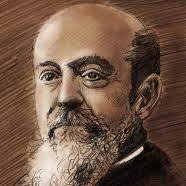
Theodore Lothrop Stoddard (1883-1950) was an American political scientist, historian, journalist, anthropologist, eugenicist, pacifist and anti-immigration advocate who wrote a number of books which are cited by historians as prominent examples of early 20th-century scientific racism.
During the early days of World War II in Europe, he spent four months as a journalist for the North American Newspaper Alliance in Nazi Germany, receiving preferential treatment from Nazi officials. However, Stoddard was relatively nonpartisan in his coverage of the Nazi regime in Into The Darkness , which was the book he wrote about his experiences during those four months.
From the dustjacket flap: "The deeply tragic error of Europe's leading statesmen has always been in underestimating Nazi strength and the practically incredible efficiency of Nazi organization. Here is the first book since the conflict started to give an intimate, inside picture- without prejudice, without sentiment- of Germany today, and at war." Also: "Into The Darkness, however, is not a "war" book. It is a book of facts nowhere else to be found in print. It is a tonic book for American readers, disturbed and dissatisfied by a censor-ridden press."
A essential, contemporarily written book concerning Nazi Germany "as it was" in the early days of WWII (and at the height of their power) prior to the American entrance into the war.
Theodore Lothrop Stoddard (June 29, 1883 – May 1, 1950) was an American political scientist, historian, journalist, anthropologist, eugenicist, pacifist, and anti-immigration advocate.
Thousands, tens of thousands of books have been written about this period of history. However, this is a bizarrely real account from the ground, free of any sensationalism. The author travels throughout Germany -and part of Central Europe- during the earlier stages of the war. We takes trains and taxi, sometimes an adventure in itself, experiences food rationing and blackouts, examines every aspect of social life with the eye of the reporter and the sociologist. He faces real, daily-life issues as he interviews real people, from the humblest dairy farmer to Adolf Hitler himself. A very detailed picture, with curiosity and truth-seeking as the only lense, far from any cartoonish representation. Interesting how the book gets darker as the weight of war grows more overwhelming.
For anyone curious about the groceries of a German housewife, to the spirit de corps of the SS; highly recommended.
Incredible account of Nazi Germany from a slightly sympathetic but ultimately neutral American.
I've spent most of my life consuming media about and researching the third Reich but I've never actually came across much information on many of the subjects in this book, if you're at all interested in the nitty gritty of Nazi domestic policy such as labour laws, countryside culture, rationing and the like then this book is the perfect digest for a proper understanding of how it all worked.
Most importantly though is this book contains interviews and appearances of many Nazi leaders including Hitler, Himmler and Goebbels, although these are all quite quick and indirect in nature.
I would recommend this book to anyone who actually wants to learn about Germany and not get propagandized to.
One of the most interesting reports on the third reich. Highly recommended to those that are interested in reading primary sources of americans in Germany 1940. He personally meets Goebbels, and has a meeting with Adolf, but what is more interesting perhaps is his conversations with the every farmer or worker. He visits a soap factory and gives some insight on the average mindset of the the German population.
Fantastic! Would give more stars if I could. Written by an American newspaper correspondent who spends 4 months in Germany from October 1939 through February 1940. He has an audience with Hitler and interviews very high-ups in the NSDAP party, including Himmler. The most fascinating part is reading it knowing what we know now about what happened to the Third Reich. Very engagingly written. I couldn’t put it down.
This book is adapted from a series of newspaper columns that the author wrote concerning his trip to Germany from October 1939 through January 1940. During that trip the author was able to interview Hitler, Goebbels, Himmler, Walter Darre (the Agriculture minister) and other National Socialist figures along with Joseph Tiso, the president of Slovakia. The author goes into detail on the rationing of food and clothing. The government had taken into account the British blockade which had been so effective against Germany in the First World War. There is a good description of the National Socialist agricultural program, and also industrial policies. Stoddard spoke with both factory workers and Robert Ley, the head of the Labor Front.
The book is neutral in tone; it neither condemns nor praises the National Socialist regime. Stoddard was a supporter of eugenics and he does show a great deal of interest in the eugenics policies of the German regime. He visited a eugenics court that was reviewing several cases of proposed sterilization. German policy towards the Jews is only sparingly mentioned. He does record a derogatory remark about Jews made by a letter carrier in a Jewish neighborhood in Berlin. Stoddard writes that most of the German population actually thought little about the Jewish question because they felt that it had already been solved. Regarding morale, the German people were not really in favor of the war but they also felt that they had no choice but to fight: that Britain was trying to prevent Germany from assuming its rightful place as the dominant power in Central Europe. No argument is made that the Nazis intended to conquer Europe, let alone the world, but that they just wished to be the dominant power in Mitteleuropa.
Stoddard’s trip took place before bombing began. The darkness the title refers to is the darkness of the blackout regulations in Germany. Aside from that gloom and the rationing, the book describes a country at peace, a peace that would soon come to an end.
A great, accurate, and sober report that describes the conditions of wartime Germany from late fall 1939 to early winter 1940. Stoddard gets interviews with many of the foremost personalities of the regime and vividly describes the conditions of rationing that the German people had to go through in order to attempt to achieve victory (keep in mind, this was when Germany and Russia were, in all appearances, cordial to one another).
Stoddard does a very good job of describing the place of women in German society, the relation of genetics and eugenics to national policy, the Labor Front, the Hitler Youth, and all other organizations that made up the framework of National Socialist Germany. I truly have not read a better first-hand description of all of these organizations, and Stoddard describes them very impartially, such that one can actually learn about what was going on in Germany at the time, instead of panicking in a hysterical fit.
This is a very fascinating book. Most WWII themed books focus on the war itself, not to mention the allies' side of the conflict. This book breaks the mold by not only showing you what the war was like from the German perspective but also by showing you what it was like for the average citizen instead of a soldier on the frontline. The author describes his personal experiences during his brief stay, explains how the regime has changed life for Germans, and even manages to get an audience with Himmler and the Führer himself. All in all an incredibly interesting book I would recommend to the serious reader interested in more than just the fighting.
In 1949 Lothrop Stoddard was tasked by the US State Department to show the Shah around Washington DC, a prestigious position Stoddard earned for HIS ACCURATE REPORTING during WW2. The Sunday Star ran a nearly full page article about the Shah's excellent leadership of Iran before his arrival.
Very good primary source on the wartime Third Reich. Contains interviews with Hitler, Himmler, and intelligent commentary on other observed parts of life. The author is not biased.