Fake it so Real takes on the fallout from a punk-rock lifestyle—the future of “no future”—and its effect on the subsequent generations of one family. In June of 1983, Gwen, a gnarly Nancy Spungen look-alike, meets Damian, the enigmatic leader of a punk band. Seven years and two unplanned pregnancies later, Damian abandons Gwen, leaving her to raise their two daughters, Sara and Meg, on her own.
The voices of Gwen, Sara and Meg weave a raw and honest tapestry of family life told from the underbelly, focused on the grey area between right and wrong, the idea that we are all equally culpable and justified in our actions, and the pain and ecstasy that accompany a life lived authentically.
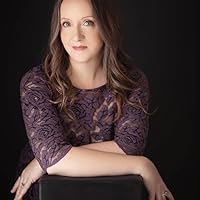
Susan Sanford Blades is a writer living on the traditional territory of the lək̓ʷəŋən people - the Songhees and Esquimalt nations (Victoria, British Columbia, Canada). Her debut novel, Fake It So Real (Nightwood Editions, 2020) won the 2021 ReLit Award in the novel category and was short-listed for the 2021 Ethel Wilson Fiction Prize. Her short fiction has been published in The Journey Prize Stories 32: The Best of Canada's New Writers (McClelland & Stewart, 2020) and has been published widely across Canada as well as in the United States and Ireland. Sections of her novel-in-progress have recently been published in Gulf Coast, The Malahat Review, and The Masters Review.
Most of the chapters in this book have been previously published in literary journals, magazines, and anthologies. The writing is strong and intricate; every sentence is carved, whittled, chiseled.
The book as a whole invites a discussion on what actually is a novel? Do linked stories make a novel? While reading I was distracted by the absence from the text, for protracted periods, of people who were supposedly the main characters (often they aren't even in the lives of each other). Each chapter is told from a first person point of view, and the reader has to figure it out. Overall, the writing made me go, wow, but I craved more of a narrative thrust, or at least something to hang on to to bring me along. Perhaps this "absence" is meant to reflect a theme, perhaps uncertainty is meant to evoke the reality of the characters, but . . .
I was definitely of two minds about this. Each chapter is strong, and raw and beautiful and jagged and all the rest, and any one of them would have been completely satisfying if I had read it in a journal. In this format, as a novel, I loved it and yet I didn't. Does my complicated reaction reveal something about my reaction to the characters themselves in all their flawed glory? Perhaps.
For what is intended to be a positive review, I fear I sound negative. Obviously, the novel stirred things up in this reader, gave me lots to think about and that is a good thing. 4.5 stars.
One could say that Susan Sanford Blades writes with a unique edgy freshness that breaks the rules and blows the mind in the most satisfying way, but that wouldn’t be diving deep enough. This book broke my heart over and over again, and I relished in the breaking. It feels like my life—even though it doesn’t resemble my life in its events at all, it FEELS like life feels. The emotional veracity, the deep and tangled history of inherited trauma—the way trauma doesn’t register as trauma because of its numbing/truncating impact on us. I fell in love with each of these broken and breaking women, so skillfully, artfully, deliciously rendered—so real. Fake It So Real is a must-must-must-read. You’ll want to recommend it to everyone. You’ll wear it like an aura for days afterwards.
Oh wow. This book reached into my throat just to tear out my heart and play hacky sack with it. Bravo! Bravo! That’s all I can say. I can’t wait to read Susan’s next work.
Shoutout to Shepp’s relationship with the children’s librarian. Would love to know which GVPL branch it took place at?
I really enjoyed this book. Not something I would have normally picked up but really glad I did. The chapters were individualistic and well thought out to the entire story. There was a raw sense to characters and events within the book if that makes sense; thoughts and perspectives through the eyes of three main characters as they go through life and deal with life. As a final note Susan really captivates the reader with her fresh and direct writing, and worth reading!
"I want him to be as awful as I imagine him to be. To live up to my fear he won't return home at the end of each day. Because the alternative, the stripping off layers of yourself and feeding them to another like slices of prosciutto, feels infinitely more dangerous than solitude."
Fake It So Real by Susan Sanford Blades is the best kind of gut-punch. It’s about faltering connections—impulsivity, lack of commitment, insecurity. Inherited generational poor choices. But lurking underneath these failures of will, if you can hear them faintly crying out under the bombast, bluster and insecurities, are real people with a longing for a less needy, less messy kind of love.
What a ride! Expect bold, bodily, sometimes gross, sometimes flaming hot, sometimes hilarious accounts of real-life sex acts in real-life places (kitchen counters, dumpsters, closets) with all the desire, excretions, desperation and boredom as befits the true human experience. (She should win an award for that alone!) Sanford Blades is ace at writing from a very physical place—and often comedically—where characters are constantly in a struggle with partners, family members and their own selves. But there are tender, heart-breaking moments, too. The wonder and weirdness of motherhood. The functional détente of co-dependency. Early love.
I loved Sanford Blades’ gutsy writing. Her steamroller, pile-on phrases, bruising irony and rapid-fire dialogue will knock your Doc Martens off. Her sentences are slam-dunk figurative gold. Try this on your ear: “…fingers stitched together like patronizing soldiers as he mansplains”; “She plunged toward him like a spoon through Jell-o”; “...I could hear the washer rock like it was imbalanced with a thick, nymphomaniacal rug.”
This book is edgy, risky, visceral. Not a straight-up through-course one POV affair, the narrative voice shifts, like the unhinged lives of its characters. If you crave simple redemption, look away. This novel is an accomplished account of the agony of life’s imperfection. It’s in the very telling.
Squalor, self-medicating, impulse sex, bad diets. The trials of Gwen, her daughters Meg and Sara and the various failed lovers and husbands who weave in and out of the punk-infused narrative strike the reader hard. We are rooting for all of them, and ultimately we love them for both their flaws and their incredible, mainstream-defying resilience.
Not something I normally do nor am I a writer but I have to say this book really moved me. It is real and raw and I can’t wait to read what Susan Sanford Blades has to write next. A must read.
I want there to be half stars or a 10 point system. This book is firmly between 3 & 4 stars. So: 3.5 or 7 if we had a 10 star system.
I liked it. It was an easy read. There were some chapters that were solid 5s and others that left me wondering if there weren't two authors, trading on and off. The inconsistency in quality of writing was disappointing. It came as no surprise that the much superior chapters had been previously published, this learned, of course, at the end of the book where such info is located. I found the characters sometimes believable and sometimes insufficiently written. The gaps of years between some chapters were not effective as narrative devices and were unproductively jarring/confusing. It does have some redeeming features, obviously! I like to get the crap out of the way first. It's super easy to read. It represents places that are rarely seen in literature; the CanLit canon is heavily focused on either naive pastoral colonialism, one of the 3 major cities (Toronto, Montréal, Vancouver,) or Ontario. Thankfully, the redundant tales of white privileged people are becoming less popular (because who gives AF about Margaret Atwood and other boring white self-involved pseudo-celebrities, FFS!) This book IS very white, another strike against it, but the white people are not portrayed in positive lights at all. And for a novel that takes place in Victoria and Edmonton, it's not inaccurate in the over representation of white people. It is too white though.
Trying to think of why I didn't mind reading it now... I guess seeing places I know struck a chord. Really, about the only reason I continued on.
I didn't think it was awesome, but it's okay. Airplane reading, should anyone fly again. And better than the colonial crap that is known as CanLit collected and written by white men who are hideous humans.
This was uncomfortably honest enough to make me squirm and beautiful enough to make my heart ache at the same time. It was also funny and relatable and went places we all go but are usually too ashamed to really see. I am not a Punk Rock fan but have observed the sub culture from a distance and been fascinated. This took me deep AND in Victoria, BC which helped me feel even more connected. I loved it from the time I picked it up until the moment I put it down. It was so damn refreshing as I’ve not had that in a couple mos and was losing hope in contemporary fiction (not to be one of THOSE people)...
This book was compelling. Very well written with a strong, unique voice. I loved all three characters, especially Meg, but felt sad for all of them. I read this on vacation and it struck me that none of these characters ever were lucky enough to go on vacation. The mother daughter dynamics were so real, so hopeless yet full of hope. The setting in my home town, so familiar, so unique, so rarely written about. The foot in the shoe! Ican't wait for the next novel by this talented author.
Edgy, raw writing, unflinching in its portrayal of the dysfunctional legacy of one family. The brilliant first chapter, Poseurs, got me hooked on the character Gwen and I was disappointed to leave her so soon, pleased to meet up with her later in the book. Gwen's life and those of her daughters are nothing to envy and I felt heartbroken for them all.
Sandford Blades opened my eyes to the enigmatic world of punk. Her characters are real, raw and intriguing. Not far into the book I felt I knew them all personally. A haunting, horrific and hilarious story of punk lives colliding with the “norm”. Where family and the need to belong matter in a typecast world of high expectations. Beautifully written. A most enjoyable read.
We encounter Gwen and her daughters Sara and Meg at multiple points between the mid 80s and the near present, as Gwen struggles and fails at relationships, parenting, sobriety. Sara reacts by rebelling, then leaving. Meg stays and tries for a "normal" life. More connected short stories than a novel, but the last story tied everything together beautifully.
Good collection of stories/novel. I think my favourite story/chapter is 'Angling'. This dude thinks he's on a date with a hot younger woman, but she's really his daughter. Being told in second person probably makes this one special too. It's not every day that you read one written so well this way. Bravo.
Witty, biting, funny, devastatingly vivid imagery - richly developed characters tied together by a no-bullshit structure in which we spend a little bit of time seeing the world from each character's perspective. The idea of "family resemblance" through story is kind of an interesting one, I really enjoyed this.
3.5 rounded up. This was hard to rate. The writing relies heavily on excessive use of metaphoric adjectives, and at times, it is beautifully poetic. Unfortunately, at other times, it misses and just seems like one too many, unnecessary and inapt descriptors. Rounding it up because the story was great and the beautiful moments were brilliant!
Loosely inter-related short-stories without underlying thematic intention à la Jennifer Egan. Almost DNFed a few times during first two, but the stories improve after that point. Cover art, title, and script font seem unfortunate, reader-repellent choices. On to the next book box this author-distributed copy shall go.
A sad story about three very believable characters and the compromises and struggles that women so often experience. Made me appreciate all the advantages I’ve benefited from.