

What do you think?
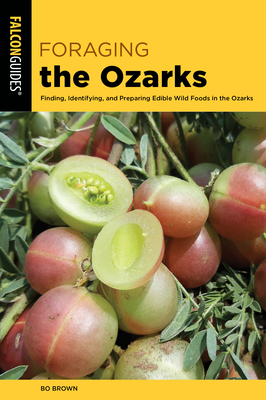
Foraging the Ozarks: Finding, Identifying, and Preparing Edible Wild Foods in the Ozarks
The Ozark Mountains in Missouri and Arkansas have had a long history of foraging, ever since the earliest white settlers came from the Appalachians and survived off of what they could find, trap, and hunt. Today, foraging remains a major activity among the outdoor community there, supported in large part by established buyers of local edibles such as ginseng, wild berries, and nuts. Foraging the Ozarks, written by local wilderness expert Bo Brown, highlights about a hundred commonly found edibles in the Interior Highlands, from ubiquitous herbs to endemic species. With sidebars, recipes, helpful tips, and toxin warnings throughout, Foraging the Ozarks is the only guidebook the Ozark outdoor enthusiast will need to pick it, cook it, and eat it.
- GenresNonfiction
256 pages, Paperback
Published July 1, 2020
Ratings & Reviews
Friends & Following
Create a free account to discover what your friends think of this book!
Community Reviews
Displaying 1 - 7 of 7 reviews

March 22, 2025
I do a lot of hiking in the Ozarks and write books set in the Ozarks, so this book is very interesting. So many foraging books list the common 'weeds' growing in the garden and lawn, but ignore those out on the hills and in the ravines.
This book has a section on each of the plants discussed. The section gives comments, description, habitat, uses and a warning/comment section. Many offer recipes.
Each plant is illustrated with good photographs. Some look alikes are included.
The book is packed with information, but very readable.
This book has a section on each of the plants discussed. The section gives comments, description, habitat, uses and a warning/comment section. Many offer recipes.
Each plant is illustrated with good photographs. Some look alikes are included.
The book is packed with information, but very readable.
August 15, 2020
Super book about finding all sorts of treasures in the Ozarks and Missouri. Lots of pictures for reference.
January 12, 2023
Bo Brown is a wilderness expert and shares hundreds of commonly found edibles in the Ozarks. Some are fruits, herbs, nuts, or ones you can use like lettuce or in soups.
He shares recipes, helpful tips, and toxin warnings.
I like his insights into how some of the herbs or fruits have been used for medicinal purposes by Native Americans or frontiersmen.
Large photos that include stems, flowers, fruits, or seeds, help to identify what to look for in the woods.
Also, he goes into detail in the preparation of what it takes to eat these foraged items. Some you can eat raw whereas others you might have to skin or cook.
It is a guidebook I will turn to when I go out foraging.
He shares recipes, helpful tips, and toxin warnings.
I like his insights into how some of the herbs or fruits have been used for medicinal purposes by Native Americans or frontiersmen.
Large photos that include stems, flowers, fruits, or seeds, help to identify what to look for in the woods.
Also, he goes into detail in the preparation of what it takes to eat these foraged items. Some you can eat raw whereas others you might have to skin or cook.
It is a guidebook I will turn to when I go out foraging.
February 5, 2024
Bo is a phenomenal forager and an excellent teacher. This is one of, if not the best, books on edible plants for the Midwest region of N. America, though many of the plants discussed can be found throughout the US.
The plants all have good descriptions and excellent photographs. Recipes, foraging tips, and essential identification are easy to understand and are incredibly useful. Warning and toxic look alikes are mentioned for relevant plants and are very clear.
No good forager should depend on a single source for identifying new wild edibles, but this is the one I turn to first the most often.
The plants all have good descriptions and excellent photographs. Recipes, foraging tips, and essential identification are easy to understand and are incredibly useful. Warning and toxic look alikes are mentioned for relevant plants and are very clear.
No good forager should depend on a single source for identifying new wild edibles, but this is the one I turn to first the most often.

June 7, 2021
This book was AWESOME! Super comprehensive and exactly what I was looking for in an edible foraging guide...PLUS, the vast majority of these plants can also be found outside the Ozarks, so it’s largely relevant elsewhere! My parents live near Springfield, MO where he’s based, so I can’t wait to try and participate in a foraging walk or lecture that he provides!
September 9, 2021
Everything you ever wanted to know

January 5, 2026
Best local foraging book I've seen!
Displaying 1 - 7 of 7 reviews