

What do you think?

Literal Madness
Here in one volume are three subversive novels from mastermind Kathy Acker, tackling the perils of erotic entanglement in the face of the modern world's corrupted moral and political values.
Kathy Goes to Haiti follows a young writer from New York traveling along in Port-au-Prince. There she meets Roger and they begin a pornographic affair of intellectual exploration. In My Death My Life by Pier Paolo Pasolini, the deceased Italian filmmaker solves his own mysterious murder, featuring cameos from Romeo, Juliet, Hamley, and Macbeth. Florida—a surreal rendering of John Huston's film Key Largo—finds a cast of depraved characters bracing for a hurricane. Dreamlike, incisive, scathingly satirical while fiercely compassionate, the three books collected in Literal Madness form a multifaceted triptych that exemplifies Acker's clear-eyed, unflinching approach to reinventing fictional narrative.
Kathy Goes to Haiti follows a young writer from New York traveling along in Port-au-Prince. There she meets Roger and they begin a pornographic affair of intellectual exploration. In My Death My Life by Pier Paolo Pasolini, the deceased Italian filmmaker solves his own mysterious murder, featuring cameos from Romeo, Juliet, Hamley, and Macbeth. Florida—a surreal rendering of John Huston's film Key Largo—finds a cast of depraved characters bracing for a hurricane. Dreamlike, incisive, scathingly satirical while fiercely compassionate, the three books collected in Literal Madness form a multifaceted triptych that exemplifies Acker's clear-eyed, unflinching approach to reinventing fictional narrative.
410 pages, Paperback
First published January 1, 1987
About the author
Kathy Acker
86 books1,273 followersBorn of German-Jewish stock, Kathy Acker was brought up by her mother and stepfather (her natural father left her mother before Kathy was born) in a prosperous district of NY. At 18, she left home and worked as a stripper. Her involvement in the sex industry helped to make her a hit on the NY art scene, and she was photographed by the newly fashionable Robert Mapplethorpe. Preferring to be known simply as 'Acker' (the name she took from her first husband Robert, and which she continued to use even after a short-lived second marriage to composer Peter Gordon), she moved to London in the mid-eighties and stayed in Britain for five years.
Acker's writing is as difficult to classify into any particular genre as she herself was. She writes fluidly, operating in the borderlands and junkyards of human experience. Her work is experimental, playful, and provocative, engagingly alienating, narratively non sequitur.
Acker's writing is as difficult to classify into any particular genre as she herself was. She writes fluidly, operating in the borderlands and junkyards of human experience. Her work is experimental, playful, and provocative, engagingly alienating, narratively non sequitur.
Ratings & Reviews
Friends & Following
Create a free account to discover what your friends think of this book!
Community Reviews
Displaying 1 - 30 of 31 reviews

September 4, 2018
I'm working on a project of reading Acker's complete works in reverse chronological order (don't ask, it just sort of happened that way) so I only read My Death My Life by Pier Paolo Pasolini this round so far. (Now I've re-read Kathy Goes to Haiti and my review is under the stand-alone edition, the one I first read back in '86 while traveling in Europe.) My heavens! Although I give students in my creative writing course a little bit of the first chapter every semester, I'd totally forgotten how great this whole novel is. Of all of Acker's longer, later novels, this--I guess the first of those longer later novels--may be my favorite. She really hits/uses/abuses/parodies and pays homage to so many of my own favorite texts and writers--Pasolini, Shakespeare (so much Shakespeare in this one!), the Brontes (not to mention shout outs to the Fall, Gang of Four, and some lyrics stolen from Siouxie Sioux) and even a couple of movies I like. So, like, I can relate, man.
1986 was a watershed year for me too. It's the year I finished uni., sold everything, saved up $3,000 and escaped to Europe to write a novel. I finished my nine months abroad--after a brief homeless stint in Amsterdam--back working in the same used bookstore in North Beach in San Francisco where I began the year, but with a whole new outlook on life, a new doomed love affair, and a completed first draft of a novel in my pocket--my first. There, the bookstore where I worked, or City Lights next door, is where I must have picked up this sweet hardcover first edition of Literal Madness too. And I guess I hadn't read it since then although I've carried it to NYC, and finally to Florence where I have resided for the last 20+ years.
You know what My Death My Life's about--and also, partially, what the novel I wrote in '86 is about as well? The single most enduring legacy of European culture: militarism and endless war. (There are three versions of MacBeth in My Death My Life!) I guess you could call the theme of the pastiche violence on a more general or personal level--as in Pasolini's murder--but of course that murder was probably an execution and therefore political and, therefore, ultimately, part of the endless ongoing war between Europe and the rest of the world (race wars) and/or the rich and poor (which are always framed by the state's media stooges as race or religious wars). Of course this theme comes from U.S. writers. The U.S. is Europe's biggest and strongest child and whipping boy and star pupil. That's why they have to whip us--their bad conscience. They know, no matter how crass, that we're a real chip off the old block.
FLORIDA
Been stalled a bit with the Acker re-read project. Got going today by reading the very short third novel in this collection. As a big fan of both Film Noir and Acker's ease of imitating almost any prose style, I loved it absolutely. Certainly Florida deserves a stand-alone publication, perhaps in the Penguin Modern series. It's short, but it's pithy and sassy redux of the film Key Largo is witty, fun, feminist, and, in its way, equally effecting and beautiful. It does kind of fizzle w/out a dramatic conclusion, but the parody of a Lauren Bacall 40's song number with which it concludes is fabulous enough to almost make up for that. (4 stars)
1986 was a watershed year for me too. It's the year I finished uni., sold everything, saved up $3,000 and escaped to Europe to write a novel. I finished my nine months abroad--after a brief homeless stint in Amsterdam--back working in the same used bookstore in North Beach in San Francisco where I began the year, but with a whole new outlook on life, a new doomed love affair, and a completed first draft of a novel in my pocket--my first. There, the bookstore where I worked, or City Lights next door, is where I must have picked up this sweet hardcover first edition of Literal Madness too. And I guess I hadn't read it since then although I've carried it to NYC, and finally to Florence where I have resided for the last 20+ years.
You know what My Death My Life's about--and also, partially, what the novel I wrote in '86 is about as well? The single most enduring legacy of European culture: militarism and endless war. (There are three versions of MacBeth in My Death My Life!) I guess you could call the theme of the pastiche violence on a more general or personal level--as in Pasolini's murder--but of course that murder was probably an execution and therefore political and, therefore, ultimately, part of the endless ongoing war between Europe and the rest of the world (race wars) and/or the rich and poor (which are always framed by the state's media stooges as race or religious wars). Of course this theme comes from U.S. writers. The U.S. is Europe's biggest and strongest child and whipping boy and star pupil. That's why they have to whip us--their bad conscience. They know, no matter how crass, that we're a real chip off the old block.
FLORIDA
Been stalled a bit with the Acker re-read project. Got going today by reading the very short third novel in this collection. As a big fan of both Film Noir and Acker's ease of imitating almost any prose style, I loved it absolutely. Certainly Florida deserves a stand-alone publication, perhaps in the Penguin Modern series. It's short, but it's pithy and sassy redux of the film Key Largo is witty, fun, feminist, and, in its way, equally effecting and beautiful. It does kind of fizzle w/out a dramatic conclusion, but the parody of a Lauren Bacall 40's song number with which it concludes is fabulous enough to almost make up for that. (4 stars)

August 11, 2009
Three novels by Kathy Acker. In Kathy Goes to Haiti, the protagonist, a white girl named Kathy, goes to Haiti. There, she finds many males suggesting themselves as possible boyfriends or husbands. They tell her it’s because women are not supposed to be independent in Haiti. Kathy starts seeing one of the men, and much of the novel is about their relationship. While Kathy is in Haiti, she learns about its economy and culture. In a number of ways, the novel reflects what Fredric Jameson characterized as a “waning of affect” in postmodern cultural work. For instance, the novel does not employ the conventional plot structure in which there is a rise in tension, a crisis, a climax and a denouement. There is little character development, and little change in the situation in Haiti. The narrator describes different locations, but these descriptions do not emphasize the picturesque; in some instances the descriptions are simply repetitive. The narrator describes Kathy’s sexual experiences, but in a way as to de-eroticize them. Moreover, the narrator employs simple sentence structures of the sort one might find in books written for children who are learning to read. If there is any kind of conventional psychological tension in this novel, it is probably most evident in the dialogues between characters. A conversation between Kathy and some boys that goes around in circles is particularly good.
In My Life My Death by Pier Paolo Pasolini, Acker represents the Italian filmmaker Pasolini attempting to solve his own murder. Acker experiments with language, for instance using puns, wordplay and juxtapositions that sometimes read like surrealist poetry. She switches between narrative and dramatic modes. She plagiarizes writers like James Joyce and Robbe-Grillet, and writes new dialogue for characters like Hamlet, Ophelia, Romeo, Juliet, Catherine and Heathcliff (the speeches of the latter characters are in French). These experiments, as well as passages making reference to Hiroshima, the Irish “troubles,” and Nicaragua, contribute to the novel’s theme of the relations between power and language. While Pasolini narrates some of the novel, another narrator narrates other passages; in many instances it is difficult to determine who is narrating. Many of the events in the novel are fantastically violent.
According to the blurb on the back cover, Florida is a re-telling of the film Key Largo. I can’t comment because I have not seen the film. Acker’s narrative is fragmented into descriptions of events and unattributed dialogue.
Acquired Aug 9, 2009
Attic Books, London, Ontario
In My Life My Death by Pier Paolo Pasolini, Acker represents the Italian filmmaker Pasolini attempting to solve his own murder. Acker experiments with language, for instance using puns, wordplay and juxtapositions that sometimes read like surrealist poetry. She switches between narrative and dramatic modes. She plagiarizes writers like James Joyce and Robbe-Grillet, and writes new dialogue for characters like Hamlet, Ophelia, Romeo, Juliet, Catherine and Heathcliff (the speeches of the latter characters are in French). These experiments, as well as passages making reference to Hiroshima, the Irish “troubles,” and Nicaragua, contribute to the novel’s theme of the relations between power and language. While Pasolini narrates some of the novel, another narrator narrates other passages; in many instances it is difficult to determine who is narrating. Many of the events in the novel are fantastically violent.
According to the blurb on the back cover, Florida is a re-telling of the film Key Largo. I can’t comment because I have not seen the film. Acker’s narrative is fragmented into descriptions of events and unattributed dialogue.
Acquired Aug 9, 2009
Attic Books, London, Ontario

June 29, 2009
I'd been curious about Kathy Acker; I knew of her work by reputation only: placement in the indie/queer section in the late 90s at Powells Bookstore in Portland, Ore.
If you were gay, bi, pierced, curious, protoemo, a mopey pomo or overselfmedicated on Prozac and taking a lot of long drives to Powells in the rain you, too, no doubt saw the Ackerthologies.
I want to note that I recently learned through a review that Acker once did an interview with Alasdair Gray - author of the delightful Poor Things - that the reader found "interesting and insightful", and trusting that reader-reviewer's instincts (she's got a good scorecard when it comes to literature; a true advance scout) I picked this up.
And it was the most heroic thing I ever did.
If you were gay, bi, pierced, curious, protoemo, a mopey pomo or overselfmedicated on Prozac and taking a lot of long drives to Powells in the rain you, too, no doubt saw the Ackerthologies.
I want to note that I recently learned through a review that Acker once did an interview with Alasdair Gray - author of the delightful Poor Things - that the reader found "interesting and insightful", and trusting that reader-reviewer's instincts (she's got a good scorecard when it comes to literature; a true advance scout) I picked this up.
And it was the most heroic thing I ever did.

December 9, 2015
I picked this book up in the Yaddo library because I liked the title. I had never heard of Kathy Acker so had no idea what to expect. Wow. So now I know. I only read the first novel in this collection, "Kathy Goes to Haiti". Apparently this is queer/punk/post-punk/feminist literature? Anyway, whatever it is, I kind of loved it. You can't go wrong with lines like "Kathy's cunt is silent, ready, nothing." Will definitely be checking out more of her stuff in the future.

April 13, 2024
Florida is brilliant, DIY Flannery O’Conner

January 27, 2014
Literal Madness really deserves three separate reviews, one for each of the two short novels and one short story that are often published together, since they vary widely in subject matter and writing style. As it happens, the three are almost always published as a collection of the novels Kathy Goes to Haiti and My Death My Life by Pier Paolo Pasolini and the short story “Florida,” so a useful review should also combine them.
Kathy Goes to Haiti uses a narrative of the protagonist’s trip to Haiti and the people that she meets there as a constrained example of broader categories of human relationships, both interpersonal and political. It does this very well, and without sacrificing the protagonist’s (Kathy’s) humanity by turning her into some sort of straw man – a humanity which is reinforced by several stream-of-consciousness interludes that give the author the chance to add her own voice to the fictional character that bears her name. This book, alone, would probably merit a five-star review. It reminded me to a certain extent of The Sun Also Rises in terms of its overall structure and purpose, although it is much better written and its central character is more sympathetic and easier to identify with.
In contrast, My Death My Life by Pier Paolo Pasolini reminded me of nothing so much as that time in high school when you’re given a writing assignment and, because you’ve already gotten into college and are long past caring, you just get high and write whatever ridiculous nonsense wanders into your head, only to get the damn thing back a week later with “A+ VERY Theatre of the Absurd” scrawled in the margin in red pen, leaving you to wonder if you shouldn’t have been trying all along. This may describe the exact process by which this book was written and published.
Ostensibly, this book is about Pasolini, an influential Italian filmmaker who was murdered under odd circumstances in 1975, solving his own murder with the aid of various fictional characters drawn from other works, who are each given their own modern voice, Kathy Acker style, in a series of otherwise unrelated and entirely separate chapters. It conjures up the vision of Pasolini going door to door in Hell trying to find the killer and finding a different bizarre, dysfunctional scene behind each one like it’s an episode of The Goon Show. The author uses each chapter to explore a different and invariably experimental narrative style, including writing it as a play, as near-meaningless stream of consciousness poetry, as straight prose and, in one case, middle-school franglais. In the end, the whole thing doesn’t work. Individually, some of the writing is very clever, and Acker is often successful at exploring some of the unstated power and gender relationships among, for example, Shakespeare characters with her typical incisive language, but her enthusiasm for trying new ways to express characters that were otherwise fixed parts of the cultural canon comes at the price of clarity, meaning and linear thought progression. The postmodern consensus, which the author obviously supports, is that these things don’t matter; it turns out that, after a certain point, they do.
“Florida,” is by far the shortest of the three “novels” that make up Literal Madness, and is better described as a short story. Based on the now-obscure 1948 Humphrey Bogart/Lauren Bacall film Key Largo and running to only about a dozen pages, it leaves one with the impression that Bogart and Bacall would have made a more memorable movie if Kathy Acker had been old enough to write and direct it. In Florida, she is doing essentially the same thing that she did in each chapter of My Death My Life—exploring the unstated but highly meaningful power and gender relationships between already-established characters -- but in this case she seems to have finally found the right voice to do it in.
In short, this book is worth buying for Kathy Goes to Haiti alone, and Florida is also impressive, but the reader shouldn’t take My Death My Life too seriously.
Kathy Goes to Haiti uses a narrative of the protagonist’s trip to Haiti and the people that she meets there as a constrained example of broader categories of human relationships, both interpersonal and political. It does this very well, and without sacrificing the protagonist’s (Kathy’s) humanity by turning her into some sort of straw man – a humanity which is reinforced by several stream-of-consciousness interludes that give the author the chance to add her own voice to the fictional character that bears her name. This book, alone, would probably merit a five-star review. It reminded me to a certain extent of The Sun Also Rises in terms of its overall structure and purpose, although it is much better written and its central character is more sympathetic and easier to identify with.
In contrast, My Death My Life by Pier Paolo Pasolini reminded me of nothing so much as that time in high school when you’re given a writing assignment and, because you’ve already gotten into college and are long past caring, you just get high and write whatever ridiculous nonsense wanders into your head, only to get the damn thing back a week later with “A+ VERY Theatre of the Absurd” scrawled in the margin in red pen, leaving you to wonder if you shouldn’t have been trying all along. This may describe the exact process by which this book was written and published.
Ostensibly, this book is about Pasolini, an influential Italian filmmaker who was murdered under odd circumstances in 1975, solving his own murder with the aid of various fictional characters drawn from other works, who are each given their own modern voice, Kathy Acker style, in a series of otherwise unrelated and entirely separate chapters. It conjures up the vision of Pasolini going door to door in Hell trying to find the killer and finding a different bizarre, dysfunctional scene behind each one like it’s an episode of The Goon Show. The author uses each chapter to explore a different and invariably experimental narrative style, including writing it as a play, as near-meaningless stream of consciousness poetry, as straight prose and, in one case, middle-school franglais. In the end, the whole thing doesn’t work. Individually, some of the writing is very clever, and Acker is often successful at exploring some of the unstated power and gender relationships among, for example, Shakespeare characters with her typical incisive language, but her enthusiasm for trying new ways to express characters that were otherwise fixed parts of the cultural canon comes at the price of clarity, meaning and linear thought progression. The postmodern consensus, which the author obviously supports, is that these things don’t matter; it turns out that, after a certain point, they do.
“Florida,” is by far the shortest of the three “novels” that make up Literal Madness, and is better described as a short story. Based on the now-obscure 1948 Humphrey Bogart/Lauren Bacall film Key Largo and running to only about a dozen pages, it leaves one with the impression that Bogart and Bacall would have made a more memorable movie if Kathy Acker had been old enough to write and direct it. In Florida, she is doing essentially the same thing that she did in each chapter of My Death My Life—exploring the unstated but highly meaningful power and gender relationships between already-established characters -- but in this case she seems to have finally found the right voice to do it in.
In short, this book is worth buying for Kathy Goes to Haiti alone, and Florida is also impressive, but the reader shouldn’t take My Death My Life too seriously.

July 13, 2022
Caveat Emptor This review is written in a style that the reviewer thinks Kathy Acker would approve. The pornography is forthright and uses the same vocabulary Acker did; she meant to be provocative and transgressive, so any decent review should be too.
Kathy Acker’s underground travelogue, Kathy Goes to Haiti, 1978, has so many literary antecedents, most of which only occur if an intrepid reader gets to the end of the work and mulls over the text, that it is hard to decide where to begin in clarifying it. Why not just delve in without rhyme or reason, much like the eponymous heroine, who shows up at Port-au-Prince airport one day with no purpose and—within pages—is sucking the penis of the benevolent cab driver who want to be her “boyfriend”? Don’t jump to conclusions, however, that this book is mere pornography or even highbrow pornography in the vein of Alexander Trocchi. Yes, Kathy Acker was influenced by the Beats.* Her “Naked Lunch” (quoted here to emphasize the conversational manner in which the title came about, after a line by Allen Ginsburg) is a frank account of a twenty-nine year-old white American writer traveling alone in a very poor developing nation. Whether it be factual memoir or disturbing fiction, the narrative picks up steam chapter by chapter and—by the end— leaves the reader with an existential crisis similar to that of the protagonist.
Acker’s prose is simplistic, painstakingly descriptive, and laconic. It is deliberately clunky, perhaps to emulate both 70’s era mainstream pornography like Harold Robbins as well as underground classics like those written by Nathanael West, specifically, A Cool Million. There are entire pages of dialogue in which it is hard to infer which character is speaking; some speak twice in a row. And then there is the absurdity of the descriptions, like the ongoing dialogue as Robert, Kathy’s eventual love interest, blathers on and on, all while eating her cunt. There is no joy or horror in the descriptions of anything that Kathy sees or experiences. The sex is emphatically unsexy. It happens quicky with the penis going in and out of an orifice in the midst of desultory dialogue. Anal sex is featured often, once after an accidental non-specific thrust and once—as any inferring, inciteful reader can see coming—during vengeful break up sex. All this in spite of the fact that Kathy has been suffering the after-effects of dysentery.
The graphic sexual depictions seem to mock the faux euphoria of a sex tourist like Henry Miller. Sex is power and Acker’s heroine has it with one partner and lacks it with another. Unlike Miller, Kathy’s reputation among the locals suffers. The pre-teens she is friendly with proclaim forthrightly that she is a prostitute in their pidgin English; all the dialogue, excepting those with Robert, who spent time in the U.S.A., has aspects of pidgin English which adds to the feel of clunky prose.
The first edition has a pulp feel, right down to typos that are almost too numerous for a coherent copy editor to have tolerated.** The black and white drawings by Robert Kushner play an important role in emphasizing that all the sex is interracial; Acker does not. The simple illustrations enhance the work much in the way that Moby-Dick is enhanced with Rockwell Kent’s illustrations.*** The scenes depicted are often the sex scenes, but lacking the pornographic detail of the text.
Like Melville early in his career, Acker is deliberately provocative; her protagonist broaches polite cultural boundaries and mores. Think Melville’s sensational inaugural offering, Typee, but retitled, Herman Goes to Tahiti, with the sex presented as a power dynamic amidst the squalor of a very poor country or in the hermetic bubble where Kathy carries on with the kept, married son of a rum magnate rather than in a lush tropical setting; the sex scenes would have landed Melville in jail, rather than just eventually shunned by polite, sententiously moralistic literary critics of his era.
Is there a plot in Kathy Goes to Haiti? Acker gives a tacit nod to both Paul and Jane Bowles, but with characters that have enflamed libidos; Kathy simply has an itch that needs to be scratched. While she may not have intended to be a sex tourist, that is the description that is most fitting. Sex is front and center in many chapters, not implied, as it is in Two Serious Ladies. And yet it doesn’t cure whatever ails Kathy—if she is, in fact, ailing at all. She is unapologetic. She doesn’t descend in an unreturnable nightmare spiral like the protagonists in The Sheltering Sky. She is not raped or murdered. Yet, there is no resolution. The world is no bleaker or more pointless as the novel ends as on the day Kathy stepped onto the tarmac in Port-au-Prince. In a sense, Acker is mocking the adventurous travel accounts of the 70’s as affluent Westerners began to take advantage of cheap air travel to visit neglected locales, often with dubious motives. Yes, most twenty somethings who travel are looking for sex, whether it be outright sex tourism or just a natural proclivity to copulate.
I have stressed elsewhere the importance of revisiting literary works periodically to better understand them. I first “read” Kathy Goes to Haiti thirty years ago, but put it down in disgust, falsely thinking that anyone could create pornographic prose and mimic a seemingly dubious vacation like Acker did. While the plot is only marginally linear, there is a culmination, with the chapters getting stronger—and less reliant on sex--as the book progresses. The chapter, “The Children” could be a stand-alone masterpiece. It is probably amongst the chapters initially published in Traveler’s Digest and Perioicals. The annoying conversations and situations that intrepid women traveling alone in a developing nation inevitably face is presented with minimalist flare. Kathy is pestered constantly. The depictions are mundane, aggravating, and recognizable to any solo budget traveler, specifically a woman in her twenties. If anything, the only weakness of the novel is that much of the dialogue that may have taken place in Creole or in rudimentary travel French is presented in bad or pidgin English. There is no rich mélange of language as in Patrick Leigh-Fermor’s buried classic of the Caribbean, The Violins of Saint Jacques. However, since the novel seems to be a deliberate imitation of pulp, that objection is just caviling.
Acker’s Kathy Goes to Haiti has aged brilliantly, much like Perry Henzell’s lost Jamaican film No Place Like Home. Written just at the cusp of the AIDS epidemic, Acker's book evokes a specific era. She transgresses, literary boundaries, gender dynamics, and power relationships better than any critique could ever illustrate. It is about so much more than the tawdry sex, and leaves a reader unsettled, questioning preconceptions on travel, sex, life and literature.
*Desolation Angels is the only Beat work referenced in the text.
**Presumably, these have been corrected in the Grove Press edition where Kathy Goes to Haiti is presented with two of Acker’s better-known texts.
***Or the Barry Moser illustrations in the Arion Press edition of Moby-Dick since faces are never featured, so the reader is never given an idea as to the appearance Kathy or any of the other characters. The Grove press edition lacks the illustrations. If possible, read this work in the original edition. Unfortunately, it is scarce and costs at least $130.
Kathy Acker’s underground travelogue, Kathy Goes to Haiti, 1978, has so many literary antecedents, most of which only occur if an intrepid reader gets to the end of the work and mulls over the text, that it is hard to decide where to begin in clarifying it. Why not just delve in without rhyme or reason, much like the eponymous heroine, who shows up at Port-au-Prince airport one day with no purpose and—within pages—is sucking the penis of the benevolent cab driver who want to be her “boyfriend”? Don’t jump to conclusions, however, that this book is mere pornography or even highbrow pornography in the vein of Alexander Trocchi. Yes, Kathy Acker was influenced by the Beats.* Her “Naked Lunch” (quoted here to emphasize the conversational manner in which the title came about, after a line by Allen Ginsburg) is a frank account of a twenty-nine year-old white American writer traveling alone in a very poor developing nation. Whether it be factual memoir or disturbing fiction, the narrative picks up steam chapter by chapter and—by the end— leaves the reader with an existential crisis similar to that of the protagonist.
Acker’s prose is simplistic, painstakingly descriptive, and laconic. It is deliberately clunky, perhaps to emulate both 70’s era mainstream pornography like Harold Robbins as well as underground classics like those written by Nathanael West, specifically, A Cool Million. There are entire pages of dialogue in which it is hard to infer which character is speaking; some speak twice in a row. And then there is the absurdity of the descriptions, like the ongoing dialogue as Robert, Kathy’s eventual love interest, blathers on and on, all while eating her cunt. There is no joy or horror in the descriptions of anything that Kathy sees or experiences. The sex is emphatically unsexy. It happens quicky with the penis going in and out of an orifice in the midst of desultory dialogue. Anal sex is featured often, once after an accidental non-specific thrust and once—as any inferring, inciteful reader can see coming—during vengeful break up sex. All this in spite of the fact that Kathy has been suffering the after-effects of dysentery.
The graphic sexual depictions seem to mock the faux euphoria of a sex tourist like Henry Miller. Sex is power and Acker’s heroine has it with one partner and lacks it with another. Unlike Miller, Kathy’s reputation among the locals suffers. The pre-teens she is friendly with proclaim forthrightly that she is a prostitute in their pidgin English; all the dialogue, excepting those with Robert, who spent time in the U.S.A., has aspects of pidgin English which adds to the feel of clunky prose.
The first edition has a pulp feel, right down to typos that are almost too numerous for a coherent copy editor to have tolerated.** The black and white drawings by Robert Kushner play an important role in emphasizing that all the sex is interracial; Acker does not. The simple illustrations enhance the work much in the way that Moby-Dick is enhanced with Rockwell Kent’s illustrations.*** The scenes depicted are often the sex scenes, but lacking the pornographic detail of the text.
Like Melville early in his career, Acker is deliberately provocative; her protagonist broaches polite cultural boundaries and mores. Think Melville’s sensational inaugural offering, Typee, but retitled, Herman Goes to Tahiti, with the sex presented as a power dynamic amidst the squalor of a very poor country or in the hermetic bubble where Kathy carries on with the kept, married son of a rum magnate rather than in a lush tropical setting; the sex scenes would have landed Melville in jail, rather than just eventually shunned by polite, sententiously moralistic literary critics of his era.
Is there a plot in Kathy Goes to Haiti? Acker gives a tacit nod to both Paul and Jane Bowles, but with characters that have enflamed libidos; Kathy simply has an itch that needs to be scratched. While she may not have intended to be a sex tourist, that is the description that is most fitting. Sex is front and center in many chapters, not implied, as it is in Two Serious Ladies. And yet it doesn’t cure whatever ails Kathy—if she is, in fact, ailing at all. She is unapologetic. She doesn’t descend in an unreturnable nightmare spiral like the protagonists in The Sheltering Sky. She is not raped or murdered. Yet, there is no resolution. The world is no bleaker or more pointless as the novel ends as on the day Kathy stepped onto the tarmac in Port-au-Prince. In a sense, Acker is mocking the adventurous travel accounts of the 70’s as affluent Westerners began to take advantage of cheap air travel to visit neglected locales, often with dubious motives. Yes, most twenty somethings who travel are looking for sex, whether it be outright sex tourism or just a natural proclivity to copulate.
I have stressed elsewhere the importance of revisiting literary works periodically to better understand them. I first “read” Kathy Goes to Haiti thirty years ago, but put it down in disgust, falsely thinking that anyone could create pornographic prose and mimic a seemingly dubious vacation like Acker did. While the plot is only marginally linear, there is a culmination, with the chapters getting stronger—and less reliant on sex--as the book progresses. The chapter, “The Children” could be a stand-alone masterpiece. It is probably amongst the chapters initially published in Traveler’s Digest and Perioicals. The annoying conversations and situations that intrepid women traveling alone in a developing nation inevitably face is presented with minimalist flare. Kathy is pestered constantly. The depictions are mundane, aggravating, and recognizable to any solo budget traveler, specifically a woman in her twenties. If anything, the only weakness of the novel is that much of the dialogue that may have taken place in Creole or in rudimentary travel French is presented in bad or pidgin English. There is no rich mélange of language as in Patrick Leigh-Fermor’s buried classic of the Caribbean, The Violins of Saint Jacques. However, since the novel seems to be a deliberate imitation of pulp, that objection is just caviling.
Acker’s Kathy Goes to Haiti has aged brilliantly, much like Perry Henzell’s lost Jamaican film No Place Like Home. Written just at the cusp of the AIDS epidemic, Acker's book evokes a specific era. She transgresses, literary boundaries, gender dynamics, and power relationships better than any critique could ever illustrate. It is about so much more than the tawdry sex, and leaves a reader unsettled, questioning preconceptions on travel, sex, life and literature.
*Desolation Angels is the only Beat work referenced in the text.
**Presumably, these have been corrected in the Grove Press edition where Kathy Goes to Haiti is presented with two of Acker’s better-known texts.
***Or the Barry Moser illustrations in the Arion Press edition of Moby-Dick since faces are never featured, so the reader is never given an idea as to the appearance Kathy or any of the other characters. The Grove press edition lacks the illustrations. If possible, read this work in the original edition. Unfortunately, it is scarce and costs at least $130.

October 1, 2022
This is really five stars for My Death My Life, which is truly where the Literal Madness comes from. It’s Acker at her best and most chaotic. Also worth knowing possibly is this is really two novel-length works and a sort of epilogue/short piece (Florida ~ 14 pages). The aforementioned My Death My Life comprises much of the second half of the collection’s length, and it breaks down into several interrelated pieces with different styles and forms throughout. There’s a lot to digest, and if you like Acker, I don’t need to convince you, and if you haven’t read her, I might begin with ‘Blood and Guts’ or ‘Don Quixote’. I’d have to think a bit more and revisit other works to give a better roadmap-type overview…though it never hurts to go chronologically with complex authors. This is hardly a review, but I don’t care and Kathy definitely doesn’t give a fuuuuck (though actually I’m sure she was a compassionate punk ass genius).

Read
April 11, 2011I'm not offering a star rating here. I read this at university, years ago and at the time enjoyed it very much as a piece of ludic post-modernist anti-fiction. Of course, nowadays I like to settle down with a Len Deighton, Jeffrey Archer or Jonathan Franzen novel, take a good single malt snifter, and lower myself into the temperate waters of resigned realism. But Cathy Acker had a lot of spunk, a lot of kick. Maybe I should read it again...

March 10, 2021
This was a wild ride. I can't think of a category for Acker. Anarchic. Yeah, that's trite but true. Kathy goes to Haiti reminds me of a sexual Jane Bowles, the way Kathy refuses to put boundaries between herself and others she meets and in fact wants to be intimate with right away, whatever surreal form that takes. The Pasolini riffs are a sort of shape-shifting inhabiting of him and various dramatic personae. In 'Florida' she is everyone.

July 10, 2024
Not my cuppa. Read the first book, thinking (hoping) it might be leading to some sort of climax (other than sexual, of which the book had many). It wasn’t. The ending was abrupt and left me with a feeling of, “What the hell did I just read?” Maybe that was intentional. But it very much had the feel of someone who got just as tired of writing it as I was of reading it.

January 7, 2022
Reading Kathy without understanding the myriad of literary (and other) references that make up her work is certainly not the path of least resistance, and at times I felt I was trudging through a jumbled nothingness to get through this book. Acker has a funny way of knowing exactly when that is for her reader, and dives into a tangent about how meaning and morality is futile and nothing means anything. She is aware that she writes haphazardly and often incorrectly and incoherently, and it's all part of the game for her. I have to admire it. And, although repetitive, her insights on what it is to be a man and a woman are situated within her unique and inventive plays, travel logues, and parodies -- and they really made sense to me. This review feels rather disjointed but I think she just has that effect on me. It was good and I liked it and I felt rather inspired throughout, but I still don't quite know what to make of it all.
July 1, 2026
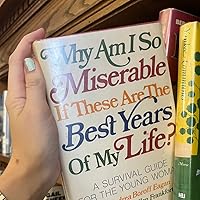
as always, i love kathy acker. i’m often struck by how narrative she is (when she is) and how much of a mastery over that mode she has. i did not love the macbeth/shylock sections… but i’ve never been one for the theater. pier passolini gave me a smile - i like to imagine kathy and i watching the same movies.
thank you to maddie who was so clever and thoughtful in gifting me this book!
thank you to maddie who was so clever and thoughtful in gifting me this book!

November 1, 2023
I read the first novel out of this omnibus, and in my opinion, it was average Beat literature - I got the gist and am not compelled to read the other two. I can see certain people liking this, but it's just not for me. Sorry, Kathy...

August 10, 2022
I don’t know about Kathy … can read like middlebrow smut with half-baked theory thrown in … but I think her childish style is authentically transgressive + original

Read
September 21, 2022Like I get it, and I feel like the content should feel maybe outdated by the schizo-culture but it still makes me feel sick...

August 16, 2023
even the less succesful experimental works are more interesting than most author's magna opera

September 24, 2023
That was a lot


February 24, 2024
So bizarre. Couldn’t finish. Definitely racist.

July 11, 2026
Kathy goes to Haiti was great and very different for Acker the Pasolini book was a bit of a mess in my opinion
January 18, 2013
Kathy Goes to Haiti
This narrative is accessible to most readers, although many will find its graphic sexual imagery shocking. The novel tells the story of a young woman's travels to Haiti, and does include gripping descriptions of the country's sights and sounds. However the focus is on Kathy's sexual relationship with Roger, a wealthy and influential son of a plantation owner and it is impossible not to wonder why. Acker's true genius is that she never explains this choice. It is up to the reader to figure out whether the protagonist's enjoyment of sex is pro-feminist, or whether she is subject to the whim's of men and attaches herself to Roger for survival. Reading this now, I see that Acker was ahead of her time, and master of the monodrone (self-absorbed female chatter) which gives the impression that is it self-affirming, but is in fact just noise in the air and means nothing.
My Death My Life by Pier Paolo Pasolini
This novel is a little muddled and feels very experimental. The Shakespearean inspired mini-plays are feeler with acerbic wit and vary in quality. The take on Macbeth is overtly political, and will appeal to those who feel that the English oppression of Ireland coherently explains all human complexities therein. My personal favorite if from Romeo and Juliet. It reads likes a raucous "Saturday Night Live" sketch, yet tells of a truth that may be too frightening for to some to confront. Supposedly this novel is a "scathing commentary on false values in art" but that puts Acker's Shakespearean skits in a difficult place. Pretentious satire to rebuke pretentiousness? Acker's work can be read at face value - an experimental attempt to place those marginalized by society into a literary framework. Inevitably chaos, sometimes jarring, sometimes lyrical erupts.
Florida
Short.
This narrative is accessible to most readers, although many will find its graphic sexual imagery shocking. The novel tells the story of a young woman's travels to Haiti, and does include gripping descriptions of the country's sights and sounds. However the focus is on Kathy's sexual relationship with Roger, a wealthy and influential son of a plantation owner and it is impossible not to wonder why. Acker's true genius is that she never explains this choice. It is up to the reader to figure out whether the protagonist's enjoyment of sex is pro-feminist, or whether she is subject to the whim's of men and attaches herself to Roger for survival. Reading this now, I see that Acker was ahead of her time, and master of the monodrone (self-absorbed female chatter) which gives the impression that is it self-affirming, but is in fact just noise in the air and means nothing.
My Death My Life by Pier Paolo Pasolini
This novel is a little muddled and feels very experimental. The Shakespearean inspired mini-plays are feeler with acerbic wit and vary in quality. The take on Macbeth is overtly political, and will appeal to those who feel that the English oppression of Ireland coherently explains all human complexities therein. My personal favorite if from Romeo and Juliet. It reads likes a raucous "Saturday Night Live" sketch, yet tells of a truth that may be too frightening for to some to confront. Supposedly this novel is a "scathing commentary on false values in art" but that puts Acker's Shakespearean skits in a difficult place. Pretentious satire to rebuke pretentiousness? Acker's work can be read at face value - an experimental attempt to place those marginalized by society into a literary framework. Inevitably chaos, sometimes jarring, sometimes lyrical erupts.
Florida
Short.

April 11, 2012
"Kathy Goes to Haiti" a.k.a. the only story I read in this trilogy, reminded me of a grainy, poorly lit 70s porn movie where there was no pretense of good acting or a comprehensive plot line, merely a short and laughably bad dialogue between two people who happened to be scantily clad around each other and mutually lonely. Which is not to say it wasn't interesting to read, but sort of a strange, meandering plot line that involved a single woman's travels through Haiti. She makes it apparent from the beginning that she's there to get laid and laid she gets. Unfortunately, the fact that she's traveling alone is some sort of signal to all the men (and boys) on the island that she's single and ready to mingle, and they swarm her day and night, eager for a piece of the action. Along the way, she falls in love with the son of a wealthy business owner who also happens to moonlight as a drug dealer. P.S. He's also married.
I personally love it when authors are not afraid to flesh out their female characters with qualities that are either unacceptable to be open about or seen as deviant in some way. Kathy, although conflicted with guilty feelings about her acceptance of sexual humiliation as being pleasurable, is comfortable seeking out the company of men that make her happy without the expectation of having a relationship.
I personally love it when authors are not afraid to flesh out their female characters with qualities that are either unacceptable to be open about or seen as deviant in some way. Kathy, although conflicted with guilty feelings about her acceptance of sexual humiliation as being pleasurable, is comfortable seeking out the company of men that make her happy without the expectation of having a relationship.

October 2, 2012
The problem here was that I tried to read all three in one go. Kathy Goes to Haiti was fine as it's more conventional and I enjoyed the story - despite the fact it was rambly and didn't seem to have a point. I like things that are rambly and don't seem to have a point. Couldn't get through My Death My Life though. There were good bits in there but, try as I might, experimental feminist literature just doesn't seem to be for me. Also: there's a bit where one of the characters says "We only speak French now" and then the next six pages of the book are in French. While this was hilarious, it also obviously was frustrating

May 11, 2007
Hmmm, I *want* to love Kathy Acker. I think I need to read her in a class setting. I started on Kathy Goes to Haiti but just couldn't get down with it.

Read
September 19, 2008Reads like the inside of my brain.

December 28, 2008
Read 115 pages all the way through of Literal Madness before I gave up on it. There are 3 stories in the book, and I only liked the first one: Kathy Goes To Haiti.

July 21, 2009
I really love Kathy Goes to Haiti, the others less so ...

April 8, 2012
Parts of this book were interesting, but overall it was pretty dated. Acker has a very 1970s point of view.

February 8, 2013
Kathy Goes to Haiti
Okay, such a weird but good story. I was little disappointed with the ending, but it fit well with the story. But can I just say that I wanted to slap Kathy entire time.
Okay, such a weird but good story. I was little disappointed with the ending, but it fit well with the story. But can I just say that I wanted to slap Kathy entire time.
Displaying 1 - 30 of 31 reviews