What do you think?
Rate this book


Per millenni filosofi, teologi e scienziati non sono riusciti a trovare risposte verificabili alle domande che definiscono il significato stesso dell’esistenza umana: che cosa siamo e che cosa ci ha resi quello che siamo? Nel suo esame della storia evolutiva, Wilson si spinge qui più indietro di quanto abbia mai fatto, consegnandoci un testo che mette in luce le origini profonde delle società animali e di quella umana. L’unico modo per comprendere il comportamento umano è cercare di conoscere le storie evolutive, lunghe e complesse, delle specie non umane. Tra queste almeno diciassette specie (roditori e gamberi tra gli altri) hanno sviluppato società avanzate e basate su livelli di altruismo e cooperazione simili a quelli che osserviamo tra gli esseri umani.
Sulla scia di Darwin, che suggerì di studiare le origini dell’umanità tenendo conto del comportamento delle scimmie antropomorfe, Wilson sintetizza le più aggiornate ricerche svolte nel campo delle scienze dell’evoluzione, realizzando un’opera concisa ma rivoluzionaria sulla genesi della società umana.
134 pages, Paperback
First published March 1, 2019
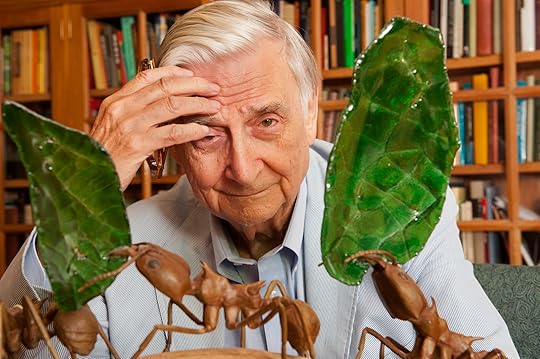
Within groups, selfish individuals win against altruists, but groups of altruists beat groups of selfish individuals.What we understand about the mechanisms of evolution has to do mostly with competition, one-on-one, or one-on-many dueling, whether in actual combat, which leads to bigger, tougher, stronger, faster characteristics, or sexual selection, which gets pretty extreme in other ways. But it was not so obvious, even to folks like Darwin, how it was possible for altruism to evolve. Where is the gain for a worker ant that does not reproduce? How are there still any worker ants at all? This is the focus of Edward Osborne (aka E.O.) Wilson’s latest book, Genesis. In case you have been living inside a termite mound for the last 60 years or so, Wilson is the world’s greatest expert on ants.
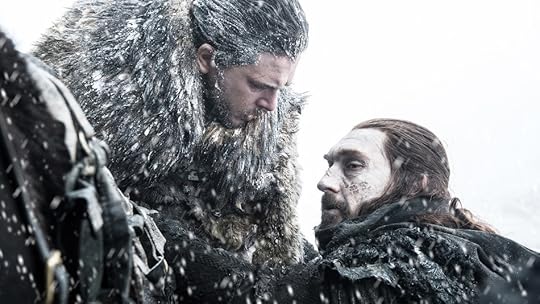
So when Benjen Stark throws a defeated Jon Snow onto his horse and sacrifices himself to an onslaught by a crazed zombie horde, it is an action that is advantageous to House Stark. Uncle Ben will not be making any little Bennies, but his sacrifice helps allow at least the possibility that his nephew might generate little Jon-Snow-flakes someday, thus keeping the Stark gene machine rolling along, the Red-Wedding be damned.
Image from Mashable.com

a process in which populations of two closely related species, after first coming into contact with each other, undergo rapid evolutionary differentiation in order to minimize the chances of both competition and hybridization between them. – from the Britannica profileHe has been a proponent of theories that have drawn considerable criticism. In 1990 Wilson was awarded the Crafoord Prize. The Royal Swedish Academy of Sciences offers this award to support areas of science the Nobel Prizes do not recognize. He has won two Pulitzers for his writings. I leave it to Wikipedia to list his publications, far too many to show here. Wilson is, arguably, the closest living person we have to Charles Darwin, in terms of his impact on his field(s) during his lifetime.

“For group-level traits as for individuals, the unit of selection is the gene that prescribes the trait. The targets of natural selection, which determine whether genes do either well or poorly, are the traits prescribed by the genes. An individual in a group that competes with other members for food, mates, and status is engaged in natural selection at the individual level. Individuals that interact with other group members in ways that create superior organization through hierarchies, leadership, and cooperation, are engaged in natural selection at the group level. The greater the price extracted by altruism and the resulting loss to the individual’s survival and reproduction, the larger must be the benefit to the group as a whole. The evolutionary biologist David Sloan Wilson (no relation) has nicely expressed the rule for the two levels of selection as follows: within groups, selfish individuals win against altruists, but groups of altruists beat groups of selfish individuals.”
“During the origin of advanced social organization, the added subcastes require not only one or two additional decision points in development of the larvae, but a regulation of their relative members in different stages of colony growth. The regulation is the equivalent of the division of labor in humans based on different occupations plus cultural regulations on the number trained in each occupation. Thus have emerged the empires of ants and man.”Wilson points to evidence of campfires as a source of cooked meat but also as a source of community building through stories. Putting this together, campfires and their stories, exist in an evolutionary way in order to form eusocial groups.