Jeff Bussey walked briskly up the rutted wagon road toward Fort Leavenworth on his way to join the Union volunteers. It was 1861 in Linn County, Kansas, and Jeff was elated at the prospect of fighting for the North at last.
In the Indian country south of Kansas there was dread in the air; and the name, Stand Watie, was on every tongue. A hero to the rebel, a devil to the Union man, Stand Watie led the Cherokee Indian Nation fearlessly and successfully on savage raids behind the Union lines. Jeff came to know the Watie men only too well.
He was probably the only soldier in the West to see the Civil War from both sides and live to tell about it. Amid the roar of cannon and the swish of flying grape, Jeff learned what it meant to fight in battle. He learned how it felt never to have enough to eat, to forage for his food or starve. He saw the green fields of Kansas and Okla-homa laid waste by Watie's raiding parties, homes gutted, precious corn deliberately uprooted. He marched endlessly across parched, hot land, through mud and slashing rain, always hungry, always dirty and dog-tired.
And, Jeff, plain-spoken and honest, made friends and enemies. The friends were strong men like Noah Babbitt, the itinerant printer who once walked from Topeka to Galveston to see the magnolias in bloom; boys like Jimmy Lear, too young to carry a gun but old enough to give up his life at Cane Hill; ugly, big-eared Heifer, who made the best sourdough biscuits in the Choctaw country; and beautiful Lucy Washbourne, rebel to the marrow and proud of it. The enemies were men of another breed - hard-bitten Captain Clardy for one, a cruel officer with hatred for Jeff in his eyes and a dark secret on his soul.
This is a rich and sweeping novel-rich in its panorama of history; in its details so clear that the reader never doubts for a moment that he is there; in its dozens of different people, each one fully realized and wholly recognizable. It is a story of a lesser -- known part of the Civil War, the Western campaign, a part different in its issues and its problems, and fought with a different savagery. Inexorably it moves to a dramatic climax, evoking a brilliant picture of a war and the men of both sides who fought in it.
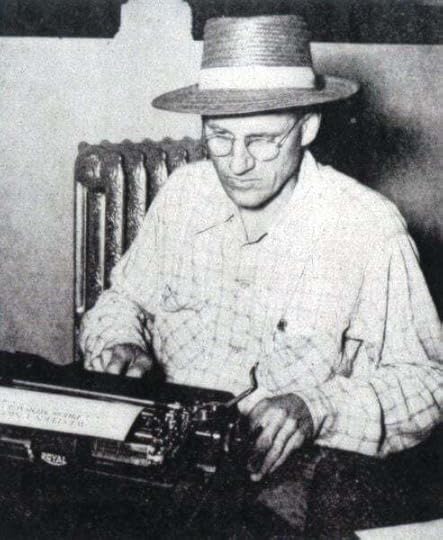
Harold Keith lived his entire life in Oklahoma, a state that he greatly loved and which served as the setting for many of his books. Perhaps his best known story, the historical novel "Rifles for Watie", was first released in 1957. It went on to win the 1958 John Newbery Medal and the 1964 Lewis Carroll Shelf Award. In 1998, Harold Keith died of congestive heart failure, in Norman, Oklahoma.
When Harold Keith was doing research for his master's thesis at the University of Oklahoma, he stumbled upon a precious cache of unused Civil War documents from the “Western theater” of the war. This led to a powerful curiosity, which then led to him interviewing twenty-two Civil War veterans who were still alive in 1940 and 1941, which ultimately led to a five year project of writing this historical fiction novel of the war.
And, let me tell you. . . it paid off, and then some.
Mr. Keith took home the Newbery Medal in 1958 for his YA offering, and, some 60+ years later, his story feels as alive as it must have felt on the day he published it.
Whether you're a descendent of Northern abolitionists like I am, a person of Native heritage, or a rebel sympathizer, you'd be hard-pressed to find a more thorough, stirring, balanced story of the Civil War, and you certainly can't find its equal when it comes to any depiction of the part of the war battled out in the Western territory.
I'm half in love now with Harold Keith, who lived for almost a century—a man who rubbed shoulders with Civil War vets and then died right before the Y2K “crisis!”
I suspect that Mr. Keith's protagonist, Jeff Bussey, is as clear-headed and as fair-minded as the author, a man who clearly understood that war is hell and no one really “wins.” How you really win in this life is by being an outstanding human being.
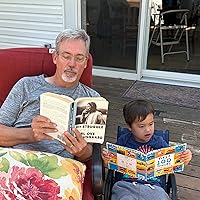
I'd like to mention that my copy of this book comes from my father's library, the one he had as a teenager in his parents' home. It delights me to no end that I read it to my daughter this month at almost the exact age my dad must have been when he first read it, and I wish he were alive to know how much she loved the story.
He began to recall all the mean things he had ever done and how he might never have time to atone for them. Life was running out on him. He wasn't ready to die. He didn't want to be rushed into it. He needed more time to think about it. After all, a person died just once. Anybody who let himself be killed was just plain stupid. The world was a wonderful place to live.
Q. Why didn’t I read this in junior high? Q. Why didn’t my teachers make it mandatory? Q. Why did I ever read anything out of a text book about the civil war?
Rifles for Watie taught me more about the civil war than any junior high American History book I ever endured. If I were teaching Junior High history this would be MANDATORY. It was exciting and not biased. The author did a remarkable job of showing the good and bad sides of both the Union and Confederate Armies. The protagonist Jeff Bussey was a fun hero. His character progression touches the heart of every reader. We pity his 16 year old attitude: “War is a Lark.” We cry with him when he watches his friends and comrades die in his arms. We applauded him when he chooses the higher road. We hold our breath as he survives one narrow escape after another. I would recommend this book about the civil war to everyone who loves a good story.
I recalled once reading Rifles for Watie by Harold Keith when I was a kid probably over my summer vacation. I believed I had enjoyed the experience, so I decided to have another go at it now and hope the historical novel written for teens still holds up. I am happy to report Rifles for Watie still turns my crank. The author Keith had a wonderful knack for turning descriptive phrases of the landscape, battle scenes, and soldiers' camp life. His protagonist of Jeff Bussey from Linn County, Kansas, is a sensitive teenaged soldier who turns mean as a rattlesnake when he faces danger. Keith did tons of research as he laid out in his Author's Note before writing his novel. The level of violence surprised me, and I felt as if I was reading an adult novel. There is also romance when Jeff falls in love with a rebel girl. I got a nice historical overview of the American Civil War fought in the far west theater (the name Watie is pronounced as weighty). Stand Watie the Cherokee general who threw his support to the Confederates is an interesting character. Keith also did the smart thing by dramatizing the acts of compassion performed on both sides of the conflict. My second reading of Rifles for Watie as an adult really worked out for me, and how often does that happen? Well, I have to say not so frequently for me.
Children's Bad Words Mild Obscenities - 50 Incidents: corn, by jack, shut up, jeepers, darn, darned, dad-gummed, cripes, shucks, stupid, shoot, dang, gosh, gallinippers, heck, h*ll (once) Name Calling - 21 Incidents: chronic croakers, Free State scum, n*ggers (three times), dom (dumb), big lout, fool, Yankee swine, Yankee liar, foot-sloggers, Buttermilk Rangers, crazy dumb, cowardly swine, stupid, bugger, gray devils, bl**dy-minded shikepokes Scatological Terms - 7 Incidents: bl**dy (as in lots of blood - 4 times), bl**dy (swear word - 3 times) Religious Profanity - 19 Incidents: goshallmighty, for God's sake, Godforsaken, Jeez, Bedad, Bejabez, wish it to God, gawsh, gosh, Lor', praise God
Attitudes/Disobedience - 14 Incidents: A boy brings his dog to bed with him after his parents told him not to. A boy won’t tell his father he’s leaving to join the army because he knows his father does not want him to. Another boy won’t tell his mother he’s leaving to join the army because he knows she won’t let him. A boy is teased for his name but he gets back at the person and “felt repaid.” A boy is asked to help steal confiscated watermelons. He doesn’t want to but gives in to peer pressure. A boy doesn’t want to go home during furlough because he’ll “just have another big brawl with Pa” for joining the army. A boy gets homesick so deserts the army. A boy gets into a fight with his mother when she won’t let him return home and makes him join back up with the army. It mentions that a boy didn’t like officers. A boy lies about his age, saying he’s older than he is, so he can stay in the army. A boy shoots himself in the hand so he won’t have to be in the front lines and lies about it. “Never again, he told himself, would he obey an order that took him away from his comrades.” A boy hates his commanding officer because he is arrogant and a bully. A boy is ashamed of his father’s ugliness so never returns to see his father.
Religious & Supernatural - 1 Incident: When a boy sees the reality of war, he prays and vows to always go to church if he lives.
Violence - 2 Incidents: The main character is in his first battle. He sees a man with both legs sheared off. (This excerpt is an example of how other battle scenes are described). A man “deliberately ground his heel into the helpless rebel’s eye. They dying man’s mouth flopped open. There was a slow rattling in his throat, and his hands clawed and twitched. Then he lay quiet.”
Romance Related - 21 Incidents: At a hospital, boys are told to strip to the waist for examinations. Boys and men strip to get lice off. Got himself a purty gal, too - the blacksmith’s daughter. He’s still wearin’ his wedding suit.” ‘One of Watie’s rebel corporals threatened to cut off Mitchell’s red curls and send them to his rebel sweetheart … “so she’d think he was flirtin’ with a little redheaded gal in Dixie.”’ “Mitchell peeled off his drawers and, standing naked by the fire, dropped them into the open kettle. Huge splotches of pink freckles covered his entire body.” “Naked as a jaybird, he emerged from the woods and limped up to the fire. His nude body was reddened from running through the shrubbery.” A boy sees a girl and thinks she’s very pretty. A boy wanted a chance to see a girl again. When a girl walks by, soldiers eyeball her from head to toe and whistle seductively at her, saying “I hain’t hugged a gal fer so long I’m outa practice.” “A girl that beautiful was sure to have her front porch full of suitors.” “I’ll bet Miss Lucy’s got rebel beaux swarming all around her…” “Lucy Washbourne’s beauty was breath-fetching.” As his fingers touched hers, a shiver of pleasure shot up his arm. He looked at her, but she sat down silently on a settee… opposite.” “He felt miserable. He guessed he was head over heels in love with Lucy.” “He thought of Lucy and her dark beauty, and an intolerable longing assailed him… maybe he could make her like him.” (He thinks about her often throughout the book). A boy’s heart is thumping and he’s breathless as knowing he’ll see the girl he loves. They hold hands for a moment. A boy doesn’t want to wait until after the war to court a girl. They kiss. A family all kiss a boy goodbye. A boy and a girl hold hands and they speak of marriage. They kiss and hold each other. Bum-blistered. The word "breast" is used a few times - not sexual.
Conversation Topics - 11 Incidents: Mentions Negroes throughout the book. It mentions drinking alcoholic drinks a number of times throughout the book. Men smoke pipes, cigarettes and cigars and chew tobacco throughout the book. Throughout the book it mentions that someone cursed, but don’t provide an exact word used. A man has an American flag tattoo. Men gamble their pay away. Mentions card-playing. A boy is ordered to confiscate livestock from civilians. He doesn’t like it but must obey orders.(He defies the orders later by returning one of the cows to a family). Confiscating/Stealing from civilians: “Gradually Jeff was beginning to learn the army’s careless regard for the private property of civilians, especially food.” (This is a reoccurring act throughout the book). A man is so hungry he admits that he probably would have killed the man if he hadn’t given him food. The main character takes some hard apple cider and gets drunk. “In the Jackman home everything possible was done to teach the girls good breeding. They had to learn to sing, dance, play the piano, ride horseback, read the classics and flirt with boys without seeming forward or immodest.”
Parent Takeaway This is a good book for showing the realities of war without getting too graphic for children/young adults. It has a few battle scenes and shows how morals sunk as the war continued and what some desperate men did. Throughout the war the main character manages to hold (mostly) to his morale code and does not sink like the other men. Most of the bad words (shown in the report) are substitute words; there are not many actual swear words.
**Like my reviews? Then you should follow me! Because I have hundreds more just like this one. With each review, I provide a Cleanliness Report, mentioning any objectionable content I come across so that parents and/or conscientious readers (like me) can determine beforehand whether they want to read a book or not. Content surprises are super annoying, especially when you’re 100+ pages in, so here’s my attempt to help you avoid that!
So Follow or Friend me here on GoodReads! And be sure to check out my bio page to learn a little about me and the Picture Book/Chapter Book Calendars I sell on Etsy!
There's a lot to like about this Civil War novel. The young protagonist, Jeff Bussey, is a likeable character, and there's a good portrayal of his experiences as a young Union recruit from Kansas, as he goes from impatience to get a taste of war to eventual disillusionment with the destruction caused by both sides; knowing fear and hardship, forming friendships with good people on the other side of the conflict, and falling in love. The angle of the Cherokee Nation's participation in the war was very interesting, and something I'd never heard much about before. On the other hand, I found the writing to be occasionally clunky, with abrupt changes of perspective or jumps from one subject to another in mid-paragraph, and some slightly forced dialogue, which sometimes pulled me out of the story a little bit. But there's plenty of interesting detail about army and camp life, and it's a good story overall.
There are few reasons why I wanted to read this book. One, it was highly recommended to me by my sister. Two, is historical fiction (about the civil war). And three, it is based in the mid-west which is mostly ignored during the civil war, except when they mention "Bloody Kansas" for one paragraph in the textbooks. It was a bit long and it took me a while to read but it was well worth it.
Hoping to prove himself and defend his home Jeff leaves to enlist as a soldier in the Union Army. He has this idea that going into battle is an adventure. Basically the plot is Jeff finding out what war is really about but still perseveres. Throughout the book Jeff becomes part of the infantry, cavalry, he's a scout and I'd say more but that might gave something away. It's surprising how long and short the book felt at times.
I can feel how much work was put into this book. The amount of research must of been tremendous; like details from the terrible confederate coffee to the military jargon. The weather is described, the uniforms, even the terrain. However, I didn't feel it was an overload of detail as some authors do.
What really makes the book though is Jeff. Is there a guy like that out there anymore? I kind of doubt it-unless we include the Amish...maybe. He grows up so much during the war, but unlike some other books I've read with war he still tries. Yes, he learns that war is not an adventure and it isn't all it's cracked up to be but he still keeps true to what he knows is right. Jeff does become more somber but not altogether hopeless. As easy as it may be, he isn't extremely bitter though he knows not everyone is fighting for the things he is. Jeff is just so so so...good. I know that a lot of people like the bad boy type but I think good guys are more appealing.
First, let me say that I get what is good about this book. It's unique. There aren't many decent children's books out there that follow a young soldier around through the entire Civil War, and the ones that do exist are all set in the eastern part of the U.S. I didn't know much about what was going on in the west during the Civil War before I read this book. Most of the scholarship or fiction I've been exposed to has all been focused on the other part of the country.
For it's length, it's a very readable, usually exciting novel. Part of me wishes it was shorter, but in all honesty, it would have been better served by being longer. It wraps up very abruptly and it feels very rushed. The villain of the novel, Clardy, is killed off-screen, and we are denied a big confrontation. The whole ending just seemed really anti-climatic, but maybe that's the way war really is? You fight and march, and everything's all build up and then suddenly it's all over. I don't know. It didn't make for a great novel ending, though.
Now let's play a quick game of Is It Racist? I think there is a definite difference between a racist character and a racist author/omniscient narrator. I'm OK with a racist character existing. There are racist people out there, and of course, they're going to find their way into stories. I have more of a problem when the author or the omniscient narrator is blatantly racist. Let's examine the scenes in Rifles for Watie that made me cringe, and see whether they are reflections of the author's own racism or of they are simply racist characters in a time when the country was very racially charged.
The first scene that made me cringe was when Jeff first meets Lucy, his Confederate love interest. She is half-Cherokee, and according to our narrator, very beautiful. Jeff too, finds her beautiful "even though her skin had a brownish cast." My first reaction to that statement was, "What does that even mean?" The answer of course is that Jeff's ideal of a beauty up until that point was a fair-skinned very Caucasian girl. Lucy was so beautiful that it redefined Jeff's definition of beauty. My first inclination is to say that this is simply character racism. After all, it's Jeff's prejudices that we're dealing with here, but after thinking about it, I changed my mind. The narrator says it in such a matter-of-course way. It's like "Of course dark-skinned ladies aren't usually beautiful, but this girl was REALLY beautiful." That nonchalance makes me think that it's really Harold Keith's prejudices that we're dealing with.
Then there's the dialect. The African-American slaves that the Union soldiers come across nearly always speak like they do on page 150. "Yassuh! Yassuh! Plenty of hams in theah, suh." The Union soldiers don't really talk with much dialect throughout the book, even though they're all farmers from Kansas. I was ready to give Harold Keith another racist stamp for it, but then we meet the White Confederate soldiers, and they all speak with that dumb, exaggerated dialect, too. So, I really think that, to Harold Keith, Americans from the west spoke in a kind of normal dialect. A few contractions here and there, but usually complete, coherent sentences. The moment you cross the Mason-Dixon line and enter the South, everyone, white and black, speaks in a kind of jumbled up, nonsensical manner. In this case, Harold Keith wasn't racist, only regionalist. If he looked down on anyone for the way he thought they talked, it was the South as a whole.
The last scene I want to look at is on page 155. There is a dying slave literally on his death bed. He is holding on to life, so that he can see a Union soldier coming to liberate his people before he dies. Jeff walks into the room, and the man takes a look at his blue uniform, and says, "I bress God." and dies. (Bress. Really?) I call this a white messiah moment. I think that Harold Keith saw his ancestors that served in the civil war as liberators coming in to save the slaves, even though there were men of many races serving on the union side. The whole scene just seemed really condescending to me, and I think the novel would have been better without it. In the end, yeah. I think Harold Keith was a little bit racist.It isn't overwhelming, but I do think he had some prejudices that came out in his novel.
I liked Rifles for Watie, but I didn't love it. The main issue for me was the anti-climatic feeling I got from the abrupt ending. The uncomfortable feeling I got from those few scenes spoiled it some, too.
This book is part of my 12th grade son's history curriculum through Beautiful Feet Books. I thoroughly enjoyed the story and learned a lot about a part of the Civil War that goes underrepresented in literature - the western theater. In this story, Jeff (16 years old at the beginning and 20 by the end) joins the Union Army. He eventually winds up as a spy/scout and infiltrates the rebel army in Colonel Watie's division - this is also a division of Cherokee Indians.
Through his experiences, Jeff learns that war is much more complicated and a lot less romantic than he had imagined. He comes to care for people on both the Union and Confederate side of the conflict. We witness Jeff's innermost thoughts and feelings - and his struggle to make moral, upstanding choices - which he always does!
Harold Keith (from Oklahoma) has such a vivid, beautiful writing style. The end of the book was tied up so neatly and circled right back around to the beginning in such a poignant way. I'm so glad I decided to pick this up and read in preparation for discussions with my son.
Note: This story of Colonel Watie and Jeff is entirely fictional (although Watie was a real person), but the story of Union officers smuggling repeating rifles to Confederate forces is true, and something I hadn't known about before.
I loved this book! It reminded me of Sunday nights watching THE WONDERFUL WORLD OF DISNEY fifty years ago. If Walt Disney had ever made an epic movie of the Civil War that was kid friendly but still crammed with unbelievable danger, action, and romance, this would be that book. I loved everything about it, not just the battle scenes but the scenes of camp life and even the fascinating information about hunting, tracking, and cooking in frontier days!
Jeff Bussey is the hero, and he is a really special kid. He's brave, loyal, little but brave, and crazy about dogs and horses. He lives in Kansas and he's really concerned about protecting his family from pro slavery raiders, so he joins the Union Army. But in the course of the book he goes from being Union infantry, to Union cavalry, to being a spy, to being a Confederate soldier!
One thing about this book that really bothered me was that it was so episodic. For the first half of the book every chapter is almost like a short story all to itself. The author introduces all kinds of amazing and colorful characters, but they come and go like the colors in a kaleidoscope! I really wanted to see more of Noah Babbitt, the self-educated Yankee scholar who plays Rick Sanchez to Jeff's Morty. I also wanted to see more of Jeff's love interest Lucy, who was the most alluring love interest I've ever seen in a YA novel. She was one part Indian princess and one part Southern Belle, and yet you could totally believe she would be attracted to a simple, straightforward guy like Jeff. I even felt like Clardy, the villain, was so intriguing that I would have liked to see more of him. He reminded me of Claggart in Melville's Billy Budd, except Jeff is much smarter than Billy and has better friends. Especially of the four-legged variety!
Nothing could have spoiled my enjoyment of this amazing YA classic, but I wish there had been a little more about what slavery was like for black people, and how they felt about the war. The author says about a thousand times that the Southern people are "fighting for what they believe in" but he never connects that to the real-life atrocities that slaves endured on a daily basis, or to the selfishness and greed of the slave-owners themselves. And given that most of the slave-owners in this book are actually Native Americans, it's especially disappointing that Jeff never notices the irony of one colored race enslaving another one. He argues with Lucy about preserving the Union, but he never says "a people that have sunk low enough to enslave black men will certainly enslave red men sooner or later." That's what I would have said, but I enjoyed the book thoroughly and I was with Jefferson Davis Bussey every step of the way. If you read this book you will probably feel the same way!
One child out of a hundred will love this book above all others. The other 99 won't make it through the first chapter. Although I already knew an awful lot about the Civil War, I learned a little from this book. More importantly, the way the main character was written gave me a new perspective on what I already knew. I was also glad that Keith didn't wimp out on the action, and described it with realism. I think he had me after first mention of lice.
This is very well written. In fact, it's probably the first Newbery winner that's written professionally enough for an adult audience, and not just well enough for the kids. The most conspicuous aspect of the book is the impeccable research that went into it and the way that historical and geographical details are seamlessly woven in to strengthen the narrative. The book is action-packed, and Keith's characters feel like real people.
Any Newbery winner before 1970 requires a diversity inspection. Rifles for Watie holds up remarkably well on this front. Although the first Cherokee character speaks with some stereotypical Tonto grammar, that impression is quickly erased by the variety of carefully drawn Creek, Cherokee, and Choctaw characters. Howard Keith spent considerable time interviewing Cherokees for this book, and it pays off with depictions of realistic people living on many different levels of Cherokee society. In fact, the Tonto grammar is probably based on the speech of someone he interviewed.
The portrayal of African Americans is more mixed. Although there are a number of these characters, and they present a variety of personalities and attitudes, they all speak with servile "Yassuh, yassuh," slave jargon. I have no doubt that most Southern blacks spoke this way in the 1800s, and that some still spoke this way when this novel was written. Although Keith makes an effort to describe the slave/master social system, he doesn't do it with nearly the thoroughness that he applies to Cherokee society. The result does not fully explain why African Americans spoke that way in the first place. I also wish that Keith's physical descriptions didn't focus quite so much on rolling, bugged-out eyes.
As a side note, the "n" word gets used a few times in ways that I would describe as historically accurate and appropriate to the sophistication of the rest of the book. A reader who understands the rest of the book will understand that this word is a reflection on the character using it, and not on the author's personal vocabulary.
I enjoyed this book so much that I want to find someone to share it with. I think the right audience for this would be a young man in at least 5th grade who loves action and history and is not intimidated by a 300+ page book.
Jeff Bussey walked briskly up the rutted wagon road toward Fort Leavenworth on his way to join the Union volunteers. It was 1861 in Linn County, Kansas, and Jeff was elated at the prospect of fighting for the North at last.
In the Indian country south of Kansas there was dread in the air; and the name, Stand Watie, was on every tongue. A hero to the rebel, a devil to the Union man, Stand Watie led the Cherokee Indian Na-tion fearlessly and successfully on savage raids behind the Union lines. Jeff came to know the Watie men only too well.
He was probably the only soldier in the West to see the Civil War from both sides and live to tell about it. Amid the roar of cannon and the swish of flying grape, Jeff learned what it meant to fight in battle. He learned how it felt never to have enough to eat, to forage for his food or starve. He saw the green fields of Kansas and Okla-homa laid waste by Watie's raiding parties, homes gutted, precious corn deliberately uprooted. He marched endlessly across parched, hot land, through mud and slash-ing rain, always hungry, always dirty and dog-tired.
And, Jeff, plain-spoken and honest, made friends and enemies. The friends were strong men like Noah Babbitt, the itinerant printer who once walked from Topeka to Galveston to see the magnolias in bloom; boys like Jimmy Lear, too young to carry a gun but old enough to give up his life at Cane Hill; ugly, big-eared Heifer, who made the best sourdough biscuits in the Choctaw country; and beautiful Lucy Washbourne, rebel to the marrow and proud of it. The enemies were men of an-other breed - hard-bitten Captain Clardy for one, a cruel officer with hatred for Jeff in his eyes and a dark secret on his soul.
My thoughts : I had forgotten how this book made me feel while I was reading it since its been forever since I read it , in fact the last time I actually read it was way back in Junior High school , and since then I've been looking for it to buy , and I'm so glad I was able to find it on line to buy . I had also forgot that there was parts of this book that made me cry and believe me it takes a lot for a book to make me cry, the author was able to bring to live Jeff and his family , and his fellow solders that he meet , as well as bring to live the battles and how hard it was for both sides . I can say that this is still one of my all time favorite books to read and if you haven't checked it out then you might want to .
After this second read through with my boys, I can see why this was my favorite book in Junior High! This is an amazing tale of a young man who joins the Union Army to fight in the War between the States. The author writes the story and characters in a real life historical setting, but without any bad language or sexuality. Given that this is a book that takes place during war, there is some slight violence.
However, the book is not racist but rather shows how a young man from Kansas can love people of other skin colors than himself. Sure, the terms used in 1860's will offend the overly sensitive today. But if you like historical fiction, you want it to be at least somewhat close to realistic.
Long but worthwhile, this story has many twists and turns, and although readers certainly know how the war will play out on the large scale, there is a good deal of suspense regarding individual characters. The details of place, characterizations, dialogue, etc. are first rate, making this stand out from more generic juvenile historical fiction set during the Civil War.
The author manages to deliver a good deal of history and through interesting juxtapositions of the protagonist is able to convey the viewpoints of both the Union and Confederate positions. It is clear that there are good and bad people on both sides and also that sometimes extenuating circumstances, not specific choices, are responsible for some predicaments.
The fictional elements are handled well and are convincingly presented. We get a nice helping of romance as well. It keeps things interesting, but there is not too much that it distracts from the book's primary intention. The important accounts of battle are described exceptionally well, with both the military actions and the inner thoughts of our hero being brought together to generate an uneasiness and tension that makes the scenes come to life.
The title is not representative of the content of the entire book (the repeating rifle is not mentioned until p.210 and the Confederate plot to obtain them isn't introduced until p.266). But it's as good a title as any.
Holy moly, I feel like I've been reading this book for years. In truth, it has taken me several months. It went on for-e-ver. It didn't help that it's one of the longer Newbery books and the type was small and dense.
Jefferson Davis Bussey is excited to join the Union Army and fight for what's right. He learns (I would say quickly, but it took about a 1,000 years for him to get to this lesson) that war is not all it's cracked up to be. He also meets a lot of people from the Confederacy that show him how human both sides are.
I feel like after how long it took me to read I should write this long, beautiful review, but I can't. I'm so over this book and ridiculously happy to mark it off my list. Some parts were truly great, but the length diminished the joy any of those parts brought. It's obvious the author put a lot of heart and soul in to writing this book, but it is not the book for me.
A sentimental 4 stars: Rifles for Watie was one of my favorite books when I was young; I don't know how many times I checked it out of the library.
I was pleasantly reminded of it (and another sentimental favorite, The Horse Soldiers) while reading David Donald's Lincoln. I can still remember specific scenes from the book like Jeff's first battle, loading a rifle, the night he spends in a rebel's house, using worthless Confederate dollars to cut out a piece of bread.
Both books have joined the list of stuff I'd like to reread when I can find the time.
Gosh, Jeff sure was a good guy! Corn, but Lucy sure was a purty girl!
Too long, with too much of the author's research showing. Too simplified, with the army men's language and behavior toned down for middle graders. Too tidy, with people and character traits recurring to tie things up neatly at the end. Plus all those womenfolks who couldn't plant corn in a straight line, and all those slaves who just loved their masters.
Exceptional Civil War story focused on the West and with authentic empathy for a variety of perspectives of the war. Highly recommended for young readers especially.
The Audible.com audiobook is breathtakingly well done.
I don't typically read books targeted for youth, but this Newberry Award winner was a treat. It was thoroughly researched and taught me a great deal about the western edge of the Civil War, in Kansas, Missouri and Arkansas. It is the story of a 16-year-old boy, anxious to get off the farm in Linn County KS (an area I have visited) after hearing the long-limbed Lincoln in a town hall. I’ve read about the war in my neck of the woods (Missouri/Kansas) which was an amalgam of Bushwhackers, pillaging for their own selfish reasons and opportunistically enriching themselves, and those defending “bleeding Kansas” which was trying its best to be a Free state. The rebels were strong in Missouri, as was the Union army, and many smaller battles were fought along the state lines. What was unique about this book is it told of the Indian territories in Oklahoma and, mostly, Arkansas, where the Cherokee and Choctaw nation was fighting for it’s own autonomy. The half Indian colonel Watie sided with the rebels, and our boy decides to fight against them for the preservation of the Union (and because the rebels had terrorized and stolen from his farm). The farmers and innocents in this region of the country were constantly in fear from both sides of the war, and the roguish bushwhackers, so choosing any side was risky. The menfolk were largely at war, so the young people and women were often left to their own subsistence and self-defense. Here we find our protagonist, Jeff Bussey, who enlisted in Leavenworth and his subsequent experiences were harrowing and full of all sorts of danger and adventure.
Jeff helps a poor rebel household and finds a young lady who becomes his infatuation and his inner conflict. As a horseman in the calvary, after a number of menial jobs due to his small stature and youthful appearance, Jeff flourishes due to his horse-riding talents. The day-to-day experience of feeding and managing an army was told in detail, and I enjoyed these practical aspects very much. The poor-quality water that had to be boiled and filtered, and the nasty “salt horse” and hardtack were daily staples – I’m sure the health of even the relatively well-equipped Union army was woefully inadequate. We meet a variety of characters, who are splendidly described in all their tawdriness. There is no swearing, only “cursing”, since this is a book for youth, but the details of army life, the boredom, the physical demands, was described very well with brisk prose. The plot moves quickly, and each chapter ends with some drama – the old style of labeling each chapter with a description was something I don’t see much anymore, and led me to fits of nostalgia for my youthful reading.
The book takes an interesting turn with our boy Jeff, now 18 or so, infiltrates the enemy as a spy. He is surprised to find the rag tag rebels to be a much more entertaining and interesting lot, even with laughter and singing. The food is much better, being closer to the farms they control in the Indian territories, and less regimented than the starchy Union hierarchy war machine. In fact, Jeff is tempted to stick with the rebels, especially since his beloved is also of this inclination, but ultimately, he makes his decision to return with his valuable information back to the Union army at Fort Gibson (in part to turn in his hated leader Clardy who is clandestinely selling Union rifles to the confederates for his own enrichment). Jeff nearly is captured, as he flees on foot northward, finally arriving, nearly starved and anxious to share his motherlode of strategic info about the rebel movements. Jeff does reconcile with his beloved, and this good ending to the story is surely a part of the “youth” aspect of the book (it was written in 1958, so not uncommon even in adult fiction of this genre).
What I liked about this book is that it was based on actual people and actual battles and places. I learned a great deal about the Civil War in my state. The youthful PG aspect of the book was a respite from the hardcore, more brutal and realistic accounts that I’m used to reading. But the story is well told, excellent for young people. I’ll send it to my cousin’s sheltered son, with whom I’m cultivating a love of reading. I think he will love it.
I wanted something “lighter” after reading some heavy postmodernist works, so this was just the ticket.
The mere fact that it took me two weeks to read this snoozefest tells you everything you need to know.
I am not the reader for this book. When I was in high school, I loathed The Red Badge of Courage and All Quiet on the Western Front, so I clearly have a distaste for "combat-centered" books. I find it all terrifically dull - the marching, the strategizing, the riding around on horses. All of it. So boring. So, so, so boring.
At one point, Jeff (the protagonist, who in any given paragraph seems either wise beyond his sixteen years or 10 1/2 years old) must escape back north and is tracked by the unit he had been spying on for over a year. This was vaguely thrilling, but I still fell asleep in the middle of the chapter. Frankly, this is probably why it took me so long to read the book. I couldn't stay awake for more than ten minutes while reading it.
In fact, last weekend, I picked up the book, and my husband raised his eyebrows as if to say, "Enjoy your nap." An hour later, I was groggily resurfacing from dreams of Civil War-era Kansas.
Add to this the horrifying racial stereotypes, including the downright galling dialect attributed to the slaves, and it's safe to say this volume is better of just collecting dust in an archive somewhere.
Frankly, and I don't say this lightly, I'd gladly re-read The Story of Mankind before even considering to read a chapter of this colossal bore.
This won a Newbery? Maybe in 1957, this was innovative (big maybe), but there are no surprises and nothing to say about war, aside from it's dirty and even your enemies are human, which was not news to me. The main character and his simple-minded friends think war will be great fun and are shocked - shocked, I tell you - to discover that it's a lot more boring and bloody than their childish imaginings. The protagonist is saddled with the name Jefferson Davis Bussey. The supposed irony is that he's fighting for the union. But I couldn't tell you what anybody in this book is really fighting for. The characters are cliched stereotypes, some particularly offensive. The dialect is annoying (especially on the audiobook). And worst of all, the title refers to an incident that happens maybe 5/6 of the way through the book. The one positive thing I will say about this book is that it focuses on an aspect of the Civil War I didn't even know existed.
Anyway, Keith's acceptance speech isn't that interesting. He speaks of his background as sports publicity director for U. of OK as not being helpful, but as writing workshops teaching him the strategies of putting together a successful story.
There and in the introduction in the book itself he speaks of all the interviews he did with the aged veterans of the war. So, yes, the details of how the boys dealt with being soldiers, etc., do ring true.
However. In the introduction he admits that the novel is entirely fiction, and especially that he knows of no record of Stand Watie, the Cherokee slave owner and leader of rebel Indians, attempting to secure repeating rifles.
That's just too much invention for me.
I want to know more about Watie, but not from this novel. I read to p. 92, the introduction to Watie, and gave up.
Set in Kansas territory at the dawn of the Civil War we meet Jeff, a teenager bent on joining the war to help being about peace to Kansas. Based on years of interviews with living confederates in Oklahoma, this is the tale of the little known conflicts on the western boarders during the Civil War. One thing I really appreciated is how the author showed the conflict from many sides, written before the woke era in 1957 we get a different look at Indians, settlers, North and South. Hunger is a character in this book, always there in the background and I found that deeply intriguing because of the personal testimonies of veterans it changes the tone of the book.
This is an exceptionally well written novel. It is the story of a 16-year-old farmer's boy who joins the Union Army after his family survives a brush with Missourian Bushwackers. In preparing for this novel Harold Keith had done an enormous amount of research and even interviewed veterans of the Civil War in the 1940s. In an effortless style he weaves into the narrative a tremendous amount of historical detail. The story is also very realistic in its depictions of the hardships the troops went through from lice to endless marches in the scorching sun, fording freezing rivers in winter, hunger, and cold. Yet Harold Keith never loses sight of his intended audience. The unforgiving nature of war, the carnage on the battlefield, the suffering of the populace are given enough detail to make them realistic but without being overly graphic.
Jeff Bussey, the protagonist, is a likable, solid, salt-of-the-earth young man from Kansas. As he adjusts to infantry life he makes his share of mistakes and suffers the consequences. He also has moments of sheer dumb luck, which in the theater of war I am sure every soldier who lives to tell the tale can attest to. Jeff is not a passive participant in all the things that are happening to him. He has an active inner life reflecting upon them. He has a keen sense of right and wrong which he never loses.
Harold Keith is a superb story teller. The narrative never slacks, the hardships and action-driven parts are balanced with more pleasant reprieves. All of these serve a purpose, to show in detail that in war there are no winners, at least not with the folks on the ground, in and out of uniform, who bear the brunt of it.
In creating Jeff Bussey Harold Keith set a beautiful memorial to all the men who fought the Civil War and the people who had been caught in the cross hairs.
Anyhow, it actually did move along nicely and turn into an interesting book about midway through. I'm glad I put it down months ago and picked it up again a few days ago when I was ready to finally read another civil war era book. It's got some issues in it, like the N word. It's not as prejudiced against Native Americans as one would assume from the cover. In fact, it points out that many Cherokees owned large plantations and homes and were actually assimilated before the events leading up to the "Trail of Tears." Very helpful! My dad was born in the 50's and raised on the stereotype that Native Americans lived in teepees. I finally printed some articles out for him and he couldn't believe it. Anyhow, too bad he didn't read this book as a boy, might have changed his whole perspective.
Overall, I recommend the book with the warning that the black characters in the book are steeped in stereotype with awful accents and everything and the N word is used. There are not very many interactions with black people in the book as slavery was not that common in the setting of the book. But, still, you should know it's there before reading it.
Good story, but long-winded. I think someone who has an interest in historical fiction would find this story more engaging than I did. I did find it interesting to learn about portions of the Civil War that I didn't even learn about it AP US History class. I'm almost embarrassed to admit I didn't even know the war extended into Kansas.
"Weer's Union army didn't stay long in the Cherokee nation. The weather continued hot, the grass burned to a crisp, and the supply train from Kansas was long overdue. Weer put the army on half rations, without vegetables. Alarmed, most of the officers wanted to return to Kansas. Weer not only opposed them but became intoxicated and abusive."
"Before rain come, lots of sign. Sky all red before sunrise, no early dew on ground. Flies thick and stay close to your hands, fish jump out of water to catch bugs in air, hickory leaves curl. You can smell the woods better, hear noises better. Campfire smoke stay close to ground. None of these signs here now."
"He began to hear tiny thuds here and there in the ground. They reminded him of the first, isolated dropping of hailstones during a spring storm on the Kansas prairies. Tardily he realized they were rebel rifle bullets."
"His mind was busy with the events of the last two days. Never had so much happened in so little time."
"Later the sound of the two shots caused the wolves back in the hills to set up an unhappy wailing that seemed the consummation of grief and loneliness."
"We buried Lee on the same hillside where he and Lucy used to play with their sleds when they were children. It was God's will, I supposed, that my son died so young, but it has been very hard for me to bear."
"Even if Heifer did have a face that would stop a clock, Jeff was too tired to care."
"Jeff winked his eyes sleepily open and looked out into the cool flush of early morning. The east was oranged over with daybreak. A cowbell jangled down in the barn lot and he knew the cattle were getting up and stretching themselves. The insect drone had died to a small, tremulous murmur. It seemed that the whole world was just waking up and throwing off the covers."
This reminds me of our time in Colorado. We used to get some amazing weather: "The road was muddy, and puddles stood in the weed-grown fields. The sky was dappled with big, cottony thunderheads drifting lazily northward, speckling the wet, green earth with great moving shadows."
When Rifles for Watie was dumped on my junior high school desk in 1971 I didn't get past the title before deciding I was not going to read this book.
The previous year was the height of the Vietnam war and after seeing the televised execution of a handcuffed prisoner only 12 months earlier, aged 11, I had already decided I wanted to have nothing to do with war, let alone supporting Australia's involvement in a fabricated offensive against a neighboring country at the direction of the USA, neither of which were under threat from Vietnam. (https://www.youtube.com/watch?v=BGrsw...)
"Rifles? You want me to read about rifles? For who? What-ee? What-i ? Wah-tie? How do you say that? Who calls anyone a name like than anyhow? And woa - how heavy is this thing? Huh? American civil war? Get outta here? No way. Why would any self respecting Australian youth read this rubbish."
And so I didn't. Not a jot. The title alone was so repulsive to me I didn't even open it let alone to page one. The cost of this work of trash sickened me even more so. And when the book review assignment came around I did nothing more than skim the back cover, and make it all up from there.
When the English teacher handed back my paper he looked at me with dismay and asked "Did you read any of it?", to which I unashamedly answered, "Nope".
Now, 45 years late, I've decided to do my honest book review assignment, and here it is.
I still find this book's title just as repulsive today as I did back then. I've rarely come across anything so blatantly insulting to my intelligence that I felt able to confidently rejected it immediately. Why? The cultural cringe to American authors over Australian ones goes without saying. But what is certain is that this book was written to target American school kids for the crass purpose of pandering to the lucrative schools market. It even won an award for being so purile it just HAD to be what every parent would think their kid would love to read, and instantly giving it ABSOLUTE ZERO appeal to the intelligence of any self respecting Australian kid.
Inflicting Rifles for Watie on Australian students either reflects the complete stupidity of the teachers who set the curriculum, or their temerity in promoting war propaganda in schools to groom youth for battle in Vietnam. Its nauseating crap, and I didn't even have to read anything more than the title before wanting to throw up. And it sickens me to this day.
This is one of those books that I cannot honestly rate because I’ve read it two dozen times, and first read it in fourth grade. I loved it then, and I love it now, and it’s too close to my reading heart to rate it honestly. So anyway, five stars.
I was assigned this book in fourth grade, and it’s the first book that I opened, read two or three sentences and got super intimidated and put aside. A friend of mine told me he really liked it, so I powered forward, and ended up loving it. My personal copy is one I stole from my 9th grade English teacher. I think I might have borrowed it and forgot to give it back, but I can’t swear to that. As an English teacher now, and on her behalf, I forgive myself.
So the novel takes place first in Kansas in 1861, when Jeff(erson Davis) Bussey is working on his family farm when Missouri bushwhackers show up and hold his family at gunpoint. Every fights the pair off, and this incident impels Jeff to leave home to join the Union army. He grabs a couple of his friends along the way. We see him through training and marching, early skirmishes and his first battle. He has run-ins with corrupt officers, gets punished for standing up to bullying, and sees friends and colleagues killed. He also falls in love with a half-Cherokee girl named Lucy, who lives with her family in the Indian Territory of Talequah (now in Oklahoma), and who supports the Confederacy. He’s moved to the cavalry, and then the scouts, and finally the spies. He’s caught across enemy lines and gets conscripted into the very rebel fighting unit that has been terrorizing the countryside, Watie’s Raiders.
Here he learns not to love the Confederacy, but to understand it, and to love some of the people who fight for it and support it. When he’s presented with vital information regarding upcoming battles, he faces the choice to stay or go.
For the most part, this novel tries to be fair-minded. It doesn’t allow the Confederacy to promote the “lost cause” nonsense, but it does remind everyone of their humanity. It’s not a perfect portrayal, but it’s a solid work for kids, though the casual use of the n-word and a few other moments, means it requires some context-building.