

What do you think?
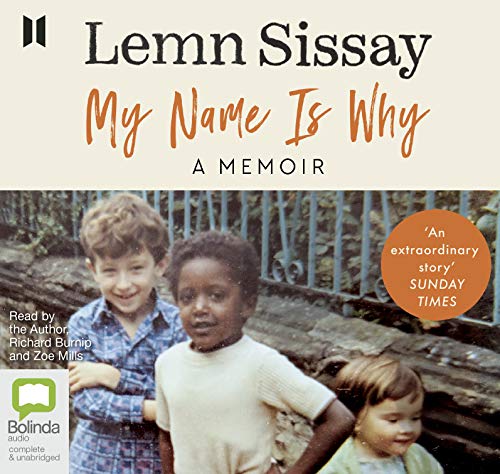
My Name Is Why
How does a government steal a child and then imprison him? How does it keep it a secret? This story is how.
At the age of seventeen, after a childhood in a foster family followed by six years in care homes, Norman Greenwood was given his birth certificate. He learned that his real name was not Norman. It was Lemn Sissay. He was British and Ethiopian. And he learned that his mother had been pleading for his safe return to her since his birth.
This is Lemn's story: a story of neglect and determination, misfortune and hope, cruelty and triumph.
Sissay reflects on his childhood, self-expression and Britishness, and in doing so explores the institutional care system, race, family and the meaning of home. Written with all the lyricism and power you would expect from one of the nation's best-loved poets, this moving, frank and timely memoir is the result of a life spent asking questions, and a celebration of the redemptive power of creativity.
At the age of seventeen, after a childhood in a foster family followed by six years in care homes, Norman Greenwood was given his birth certificate. He learned that his real name was not Norman. It was Lemn Sissay. He was British and Ethiopian. And he learned that his mother had been pleading for his safe return to her since his birth.
This is Lemn's story: a story of neglect and determination, misfortune and hope, cruelty and triumph.
Sissay reflects on his childhood, self-expression and Britishness, and in doing so explores the institutional care system, race, family and the meaning of home. Written with all the lyricism and power you would expect from one of the nation's best-loved poets, this moving, frank and timely memoir is the result of a life spent asking questions, and a celebration of the redemptive power of creativity.
audioCD
First published August 29, 2019
About the author
Lemn Sissay
43 books342 followersLemn Sissay OBE (born 21 May 1967), is a British author and broadcaster.
Ratings & Reviews
Friends & Following
Create a free account to discover what your friends think of this book!
Community Reviews
Displaying 1 - 30 of 1,299 reviews

September 3, 2019
I’ve really liked and admired the strong, pure focus of Lemn Sissay’s voice as a poet and a broadcaster at large every time I’ve had the opportunity to read or hear it. In this incendiary memoir of his childhood at the hands of the Authority (love how he personalised this depersonalised figure in the book) in Britain, 1967-1985, it could not be more muscular. This man is exactly my age (he’s 2 months older). What he experienced in his life as a young child completely alone in the world, stolen by the State from his mother by deceit, will break your heart - especially when you think of the many for whom this book speaks. But what is strongest here is the insistence he has on his name, place, right to be, spirit for survival, and his superpower - poetry. Being able to see the world as a poet gives him dominion over all the petty managers, social workers, ‘care’ home ‘family’ staff (some who try to help in their bumbling, inefficient ways) and most of all the pair of hopeless morons appointed to ‘parent’ him. Lemn (if you read these reviews): you are why. And you know that.
I will seek Lemn Sissay’s work out wherever and whenever it can be found. It is the least one can do to honour the brave heart of the man and all those who had the misfortune to share these experiences.
I will seek Lemn Sissay’s work out wherever and whenever it can be found. It is the least one can do to honour the brave heart of the man and all those who had the misfortune to share these experiences.

May 14, 2021
Lemn Sissay is a poet, author and broadcaster. He was the official poet of the London Olympics. He is fairly regularly seen on British TV. He now also advocates for children in care and is involved in a number of organisations concerned with their welfare. This is a memoir of his childhood in the care system: in a foster home until he was 12 and then in a series of children’s homes. Coincidentally as I write this he is on Mary Beard’s culture show talking about memory. Sissay’s mother was from Ethiopia and had come to Britain to study. After he was born, his mother had to go back to Ethiopia to see her dying father. Sissay was taken into care and his name changed to Norman Mark Greenwood. His mother wrote to try to get him back, but to no avail. He was 16 before he discovered his real name.
Sissay only managed to get hold of file from social services in Wigan n 2015, after thirty years of asking. He used what was in his file to help tell his story and there are extensive quotes from it in the book. Sissay also intersperses the book with poetry:
“I am not defined by darkness/Confided the night/Each dawn I am reminded/I am defined by light”
This is a searing indictment of the care system and the way children are treated. Of all the professionals in the book, there was only one who really tried to help Sissay and he was usually over-ruled by his superiors. There is a history of neglect and racism. The foster family were very religious and initially things went ok until they had children of their own and things went gradually downhill. Sissay also records how the care homes he lived in affected his mental health and identity:
“Memories in care are slippery because there’s no one to recall them as the years pass. In a few months I would be in a different home with a different set of people who had no idea of this moment. How could it matter if no one recalls it? Given that staff don’t take photographs it was impossible to take something away as a memory. This is how you become invisible. It is the underlying unkindness that you don’t matter enough. This is how you quietly deplete the sense of self-worth deep inside a child’s psyche. This is how a child becomes hidden in plain sight.”
Race obviously played a central role in Sissay’s upbringing and he charts how he was affected by it, even it subtle ways: his foster family nicknaming him Macavity (after Eliot, Macavity was quick, dark and a thief).
Some of this is heartbreaking and difficult to read, but it clearly shows how a child can be lost in the care system. Read it and weep.
Sissay only managed to get hold of file from social services in Wigan n 2015, after thirty years of asking. He used what was in his file to help tell his story and there are extensive quotes from it in the book. Sissay also intersperses the book with poetry:
“I am not defined by darkness/Confided the night/Each dawn I am reminded/I am defined by light”
This is a searing indictment of the care system and the way children are treated. Of all the professionals in the book, there was only one who really tried to help Sissay and he was usually over-ruled by his superiors. There is a history of neglect and racism. The foster family were very religious and initially things went ok until they had children of their own and things went gradually downhill. Sissay also records how the care homes he lived in affected his mental health and identity:
“Memories in care are slippery because there’s no one to recall them as the years pass. In a few months I would be in a different home with a different set of people who had no idea of this moment. How could it matter if no one recalls it? Given that staff don’t take photographs it was impossible to take something away as a memory. This is how you become invisible. It is the underlying unkindness that you don’t matter enough. This is how you quietly deplete the sense of self-worth deep inside a child’s psyche. This is how a child becomes hidden in plain sight.”
Race obviously played a central role in Sissay’s upbringing and he charts how he was affected by it, even it subtle ways: his foster family nicknaming him Macavity (after Eliot, Macavity was quick, dark and a thief).
Some of this is heartbreaking and difficult to read, but it clearly shows how a child can be lost in the care system. Read it and weep.

July 22, 2019
If ever there was a book to expose the failures and pointlessness of governments and local authorities, it was this one. This book made me fucking angry. The treatment of Sissay during his 17 years in care is an absolute fucking disgrace and everyone (save a couple of heroes he meets along the way) should be utterly ashamed of their involvement.
Sissay was left to swim against a tide of abuse, rejection and red tape, his only weapons his thirst for rebellion and obsession with Bob Marley.
The thrust of this book is undeniably passionate and moral and right. The writing wasn't quite as I hoped, however. I mean, it's fine and it's accessible, but I was hoping for something more daring. Also, the early proof I read is an absolute mess, full of errors and it feels very unfinished. But I guess they'll straighten that all out by the time it's published.
Sissay was left to swim against a tide of abuse, rejection and red tape, his only weapons his thirst for rebellion and obsession with Bob Marley.
The thrust of this book is undeniably passionate and moral and right. The writing wasn't quite as I hoped, however. I mean, it's fine and it's accessible, but I was hoping for something more daring. Also, the early proof I read is an absolute mess, full of errors and it feels very unfinished. But I guess they'll straighten that all out by the time it's published.

February 2, 2020
"I am British. But I am also a first-generation Ethiopian. Ethiopia is not what we think of in this country. It is a profound place. I had to unlearn everything I had learnt about Africa and everything I had ever learnt about black people."
My Name is Why is a scathing indictment of the British care system in the '80s. The same system that still fails many children to this very day.
Lemn gives us a harrowing account of how his childhood was impacted by the multitude of failures and neglect by people in a position of authority and trust with a duty of care. The memoir details the ways in which his mother was lied to by the authorities and denied the right to her child and the subsequent challenges Lemn faced as a result.
You can't help feeling anger and despair when reading this — I recommend the audiobook. So much of this story is heartbreaking but the damning documents by social services which serve as proof that he was not only denied his real family, his heritage, and his name but also the permission to dream, propels that feeling into something much deeper.
"Aspirations are free – and they would not even give us them"
Amidst all the pain Lemn's writing stands out beautifully. The simplicity in the way he tells his story makes it utterly compelling. The story is told for exactly what it was and depicts a man who managed to survive and flourish against all odds. There is no sense of defeatism and as heartbreaking as it is, it's also a tale of resilience and courage. It is because of this that Lemn is before us today as a remarkable and accomplished man.
"I do... to this day, think that success is being able to look in the mirror and know that I'm alright on that day. I don't believe I've made it–I believe that I'm making it. I believe that I've found my past so that I can live in the present, it's the most important thing to me. The books and the plays and the touring and the gigs and the speeches and the cash...it all pales into insignificance when compared with knowing that I didn't do anything wrong, and I'm going to be okay now."
I think this book is apt, important and given the plethora of issues still deeply rooted within the British care system, extremely relevant.
My Name is Why is a scathing indictment of the British care system in the '80s. The same system that still fails many children to this very day.
Lemn gives us a harrowing account of how his childhood was impacted by the multitude of failures and neglect by people in a position of authority and trust with a duty of care. The memoir details the ways in which his mother was lied to by the authorities and denied the right to her child and the subsequent challenges Lemn faced as a result.
You can't help feeling anger and despair when reading this — I recommend the audiobook. So much of this story is heartbreaking but the damning documents by social services which serve as proof that he was not only denied his real family, his heritage, and his name but also the permission to dream, propels that feeling into something much deeper.
"Aspirations are free – and they would not even give us them"
Amidst all the pain Lemn's writing stands out beautifully. The simplicity in the way he tells his story makes it utterly compelling. The story is told for exactly what it was and depicts a man who managed to survive and flourish against all odds. There is no sense of defeatism and as heartbreaking as it is, it's also a tale of resilience and courage. It is because of this that Lemn is before us today as a remarkable and accomplished man.
"I do... to this day, think that success is being able to look in the mirror and know that I'm alright on that day. I don't believe I've made it–I believe that I'm making it. I believe that I've found my past so that I can live in the present, it's the most important thing to me. The books and the plays and the touring and the gigs and the speeches and the cash...it all pales into insignificance when compared with knowing that I didn't do anything wrong, and I'm going to be okay now."
I think this book is apt, important and given the plethora of issues still deeply rooted within the British care system, extremely relevant.

September 1, 2019
Fantastic but heartbreaking read, devastating account of the treatment of children and systemic failures the care system in the UK.

October 15, 2023
Identity matters, and books like these are important.
This is Lemn Sissay's story.
Featuring many of the documents from social services in their original form along with Lemn's narrative of how each event translated into his childhood mind, we enter a world where a Black baby boy was put in the care of a white couple who then went on to have 4 children of their own.
It's a troubling read. Lemn did not know where he came from. He did not know the name on his birth certificate. His birth mother was portrayed negatively, he was conditioned to fear God. His developing years were unstable and unpredictable.
Five stars - In terms of the authorities (Wood End in particular), it's a massive thumbs down from me.
This is Lemn Sissay's story.
Featuring many of the documents from social services in their original form along with Lemn's narrative of how each event translated into his childhood mind, we enter a world where a Black baby boy was put in the care of a white couple who then went on to have 4 children of their own.
It's a troubling read. Lemn did not know where he came from. He did not know the name on his birth certificate. His birth mother was portrayed negatively, he was conditioned to fear God. His developing years were unstable and unpredictable.
Five stars - In terms of the authorities (Wood End in particular), it's a massive thumbs down from me.

Read
December 24, 2021Bearing in mind that I wouldn't have chosen this book of my own accord...
If you've had a job in the UK that involves frontline work with people in poverty; if, over the years, you've read quite a few long Guardian reports about problems with the British system for children in care, or about adoption and race, you may feel, as I did, like you've heard a lot of this before.
I'm pretty sure that in the past, I'd read, or heard on the radio, a fairly detailed piece about how Lemn Sissay himself ended up in the care system as a baby and young child, and the communication failures and inflexibility that meant late 1960s-early 1970s Wigan Social Services did not know or care that his Ethiopian mother would willingly have looked after him and taken him to her home country.
There are echoes of Jeanette Winterson in the Lancashire location and in the intransigence of devoutly religious parents clashing with a child who was different in both identity and creative gifts.
I think that it's a great choice of format to include long excerpts and notes from social services casenotes, with commentary, to show different sides of what went on, and also, for readers who work in allied fields, to be reminded so vividly of how there are other powerful and valid perspectives on what they observe. It could also feel like a hand-hold for other people who need to face potentially frightening and retraumatising official records about themselves, to see how one man has reclaimed his story from his. And for others who were in the same residential homes as Sissay, especially the sadistic Wood End, there is the vindication that the public has heard, through such an eloquent and respected voice, what sort of conditions they endured.
As the 1970s become the 80s, one can see the effects of social change as a greater proportion of the professionals dealing with the young Lemn Sissay are kind people who treat the young man as an individual, and understand his personality and cultural interests (albeit these workers are all still white). But there remain an old guard of ageing, often male staff who are responsible for regimes that are unpleasant and unnecessarily restrictive to various extents.
Although this was a brilliant reading on audio with actors reading the case files and the author reading his memoir, I still stalled at the last hour for weeks - although the reader knows the author made a great success of his life, and writes with vivid poetic flair about his childhood, it's a tough story to hear. It's unlikely to be a book you turn to when you want an hour of relaxing escapism.
Towards the end of the book, there are increasing mentions of the author acquainting himself with Black culture in his teens: Bob Marley and Rastafarianism, campaign groups like Black and in Care, a theatre group, musicians... This is the story I'd have liked to hear: about what it was like being young and Black in the North in the 80s, the scenes the author hung out in and how he got to be who he is now. Maybe these will be in a sequel.
If you've had a job in the UK that involves frontline work with people in poverty; if, over the years, you've read quite a few long Guardian reports about problems with the British system for children in care, or about adoption and race, you may feel, as I did, like you've heard a lot of this before.
I'm pretty sure that in the past, I'd read, or heard on the radio, a fairly detailed piece about how Lemn Sissay himself ended up in the care system as a baby and young child, and the communication failures and inflexibility that meant late 1960s-early 1970s Wigan Social Services did not know or care that his Ethiopian mother would willingly have looked after him and taken him to her home country.
There are echoes of Jeanette Winterson in the Lancashire location and in the intransigence of devoutly religious parents clashing with a child who was different in both identity and creative gifts.
I think that it's a great choice of format to include long excerpts and notes from social services casenotes, with commentary, to show different sides of what went on, and also, for readers who work in allied fields, to be reminded so vividly of how there are other powerful and valid perspectives on what they observe. It could also feel like a hand-hold for other people who need to face potentially frightening and retraumatising official records about themselves, to see how one man has reclaimed his story from his. And for others who were in the same residential homes as Sissay, especially the sadistic Wood End, there is the vindication that the public has heard, through such an eloquent and respected voice, what sort of conditions they endured.
As the 1970s become the 80s, one can see the effects of social change as a greater proportion of the professionals dealing with the young Lemn Sissay are kind people who treat the young man as an individual, and understand his personality and cultural interests (albeit these workers are all still white). But there remain an old guard of ageing, often male staff who are responsible for regimes that are unpleasant and unnecessarily restrictive to various extents.
Although this was a brilliant reading on audio with actors reading the case files and the author reading his memoir, I still stalled at the last hour for weeks - although the reader knows the author made a great success of his life, and writes with vivid poetic flair about his childhood, it's a tough story to hear. It's unlikely to be a book you turn to when you want an hour of relaxing escapism.
Towards the end of the book, there are increasing mentions of the author acquainting himself with Black culture in his teens: Bob Marley and Rastafarianism, campaign groups like Black and in Care, a theatre group, musicians... This is the story I'd have liked to hear: about what it was like being young and Black in the North in the 80s, the scenes the author hung out in and how he got to be who he is now. Maybe these will be in a sequel.

November 28, 2019
“My mother is from the Amhara people of Ethiopia. It is a tradition of the Amhara to leave messages in the first name of the child. In Amharic the name Lemn means Why?”
The poet/playwright grew up thinking his name was Norman Greenwood. He was simply the oldest child of a white family near Wigan. Though they never formally adopted him, the Greenwoods were his long-term foster parents for 12 years. By adolescence he was perceived as being too difficult – for acts of rebellion normal for his age but also his confusion over race and religion – and was taken into a series of children’s homes, followed by Wood End ‘Assessment Centre’, which sounds little better than Nickel Academy in Colson Whitehead’s novel. You can’t help but feel sorry for this mistreated young man who never knew that his Ethiopian mother longed to reclaim him in his early years. Though he writes fondly of the individual case workers who helped him, he believes the system as a whole failed him.
The book relies far too heavily on social workers’ case reports, which are reprinted in facsimile form all through the text and make it seem like (as surely was true) Sissay was using them to piece together the mere scraps of memory he retained from those years. I’ve read several memoirs similar to this one in the last year or two: Plot 29, Maggie and Me, Lowborn and Red Dust Road. This didn’t stand out particularly for me, though the chapter epigraphs in verse made me eager to try Sissay’s poetry. For example, “Secrets are the stones / That sink the boat / Take them out, look at them / Throw them out and float”.
The poet/playwright grew up thinking his name was Norman Greenwood. He was simply the oldest child of a white family near Wigan. Though they never formally adopted him, the Greenwoods were his long-term foster parents for 12 years. By adolescence he was perceived as being too difficult – for acts of rebellion normal for his age but also his confusion over race and religion – and was taken into a series of children’s homes, followed by Wood End ‘Assessment Centre’, which sounds little better than Nickel Academy in Colson Whitehead’s novel. You can’t help but feel sorry for this mistreated young man who never knew that his Ethiopian mother longed to reclaim him in his early years. Though he writes fondly of the individual case workers who helped him, he believes the system as a whole failed him.
The book relies far too heavily on social workers’ case reports, which are reprinted in facsimile form all through the text and make it seem like (as surely was true) Sissay was using them to piece together the mere scraps of memory he retained from those years. I’ve read several memoirs similar to this one in the last year or two: Plot 29, Maggie and Me, Lowborn and Red Dust Road. This didn’t stand out particularly for me, though the chapter epigraphs in verse made me eager to try Sissay’s poetry. For example, “Secrets are the stones / That sink the boat / Take them out, look at them / Throw them out and float”.

February 17, 2020
Well I finished Lemn Sissay’s My Name Is Why today and immediately fell apart. I grieved this book. I grieved this childhood. A memoir about his theft in infancy from his Ethiopian mother’s care in a “home” for young mothers in rural England, through his failed white foster placement, and then through various boy’s “homes” until his own ingenuity springs him from the system, this is really a memoir about a beautiful boy who sows poetry from seeds of racism, and neglect, and abuse, and torture. The art in this book was multitudinous, but for me it was primarily twofold. In the one instance Sissay gets all of his documents as a ward of the state from birth to adulthood, and he intersperses physical copies of these in the linear story of his life, interpreting them as he writes, highlighting how bureaucracy steals the love that should shape every childhood, and also steals the truths that young Sissay experiences. Through this he demonstrates how semantics turn regular childhood actions into problematic behaviours, and how it erases the violence inflicted on his young body. And then, secondly, Sissay writes with the honesty, the brightness, the kindness, and the hurt of a young child, which screams out the absurdity and inherent brutality of a system that separates a child from any promise of love and attachment. He takes bureaucratic language and turns it on it’s head with his truth. The actual poetry in this book is so spare and says so much, I was transformed. I can’t say enough what a visual experience this was. And what a visceral one. My breath was taken away more than once, and I held my children closer every day I picked up this book. A memoir for the ages, I can only hope that Sissay writes the rest of his life for us as well. Thank you @canongatebooks for this review copy.
February 27, 2026
“Memories in care are slippery because there’s no one to recall them as the years pass. In a few months I would be in a different home with a different set of people who had no idea of this moment. How could it matter if no one recalls it? Given that staff don’t take photographs it was impossible to take something away as a memory. This is how you become invisible. It is the underlying unkindness that you don’t matter enough. This is how you quietly deplete the sense of self-worth deep inside a child’s psyche. This is how a child becomes hidden in plain sight.
My mother is from the Amhara people of Ethiopia. It is a tradition of the Amhara to leave messages in the first name of the child. In Amharic the name Lemn means Why?”
Sissay was born in 1967 to an Ethiopian mother shortly after she moved to England to study. He was taken into long-term foster care in Wigan and named Norman Greenwood. After being reunited with his mother aged 18, she told him he had been named Lemn, which meant "why" in Ethiopia's Amharic language, and she had made unsuccessful efforts to get him back. He went on to fight a 34-year battle with Wigan Council to get hold of his records and settled a court case against the authority over his treatment. This was an emotional roller coaster from page 1 and I did not want this to end.
My mother is from the Amhara people of Ethiopia. It is a tradition of the Amhara to leave messages in the first name of the child. In Amharic the name Lemn means Why?”
Sissay was born in 1967 to an Ethiopian mother shortly after she moved to England to study. He was taken into long-term foster care in Wigan and named Norman Greenwood. After being reunited with his mother aged 18, she told him he had been named Lemn, which meant "why" in Ethiopia's Amharic language, and she had made unsuccessful efforts to get him back. He went on to fight a 34-year battle with Wigan Council to get hold of his records and settled a court case against the authority over his treatment. This was an emotional roller coaster from page 1 and I did not want this to end.
June 3, 2020
Lemn, I cheer your courage, your intelligence, your bravery, your voice.

October 31, 2020
I hadn't heard much about Lemn Sissay's life before reading his memoir My Name is Why but I decided to buy the book as I had seen it a few times via bookstagram. Bookstagram does inspire most of my reading choices these days!
In My Name is Why, Lemn Sissay recounts his story of how he spent his childhood and teenage years living with a foster family before being transferred from one care home to another, as well as the cruelty of the social care system in Britain. Lemn's life story is told via official social records alongside his own personal memories of his experience in care. It wasn't until the age of seventeen that Lemn was finally able to see his own birth certificate and ultimately, this led to him finding out that his name was not actually 'Norman Greenwood' as he had been called for the first two decades of his life, it was actually 'Lemn Sissay'. He also found out that as a baby, he had been taken away from his Ethiopian mother and put into care. Despite multiple tries from his birth mother to reclaim her son, the British social care system denied her and instead, forced him to stay with his foster family.
I found his memoir to be an eye-opening experience of how awful and racist the British social care system had been a few decades ago. With this book, Lemn explores themes of race, adoption, cruelty, identity, hope and the sense of family. It frustrated me to read how badly treated he had been but it was also inspiring to hear what kind of man Lemn grew up to be despite his tough and unstable upbringing. It's quite a short memoir so you could probably finish it in a day or two, but it's one that you will remember for a while. I would say that the format of the book did take a little while to get used to as it regularly interchanges between Lemn's narrative and his social care reports.
In My Name is Why, Lemn Sissay recounts his story of how he spent his childhood and teenage years living with a foster family before being transferred from one care home to another, as well as the cruelty of the social care system in Britain. Lemn's life story is told via official social records alongside his own personal memories of his experience in care. It wasn't until the age of seventeen that Lemn was finally able to see his own birth certificate and ultimately, this led to him finding out that his name was not actually 'Norman Greenwood' as he had been called for the first two decades of his life, it was actually 'Lemn Sissay'. He also found out that as a baby, he had been taken away from his Ethiopian mother and put into care. Despite multiple tries from his birth mother to reclaim her son, the British social care system denied her and instead, forced him to stay with his foster family.
I found his memoir to be an eye-opening experience of how awful and racist the British social care system had been a few decades ago. With this book, Lemn explores themes of race, adoption, cruelty, identity, hope and the sense of family. It frustrated me to read how badly treated he had been but it was also inspiring to hear what kind of man Lemn grew up to be despite his tough and unstable upbringing. It's quite a short memoir so you could probably finish it in a day or two, but it's one that you will remember for a while. I would say that the format of the book did take a little while to get used to as it regularly interchanges between Lemn's narrative and his social care reports.

February 14, 2020
I actually read My Name Is Why a few days back, but I really needed some time to fully digest my thoughts before typing up this review. This book will leave you angry, frustrated yet interested all at the same time. The shocking true events of Sissay himself being adopted and part of the social care system until adulthood and then learning the reality, the bigger picture that had been shielded from him all his life. Told in short chapters with images of social care reports included, it's a memoir that you won't forget in a hurry. Also, Sissay's poetry is fantastic to read. Discussions on racism, being adopted, portrayed as a person which isn't accurate. Overall- I would recommend it!

May 12, 2020
Unfortunately, this was quite a tedious read. I really did not like the way Sissay decided to format the book, with most of the narrative being told in social work/government entries, with little-to-no exposition made on Sissay's part; almost like inserting a quote in an essay and that being the sentence, with no analysis.
The story is tragic and should be told, I think I would have preferred the story to be completely narrative. I imagine I would have connected more and been able to visualise his story and life better if this had been the case. But this could be a personal viewpoint as this book has been lauded with praise.
The story is tragic and should be told, I think I would have preferred the story to be completely narrative. I imagine I would have connected more and been able to visualise his story and life better if this had been the case. But this could be a personal viewpoint as this book has been lauded with praise.

May 23, 2022
Heartbreaking. Absolutely frustrating.
I first encountered Lemn and his story about 7/8 years ago and every time, I'm filled with such deep sadness and rage on his behalf. This book offers more details and concrete layers to Lemn's early disheartening journey.
Lemn includes considerable documentation in this book, to the point that more than half the book is essentially receipts. From a writing perspective, it's an interesting approach to use so much of such documentation as a plot, pace, and character development mechanism; provocative implications and commentary on authors and authorities of history, and the form and formats of autobiographical narratives. As a reader, I appreciated the grounding veracity these documents provided while I was also left wanting more of the story from Lemn himself, in his own words and interpretation. Especially so because the book is a short read and covers roughly an 18-years journey in about 200 pages. It felt like a contracted version with Lemn letting a large portion of his story be told via others' telling of it. It left me conflicted in a number of ways.
I first encountered Lemn and his story about 7/8 years ago and every time, I'm filled with such deep sadness and rage on his behalf. This book offers more details and concrete layers to Lemn's early disheartening journey.
Lemn includes considerable documentation in this book, to the point that more than half the book is essentially receipts. From a writing perspective, it's an interesting approach to use so much of such documentation as a plot, pace, and character development mechanism; provocative implications and commentary on authors and authorities of history, and the form and formats of autobiographical narratives. As a reader, I appreciated the grounding veracity these documents provided while I was also left wanting more of the story from Lemn himself, in his own words and interpretation. Especially so because the book is a short read and covers roughly an 18-years journey in about 200 pages. It felt like a contracted version with Lemn letting a large portion of his story be told via others' telling of it. It left me conflicted in a number of ways.

September 8, 2019
Really recommend this book. Very powerful but not an easy read. Raises so many questions about identity, family dynamics, the times, unchallenged everyday racism, as well as humanity and the lack of humanity

September 22, 2019
A story that must be heard, no matter how painful. We seem to live in a society where blaming the unfortunate offers absolution for the conscience and justifies an underfunded, under-resourced care system that is far from ideal. Perhaps this book will change some minds.

October 18, 2019
'Hurt people hurt people' is one of many memorably lines in this heartbreaking book. It tells the story of the theft of a boy from his unmarried mother and his subsequent fostering by a family unsuited to his needs. It's noit about scars, as he says, it's about his astonishing ability to survive. V hard to write a review without spoilers but his name is changed, his Ethiopian heritage denied, his character oppressed. It's a tough rea din parts but worth it. Excelelnt use of official materials including the fies he had to fight to get. I recognised much of my own childhood here--being misunderstood, even disavowed, the abuse at hands of uncaring adults, the 'underleying unkindness'. I also recognised the healing power of friendship and of stories--writing poems saves this boy. This book might save you.

July 11, 2020
How Lemn Sissay survived and turned out to be the man he is today is due only to the human spirit refusing to give in to the horrors heaped upon him as a youth.
This is yet another horrifying chronicle of those in charge of taking care of disadvantaged children failing in the most monstrous manner. And might I mention that this takes place in Great Britain the 1960’s, not the 1860’s.
In this case the original foster parents are the worst. How Christian people could treat a child in their care in this manner beggars belief. They give Christianity a bad name!
This is a horrifying story with a happy ending (for once). I bow down to the strength of character and tenacity displayed by this author.
This is yet another horrifying chronicle of those in charge of taking care of disadvantaged children failing in the most monstrous manner. And might I mention that this takes place in Great Britain the 1960’s, not the 1860’s.
In this case the original foster parents are the worst. How Christian people could treat a child in their care in this manner beggars belief. They give Christianity a bad name!
This is a horrifying story with a happy ending (for once). I bow down to the strength of character and tenacity displayed by this author.

January 24, 2020
Devastating indictment of foster care, adoption, racism, and treatment centers especially for black children.
However, the construction of the book was terrible. Much of the book was photocopies of reports from his files (and then retyped). This stopped any narrative flow. I would have appreciated more story in his voice and files placed in footnotes or appendices or used more sparingly.
However, the construction of the book was terrible. Much of the book was photocopies of reports from his files (and then retyped). This stopped any narrative flow. I would have appreciated more story in his voice and files placed in footnotes or appendices or used more sparingly.

March 5, 2023
When poet Lemn Sissay was a young adult he requested that he see the files pertaining to his adoption and family background.
What he was to discover was to change his whole outlook on life.
My name is Why is that story.
This memoir details Lemn Sissay’s years from his first foster family, then being moved around to different homes. On the way he tries to discover his identity. Name changes, parentage and roots all feature in the book and lemn Sissay’s mission is to uncover all the secrets that the government had hidden from him.
The end result is a disturbing expose of how adopted children are treated, and in the case of Lemn Sissay some information is deliberately denied. Now whether laws have changed due to this book, I don’t know but it does make the reader aware that the state can have a big role in your direction in life. There are times when Sissay compares the government practices to the ones utilised in Orwell’s Nineteen Eighty-Four. The fact that My Name is Why is populated with documents and one sees what is written, the shock just hits harder.
As memoirs go My Name is Why is quite unique. It’s also a quick read but despite the deceptive breeziness, it is uneasy reading, especially knowing that such practices may exist. Definitely an eye-opener.
What he was to discover was to change his whole outlook on life.
My name is Why is that story.
This memoir details Lemn Sissay’s years from his first foster family, then being moved around to different homes. On the way he tries to discover his identity. Name changes, parentage and roots all feature in the book and lemn Sissay’s mission is to uncover all the secrets that the government had hidden from him.
The end result is a disturbing expose of how adopted children are treated, and in the case of Lemn Sissay some information is deliberately denied. Now whether laws have changed due to this book, I don’t know but it does make the reader aware that the state can have a big role in your direction in life. There are times when Sissay compares the government practices to the ones utilised in Orwell’s Nineteen Eighty-Four. The fact that My Name is Why is populated with documents and one sees what is written, the shock just hits harder.
As memoirs go My Name is Why is quite unique. It’s also a quick read but despite the deceptive breeziness, it is uneasy reading, especially knowing that such practices may exist. Definitely an eye-opener.

January 3, 2022
This book is painfully eloquent, given the issues at stake (racism, children in care, white saviourship, child abuse). Sissay writes so beautifully and calmly on such tragic and fraught events. I loved that each chapter opens with a stanza of his poetry - a testament of the person he is today, waving to the boy he was. His inclusion of letters and reports from his files, written by the people who governed his care, are well placed and he observes and interrogates their contents honestly. He has a trusting relationship with his readers, asking them to reason with what happened to him and why. Everyone should read this book, especially young adults.

August 25, 2024
This read made me so angry at the government responsible for the agony of a child, all the people who stood by and did nothing to return him to his mother and the foster family that gave him false love.
I hope the book gains more awareness and shows more people how this is happening to many children.
I would’ve liked more personal insight from the author rather than all the notes documents from the social workers but you can see how they twisted things to negatively affect him.
I hope he can one day find peace despite this horrible upbringing.
I hope the book gains more awareness and shows more people how this is happening to many children.
I would’ve liked more personal insight from the author rather than all the notes documents from the social workers but you can see how they twisted things to negatively affect him.
I hope he can one day find peace despite this horrible upbringing.

October 12, 2020
A fourteen-year old boy should never have to ask the questions Who is my mother? and Who are my family? These were not easy questions to formulate in the mind or the mouth because the question comes with others . . . What did I do to deserve this?
This memoir is poet Lemn Sissay's fact-finding mission into his own past. In 2015, after a 'thirty-year campaign' to be allowed to see his own records, Sissay finally discovers how and why he became a ward of the State and the official record of his nearly 18 years 'in care'. At all times, the word 'care' is ironic - as Sissay finds the system the antithesis of caring. The account ends with Sissay's 'release' into state-assisted housing: a flat on a housing development called Poet's Corner. 21 Cowper Avenue: an auspicious address for a young man who had already begun writing poetry as a way to make sense of his feelings and flesh out his identity.
Sissay relies heavily on original documents (both from his social worker and others) to chart his 'progress' (rather, descent) through the fostering system. His own memories and self-analysis run alongside these official reports; sometimes he offers personal reminiscences to fill in the blanks of the official reports, sometimes he offers explanations or contradictions. His poetry (a quatrain at the beginning of each chapter) punctuates the narrative and becomes an allusive reference to his emotions.
It's a jarring, unsettling read - and a terrible indictment of the cruel system which Sissay calls The Authority. The cruelty begins when Sissay is taken away from his mother - a young Ethiopian woman who had come to England to attend a Bible College. Although she returns to Ethiopia after the birth, she tries on more than one occasion to trace and reclaim her son. The Authority denies access to her, and prefers to leave Lemn (called Norman at this point) with his foster family. Shockingly, when Sissay is 12, his foster parents - who he has always thought of his family - decide to send him back into care. For the next six years, as becomes increasingly angry and depressed, he becomes trapped in a vicious cycle: minor infractions of behaviour result in increasingly uncaring, degrading and even violent care settings. His final 'home', the Wood End Assessment Centre, is basically just a form a imprisonment.
There were two sort of child-inmates: young people on remand (awaiting court appearances) and young people in care. It was a technical difference because we were all treated like charged criminals. I was under surveillance twenty-four hours a day. {...} Anyone who stepped out of line was beaten.
In addition to all of this, Sissay is struggling with being black in an overwhelmingly white (and often overtly racist) Lancashire. His skin colour is just another aspect of his otherness. His exploration of his racial difference is a story that runs parallel to his childhood in the foster care system.
This is a life story with a happy ending because Lemn Sissay grows up to become not just a successful writer but an activist in the field of 'care and 'care leavers'. After reading his story, though, one cannot help but think what a miracle it is that he salvaged something so empowering from a childhood that consistently denied him love and support.

February 20, 2020
My Name Is Why is Lemn Sissay's poetic, heartbreaking, scathing look at the foster care system in the UK and how he was failed by it time and time again. Sissay's mother was an Ethiopian student who studying abroad at a university in the UK when she became pregnant. Due to circumstances beyond her control she was unable to care for him right away and he was put in temporary foster care. He could never be adopted though because she has refused to sign her rights away. So begins the memoir which ends with Sissay receiving his file and leaving the system.
The memoir is set up chronologically and is Sissay's experiences interposed with documents and letters from his file by his care workers and mother, who inquired for years to get him back. This made for an intensely emotional read. I along with everyone in the group read fell in love with Sissay's poetry at the start of each chapter. I would definitely like to read more of it.
As a side note, because of the way the book is laid out, with the documents throughout, I wondered how it would translate in the audiobook format. Thankfully the library offered it through BorrowBox so I listened to a part of it and nothing at all was lost. If anything, hearing Sissay read it added a special facet to the memoir. Definitely a fine option for audiobook lovers as well.
The memoir is set up chronologically and is Sissay's experiences interposed with documents and letters from his file by his care workers and mother, who inquired for years to get him back. This made for an intensely emotional read. I along with everyone in the group read fell in love with Sissay's poetry at the start of each chapter. I would definitely like to read more of it.
As a side note, because of the way the book is laid out, with the documents throughout, I wondered how it would translate in the audiobook format. Thankfully the library offered it through BorrowBox so I listened to a part of it and nothing at all was lost. If anything, hearing Sissay read it added a special facet to the memoir. Definitely a fine option for audiobook lovers as well.

July 2, 2020
A compelling and powerful memoir which reflects the resilience required to be ‘Other’ in a system that does not cater to you. Sissay’s beautiful poetry is interspersed throughout each chapter and the use of social workers’ case notes is very effective.

February 9, 2020
An incredibly moving memoir about the failure and systemic racism of the care system in Britain a few decades ago.

August 19, 2021
A beautiful book that I will be thinking about for a long time.
I feel lucky to have discovered Lemn Sissay, and look forward to exploring his collection of poetry books and documentaries
I feel lucky to have discovered Lemn Sissay, and look forward to exploring his collection of poetry books and documentaries

September 3, 2020
Lemn Sissay’s extraordinary and distressing story of his life in a foster home and then in local authority care is brought vividly alive by his extensive use of the original documents recording exactly what happened to him - documents that he was only recently given access to.
I read it after watching the BBC Omnibus documentary on Lemn Sissay and I’d advise anybody intending to read his book to watch the TV programme because it updates his story by showing his remarkable achievements as a poet, writer and performer and shows him meeting up with his original family in Ethiopia.
I read it after watching the BBC Omnibus documentary on Lemn Sissay and I’d advise anybody intending to read his book to watch the TV programme because it updates his story by showing his remarkable achievements as a poet, writer and performer and shows him meeting up with his original family in Ethiopia.

December 8, 2025
ich fands so schön irgendwie, auch krasse persönliche geschichte, aber ja war toll! interessant für alle natürlich und besonders für die die mit jungen leuten arbeiten (looking at you..👀)
Displaying 1 - 30 of 1,299 reviews