

What do you think?

The Incompletes
A world-spanning intellectual thriller in the vein of Sebald
“Now I am going to tell the story of something that happened one night years ago, and the events of the morning and afternoon that followed.”
The Incompletes begins with this simple promise. But to try to get at the complete meaning of the day’s events, the narrator must first take us on an international tour—from the docks of Buenos Aires, to Barcelona, until we check in at the gloomy Hotel Salgado with the narrator’s transient friend Felix in Moscow. From scraps of information left behind on postcards and hotel stationery, the narrator hopes to reconstruct Felix’s stay there. With flights of imagination, he conjures up the hotel’s labyrinthine hallways, Masha, the captive hotel manager, and the city’s public markets, filled with piles of broken televisions.
Each character carries within them a secret that they don’t quite understand—a stash of foreign money hidden in the pages of a book, a wasteland at the edge of the city, a mysterious shaft of light in the sky. The Incompletes is a novel disturbed by this half-knowledge, haunted by the fact that any complete version of events is always just outside our reach.
“Now I am going to tell the story of something that happened one night years ago, and the events of the morning and afternoon that followed.”
The Incompletes begins with this simple promise. But to try to get at the complete meaning of the day’s events, the narrator must first take us on an international tour—from the docks of Buenos Aires, to Barcelona, until we check in at the gloomy Hotel Salgado with the narrator’s transient friend Felix in Moscow. From scraps of information left behind on postcards and hotel stationery, the narrator hopes to reconstruct Felix’s stay there. With flights of imagination, he conjures up the hotel’s labyrinthine hallways, Masha, the captive hotel manager, and the city’s public markets, filled with piles of broken televisions.
Each character carries within them a secret that they don’t quite understand—a stash of foreign money hidden in the pages of a book, a wasteland at the edge of the city, a mysterious shaft of light in the sky. The Incompletes is a novel disturbed by this half-knowledge, haunted by the fact that any complete version of events is always just outside our reach.
- GenresFictionLiterature
180 pages, Paperback
First published July 1, 2004
About the author
Sergio Chejfec
39 books52 followersSergio Chejfec is an Argentine Jewish writer. He was born in Buenos Aires in 1956. From 1990 to 2005 he lived in Venezuela, where he published Nueva sociedad, a journal of politics, culture and the social sciences. He currently lives in New York City and teaches in the Creative Writing program in Spanish at New York University.
Chejfec has written novels, essays and a poetry collection. His works include Lenta biografía (1990), Los planetas (1999), Boca de lobo (2000), Los incompletos (2004), Baroni: un viaje (2007), Mis dos mundos (2008), and La experiencia dramática (2012). He has been compared to Juan José Saer, which he finds flattering but not accurate. His novels usually feature a slow-paced narration that interweaves a minimal plot with reflection. Memory, political violence, and Jewish-Argentine culture and history are some of the recurring themes in his work.
Chejfec has written novels, essays and a poetry collection. His works include Lenta biografía (1990), Los planetas (1999), Boca de lobo (2000), Los incompletos (2004), Baroni: un viaje (2007), Mis dos mundos (2008), and La experiencia dramática (2012). He has been compared to Juan José Saer, which he finds flattering but not accurate. His novels usually feature a slow-paced narration that interweaves a minimal plot with reflection. Memory, political violence, and Jewish-Argentine culture and history are some of the recurring themes in his work.
Ratings & Reviews
Friends & Following
Create a free account to discover what your friends think of this book!
Community Reviews
Displaying 1 - 17 of 17 reviews

Read
September 28, 2019I wouldn't say The Incompletes is Weird fiction, but I would say it shares that sense that what we are experiencing is akin to a dream. And aren't dreams sometimes illogical and silly? Haven't you ever woken up and wondered why you just spend the night dreaming about buying 25 cans of soup at the supermarket? That is the kind of feeling you get with The Incompletes, that this is not really Moscow, but a sort of soporific version of Moscow.
Read my full review https://www.npr.org/2019/09/28/765193...
Read my full review https://www.npr.org/2019/09/28/765193...

July 25, 2021
I have no idea why I chose this book in the first place -- it doesn't show up on anyone's list that I go to for reference, there are no stellar reviews, and it definitely wasn't one I'd have picked up on my own. Given its amorphous shape and stagnant propulsion, I'm surprised I spent an entire morning reading it cover to cover. It reminded me in tone of the work of Patrick Modiano, given the its dreamy quality. And there were passages that literally took my breath away. The encounters in a surreal hotel in Moscow display the paradox of making a place a home for a short time, a place that has housed many others before and after you, but interpersonal experience is non existent, and even the shapes of the rooms are disquieting and lead one to wonder why anyone would chose to stay even for a night. As I said, I read it in one sitting, but warn anyone considering it, to be forewarned.
January 30, 2022
I loved his "My two worlds", and I still consider him as one of my favorite contemporary writers however little I have read.
But.
This was, true to its title, quite incomplete. Perhaps that's the point - after all our memory of our life's past events is almost always incomplete, and history however painted extravagantly with complete care and attention will always remain incomplete, and Chejfec recounts few days and whole lot in the past between him (the narrator) and his friend, who leaves him to board a ship to Moscow.
At first we are introduced to his friend Felix - who doesn't identify himself nationally - who is a seeker of serendipities; who loves to be guided by whatever the landscape or surrounding offers, and hence embarks on a journey or multiple journeys. The main destination being Moscow, whose geography takes up the whole book.
I had trouble initially to understand the historical time this is set in - is it soviet era or post? Only well past the middle of the book we are informed that it is more of a recent past.
Before this work turning into a commentary, towards its end, on photography, and documentary depicting soviet era crimes (?) --- thereby sustaining the memory of their history --- there was depiction of lulling Moscow streets, neglected, dark hotel where his friend Felix stays, a lady- an owner of the hotel, and her chance discovery of bundle of money and a book, which leads her to semi-read her first book and invent Felix - her hotel stayer - to her whims by being its author, a figurine - an outsider, buried in muds of neglected earth which Felix alone discovers which he guards (path) secretively from others, particularly Masha the hotel owner, and many partially developed sketching strokes of - life in Moscow, time, memory, etc.
There are just too many elements thrown in this short novella. You start to get warmed up to a particular one and then it completely changes to something else, and once you get your head around this and work the connections between both, it changes the track completely.
It is a worth a read, but a highly disjointed and incomplete recollections on Moscow, and its troubled history and its inhabitants, an immigrant's (Felix) status in the world (particularly through identification with vestiges of neglected corpses of history), time, memory, documentaries of memory, and guilt, and, etc, etc.
Certain passages reminded me of Sergei Loznitsa's Documentaries, particularly portrait!

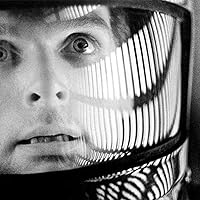
A still from the film.
I will leave you with a small passage from the book:
Now I understand: the truth is that I never planned to finish the job, or probably even start it. Instead, I saw it as a slow and secret labor, repeated over several days without making any progress. Come to think of it, this stasis was what I wanted for my own life - not inaction, but rather the absence of change, and also a task that would justify my existence to others, whatever opinions my personal choices might generate.
This I take it (though I may be wrong) is an indirection allusion to this project, which he establishes as a metaphor of a hammer (a single - perhaps a pen?) striking and knocking down whatever that has been built in this world (an act of nullifying history (of identity) - Argentinian or the whole world?)
I wait for his future next works, still hopeful of finding a work that would come closer to his masterpiece "My two worlds". In the meanwhile, if possible I should get to his other works, though not in any near future, since I am starting Joyce and he is gonna occupy my mind for some good time to come!

March 24, 2020
Reading this book made me think of what it must be like to explore an uncharted cave system. At first I was struck by the unique structure. I marveled at the labyrinthine sentences that meandered along and later doubled back on themselves. But at about the 2/3 mark I started to feel claustrophobic. My explorations started to feel less fun and more like work. Overall I liked this book. As an experimental writing exercise it's certainly very impressive. But after getting stuck in some tight spaces I'm not sure I can recommend it as an enjoyable reading experience.

February 20, 2020
....Come to think of it, this stasis was what I wanted for my own life—not inaction, but rather the absence of change, and also a task that would justify my existence to others, whatever opinions my personal choices might generate. Maybe Felix was searching for the same thing, along a different path. His choice proved to be the most correct and the one best suited to the way things move; whereas I was not able to avoid the snares of immobility.
Sometimes I think there is a puppeteer directing my steps and those of everyone we know, Felix included. Our awareness is always partial; moreover, we seek to conceal and to show ourselves at the same time. The next morning, once the column of light had faded and the day had definitively begun, I passed the same places near the port and in Retiro on my return as I had on my way there. My clothes were soaked, as I said, and I was feeling slightly drugged from exhaustion. Felix’s goodbye, the preparations aboard the boat, and the start of his extended journey that still continues today—all that seemed to occupy a distant moment. I would not be exaggerating if I said that those things seem closer to me now than they did then. A new era began that morning, a new time: one of waiting for the next memory to emerge.
This novel, indeed, was a tough nut to crack for me. I had difficulty switching myself into this book; it was a hard narrative to get into. The novelistic structure and the manner of composition are some of the strangest I have ever came across in modern literature. There are elements of the French noveau roman in this and some random passages of this wonderfully off-beat narrative borrow a lot from that of Robbe-Grillet in that the narrative never seems to be driven through the characters but more so through the character and its relationship to what he sees or experiences in the surrounding environment.
Come to think of it, there are relatively few novels of recent memory in my mind that picks on a narrative in this manner emphasizing the very fact that Chejfec holds a unique place in modern Argentinian letters; among the modern crop from Argentina starting from Ricardo Piglia and Juan Jose Saer continuing to that of Rodrigo Fresan and Guillermo Saccomanno, Sergio Chejfec seems to be the most different.
The thread of the narrative takes its course over a day starting from the docks of Buenos Aires to the porticos of the Hotel Salgado in Moscow with its beguiling manager. The narrative reconstructs the entire day's events mostly from the perspective of a third person narrator who in the most delicate and most meticulous (if one can suppose so!) manner deconstructs every labyrinthine alley or marketplace tunneling through every nook and cranny like a rodent burrowing through every minute corner of the place. But there is one drawback, however. There is supposed to be an element of mystery involved and we are meant to believe that each character harbours a secret of his own. The author fails to sustain that aura of mystery that was palpable in the first few pages.
Overall, this one novel is mostly about loneliness and isolation, and these are the two prominent themes I could find. Novelistic stasis, not inaction, or rather the absence of change, and the undesirability of it.
Sometimes I think there is a puppeteer directing my steps and those of everyone we know, Felix included. Our awareness is always partial; moreover, we seek to conceal and to show ourselves at the same time. The next morning, once the column of light had faded and the day had definitively begun, I passed the same places near the port and in Retiro on my return as I had on my way there. My clothes were soaked, as I said, and I was feeling slightly drugged from exhaustion. Felix’s goodbye, the preparations aboard the boat, and the start of his extended journey that still continues today—all that seemed to occupy a distant moment. I would not be exaggerating if I said that those things seem closer to me now than they did then. A new era began that morning, a new time: one of waiting for the next memory to emerge.
This novel, indeed, was a tough nut to crack for me. I had difficulty switching myself into this book; it was a hard narrative to get into. The novelistic structure and the manner of composition are some of the strangest I have ever came across in modern literature. There are elements of the French noveau roman in this and some random passages of this wonderfully off-beat narrative borrow a lot from that of Robbe-Grillet in that the narrative never seems to be driven through the characters but more so through the character and its relationship to what he sees or experiences in the surrounding environment.
Come to think of it, there are relatively few novels of recent memory in my mind that picks on a narrative in this manner emphasizing the very fact that Chejfec holds a unique place in modern Argentinian letters; among the modern crop from Argentina starting from Ricardo Piglia and Juan Jose Saer continuing to that of Rodrigo Fresan and Guillermo Saccomanno, Sergio Chejfec seems to be the most different.
The thread of the narrative takes its course over a day starting from the docks of Buenos Aires to the porticos of the Hotel Salgado in Moscow with its beguiling manager. The narrative reconstructs the entire day's events mostly from the perspective of a third person narrator who in the most delicate and most meticulous (if one can suppose so!) manner deconstructs every labyrinthine alley or marketplace tunneling through every nook and cranny like a rodent burrowing through every minute corner of the place. But there is one drawback, however. There is supposed to be an element of mystery involved and we are meant to believe that each character harbours a secret of his own. The author fails to sustain that aura of mystery that was palpable in the first few pages.
Overall, this one novel is mostly about loneliness and isolation, and these are the two prominent themes I could find. Novelistic stasis, not inaction, or rather the absence of change, and the undesirability of it.

May 22, 2020
I really couldn't get into this one. It felt like an airless narrative, claustrophobic (which may be the idea) but I couldn't find the point of it all.

June 14, 2020
I'm a sucker for staff picks at my favorite bookstores, which I have to assume is how I ended up picking this up. My reading backlog is big enough that it typically takes a few months before a new purchase makes it to the top of my queue, so I wish I remembered better the details around this selection. It is, in a word, bad.
I'm rarely disappointed with South American authors, but this is my first and almost certainly last Chejfec novel. The narrator, who lives in Buenos Aires, gets a couple of postcards from an itinerant friend of his and basically makes up really elaborate backstories to fill in the blanks from these foreign cities, first Barcelona and then (much longer) in Moscow. Typically if someone is going to make up a story to entertain themselves, interesting things happen, but this guy crafts impossibly boring scenarios. His friend never interacts with anyone (there's no dialogue in the book, which is just one long unbroken chapter), and in Moscow he rarely leaves the dingy old hotel he's staying at. When he does he basically just walks around a little bit and spends a lot of time at an abandoned housing complex he finds one day. That's it. That's all that happens in this book.
I'm rarely disappointed with South American authors, but this is my first and almost certainly last Chejfec novel. The narrator, who lives in Buenos Aires, gets a couple of postcards from an itinerant friend of his and basically makes up really elaborate backstories to fill in the blanks from these foreign cities, first Barcelona and then (much longer) in Moscow. Typically if someone is going to make up a story to entertain themselves, interesting things happen, but this guy crafts impossibly boring scenarios. His friend never interacts with anyone (there's no dialogue in the book, which is just one long unbroken chapter), and in Moscow he rarely leaves the dingy old hotel he's staying at. When he does he basically just walks around a little bit and spends a lot of time at an abandoned housing complex he finds one day. That's it. That's all that happens in this book.

August 26, 2008
Un amigo se despide de otro en el puerto de Buenos Aires. Tiempo después empiezan a llevar cartas escuetas, frases sueltas en postales, restos de escritura. Esas son las puntas que el narrador usa para construir ficciones hipnóticas y ambiguas. Félix, el amigo viajero se hospeda en un hotel oscuro de Moscú regenteado por Masha. Eso y el deambular por ese hotel y por esas calles de estos personajes borrosos es todo lo que hay como argumento. El resto es la escritura de Chefjec, que tiene momentos de belleza y fascinación. No sé si llamarlo de "lectura complicada" (eso sí, ayuda que tenga sólo 200 páginas), pero sí diría que es para leer en la cama y en silencio (no apto para la leer en el subte). Seguiré con Chefjec (ya me compré El aire y El llamado de la especie), pero antes necesito intercalar un poco de frivolidad.

September 4, 2023
words of advice? never read this book just because you happened to pick a book.you have to be wide awake and ready to sit down and listen to a friend telling you about another high as fuck friend considering starting a philosophy podcast because he had an edible.
the book keep hammering the idea of things uselessness, honestly after losing half my iq reading i could say the same about the book.
this is not a bad book by the way, i enjoyed the beginning so much and it had so many interesting thoughts and then things derailed
to be honest, i was just not in the mood for abstract literature so of course that affected my ratings, yet the paragraphs were so fucking long winded my eyes would go over the words and nothing register. every 10 pages i would consider dnfing. i was miserable.
i actually couldn't care to read the last 25 pages i didn't even skimmed, i read few lines from every page or i would have shot myself.
i got half the point of the book, it was also incomplete, isn't that ironic now?
the book keep hammering the idea of things uselessness, honestly after losing half my iq reading i could say the same about the book.
this is not a bad book by the way, i enjoyed the beginning so much and it had so many interesting thoughts and then things derailed
to be honest, i was just not in the mood for abstract literature so of course that affected my ratings, yet the paragraphs were so fucking long winded my eyes would go over the words and nothing register. every 10 pages i would consider dnfing. i was miserable.
i actually couldn't care to read the last 25 pages i didn't even skimmed, i read few lines from every page or i would have shot myself.
i got half the point of the book, it was also incomplete, isn't that ironic now?

September 29, 2021
Plotless doesn't have to me nothing happens, but in the case of this book, ostensibly, or maybe actually, nothing happens. We are fed a series of observations of things, people, concepts, and imaginings, but throughout there is little to take from this seeing of things. Chefjec writes more than capably, in places he conjures some fantastic sentences and imagery, but for the most part I found the text rather middling, or at least not exceptional or noteworthy. One may be tempted to call this Weird Fiction, or Horror Without Anything Horrifying, or even tritely label it Kafka-esque. I found it to be none of those and not much else besides. The choice of title is appropriate, but instead of guiding or encouraging the reader to wonder, or wander, or suppose their own endings, it merely sums up the sensation of not-quite-finished in a way that tends toward laziness instead of creativity or craft.

February 21, 2021
Quite odd

December 12, 2021
Incredibly bored

Read
March 5, 2021Argentine Lit 7/10
Only fitting that I left this book...incomplete.
Only fitting that I left this book...incomplete.

March 14, 2020
A narrator remembers (and invents?) events in the life of a friend Felix who has left Argentina to travel the world "like a wandering planet." He hears from this friend in intermittent letters but seems to have a much greater imagined idea of what has happened in that friends life. Much of the novel focuses on Felix's life in hotels, especially a labyrinthine hotel in Moscow.
The novel, I think, is getting at how the past grasps us and the absence of those we have lost (read Argentina's dead) takes control of our consciousness, even as we refuse to treat people as real in their presence. Only the imaginary or the dead are complete -- the incompletes are the rest of us left in their wake.
The novel, I think, is getting at how the past grasps us and the absence of those we have lost (read Argentina's dead) takes control of our consciousness, even as we refuse to treat people as real in their presence. Only the imaginary or the dead are complete -- the incompletes are the rest of us left in their wake.

February 25, 2020
A very tough read. Reading this book taught me the importance of chapters.
January 8, 2020
"... él mismo en ocasiones dudaba de su origen, digamos de la existencia de su país como terruño o comarca. Sabía que tenía una adscripción nacional, similar a una cédula civil, o sea el pasaporte, pero cada vez le parecía más misterioso el significado y el efecto concreto que ello podía tener sobre su propio carácter. A la vez, a medida que se diluía la importancia de su propio origen, los demás países y comarcas del mundo, con toda la gama de subnaciones, territorios autónomos, minipaíses e hiperestados se tornaban para él más decisivos."

August 4, 2019
Excellently translated, pleasantly offbeat and very dreamlike but I just struggled stay with it too much.
Displaying 1 - 17 of 17 reviews