Yolande Mukagasana is a Rwandan nurse and mother of three children who likes wearing jeans and designer glasses. She runs her own clinic in Nyamirambo and is planning a party for her wedding anniversary. But when genocide starts everything changes. Targeted because she's a successful woman and a Tutsi, she flees for her life.
This gripping memoir describes the betrayal of friends and help that comes from surprising places. Quick-witted and courageous, Yolande never loses hope she will find her children alive.
Yolande è di Butare, uno dei luoghi importanti del genocidio in Rwanda. La chiamavano Muganga, dottore, ma era ‘solo’ una capo infermiera che aprì un piccolo ambulatorio privato nella capitale Kigali. Sposata con tre figli, di cui una adottata. Donna forte, intelligente, indipendente, virtù che hanno peggiorato la sua situazione all’indomani del 6 aprile, trasformandola in preda da caccia. Nel genocidio ha perso il marito, i figli, le due sorelle e il fratello. Tutti uccisi. Si salvò, riuscì a evitare la morte, che davvero la inseguì, davvero la voleva, perché una donna hutu, Jacqueline Mukansonera, la nascose e protesse a rischio della sua stessa vita. Forse, perché Yolande è forte e intelligente.
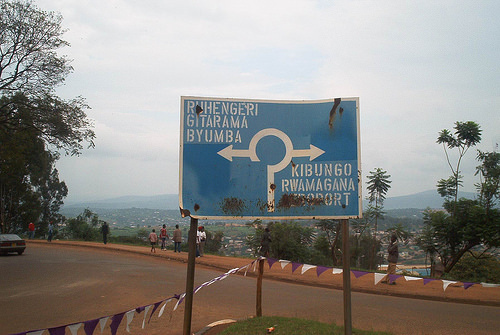
Dopo il genocidio, l’inglese è diventato lingua diffusa insieme al kinyarwanda e al francese
Uno dei primi libri di testimonianza diretta sul genocidio in Rwanda, imprescindibile dal punto di vista di ricostruzione della memoria. Yolande ha dedicato la sua vita dopo il genocidio a raccontare quei cento giorni (dalla sera del 6 aprile 1994 a circa l’11 luglio), come sia riuscita a salvarsi, cosa sia successo. Donna magnetica, forte, è stato un bell'incontro.
“Never Again-Jamais plus-Mai più” è uno slogan forte: ma non è servito a evitare che si ripetesse. Testimonianza e memoria: servono? Non lo so, è una risposta difficile. Molto.
Credo che il silenzio sia inaccettabile - credo che testimoniare e ricordare possa servire ai sopravvissuti, possa in qualche modo aiutarli – credo che sapere sia meglio di ignorare – credo che gli occhi aperti siano meglio che chiusi. Qualsiasi sia la risposta a questa domanda, io voglio comunque sapere.
PS Yolande Mukagasana dopo aver pubblicato questo libro ha dedicato parte del suo tempo e attività ad andare nelle prigioni rwandesi per intervistare gli autori del genocidio. E lei, vittima sopravvissuta, conclude che anche i colpevoli a volte possono soffrire, che se comprendono la loro colpa, per i carnefici è perfino più difficile dimenticare che per le vittime: in un certo senso la sofferenza degli assassini <<è più grave, perché è senza fine>>.
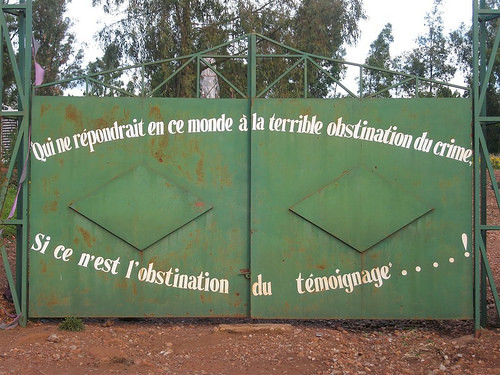
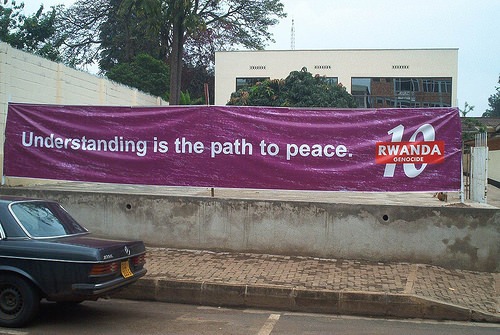
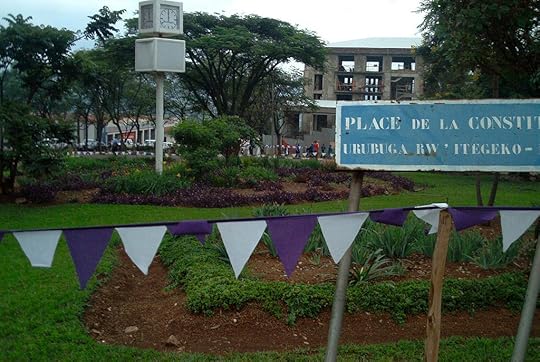
La capitale Kigali durante le celebrazioni del decennale del genocidio: il viola del lutto, giardini ben curati, ricostruzione faticosa.
In this powerful and gut-wrenching testimony, which has only been recently translated in English, Yolande Mukagasana writes of the Rwandan genocide. In a striking and incisive prose Mukagasana recounts the horrific three months in which Hutus massacred hundred of thousands of Tutsis. Mukagasana, a Tutsi, worked was a nurse/doctor in Kigali. She was married with three children. When Hutus begin persecuting and killing Tutsis Mukagasana and her loved ones attempt to flee away from Rwanda. Their attempts are unsuccessful as the people who they had once considered their friends turn against them. Mukagasana narrates these events through a first-person perspective and using the present tense. These two modes lend immediacy to her experiences.
There are many distressing if not downright nauseating scenes in this novel. Mukagasana doesn't gloss over the truly horrific realities of a genocide. These pages are dripping with violence, grief and despair. Before reading this memoir I knew next nothing about Rwanda or its history. Mukagasana provides many illuminating insights into her country's past and present, emphasising the role that the West played in the fraught relationship between Hulus and Tutsis. Mukagasana challenges Western views of her country and of genocides (the West dismissing the “genocidal violence” that broke out in 1963 as “the usual tribal infighting”) as well as the hypocrisy of organizations such as the United Nations (“expressing platitudes but not acting”). Mukagasana also addresses the causes and consequences of genocidal violence. The author regards violence from numerous standpoints: from a global, national, and individual level. While Mukagasana conveys with painful clarity the shock and agony that she experiences her audience’s understanding of her grief and pain will be infinitesimal. However challenging and upsetting this memoir is I encourage others to pick this one up.
Have you ever thought of killing somebody and the aftermath effect it would have you on?
I find myself thinking about it whenever I listen to true crime podcast, watch true crime documentaries or read books that detail erroneous crimes as such.
I get afraid, like how would it affect my psyche? Would it ruin me mentally or would it unlock some part of me that will like murdering people that I never knew I had?
All I know is I never ever want to find out.
I learnt about the genocides in Rwanda when I was 11, for some reason my father saw a movie called “Sometimes in April” and thought my daughter is born in April, she would like this. I wasn’t prepared for the horrors that would unfold and I never knew it was real, back then I didn’t have access to the internet or knew something like Google existed.
I came to know about the existence of Not My Time to Die due to a panel at Ake Festival in 2019, where Yolande Mukasagana spoke in length about her experience, and I knew that whatever happened I had to read her testimony.
Human beings are the scariest things on this planet. Yolande’s testimony details how a community of people who she treated and was always happy to cater to as their Muganga in the space of hours started to hunt her and became her worst enemy.
It’s scary how easy it is to become inhumane.
Reading Yolande account of what happened to her from the 6th of April in 1994, how she fought to stay alive and the sheer bravery of her family as they faced death, was so hard, I had to take breaks because I couldn’t help the tears.
This testimony will always stay with me as a reminder. Read this book if you haven’t already.
Not my Time to Die was first published in French (La mort ne veut pas de moi) in 1997, three years after the genocide against the Tutsis in Rwanda. This true story is a survivor’s account, one of the first to be published following the genocide. Yolande Mukagasana was a wife, mother of three, successful and well respected nurse running her clinic in Kigali, living a normal life. In the midst of planning her wedding anniversary, the political climate takes a turn for the worse, leading to people from the Tutsi tribe being targeted. With Yolande's life at risk, her and family attempt to flee or at least survive. She provides a heart-wrenching narration from the lead up of events, betrayal, loss, struggle with faith, in compendious prose. Yolande makes the reader know the genocide did not happen in a vacuum, she gives historical context to the colonial policies that fuelled divide within the community. Despite all that was going on, it is mind-boggling and heartbreaking how a lot of people were complicit as the genocide happened. This is a remarkable story of survival and I am thankful Yolande kept to her promise of writing her story.
This unflinching testimony of the 1994 genocide in Rwanda by Yolande Mukagasana, first published in 1997, translated now from French to English by Zoe Norridge, is a gruelling read, but hard to put down because of the brilliant writing. The narrative is almost novelistic the way it builds tension, and while you are ceaselessly shocked and stunned and numbed by the brutality, and the inexorable losses, you keep turning the pages - though several times I had to look away and ‘recharge’. I don’t remember ever being so affected by a non-fiction narrative. Highly recommend.
Before I read this book, I knew I'd be heartbroken so I put it off as long as I could. But I picked it up last night (on One Read app) and I read it straight till this morning amid tears.
It's such an important, gut-wrenching account of man's cruelty towards his fellow man.
“Vedo un machete, attrezzo campestre fatto per cogliere le spine di sorgo o per sfrondare gli alberi. Un machete, sfrondare Sandrine! Lo immagino come per scongiurarlo. "Che coloro che non avranno la forza di leggere questo, che forse un giorno scriverò" mi dico "si denuncino come complici del genocidio ruandese. Io, Yolande Mukagasana, dichiaro di fronte all'umanità che chiunque non voglia prendere coscienza del calvario del popolo ruandese è complice dei carnefici. Il mondo non rinuncerà a essere violento fino a quando non accetterà di studiare il proprio bisogno di violenza. Non voglio né terrorizzare né impietosire. Io voglio te-stimoniare.”
”Sono stata braccata per 5 o 6 settimane, come un animale, ho appreso dalle antilopi l’arte dì intrufolarmi tra le siepi, dai serpenti quella di nascondermi sotto le pietre, ho imparato dalle colpi quella di fingere, dalle iene il gusto di mordere chi mi vuole bene.”
Non è stato sicuramente facile affrontare questa lettura; del genocidio in Rwanda sapevo poco e niente e questo libro mi ha permesso di inoltrarmi nei lati più oscuri di qualcosa, che faccio fatica a credere sia potuto accadere. Non sono negazionista, ma ho paura nel credere che l’uomo sia in grado di attuare e perpetrare violenze così inaudite, nonostante i fatti che continuano ad avvenire in Palestina e ad Israele siano ormai la prassi. La “pesantezza” della trama, di certo, non è aiutata dalla scrittura dell’autrice, che ho trovato un po’ ripetitiva e ostica; ma Yolanda parla in prima persona, raccontando ciò che ha dovuto vivere e subire. Consiglio di leggere la “post-fazione” all’inizio del libro, in quanto è un riassunto veloce della storia socio-politica del Rwanda e spiega come si è arrivati al genocidio. (Non capisco perché abbiamo messo questo capitolo in fondo al libro, che sinceramente, l’ho trovato propedeutico alla lettura) 3 stelle.
1994 yılında Ruanda'da yaşanan ve yüzbinlerce Tutsi'nin katledilmesine yol açan olaylar sırasında hemşire olarak görev yapan Yolande Mukagasana'nın yaşadıkları anlatılıyor kitapta. İnanılmaz bir vahşet olanca gerçekliğiyle yüzümüze çarpıyor. Mukagama 'nın şu sözleri de insanın içine işliyor...
“Günün birinde bunları yazarsam, okuyacak gücü kendilerinde bulamayanlar da, ruanda’daki soykırımın suç ortağı saysınlar kendilerini, diyorum kendi kendime. ben, yolande mukagasana, insanlığa karşı, ruanda halkının çektiklerini öğrenmek istemeyen herkesin, cellatların suç ortağı olduğunu ilan ediyorum. dünya ancak, şiddet gereksinimini irdelemeyi kabul ettiğinde şiddetten vazgeçecektir. ne dehşet ne de merhamet uyandırmak istiyorum. tek isteğim tanıklık etmek.”
As the title suggests, this was probably the most powerful book I’ve ever read. It is a first hand account of a survivor of the Rwandan genocide who loses her entire family, including seeing her husband have his hand hacked off by a machete then shot. It is horrific. The words cannot do the trauma justice.
Having been in Rwanda and tried to learn about the genocide, this account brings it to life in the most unimaginable way. The story itself is hard to believe, how close Yolande comes to death and her interactions with some of the Hutu leaders. It’s quite crazy. It could inspire an Oscar winning film.
Glad it’s getting the airtime it should have, as opposed to accounts written by Europeans and Americans. It’s a tragedy the still hangs over the country.
It feels wrong to rate a memoir, especially one detailing the atrocities of the 1994 Rwandan genocide, but here goes. The content of the book is gripping, with Mukagasana describing her desperate journey of survival and her hopes to find her children alive. The writing is fluid, a stream-of-consciousness which highlights Mukagasana’s intense fear, rage and desperation as she tries to escape.
probabilmente il libro più brutto che io abbia mai letto. non l'ho voluto mollare because testimonianza, ma sarebbe stato più rispettoso nei confronti del genocidio ruandese usarlo per pareggiare un tavolo.
A profoundly touching (and devastating) account of Yolande’s fight for survival from the Interahamwe and the RAF during the genocide. She maintains the readers captivity in every chapter by detailing intimate stories of her life and the various atrocities she witnessed and was victim to.
Powerful. Personal memoir of the 1994 Rwandan genocide by an intelligent, professional woman of Tutsi ethnicity. Her entire family is killed, but it was not her time, as prophesied by her brother. It seems I was reading The Hunger Games, but the hunt was real.
5 * non per lo stile né per la storia, ma semplicemente perché è una testimonianza che tutti dovrebbero leggere. La storia agghiacciante del genocidio dei Tutsi.
read for uni, so incredibly fast-paced and emotional you would almost think it was fictional, incredibly poignant and would highly recommend to everyone
If you don’t cry reading this you don’t have a heart.
“One day, I will write all this down.' I vow to myself. 'May those who don't have the strength to read it denounce themselves as complicit in the genocide against the Tutsi in Rwanda. I Yolande Mukagasana declare before humanity that whoever doesn't want to know about the ordeal of the Rwandan people shares in the guilt of the perpetrators. The world will not cease to be violent if it doesn't examine its need for violence. I will write this not to scare you or make you feel sorry for me. I want to bear witness."
A brilliant memoir reminding us of one the most horrific periods in recent history. A must read
Yolande Mukagasana's memoir "Not My Time to Die" is a profound and harrowing account of survival during the Rwandan genocide. This book is not just a memoir; it's a powerful testament to the resilience of the human spirit in the face of unimaginable horror.
Mukagasana, a Tutsi nurse, narrates her experiences with a raw honesty that is both heart-wrenching and inspiring. The narrative captures the escalation of the genocide, detailing how her life of normalcy was shattered in 1994 when systematic killings began. Her ability to convey the sheer scale of the tragedy, while maintaining a focus on personal experiences, makes the narrative deeply personal and universally impactful.
The strength of Mukagasana's memoir lies in her vivid storytelling. She brings to life the people she lost and the horrors she witnessed, ensuring that the reader is not just a distant observer but a companion in her journey. Her descriptions of the loss of her family and her struggles to survive are poignant and deeply moving.
Another remarkable aspect of this book is Mukagasana's reflection on the nature of humanity. Amid the brutality, she observes moments of kindness and solidarity, offering a balanced perspective on human nature. Her journey towards healing and forgiveness is as compelling as her survival story.
However, readers should be prepared for the emotional intensity of Mukagasana's narrative. The graphic descriptions of violence and the rawness of her grief can be challenging to absorb. This book demands a certain emotional fortitude from its readers.
In conclusion, "Not My Time to Die" is an essential read for anyone looking to understand the human aspect of the Rwandan genocide. Mukagasana does not just tell her story; she invites readers to bear witness to a tragedy that should never be forgotten. Her courage and resilience are a beacon of hope in a narrative that, at its core, is about the triumph of life over death.
This entire review has been hidden because of spoilers.
The book La a per Ne Veut Pas De Moi By Yolande Mukagasana is about the genocide that happened in Rwanda against Tutsi’s by Hutu’s on April 7, 1994 after the assassination of the former president Habyarimana. This Genocide consider of the killing of 800,000 Tutsi. This killing lasted a 100 days. She talks about how her brother told her that she won't be killed using imagery. He told me “ Death doesn't want you.” He used flour by blowing it away and telling her that is how her family is going to disappear but she will survive. She talks about the difficulties she went through and said thy is was meant to be her survive and testify what happened she now lives in Belgium and adopted orphans from the Genocide. She passes out a strong message which is having faith no matter what difficulties you face.
The author did a good job because she included literary devices like imagery which made it even more interesting. The story moved me at some point because of how she acted strong even though they killed all her loved ones. The audience should read it because it has a great message about having faith and keep moving forward no matter what you have been through in your past.
It was one of the interesting book I read. If I had to rate it I would give a five. The reasons why I would give a five is because the writer did a good job of writing and explained everything with details which made the reader start to picture some of the scenes in their mind.
Rwanda'da 20.yy'ın sonlarında yaşanan ve o yüzyılda vuku bulmuş dünyanın en büyük soykırımlarından biri olan Tutsi katliamlarına bu kitapla tanıklık edebilirsiniz. Söz konusu katliama ilişkin çekilen "Rwanda Oteli" filmi her ne kadar katliamlara ilişkin küçük bir kesit gösterse de, bu kitapta yazılanlar, Rwanda'da yaşanan olaylar hakkında neden-sonuç ilgisini kurmayı kolaylaştırıyor. "Anı" niteliği taşıyan bu kitap oldukça başarılı bir şekilde Türkçe'ye aktarılmış.
Kitaptan bazı alıntılar yapmak gerekirse;
"Herkes dünyaya neden geldiğini merak edebilir, bu da hiçbir şeyi çözmez."
"Uzaklarda bir el bombası patlıyor. Joseph'in elinde en ufak bir kasılma hissetmiyorum. El bombaları normal bir şey oldu, tıpkı trafiğin yoğun olduğu saatlerde Ulusal Birlik Meydanı'nda çalınan kornalar gibi."
"Hutu olduğunu söylemen anlamsız. Büyük babamız Tutsiydi. İhmal sonucu sürüsünü yitirdiği için Hutu oldu. Hutu ve Tutsi birer ırk ya da etnik topluluk değildir. Birer kast, ahlaki ya da sosyal sınıflamadır."
"... Belçikalılar ise, kiliseyi arkalarına alarak, bize birbirimizden nefret etmeyi öğretti. ' Tutsiler üstün ırktır diyordu sömürgeciler. Nüfusun yüzde doksanını temsil eden Hutular ise, ağır ruhlu ve pasif, her türlü yarın kaygısından uzak köylülerdir."