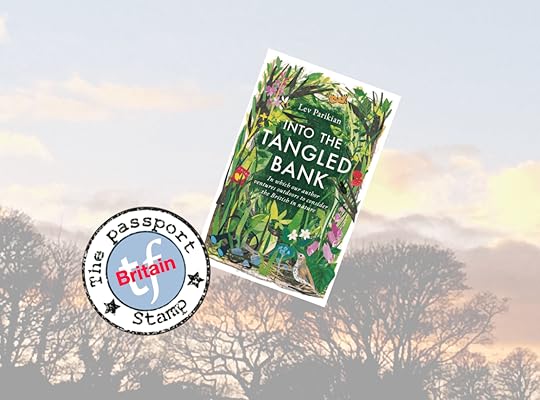
Lev Parikian is on a journey to discover the quirks, habits and foibles of how the British experience nature. He sets out to explore the many, and particular, ways that he, and we, experience the natural world – beginning face down on the pavement outside his home then moving outwards to garden, local patch, wildlife reserve, craggy coastline and as far afield as the dark hills of Skye. He visits the haunts of famous nature lovers – reaching back to the likes of Charles Darwin, Etta Lemon, Gavin Maxwell, John Clare and Emma Turner – to examine their insatiable curiosity and follow in their footsteps.
And everywhere he meets not only nature, but nature lovers of all varieties. The author reveals how our collective relationship with nature has changed over the centuries, what our actions mean for nature and what being a nature lover in Britain might mean today.
Extremely enjoyable and accessible nature writing, from the perspective of the enthusiastic and highly informed amateur rather than scientist, which in turn makes it feel more within the reach of the ignorant amateur (me). Parikian's style is funny and likeable and the whole thing makes you ache to get out in the countryside and see life.
For some people, the idea of a nice afternoon out is to drive to a picturesque place and wind the car window down and enjoy the view. The thought of venturing out into the unsanitised countryside is just too much. There are some who are the other extreme, those that think nothing of taking a long weekend to hit the hills and sleep in a ditch. Parikian is somewhere in the middle of these two extremes, wanting to go and see these things for himself, striding out to get there, but also taking the time to dawdle when he has arrived. But if you were to come across him in his semi-natural environment, you are as likely to find him spending a fair amount of time lounging about on the ground. He is sometimes looking for lichens and at other times trying to take a photo of a lizard; both instances gain him some strange looks…
He is inspired by some of the great nature writers that we have had in this country and takes a bit of a pilgrimage to see their natural habitats, including Darwin, Clare, Lemon and getting really annoyed by the campervans on Skye when he visits Maxwell’s house. Like them he tries to keep a notebook that is his nature diary, it is a woeful and incomplete mishmash of all manner of things, but it is still his way of trying to keep a record of the natural world as it happens.
His first book Why Do Birds Suddenly Disappear was exclusively about birds, but in this, he considers all types of nature, from butterflies and moths, mammals and trees. He still likes spotting birds though, missing a hobby by moments, even after the person that was in the hide with, runs after him to tell him about it. He goes to see the beluga whale in the Thames and after milling around for a while, is told it is 200 yards further upstream.
I really like his conversational style of writing, accessible and informative without feeling that you are listening to someone who is going to reel of vast swathes of facts. This is another really funny book from Parikian. I am not sure that natural history books are supposed to be funny, but I am really glad this one is. He has some forthright opinions, that museums are full of too many dead things, and he much prefers the great and not so great outdoors. especially in the interlude where it becomes a proper rant! It is a reminder too, that you don’t need to head to the Galapagos Islands to get your fill of nature, it is all around us, just outside your back door, down that slightly overgrown path or when you find the eight-legged arachnid that is waiting in your bath for you. Mostly this is a personal story of a man who realises that he might have come to the natural world a bit later that he really wanted to and is trying his hardest to catch up on those missed years.
If you are new to discovering what nature is all about or like me you enjoy being outside watching birds and insects but are blooming useless at identifying them then this book is for you. Lev is still new to this nature lark and this book is his journey into the outside world to learn more about what is out there. It is not packed full with a gadzillion facts about one species, instead you get given Lev's knowledge on what he sees, with plenty of footnotes explaining he is probably wrong. He takes you from his kitchen sink to his garden and surrounding area, he gradually moves further afield to zoos and islands and this is one of the best things about this book, it takes you to places that are easily accessible to the reader...well at least once I've figured out the clues to find his house that is.
One of the funniest nature books I've read was by Douglas Adams, Last Chance to See was so good because his sense of humour gave the reader a bit more involvement, it was like you were there with him. Lev's sense of humour is brilliant, I love reading his funny observations on twitter and it was great to see it here in this book. He does a lot of people watching and his comments about those he met had me laughing, his almost-fear of joggers gave me a good chuckle. He is also the master of creating some pretty bonkers metaphors, one of my favourites was:
"Good humour runs through them like writing through a stick of rock"
Unlike your standard nature book this author does like a good swear word and for that reason the book should be used in schools, I would have been hooked on nature as a kid if this book was available to me then. He also explores areas that usually get missed out of other books, the kitchen sink and it's resident spider get explored which was a great addition to the book. He explores his garden too and it's these sort of things that will inspire the reader to go out exploring.
This is a wonderful book, a must read for all and would make a great gift for anybody showing the slightest interest in the outside world. The cover makes my top 10, lots of little things to spot in the drawing.
In the same way that kids sometimes write their address by going from the specific to the cosmic (street, city, country, continent, hemisphere, planet, galaxy), this book, a delightfully Bryson-esque tour, moves ever outwards, starting with the author’s own home and garden and proceeding to take in his South London patch and his journeys around the British Isles before closing with the wonders of the night sky. By slowing down to appreciate what is all around us, he proposes, we might enthuse others to engage with nature.
With the zeal of a recent convert, he guides readers through momentous sightings and everyday moments of connection. As they were his gateway, many of these memories involve birds: looking for the year’s first swifts, trying to sketch a heron and realizing he’s never looked at one properly before, avoiding angry terns on the Farne Islands, ringing a storm petrel on Skokholm, and seeing white-tailed eagles on the Isle of Skye. He brings unique places to life, and pays tribute to British naturalists who paved the way for today’s nature-lovers by visiting the homes of Charles Darwin, Gilbert White, Peter Scott, and more.
I was on the blog tour for Parikian’s previous book, Why Do Birds Suddenly Disappear?, in 2018. While the books are alike in levity (pun intended!), being full of self-deprecation and witty asides along with the astute observations, I think I enjoyed this one that little bit more for its all-encompassing approach to the experience of nature. I fully expect to see it on next year’s Wainwright Prize longlist.
Readalikes (that happen to be from the same publisher): Under the Stars by Matt Gaw and The Seafarers by Stephen Rutt
This book is an utter delight. Uplifting, positive and there are many things to learn (without feeling it’s a didactic lesson in learning!). The writing style is warm and approachable and it is full of humour and gentle observation. I am sure my husband got fed up with me saying “.. and did you know…”, going on to quote a fact or observation from the book. It has that effect on you.
Such a great cover, it just demands to be picked up! What is this book about? Well, the book opens as the author muses about what he sees from the level of the pavement (he is lying down, not taking a nap), somewhere in South London. From here he can observe all kinds of things about nature and our place as humans within nature.
He explores from his home in Norwood and ponders about the earthworm and contemplates Darwin’s discoveries; and how essential this little creature is to the functioning of, well, the world. He explores the texts of Gilbert White and his jottings in The Natural history and Antiquities of Selborne, and pops down in Hampshire to visit his house.
Have you thought about burying a pair of underpants in the earth and digging them a few weeks hence? No? Well, do, advises the author. Assuming they are made of cotton (cellulose) then all kinds of grubs, bacteria and life forms will feed and decimate the item, and thus they enter the constant cycle of life (he advises to leave a little piece of the material poking up so you can determine where you buried them).
The footnotes add a wonderful insight to the thought processes of the author, adding wry observations and reflections.
All in all a wonderful read and great if you need a bit of cheering up in these days of gloom…. It also makes a great present for anyone who loves a bit of gardening and has even the tiniest interest in nature! A winner!
I genuinely think Into the Tangled Bank should be put on prescription for anyone suffering depression or loneliness because it is an absolute tonic of a book that creates happiness in the very soul of the reader. I adored it. My strength of emotional reaction comes partly because it made me feel closer to my much missed Dad. He would have loved every word of Into the Tangled Bank. Dad introduced me to the natural world and he’d have delighted in this book as much as I have. I especially enjoyed the When Nature Changes chapter because John Clare’s Helpston is the next village along from where I live in one direction and Northborough is the next along in another. Reading Into the Tangled Bank gave me a personal, human connection of the kind we all need in these uncertain times.
Into the Tangled Bank is enormously enlightening. I learnt all kinds of facts, not just about wildlife, but people from history, places and so on – quite frequently through the hugely entertaining footnotes. I think my poor husband wished I’d shut up as I kept reading snippets of information out to him that I’d found unusual, that resonated with me or that I felt described him, never mind Lev Parikian, with absolute precision. I felt I got to know the author as an individual too – and I liked him very much. His frustrations with other humans like ‘Massive Lens Guy’, his conversational style, his self-awareness and his absolutely brilliant writing made me wish I could meet him in real life and chat with him about the book.
Lev Parikian’s writing style is, quite frankly, sublime. It’s beautiful and poetic. It’s realistic and dramatic. He has the ability to convey as much meaning in a two word paragraph as he does in longer sections. It’s engaging and I hadn’t been prepared for how funny it is too. Again the footnotes come into play here where his wry observations, direct appeals to the reader and asides are fabulous. I must confess that I know little about cricket, and the Interlude is less in keeping with the other chapters in Into the Tangled Bank, but I laughed until I wept reading its ending, despite the stark description of the state of the planet.
Into the Tangled Bank is the perfect antidote to the ills of the world because it’s funny, enlightening and very entertaining. It would make a glorious present for any nature lover because it brings alive the world in which we live. It would appeal to any observer of humanity as Lev Parikian’s observations are pithy and insightful and he manages to articulate exactly what so many of us think and feel. Into the Tangled Bank is a glorious book. Don’t miss it.
If ever there was the personification of "the Dad joke", Lev Parikian is it!
This book is ok, but very frustrating. Essentially it's a nature journal, but it is littered with constant unnecessary footnotes, quips, dad jokes and snarky remarks. These do nothing but detract from the writing. Parikian comes across as a complete smart arse all the time, which wears extremely thin after a while.
The actual nature bits are good but they're terribly let down by the in-between verbal detritus!
This is a great book. I have been really into nature books lately and that one was interesting and ticked so many boxes. I liked the fact that it had a bit of history (Charles Darwin, but also people I personally had never heard of - Etta Lemon was fascinating!), science - precise but well-explained and easy to understand - and obviously a lot of nature. What I really liked especially was the fact that a lot of what Lev Parikian chooses to focus on is very accessible: the plants by the pavement, the birds in the back garden, the local parks... The most expensive pieces of equipment he names are a sketchbook and a pair of binoculars.. He is not a nature expert and I really loved being reminded that you don't need expert knowledge or to go very far to have a connection with nature and that you can learn a lot simply by observing. Would definitely recommend to anyone who feels they don't get enough time in nature, just to be reminded that you can find it in the most ordinary places.
Lev Parikian's Into the Tangled Bank is a friendly, funny, completely readable paean to the natural world, written from the point of view of one ordinary man, wandering about Britain and chatting about what interests him.
Each chapter begins with something personal and goes on to investigate some aspect of British nature (most often by introducing us to one of nature's great and eccentric past champions, such as Charles Darwin and Gilbert White). Just when you think the chat has gone off on a tangent it meanders back round to the point it was always making, and the whole book feels like a conversation with a friend.
It's like sitting down in the pub with a mate and kicking back with a pint while he rambles on (in the nicest way). And it's reminded me of the value of observing my neighbourhood, especially right now when I can't get out to visit anywhere else.
Good engaging writing, as the author details his various nature related forays with good humour and clear imaginative descriptions. However, the book really irritated me with the mountains of footnotes, which , although generally quite amusing, really broke the flow of the writing.
An utterly adorable read, seemingly written with such fondness and desire to make nature accessible again. I found the author's conversational style good - if sometimes a bit distracting with unnecessary footnotes written for comedic purpose. That said, it's a pleasant read with a good balance of historic and anecdotal fact.
this is the book i’d recommend to anyone wanting to get into nature writing - very accessible & teaches you to appreciate the wildlife that’s in your own backyard
I beg to disagree with previous reviewers but I was disappointed with this book. It was a competition prize and, with a keen interest in nature and the great outdoors, I was very eager to read it but have given up. I enjoyed the author's prose and style but found the copious footnotes very irritating and often puerile. In my opinion, the tales would have flowed much better if these notes had been italicised within brackets at the appropriate point in the body of the text. Having to constantly shift between the page and the footnotes and match the minute symbols was very frustrating. Sadly, this book will soon be gracing the shelves of my local charity shop. .
I'm going to put it down to personal taste but this book wasn't for me. It certainly had its chapters that held me and interested me but what I don't like in a Nature book is history of Naturalists and history of charities for example. I enjoyed parts, like the diaries of trips to the Farnes and the Kielder Observatory but overall I was wishing the pages away... Sorry
Into the Tangled Bank takes us on an exploration of the natural world in an entirely comfortable way and the author evokes natural atmosphere with fine attention to detail and a real enthusiasm for everything he sees and describes. The book is divided into easy to peruse chapters, which you can dip into and out of at whim, but no matter where the book falls open there is always something new and exciting to discover.
The book made me smile as the author's natural wit shines through in his descriptions of what’s happening around us in the natural world, not just on his doorstep, but also in the wider countryside. I found much to learn and enjoy about all sorts of different habitats, flora and fauna. I especially enjoyed the witty introduction to each chapter which gives the reader a quirky insight of what is to come.
I think what comes through in abundance is the authors unbridled enthusiasm. He finds much to enjoy in the natural world and shares his experiences with such such joy that it’s been a real pleasure to follow in his footsteps as he describes the nature on his doorstep in an urban landscape, and, lets be honest, who wouldn’t want to be brave enough to lie on the pavement to get up close and personal with the Common Blue butterfly, after all, they are stunning little creatures.
Urban environments aside the author takes us on a magical journey from countryside to coast and all along the way he shares lovely little snippets of historical information about all sorts of things you never knew you needed to know about nature, birds and animals. I especially enjoyed visiting the haunt of Gavin Maxwell in the chapter, 'Wild Things' as Ring of Bright Water has always been one of my favourite books. I also learned much about Charles Darwin in the chapter entitled 'A Garden is a Lovesome Thing' when the author visits Darwin's garden at Down House in Kent.
In this strange time of social isolation I’ve really enjoyed travelling around in the company of this expert guide. Into the Tangled Bank is a really lovely book, from its stunning cover to its lively content, it’s perfect for anyone who loves the natural environment.
Fun(ny) fact(s): Summer reading challenge Bingo with the Dayspring youth #2: a book I own but have never read! I bought this in an Oxfam when exploring used bookstores in Cambridge with Anna, and it has sat in a (dwindling) stack of books near my bed that I never made time to read until now.
Favorite quote/image: "It's easy to think that genius comes in a flash – Eureka! – but the truth is far more mundane. The moment is typically preceded by immense quantities of thought, hard work, and confusion. And often the flash of inspiration strikes when the mind is allowed to roam unfettered, rather than having to focus on the work at hand...Even if we can't all achieve greatness, it's important to notice and cherish the small moments of inspiration" (pg. 51, 53)
Honorable mention: "But sometimes the best bits aren't dramatic at all. They can be found in the simplest of things: the aforementioned blade of grass, if you like; or the chaotic tangle of a bramble in autumn, heavy with fruit ripe for the plucking; or the particular sensation you get when the wind picks up a fraction on a not-quite-warm-enough spring day, and brings a chill to your cheek in a way that reminds you what it is to be alive; or simply the undervalued pleasure of sitting on a bench and doing nothing, looking at nothing, just allowing everything, including yourself, to get on with the underrated business of existing." (pg. 148)
Why: Parikian's casual, witty writing style (which includes a copious amount of footnotes akin to my own penchant for using parentheses and footnotes for side comments that I feel are worth including but not essential to the main text) embraces a refreshing and reinvigorating sense of wonder in what many would consider to be mundane. A wandering ode to his journey re-engaging with nature in his middle ages, Parikian encourages all to "look. Look again. Look better" at even the smallest pockets of nature in our world (pg. 296).
Today sees the publication of Lev Parikian’s new book, Into the Tangled Bank, “in which our author ventures outdoors to consider the British in nature”. Over the past few months I think many people will have been venturing out more and discovering previously unknown local walks, or even just noticing the wildlife in their gardens or local areas.
In this book, keen nature watcher Lev Parikian considers his own love for nature as well as that of the British public in general. He covers topics such as how we encounter nature, different kinds of nature lovers, nature in all its forms both animal and plant, and he links into naturalists of the past and present such as David Attenborough, John Clare and Emma Turner. As well as looking at nature in the author’s own local patch in South London, the reader is taken across the United Kingdom to nature reserves such as Slimbridge in Gloucestershire, Gilbert White’s house in Selbourne, Kielder Observatory and a trip to Skye and Raasay.
I really enjoyed reading Into the Tangled Bank. The author has a really engaging and relatable style of writing. His footnotes in particular made me laugh a lot as he added some more personal comments. I learned a lot about nature and also about naturalists through the years, some of whom I’d only been vaguely aware of before. There was plenty to make me think such as the part of the book about the ethics of zoos and their role in conservation. It would be a great book to dip in and out of although it’s equally enjoyable to read right through.
This is a timely book not just because so many of us may be appreciating the nature around us more but because of the growing awareness that if we do not look after our planet, much of that nature which we take for granted may not be there for us to enjoy for ever. Into The Tangled Bank is an entertaining, witty, informative and most of all heartfelt appreciation of the natural world by an author who clearly wants to share his love of nature.
I really enjoyed reading this book as I followed Lev’s observations on how people and nature interact. Lev has such an easy style to his writing and as well as various facts there is also a nice level of humour. The book is littered with various interesting facts from history, nature and life.
Lev looks at various aspects of nature including our own gardens, parks and open green areas. He notices various things about human nature and how people with certain interest can chat about things for quite a while. As a gardener I found myself sniggering about they way gardeners can talk about “their patch” what they grow, the pests and bugs.
Lev’s observations of people in nature draw together different walks of life. From the dog-walkers, to the gardeners, the photographers to the birdwatchers. These observations make a really enjoyable read and many times I found myself nodding my head in agreement or as I read sections thought “this is me!”.
A book that is ideal for dipping in and out of, in fact I read most of this book sat in the garden have a break from the weeding, trimming and filling bird feeders and it was the perfect spot.
A refreshing read that I think various people would really enjoy, and I am sure any nature lover, or those who spend time outdoors and then reads this book will find themselves in it at some point. A good book about the observations of an author and one I would happily recommend, its a fabulous read.
Lev Parikian's Into the Tangled Bank hits a sweet spot. It lacks the intensity and sometimes artificiality of those quests around which many nature books are framed, but the structure is beautifully and securely constructed. This is not simply an "Aren't birds brilliant?""Isn't nature good for us?""What am I like?" book written in Parikian's Bill Bryson-ish but still distinctive style, pleasant though that would still have been, the birder being such a good egg.
The 'British in Nature' aspect is quite subtle but he does show us many different relationships with the natural world and validates many of them, including Ms YooHoo White-Tailed Eagle, and the unexpected chat with a man and his non-biting dog. I especially appreciated his gentle reflections on those whose access is limited in some way, whether that be by disability or colonialist racism, and the value of screen based nature.
I loved his visits to places such as Gilbert White's Selbourne, Scott's Slimbridge and Rothschild's Tring and his accounts of particular individuals in the history of the British involvement with nature. Whilst I loved where the book, surprisingly, ended up, it did seem a few chapters too short before that... More fish! More flowers! More fossils! Another book Lev!
Into the Tangled Bank is a delectable diary of one ordinary man’s communion with the natural world around him. Although not strictly a writer (or naturalist) by trade Lev Parikian has delivered a truly beautiful and bewitching book that can inspire and entertain in equal measure. The author's writing style is really engaging; always delightfully descriptive and often humorous. Most importantly he demonstrates that anyone can gain something from the nature on their doorstep no matter where they live or how much scientific knowledge they start with; his literary journey takes the reader “from the kitchen sink to the cosmic void”.
Reading this after almost three months lockdown and whilst still being a practical hermit in my house was a diverting experience and a balm to the soul. I have missed the freedom of long walks amongst greenery and alongside water; when I can go back to those places I will have a deeper appreciation of the wildlife around me. Thank you to NetGalley and to the publishers for a copy of this book in return for an honest review.
In Into the Tangled Bank, Lev Parikian attempts to document the different ways the British experience nature.
It's a wide remit - we are all unique, and not only do we all experience nature differently, our very definitions of nature differ widely. He starts local, at home and in his garden, before venturing further afield and visiting the home patches of some famous nature lovers. He tries to catch a glimpse of what motivated and inspired them, always unearthing some interesting nuggets whether he is visiting Sir Peter Scott's Slimbridge or musing on Gavin Maxwell's otter habit. Along the way he meets a diverse collection of people, some experts in a particular area, some enthusiastic amateurs and others just enjoying the natural world in their own way.
It's the perfect read* for a wet blustery winter when you might not get out as much as you would want to. Reading this is a bit like going for a ramble with a slightly more knowledgeable mate who is keen to share what he has learnt.
* - especially if you are a fan of footnotes. Lev loves a footnote.
I often find that books grab me at the outset and tail off towards the end, but 'Into the Tangled Bank,' had the opposite effect. I just didn't get on with the jokey humour until I was over 200 pages in, when the author settled down, and I began to enjoy sharing his exploits in wilder places; the Isle of Skye and Skokholm. Maybe this was deliberate, tracking his journey from pavement to domestic backyard to remote island.
The book is packed full with interesting references, places, reflections and allusions. Probably suited to extravert readers who enjoy fun rather than quieter introverts like me. Halfway through the book there is an interlude 'in which the author indulges himself in a short rant on the state of the planet.' Imagine my disappointment when the profound message, spouted by John Emburey the cricketer, who I remember, is, 'The fucking fucker's fucking fucked.'
Although this book was a disappointment for me, I am sure that many readers will enjoy the wit and frolics.
In this book @levparikian takes us through his relationship with nature and the relationships humans at large have with the natural world. He does this though a mixture of personal anecdotes, science and natural history.
This book has a good dose of nostalgic feeling and you can really feel his awe and love of nature. It also has a lot of very British cultural references and descriptions of nature specific to the UK.
He is a keen birder so their are lots of lovely descriptions of birds and bird watching.
One of the figures of natural history he mentions is Etta Lemon, founder of the RSPB who I had never heard of before and am now slightly obsessed with. Anyone who is referred to as “the mother of birds” and “the dragon lady” is interesting to me. ~ I read this book while on my first trip back into the countryside in over six months and I really enjoyed it in this rural holiday setting.
It’s a lovely, accessible piece of nature writing. ~ I recommend this book if you enjoy light nature writing and British humour. Also if you have a interest in the natural history and the history of conservation of the UK this is a great book to introduce you to some of its leading figures.
This was the book I needed right now! Parikian balanced humor, information, and anecdotes in ratios that worked for my current mood. True, I'm American and am unlikely to visit these places, but his message that everyone can interact with nature differently and in their own small way locally is universal. Bonus points, he does this without being condescending or shaming people for not spending every Sunday rambling the countryside. His soft sell approach has inspired me to at least check out my local waterfowl reserve.
Warning: If you're looking for in depth info on wildlife or history this is not your book. It's an overview and is basically anecdotes of trips and activities that developed his own personal relationship with nature with some history and science thrown in. So, heads up! A good book, but you have to be in the right head space.
Interesting book, initially I was n't sure about the style but it grew on m and by a quarter of the way in I was won over. I liked the chatty style and the divergences into other topics. It helped that many of the places the author visited were also places I'd been. Initially I treated it as a "dip in, dip out" book alongside other reads, I tends to read books consecutively rather than concurrently so it was interesting to have two books on the go. A very approachable book to introduce people to nature and its appreciation, I'm sure it'll irritate some purists who won't like the personal divergences.
Into The Tangled Bank is a foray in to talking about how people interact with nature. The author himself feels late to it & humorously misses odd moments throughout ( see supplied footnotes). I enjoyed discovering parts that my Nature book club have talked about eg. Gilbert White & the Kielder Observatory which the author spoke of. Also his reflections on conversations with people out walking he wouldn’t expect to talk/ share knowledge 'v' others been rude made me smile!. However at times my interest was lost a little because just so much was been covered but still I found it mostly a enjoyable read.
Basically this is a guy wandering to and fro looking at different places and different beasts and recording his thoughts. The author is fascinated by everything, from a golden eagle on a rock to a spider in a sink, and he makes you feel fascinated too.
Not only this, but the beautiful descriptions of the nature we're living in make this book well worth the read (despite the wanky title). I especially liked the trip to Skye and the night sky watching at the end. If reading this doesn't make you view your surroundings with a great deal more respect you must be a bit of a tit, and not the birdy kind either.