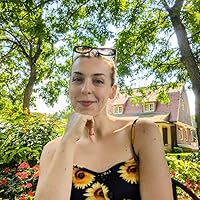
Kendra Atleework grew up in Swall Meadows, in the Owens Valley of the Eastern Sierra Nevada, where annual rainfall averages five inches and in drought years measures closer to zero.
Kendra’s family raised their children to thrive in this harsh landscape, forever at the mercy of wildfires, blizzards, and gale-force winds. Most of all, the Atleework children were raised on unconditional love and delight in the natural world. But it came at a price. When Kendra was six, her mother was diagnosed with a rare autoimmune disease, and she died when Kendra was sixteen. Her family fell apart, even as her father tried to keep them together. Kendra took flight from her bereft family, escaping to the enemy city of Los Angeles, and then Minneapolis, land of all trees, no deserts, no droughts, full lakes, water everywhere you look.
But after years of avoiding the pain of her hometown, she realized that she had to go back, that the desert was the only place she could live. Like Wild, Miracle Country is a story of flight and return, bounty and emptiness, and the true meaning of home. But it also speaks to the ravages of climate change and its permanent destruction of the way of life in one particular town.
KENDRA ATLEEWORK was born and raised on the dry edge of California at the eastern base of the Sierra Nevada mountains. She moved away for eleven years, mostly spent being homesick and researching the place she left behind—the product of which is Miracle Country. She has an MFA from the University of Minnesota and serves on the board of the Ellen Meloy Fund for Desert Writers. She lives in her hometown of Bishop, California.
Though this is one of those nonfiction books that I'd classify as subgenre-bending (is that a thing? I'm making it a thing), I can tell you that is a book that is deeply of a specific place.
That place is the Owens Valley, located to the east of California's Sierra Nevada mountain range, to the north of the Mojave desert, and in the backyard of Los Angeles, as the author Kenda Atleework says. She should know. She grew up on this arid land and her history with the region as well as the region itself is what she focuses on throughout this memoir/history/nature writing chimera.
The author interweaves her story and her family's story with the history of the region. How this land was taken from native populations, how the city of Los Angeles came to suck water out of it like an overenthusiastic kid with a straw, and how climate change is liable to change it going forward.
There are many touching moments, including the memories the author shares of her mother, who died when she was only sixteen and her two siblings even younger still. And the way the author describes nature and the emotional connection she feels to this land is remarkable. Yet the whole way through the book, I felt like I was wandering without a guide; though the book is beautiful, it lacks a central story or purpose that keeps the reader focused and the narrative from meandering too far off.
I've read a number of novels in my life that were clearly drawn so heavily from the author's life that I find myself wondering, "why didn't you just write a memoir?" This is the very first memoir I've read that I think would have actually made a better novel. A story set in the Owens Valley using all this historical information and nature writing? Would have been sublime. As nonfiction, it's a 3.5 star book.
Click here to hear more of my thoughts on this book over on my Booktube channel, abookolive!
I lived for 40 years in the rain shadow of the Sierras and fully understand Kendra’s love for the raw beauty that comes with this country. What they called the Sierra Wave we called the Washoe Zephyr, because you need a name to make friends with such a violent beast. It drives the weather and it drives wildfire. But most of all it’s big and it’s beautiful. When you fall in love with the high desert, you fall deep. The place of Kendra’s story is as important as is her family’s story, and her deep love of both is beautifully rendered.
Yearly we drove to SoCal to spend New Years with family, and depending on the snow conditions, might spend the night at a Best Western in Lone Pine, but regardless, it was always a relief to arrive in Bishop. It was a shock to see the carcass of Owens Lake, and it was a point of celebration when Mono Lake was allotted enough water to cover the land bridge, denying predators access to nesting sites on the islands.
The theft of the Valley’s water and lifeblood is unquestionably unfair, but when my young self would petulantly tell my mother that something was unfair, she’d reply - whoever told you life was fair?!! The greatest good for the greatest number is a recurring theme in the book, and anyone not in the greatest numbers knows it’s not fair, but nevertheless there it is, and it’s a recurring theme in water rights in the Arid West. “The greatest good for the greatest number” rationalized the attempted eradication of American Indians to make room for frontier settlers. The Homestead Act of 1862 offered free land to hopeful homesteaders if they met the qualifications after five years, but it was “free” because the surviving Indians were relocated to settlement camps called reservations. That said, there would be no Los Angeles or homesteading without employing the greatest-good-for-the-greatest-number ethic. Not fair!
Kendra quoted a number of prominent environmentalist authors, and if she keeps writing like this, we might one day be quoting her.
I feel like I don’t have the words to begin how to describe how I feel about this book. The way the author weaves the past and the present is effortless. The book reminds us the we can not move forward without remembering what came before - and holds our hand through California’s history. Challenging us to take responsibility for our place in time, while opening the curtain into her own life. The author brings up the questions of home - can our home ever really be our own? And at the same time how can it not be? I cannot recommend this book enough. Atleework has her finger to the pulse of the present while not letting us forget what has come before.
Miracle Country is the memoir of Kendra Atleework, who grew up with her family in the Owens Valley of the Eastern Sierra Nevada at the mercy of all nature could throw at them. After losing her mother at 16, her family fell apart and Kendra escaped to LA and then Minneapolis, but eventually returned home to come to terms with her past. This memoir is a unique combination of family story and environmental history. What originally drew me to the book was the promise of beautifully descriptive accounts of the natural landscape. Having come off of reading Where the Crawdads Sing recently, I was intrigued, and this book definitely delivered on that promise. Atleework gives the reader the most breathtaking descriptions of both the beauty and ferocity of the Eastern Sierra Nevada. I also appreciated the poetic way she connected her personal history with the environmental issues. That being said, I found myself falling in and out of love with this story as I read and never had that “I need to keep reading this” feeling you get with a really great book. The personal and environmental histories were both interesting in and of themselves, but the narrative read almost more as a stream of consciousness with the historical sections embedded so abruptly in the middle of the personal narratives that I found it impossible to get into a rhythm of reading it and at times had to check to make sure the pages of my ARC weren’t somehow disordered. This book would be great for someone who would like to read about the negative impact people have on the environment told through the lens of personal ties to the land. Thank you to @algonquinbooks for providing me with this ARC in exchange for a fair and honest review. Also…this cover 😍
An incredibly beautiful, moving memoir, seamlessly weaving the author’s own history with that of the Owens Valley. Atleework writes about the loss of her mother in a way that is poetic and unflinching. She captures the magic and the danger of the Eastern Sierra Nevada, the vulnerability of being a young adult, and the remarkable wonder of our ability to keep going forward even when we don’t realize our feet are moving. MIRACLE COUNTRY is inspiring and heartbreaking. I suspect time will prove it’s also unforgettable
Memoirs are tricky. While everyone has a unique story not every story sparks interest. Miracle Country is part memoir and part biography of a place. I would place it in the literary non fiction genre. The writing was good, but it wasn't powerful enough to carry me through. DNF at the half way mark.
The California desert is as much of a character in this memoir as are the fascinating members of Kendra Atleework's family. The author has blended her touching family memoir with the history of California in such a lovely way. Her work is poetic, lyrical and mesmerizing. I listened to the audio book and looked forward to each moment when I was swept away by this magical book. Most highly recommended.
Kendra Atleework’s beautifully written memoir combines environmental history, personal experiences, and the cultural background of California's Owens Valley in the Eastern Sierra Nevada. She grew up in Swall Meadows, approximately twenty miles northwest of Bishop, California, in the high desert. It is an area marked by extreme conditions, such as high winds, drought, and wildfires. The reader will gain perspective on what it is like to live in this rural region of the American West. Her family has dealt with its share of losses, including the death of her mother when she was sixteen. The narrative follows her personal journey, leaving home after graduating from high school, and heading to Los Angeles, then stints in San Diego, and the Great Lakes region, before returning to her hometown.
One of the highlights is the overview of the history of water rights in California. She documents how water was lost to the Owens Valley, the impact of the Los Angeles Aqueduct, historical conflicts between urban and rural water needs, the environmental consequences of water diversion, and residential effects of living in a desert. Another highlight is the history of the indigenous peoples in the region.
It is told in a mostly chronological manner, moving fluidly between childhood memories, historical accounts, environmental observations, and family anecdotes. It is written in lyrical prose with vivid descriptions of nature. The author recounts the impact of the loss of her mother at an early age, the bonds she developed with her father and siblings, and the role of family in creating a connection to a place, factors which contribute to its emotional depth. As someone who has driven by this area many times over the years, I appreciate the author’s many mentions of places I have visited, and it is delightful to obtain such in-depth information from someone who has lived there.
I was really taken with this book. Beautifully written tribute to a family and the land that they lived on and they respected and honored. I found this book in Spellbinder’s bookstore in Bishop CA, which is mentioned several times in the book. I wandered in this lovely store during my first trip to Bishop (and the Eastern Sierra)… 47 years after the death of my father in a plane that crashed into the mountains so beautifully described in the book. I learned so much about this part of my beloved state of California. Grateful to have found this little gem of a book.
Close to a 4.5! Full review to come close to pub day. :) - Miracle Country is an atmospheric, and layered memoir that blends wistful nature writing with Kendra Atleework’s experience growing up, losing her mother, leaving, and eventually returning to the landscape that just wouldn’t let her go.
Atleework grew up in Owens Valley, a dry and arid area that is east of the Sierra Nevada mountain range. The Owens River runs through the valley and provides water to communities that would otherwise have disappeared long ago. I always find it interesting to see how people define themselves, and in this memoir Atleework uses the landscape of Owens Valley to do so. The landscape is integral in her writing, and is fused to the story Atleework tells of her family, from how her parents met to her wandering path from, and back to, Owens Valley.
The nature writing is quite beautiful and is easy to immerse yourself in. The love that Atleework holds for her home is evident in the care with which she writes. I especially appreciated how Atleework weaves in historical narrative to her own examination of the land she grew up on. She integrates quotes from famous nature writers who spent time in Owens Valley, and interviews and stories of the native Paiute tribe that has lived in Owens Valley for years.
Atleework’s historical musings serve to ground her individual story in the larger context of Owens Valley, where water has been fought over for centuries. Atleework honors the history of the Paiute people, and is honest about the injustices that white settlers committed against their people. She delves into the fraught history of water in Owens Valley, where Los Angeles has been siphoning off much of the water found in the valley for the last century. These events have served to create an underlying tension and passion that only matches the arid climate Atleework writes about, where a single spark can start a fire.
At once a story of finding yourself and growing up, this is also a story of Owens Valley and a family who was as much inspired by it as it was formed by it. Atleework’s memoir is full of beauty, passion, love, hardship, and forgiveness. Thank you to Algonquin Books for providing me with an advanced copy in exchange for an honest review!
Kendra Atleework describes her family’s struggles as they live in a remote part of the California desert. They fight against elements (extreme drought & fires) and navigate her mother’s early death at the age of fifty-two. Her siblings struggle in their own ways and Kendra flees the Eastern Sierra, in search of peace while at college in Los Angeles. After a few moves across states, she realizes the only place she will ever feel at home is in Swallow. She returns home and begins anew as she comes to terms with her identity as she is shaped by the landscapes around her.
I thought this memoir did an excellent job of capturing the essence of each of Kendra’s family members. I really enjoyed her retelling of stories that depicted her mother and father’s journeys as well as her two siblings. I did find it a bit difficult at times to follow as it’s non-linear. The personal story is often interjected with quite a bit of history about the area and sometimes it hops back and forth in time without much notice. I am discovering that I really prefer memoirs that are written in chronological order and this is the main reason for the rating I gave this book. The theme of survival and resilience is woven in seamlessly as Atleework explains the challenges her parents faced by choosing to settle down in the Eastern Sierra. Thank you to @netgalley and @algonquinbooks for the ARC.
It is difficult for me to review a memoir since this is a personal book about the authors life but I will do my best. A memoir that is powerful in describing the rough landscape. The drought, heat, wild fires, etc... can’t imagine living in that kind of extreme environment. Thank you Algonquin the invitation To this Blog Tour, Kendra Atleework and NetGalley for this arc in exchange of an honest review
I spend a lot of time outdoors and one of my favorite places in California is the 395 corridor. Every time I’m there I fantasize about moving to the area. Atleework grew up there and her book is a vivid description of her family’s experiences living in such a beautiful and harsh place. She has a real affinity for the area’s geography and history. This one is an instant classic.
The Eastern Sierra is a land of wild winds and wildfires. In 1892, Mary Austin arrived at the Eastern Sierra and wrote, "You will find it forsaken of most things but beauty and madness and death and God."
Once Paiute harvested fields of wild rye and love grass, before ranchers arrived to summer their stock. The cattle devoured the crops and the First People starved. Bill Mulholland stole lake water to grow Los Angeles. Drought depletes the wells while the streams are diverted to LA.
A woman from the Great Lakes and a man from the California coast were drawn to the sublimity of the high desert. They met in a band and went on a hike. They birthed two girls and adopted a brown-skinned son.
It's hard to know how to fix a smashed world at sixteen, at fourteen, at eleven.~ from Miracle Country by Kendra Atleework
Their idyllic life was smashed with their matriarch's early death, spiraling the children into their private hells from which their father could not save them.
Atleework left for LA and then the MidWest. The hills burned. The dust blew arsenic. Her father's well dried up. But the beauty of Atleework's homeland brought her back from her wanderings.
Whiskey's for drinking. Water's for fighting over.~from Miracle Country by Kendra Attleework
The environmental cost for the growth of cities is central to the story and raises ethical questions about water rights. "We live in a landscape damaged beyond repair," Atleework writes, "and we see our loss magnified the world over."
The story of water in Owens Valley...was a sad story of wrong done, a near tall tale with a suit-coated villian and cowboy herons. ~from Miracle Country by Kendra Atleework
The valley's discovery by American soldiers and the settlers eager to displace (or annihilate) the native people is the story of European attitudes that 'built' the country while also destroying it.
Atleework's Miracle Country was a pleasure to read, gorgeous in prose, intimate as a memoir, and wide-ranging in its portrait of a land and its people. Highly recommended.
I was given a free ebook by the publisher through NetGalley in exchange for a fair and unbiased review.
A memoir cum environmental history of Owens Valley, sprawling in its ambition but clumsy in its execution. Through telling the stories of her parents and siblings, as well as those of California writers and historical figures, she describes the the beauty and danger of the Valley. In particular, she focuses on the wildfire and water issues brought to the fore by climate change. I felt like I understood a little more about the instinct to rebuild in an area that regularly gets destroyed by natural disasters after reading this.
Atleework's stream of consciousness style doesn't lend itself well to integrating these other voices though, which makes the book hard to follow. More importantly, many of the other voices seem shoehorned into the author's narrative. The indigenous voices are often awkwardly framed as part of an argument about utilitarianism. Latinx voices are metoynmized into tamales and chicharron. Even the voices of her family, with the exception of her daredevil father's, feel flat in the way they’re brought into the story. Writer Mary Austin and engineer William Mulholland are the only voices which Atleework effectively engages with throughout the book.
I think I am especially critical because I tried to write something like this once in a creative writing class. The feedback I got on my drafts, “too many places”, “too many outside voices”, and “confusing sequencing of events”, echoed in my head as I read. So while I may be overly sensitive to the snags in the craft of this book, I admire the attempt by a white nature writer to synthesize her family's understanding of homeland with that of the indigenous people who understood it first. For that reason, I'd recommend it to hardcore lovers of writing about California, but not anyone else.
Miracle Country by Kendra Atleework is a beautiful reflection by the author of her life living in the Eastern Sierra Nevada desert, in the presence of snow capped mountains and a glaring absence of available water. Atleework brilliantly situates this land of "lack" against her own experience of loss after her mother dies, bringing this idea of something that is missing from the microcosm of family to the larger picture of an entire region.
It is clear that Atleework loves the wild land where she grew up; within her memoir is a wealth of historical information from the nearly complete siphoning of her town's major water source via canal system to Los Angeles, to how this "modernization" in conjunction with white settlement has impacted the indigenous Paiute tribe, to the peculiar weather patterns that arise on the Eastern side of the Sierra and the impact that climate change has had on the area.
Miracle Country is beautifully written and rife with longing for her mother, for the family she had before her mother's death, and for her hometown once she moves away for college. I recommend for anyone that enjoys a stunning memoir that looks outside, as well as in.
I wish 6 stars was an option. Wonderful story of how place influences our lives. I recently moved out of California and having spent lots of time in the Sierra this book was exactly what I currently needed. It was a perfect mix of history, environmental information and memoir. I highly recommend, especially if you’re familiar with the Eastern Sierra.
MIRACLE COUNTRY is a traveling machine, one that will zip you, in the time it takes to turn a page, from your seat to Sierra Nevada in California. Kendra Atleework has created a lyrical portrait of a place, its people (both Native and invader), and how the two try to co-exist in a high desert often sick from drought, but--in Atleework's hands--always beautiful. I want to visit Bishop and Swall Valley and Mount Tom....but, in a very real sense, I already have.
Comparisons to Annie Dillard and Gretel Ehrlich are legit.
I finished this memoir today and will give it four stars. I thought the author’s writing style was quite beautiful and I loved how certain phrases or passages would echo throughout the book. I wouldn’t say that I learned a lot that I hadn’t already learned in my days at UCLA, but if you are not familiar with Mulholland and the diverting of water from Owens Valley to Los Angeles, you could discover some of the story in these pages. What I did learn is chiefly about the indigenous people of the Owens Valley area — the Paiutes, some of whom ended up on the Tule River Reservation, on the western slope of the Sierras, which I visited in my days as a student.
Lots of outdoors--the desert and mountains. Many themes of place, ownership, resources, family, and home. Less dysfunction than Educated, less peril than Crawdads. Atleework works in CA history along her route. Well-researched, authentic, beautifully composed, and--particularly notable for a young person's memoir--refreshingly readable and relatable.
I really enjoyed this memoir. About returning home, overcoming painful memories and finding out where you truly belong.
She was raised in survive and thrive in the harsh landscape of Eastern Sierra Nevada. She experienced things like drought, wildfire and crazy winds.
When she was 16 years old, her mother passed away and the family fell apart. Kendra then decides to breakaway to LA then to Minneapolis, two landscapes very different than what she grew up with.
She eventuality feels the need to return home to overcome her past and find a true meaning of home.
This book is about losing, then finding yourself and the complexities of family.
Thank you to Algonquin Books and Kendra Atleewood for providing me with an advanced copy in exchange for an honest review.
This book uses a non-linear storytelling style that was a little hard for me to get into at first. Rather than progressing directly from past to present, the author dances back and forth, sprinkling in memories of her life and family with stories about California's not-so-golden history. I learned quite a bit about native displacement, the "water wars" and a horrifying concept known as "the greatest good for the greatest number" that can be used to justify all sorts of terrible actions, as long as the number of people that benefit from it is greater than those that are hurt.
But it's not all doom-and-gloom. California, and the people that call it home, are nothing if not resilient and resourceful. Some might even say, stubborn. ;D At its heart, it's a story of many kinds of loss and love, and the enduring calls of home and family even when you feel like you've lost the way.
Side Note: I particularly enjoyed the author's frequent descriptions of the beauty and freedom to be found in the California desert, despite its hardships. It's not for everyone, but for those that hear its song, it offers a unique and haunting experience all its own.
One thing I love about book is how beautifully poetic it is. The writing is seemless and entralling. The way the author writes on loss, on nature, on family is alluring.
I rarely read non-fiction and while it took me a while to adjust to this one, it is undeniable that this book is a masterpiece. The way Kendra Atleework weaves her story back and forth, only few writers know how to pull that off seemlessly and perfectly.
I was also pleasantly surprised to learn from the book that the name Atleework is actually a combination of the surnames of Kendra Atleework’s parents — Atlee & Work.
I don’t have much words to describe this book or explain a lot about it but if you enjoy memoirs that are poetic, moving, deep and if you love nature, you should read this book. However, as a trigger warning, this book contains themes of sexual assault so take note.
Thank you Algonquin Books and NetGalley for a copy in exchange for an honest review.
Kendra Atleework's memoir is a mix of sharing family tragedy, family growth and environmental history within the Sierra Nevada region of California.
While I appreciated the mix of family history, personal growth and environmental history, I found that at times the story seemed very disconnected. I had to double back sometimes to see if I had missed a page.
I enjoyed learning more about the fire seasons in the Sierras and the water issues within California and would've liked to see that expanded a bit more as well as an expansion on information shared on the Indigenous communities in the area.
Oh I adored this book and will now show up for anything more from Atleework!
I was drawn to this by the land, which is a full-on presence in this memoir. I have had the good fortune to visit this area of Southern California several times and am fascinated by its beauty, complex history and ecology, harshness, mix of residents.
There's much more to appreciate here. Atleework is young, not always a plus for a writer of memoir, but a careful observer and a revealing teller of tales. Wonderful book.
This book is a complicated weaving together multiple threads (family history, life in an inhospitable environment, connection to place, history of California, land & water rights, etc.). It lost and overwhelmed me at times, but there was also enough to keep me going (unlikely connections, beautiful writing, exploration of unanswerable questions). But without some investment in one of those threads (for me, connection to place, growing up in an elsewhere), it would be a hard go.
I wasn’t even ten pages into Miracle Country when I had to put the book down, not because I didn’t like it — quite the opposite. It was because Kendra Atleework was writing my childhood back to me. Not exactly, of course. But close enough that I could feel the Owens River on my skin and see Mt. Tom rising in the distance like it always did when I was growing up — constant, unmoving, a kind of unspoken compass.
There’s something strange about reading a book that understands where you come from better than most people you meet. Atleework writes about the Owens Valley with a kind of intimate clarity I didn’t know I was craving until I had it. She doesn’t just describe the place — she knows it, in the same way you know the feeling of belonging, that no matter how long you're away, this place welcomes you back with open arms!
Her story of growing up in Bishop — shaped by family, drought, illness, and the slow unraveling of a home — is deeply personal, but the land is always the thread. That’s what hit hardest for me. Because for those of us who grew up under that huge sky, with Mt. Tom standing over us like a weathered sentinel, the land isn’t just scenery. It’s a participant. It raises you, holds you, breaks you a little. And Atleework gets that. She gets it in the way she writes about dust storms and glacial runoff, about the ghosts of Paiute irrigation and the long, thirsty reach of Los Angeles.
What I loved most was that she didn’t try to make the Valley something it isn’t. She lets it be beautiful and brutal, full of love and grief, empty and overflowing all at once. That’s the Owens Valley I know. That’s the Mt. Tom I grew up looking at — gorgeous, unflinching, always there even when everything else changed.
Reading Miracle Country felt like going home. And like home, it left me a little breathless, a little haunted, and incredibly grateful.
[Rating 3.5 stars] Miracle Country is a memoir about growing up in the California desert, and about what home means in the context of family and a harsh landscape.
Having lived in the Southwest for a lot of my life, I already have an affinity for the desert. While I connect with the beauty and the rawness of such places, I feel that the particular area Atleework grew up in has a different context because of its proximity to Los Angeles and that history of water conflict. She delves deeply into the history of the region and the issue of water rights, dams and pipelines. To be honest, those parts dragged a bit for me, but I like that she included some voices of Native communities from the area.
I thought the exploration of the idea of home was interesting; how she kind of has a love/hate relationship with the valley, but also did not feel at home anywhere else. I liked the parts about her family members, and how the harsh desert and the death of her mother shaped them all in different ways. I think the interweaving of personal history with regional history got a little confusing, but was an interesting approach.
Atleework’s writing was at times powerful and poetic, and conveys her conflicted emotions about the place she calls home. There were some beautiful descriptions of nature, both in her words and through other writers. This is a good choice for readers who enjoy poetic memoirs, and have an appreciation for nature.
Thank you to Algonquin Books and NetGalley for providing this review copy.
On a recent two day trip to the Owens Valley in California, I spent some time in a small town, Bishop, and found a wonderful local bookstore there called Spellbinder Books. Of course I had to stop in and browse. I always make it a point to find a local author that I can take home with me. This book was recommended to me by the bookseller and I am so happy that it was.
Author Kendra Atleework grew up in that area and tells the story of not only her family, but the harsh yet beautiful area that is the center of who she is. The incredible mountain views of the Sierra Nevada come with a diverse desert climate: little rain, unpredictable winds, and snowfalls that can remain year round on the highest peaks. Add to that the very real possibility of devastating wildfires, living here is not for the faint of heart. But the family made it work, until a 16 year old Kendra loses her mother to cancer, and everything seems to fall apart. She leaves the area to go to Los Angeles, a place that many from the Owens Valley loathe because of past decisions that literally drained a lake there for the city, and then off to Minnesota, which could not be more different than where she grew up. But home comes calling, and she returns to what is still a part of her soul, where she feels she belongs.
This book is a lover letter to the Owens Valley, a place that is so easy to fall in love with. Knowing that this area is just a few hours drive from my home in Nevada gives me great joy as I can totally understand the author's love and pride in it. If you love books from Cheryl Strayed, Rebecca Solnit, or Terry Tempest Williams, I highly recommend this memoir.
This is a memoir of a family in place; the history of that place; and a look at the environmental impacts on this place and California. Kendra Atleework is still quite young but she has experienced much. Raised by two somewhat hippie-like and eccentric people, Robert Atlee and Jan Work, in the small village Swall Meadows, 20 miles north of Bishop, the family includes Kendra, the oldest child; her sister, Kaela and their adopted brother, Anthony. Jan comes down with a fatal autoimmune disease and dies when Kendra is 16. It sends her and the rest of the family into a tailspin. Kendra tried living in other places like LA and Minnesota, but eventually returns to Bishop. The book moves between the family history, the demographic and environmental history of this valley. While it is one of the driest areas in the United States, Los Angeles gets most of its water from there. The writing is exuberant and circular moving between her different themes. The one drawback is that you feel the whole story does not come out as thoroughly as it would in a more straightforward book. The book is well worth reading to know this family and place well, told in a very beautiful way.