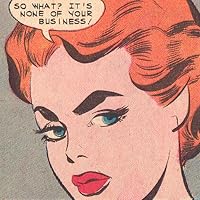
¿Por qué están los hombres cabreados? Michael Kimmel, uno de los más prestigiosos sociólogos a nivel mundial en estudios sobre la masculinidad, se hizo esta pregunta en el año 2013. Para responder a ella, decidió pasar cientos de horas en compañía de estos Angry White Men: desde activistas por los derechos de los hombres, pasando por supremacistas blancos, estudiantes o, sencillamente, trabajadores de a pie. Lo que detectó fue toda una serie de cambios sísmicos de raíz económica, social, política y cultural, que ha dejado a muchos hombres, todavía anclados en una idea obsoleta de masculinidad, con una sensación de confusión, traición y finalmente ira. Fruto de sus análisis, el autor acuña la expresión «derechos agraviados» para referirse a la privación de unos beneficios que estos hombres —blancos— cabreados creen poseer por el mero hecho de ser.
En 2016, con la inesperada victoria de Donald Trump, este lúcido ensayo sobre la pérdida de privilegios masculinos cobró una renovada actualidad que, con el auge global de las derechas populistas, merece ser analizado con mayor calma y profundidad.
Esta es una edición revisada y actualizada en 2017 por su autor —incluyendo un prólogo adaptado a la era Trump—, que pone de manifiesto la relevancia del género para comprender las claves de un nuevo mundo por venir.
«El mundo que vio medrar al hombre blanco entre promesas de que encontraría su lugar en la escala económica por su cara bonita está a punto de pasar a la historia. Sí, es verdad que se puso a la cola, que respetó las reglas del juego y pagó sus impuestos. Este es el ideal del sueño americano, el ideal de la meritocracia. Pero dicho ideal omite que, durante generaciones, la partida ha estado amañada. Así, cualquier acercamiento a la igualdad les parece [a ellos] una derrota catastrófica».
Michael Scott Kimmel is an American sociologist, specializing in gender studies. He is among the leading researchers and writers on men and masculinity in the world today. The author or editor of more than twenty volumes, his books include The Politics of Manhood, and The History of Men (2005).
His documentary history, "Against the Tide: Pro-Feminist Men in the United States, 1776-1990" (Beacon, 1992), chronicled men who supported women’s equality since the founding of the country. His book, Manhood in America: A Cultural History (1996) was hailed as the definitive work on the subject. Reviewers called the book "wide-ranging, level headed, human and deeply interesting," "superb...thorough, impressive and fascinating."
His most recent book, Guyland: The Perilous World Where Boys Become Men (2008) is a best-selling investigation of young people’s lives today, based on interviews with more than 400 young men, ages 16-26. Feminist icon Gloria Steinem said that "Michael Kimmel's Guyland could save the humanity of many young men – and the sanity of their friends and parents."
Kimmel holds the position of Distinguished Professor of Sociology at the State University of New York at Stony Brook in New York, and is a spokesperson of NOMAS (The National Organization For Men Against Sexism).
It's an important book, but at times I did feel like I was being pressured to empathize instead of simply understand. "Aggrieved entitlement" does not justify the harm that is done, and while I'm sure that's not what Kimmel was trying to say, I sometimes felt like I was being told, "Hey don't hold it against them, they're inevitable."
Kimmel seems to think very highly of his readers, because he often doesn't explain why a certain point of view is problematic (e.g., men saying "ladies night" is sexist toward men - "ladies night" is predatory toward women and part of rape culture). If we're smart enough to figure these things out on our own, surely we could have handled more intersectionality in this book as well. There was a chapter called Targeting Women and several sections in other chapters on attacking people of color, but I don't recall a mention about how these men target the LGBTQ community, especially trans women. How does this fit in with Kimmel's thesis of aggrieved entitlement? What is making "angry white men" feel threatened in those situations? (coughmasculinitycough)
Angry White Men is also focused on the extreme right-wing, and I would have liked a discussion on the same kind of entitlement in other realms as well (e.g., liberal men who call themselves feminists but angrily turn on you if you point out their own privilege and entitled behaviors).
The last two chapters also seemed like kind of a rushed clusterfuck and lead me to believe Kimmel had a close deadline, which is a shame.
this was not as good as it should have been. it read like a sloppy rush job. many editorial oversights ("depravation" instead of "deprivation" more than once), many inconsistencies on behalf of the author--why point out the difference between correlation and causation when you want to argue spurious correlations, but leave the topic undiscussed when you like the implication? why the seemingly haphazard use of footnotes? so many questionable statements, too. just one example (p. 238): "perhaps as many as a half-million people visit their websites [...]." sure, perhaps. and then again, perhaps not? i understand this is not an academic work, but really, a harris poll is not evidence even in my most generous mood. many many, problems, but the biggest one is the main premise of the book: angry white men are angry because of their "aggrieved entitlement." they think they're entitled to something they're not getting, so they're angry. fair enough, but that does not make them any different from men of color, or women of any race/ethnicity. angries transgress gender, racial/ethnic, and yes, class boundaries. so, no. don't get me wrong, this was not a terrible read, and i may even use a chapter from this book in my sociology of gender course. it's not a good read, though, and on the other hand, it's not academically up to par, so i dunno where this book is going to go. nice try, but no cigar, i guess.
A comprehensive and detailed analysis of the mindset, arguments, and attitudes of the racist, sexist, homophobic, and anti-semetic alt-right, including the so-called men's rights activists. In my opinion Michael Kimmel was more than fair to these groups, explaining the sources of the anguish and how it is misdirected at the wrong targets through active manipulation. I would sympathize with them myself, if not for their hateful speech and violent conduct. In any case, it is incredibly useful to understand their major talking points and how to argue against them using real, not cherry-picked, evidence. It's time for the down-trodden to band against their common enemy (neo-liberal economic policies), not fight and oppress those who are even worse off.
"...it’s true that their sense of entitlement may be illegitimate—if that entitlement has to do with superiority over others who are in the same position that they are. But it’s quite another thing to believe yourself entitled to a decent job and a social safety net that enables you to wake up in the morning and go to work and feel you are making a contribution to the greater good—and for which you are granted not only a decent wage, capable (with your spouse) of supporting a family, with something put aside for your retirement, but also granted the respect of your coworkers and a secure place in your community."
This book starts strong and ends weak. In a nutshell, Kimmel's thesis is that some of the more extreme right-wing politics comprised of white men stem from their sense of entitlement. They feel not just downtrodden, but ripped off. The direction of the anger is at minorities, feminists, sometimes Jews, nd gays. Kimmel points out that this rage is misdirected at these groups when it should properly be aimed at the economic system that has caused skyrocketing inequality since the late 70s.
That's true but hardly revealing and in a broad sense this work is highly duplicative of Thomas Frank's What's The Matter With Kansas except that it attempts to apply gender-studies models to the issues and examines, for the most part, groups that are further to the right on the political fringe. Frank's book was written before the Great Recession and reached largely the same conclusion.
It's a decently written, if repetitive work. (You will know the lyrics to many Springsteen songs well by the end.) Some of the sampling of Internet comments might be taken too seriously for some groups, but not used at all for others. For example, while I have no doubt that the "Men's Rights Advocates" spew such filth in their ranks, comparing them to the polished statements of feminist academics is hardly a fair comparison. Kimmel might point his browser to Reddit to see angry white women doing similar things. This is not to say that "both sides do it" and that feminists are equally wrong. It's simply to say that when pointing out that that is not the case, it is helpful to enter evidence from parallel sources.
In the Epilogue, Kimmel's solution seems to be simply to let demographic destiny take control. That may be a fine answer for a sociologist, but for someone interested in politics or even in citizenship, it seems like no solution at all. I've thought for a long time that a new kind of voting-based labor movement that took no positions on social issues and that was unconnected to any unions would be a great idea, if the college boys among us would be willing to go organize in deep red areas and stfu about cultural issues for a while. (They won't, so it's not really a solution, is it?)
I cannot believe this book was written before the election! It is a really good review of all the strains of anger and resentment that led to Trump being the redeemer of Angry White Men. It's a really good book and it made me really angry.
This was certainly a challenging read, in that I couldn't stand all of the contradictory logic, the racism, the sexism, the hateful scapegoating, and the overall absurdity of angry white men presented in this book. I could only read a little at a time before I hit my threshold for BS. There are so many different kinds of angry white men, and it was nauseating to read about them. Honestly. The author has compassion (too much, if you ask me) for the very few angry white men who have something approaching a legitimate complaint, but I have to say that I struggled to access any compassionate feelings within myself. As Kimmel says in his epilogue: "To some of these groups, one wants to simply say get over it."
I'm giving this three stars because Kimmel's writing style was a bit irksome to me, and that made wading through all of this unpleasantness that much more difficult. There were multiple instances of redundancy and an over-reliance on Bruce Springsteen lyrics. That being said, I enjoyed the few places where his sense of humor was in evidence. I also admire the fortitude he had when, as a Jewish New Yorker, he approached some of these dangerous chuckleheads (white supremacists, to be precise.)
Update: Ta-Nehisi Coates's recent article entitled "The First White President" articulates how the focus on angry white working-class men is erroneous: "When David Duke, the former grand wizard of the Ku Klux Klan, shocked the country in 1990 by almost winning one of Louisiana’s seats in the U.S. Senate, the apologists came out once again. They elided the obvious—that Duke had appealed to the racist instincts of a state whose schools are, at this very moment, still desegregating—and instead decided that something else was afoot. 'There is a tremendous amount of anger and frustration among working-class whites, particularly where there is an economic downturn,' a researcher told the Los Angeles Times. 'These people feel left out; they feel government is not responsive to them.' By this logic, postwar America—with its booming economy and low unemployment—should have been an egalitarian utopia and not the violently segregated country it actually was."
Update: The more I think about it, the more I dislike this book and don't want to give racist, sexist white men any more time or any more of the spotlight. One star.
Una visión interesante sobre el ciudadano blanco medio estadounidense y su supuesto enfado, ese que tanto aprovecha Trump para conseguir nuevos acólitos día a día. Un texto sobre hombres perdidos y los posibles orígenes de su rabia que no busca exculparles, sino todo lo contrario, mostrar sus incoherencias y equivocaciones acerca de hacia donde apuntan esa rabia.
En sí, se trata de un texto que no sorprende mucho y que no descubre nada nuevo a cualquiera que haya indagado algo sobre lo que la causa feminista nos habla todos los días. La posición del autor, aunque buscando ser neutra, es fácil de intuir pues introduce, con demasiada facilidad y en más de una ocasión, su propio punto de vista sobre dónde debería estar el origen de ese enfado. Además, llega a resultar algo reiterativo conforme avanza el libro, sobre todo en sus últimos capítulos.
No obstante, considero que es una lectura fácil e interesante de la que se puede sacar provecho. Cuenta con ciertos datos de interés y, además, como mayor punto positivo, nos permite acercarnos a la sociedad estadounidense y conocer un poco más de cerca las diferentes razones que esgrimen los "angry men", de dónde vienen, a quiénes escuchan, dónde está el origen de sus creencias, etc. Todo ello, entendiendo a su objeto de estudio a la vez como un todo y como la suma de diferentes voces y sus razones de peso.
I thought I already knew everything there is to know about masculine entitlement, but I was clearly wrong. Kimmel delves into the minds of men who feel like they are the new oppressed minority and provides a lot of insight about why they think and feel that way. Coming from a feminist perspective, I hadn't really gotten a good look at this anywhere else because feminist scholarship (reasonably) does not focus much on the feelings of entitled white men.
While Kimmel discusses race at various points in the book, I wish he had focused on it a little more. He does a great job of explaining why people with these views tend to be men, but not necessarily why they tend to be white.
Also, this book would've benefitted from some better editing. It gets VERY repetitive at times, both in terms of specific phrases and ideas. There are sections where Kimmel basically says the exact same thing several times with ~slightly~ different wording. Some of the things he discusses don't get tied into the thesis very well; for instance, I still don't understand the main point of the chapter about mass shooters. Are they entitled white males, or are they responding to the bullying of entitled white males, or both?
(The fact that Kimmel uncritically parrots the talking point that mass shooters are all "insane" really does not help here.)
Further, while I generally enjoy snark and informal writing, Kimmel overdoes it at times when describing these men. While I agree that they're worthy of ridicule to some extent, he makes it seem like he NEEDS to be sarcastic in order to get the reader to see how ridiculous white male entitlement is. That's really not necessary. His interview subjects speak perfectly well for themselves, and I think a more objective tone from the author would actually enhance that.
Anyway, I'd still recommend this to feminists who are used to reading women's perspectives (which are, obviously, really important) but not so used to hearing men like these speak on their own, rather as part of an argument with a feminist. And the ultimate point--that angry white men has misdirected their anger from the accurate targets, like Wall Street and corporatism, and toward inaccurate targets, like women, LGBT people, immigrants, and people of color--is really important.
When I started reading this I sort of knew what was coming (because I don't live on mars) but I really wanted to see what a bona fide professor of sociology has to say about the phenomenon that is Angry White Men.
What is depressing about the Angry White Men is that they just seem incapable of understanding any other point of view. (and of course, I do have another point of view, because I'm not one of them). The good news is that sociologists (and others) like Kimmel are trying to understand, and are sympathetic with their plight in some respects.
What this book boils down to is that actually, yes Angry White Men should be angry about a lot of things. The problem is that they are focusing this anger - as people do - on the wrong target. Instead of targeting those people on the rung below them - they should be reserving their ire for the corporations and 1% who are sucking up all the money and resources and shitting on the rest of us.
and it's not all depressing - the summary is hopeful that things aren't as bad as all the preceding chapters seem to be leading up to.
The book is too long and too poorly edited, and Kimmel is too impressed with himself. Definitely not as woke as he wants to be about gender and sexuality. Like your boomer dad trying to tell you how progressive his neighborhood association meetings are.
A worrying analysis of raging white males in the age of Trump. The world has changed depriving these men of their concept of masculinity. The seek to return to an idealized past. Trump will fail them as the world has changed and I expect them to be more violent. The people who need to read this are those white males in America who feel cheated of their birthright. However these are the people who will be the least likely to read this book. They live in the old American economy which voted for Trump as opposed to the new American economy which voted for Clinton. Sanders and Trump were on the same page with the same misguided belief that America can return to the past. Technology more than globalization has seen to that. The challenge for the Democrats and moderate Republicans (are there any left) is to reach out to these men and show them that the future is not as emasculating as it appears to be if they embrace change.
Interesting, but not very useful in understanding how to we make things better in our country. I get that there are a lot of men who don't respect women, don't like their lives, feel totally victimized, and in turn do dangerous and hurtful things to friends, family, community, and themselves. The one point Kimmel made about entitlement deserves more study. Where does it come from? "Hillbilly Elegy" suggests it was the New Deal but that's a cop out and implies way too much connection. I would argue it's an extension of the perception of America's role in WWII and the myth of America's importance in the world post WWII. But even that is not addressing, short of war, the question of how we come closer together and reduce the underlying animosity and anger of too many, especially men.
I wish all the American angry white men (and the women that love/enable them) would read this book and learn something. They won't though, and the rest of us will continue to suffer for it.
Three years after its original publication, Angry White Men seems at first glance to be half more relevant than ever, half completely outdated. The promised End of an Era of the subtitle seems not to have come to pass; arguably, we are in an era of Angry White Male ascendancy. But perhaps not. Perhaps this moment is the last, white-hot burst of anger before the futility of that anger dawns on those who express it; or before those against whom it is mistakenly directed become powerful enough to restrain it until it burns out. Nonetheless, Kimmel's study of white male anger remains relevant as that anger becomes the defining political force of the United States of America. But that current political climate means that Kimmel's book can be quite devastating reading at times, because these men have genuinely no clue about what forces do damage to their lives, because of the terrible opinions that they hold, because of the way they consider treating other people with respect as such a horrific inconvenience. It is only the second book I can recall that gave me nightmares (the first was A Pale View of Hills by Kazou Ishiguro, for different reasons). But it still feels like essential reading for white men, angry or otherwise, which can perhaps help us figure out our place in a better future.
Kimmel might be described as too sympathetic to these angry white men - although perhaps his own choice of words, compassionate and empathetic, are better. On the other hand, he's often condescending (and admits it, when discussing MRAs), which makes me suspect that this book is more for the choir than for the unconverted. But I think it would be better to characterise his approach as a hunt for a reason why these men behave the way they do, a way that is clearly contrary to logic and their own best interests. His approach is not biographical, although he does examine their particular circumstances, but rather looking at the wider picture and the social structures and cultural conditions that lead men to behave in the way they do. And, while his focus (particularly the biographical elements) is often on the extremes, those extremes are related back to the broader picture in which other men do not chose to make the extreme decisions - but do contribute to a social setting in which those decisions can seem like rational actions. The picture Kimmel paints is one of men who feel ignored and abandoned, with genuine concerns (although they may not be as concerning as issues facing other groups) to which the (far) Right and other extremist groups appear to offer solutions, although those solutions serve the far Right's interests rather than the men themselves. Kimmel argues that the forces of the Right are mobilised and ready to recruit these men who are more aware of their racial identity than their class identity (which might have lured them left) and that other forces need to pay attention so that there are alternate routes for these men. This book makes me realise why so many people thought (and still think) that Bernie Sanders had a better chance of beating Donald Trump than Hillary Clinton, although I'm unconvinced that the mechanisms of Left Wing politics in the US have the infrastructure and mobilisation to match those of the far Right. Kimmel details the organizations, the radio shows, the internet forums, all ready to turn white male anguish into white male anger.
Much of what I read here was not new to me, because I follow feminist men and women on Twitter, read what they have to say, and have examined my own life history in its light. But it was good to get it laid out in front of me, as a pattern. But Kimmel's conclusions seem too late. An inevitable egalitarian future now seems decidedly evitable, and the decreasing anger of those white men seems to have been misinterpreted. But perhaps in the text of the book we can see the hope; we can offer alternatives to anger, resentment, and reactionary politics; we can show these white men that there is a place for them in a better future. The greatest flaw in this book is to view the future optimistically, to assume a positive outcome and an upwards trajectory to history; rather, one should view the future hopefully, to know that there are good possible outcomes and that the only way to achieve them is through positive action. Angry White Men lays out the problem, a problem that has only gotten worse, and offers some pointers to the solution. Now we have to work to make sure that the positive future is the future we get.
Written in 2013, “Angry White Men” by Michael Kimmel is a window into the politics behind America’s largest population: straight white men. More importantly, this book acts as an explanatory tool for their political decisions and acts of violence. At times, however, the book comes off as repetitive and is a bit too kind to the men themselves.
Firstly, I think this book has excellent analysis regarding the origins of American masculinity and its poisons. Robert Bly is mentioned, as well as other figures of the mythopoetic men’s movement. The politicization of this modern masculinity movement, mostly at the hands of extreme right demagogues, created an activated political group seeking restitution. For what? The stolen American of the past: the once great America who gave all of its white men their due.
Of course, Kimmel accurately describes the folly of this belief. Truth is, the system was rigged from the start. Typically benefitting just white men, the changes of inclusion have begun to erode the grip the patriarchy had on access to the economy. I say begin to erode, because there is much more to be saved.
At times, I felt like Kimmel went over the same concepts too many times. For example, the Goldilocks porridge analogy was explained three separate times. Other parts of the book rehashed older bits. I think an editor could probably cut 30-40 pages out of this book. I also think it would serve the book well to have a chapter dedicated to the origin of these patriarchal systems. While Kimmel described this entitlement as only entitlement, he sometimes comes off as giving these men a pass. In reality, the same system that discards them now is the system they built for others’ oppression. It is white men who have destroyed white men. Kimmel mentions this in passing many times, but it deserves a main focus. It would make his critique of these men more complete in my opinion.
Overall, Kimmel’s 2013 book is timely and accurate. In some passages, Michael is a fortuneteller, describing some of the pains we’ve encountered today by covering the past (Unite the Right rally, election of Donald Trump, popularity of Tate). This book makes a powerful connection between traditional masculinity and modern conservative politics. However, it has some weak analysis regarding this system’s origins, as well as some strange editorial issues.
Overall, I’d give this book a 3.75/5. I’d recommend it to anyone more curious about conservative, straight white men or more generally curious about masculinity politics in America.
A look at a group of people who are trying to hold onto "their America" - where white men were supreme and did not have to share. Written in 2013, it is relevant in 2016. Ignored for so long, they believed that Donald Trump listened to them.
Really qualitative, anecdotal, unacademic, doesn’t tell us anything we don’t know, doesn’t propose solutions and doesn’t describe the economic reality of these men although it constantly refers to it
DNF at p. 168. There's a lot of good stuff in here, but for me it's the wrong book at the wrong time. Had I read it when it was first published in 2013, I probably would have found it eye-opening, or at the very least thought-provoking. The through-line Kimmel traces from school shooters to MRAs to domestic abusers and more is certainly important, and he (rightfully) keeps coming back to the idea that, while many of these men have legitimate things to be angry about, they are, critically, directing their anger at the exact wrong targets. Feminism actually sympathizes with and addresses many of the underlying problems these men experience, but feminists are caricatured and villified and turned instead into the enemy. Instead of joining with women and minorities and agitating for economic change and systemic justice, they blame those just below them on the economic ladder, allowing the power-brokers to divide and conquer (the Marxist argument for class consciousness and solidarity is never made explicit, but the subtext is certainly there).
I agree very much with almost all of what is here, and like I said, had I read this book six years ago, it probably would have been a five-star read. Now though, I've already read a lot on this issue in other places, and at this point for me it's just tiring. However, if you've not read a ton of discourse on masculinity, this might be a very good starting place for you. Kimmel's portrait is not unsympathetic, but he pulls no punches when it comes to pointing out fallacies and hypocrisies. For anyone unfamiliar with (or hostile to) the idea of toxic masculinity, this book thoroughly introduces the concept without once using that phrase (which I don't think had gained much cultural traction yet in 2013). And if you're somebody who uses the #NotAllMen hashtag unironically, this is definitely where you need to be.
”The “enemies” of white American men are not really women and men of color. Our enemy is an ideology of masculinity that we inherited from our fathers, and their fathers before them, an ideology that promises unparalleled acquisition couple with a tragically impoverished emotional intelligence. We have accepted an ideology of masculinity that leaves us feeling empty and alone when we do it right, and even worse when we’re doing it wrong. Worst of all, though, is when we feel we’ve done it right and still do not get the rewards to which we believe we are entitled. Then we have to blame somebody. Somebody else.”
“…they also felt cheated by Bush on immigration - they wanted him to build an impenetrable wall and send all the illegal immigrants back, but instead he chose a policy far more amenable to large corporations who needed the cheap labor - and on the Middle East, where he sent white American boys to die in a war for Israel and for the oil companies, neither of which was exactly a friend of regular white Americans.”
“They’re America’s Everymen, whose pain at downward mobility and whose anger at what they see as an indifferent government have become twisted by a hate that tells them they are better than others, disfigured by a resentment so deep that there are no more bridges to be built, no more ladders or upward mobility to be climbed, a howl of sin mangled into the scream of a warrior. Their rage is as sad as it is frightening, as impotent as it is shrill.”
A very informative, somewhat entertaining, and unfortunately still timely book.
I read this previously and just finished listening to it. The narrator of the audiobook has little inflection. At first I thought it was a computer voice reading the text, but saw there actually was a human narrator. A better read then a listen.
The premise of “aggrieved entitlement” is interesting, but there seems to be more political commentary than necessary. The beginning of the new edition refers to “Trump supporters” and gives the impression in much of the book that all Republicans are angry white men, exclusively, and all belong to men’s rights and extremist groups. He does refer to women, but more in the fashion of auxiliary groups to the extremists and more longing for the good old days than holding hateful views. Yet, 47% of white women (who voted) voted for Trump. A fairly large demographic. There is a lot of focus on very small groups, like white supremacists and mass shooters, but they do not necessarily extrapolate to the larger mass of men. He brings up male suicide as an example of that anger turned inward, which is not quite accurate. The number of men who commit suicide is a multiple of women who do. That is because men are more successful at their attempts than woman. However, the number of women who attempt suicide is much higher than men. Something he overlooks because it does not fit the narrative.
All in all it is worthwhile to read, but maintain a bit of skepticism.
(Nach der Hälfte abgebrochen, dann nur noch quer und die letzten Kapitel gelesen.)
Männer, die sauer sind, weil sie das GEFÜHL haben, ihnen stünde zu, was andere bekommen. Der Autor versucht (vergeblich, zumindest bei mir), Empathie für diese Gruppe Menschen zu erwecken. Amokläufer beim Namen nennen, ihre Taten haarklein und detailreich aufzuschlüsseln, die vermeintliche Ideologie hinter "Wutradio" und die verdrehten Wahrnehmungen der vermutlich vollständigen Wählerschaft Trumps ein Jahr später erörtern... das alles ist schon harte Kost. Mir war das alles zu binär, zu wenig begründet, zu oberflächlich. Worin genau besteht denn nun die wirtschaftliche Abgehängtheit von diesen "zornigen weißen Männern"?
Ich weiß, das Buch wurde später (nach Trumps Wahlsieg) mit einem Vorwort versehen, das in meiner Ausgabe noch nicht vorhanden war und ich sicher noch lesen werde. Aber der vermeintlich optimistische Epilog fühlte sich einfach geheuchelt an und auch hier fehlen mir konkrete Ideen, Vorschläge und wahrer Optimismus, um die Dinge besser zu machen. Sicher ist es wichtig, zornigen weißen Männern zuzuhören und das nicht nur von ihnen zu verlangen. Ich frage mich aber, was dieses Buch dazu beitragen soll, denn ich habe den Eindruck, dieses Buch preaches to the converted und wird vermutlich in den seltensten Fällen von denjenigen gelesen, um die es hier eigentlich geht: die zornigen weißen Männer.
This was an interesting read for sure. To be inside the minds of angry white men. I wholeheartedly agree with the author that white men have a reason to be upset. But it's outdated and a lot more things could be looked at. Hell, the last 8 years alone could add/change some of what is here. The science is outdated as well, and I think there would be endless hours of video just on tiktok alone he could get so much more insight from. PLUS more white men would be more willing to be interviewed anywhere you can find them. I would really love to see an updated version of this book. In my opinion, if this is really how they feel, they need to work through that trauma so they can find a way to move on from it. In doing so they can make better lifes for themselves, their family and the country.
It's weird to read this book now, after four years of a Donald Trump presidency, but it remains as relevant now as it was then. Donald Trump isn't mentioned at all this book, but he is the elephant in the room throughout. Kimmel, a sociologist, uses this book to explore who a "angry white man" is, what feeds into their sense of grievance and the dynamics of power in American politics. The author also points out that these men exist at an "end of an era", pointing to massive shifts in both economic forces and personal relationships that make it nearly impossible to truly turn back the clock.
Poca profunditat d'anàlisi en un llibre que, tot i tenir algunes idees interessants, acaba sent força repetitiu i simplista. El focus total en l'home blanc nord-americà també limita la informació que se'n pot treure de l'obra de Kimmel, massa centrada en les matances amb rifle exclusives del país americà, o els motius polítics i econòmics que ens presenta com a excuses de pes pel comportament dels protagonistes del llibre. Massa poc crític i punyent pel meu gust.
What makes this whole topic of angry white men so agonizing is the deep seated misunderstanding against whom to fight. A lot of the people discussed in the book have genuine grievances. But instead of kicking up - mobilizing to change economic policy and rallying against corporate greed - they decide to kick down. They punch down on minorities, women, queer people, you name it. The very people who share some similar grievances and could be allies.