Jump to ratings and reviews
Rate this book

La ribera de les Sirtes

Rate this book
Aldo és destacat al front on es disputa, des de fa tres-cents anys, una guerra entre la senyoria d'Orsenna i el Farghestan, a banda i banda de la mar de les Sirtes. Hi arriba en una època de calma que s'allarga sense fi. Paral·lelament, la tensió entre els dos bàndols i entre els soldats d'un mateix fortí, sacsejats per notícies incertes, augmenta desmesuradament. La represa de les hostilitats sembla inevitable: un incident mínim faria esclatar les lluites... Mentrestant, Aldo se sent cada cop més fascinat per la ribera enemiga. Les novel·les de Julien Gracq són novel·les de l'espera. Tot hi és encarat, de l'estructura a les descripcions, de les anècdotes al comportament dels personatges, a un esdeveniment, anunciat o només pressentit, que s'acosta i que dóna sentit a l'obra. El seu temps no és un temps viscut veritablement, sinó un parèntesis que transporta, com una força magnètica, el lector.

432 pages, Hardcover

First published January 1, 1951

111 people are currently reading
7334 people want to read

About the author

Julien Gracq

73 books178 followers
Julien Gracq (27 July 1910 – 22 December 2007), born Louis Poirier in St.-Florent-le-Vieil, in the French "département" of Maine-et-Loire, was a French writer. He wrote novels, criticism, a play, and poetry.

Gracq first studied in Paris at the Lycée Henri IV, where he earned his baccalauréat. He then entered the École Normale Supérieure in 1930, later studying at the École libre des sciences politiques.

In 1932, he read André Breton's Nadja, which deeply influenced him. His first novel, The Castle of Argol is dedicated to that surrealist writer, to whom he devoted a whole book in 1948.

Ratings & Reviews

What do you think?
Rate this book

Friends & Following

Create a free account to discover what your friends think of this book!

Community Reviews

5 stars
637 (41%)
4 stars
461 (30%)
3 stars
292 (19%)
2 stars
104 (6%)
1 star
38 (2%)
Displaying 1 - 30 of 178 reviews
Profile Image for Vit Babenco.
1,783 reviews5,784 followers
August 22, 2023
The Opposing Shore has a quite unique atmosphere – it is written in the baroque language of the nineteenth century classical novels and at the same time it is fraught with the Kafkian surreal suspense of the kind that permeates The Castle and it even boasts some whiffs of beautifully enigmatic Gormenghast.
Yet even the melancholy of that flaming sun over a dead land failed to extinguish in me a throb of happiness; I felt in complicity with the tendency of this country to absolute desolation. It was both end and beginning. Beyond these realms of lugubrious reeds extended the desert sands, ever more sterile, and – like the decor of a navigable death – behind a sparkling mirage of mist, the peaks to which I could no longer deny a name.

The main character lives among the ruins of stale traditions and decayed formalities so he unconsciously commences to fight his day-to-day routine of existence.
Solitude and boredom. It's what happens to something that's felt itself gathered together too long, too exclusively. The vacuum that occurs at its frontiers – a kind of numbness which is generated on its torpid surface as if it had lost the sense of touch – lost contact.

And when one commences to slide into the bottomless abyss of doom there is no way to stop…
Profile Image for Guille.
1,006 reviews3,274 followers
February 22, 2024

Las leyendas urbanas que perduran son aquellas que, aunque vayan en contra de lo razonable o lo sabido, consiguen sondear alguno de los oscuros recodos de nuestra naturaleza. Una de esas leyendas es la del escorpión que se suicida acorralado por el fuego. Mucha gente sigue creyéndolo, aunque sea la deshidratación por la cercanía de las llamas lo que le provoca los espasmos y las contracciones en la cola que pueden hacernos pensar que se está clavando el aguijón. Sin embargo, ni su duro caparazón puede ser perforado de esa forma ni el veneno puede hacer nada contra él por ser inmune. “El mar de las sirtes” es una historia que replica la leyenda: el escorpión es el pueblo de Orsenna, la fuerza que lo acorrala, el aburrimiento.
“Cuando vine aquí, no podía más de aburrimiento, estaba harta, me sentía dura y tensa. Quería amasarme, hacerme rígida y sólida entre mis manos como una piedra, una piedra que se le tira a la cara a la gente. Quería chocar por fin con algo, romper algo, como se rompe un cristal, en ese marasmo”
Dirán ustedes que el aburrimiento no es comparable a un cerco de fuego que nos asedia. Se equivocan, el aburrimiento no es solo la mera consecuencia de la falta de estímulos, puede ser también una señal de que estamos gastando esfuerzo y/o tiempo en actividades que no están a nuestra altura, que estamos malgastado nuestro potencial en tareas a las que no damos ningún valor. Ello puede provocar frustración y ansiedad y llevarnos a conductas problemáticas, a buscar cualquier experiencia que nos saque del vacío que sentimos, ya sea perjudicial o peligrosa. Dice Josefa Ros Velasco, filósofa y autora del libro «La enfermedad del aburrimiento», que “Si alguien se aburre suele darse a la botella, cuando le pasa a un país suele darse una revuelta”. Este es precisamente el caso que trata «El mar de las Sirtes».
“Me parecía que Orsenna se cansaba de su salud somnolienta, y, sin atreverse a confesárselo, esperaba ávidamente sentirse vivir y despertarse con la angustia sorda que se iba apoderando ahora de sus profundidades. Era como si la ciudad feliz, que se había dispersado por todos los rumbos del mar, y había dejado irradiar tanto tiempo su corazón inagotable en tantas figuras enérgicas y tantos espíritus aventureros, reclamara ahora, desde el fondo de su senectud avara, las malas noticias como una vibración más exquisita de todas sus fibras”
Orsenna estaba en guerra con Farghestán, dos países arrogantes y orgullosos de su viejo pasado de gloria. Lo que quitaba gravedad al asunto era que llevaban trescientos años en guerra y hacía ya mucho que no se registraba batalla alguna. Pero la voz de la Patria “nunca habla tan fuerte como cuando se trata de exponerse a un peligro sin que exista una necesidad urgente”, y ya saben aquello que decía Shopenhauer, “Cualquier tarugo miserable que no tiene nada en el mundo de lo que pueda sentirse orgulloso, recurre al último recurso, vanagloriarse de la nación a la que casualmente pertenece”. Cuántos hay, que no pudiendo hacer nada digno con su vida, bien por falta de opciones, bien por falta de méritos, bien por ambas al tiempo, se parapeta en un grupo en el que poder sentirse parte de algo, por banal que este algo sea. Cuando se trata de un equipo de fútbol o un cantante de moda, las consecuencias, de haberlas, se circunscriben a un corto radio de acción, pero cuando se trata de religión o de La Patria y su supuesta “unidad de destino en lo universal”, como es este caso, la cosa se puede poner muy fea. Como ven, un tema de absoluta actualidad.
“La fe profesada por los hombres que construyeron la grandeza de la Señoría era que un Estado vive en la estricta medida en que mantiene un contacto inveterado con ciertas verdades ocultas, sin más depositario que la continuidad de sus generaciones”
Aldo, miembro de una de las familias más antiguas de Orsenna, siente un profundo hastío en su regalada vida. Con el presentimiento de que algo único le está reservado y con el objetivo de romper su tediosa rutina, decide ocupar una plaza como Observador de la Señoría en las Sirtes, un puesto de frontera considerado entre el funcionariado como un purgatorio donde se expía alguna falta de servicio durante larguísimos años de aburrimiento. Aldo tenía esa extraña idea, aunque comúnmente aceptada, de que el sufrimiento de privaciones le traería, a modo de compensación, el prodigio que tanto ansiaba. Este mal no era exclusivo de Aldo, cada vez más y más ciudadanos de Orsenna sentían la “mordedura de una fiebre” que los llevaba a pensar que algo se estaba urdiendo, algo que extrañamente coincidía con esa embriaguez de aventuras que les quemaba por dentro, algo que no germinó espontáneamente ni se extendió por casualidad, algo que un hombre, predispuesto de antemano y sabiamente manejado, se encargará de precipitar.
“(Hay hombres) Más estrechamente pegados a la sustancia de todo un pueblo que si fueran su sombra proyectada, son en verdad su instrumento ciego; el terror semirreligioso que les da su estatura sobrenatural consiste en la revelación de que son portadores: que en todo momento puede intervenir un condensador a través del cual millones de deseos dispersos e inconfesados se objetivan monstruosamente en voluntad.”
“El mar de las Sirtes” es una novela barroca, densa, exigente con el lector, lenta en su desarrollo, profunda en sus reflexiones, una de esas novelas que, como decía de aquellas leyendas urbanas, perdurarán porque a lo acertado de su visión unen el preciosismo de su estilo.
Profile Image for Jonathan.
1,009 reviews1,229 followers
March 31, 2016
I enjoyed this book. I did not enjoy it as much as some books I have read but I did enjoy it more than some other books I have read. The things that the words said happened were interesting to me. Some of the sentences were less interesting to me than some of the other sentences. Some of the sentences that were less interesting to me were less interesting to me because I had read similar things in different sentences in different books on previous occasions. During reading the pages I sometimes thought of things in the world that were not in the book. During reading the pages I sometimes thought of things that were not in the world but were in the book. I did not have to look up any of the words in the book in a dictionary. I was not confused at any point during my reading of this book. If a friend whose reading taste was similar to mine were to ask me if he or she should read this book I would answer in the affirmative, though with only limited enthusiasm.
Profile Image for Malacorda.
598 reviews289 followers
May 28, 2020
Un libro notturno, evocativo, suggestivo, elegante, visionario nel senso che è fatto di visioni (ma anche nel senso che prevede, ipotizza un futuro più o meno lontano). Un testo vagamente oppiaceo, sembra di essere in un quadro di Paul Klee ma forse anche di Edvard Munch. L'eleganza del ritmo e del testo lo fanno assomigliare ad un lento incedere, una basse danse. E' tutto molto giusto ma forse anche un po' "troppo".

Sontuoso è l'aggettivo che più gli si attaglia, per cui mi tocca ripeterlo anche se l'hanno già detto/scritto in tanti: una lettura sontuosa, densa, infine vischiosa, di quella vischiosità cui a tratti ci si abbandona con piacere ma che in altri tratti eccede. Non lo so se la sontuosità e l'eleganza siano giustificativo sufficiente per le cinque stelle. Di solito appena terminato un libro ho subito chiaro in mente che giudizio intendo dargli, qui resto molto combattuta tra le quattro o le cinque stelle. Ma se le cinque stelle devono rappresentare la perfezione dell'opera - o per lo meno la perfezione della soddisfazione che se ne è ricavata - allora qui dovrò fermarmi a quattro.

Dapprima avevo la sensazione che alla sontuosità del testo originale corrispondesse una speculare e paritetica sontuosità della traduzione - un lavorone ben fatto, insomma - ma in dirittura d'arrivo ho cominciato a sentire una certa pesantezza, non so più se nella traduzione o nel testo in sé, mi azzardo a dire che da qualche parte si trova una certa approssimazione come diretta conseguenza della ricerca di barocchismi. Esempio pratico: quante migliaia di volte compare in tutto il testo il termine bruma? E dire che di sinonimi nella lingua italiana ce ne sono parecchi, così pure come ce ne saranno in francese... forse si ripete sempre uguale in italiano perché così è anche nell'originale francese, ma insomma, si torna al punto di partenza: concorso di colpa per Gracq e Bonfantini, la sontuosità non deve andare definitivamente a discapito di un certo tasso di leggerezza della parola.

Similitudini e metafore sono incastonati nel discorso e nella trama alla perfezione: sia a livello "micro" all'interno del fraseggio, sia per quanto riguarda il livello "macro" che intende raccontare la tensione da guerra fredda e la decadenza, il lento spegnimento di antiche istituzioni e tradizioni (piacevolissimo il richiamo rinascimentale che fa chiamar Signoria la Repubblica immaginaria di Orsenna). Ma d'altro canto, la sovrabbondanza di metafore rende alcuni passi piuttosto ridondanti, specialmente nei capitoli centrali.

La trama è di quelle impalpabili, vi si racconta quel perverso meccanismo in virtù del quale se uno fissa il baratro finisce per venirne suo malgrado attratto, come risucchiato. O più prosaicamente: quando in autostrada si corre lungo la corsia di sorpasso e si sta sorpassando un tir, se per debolezza o distrazione si lascia che lo sguardo vada ad indugiare sul mezzo pesante, è assai probabile che si vada a sbatterci contro con risultati facili da immaginare.
Più in piccolo lo ha raccontato anche Pirandello con L'Esclusa: una voce che tutti vogliono vera, e che inizialmente vera non è, finirà solo dopo col concretizzarsi realmente. Se mi piacessero i paragoni con l'attualità potrei anche parlare di fake news e post-verità, ma questi li lascio fare al tg2.
Gracq racconta - pennellando poco per volta - questo meccanismo semplice e complesso al tempo stesso, in cui molti desiderano che le cose vadano in un certo modo, molti altri temono che le cose vadano in quel modo, sia come sia tutto spinge da quella parte per cui quella che poteva essere solo una utopia (oppure una distopia), diventerà realtà: e il fatto che strumento di questa realizzazione sia un uomo in particolare più degli altri, finisce per essere un un dettaglio più o meno irrilevante all'interno del meccanismo, proprio come un profeta non si assume meriti per sé ma si sente solo docile strumento nelle mani del suo Dio.

Il tono, il ritmo e il fraseggio, quell'aria di ricerca costante e minuziosa, mi hanno ricordato Austerlitz di Sebald. Ma è l'ambientazione che rappresenta certamente il suo lato più affascinante ed è anche quello che mette in moto un gran numero di riferimenti letterari.

Il paese immaginario e il clima di attesa infinita e la fortezza, richiamano Il deserto dei tartari di Buzzati.
Pur essendo luogo di fantasia, la città di Maremma non è solo molto somigliante a Venezia, ma riporta con precisione alla Morte a Venezia di Mann.
La parte alta della città di Orsenna ha un qualcosa di Gormenghast, e non solo nella fotografia e nelle architetture: c'è anche la tematica della decadenza e dell'incombere del cambiamento traumatico e tuttavia ineluttabile.
Un ricordo più antico ma abbastanza preciso mi sovviene dal Giuoco delle perle di vetro di Hesse: al posto di Orsenna là c'è Castalia, a metà strada tra un'arcadia, un monastero buddista e Gran Burrone; alle prese con l'inevitabile decadenza, deve fare i conti con il resto del mondo e con lo scorrere del tempo, sia dal punto di vista politico e culturale che dal punto di vista più concreto e pratico della vita di tutti i giorni.

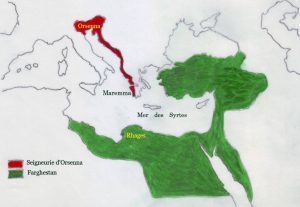
L'ambientazione delle Sirti è un po' Camargue, un po' Polesine; però interessante è anche l'interpretazione che ho trovato spulciando su internet e che vedrebbe la Signoria di Orsenna occupare tutta la costa sull'Adriatico, dal Veneto e Trieste e poi Slovenia, Croazia, Albania, sempre più giù fino al Peloponneso, con il Farghestan (i cosiddetti frontisti) che occupano nord Africa e Turchia.


All'inizio lettura un poco faticosa, poi ammaliante e avvolgente, poi ancora vischiosa e quasi opprimente, nel complesso l'effetto caleidoscopio è un qualcosa che depone a favore del buon libro. Non mi ritrovo nella condizione di perfetta soddisfazione della lettura, comunque il livello è elevatissimo e meriterebbe di certo una maggior diffusione. Voto finale: quattro e mezza.
Profile Image for To-The-Point Reviews.
113 reviews102 followers
November 14, 2024
For 300 years Orsenna has, against the will of the more adventurous, been at peace -- a fragile yet overtly tangible peace -- with Farghestan and Gracq, a writer of sumptuous prose, propels the reader, cautiously yet with sagacious aplomb, into a swamp of myriad description and metaphor by means of such baroque language (so dense and with such a wealth of greed and richness, as if drenched in a viscous syrup of human poetry), that one is, in a state of ecstasy, left spiraling in hallucinating whirls and whorls until nauseated, hopelessly, by the thick porridge of language that they, whomever they might be, are left staggered and bewildered, a mere shell of a reader, cautiously peeling away at each page until, with trembling relish and ecstasy, the endeavour is, like a fading sunset, at last.. graciously within reach.
Profile Image for Lee Klein .
911 reviews1,055 followers
June 13, 2013
Read this thanks to this bit in Enrique Vila-Matas's Dublinesque:
"He'd published lots of important authors, but only in Julien Gracq's novel The Opposing Shore did he perceive any spirit for the future. In his room in Lyon, over the course of endless hours spent locked away, he devoted himself to a theory of the novel that, based on the lessons apparent to him the moment he opened The Opposing Shore, established five elements he considered essential for the novel of the future. These essential elements were: intertextuality; connection with serious poetry; awareness of a moral landscape in ruins; a slight favoring of style over plot; a view of writing that moves forward like time."

As noted by others on here, when I first looked to get it, copies cost more than $200 online. But recently I checked to see if a cheaper one had shown up and copies were available for a little over $20. Turns out they're print-on-demand copies (look for the tell-tale ISBN on the last page), which look just fine. My copy even has a born-on date: "26 May 2013" -- it was printed in Lexington KY, too, for what it's worth.

So hard to do this one justice. Like a cross between Kafka and a super-French/semi-evil Updike? To be added to a syllabus featuring Waiting for the Barbarians and The Tartar Steppe. Totally humorless. Purposefully disorientating. Set in a region engaged in something like a cold war for 300 years, in a somnolent, half-alive, yet peaceful state -- the prose induces a similar state in a reader thanks to precise, decadent, sometimes Gothic (sometimes almost purple) prose always worth a second and third read to savor and store a sentence. I'd say that sometimes I felt like I was reading blind, and then I'd have to read back up the page to see where I lost touch with a paragraph. Best when read aloud since the sentences really flow and it's easier to stay alert when reading aloud. A psychedelic existential novel about pushing through and making contact and really feeling alive even if doing so is in no way in one's best interest on a practical level (in the novel's case, it might lead to full-on war) but is essential so life seems alive. Worth going through again one day -- like much of Faulkner, seems like much would clarify on second and third read. So many quotables. More later.
Profile Image for Nora Barnacle.
165 reviews124 followers
May 6, 2023
Pročitavši Šesto pevanje Eneide, Žilijen Grak skliznu u promišljanje da li se opisano zbilo na (Enejinoj) javi ili pak u snu – pitanjem interpolacije se ovoga puta nije hteo baviti – i, kontuzovan dubokim utiskom, usni kako Kafkina sen Prustovoj seni prepričava Sedmi pečat, probudi se naglo i zaprepašćen, pa pokuša još jednom da zasanja isto, ne bi li otklonio nedoumicu da su to, ipak, pre mogle biti Lafkraftova i Beketova avet koje polemišu oko Turinovog konja, ali mu onaj refleksni trzaj sa kojim telo pada u san – jednu od rudimentnih telesnih funkcija, poput ježenja ili pokretanja ušne školjke, sada nepotrebnih aktivnosti nekog drevnog genetskog zapisa, koji je praistorijske ljude spašavao da ne zaspu u snegu i smrzavanjem nasmrt prekinu sveopšti evolutivni lanac – preduhitri hučeći početak uvertire za Tristana i Izoldu sa krčavog gramofona komšije odozgo. Naglo skoči iz kreveta, brzo dohvati nedopijenju čašu jako koncentrovanog čaja od žalfije, kažiprstom proburazi trodnevnu površinsku skramu, progrgolji dva gutljaja, ali ih, namršten gorčinom, ispljunu nazad, odluči da (za sad) neće da se ubije, sede i napisa Obalu Sirta.

Sto posto!


Upozorenja i korisni saveti:

1. Ne, nemate problem sa koncentracijom zato što svaku rečenicu morate da pročitate po dva - tri puta. Ovo iznad je naivni pokušaj podražavanja piščevog manira, predoziran uzbudljivošću. Namera mi je bila da kažem na šta me sve podseća.
2. Da, moguće je da neko napiše ovoliko metafora na trista strana i treba mu oprostiti sve one bespotrebne zbog onih (malo više od) nekoliko maestralnih.
3. Da, imate pravo da kažete fanovima Pink Flojda da je etalon psihodelije ipak nešto drugo.
4. Ne, ništa neće početi da se dešava nakon polovine. Ne, ni nakon 250 strana. Dalje bi bio spojler, ali vidi pod 3.
5. Da, normalno je da vam bude krivo što ovaj pisac nije pisao horore i sf, iako ne čitate ni horore ni sf.
6. Da, imate pravo da proslavite shvatanje poente nakon one jedne upitne rečenice na kraju, tako što ćete na kolenima doklizati do dve saksije u svom fan pitu (vaze, knjiga, taburea - šta vam je već fan pit na kućnoj koncertnoj bini) i da na ejr gitari odsvirate t-n-n-n-n-n-n-n.
7. Ne, ne trujete se lagano. Ni u živo blato ne tonete, ne. Reč je o izuzetno dobro postignutoj atmosferi, među najupečatljivijim u (meni poznatoj) književnosti, toliko dobroj da nadilazi i jezik i stil i narativ i vredi svakog pokidanog nerva. Upravo to je i razlog što ćete mazohistički nastaviti da se mrcvarite čitanjem, uprkos pitanju "šta mi ovo treba u životu". Nakon svake desete strane, da.
8. Ako -stan iz Fargestan povežete sa islamom, valjda je ok da podignete obrvu na Uelbekovo Pokoravanje i da se pitate da li je Orsena alegorija (hrišćanske) evropske inertnosti, a Žilijen Grak prorok koji to shvata još '51. kada je ovo objavio. To i nije preterano bitno, jedna je od mogućnosti tumačenja (jer mi ovo sa razaranjem iz recenzije ne zatvara sve rupe).
9. Ne, Vanesa, nije demon. Valjda (hi, hi). Da, deluje tako nekako šućmurasto nedovršena kao, uostalom, i glavni i svi drugi likovi, ali će se do kraja ispostaviti da to nije propust.
10. Hvala prevoditeljki koja se borila sa ovim tekstom.


Uprkos svemu, ne znam da li bih ovu knjigu ikome preporučila, ali ću je izvesno čitati ponovo i to ubrzo.
Profile Image for Jeff Jackson.
Author 4 books527 followers
September 3, 2015
I finished this over a month ago and have been figuring out how to review it. It's one of those rare BURIED novels that's so good I'm actually tempted to *not* to tell anyone else about it. To keep it to myself and try to figure out how to replicate some of its magick. So in that spirit, I'm not going to say too much.

The Opposing Shore has been described as science fiction, but it takes place in an ancient kingdom that's closer to Calvino's Baron in the Trees if that book was more doomstruck and written in lusher prose. It's a sort of adventure novel about entropy and the void, populated by stagnant seaside resorts and festering necropolises, sprawling map rooms and weeklong parties, propelled by an engrossing plot that never hits any of the expected notes. It's one of a handful of great novels coughed up by the 20th Century.
Profile Image for Megha.
79 reviews1,192 followers
Read
August 5, 2014

** Unfinished **
________________________

You stand at the shore taking in the salty air. The waves crashing on the shore sing to you soothingly. A calm smile adorns your face. You look at the horizon and wonder what lies beyond.

You wander around in the quiet, somnolent streets. Like a child digging in the dirt to discover little treasures, you roam the un-walked paths unearthing their secrets. The unvisited corners grow intimate and become your safe haven.

You gaze back at your city and its familiarity fills you with warmth. Its stability calms you. You see in it a lap of comfort that you can return to anytime and you will be home.

Days turn into weeks. Weeks into months. And everything is just the same. Except the sense of peace and relaxation is slowly evaporating. There is something stirring inside you.

You gaze back at your city and in its immutability and dormancy, you now see decay and stagnation. The calm and quiet now feels like boredom. Its old ways and inaction seem cowardly. You yearn for something new and invigorating.

You wander around in the quiet, somnolent streets as you battle with yourself. Apprehensions about diving into the unknown and a dubious future don't let you rest. You feel strongly tethered to what is known and familiar and you turn pale at thought of stepping outside the boundaries.

You stand at the shore and wet sand tickles your bare feet. You still feel the intoxication of the feverish dreams that kept you up all night. A heady mix of excitement and nervous anxiety rushes through your being. Your face betrays a determined smile. You look at the horizon and wonder what lies beyond. You wonder about the possibilities and that which lies ahead. The day is just beginning…….
"It seemed to me we had just pushed open one of those doors you pass through in dreams. The stifling sense of happiness lost since childhood seized me; the horizon in front of us burst into fragments of glory; as though caught in the current of a shoreless river, it seemed to me that I was now utterly restored - a freedom, a miraculous simplicity was washing the world; I saw the morning born for the first time."
Profile Image for L.S. Popovich.
Author 2 books459 followers
January 30, 2021
While the descriptive passages are gorgeous, I tired of the narrative? and the narrator about 2/3 of the way through. My reading was hindered by some inconsistencies in the prose, which tended to ebb and flow, ranging from excellent evocation of dense imageries, conjured with immaculate confidence, to forced, teetering, cobbled-together dialogue sections between characters acting like wooden dummies.

I was compelled by the enigmatic atmosphere to keep going, and am willing to sample and read the author's other productions at some point. I liked the writing style enough not to seek much else by way of pleasure from the text. I feel quite leisurely about this interest and may put off further peeks into his oeuvre. I've noticed that this book causes me to want to be extra specific about the sentences I'm using to describe it, possibly because the sensation of reading it instills in you a need to rely on too many long sentences, such that you begin to sound like you are not stating things in the most succinct way. But this sheer lack of concision contributes to the eerie mystique of the book. Maybe. The author prolonged the interior exploration of his fictional world through the use of dreamlike articulations, visions, and floods of figurative language. Antunes accomplishes much of the same thing, but manages to command more force with his characters and plot, whereas Gracq relies solely on aura and setting to house his indulgent detail.

There was less commitment to the warring city-states than I expected. Less commitment to the love interest than I anticipated. Less going on, fewer meaningful interactions amid a lot of aloof observation, contemplation and dwelling on the inner feelings aroused by a pleasing landscape, so difficult to encapsulate and yet, it remains fairly memorable. An uncategorizable, melancholy book too caught up in its technicolored backdrop to plumb past the two-dimensional. But what it manages to grasp, outside of its vessel-like characters, is a profound awareness of our ability to perceive the complexity of constituent descriptions.
Profile Image for Momčilo Žunić.
274 reviews113 followers
August 3, 2023
Iza tmolastih i prezasićenih Grakovih draperija od rečenica, u osobitoj napetosti tematske karniše o kojoj se drže, s nemarnim obzirom prema tome da li će se kroz njih prozirati samo zid ili pričina ili će pričina proći i kroz zid i kroz draperiju, ili će se već promoliti nešto bezmalo treće i od zida, i od pričine, i od draperije veće: poput uzvišene lepote tromog iskotvljavanja ka katastrofi buđenja, u carstvu opijenom vlastitim neposluhom za ustajanjem, leno zapletanje "Obale Sirta" i rasplinjavanje njegove fabule, moglo bi se, utiska radi, prevesti u uprizorenje snene stogodišnje besanice "Trnove Ružice", ponajviše onog njenog isečka koji kazivač zaobilazi u jednom zamahu: omamu razbuđivanja.

Da, osim što taj trenutak Grak razla��e, čini poroznim i zgušnjava na 283 stranice, rastapajući deskriptivne blokove sporohodno-opijumskim događajnim oblogom. U iščekivanju umirenja pod lišajevima i mahovinom. [Recimo da je tako, osim što led treba zameniti močvarnim i njenim isušenjem: peskovitim porazom!]... Osim što se ovde budi u umiranje, jer "Onaj ko spušta vodu u čamac koji truli na žalu... može se smatrati ravnodušnim prema njegovoj propasti, ali ne i prema njegovoj 'svrsi'".
Profile Image for Dimitri.
176 reviews72 followers
June 12, 2023
Mi rigiravo talvolta per guardare dietro di me la fortezza di un livido colore d’ossa sotto i suoi veli di nebbia; davanti a me, in lontananza, i riflessi di mercurio delle lagune di Maremma venivano a mordere sull’orizzonte una linea sottile nera e dentellata, e, in quel mattino già così pesante, mi sembrava di sentire quei due poli attorno ai quali oscillava ormai la mia vita caricarsi sotto il loro velo di bruma d’un sottile fluido elettrico.

Annoiato dalla vita nella capitale, il giovane aristocratico Aldo ottiene il ruolo di Osservatore sulla costa delle Sirti, al confine meridionale dell’immaginaria Signoria di Orsenna, in una terra sprofondata in un sonno senza sogni. I militari di stanza alla fortezza dell’Ammiragliato hanno il compito di segnalare eventuali pericoli, perché al di là del mare c’è il Farghestan, con cui Orsenna è in guerra da trecento anni, nonostante il nemico non si veda da tempo immemore e il ricordo delle passate battaglie vittoriose sia relegato nei libri di storia. Ma, nella vicina città semiabbandonata di Maremma, simile a una Venezia marcescente, cominciano a diffondersi strane voci di un imminente attacco.

Ad ogni istante può comparire nella storia un condensatore per mezzo del quale milioni di desideri sparsi e inconfessati si concretano mostruosamente in volontà.

I tempi sembrano maturi per un fatto nuovo, che porti a un cambiamento tanto temuto e altrettanto desiderato. E l’inquieto Aldo potrebbe essere la persona giusta, scelta e indirizzata a sua insaputa, come un proiettile sparato da altri, per svegliare una sonnolenta e decadente civiltà occidentale, interpretando un sentire ormai diffuso a regola d’arte e avviando un processo inarrestabile verso l’ora dell’ultima dubbiosa battaglia.

“Dormite sempre sonni tranquilli, signor Osservatore?”

Mi rimarrà per parecchio tempo la sensazione di aver letto un libro raro per forma e sostanza: per una prosa maestosa e per molte riflessioni importanti. Bellissimo romanzo metafisico e politico che, con un linguaggio ricco e preciso (che richiede un certo impegno nella lettura) crea un mondo sia interiore che esteriore. Racconta il lento scivolare verso l’evitabile, il naufragio di un popolo ormai incapace di ribellarsi e di risolvere i conflitti tra giovani e vecchi, così come descrive l’eccitazione per l’ignoto e i desideri di un singolo che la letteratura rende universali.

E il sonno si richiudeva male sulle mie orecchie tese, come quando siamo stati svegliati nella notte dal rumore e dal bagliore lontano di un incendio. Qualche volta, tornando nella camera, vedevo di lontano un’ombra oscillare sul suolo e, alla luce della lampada, le mani di Vanessa, che sollevavano i suoi capelli ingarbugliati come ogni volta che si svegliava, facevano svolazzare sui muri come grosse farfalle notturne.
Profile Image for Brodolomi.
292 reviews197 followers
March 31, 2020
Dok sam čitao „Obalu Sirta”, obrazi su mi se crvenili i klatio sam nogama kao šiparac od svih upečaljivih metafora i poređenja prisutnih u tekstu. Baš raskošan roman. Grakova arogancija da odbije Gongura je sasvim razumljiva; i ja bih je odbio da umem ovako da pišem.

Radnja se odigrava u izmišljenoj republici Orseni, u nekom, recimo, pseudosrednjovekovnom ambijentu Mediterana (Ako bih geografske prostore iz ovog romana morao da stavim u neki književni atlas, onda bi se one nalazile u imaginarnim prostorima Evrope zajedno sa zemljama iz romana Ernsta Jingera, koga bih, prateći sopstveno čitalačko iskutvo, odredio kao bliskog literalnog rođaka Žilijena Graka). Orsena je vekovima u ratu sa susednom prekomorskom državom Fargesten, ali već trista godina nije došlo do bilo kakvog ratnog sukoba. Pošto do sukoba nije došlo vekovima, republika u primirju može sebi da priušti zadovoljstvo tonjena u dekadenciju, a sve to izobilje i bogatsvo dovode Orsenu u stanje prefinjenog umora i raspadanja (Zdravo Špenglere!). Glavni junak i pripovedač Aldo, obuzet splinom, napušta glavni grad i odlazi kao Posmatrač u Admiralitet na obali Sirte, gde ima zadatak da nadgleda vojno utvrđenje. Aldo se i u tom zamku dosađuje, te u dokolici počinje da razgleda mape Fargestana i da sanjari o toj neprijateljskoj zemlji, praveći od fantazije svojevrsni porok.

Roman je sačinjen od mnogobrojnih motiva romantičarsko-dekadetne literature: junak obuzet splinom, umorna aristokratija, nemirno more, mesečine i magle na svakoj drugoj stranici, fam fatal iz porodične loze izdajica i ubica, ulični proroci, grad koji podseća na Veneciju i to onu umornu Veneciju Tomasa Mana na kub, i sve ostale divne stvari koje kao čitalac volim, a opet, sve je to sekundardno, a u prvom planu je atmosfera beskrajnih iščekivanja koji pothranjuju izvesnost događaja i atmosfera brižljivo odnegovane praznine. „Obala Sirte” je podložna različitim tumačenjima, od geopolitičkih do razmišljanja o prirodi istorije, iako bih se ja uvek prvo zadržao na maksimi koju izgovara jedan od junaka kao svojevrsnoj poenti: „Svet cveta zahvaljujući onima koji podležu iskušenjima.”
Profile Image for Maricruz.
528 reviews68 followers
February 27, 2022
Una de las cosas que más me sorprende de esta novela es la cantidad de comparaciones que suscita. Echando un vistazo por aquí veo que, por ejemplo, se la compara con: la obra toda de Kafka, El desierto de los tártaros, o Gormenghast, entre otros referentes. A todas esas comparaciones habría que decir que sí, que hay en efecto puntos de contacto, pero aun así El mar de las Sirtes siempre ofrece algo más aparte de ese parecido, algo enteramente propio. Tiene ese aire de alegoría existencial que encontramos en Kafka o en Buzzati, pero también posee una dimensión política; no en vano Julien Gracq se licenció en Ciencias Políticas y trabajó como profesor de Historia durante muchos años. Por otro lado crea un universo de gran densidad, como el de Gormenghast, pero los personajes de Gracq se mueven en una atmósfera casi onírica que les priva de la nerviosa energía que tienen los protagonistas de Mervyn Peake. Hay algo más en lo que ambos coinciden: un estilo prolijo, majestuoso, cuyas volutas pueden enervar a un lector partidario de un lenguaje más directo. Yo personalmente no soy muy amiga de esas prolijidades, que casi me hicieron abandonar Titus Groan (menos mal que no lo hice), pero he de reconocer que a pesar de eso he leído El mar de las Sirtes como en medio de un trance hipnótico. Por gustos personales, siempre me va a gustar más El desierto de los tártaros, pero no puedo dejar de reconocer la grandeza de esta obra de Julien Gracq. Su obituario en el diario «The Independent» comenzaba diciendo que Gracq era «el último de los escritores universales». Creo que por ahí van los tiros.
Profile Image for Maru Kun.
223 reviews573 followers
June 30, 2017
This book could serve as a great case study for aspiring authors on how a potentially very good book can still be spoiled by poor execution.

Unusually what spoils the book is not what you would normally expect - unexciting plot, uninteresting characters, unnatural dialogue - but, and almost uniquely in my experience, the problem is with the book’s written style alone, which is very overwrought and one that few readers could enjoy. Normally I am not even conscious of literary style, but a book like this makes you very aware of it and the contrast helps you appreciate authors who get it right.

Otherwise all of the ingredients for a good novel are here: the premise is excellent, the description is good and the characters decent enough. The events and ideas in the book are entertaining and some passages you can read through quite contentedly before coming across a paragraph of disjointed pondering that goes on for three pages without a break.

Quite seriously, a useful exercise for a writing class would be to pick one of the more turgid sections of the book and re-write into something entertaining or at least comprehensible. Given you have all the elements you need this would certainly help focus on style alone.

If, like me, you have ever wondered why authors need editors then this is the book to show you!
Profile Image for Nate D.
1,653 reviews1,251 followers
June 27, 2016
What seems at first to be little more than an exquisitely-described study of a state of suspended history, of the torpor and inertia attending a 300-year ceasefire and decadence of the national machinery, gradually shifts and darkens into something more unsettling. Julien Gracq's principle subject, in a career bisected by WWII and time in a POW camp, seems to be observing through subtle, isolated viewpoints, just where and how the 20th century fell aside, somewhat willingly, into the flames of chaos and death attending two world wars. This is a strange book on that subject, as in fact very little happens and it seems to unfold in a series of painterly tableaux of crumbling cities and empty shores. But beneath the surface calm, the irrevocable sand grains of history are forever accruing, the pile grows until only a tiny shift is needed to cause a cascade, an avalanche, a maelstrom.
Profile Image for Eric Byrd.
622 reviews1,163 followers
June 20, 2019
A capriccio on late Byzantine and Venetian themes. One of de Chirico’s piazzas. Surrealist-Normalien lucubration. A film noir ruefully – posthumously? – narrated by a police spy whose restless ennui and self-destructive bent make him the lover/accomplice/dupe of a femme fatale, and a tool in the hands of a mysterious boss, the secret power of the city. All of my favorite aphorisms on decadence and debacle, pressed into a short dream.
Profile Image for Liviu.
2,519 reviews706 followers
November 5, 2010
INTRODUCTION: Several days ago, I discovered this novel utterly by chance. Published in France almost 60 years ago and an instant classic there honored with the Prix Goncourt - which the author refused after publicly railing against literary prizes - The Opposing Shore hooked me from the first page and I could not leave it before doing this review, though usually I leave some time between reading and reviewing for the book to "settle" in my mind. I also plan to get as many books of the author as possible, starting with the few English translations, so do not be surprised to see more reviews of his work here..

"Set in the mythical nation of Orsenna, The Opposing Shore concerns Aldo, a young aristocrat sent to observe the activities of a naval base separating his native land from Farghestan, the power with which Orsenna has been in a state of dormant war for three centuries. The battle has become a complex, tacit game in which no actions are taken and no peace declared. Aldo comes to understand that everything depends upon a boundary, certain but unseen, separating the two sides. He becomes obsessed with this demarcation and each chapter is a further initiation into the possibility of transgression, sym­bolized by Vanessa, a woman whose complex ties to both sides of the war pull Aldo deeper into the story's web."

FORMAT/CLASSIFICATION: "The Opposing Shore" stands at almost 300 pages divided into 12 named chapters. The narrator, Aldo recounts his days as an "Observer" at the seemingly dormant naval fortress in the sleepy Southern province of Syrtes on "the opposing shore" from the mysterious Farghestan, while both enchanting and misdirecting us at the same time.

Speculative fiction that is hard to classify, though in the same narrative space as the recently acclaimed The City and The City by China Mieville, "The Opposing Shore" is a book to be savored at length, read the first time for atmosphere and for having a rough idea of what happens, the second time for starting to get what was going on and then several times more for pure enjoyment.

Note: The Opposing Shore has been translated from French by Richard Howard.

OVERVIEW/ANALYSIS: "There is great charm in leaving a familiar city at dawn for a novel destination. Nothing was stirring yet in Orsenna's sleepy streets, and the great palm fronds spread all the more broadly above blind walls, the chiming of the cathedral clock wakened a dim yet lingering vibration from the old facades. With all that seemed chosen for me so decisively, we glided along well-known streets already strange, chosen for me so decisively, by their orientation to a distance still indefinite."

The above excerpt sets the atmosphere. Just awesome prose to drown into and it goes that way to the end. The novel is full of subtle nuances and continuous hints of the possible momentous changes, but all as viewed through a veil. The action is very low key and sometimes it is seen only in allusions that raise in intensity as the book goes on, while of course on the second read you will really get their full meaning.

The three main characters are perfectly drawn. Aldo from a stodgy noble family that is a bit on the periphery of power in Orsenna, wants to do his duty, but also wants to expand his and by implication his society's boundaries.

Vanessa Aldobrandi from the most notorious noble family of Orsenna - family involved in all the momentous events in its history, from revolts to conspiracies to wars, both on the side of the government and opposing it as generations and personalities went - and the on and off lover/seducer of Aldo wants change; both for her personally and for her currently exiled father; she is quite an ambiguous character whose motivations and subtle manipulations are slowly revealed.

Captain Marino is the current Orsenna in essence; an older career soldier and not a noble, so viewed alternatively with mild suspicion or with "he is of no real importance" by the Senate and nobility, Marino is the commander of the Admiralty, the fortress that guards the Syrtes shore. Happier as a manager of his soldiers/sailors that are hired off to the local estates for labor - which Orsenna approved long ago so the Admiralty pays for itself and even makes a profit - than as a naval officer, Marino stodgily does his duty and keeps the status quo to the least rule. However Marino likes Aldo and takes him under his wing despite seeing Aldo's disruptive potential.

"Thus the uneasiness was gaining ground, and day after day you could see some new defense collapsing in an unexpected fashion. As if we were troops advancing into fog, a subtle disorientation of the adversary was preparing and precipitating our movements. When I thought of the instructions I had received from Orsenna, and of the complacent echoes I kept hearing from the city, the rumors filling the place with fever, it sometimes seemed to me that Orsenna was growing weary of its slumbrous health, and without daring to admit such a thing to itself, greedily hoped to feel alive, to wake up altogether in the numb anguish that now was reaching its very depths. As if the happy city, which for so long had swarmed over the seas in all directions, and whose inexhaustible heart had electrified so many vital bodies and venturesome minds, now sucked the bad news deep within its sullen dotage like a richer vibration of all its fibers."

The above excerpt shows why the novel works so well; Orsenna as a land forgotten by time and history is made possible only by the vagueness of the setting; we see guns, cars, engines as well as society balls, church services and feasts, but there is no grounding in the external world, no dynamism as our history showed once technology started developing. So here we have both the sfnal - alt-Earth - aspect of "The Opposing Shore" and the reason why it works and we are so ready to suspend disbelief and let the author's wonderful prose enchant us. Despite being written in 1951, "The Opposing Shore" has a timeless aspect to it and never feels dated.

"...and what can still delight an inert stone except to become, once more, the bed of a raging torrent?"

"The Opposing Shore" (A++) is indeed a masterpiece of 20th century literature, a beautifully written novel that immerses the reader and never lets go and proof that speculative fiction can achieve any heights...
Profile Image for S̶e̶a̶n̶.
978 reviews581 followers
July 26, 2017
Maybe there are moments when you rush into the future as into a fire—helter skelter. Moments when it intoxicates you like a drug, when a debilitated body no longer resists…
Orsenna is an ancient country dominated by its capital city, ruled primarily by several aristocratic families, whose outer coastal province of Syrtes lies across the sea from the mysterious country of Farghestan (the ‘Opposing Shore’), with which Orsenna has been embroiled in a long-slumbering war of 300 years’ time. The Gulf of Syrtes is ‘guarded’ by a small and largely symbolic military unit housed in the Admiralty, a crumbling fortress settled on the moorlands. To this forgotten place, the protagonist Aldo, a young son of one of the oldest families in Orsenna, has gotten himself assigned in the role of Observer for the Signory, Orsenna’s central governing body. His duties are to operate as an agent independent of the military and file regular reports to the Signory. Weary of society life in the city, Aldo arrives at the Admiralty green as a blade of grass and ready for adventure. Little does he know how little adventure there is to be had at the ‘Syrtes base’ under the command of the stolid Captain Marino. Little does he also know how he will, inadvertently or not, come to change that.

Julien Gracq writes with a singular style. Enamored with the early Surrealists, Gracq does display their influence, though his work is also imbued with a heavy gothic atmosphere. In particular, Gracq has a possible obsession with remotely located stone or concrete outposts (castles, bunkers, observatories) fallen into disuse and all but engulfed by their teeming vegetative surroundings, which he carefully describes in rich detail. Inside these clammy buildings dwell somnolent characters who have lost their way, or simply drifted into stasis. Gracq’s descriptive talents are matchless. Though I don’t normally enjoy an excess of figurative language in fiction writing styles, Gracq is a master at spinning seemingly incongruous parallels that mushroom into clarity. As for plot development, Gracq builds in his inexorable, heavily textured way toward what materializes out of the thick grey mist covering the rank marshlands of the Syrtes coast as an inevitable climax.

There is a certain feeling I get from reading Gracq’s fiction. It’s a sense of immersion. I feel as if I’m being slowly lowered into a tank of turbid green water. I can still breathe, but everything looks distorted. It’s like driving down roads in the Southern U.S., walls of trees draped in kudzu and Spanish moss pressing in on all sides to the very edges of the asphalt. Except here, in this book, at the end of the road is the dying southern city of Maremma, slowly being reclaimed by the dark water surrounding it, the air ripe with swamp fumes. Here, the ancient Aldobrandi palace perches on a spit of land, bustling with Orsenna’s elite, who are suddenly drawn to this unlikely setting simply because the presence of Princess Vanessa has made it fashionable. And perhaps also because the dark rumors swirling through the streets are about to become true.

(4.5)
Profile Image for Hux.
395 reviews116 followers
November 14, 2024
Two fictional European states have been at war for 300 years though, in recent decades, there have been no military engagements, only the constant, ongoing threat that such engagements might, at any moment, be reignited. The protagonist, Aldo, is sent from the comfort of his home in Orsenna to a fort on the coast in Syrtes where he is increasingly intrigued by the idea of sailing towards the enemy coastline of Farghestan. The book slowly (very slowly) builds to a feverish, almost dream-like desire for the war to return, for the waiting to have a purpose. If this reminds you of 'The Tartar Steppe' then that makes sense because they are both inspired by the trope of 'Waiting for the Barbarians.'

The book is hard to review because there are moments of great literary quality otherwise lost in a swamp of turgid language that drowns these moments out. It is written in a baroque style of dense verbosity which becomes (for me at least) an altogether unpleasant experience to read. When it's good, it's superb but when it's bad (which it is the majority of the time) it's a gloopy treacle of meandering nonsense lost in a quagmire of simile and metaphor (the word 'like' is massively overused). There are times (few and far between) when it reaches glorious heights of exquisite prose:

"just as a landscape painted against the background of a black room loses its vital iridescence but thereby acquires a mineral stability and seems to filter out things what best translates their dim reverie of inertia, it was as if the sounds here were decanted, filtered through a cloak of snow, whereby they lost their ordinary meaning in order to swell to a deep and indistinct murmur which became the very sound of returning life"


But these moments are ultimately lost within the general swell of ornate and elaborate molasses which is Gracq's style. I would read a paragraph of viscous word salad several times before even grasping what he was saying only to discover (after my headache had abated) that it was something banal about the shape of the trees in a valley. Where seven words would suffice, Gracq gives us seven hundred and spirals them around an esoteric dream of intoxicated obscurantism until you're either enchanted or (in my case) losing the will to live.

Despite my misgivings, I would definitely recommend the book as the writing is good (and the pointlessness of waiting for life to happen theme is intriguing) but ultimately it's a style of writing that doesn't speak to me. Others might be seduced by this kind of technique but I was left (much like Aldo) craving an ending.
Profile Image for Robert.
10 reviews
May 24, 2015
It was an effort to finish this book. It's not very long, but it actually took me months to read it, because I hated it so much I could only handle it in small doses. Gracq has maybe the most pretentious prose style I've ever read. In fact, this book contains what just might be the worst sentence ever written (but don't ask me what it is, because I don't remember and can't seem to find it ... I just remember laughing when I read it). The book is less a story than a collection of strained similes (practically one in every sentence), mixed metaphors, belabored analogies, and endless, painfully repetitive descriptions. He uses the same words over and over again (drinking game idea: drink every time he uses the word "irremediable") and describes the same things over and over again as if he forgot he already covered them. The actual "plot" could have been told in about 30 pages, and it ends exactly where you know it's heading from page one. I'm just glad it's over.
Profile Image for LaCitty.
1,039 reviews185 followers
July 1, 2022
Prove tecniche di guerra.

...è una cosa insopportabile dormire poco: perchè in un sonno troppo pesante ci si rigira nel letto per cercare un posto meno cedevole e molle; e anche lui ha bisogno per vivere di poter vagamente fantasticare che gli equipaggi della flotta dell'Ammiragliato non sono precisamente votati per l'eternità a zappare le patate

È strano leggere questo romanzo in questo momento storico con la guerra tra Russia e Ucraina in corso.
Gracq in questa sua opera descrive gli eventi, le incomprensioni, gli "incidenti", le manipolazioni che portano due popoli ad imbracciare le armi l'uno contro l'altro. Soprattutto racconta come, a volte, fare o non fare la guerra sia una questione di volontà di trovare un accordo o di ignorare le mani tesi in atto di pacificazione.
È un romanzo dallo stile sontuoso, con frasi lunghissime e un linguaggio forbito. Inizia con una situazione simile a quella di Il deserto dei Tartari: una fortezza periferica, abbandonata a se stessa, un nemico invisibile, presenza minacciosa, ma anche impalpabile. A differenza del romanzo di Buzzati, però, qui il protagonista, Aldo, viene fortemente coinvolto dagli eventi: dall'amore verso Vanessa, agli intrighi politici degli Aldobrandi, al desiderio di avventura che si trasforma nel pretesto fatale di uno scontro evitabile, se solo ci fosse la volontà.
Le dinamiche sono strettamente psicologiche e di potere. Tutte le questioni pratiche o economiche passano in secondo piano. Il quadro non è completo, certo, ma il fascino di questo romanzo è innegabile.
Profile Image for Jim.
2,414 reviews798 followers
March 30, 2015
What Buddhist burst of contemplation led Julien Gracq to write this strangely atypical historical fantasy? The Opposing Shore is set in the Venice-like maritime state of Orsenna which faces, across a strait, the Muslim kingdom of Farghestan. We follow the young, ambitious Aldo, who signs up with the Signory to be sent to Syrtes, in the dour old Admiralty fortress which reminds Orsenna that, after three centuries, it is still technically at war with Farghestan.

Most of Aldo's colleagues at the Admiralty sleepwalk their way through life, living mainly for a weekend in the stews of nearby Maremma.

But Aldo reawakens the old conflict when he crosses the line and comes within range of Farghestan's shore batteries.

There are few novels like this one: slow, stately, but endlessly involving. This book is one of the major surprises of my reading over the last three months. Highly recommended.
Profile Image for Gianni.
390 reviews50 followers
September 2, 2024
Considero La riva delle Sirti uno dei migliori libri che abbia letto sinora.
È un romanzo dalla prosa elegante e raffinata, dalla scrittura fitta che non concede pause alla lettura e che utilizza un linguaggio poetico ricco di analogie.
Non è stato immediato entrare nel corpo della storia e ho acquisito il ritmo della lettura dopo una cinquantina di pagine.
Il protagonista e narratore principale è il giovane Aldo, che al termine degli studi assume il ruolo amministrativo di Osservatore in un distaccamento fortificato della città di Orsenna, situato sulla riva della Sirti, proprio di fronte alla regione del Farghetistan contro cui è stata combattuta una guerra e con la quale da circa tre secoli vige una tregua che non si è mai trasformata in pace, ma ha semplicemente condotto all'oblio. E se da un lato la superficie, cristallizzando il rimosso, ha consolidato un vecchiume sempre uguale a se stesso, dall'altro qualsiasi sommovimento sotterraneo fa riemergere tutto quando raggiungerà una massa critica tale da non poter essere più eluso e la scintilla della crisi sarà soltanto un alibi per il cambiamento. Quando inizia il moto, non è più possibile fermarlo e neppure prevedere dove si arresterà, non ci sono attori, ma solo strumenti.
I luoghi del romanzo, scritto nel 1951, appartengono a una geografia di fantasia, nonostante le Sirti si collochino nella geografia reale del Mediterraneo. Ne viene fuori una narrazione universale, in grado di parlarci ancora ora.
Può essere in qualche modo accostato a Il Deserto dei Tartari, di un decennio precedente e con il quale ha delle assonanze.
Profile Image for Stephen Durrant.
674 reviews170 followers
November 15, 2016
“The Opposing Shore” (Le ravage des Syrtes, 1951) is a haunting and very difficult novel. I read it as a statement about the way torpor settles over a person or, in this case, a whole state, and the inevitable, growing urge to shake things up, move towards action, even though that action might bring destruction and death. Aldo, a member of a prestigious family in the imaginary city of Orsenna, is stationed at a fort on the coast. On the other side of the sea is Farghestan, with which Orsenna has been in a somnolent war for 300 years. He soon starts to sense undefined forces pushing him forward—and he will soon act in dramatic and decisive fashion, even as he remains somewhat unsure about the motivation behind his action. What gives this novel its power is that Gracq is never explicit. His rich, metaphoric language twists and turns in ways that destabilizes us. The reader is never certain about what is going on, what currents are really motivating movement. In brief, we are as mystified in the end as we were in the beginning—a bit like life itself, I suppose.
Profile Image for Joel Fernández.
179 reviews8 followers
August 29, 2019
La verdad no puedo creer que haya gente que escriba de esta manera. Acaso todos los autores franceses escriben tan bien? Los pocos que leí tienen una prosa increíble.. a veces me pongo a pensar que podría escribir algo pequeño para mí e ir aprendiendo de a poco, pero lees cosas así y la verdad.. se lo dejo a los que saben.


Muy MUY buen libro, difícil pero me encantó aunque no se lo recomiendo a nadie. Si te gusta la idea y tenés ganas leelo, pero por tu cuenta.
Profile Image for Carlos_Tongoy.
73 reviews130 followers
December 11, 2015
Cuatro estrellas con revisión al alza, pues no tengo verdaderas razones para privarlo de la máxima puntuación fuera del consabido criterio de prudencia.
Profile Image for Sean.
58 reviews212 followers
March 10, 2018
The vacant, disquieting world herein exists on the same plane as Giorgio de Chirico's visual art—in a time outside of time, suspended in inertia, poised on the brink of turmoil.
Profile Image for Pol-Edern LARZUL.
24 reviews4 followers
November 19, 2025
Immense. C'est Nerval qui copule avec une mappemonde dans la tête d'Aldo. C'est la fabula de l'Histoire et le goût du qui-vive que je trouve génial chez Gracq.
Profile Image for Bbrown.
910 reviews116 followers
March 20, 2017
After learning the premise of The Opposing Shore I had to read it, but not because the premise is particularly noteworthy: The Opposing Shore is the story of a man who enrolls in the armed services and is sent to a remote base on the border of his country, a base on the outskirts that is notable because it faces a foreign nation that his country has long been at war with, but everything has been quiet on that front for many years. Not a bad premise by any means, but what made it intriguing to me is that this is the same premise as The Tartar Steppe by Dino Buzzati, a work I like very much. Both books even have covers using de Chirico paintings. Given these striking similarities I was curious to see how Gracq dealt with the same setup. The short answer is, not as well as Buzzati.

It quickly became apparent to me that Gracq and Buzzati's works would be nothing alike, if for no other reason than differences in writing style. While Buzzati's work can at times flirt with minimalism, Gracq's writing is on the other side of the spectrum, prolix. Gracq goes on forever describing both characters and settings, and even with my higher-than-average tolerance for the latter, this was too much. Gracq's over-description dulled the impact of the settings instead of enhancing them, and his lengthy descriptions of the characters and their actions serve to obfuscate, not illuminate. If I write that there is an apple on a table, you immediately form a mental image of that. If I write a page and a half about there being an apple on a table, that mental image doesn't necessarily get any clearer than it was after that one sentence. Overwriting something as Gracq does in The Opposing Shore gives you a glut of details, but clouds the overall image.

This is made worse by Gracq frequently giving Aldo, the protagonist, unclear motivations or seemingly contradictory (or at a minimum, inconsistent) characteristics. There is a single key act in this story, and it's entirely unclear why Aldo is taking that action, either at the time or after. In fact, Aldo seems to blame the action on several people other than himself, when he was clearly the one in control that made the decision. I'm left to conclude that Gracq couldn't write characters, didn't bother to write motivation for the book's pivotal scene, or both. No other character in the book disproves either theory.

Structurally, The Opposing Shore also has flaws, most notably the addition of a character 9/10ths of the way through the book that has been playing a central role in the action of the story the whole time, and serves to dump 11th-hour exposition on the reader (to be fair, the exposition was hinted at a couple chapters earlier). On the positive side, I enjoyed some of the discussion about the death of a country and its possible salvation, a philosophical angle I hadn't expected in this work that was more engaging than much of the actual story.

I found The Opposing Shore wanting compared to The Tartar Steppe, but I brought that risk upon myself when I sought this book out. Still, even without the comparison, there are serious flaws here. The tedious writing and jumbled character motivations sink this one for me, though I didn't dislike the settings themselves and it did present some ideas that I enjoyed. I give this one a 2.5, and round up to 3.
Displaying 1 - 30 of 178 reviews

Can't find what you're looking for?

Get help and learn more about the design.