Jump to ratings and reviews
Rate this book

Mennonite Daughter: The Story of a Plain Girl

Rate this book
What if the Mennonite life young Marian Longenecker chafed against offered the chance for a new beginning? What if her two Lancaster County homes with three generations of family were the perfect launch pad for a brighter future? Readers who long for a simpler life can smell the aroma of saffron-infused potpie in Grandma’s kitchen, hear the strains of four-part a capella music at church, and see the miracle of a divine healing.

Follow the author in pigtails as a child and later with a prayer cap, bucking a heavy-handed father and challenging church rules. Feel the terror of being locked behind a cellar door. Observe the horror of feeling defenseless before a conclave of bishops, an event propelling her into a different world.

Fans of coming-of-age stories will delight in one woman’s surprising path toward self-discovery, a self that lets her revel in shiny red shoes.

265 pages, Kindle Edition

Published September 10, 2019

9 people are currently reading
500 people want to read

About the author

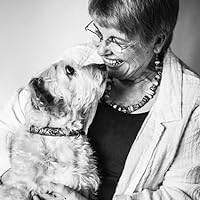
Marian Longenecker Beaman

2 books44 followers
Award-winning teacher turned story teller, Marian Beaman is enjoying her encore career as a writer. A former college professor, the author records the charms and challenges of growing up plain in mid-twentieth century Pennsylvania in Mennonite Daughter: The Story of a Plain Girl. This memoir tells the story of her transformation from a provincial young woman in a sheltered environment who finds her authentic self. Along the way, she discovers a path toward forgiveness of childhood abuse. She also shows how one’s growth can include respect for the past.

My Checkered Life: A Marriage Memoir takes an intimate look into one couple’s fifty-plus-year marriage. Using a quilt motif, the author stitches together stories that make up the fabric of their daily lives: the clash of cultures, crisis in a travel trailer, surviving a robbery, and enduring financial hardship. Readers can observe how they find common ground through their shared faith and commitment. This sequel includes curated diary entries and treasured recipes. The author blogs regularly at marianbeaman.com

Pilates, walks in the preserve, and cooking fire up the author’s writing life. She and her husband, artist-illustrator Cliff Beaman, reside in Jacksonville, Florida.

Ratings & Reviews

What do you think?
Rate this book

Friends & Following

Create a free account to discover what your friends think of this book!

Community Reviews

5 stars
42 (60%)
4 stars
18 (25%)
3 stars
10 (14%)
2 stars
0 (0%)
1 star
0 (0%)
Displaying 1 - 30 of 53 reviews
Profile Image for Marcia reading past dark.
246 reviews264 followers
November 22, 2022
Marian Longenecker Beamer’s memoir, MENNONITE DAUGHTER, is a moving and often emotional account of one woman’s struggle to find her place in this world, one where her heart and her faith can find rest. She shares her Mennonite roots, and with a master wordsmith’s touch, Marian describes the family members and traditions that shaped her young life. Her story is candid and explicit in sharing her struggle with a harsh, abusive father. Pain flows from her pen as she relives her heartache with readers. In other passages, the reader sees the real Marian, the sassy and spirited eldest child who seems intent on pushing the boundaries despite the threat of punishment.

I loved meeting Marian’s mother, her paternal grandmother, and Auntie Ruthie, strong and loving women who served as role models guiding her through formative years, and the ones who planted the seeds of her faith. Then there was Auntie Mame, with her hat bag of treasures, who lit Marian’s fire to be fancy. Cliff Beaman’s pen-and-ink sketches bring these ancestors to life.

This memoir is honest and well-written, moves at a quick pace, and lands with a resounding note of hope. At the end of the book is a collection of valuable resources: a glossary, recipes (don’t miss the molasses cookies!), references, author’s bio, questions for discussion, and a family photo album.

Marian’s journey advances from life as a child in a frame house on Anchor Road in Lancaster County to adulthood, where she is now a successful woman who is an author and professor. In spite of the unpleasant times in her life, her faith has sustained her, and her anchor still holds.
Profile Image for Kathleen Pooler.
Author 3 books34 followers
August 16, 2019
Mennonite Daughter is a heartwarming story of the author’s Mennonite roots, complete with photos, recipes, and sketches done by the author’s graphic artist husband, and told with a fresh, lilting voice. Yet underlying the bucolic picture of the Pennsylvania countryside that she masterfully paints of the characters and traditions that shaped her is her struggle with her father who was physically abusive. Throughout the story, the reader sees the sass and spunk of this eldest child who tends to push the boundaries despite the punishment of being locked in the damp, dark cellar.

The strong, loving women in her life—her mother, her paternal grandmother and Auntie Ruthie whose house on Anchor Road she retreats to—serve as role models and provide balance and security for her. Yet, either she never told them about the abuse or these women simply chose not to confront their husband/son or brother. Perhaps it was part of the Mennonite culture to reign in a strong-willed child, supposedly for the child’s own good. It is this conflict and drama that keeps this story flowing and kept this reader turning the pages. The readers senses her deep yearning to live a “fancy” life and feels relief when she is able to break away. It is in this freedom that our heroine finds forgiveness and peace toward her father and the Mennonite culture. We see that although she has left, that she will always be Mennonite at heart.

This memoir is very well-written with vivid scenic details and a fluid pace. It was truly a joy to read and be invited into another world in such an engaging way. I highly recommend this memoir to anyone who is interested in another culture or just wants to settle in with a good read.
Profile Image for Katherine Sartori.
Author 1 book16 followers
August 10, 2019
There’s a lot to like about Marian Longnecker Beaman’s memoir about her growing up years in Pennsylvania. As a tourist, I visited the Amish country in Lancaster where Marian lived, but I never learned about the Mennonites who also resided there. Until now.

Though I’m of the same generation as Marian, my growing up years in California in the 1950s & 1960s were quite different and yet I discovered some similarities.

I’ve always taken for granted the freedom I enjoyed as a teen, wearing “poofy” skirts with blouses and sweaters in a rainbow of colors, painting my nails with myriad colors, selecting stylish flats or school oxfords, and wearing a favorite bracelet or necklace with a flowing prom dress. It was all a part of the magic of being a teen! But, after reading Marian’s memoir, I realize how different these experiences were from hers. Everything about Marian’s clothes and activities was strictly regulated once she was baptized as a Mennonite at age 10. After that all her “fancy” clothes became “plain,” and she constantly covered her head with a white cap. Television shows and special flowing dresses were also banned.

Her work as a child in the tomato fields with her family didn't parallel my life, nor her wonderful experiences visiting her grandmother and aunt who lived only minutes away, plus her childhood meanderings in the spacious woods nearby. Her grandmother’s seasonal canning of vegetables and fruits was fascinating, her descriptions making me wish I could visit her kitchen to learn this special family tradition. I admired the Midwestern hard work that her whole family engaged in.

But when Marian described three long tables crowded with family at special gatherings, the clothes she and her mother produced with her sewing machine, and the moral teachings of her parents, it reminded me of my own growing up years. I was raised in a strict but loving Catholic home, yet its rules and emphasis on sin and guilt constricted my life so much that when I reached my mid-20s I left the Church, but remained a Christian all of my life. Marian also tells how Mennonite rules wreaked an intolerable rigidity on her life until finally she struggled to make a life-changing decision.

Some sad parts of Marian’s story chilled my heart. The scriptural quotations used to justify her abuse left me appalled and wanting to comfort Marian, since her mother never did. Despite those miserable incidents, Marian stubbornly asserted herself and she shares loving stories about her parents too, a tribute to her efforts to try to understand their flaws, and her dark memories as well as her happy ones.

Mennonite customs, regulations and practices in the 1950s and 1960s fill Mariam Longnecker Beaman’s memoir MENNONITE DAUGHTER, along with lovely family memories. At the end I was relieved to read that the Mennonites’ strict regulations are now modified in this modern era.
Profile Image for Shirley Showalter.
Author 1 book53 followers
August 23, 2019
What do you think when you see a woman wearing a Mennonite prayer covering? "Though light as air, the prayer covering carried the weight of tradition," says author Marian Beaman, summarizing beautifully one of the most elusive symbols of female religious submission.

If you think you understand that symbol, you need to read this book. Author Marian Beaman complicates stereotypes, exposes double standards, and probes paradoxes of what it means to grow up Mennonite--especially if you are a whip-smart oldest daughter in lifelong conflict with a strict, fearful, and parsimonious father.

I have so much in common with the author that I can't list all we share -- Lancaster County Mennonite childhood in the 1950s, strict father, oldest child, public school, Eastern Mennonite College. I wrote my own memoir about many of the same struggles with pride and humility, plainness and worldliness, that Marian and I share with many Mennonites of that place and time. So, it seems, I understand this book from the inside out.

And yet, even with so many commonalities, all human stories are unique. Which is why we must read each other's stories. Under the numerous conflicts with the patriarchal family and religion around her, the author shares the kind of spunk, joy, humor, and loving rebelliousness that many of literature's most loved heroines display. Think of Jo March, Anne Shirley, and Pippi Longstocking rolled into one character wearing an organza veiling on her head and you will come close to young Marian.

The stories in this book will introduce you to a variety of other characters showing that Mennonite life contains as much variety as any other. Aunt Ruthie and Grandma Longenecker are my two favorites, both of them serving to widen the options and soften the conflicts between Marian and her father.

The illustrations in the book, provided by the author's husband, Cliff Beaman, deserve special mention. Not only does Cliff play the role of hero in the story, he also enlivens all the stories with his sensitive, whimsical, yet profound, drawings, starting with the one he drew of his future wife still wearing a head covering in 1965.

Through the story of this Mennonite Daughter flows a deep affection for the faith that surrounded her in childhood. She had to leave it in order to claim it. She was not the first. Nor will she be the last. But she is the one and only Marian Longenecker Beaman.
Profile Image for D.G. Kaye.
Author 11 books144 followers
August 26, 2019
Mennonite Daughter is a beautifully written story about the growing up life and aspirations of one feisty and longing-to-be fancy girl who although practicing her faith obediently, longs to be free from some of the conforms of the Mennonite lifestyle.

Beaman, a girl, not unlike any other girlie girl, striving for her chance at a life free from head coverings and traditional clothing, as her desires since childhood grow to break free from tradition. We learn a lot about the Mennonite way of life, Beaman's life, the close knit family and community life, and the antiquated punishments inflicted on her by her father, and about the mother who  never interjected on those punishments, all because she spoke out for her convictions. The whippings and being locked in a dark, scary basement were the weapons of choice as punishments and discipline for her non-compliance in a world of which we'd now consider as child abuse. One heart trembling sentence that stood out to me, "I always watched for signs that Daddy was about to explode, so I wonder why I didn't stop before I ignite the fire." We'll learn once again, as many writers like myself have lived and wrote about, if we search for the 'why' in someone's behavior, we'll almost always find the root cause.

The heartaches in this book are palpable through the pages for this straight A student who received no recognition or validation from her parents; and the welcomed tender mercies she did receive from her dear Aunt Ruthie and her paternal grandmother Longenecker. It seemed any moments the little girl felt excitement for were often quashed by disappointment. One example of this was in the chapter - 'Tomato Girl gets a Bike' - Young Mennonite Marian helped work the tomato farms tirelessly, both planting and reaping the fruits of labor. She received 10 cents a basket for her labor from her frugal father, and as reward for her upcoming birthday he promised he would buy her a bike. She held her excitement in anticipation until she felt as though she wasn't worthy enough when her father eventually presented her with a well worn bike instead.

The author takes us through her life with a giant glimpse into the Mennonite world, sharing the religion,  her beliefs, chores, and family gatherings - even photos and recipes are included, to demonstrate her world of godliness and her struggle to endure conformity, hoping that some day she will get to wear those red shoes! I loved this book! #Recommended.
Profile Image for Darlene Foster.
Author 19 books219 followers
December 19, 2019
I enjoyed this memoir of another time and way of life, written from the heart. The story is filled with love and laughter, as well as sad family truths. There is no such thing as a perfect family and the author handles the imperfections of her family well, without bitterness and resentment.

Although I was not raised in a Mennonite community, I could relate to much of this story. I laughed at the goofy uncles and large family get-togethers and recognized the frugal depression-era parents, the closeness of grandparents, the hard work on the farm and the importance of food. "We learned that food shared among family does not merely feed the body. It teaches the importance of communication, of gratitude, of hard work and in doing so, it feeds the soul." (Chapter 26) and "Food I noticed, was often Mom's solution for grown-up problems." (Chapter 27)

I was impressed with how the author acknowledged that, although she is no longer part of the Mennonite community, her strict, plain Mennonite upbringing made her who she is now. From her writing, we can see that she is a caring, intelligent, compassionate person who has learned to forgive and understand. She writes, "I try intentionally to set aside my own culture and practice empathy, because that, after all, is how true compassion is expressed." (Chapter 32)

I highly recommend this book as it is well worth a read, not just to learn about a different way of life, but to learn how understanding the past can shape our future.
Profile Image for Pamela.
Author 7 books43 followers
August 13, 2019
I don't know author Marian Beaman, at least not in person. But I’ve been reading her blog for more than a year, including her posts in which she explores the world she inhabited growing up Mennonite. I got hooked on her life story, and thus was looking forward to her memoir MENNONITE DAUGHTER: The Story of a Plain Girl. This book did not disappoint and even rose above my expectations. I fell into the life of the young Mennonite girl, Marian, as I read about her life of being "plain" while longing to add some "fancy" to her clothing and to her daily life. But that young Marian was discouraged from exploring beyond the Mennonite life she lived with her parents, sisters, grandparents, and church community in Pennsylvania. Beaman's writing is so clear, fresh and descriptive that a reader feels like she's right there in the close-knit, tight community. I certainly felt Marian’s constraints, and at times I also wanted to throw the required "prayer veiling" off my head (invisible to me, but very much there for the teenaged Marian). This memoir is personal, yes, but also brings up questions of religion, spirituality, parental abuse, education and teaching, and how to break down familial and religious barriers (without losing faith) to find happiness and love.

31 reviews3 followers
February 2, 2020
An honest and thoughtful insight.

This memoir is a thoughtful and honest reflection of one woman's experience growing up in the Mennonite faith. I enjoyed learning about Marian's experiences and her own "coming of age" as a young woman. I love learning about people who have lived differently to me - Marian's writing drew me into her life and the lives of those whom she held dear. Thoroughly recommend it!
Profile Image for Melody Schwarting.
2,133 reviews82 followers
July 17, 2021
Mennonite Daughter is a refreshing addition to the genre of memoirs about coming out of a strict religious sect. Like Educated by Tara Westover (which Beaman quotes at the end of the book) and similar books, Mennonite Daughter details Beaman's exit from her Mennonite community in Lancaster County and into the "mainstream" world of American Christianity. What was most refreshing to me was that she retained her faith, but changed her way of life, from "plain to fancy."

Overall, Beaman writes with a truly unique grace toward her younger self and her family members, even her physically abusive father. Mennonite Daughter is written after years of working through the pain of her early life, and Beaman has emerged with a gentle, wise maturity that is cathartic to read.

When I first checked this book out from the library, I flipped open to a paragraph that immediately caught my attention: "But now I no longer associate the observance of Communion with fear of damnation. Now I see the bread and wine as sensory emblems of Christ's sacrifice, symbols of his broken body and shed blood for me, His daughter in faith. A Eucharist of gratitude." (177)

Beaman ends her memoir with her move to Charlotte Christian School in North Carolina, away from Lancaster Mennonite School where she had been teaching. She doesn't go into detail about her theological shift away from the Mennonite tradition, or elaborate on what her tradition is now. As a church history nut, I must admit this is what I was seeking, along with more reflections like that on the Lord's Supper. The memoir genre is flooded with ex-fundamentalist stories, and Beaman's angle of leaving a community while not leaving the faith is special, if not as sensational. As a whole, her memoir is more focused on her family and the conflict of wanting to dress fancy rather than plain.

Since Beaman has remained in the Christian tradition, I did hope for some critical reflection on how the Scriptures and rules of her community were misapplied to her. For example, Beaman quotes Menno Simons on corporal punishment,* and refers to her father's "perversion of Holy Scripture." (20) I wish she'd written more about things like that, but I also feel a bit terrible about wishing a memoirist would write to my specific tastes! She has the right to tell her own story as she sees fit.


The back cover shows Beaman in plain dress grading papers or studying, with this picture hanging on her wall. It perfectly marks the continuation of Beaman's love of literature, showing her desire to dress fancy.

Recommended for anyone interested in a former Mennonite memoir, and anyone looking to relate to a story about leaving a conservative religious community without leaving the faith.

Content warnings: physical and emotional child abuse, mention of attempted rape (of author's grandmother)

*Beaman attributes this quotation to Proverbs, presumably 13:24, but it actually comes from the Apocrypha, Ecclesiasticus/Sirach 30:1, nearly word-for-word in the AKJV. It sounds much like the verses in Proverbs. Scholars now argue that the words used for subjects of physical chastisement in these verses refer to adolescent males, rather than young children or females.
Profile Image for Robbie Cheadle.
Author 42 books156 followers
October 25, 2020
My mother calls me a people collector because I am so interested in people and their lives and I have a large circle of real and virtual friends of all ages, cultures, religions and interests. I also love reading about different peoples lives and experiences and I enjoy memoirs so when I saw this book which promised to give insight into the life of a young girl growing up in a Mennonite family I was delighted. This memoir certainly met my expectations and I was completely enthralled by the life of Marian Longenecker Beaman.

The Mennonite faith is not familiar to me so prior to reading this book I looked up a bit about the Mennonites in the USA, their religion and how they live. It was wonderful to learn so much more about the day-to-day life of people of this faith and I discovered there is much to appreciate about their religion and beliefs. As with most religions and cultures, different people apply different interpretations to the teachings of the Bible and the faith and this can sometimes have unintended consequences for their children, especially if the child in question is strong willed with their own views on life. This was the case for young Marian who sadly found herself in frequent conflict with her father which did some damage to their early relationship. I was most admiring of older Marian's ability to gain understanding of her father and his motivations in disciplining her. With this understanding came a measure of forgiveness and an ability to move on with her own life more easily.

Marian paints a vivid depiction of her early life, its joys, pleasures, heartbreaks and disillusionments. I loved the sense of community she experienced and the strong family ties and traditions. These are all described with a love and enthusiasm that makes her anecdotes of family gatherings and celebrations a joy to read.

I believe that like Marian I would chaff under the yoke of such strict traditions with regards to dress and behavior. Marian was a little girl who loved to dress up and wear bright colours. This was encouraged by her mother and female relatives until she became a member of the church. At that point she was expected to adapt to a rigid and conservative dress code including the wearing of a prayer cap. It felt a little unfair to encourage the little girl to dress up and enjoy clothes, hats and shoes and then take it away when she turned 11 years old. I expect that made it a bit harder to tolerate the restrictions.

This is a fulfilling book that leaves the reader satisfied and happy that Marian found love, acceptance and happiness in her life and still managed to maintain her ties with her Mennonite family and relatives.

I recommend this book to lovers of memoirs and learning about different lifestyles and religions.
Profile Image for Bette Stevens.
Author 5 books154 followers
September 28, 2020
Trials and Triumphs Abound!

Mennonite Daughter is a thoughtful and well-written memoir of growing up in a family whose faith required members to follow a simple and plain existence. Marian, however, even from a tender young age, loved and yearned for all that was fancy. Trials and triumphs abound as a young girl who seeks her father’s love and approval is disappointed again and again. I found it fascinating that Marian and I grew up in the 1950s and 60s and shared similar experiences although I did not grow up in a strict religious family. I have come to appreciate the fact that regardless of faith, culture and lifestyle, families everywhere have so much in common. This book includes maps and photographs as well delightful artwork created by Marian’s husband. In addition, you’ll find book club questions that are sure to prompt thoughtful and lively discussion. I highly recommend Mennonite Daughter! ~ Bette A. Stevens, author of award-winning children's picture book AMAZING MATILDA and other books for children and adults.
4 reviews2 followers
September 11, 2019
I love biographies, autobiographies, and memoir—including the memories of ordinary citizens. When we read a memoir, don’t most of us look for epiphanies and connections that may be similar to our own lives or upbringing?

Marian Longenecker Beaman’s debut book, Mennonite Daughter: The Story of a Plain Girl, takes the reader through early childhood events and memories—some of them funny and heartwarming and others that are painful: difficult to take and understand.

Early on I was drawn to Marian’s “Plain and Fancy” blog telling some of these stories. We have the same alma mater, Eastern Mennonite University, but she grew up as very conservative and plain Mennonite in eastern Pennsylvania while I grew up in a less plain Mennonite community in Indiana a few years behind her. I also grew up frequently feeling different than my peers, wearing dresses all through elementary school along with pigtails and no cut hair until I was about 12. Another similarity is that today, we both participate in the same mainline Presbyterian denomination.

Marian is a former college English professor, so her writing is crisp, with careful and exacting word choices that bring alive the action, color, and flavor of growing up a plain Mennonite in Lancaster County, Pa. Marian lived in an area and era where women especially were expected to dress and behave very conservatively, although she was not Amish or Old Order. She chafes under the restrictions and as the oldest child, somehow her father tends to make an example of her. Later as a beginning teacher in the conservative Lancaster Mennonite High School during a time before rule changes regarding dress came into practice, she also had scrapes with the leadership there.

Her relationship with her mother, grandmother and an aunt who never married seems to be the balm Marian needs to survive and thrive through her growing up difficulties. She portrays the fun and hilarious experiences with her sisters and brother and cousins which balance the strain the restrictions put on her spirit in a mid-century Mennonite home—playing bride and groom and clomping about in the bright red shoes portrayed on her book’s cover.

The contrasts are vivid: an exceedingly frugal father bestows upon Marian a beautiful violin without ever consulting Marian on whether she would enjoy taking violin lessons or perhaps another instrument. She does take up the instrument and ends up loving to play, including in her public high school’s orchestra but is confronted with a dilemma when she does not want to stick out like a plain girl when all the other girls have beautiful dresses to wear. Her mother sews a suitably “fancy” dress to wear and Marian is elated to fit in with others on stage. As she heads to the performance, she reflects, "Call me Cinderella. I'm going to the ball with a tea-length gown, a fluffy confection beyond my wildest dreams. Thank God, I would stick out like a plain Jane at the concert after all!"

Mennonite Daughter comes to a satisfying conclusion as Marian matures into a romance, career, and faith community that fits her spirit and ambitions—free to be the person she wants to be.
Profile Image for Sherrey.
Author 7 books41 followers
August 19, 2019
Marian Longenecker Beaman's memoir shares heartwarming vignettes of life in Lancaster County, PA. The author paints images with words of the joys and frustrations of growing up as a Mennonite. I visited Lancaster County several years ago. But I was not as aware of the Mennonites and their restrictions as I was of the Amish. So, some of Beaman's revelations were surprising to me. 
 
The author's use of detail in descriptions of people and places brought them to life. Thus, the reader feels an actual part of what and where Beaman was describing. The inclusion of family photographs allowed the reader to "see" the life Beaman described.
 
Beaman's family's devotion to their Mennonite faith was unmistakable in all they did. I have known Beaman from her blog, Plain and Fancy, for several years. I was not surprised at the faith commitment. Yet, reading about Beaman's baptism at age 10 took me quite by surprise. Everything changed for this young girl. The church's rigid rules about dress, everyday activities, and schooling controlled her life. The little girl who wore frills and ruffles her Mennonite mother sewed had to put those dresses away. How conflicting this must have felt to her.
 
Beaman also writes of her father's punishments and abuses. It is not uncommon for an abusive parent to declare his/her faith and to use Scripture as a basis for the punishment. I felt Beaman's pain and heartbreak as I read her emotional words and desire to know why. Beaman was a strong young woman who stood up to the leaders in the church and to her father. Although she mentioned a fear of her father's actions, she overcame that fear. What courage this took. 
 
Beaman has taken the opportunity to tell her true story. While telling of punishments and abuse, she reflects on the loving nature of her home life. The author shows respect and admiration for her mother. Yet, she questions the lack of intervention on her mother's part at times.
 
She also expresses the love felt for her grandmother and Aunt Ruthie. In fact, one might say Beaman had two homes. There was a home filled with parents and siblings. And the home maintained by her grandmother and Aunt Ruthie. This second home was a place of escape where restrictions were a bit looser. Beaman enjoyed many happy days with their grandmother and Aunt Ruthie.
 
I enjoyed reading Beaman's memoir and taking a trip back in time to Lancaster County, PA. The story is rich in family and one woman's history with traditions and culture. Her shining moment is in her courage to take a step away to build her own life.

Beaman is a master storyteller and wordsmith. Her writing is fluid, detailed, expressive, and strong. I highly recommend this memoir not only to those who enjoy reading a memoir. But also to those who want to write or are writing a memoir. Beaman does it just right.
Profile Image for Liesbet Collaert.
Author 5 books38 followers
May 27, 2020
This well-written memoir offers a fascinating and personal look into Mennonite culture, from the perspective of young Marian. How could I not snicker at phrases like “my ample-waisted aunt and rotund uncle“ or “my uncles had mirth to match their girth”? The author effortlessly weaves her stories and experiences together on these pages and provides insights into her Mennonite childhood with the emphasis on family values and dress code. Her joy about being at school and learning shines through and her descriptions made me reflect on my own teaching career and my relatively basic lifestyle (by choice - for different reasons).

Beaman’s bike story, disappointment dripping from the pages, will always be remembered. The frugal lifestyle is an adjustment, if you’re not used it. It’s especially hard for children who are surrounded by friends who receive “better” or fancier gifts. Having two “mothers” when growing up is unique, especially when they have the exact same name. My two grandmas had the same first name as well, which I even found odd.

During these “sheltering in place” Covid-19 times, it was interesting to read about home grocery deliveries by phone in the fifties. I could also relate to the author’s “pushing her father’s buttons”. I sometimes did the same, full well knowing what would set off my dad into chasing me for a slapping. It even happens now, with my husband - I know when I upset him more but that doesn’t keep me from proving a point or ignoring his frustration... It’s a weird way of approaching these situations.

I enjoyed this look into the author’s past, in which she takes us with her through emotions, events, and experiences as we savor Grandma’s dishes and hear Daddy’s piano playing waft through the open windows. The illustrations and photos bring home what life was like back then and give us a good sense of the main characters in this memoir.
Profile Image for Jill.
Author 26 books620 followers
August 19, 2019
Over the years, I’ve gotten to know author Marian Beaman through her blog on WordPress. Each week she shares snip-its of her life growing up in the Mennonite community in Pennsylvania. I especially enjoy her Aunt Ruthie’s diary excerpts. As a child, I visited the Amish country in Lancaster, but I didn’t know much about the Mennonites, so her blog has taught me so much. When I learned Marian planned to write a memoir, I anxiously awaited its publication. Marian’s memoir MENNONITE DAUGHTER: The Story of a Plain Girl was a fascinating read and it definitely went beyond my expectations. Throughout the entire book, I felt as though I was that young girl who struggled with the strict regulations followed by the Mennonites. Marian’s ability to recall such vivid details had me in awe and only added to the connection that I formed with young Marian, a connection that continued to grow as her story unfolded. I laughed and I cried throughout the book. The photographs sprinkled throughout the book were a special treat. I found myself pausing to study each face, the clothing, and the background within each photo. Marian is a talented wordsmith who has crafted a memoir that tops my list of “must read.”
Profile Image for E.J. Bauer.
Author 3 books68 followers
February 27, 2020
I do love a book that opens my eyes to a different faith and way of living. I must admit I knew little of the Mennonites and was intrigued with the way the author accepted many of their tenets for plain living, but also admitted to liking pretty clothes. I loved the description of all the wonderful celebratory food and would have loved to be in the family kitchen during the preparations for Thanksgiving. A final parting from her family's church did not mean the author abandoned her beliefs. Rather she found her own platform of faith that just might have had room for some red shoes.
Profile Image for Susan Weidener.
Author 8 books26 followers
September 25, 2019
One might say that Marian Longenecker Beaman’s memoir, Mennonite Daughter: The Story of a Plain Girl, serves as a template for woman finding voice through writing. Written half a century after the events depicted, the author was charged with the painstaking work of going back in time―a time fraught with memories requiring a careful analysis of her main characters and her reactions and responses to them as a young girl, growing up in the 1950s as a Mennonite in Pennsylvania’s Lancaster County. She admits that her memories, especially as they pertain to her abusive father, are “more malleable with the passage of time and has left the door of hope wide open.”

This observation that memories become more malleable with time and lead to forgiveness is crucial to the memoir writer’s journey. Her story of growing up in a patriarchal culture where women mostly remained voiceless, is not a rant, rather a meditative reflection on how a religious culture impacts every aspect of life, especially that of a woman's life. For Marian’s Aunt Ruthie, it meant never marrying and carving out a professional life as school principal; for her father, the culture forged an authoritarian mindset imbued with the toxicity of growing up in a household where he received no nurturing as a male child, handicapping him as father of a strong-willed daughter.

What the author has done here is create the quintessential family legacy of parents, aunts, uncles, cousins, grandparents. There are light moments…Great Grandpa Sam’s glass eyeball popping out of its socket and rolling across the “slick linoleum floor where it picked up speed.”

Her childhood memories are lyrical and literary: “In a small garden behind our house, Mother planted beans, sugar peas and cucumbers, the vegetables bordered by a row of peach-colored roses. Peony bushes, ruby red and ivory-hued, clustered on the other side of the double clothesline strung along the concrete pavement that separated her garden from lawn grass. Mother’s clothesline billowed with towels in summer and hung low with sheets frozen in winter. Her wooden fold-up stand dried small items inside on rainy days, summer or winter.”

Images like this fill the pages of Mennonite Daughter. Particularly powerful are the chapters where her mother’s life-threatening asthma is healed by what her mother believes is the divine power of God, a dramatic event which grips the reader and which the author attributes to her own lifelong devotion to God.

Another powerful chapter is the author’s confrontation with Mennonite Bishops when, as a young teacher, she dares to embellish her plain dress with “a collar and elaborate buttons” and finds herself as a woman alone confronting a tribunal of male privilege and misogyny.

The memory of the child hiding in terror under her bed from a raging father speaks for itself.

Mennonite Daughter is, in the end, the story of a young girl coming into her own, staking a claim to her voice and individuality in a unique place and time, albeit one where women were expected to conform and tow the line. For the author, reconciling herself to her past, parsing it, remembering it and reflecting on it, becomes her salvation and her triumph.
Profile Image for Wanda Adams.
Author 7 books53 followers
February 7, 2021
Marian Longnecker Beaman's book is more than a memoir: It's the story of patience, perseverance and potential. As a child in the Mennonite faith, Marian knew no other life. She followed what her parents and previous generations had done before her. She wore modest clothing and the prayer cap covering her head, denoting her as a member of the Mennonite faith. The author deftly explains the origins of the Mennonites as a part of the Anabaptist movement, originating from Zurich, Switzerland, in 1535. In 1683, she writes, a "trickle" of them emigrated to Pennsylvania as part of William Penn's "Holy Experiment," which offered them greater economic opportunity and religious freedom in the New World. Thus, her own ancestor, Ulrich Langenegger, emigrated from the Netherlands in 1733 on the good ship Hope. Marian includes her family tree and several lovely photos in this memoir as well.

Marian shares her physical life between two homes--that of her parents and that of her grandmother and her Aunt Ruthie. While at her grandmother's, she's able to "be herself"; while at home, she's always in trouble, it seems, since her father thinks she has "braids, rains and a big mouth." Marian describes beatings and wonders why she can't predict when her da will explode. He's definitely of the "spare of the rod and spoil the child" school of discipline--except he didn't react to her sisters' misbehaviors in the same way. She was always puzzled about that.

But when she's at her grandmother's house, life is far more pleasant. She and her sisters play dress-up with red hats and other props they find. They play "wedding" and other terrific childhood make-belief games.

Throughout all of this, Marian's inner self is questioning everything. Her mother's only goal in life was to become a housewife. Would Marian ever be satisfied with that role?

Tales of encounters with tomatoes, enticing food aromas (yes, I got hungry reading about them), a stinky hobo, the kindness of others, as well as the nastiness of men in power run throughout this memoir. Marian uses these building blocks throughout her life to complete her metamorphosis.

This delightful memoir is enchanting. I recommend it highly.

1 review2 followers
September 17, 2019
In this touching memoir of her life growing up in a Mennonite community and later coming to the decision that she would leave the church, but not her relationship with God, Marian Longenecker Beaman touches on many common elements of a young woman’s coming of age story, such as patriarchy, agency, and culture.

Through her strong personality and her struggle to understand why?, Marian gradually comes to accept the life she is meant to lead, and realizes that she carries forward into her new life many of the values she has been taught. Little opportunities to have a “fancy” moment after she has taken on the “plain” life of a church member give her such delight that it is impossible to imagine she would have made any other choice. She writes, “I grew up with the ambivalence of cherishing such evidence of belonging to a tight-knit group but chafing under its restrictions, like cast members in a play not wanting to wear their period apparel in public.”

What is remarkable is her ability to consider alternate intents for the characters in her life. While she experiences significant abuse at the hands of her strong-willed father, she does not paint herself solely as a victim. Instead, she provides possible explanations for a parent who may not have known how to deal with a very strong-willed and questioning daughter. This is not to say she excuses his behavior, but she is not crippled by or limited by her experiences and she faces the reality of her experiences without apology. In the book she writes, “How futile it is to try to figure out the motivations of other human beings, our parents, especially. We are all more complicated than the characters in the stories we remember about those we love.”

The memories in the book are written in short and complete stories, so that the book can easily be read one or two stories at a time. The book lends itself to either a complete read-through or a more leisurely enjoyment, a few pages at a time, with time to reflect in between.

I highly recommend “Mennonite Daughter”. It was a pleasure to read and to reflect upon. Photos, drawings by Beaman’s husband Cliff, and family recipes are just icing on the cake.
152 reviews4 followers
September 18, 2019
I long anticipated this book, as Ms Longanecker Beaman brought readers to her blog along with her in a 6 year process of planning and preparing. Oooh, the sensory impressions! And, they are sprinkled with lots of humor and all united under a story arc and themes.

I was magically transported into this multi-generation Lancaster Mennonite family. Going to a family reunion, "All my aunts were shaped like pears, and my uncles like apples, except for lean Uncle Clyde." (79)

My heart hurts at the ways Father bullies and cannot listen to or appreciate Daughter, and I follow the Daughter's trajectory, appreciating how she carries on. I love to hear grown Daughter reflecting: "The dents and blemishes in his presents, which then translated into attacks on my self-esteem, might have been an expression of his extreme frugality, nothing more. How futile it is to try to figure out the motivations of other human beings, our parents, especially." (97)

Photos, artwork, maps and a glossary of the parents' sayings all help bring to life the place, the family and the struggles of a Mennonite daughter in 40's, 50's and 60's. This is a wonderful memoir.


332 reviews6 followers
January 2, 2020
I received a copy of this book in a Goodreads giveaway.

I've read a number of Amish/Mennonite novels and have visited the Lancaster area several times, so I was familiar with many of the unique characteristics of the Mennonite church, but I enjoyed reading this memoir about growing up as a Mennonite. Although my own childhood was very different, there were some incidents that brought back similar memories of growing up in the late 1950's, particularly those about the scissors sharpener, the Fuller Brush man, and the delivery men. I thought the author did a great job of describing how her experiences eventually led to her choice to leave the restrictive environment of her home church. I read in the section on the author as well as some of the reviews that she has a blog about her life. I wondered if some of those blog posts were used as chapters in the book, because my one negative about the book was that it was not linear. In the middle section, she switched back and forth between events that had happened at different ages, sometimes making it difficult to follow.
Profile Image for April Yamasaki.
Author 16 books48 followers
December 6, 2019
I was immediately drawn in by the prologue that tells how Marian as a young school teacher was called before the bishops, and of course I just had to skip forward to read the rest of that story near the end of the book. Only then was I ready to go back and start at the beginning. For those of us plain or fancy, Mennonite or not, there's lots to love in this book--how one woman looks back on her life with compassion and even forgiveness for those who have wronged her, how she grows to accept her past and move into a new future, with drawings by her husband and family photos, a glossary of her parents' made-up sayings (like "hickamoriah"--isn't that a great word for whatever you don't have a name for?) a few recipes, and some questions for discussion. I thoroughly enjoyed this memoir.
Profile Image for Nancy Chadwick.
Author 3 books48 followers
September 6, 2019
Mennonite Daughter is wonderfully written! Beaman leaves nothing out when telling of her coming-of-age story in a Mennonite family as she finds her way through her roots to become the person she's wanted to be. Depicted with emotions and fears, challenges and rewards, her story is authentic. I enjoyed seeing the well-placed photos, especially the ones in the back of the book, and even reading the recipes! Though she considered herself a plain girl, Beaman was far from it in Mennonite Daughter.

Profile Image for Joan Rough.
Author 3 books8 followers
September 20, 2019
Gifted storyteller, Marian Beaman, tells us in beautifully descriptive words, about growing up Mennonite and how she moved beyond church restrictions to become the strong and beautiful woman she had dreamed of as a child. It's a love letter to life, filled with innocence, faith, family, and feminist values, despite her father's continuous disapproval of a spirited, willful, and independent daughter.
Profile Image for Sandy  McKenna.
775 reviews16 followers
November 18, 2019
A very interesting memoir.
Firstly, I have to admit to a total ignorance of the Mennonite culture.
Marian has penned an informative and easy to read story detailing her strict upbringing and close-knit family, in their home county of Lancaster in Pennsylvania.
Profile Image for Jean Roberts.
Author 3 books9 followers
March 12, 2021
Stories such as this fascinate me as they are a world away from my own reality. This book is beautifully written with warmth, respect, and some brutal honesty. Marian Beaman guides us through a fairly carefree early childhood into a restricted and innocent youth, and through an awakening to a life beyond the constraints of church and culture. She candidly describes a brutal family relationship without bitterness and talks with an affection about her mother, sisters, and grandmother that welcomes the reader into her family. What a wonderful woman Grandma Fannie was!

The juxtaposition of the tightening and relaxing of cultural restrictions was something that the author struggled with and, in the end, she decided to throw off some of the shackles and look for a path that was much freer whilst at the same time keeping her within her faith.

Heartwarming, inspiring, and informative. Unputdownable.
Profile Image for A. Burgi.
Author 19 books13 followers
March 11, 2020
Ms. Marian Beaman's memoir shares the heartwarming story of a spunky plain girl that longs to be fancy. She paints images with her words of the happiness and disappointments associated with growing up as a Mennonite in Lancaster County, Pennsylvania. Although I was aware of the Mennonites and some of the restrictions they place on their church members, the author's revelations were unexpected. Her vividly detailed portraits of people and places brought them to life. It was almost as if I was an invisible observer to the story as it unfolded. The included photographs, sketches, and recipes provide an added depth, which allows readers to see the life Ms. Beaman described.

Her family's devotion to their Mennonite faith was evident in all they did. Reading about the author's baptism when she was just ten years old surprised and shocked me. Everything changed from one day to the next for the young girl. The church's unyielding rules about attire, daily activities, and education dominated her life. The little girl who once wore frilly dresses her mother had sewn, suddenly had to put those clothes away.

Ms. Beaman also wrote about her father's old-fashioned punishments and abuses, like locking her up in a dank, dark cellar. It is not unheard of for an abusive parent to declare the use of scripture as a basis for said punishments/abuse. I could feel the author's anguish and heartbreak, and her deep-seated desire to know why these things were happening to her. It took guts to stand up to the church leaders and her father as a young woman. It took even more courage to open up and tell her side of the story. While writing about punishments and abuse, she also reflects on the caring nature of her home life. While she obviously respects and even admires her mother, she also wonders why her mother refused to intervene on her behalf.

The heartaches described in this book are palpable throughout. The girl that did so in school received little to no recognition or validation from her parents. Yet she was able to welcome the compassion she received from her paternal grandmother and her Aunt Ruthie. They provided her with balance and security - even if it was just for a short while. One might even say that she had two homes, and it was her second home that afforded the little girl with an escape from the day-to-day challenges.

Thankfully, the heavy moments of this book were sprinkled with some lighter ones like when Great Grandpa Sam’s glass eyeball pops out of its socket and rolls across the slick linoleum floor where it picked up speed. In the end, Mennonite Daughter: The Story of a Plain Girl is a coming-of-age tale of a girl who ultimately finds her voice and individuality. I highly recommend this memoir. Ms. Beaman is truly a master storyteller, and her unique narrative is filled with a sad family history but also traditions, laughter, and love.
Profile Image for Amy Bovaird.
Author 7 books33 followers
March 8, 2020
Mennonite Daughter, by Marian Beaman, was an absolute delight to read! I live several hours away in another area of Pennsylvania, so her book intrigued me. The one family vacation we took was to Lancaster so before reading her memoir, I was somewhat familiar with the area.
Surprisingly, the author used the physical homes in her childhood home and also that of her grandmother’s close by as a technique and a framework for her storytelling. When she opened the doors to various rooms, the stories emerged. Her language is rich and descriptive. I was so caught up in the pictures she wove, I started writing them down. They had an almost lyrical quality about them. For example, she was talking about something as mundane as the outhouse: “…its peaked roof smothered by lilac bushes, a fragrant air freshener…”
But not only did Beaman’s memoir have lovely prose, it also explored her feelings, especially about challenging relationships. So it had a deeper, more intimate level. Because she had a turbulent relationship with one of her family members, she periodically assessed how an experience impacted her. “…Each of us carry around such ghosts. They are as real and familiar to us as they are foreign to others.” These statements seem to invite the reader to examine his or her own life for such hidden feelings.
What I loved the most was her honesty. I appreciated the imperfection within her family, and enjoyed the insights into her Mennonite background--her satisfaction with the lifestyle of much of how she was raised and the dissatisfaction with other aspects. The stories themselves caught at my heartstrings—for the beauty and innocence of them, and also for the grief some caused her.
I highly recommend this memoir to anyone interested in the Plain Life, a simpler time period and the love of a good anecdotes and a fine writing style.
Profile Image for Lucinda Kinsinger.
Author 1 book83 followers
October 9, 2019
I fully enjoyed Mennonite Daughter by Marian Beaman, especially because there were so many experiences I could relate to my own. Footwashing, wearing a covering, communion twice a year, a stern circle of Mennonite men reproving her for her dress style--while I never actually experienced that last one, I know of another woman who did, so I "get" the intimidation and emotional upset such a reproach would bring.

While both of us were born into Mennonite homes, unlike me, Marian chose to leave the distinctive Mennonite practices she felt stifled by; and following the evolution of her choice fascinated me. A key to her choice--as well as to my own--comes in a simple sentence stating that her father never once told her he loved her, not even on his deathbed. Love is a much more powerful magnet than force, and a lack of it makes any religion a prison instead of a threshold. It is also clear to me that when Marian left behind her Mennonite dress and church standards, her decision was symbolic of a larger decision to leave behind the restrictions of thought and character under which she was held. After she left, Marian says, "My outward appearance no longer defined me." And that is an understanding every whole human being of every culture must eventually reach.

Beaman's writing style is crisp and rich in detail--including such interesting tidbits as her father's favorite swear word: "shitmolink!" She writes from the perspective of an educated and intelligent woman who's had a full and productive life, looking back at her beginnings. I found her writing more precise than passionate, but rich and thought-provoking and well worth my time.

I received an advance reader copy for this review.
Profile Image for Charlene.
Author 6 books90 followers
September 16, 2020
Marian Beaman's sincerity comes through with every word. Her integrity as a human being and the love with which she was surrounded in her childhood found its way into every sentence. The struggle of her life therefore comes with a full background of why this was so painful for her.
We learn much about the geography of her homeworld as well as her love of nature as we move sedately through her descriptions of her growing years.
A lovely warm rendition of the Mennonite community and their customs, informative and interesting seeds every page.
Displaying 1 - 30 of 53 reviews

Can't find what you're looking for?

Get help and learn more about the design.