I was pleasantly surprised by how much I fell in love with this book.
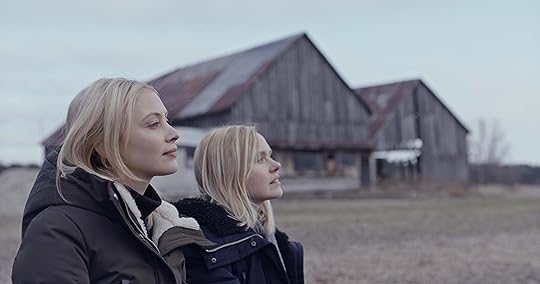
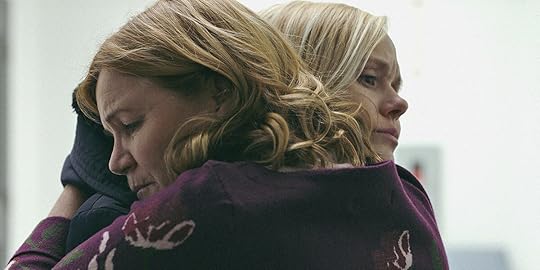
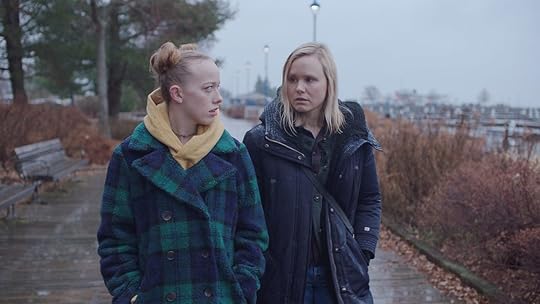
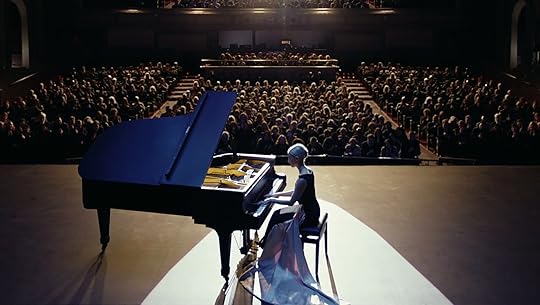
This is the story of two sisters, Elfrieda & Yolandi. They both live in Canada. Elfrieda is a world-renowned concert pianist, has a loving husband, Nicholas, and lives in a beautiful and luxurious estate, she has fans all over the world, most of which fall in love with her on sight. They're willing to go to Great Lengths and distances to listen to her and watch her perform. Unfortunately, she was also suicidal, constantly in and out of psychiatric Wards for her suicide attempt. Her younger sister Yolandi- in stark contrast- is divorced with two children, Nora and William, desperately searching for true love still, but wants nothing more than to save her sister. Their mother, seemingly fragile but very strong inside, is that a loss. They are a Mennonite family, with a history of suicide in the family. Their father committed suicide by walking in front of a train. Their cousin Leina also committed suicide. Aunt Tina dies after an unexpected heart ailment, made all the worse after her appearance as a colorful and funny supportive friend to the sisters. Needless to say, there is much sadness in this novel. All three more respectable, then, that Toews manages to make readers laugh out loud and love the ending anyhow.
The synopsis is quite deceiving because this novel is really about so many different things. Some of the main ones include sisters, family, motherhood, marriage, divorce, friendships, Mennonites, flaws in the medical system, how music deeply affects lives, suicide, suicide prevention, the helplessness and hopelessness that can be there, euthanasia.
* "What fresh hell is this?" - quoted by Yolandi, originally by Dorothy Parker
The Good
* First and foremost, Miriam Toews has a very poetic writing voice. There are many quotes I loved, on so many different topics. I feel like I could quote pages.
* On the note of poetry, clearly it is something Toews has an appreciation for, as poets are often references, verse excerpts appropriately inserted. Even the title is from a Coleridge poem: "To her I pour'd forth all my puny sorrows" (sick patient to nurse).
* Interesting flashbacks and insights into the uber conservative Mennonite community. Subcultures like that always fascinate me.
* I liked that it was told from multiple points of view. It was very effective for this novel. It is all told in first person by our narrator Yolandi, but she lends herself to an omniscient view at times, discussing things she could not have possibly known first hand, from her mother, or Elfrieda's, or her husband's perspective.
* The effect music can have on all of our lives was addressed excellently in this novel. Pages 19 and 62 have two of my favorite examples.
* Props to Toews for addressing the faulty mental health system. In the emergency room following one of her many suicide attempts, one of the renown doctors says, "We are very much amazed at what little intelligence there is to be found in [her]." Right. Because one should equate intelligence with the will to live.
*The sympathetic and understanding view of suicide should be appreciated and noted. Toews makes it a point to show that suicide is not selfish. Her characters know this. For example, when Elfreida tries apologizing, her mother tells her that suicide is not something one should apologize for. To quote Goethe, "Suicide is an event of human nature which, whatever may be said and done with respect to it, demands the sympathy of every man, and in every epoch must be discussed anew."
* It would have been so easy for Toews to make this a fairytale ending to please the masses. I love that she chose not to. I also liked that there were still a good sixty pages left in the story after Elfreida succeeds in her suicide. Why? Because life does go on. Like the best unfortunate endings, it was not entirely helpless. In fact, I might even call it beautiful. In her will, Elfrieda leaves Yolandi, in addition to her life insurance, a monthly stipend for two years so that she is free to write in a room of her own (à la Virgina, of course). After all these deaths, Yolandi moves in with her mother in a new place, bought with her sister's life insurance inheritance.
* I need to say it again. It is good writing, period. I can feel the emotions of the characters, I can really see the love between them. This is not as easy to create as one might believe.
The Bad
* I will admit that I was slightly bothered by the lack of quotations in dialogue at times, but it did make the story more immersive and flow together nicely, as long as I did not let myself get distracted. That is honestly the main problem I had with this title and it is not even that significant.
The Amazing
* I have long been a strong supporter of Euthanasia. Nowhere is this mentioned in this synopsis so this was an unexpectedly pleasant surprise for me. This is the first time I have read about Switzerland being a country that not only supports it but actually supports it for those with mental health problems. This is especially exciting for me because I have always mentioned how that aspect is almost always missing from assisted suicide and euthanasia discussions. To me, lifelong mental health problems are definitely as bad if not worse than terminal illnesses. Those, of course, are focused on the physical aspect and that they will be dying anyway, but mental anguish and pain can often be far more torturous. Switzerland apparently calls this "weariness of life". According to Swiss law, those performing euthanasia do not even need to be residents. Obviously, this is the perfect solution for individuals in other countries ready to properly say goodbye.
This brings us to what I see as the central struggle in this novel. "She wanted to die and I wanted her to live and we were enemies who loved each other," Yolandi states. When her sister puts all her trust in her to save her, to beg her to take her to Zurich to die, she is torn. Yolandi knows how much her sister wants to die. She knows or is willing to admit more than anyone how likely it is that she will succeed sooner rather than later. Sure, she could wait to see if treatment could change things, medical advances, a miracle. But it is a fight for time and a losing race. It is more likely that Elfrieda will win and if she takes her to Zurich at least she will have proper goodbyes and will have granted the sister she loves more than life her last wish. Yolandi must ask, "Could I live with myself if I did it? Could I live with myself if I did not?
Of course, Toews has to reference the famous (or infamous) "Final Exit", the suicide handbook published in 1991. There are several pages and a few different times when Toews goes into details about how euthanasia could be performed. This was of great interest to me. Around page 193, Yolandi discovers in her research that Pentobarbital is Nembutal, brand names Sedal-Vet, Sedalphorte, and Barbithal. They are used for animals, most easily purchased in pet stores in Mexico, but one must go deep into the country, since the border towns are aware of this. Recommendations are to take an over the counter anti nausea pill beforehand. It might be difficult to get it back across the border, so a better alternative is to take the person wishing to die into Mexico. One dose of Nembutal is around thirty dollars; one needs two 100 ml bottles in order to ensure the necessary speed and death with certainty.
Euthanasia and The Right To Die are vital topics for discussion in our society today. More authors need to begin addressing them like Miriam Toews has so well in this remarkable book.