

What do you think?
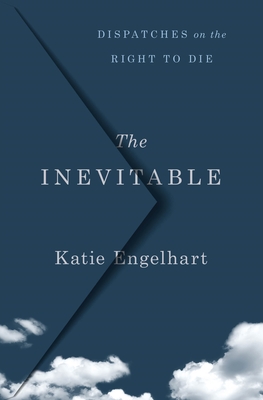
The Inevitable: Dispatches on the Right to Die
As much of the world's population grows older, the quest for a "good death," has become a significant issue. For many, the right to die often means the right to die with dignity. The Inevitable moves beyond margins of the law to the people who are meticulously planning their final hours--far from medical offices, legislative chambers, hospital ethics committees, and polite conversation--and the people who help them, loved ones or clandestine groups on the Internet known as the "euthanasia underground."
Katie Engelhart, a veteran journalist, focuses on six people representing different aspects of the debate. Two are doctors: a California physician who runs a boutique assisted-death clinic and has written more lethal prescriptions than anyone else in the U.S.; an Australian named Philip Nitschke who lost his medical license for teaching people how to end their lives painlessly and peacefully at "DIY Death" workshops. The other four chapters belong to people who said they wanted to die because they were suffering unbearably--of old age, chronic illness, dementia, and mental anguish--and saw suicide as their only option. Spanning Australia, North America, and Europe, Engelhart presents a deeply reported portrait of everyday people struggling to make hard decisions, and wrestling back a measure of authenticity and dignity to their lives.
Katie Engelhart, a veteran journalist, focuses on six people representing different aspects of the debate. Two are doctors: a California physician who runs a boutique assisted-death clinic and has written more lethal prescriptions than anyone else in the U.S.; an Australian named Philip Nitschke who lost his medical license for teaching people how to end their lives painlessly and peacefully at "DIY Death" workshops. The other four chapters belong to people who said they wanted to die because they were suffering unbearably--of old age, chronic illness, dementia, and mental anguish--and saw suicide as their only option. Spanning Australia, North America, and Europe, Engelhart presents a deeply reported portrait of everyday people struggling to make hard decisions, and wrestling back a measure of authenticity and dignity to their lives.
352 pages, Hardcover
First published March 2, 2021
Ratings & Reviews
Friends & Following
Create a free account to discover what your friends think of this book!
Community Reviews
Displaying 1 - 30 of 132 reviews

May 30, 2021
This is a book about all the legalities of euthanasia, who might help you, how you might do it, how to avoid those left behind getting into trouble with the law. Lots of case studies and therefore interesting in a morbid kind of way.
What I took away from it most was that if you have a suspicion that in the not-too-distant future you are likely to choose to die, most likely from disease, then the best thing you can do is to move to a place where physician-assisted suicide is legal. That or start storing up the pills and take them before you need help to take them. There are European countries and US states that do allow it.
I have planned my exit from this world should I be in a deteriorating state from which there would be no recovery. After watching my mother die slowly and increasingly agonisingly and with less and less quality of life and more and more indignities - spoon feeding, bottom-wiping, being talked down to as her mental powers appeared to wane due to her lung cancer having invaded her brain - I wanted to be sure that would never happen to me. My mother stored up her sleeping pills but I think she did it to frighten me, since she never made any move to take them. Yet another cruelty by my unloving mother probably.
My exit, if I am in the islands still will be a nice bottle of ready-mixed pina colada and just the right amount of sleeping pills on one of the little islands four miles away, all alone. My son will know to come for me much, much later. Hard on him I know, but we have discussed it and hope it never comes to that or that if it does, I don't miss my opportunity.
It does concern me that I might leave it too long and then I will need assistance and that's why I read the book.
What I took away from it most was that if you have a suspicion that in the not-too-distant future you are likely to choose to die, most likely from disease, then the best thing you can do is to move to a place where physician-assisted suicide is legal. That or start storing up the pills and take them before you need help to take them. There are European countries and US states that do allow it.
I have planned my exit from this world should I be in a deteriorating state from which there would be no recovery. After watching my mother die slowly and increasingly agonisingly and with less and less quality of life and more and more indignities - spoon feeding, bottom-wiping, being talked down to as her mental powers appeared to wane due to her lung cancer having invaded her brain - I wanted to be sure that would never happen to me. My mother stored up her sleeping pills but I think she did it to frighten me, since she never made any move to take them. Yet another cruelty by my unloving mother probably.
My exit, if I am in the islands still will be a nice bottle of ready-mixed pina colada and just the right amount of sleeping pills on one of the little islands four miles away, all alone. My son will know to come for me much, much later. Hard on him I know, but we have discussed it and hope it never comes to that or that if it does, I don't miss my opportunity.
It does concern me that I might leave it too long and then I will need assistance and that's why I read the book.

March 2, 2021
Ever since my law degree I have been interested in the topic of euthanasia, assisted suicide and assisted dying; these are often used interchangeably but are in actuality different. Under Section I Article 2 of the European Convention on Human Rights (ECHR) (formally the Convention for the Protection of Human Rights and Fundamental Freedoms) we are granted the 'Right to Life'. So, it can be argued, why don't we have the Right to Die? Why should others who don't feel or understand the pain of the conditions some people face on a daily basis be allowed to decide that we should be kept alive and our life prolonged with endless drugs, treatments operations and so forth? I think there's also an argument that Article 3 of the ECHR —prohibition of torture—which states that one shall not be subjected to torture or to inhuman or degrading treatment or punishment, could be argued as coming into play in situations where people are suffering terribly due to drugs companies and the medical field prolonging the inevitable. We should have the autonomy to make this difficult decision ourselves and on our own terms.
A growing list of countries now allow assisted dying in one form or another and I hope this list continues to grow; of course, the correct safeguards should be in place and the strict criteria met to deter individuals from abusing or playing the system. This is a compelling and beautifully written investigation into the Right to Die movement exploring a delicate topic that has the potential to be divisive. Award-winning journalist Katie Engelhart explores one of our most abiding taboos: that of assisted dying. From Avril, the 80-year-old British woman illegally importing pentobarbital, to the Australian doctor dispensing suicide manuals online, Engelhart travels the world to hear the stories behind this contentious moral dilemma. At once intensely troubling and profoundly moving, The Inevitable interrogates our most uncomfortable moral questions. Should a paralyzed teenager be allowed to end her life? Should we be free to die painlessly before dementia takes our mind? But the book also does something more. In examining our end, it sheds crucial light on what it means to flourish and live. Highly recommended.
A growing list of countries now allow assisted dying in one form or another and I hope this list continues to grow; of course, the correct safeguards should be in place and the strict criteria met to deter individuals from abusing or playing the system. This is a compelling and beautifully written investigation into the Right to Die movement exploring a delicate topic that has the potential to be divisive. Award-winning journalist Katie Engelhart explores one of our most abiding taboos: that of assisted dying. From Avril, the 80-year-old British woman illegally importing pentobarbital, to the Australian doctor dispensing suicide manuals online, Engelhart travels the world to hear the stories behind this contentious moral dilemma. At once intensely troubling and profoundly moving, The Inevitable interrogates our most uncomfortable moral questions. Should a paralyzed teenager be allowed to end her life? Should we be free to die painlessly before dementia takes our mind? But the book also does something more. In examining our end, it sheds crucial light on what it means to flourish and live. Highly recommended.

March 30, 2021
Mostly just my strong feelings…
Well written and acknowledging all sides. I was interested in the various people that made appearances in this book.
Well written and acknowledging all sides. I was interested in the various people that made appearances in this book.

April 20, 2021
The fact that I read a lot more books about death than the average person is something I attribute not to some morbid curiosity, but to pragmatism. As the title of Canadian reporter and documentary filmmaker Katie Engelhart’s book makes clear, this is the one subject none of us can avoid indefinitely, so why not learn about and understand it as much as possible? The Inevitable focuses on the controversial matter of assisted dying, also known as assisted suicide, euthanasia, or physician-assisted death. It’s a topic that’s already come up in my reading a couple of times this year: in the Dutch context of That One Patient by Ellen de Visser, and as a key part of the narrative in Darke Matter by Rick Gekoski.
Engelhart spends time with doctors and patients who are caught up in the assisted dying argument, chiefly in Western Europe and the United States. Ten states plus Washington, D.C. have assisted dying laws, sparked by Oregon’s Death with Dignity Act in 1997. In California, the author follows Dr. Lonny Shavelson for a month, observing all the meticulous regulations surrounded a physician-assisted death: patients with a terminal diagnosis and less than six months to live have to complete multiple forms, give many signatures, deliver oral testimony, and be able to drink the fatal concoction by themselves (whereas in other countries doctors can administer lethal injections). And if, when the time comes, a patient is too far gone to give spoken consent, the procedure is cancelled.
Other chapters consider specific cases that are not generally covered by current legislation but can drive people to seek assisted suicide: the ravages of old age, chronic degenerative illnesses, dementia, and severe mental illness. Each of these is given its own long chapter, like an extended magazine profile.
Meet Avril Henry, a former Exeter University professor in her eighties, now living alone with a failing body but no specific diagnosis that would qualify her for AD. Pain has long since outweighed pleasure in her life, so she illegally imports Nembutal from a veterinary supplier in Mexico and makes a careful plan for what will happen with her body, home, and possessions after she takes the drug in the bathtub.
Meet Maia Calloway, a 39-year-old former filmmaker confined to a wheelchair by multiple sclerosis. Her medicines cost $65,000 a year, not all covered by Medicare, and she can no longer rely on the patience of her boyfriend, who acts as her carer. She decides to raise the money to travel from Taos to a Swiss assisted dying clinic.
Meet Debra, a 65-year-old widow so rapidly declining with dementia that she knows she has to make her arrangements at once. She contacts the Final Exit Network, which gives advice and equipment (e.g. a nitrogen tank) that can make a death look unexplained or like a standard suicide.
Meet Adam, a 27-year-old in daily distress from OCD, anxiety, and depersonalization disorder. Though he’s lobbied for the inclusion of mental illness, he doesn’t qualify for AD under Canada’s laws. In 2017 he starts a Facebook livestream from a hotel room, intending to take poison off-screen. He loses his nerve this time, but is determined to try again.
These stories are so wrenching, but so compassionately told. Engelhart explores the nuances of each situation, crafting expert portraits of suffering people and the medical professionals who seek to help them, and adding much in the way of valuable context. Hers is a voice of reason and empathy. She mostly stays in the background, as befits a journalist, but occasionally emotional responses or skepticism come through – Exit International’s Philip Nitschke, vilified as a “Dr. Death” like Jack Kevorkian, is too much of a maverick for her.
And while her sympathy for the AD cause is evident, she also presents opposing arguments: from hospice doctors, from those afraid that the disabled will be pushed into assisted suicide to free up resources, from the family members of her subjects, and from those who have witnessed abuses of the system. There are those who frame this as a question of rights, and others who recognize a rare privilege; some who scorn the notion of escape, and others who speak of dignity and the kindness one would show a dying pet. The book is a vital contribution to an ongoing debate, with human stories at its heart.
Originally published on my blog, Bookish Beck.
Engelhart spends time with doctors and patients who are caught up in the assisted dying argument, chiefly in Western Europe and the United States. Ten states plus Washington, D.C. have assisted dying laws, sparked by Oregon’s Death with Dignity Act in 1997. In California, the author follows Dr. Lonny Shavelson for a month, observing all the meticulous regulations surrounded a physician-assisted death: patients with a terminal diagnosis and less than six months to live have to complete multiple forms, give many signatures, deliver oral testimony, and be able to drink the fatal concoction by themselves (whereas in other countries doctors can administer lethal injections). And if, when the time comes, a patient is too far gone to give spoken consent, the procedure is cancelled.
Other chapters consider specific cases that are not generally covered by current legislation but can drive people to seek assisted suicide: the ravages of old age, chronic degenerative illnesses, dementia, and severe mental illness. Each of these is given its own long chapter, like an extended magazine profile.
Meet Avril Henry, a former Exeter University professor in her eighties, now living alone with a failing body but no specific diagnosis that would qualify her for AD. Pain has long since outweighed pleasure in her life, so she illegally imports Nembutal from a veterinary supplier in Mexico and makes a careful plan for what will happen with her body, home, and possessions after she takes the drug in the bathtub.
Meet Maia Calloway, a 39-year-old former filmmaker confined to a wheelchair by multiple sclerosis. Her medicines cost $65,000 a year, not all covered by Medicare, and she can no longer rely on the patience of her boyfriend, who acts as her carer. She decides to raise the money to travel from Taos to a Swiss assisted dying clinic.
Meet Debra, a 65-year-old widow so rapidly declining with dementia that she knows she has to make her arrangements at once. She contacts the Final Exit Network, which gives advice and equipment (e.g. a nitrogen tank) that can make a death look unexplained or like a standard suicide.
Meet Adam, a 27-year-old in daily distress from OCD, anxiety, and depersonalization disorder. Though he’s lobbied for the inclusion of mental illness, he doesn’t qualify for AD under Canada’s laws. In 2017 he starts a Facebook livestream from a hotel room, intending to take poison off-screen. He loses his nerve this time, but is determined to try again.
These stories are so wrenching, but so compassionately told. Engelhart explores the nuances of each situation, crafting expert portraits of suffering people and the medical professionals who seek to help them, and adding much in the way of valuable context. Hers is a voice of reason and empathy. She mostly stays in the background, as befits a journalist, but occasionally emotional responses or skepticism come through – Exit International’s Philip Nitschke, vilified as a “Dr. Death” like Jack Kevorkian, is too much of a maverick for her.
And while her sympathy for the AD cause is evident, she also presents opposing arguments: from hospice doctors, from those afraid that the disabled will be pushed into assisted suicide to free up resources, from the family members of her subjects, and from those who have witnessed abuses of the system. There are those who frame this as a question of rights, and others who recognize a rare privilege; some who scorn the notion of escape, and others who speak of dignity and the kindness one would show a dying pet. The book is a vital contribution to an ongoing debate, with human stories at its heart.
Originally published on my blog, Bookish Beck.

Read
January 4, 2026interesting stories about the patients and doctors that are pro-assisted suicide, but i wish there were more POVs against it included in the book, especially from disability activists. it also would've been interesting to hear racial aspects and the connection to slavery. lots of potential to explore this deeper but it felt like the book focused on only one side of a multi-faceted coin

August 28, 2021
Much gratitude to Katie Engelhart for helping me to finalize my thoughts on the right to die” issue and for my decision to write an advanced care directive in the event that I ever become incapacitated and unable to make such a decision. These are serious moral and ethical, not to mention philosophical, questions about what it means to live and die with dignity. It’s wise, warm, and surprisingly sweetly written. I highly recommend it!

March 11, 2022
This book is incredible and I wish I had someone to discuss it with but our culture is death-phobic. People don't want to talk about dying until they have to, and I get that. Also, I don't want to sound suicidal or morbid by bringing up the right to die with anyone else besides my husband (who cringes when I talk about it). I understand his desire to recoil. I feel the same way when my father (who has Parkinsons) talks about suicide. Even before that, it was a topic I heard often. My grandmother died at 103, and she would talk openly about wanting to die, constantly. I was at her bedside, holding her hand in the last moments of her life--grateful for the time I had with her--wondering what her choice would have been (if she'd had the option to exit earlier) at different stages of her life.
When my grandfather died, my grandmother decided never to remarry but took on an independent second act. When she started to lose her hearing and couldn't drive, and eventually had to move in with my parents--she put on a brave face. When she was no longer able to cook for herself, or leave bed very often, or read books--those were some of the biggest blows. Eventually, when she lost her sight and had to be moved into assisted living (something she fought initially), that was when she became pretty depressed. By that point, she was well into her 90s and was ready to go. She eventually discovered audiobooks and made a close relationship with an older patient at her assisted living center--but there was plenty of periods of time when she was ready to exit. If she could have exited easily she probably would have; despite her Catholicism. However, then she wouldn't have lived long enough to meet the last man she would ever love in assisted living. He outlived her and loved her dearly.
This same story with my father-in-law has happened. He was ready to die after my mother-in-law died, then he got dementia, and is now in a dementia living center--with a woman he has fallen in love with there. He was ready to die before his dementia diagnosis, fought the idea of assisted living after his prognosis (initially) and now has this new reason to live again. He found a woman in assisted living who is at his cognitive level, who he loves deeply. Miracles do happen. People fall in love in the most hopeless places all the time.
My father was ready to die over and over and over again with his Parkinsons diagnosis--but now after his move to Florida-- to be near friends--he seems happier again...despite still going downhill, physically. His reason for wanting to die before was mostly physical, but he's in worse shape now than he was before--and it seems a change of scenery and new friends has given him a second wind. So I wonder sometimes about making exit drugs too easy to access--b/c I have seen older people super determined to die, who now seem happier than some people my own age. It makes me feel torn.
I don't want people to suffer longer than they have to...but I also have seen people bounce back from very dark places. When it comes to painful terminal illness, I get that easily--but this book was to try to help me understand the bigger picture and how to talk about the right to die with people who want to talk to me about it. I don't want to shut anyone down who wants to talk to me about anything, but I never knew how to respond before.
My mother-in-law died after some very pain-filled last months with Pancreatic Cancer...and I'm wondering when she would have really liked to have exited--if her religious beliefs weren't a factor in her choice. I feel as though she would have preferred to die in her own home, surrounded by friends, before she was too weak to eat solid food. She was in terrible pain and super drugged at the very end. She was so unlike the woman she was before she got sick--and I can't imagine that's how she really wanted to leave. Still, I can't know.
If you're reading this review b/c we're friends and you've never had a loved one die of a painful, slow death, or talk to you about suicide...please don't worry about me. I read this book b/c I've never known how to respond to people opening up about their thoughts on how to end their own lives before, and I wanted to learn as much as I could to better understand the laws, options, ethics, etc.
This book really gives you so many perspectives and I'd wish I'd this book when I was younger--b/c I've been unprepared for the conversations that adults in my family have wanted to have. Now that I'm over 40, I have a better appreciation of aging, quality of live, and the limits of time and resources. I am ready for this book, but I think it took a fair amount of living to want to research and learn more about this topic (despite how close to home it has always been for me) and I'm grateful to this author for her research.
In the end, I believe in freewill and would never judge anyone with what they want to do with their own body despite my own beliefs. I really respected some of the reasons that people interviewed for this book gave for their own decision to die on their terms, and it gave me a lot to think about. This book has helped me become better informed on the right to die, and a feeling of being less afraid and more comfortable with the topic if my father (or anyone else) was to share their plans with me in the future. I'm just trying to keep an open, compassionate mind about things.
When my grandfather died, my grandmother decided never to remarry but took on an independent second act. When she started to lose her hearing and couldn't drive, and eventually had to move in with my parents--she put on a brave face. When she was no longer able to cook for herself, or leave bed very often, or read books--those were some of the biggest blows. Eventually, when she lost her sight and had to be moved into assisted living (something she fought initially), that was when she became pretty depressed. By that point, she was well into her 90s and was ready to go. She eventually discovered audiobooks and made a close relationship with an older patient at her assisted living center--but there was plenty of periods of time when she was ready to exit. If she could have exited easily she probably would have; despite her Catholicism. However, then she wouldn't have lived long enough to meet the last man she would ever love in assisted living. He outlived her and loved her dearly.
This same story with my father-in-law has happened. He was ready to die after my mother-in-law died, then he got dementia, and is now in a dementia living center--with a woman he has fallen in love with there. He was ready to die before his dementia diagnosis, fought the idea of assisted living after his prognosis (initially) and now has this new reason to live again. He found a woman in assisted living who is at his cognitive level, who he loves deeply. Miracles do happen. People fall in love in the most hopeless places all the time.
My father was ready to die over and over and over again with his Parkinsons diagnosis--but now after his move to Florida-- to be near friends--he seems happier again...despite still going downhill, physically. His reason for wanting to die before was mostly physical, but he's in worse shape now than he was before--and it seems a change of scenery and new friends has given him a second wind. So I wonder sometimes about making exit drugs too easy to access--b/c I have seen older people super determined to die, who now seem happier than some people my own age. It makes me feel torn.
I don't want people to suffer longer than they have to...but I also have seen people bounce back from very dark places. When it comes to painful terminal illness, I get that easily--but this book was to try to help me understand the bigger picture and how to talk about the right to die with people who want to talk to me about it. I don't want to shut anyone down who wants to talk to me about anything, but I never knew how to respond before.
My mother-in-law died after some very pain-filled last months with Pancreatic Cancer...and I'm wondering when she would have really liked to have exited--if her religious beliefs weren't a factor in her choice. I feel as though she would have preferred to die in her own home, surrounded by friends, before she was too weak to eat solid food. She was in terrible pain and super drugged at the very end. She was so unlike the woman she was before she got sick--and I can't imagine that's how she really wanted to leave. Still, I can't know.
If you're reading this review b/c we're friends and you've never had a loved one die of a painful, slow death, or talk to you about suicide...please don't worry about me. I read this book b/c I've never known how to respond to people opening up about their thoughts on how to end their own lives before, and I wanted to learn as much as I could to better understand the laws, options, ethics, etc.
This book really gives you so many perspectives and I'd wish I'd this book when I was younger--b/c I've been unprepared for the conversations that adults in my family have wanted to have. Now that I'm over 40, I have a better appreciation of aging, quality of live, and the limits of time and resources. I am ready for this book, but I think it took a fair amount of living to want to research and learn more about this topic (despite how close to home it has always been for me) and I'm grateful to this author for her research.
In the end, I believe in freewill and would never judge anyone with what they want to do with their own body despite my own beliefs. I really respected some of the reasons that people interviewed for this book gave for their own decision to die on their terms, and it gave me a lot to think about. This book has helped me become better informed on the right to die, and a feeling of being less afraid and more comfortable with the topic if my father (or anyone else) was to share their plans with me in the future. I'm just trying to keep an open, compassionate mind about things.

August 16, 2023
This was exactly the kind of thoughtful discussion of the right to die that I was seeking. Most Americans, including me, believe that people should have access to assisted death under at least some circumstances. What constitutes allowable circumstances, however, is subject to debate.
The fact that the US doesn’t have universal healthcare complicates the question. Healthcare costs are the leading cause of bankruptcy; suicide might feel preferable to losing one’s life’s savings. The elderly might feel pressure to choose suicide over spending their children’s inheritance on end of life care.
Then there is the question of whether the mentally ill have a right to die if their suffering seems incurable. Who gets to decide as to whether trying one more therapy would result in a cure?
The author presents a range of points of view from a radical right to die for any reason, to a constrained medical process reserved for those with intractable suffering and no more than six months to live. The latter view presents problems. What if a person is diagnosed with Alzheimer’s and will be demented and unable to consent by the time they are within six months of death?
These complex ethical questions are well worth considering. Highly recommend this book to anyone interested in learning more.
The fact that the US doesn’t have universal healthcare complicates the question. Healthcare costs are the leading cause of bankruptcy; suicide might feel preferable to losing one’s life’s savings. The elderly might feel pressure to choose suicide over spending their children’s inheritance on end of life care.
Then there is the question of whether the mentally ill have a right to die if their suffering seems incurable. Who gets to decide as to whether trying one more therapy would result in a cure?
The author presents a range of points of view from a radical right to die for any reason, to a constrained medical process reserved for those with intractable suffering and no more than six months to live. The latter view presents problems. What if a person is diagnosed with Alzheimer’s and will be demented and unable to consent by the time they are within six months of death?
These complex ethical questions are well worth considering. Highly recommend this book to anyone interested in learning more.

January 2, 2022
A thought-provoking and well-written account of many different voices in the right to die movement, from physicians to ethicists to patients. I appreciated Engelhart's open and curious stance towards her subjects.

May 20, 2022
Thoroughly researched. The author’s exploration of the right to die in the United States and Europe was eye opening. I learned so much about my right and the rights of loved ones. This pushed me to consider ethical aspects of the right to die that I would not have considered before.

February 17, 2023
Thoroughly researched and poignant with human stories, The Inevitable explores the history and hearts of the “right to die.” It’s a topic more relevant than many realize, and Engelhart handles it masterfully. I eagerly await her next book.

May 28, 2021
I deeply appreciated this book that gives a nuanced look at the right-to-die movement through 6 varied, yet personal stories of people who have exerted this right.
I see my that my own personal myths have gotten in the way of the subject matter many times, as well as religious and societal influences.
This is a much needed discussion, and I’m happy that this book helps to facilitate it.
Recommended to anyone who’s going to die (except if you’re deeply religious).
I see my that my own personal myths have gotten in the way of the subject matter many times, as well as religious and societal influences.
This is a much needed discussion, and I’m happy that this book helps to facilitate it.
Recommended to anyone who’s going to die (except if you’re deeply religious).
December 29, 2020
Engelhart is an astute reporter and fantastic writer. She balances empathy with editorial distance, while writing about this incredibly difficult topic. The book examines position assisted death Through personal stories as well as interviews with people working in the right to die movement. Highly recommend this book to anyone interested in the oncoming “gray tsunami” as more baby boomers turn 65 and potentially overwhelm our medical system. This topic is not going away, in fact it will become a growing part of our larger cultural conversation in the days and years ahead.

February 4, 2021
Thought-provoking and full of feeling.
It makes you look inward at your own views and personal preferences, whilst trying to understand that of others, in various different positions and stages of life.
It took me a while to get through this book. Purely because the subject matter is so intense and sensitive. Katie Engelhart's writing is very matter of fact and to the point, which I actually think is needed. Less fussing around and trying to avoid the subject.
An interesting read, no matter which side of the debate you stand.
It makes you look inward at your own views and personal preferences, whilst trying to understand that of others, in various different positions and stages of life.
It took me a while to get through this book. Purely because the subject matter is so intense and sensitive. Katie Engelhart's writing is very matter of fact and to the point, which I actually think is needed. Less fussing around and trying to avoid the subject.
An interesting read, no matter which side of the debate you stand.

May 9, 2021
Americans are terribly afraid of discussing death. Petrified really, and then there’s the fear-mongers. “According to the 2017 Kaiser Family Foundation study, about 70 percent of Americans report that they ‘generally avoid’ talking about death. Just 22 percent of people aged sixty-five and older have ever discussed end-of-life wishes with a healthcare provider. National death phobia is so institutionalized that, in 2009, a rather technical policy debate about how American physicians should be reimbursed by medicare for counseling their patients on living wills and end-of-life care options (the proposed fee was $86 for an initial thirty-minute appointment) was hijacked by conservative lawmakers and vice-presidential candidate Sarah Palin, who argued that such counseling sessions amounted to government run ‘death panels’, deciding who could lie and who must die” (p. 267). It’s not really surprising in Fantasyland America with an unread Bible in one hand and a loaded assault rifle in the other, praying at the altars of Fake News and Disinformation, Hypocrisy and Immorality.
Terry Gross interviewed the author for All Things Considered (https://www.npr.org/sections/health-s...). I’m a Right-To-Die-With-Dignity guy, just so my bias is clear from the get-go. I’m also a life-long metalhead, where Death is a foundational topic; an armchair Buddhist, where annihilation of the Self, the impermanence of all things, and the seeking of Oblivion are prime tenets; and, someone who has had undulating “suicidal ideation” since around 13 years of age—it is baked into my gray matter, and therefore a deep-tissue component of me.
However, Englehart does a masterly job of being unbiased with this book: “This book incorporates medicine, law, and philosophy, but it is not a book of argument and it is not a comprehensive accounting of the right-to-die movement in the United States or anywhere else. Primarily, it is a collection of stories and conversations and ideas” (p. 21). It is that exactly, and not an enjoyable, uplifting read, but it is enlightening in many tremendous ways, analyzing the history of this idea in its modern context. The fact remains, we treat the passing of our suffering pets with far more dignity, empathy, and compassion than we do most human beings. That is the keystone to this entire issue. Shouldn’t we be given, at the very least, the choice of a dignified, peaceful death? The research shows that just having the option grants many people a gentle push towards living life a bit harder, knowing that a safety net is in place should all other opportunities resign. Allowing a dignified, peaceful death actually gives most people more hope to try living longer. Think about that.
“In 2010, the number of people in America over sixty-five years old was around 40 million, but by 2030 that number will have doubled to almost one in five people. The sclerotic healthcare system cannot bear the strain. Already, in 2017, Americans spent more than $3.5 trillion on healthcare: more than 17 percent of the entire country’s gross domestic product, and about double, per capita, what the average OECD [the Organization for Economic Co-operation and Development, basically the wealthiest nations on Earth] country pays. Up to a quarter of all Medicare spending goes to patients in just the last year of their lives” (p. 267).
We all know things are not good, unless you’re filthy rich and can afford everything your heart desires, including a new heart; our “sclerotic healthcare system” is systemically flawed. Pharmaceuticals are ridiculously expensive, medical bills bankrupt too many people, the insurance consortium is nothing but predatory, Medicare doesn’t cover assisted-living facilities and most at-home caregiving, the “assisted living / nursing home” industry is all too vampiric and inhumane, and a large portion of the population simply doesn’t make healthy choices, compounding everything from insurance premiums to the burden of the healthcare system overall. The medical model does not work when talking about rational death. We need a rights-based model: having a peaceful death—having the choice of a peaceful death—should be a fundamental human right devoid of politics and dominating, obsolete, religious belief systems. Liberal, godless humanism, I know.
Another fact is that the right-to-die-with-dignity camp is growing stronger every year, and nations like Belgium, the Netherlands, and Canada are leading the way towards a new paradigm model. I just hope by the time it’s my turn to forego prolonged agony and misery in later-life, a simple cocktail is all that’s required to drift into the endless sleep of Oblivion, with Charon softly humming Metallica’s “Fade to Black”, perhaps with the entire San Francisco Symphony playing along the shores of Styx, as his paddle gently slips into the black water.
Terry Gross interviewed the author for All Things Considered (https://www.npr.org/sections/health-s...). I’m a Right-To-Die-With-Dignity guy, just so my bias is clear from the get-go. I’m also a life-long metalhead, where Death is a foundational topic; an armchair Buddhist, where annihilation of the Self, the impermanence of all things, and the seeking of Oblivion are prime tenets; and, someone who has had undulating “suicidal ideation” since around 13 years of age—it is baked into my gray matter, and therefore a deep-tissue component of me.
However, Englehart does a masterly job of being unbiased with this book: “This book incorporates medicine, law, and philosophy, but it is not a book of argument and it is not a comprehensive accounting of the right-to-die movement in the United States or anywhere else. Primarily, it is a collection of stories and conversations and ideas” (p. 21). It is that exactly, and not an enjoyable, uplifting read, but it is enlightening in many tremendous ways, analyzing the history of this idea in its modern context. The fact remains, we treat the passing of our suffering pets with far more dignity, empathy, and compassion than we do most human beings. That is the keystone to this entire issue. Shouldn’t we be given, at the very least, the choice of a dignified, peaceful death? The research shows that just having the option grants many people a gentle push towards living life a bit harder, knowing that a safety net is in place should all other opportunities resign. Allowing a dignified, peaceful death actually gives most people more hope to try living longer. Think about that.
“In 2010, the number of people in America over sixty-five years old was around 40 million, but by 2030 that number will have doubled to almost one in five people. The sclerotic healthcare system cannot bear the strain. Already, in 2017, Americans spent more than $3.5 trillion on healthcare: more than 17 percent of the entire country’s gross domestic product, and about double, per capita, what the average OECD [the Organization for Economic Co-operation and Development, basically the wealthiest nations on Earth] country pays. Up to a quarter of all Medicare spending goes to patients in just the last year of their lives” (p. 267).
We all know things are not good, unless you’re filthy rich and can afford everything your heart desires, including a new heart; our “sclerotic healthcare system” is systemically flawed. Pharmaceuticals are ridiculously expensive, medical bills bankrupt too many people, the insurance consortium is nothing but predatory, Medicare doesn’t cover assisted-living facilities and most at-home caregiving, the “assisted living / nursing home” industry is all too vampiric and inhumane, and a large portion of the population simply doesn’t make healthy choices, compounding everything from insurance premiums to the burden of the healthcare system overall. The medical model does not work when talking about rational death. We need a rights-based model: having a peaceful death—having the choice of a peaceful death—should be a fundamental human right devoid of politics and dominating, obsolete, religious belief systems. Liberal, godless humanism, I know.
Another fact is that the right-to-die-with-dignity camp is growing stronger every year, and nations like Belgium, the Netherlands, and Canada are leading the way towards a new paradigm model. I just hope by the time it’s my turn to forego prolonged agony and misery in later-life, a simple cocktail is all that’s required to drift into the endless sleep of Oblivion, with Charon softly humming Metallica’s “Fade to Black”, perhaps with the entire San Francisco Symphony playing along the shores of Styx, as his paddle gently slips into the black water.

November 20, 2024
I don’t know quite how to review this book. It was a fascinating read. It made you think constantly. It was full of ethical dilemmas. The writing is superb. And were it not for the content, I would not have been able to put this down. I had to skip the chapter where mentally ill people were discussed because it was too close to home, with my job. Where do I sit? I am definitely a supporter of the right to die movement, but as I have learned from this book, what does that even mean?
My favorite quotes:
-in states like Oregon, there is a right to die, but not a corresponding right to medical care.
-When I asked the well-known Belgian oncologist and supporter of euthanasia about physician assisted dying in America, he personally recoiled. “It’s a developing country. You shouldn’t try to implement a law of euthanasia in countries where there is no basic healthcare.”
-is there a duty to keep living no matter what?
-it was nice out on the day that Debra died, but all the curtains were drawn.
-What kind of society do we live in to make people feel like burdens?
-the possibility of rational suicide is not discussed much in the psychiatric profession.
My favorite quotes:
-in states like Oregon, there is a right to die, but not a corresponding right to medical care.
-When I asked the well-known Belgian oncologist and supporter of euthanasia about physician assisted dying in America, he personally recoiled. “It’s a developing country. You shouldn’t try to implement a law of euthanasia in countries where there is no basic healthcare.”
-is there a duty to keep living no matter what?
-it was nice out on the day that Debra died, but all the curtains were drawn.
-What kind of society do we live in to make people feel like burdens?
-the possibility of rational suicide is not discussed much in the psychiatric profession.

March 20, 2021
2.75/5. this was a tough read. not even the subject matter, just getting through it was soooooo long and i felt like it took me so long to read every chapter. i wanted to like it, and the subject itself was really interesting to me. the strengths were definitely the people and their stories, and when it strayed away from that (which it did a lot) it was a lot of names, a lot of laws, and not very much to keep me reading. i understand with a book like this you want to put as much information as you can for people to form their own opinions, but after a while it just wasn't interesting.
also the final two chapters were not enjoyable to me at all. i understand that sometimes there are villains and unsympathetic characters in all stories, real or fiction, but there was just too much i found negative or unlikeable to even feel for the individuals spotlighted.
on to the next!
also the final two chapters were not enjoyable to me at all. i understand that sometimes there are villains and unsympathetic characters in all stories, real or fiction, but there was just too much i found negative or unlikeable to even feel for the individuals spotlighted.
on to the next!

November 6, 2021
I remember writing a 20 page Phil paper in college on physician assisted suicide and how so much of the literature was codified legally and academically in all it's nuanced jargon. Engelhart does an incredible job in her journalistic writing by adding a human face to the discourse of dying with dignity. Such a personal topic that we don't talk nor protest enough about. She shows that the right to die can be a more viable alternative than decay and suffering on so many dimensions. And the dangers of being denied the right to die vastly outweigh the supposed dangers in arguments against assisted suicide.

February 14, 2024
Well-researched and it did successfully get me to reconsider some of my positions. I started the book firmly for the right to die, and I still am for it, but some of the euthanasia advocates struck the wrong chord with me. They seemed to be out hunting for the perfect death, and when is there such a thing? There's better and worse ones. Any death inevitably going to be at least a little ugly and sad, because that's what death is.
I really wish that this book engaged with disability rights activists who opposed assisted suicide, because those are the opponents I'm most likely to encounter on the left and I have seen very little productive discussion between these sides.
I really wish that this book engaged with disability rights activists who opposed assisted suicide, because those are the opponents I'm most likely to encounter on the left and I have seen very little productive discussion between these sides.
October 25, 2024
Major major warnings to not read this book if you don’t want to think a lot about death and suicide. I found it difficult to stomach at times but also was exactly the sort of deep dive into bioethics I was really craving. If you go in with an open mind, it really forces you to think critically about autonomy, consent, meaning of life, etc.
Read
June 12, 2026Sometimes I get curious about how something works and more often than not, there’s a book about it. For this one I wanted way more facts and much fewer anecdotes, but still glad to have gained more knowledge.
July 30, 2021
I picked up this book after hearing the author on Longform podcast and it did not disappoint. Very thought provoking with excellent story telling, I think this will stay with me for a while.

May 16, 2022
i will think about this book for the rest of my life

December 5, 2023
This was a totally fascinating and pretty uncomfortable read. I still have no idea where I stand on this.

August 31, 2026
Considered, insightful, informative. Important conversation.
December 29, 2022
Interesting insight into the debates on the right to die
March 17, 2021
A difficult topic approached with sensitivity and balance. The personal stories contained in this book are authentic because they are so distinctly human: imperfect and conflicting.
A valuable read for those looking to deepen their understanding of one of the ascending moral and societal issues of the coming decade.
A valuable read for those looking to deepen their understanding of one of the ascending moral and societal issues of the coming decade.

May 20, 2026
Is it fair that we can euthanize suffering pets but not people? This book explores the medical, ethical, legal, political, and personal dilemma of physician assisted death. Sensitive, tragic, and near existential in nature, this was by no means a comfortable read, but it was also an important one. I found it both frightening and riveting in equal measure.
First to address my star rating, I really wanted to rate this higher because I do genuinely think this is a great book. But unfortunately, I found the overly-journalistic writing style of this off-putting (this reads like one very long NYT article, which I guess shouldn't be surprising given the author), and also I found this book extremely repetitive (the same points were being made over and over and over again, and I think this could have been at least 100 pages shorter than it was). Both of these issues greatly impacted my actual reading experience and motivation to keep reading towards the negative, so to fairly represent this I have knocked a star off each for both of these issues. Still, I would not by any means say this is a bad book or a book not worth reading. But readers beware that getting through this can be somewhat of a challenge, of course for the heavy material, but also for the way this book is itself.
That aside, my remaining three stars go to acknowledging just how interesting this book was, and how much it made me think. I am young, and lucky enough to have not yet experienced the death of anyone very close to me. I haven't put much thought into death: I find death (like most Americans, according to this book) an uncomfortable and frightening subject, with my mind prone to projecting the scenarios of suffering I think too deeply about onto my loved ones, naturally recoiling in horror and fear as a result. I have never found this strain of thought productive. Death is going to come for ourselves of course, but also everyone we know, and building a better relationship with that fact, as difficult as it is, must feel remarkably enlightening. So, this book was slightly out of my comfort zone, but enlightening indeed.
The whole argument about physician-assisted-death (PAD), AKA euthanasia for people, has an abortion-esque flair. There are many parallels to be drawn. At the core it seems to come down to a certain question of personal autonomy: why must a suffering person who wants to die continue to live? Who is to say they cannot die? Who is allowed to stop them against their will? It is, like abortion, about choice and allowing people to make their own choices. It also aligns roughly: liberals and pro-choice support PAD, while religious orgs and conservative politicians (and malevolently, money-hungry healthcare and pharma systems) lobby and rage against and condemn it. But even from the start, it is clear that things are not so simple.
Is seeking PAD like suicide? It is widely acknowledged that everything should be done to prevent people from committing suicide. Suicide is broadcasted as universally a mistake, a symptom of a root cause that can be fixed or at least treated. Suicide is an enemy, most would agree. But is seeking PAD among the terminally ill and already dying, and those experiencing constant, incurable suffering, really comparable to the traditional ways we view suicide? Can there be such a thing as rational suicide among these people? The questions become very complicated, almost fractally so. What constitutes unbearable suffering? It may be possible to define or at least standardize for physical ailments (see the current criteria of <6 months to live prognosis), though prognosis itself is imprecise, and many conditions are chronic and unbearable, but not technically terminal. Should those unlucky in this way be left to suffer unbearably with no end in sight? And even more slippery, what about mental suffering, which itself may be chronic and unbearable, but is never really terminal (short of the threat of regular suicide, of course)? Psychiatry is unlike other medical fields. The lines are too fuzzy to say whether a patient is every truly beyond medical help, but it is undeniable there remains a portion of patients for whom psychiatry and all its cocktails of drugs and therapies can still never seem to be cure or help. Yet it is difficult to imagine allowing some of these people, as young as in their twenties and thirties, to end their lives through PAD, because a tenet of psychiatric training itself seems to be that one should never give up hope. And who says these patients are mentally capable enough to make a decision like this for themselves anyways? This issue holds even for those eligible with the <6 month prognosis. If someone requested PAD in the case they ever became demented, but after dementia expressed no desire to go through with it, whose word should be taken? There are no easy answers here. None at all.
Whether it is legal or not, the demand for PAD is large and not going anywhere. Suffering people want to die with "dignity" (another question: what is dignity, and what does it mean to die with it?) before they consider it too late. They feel they have lived their lives to the fullest and would like to end their lives happily, on their own terms, before their life quality will inevitably decline enough to become unbearable for them. What makes life unbearable for anyone is subjective. But as a doctor, seeing your patients begging you for death, being unable to help them, leaving them to commit suicide in messy, traumatic, and "undignified" ways (like a plastic bag over the head), is something that has pained the hearts of even those staunchly against PAD. Those against certainly include the evil: the anti-choice/anti-autonomy religious and the conservative politicians. But it also includes so much more than that. It includes mainstream doctors, and the families of the suffering. It includes activists and intellectuals and all sorts of people whom you might not associate with what is technically an anti-choice position like banning PAD. But their concerns remain within reason, often. In a place like America with abysmal healthcare, what does PAD mean when the cost to stay alive is greater than the cost to die? Who might feel obligated to die cheaply when living on is so expensive? Even a Belgian doctor and great proponent of PAD in the very liberal with regards to PAD Belgium warned against PAD in a place like America without universal healthcare.
In the end, one radical doctor (his license was taken from him for his staunch beliefs), believes that anyone who wishes to commit a "rational suicide" should not be stopped, even without meeting certain medical criteria. He believes these people have a right to take their own lives in a peaceful and dignified manner, and he has made this a reality for many with his The Peaceful Pill Handbook. Hero or villain, it is difficult to tell. But I can't help understanding him. As someone who has never experienced true suffering and struggles to even picture it, it feels wrong to force someone suffering this way to live through what they don't want to live through. But I am no doctor. And I also know how in our dystopian, hyper capitalistic American society, the road to hell can also be paved with good intentions. Ultimately, after reading this book, I support PAD and that the choice be given to those who are in some way capable of making it, but I also believe this alone is not enough. We cannot relax into complacency about the state of our healthcare. We cannot take PAD as a triumph and end-all be-all solution and a sign to stop pushing for better medicine and for a better society. But as long as we do not have that better medicine and better society, which we currently do not and for a long time may not, I do not believe we should continue to let suffering people fall through the cracks. It is why I believe, flawed and conflicted though it may be, the choice must remain theirs. It's what I would want for my loved ones, and ultimately for myself - the choice.
First to address my star rating, I really wanted to rate this higher because I do genuinely think this is a great book. But unfortunately, I found the overly-journalistic writing style of this off-putting (this reads like one very long NYT article, which I guess shouldn't be surprising given the author), and also I found this book extremely repetitive (the same points were being made over and over and over again, and I think this could have been at least 100 pages shorter than it was). Both of these issues greatly impacted my actual reading experience and motivation to keep reading towards the negative, so to fairly represent this I have knocked a star off each for both of these issues. Still, I would not by any means say this is a bad book or a book not worth reading. But readers beware that getting through this can be somewhat of a challenge, of course for the heavy material, but also for the way this book is itself.
That aside, my remaining three stars go to acknowledging just how interesting this book was, and how much it made me think. I am young, and lucky enough to have not yet experienced the death of anyone very close to me. I haven't put much thought into death: I find death (like most Americans, according to this book) an uncomfortable and frightening subject, with my mind prone to projecting the scenarios of suffering I think too deeply about onto my loved ones, naturally recoiling in horror and fear as a result. I have never found this strain of thought productive. Death is going to come for ourselves of course, but also everyone we know, and building a better relationship with that fact, as difficult as it is, must feel remarkably enlightening. So, this book was slightly out of my comfort zone, but enlightening indeed.
The whole argument about physician-assisted-death (PAD), AKA euthanasia for people, has an abortion-esque flair. There are many parallels to be drawn. At the core it seems to come down to a certain question of personal autonomy: why must a suffering person who wants to die continue to live? Who is to say they cannot die? Who is allowed to stop them against their will? It is, like abortion, about choice and allowing people to make their own choices. It also aligns roughly: liberals and pro-choice support PAD, while religious orgs and conservative politicians (and malevolently, money-hungry healthcare and pharma systems) lobby and rage against and condemn it. But even from the start, it is clear that things are not so simple.
Is seeking PAD like suicide? It is widely acknowledged that everything should be done to prevent people from committing suicide. Suicide is broadcasted as universally a mistake, a symptom of a root cause that can be fixed or at least treated. Suicide is an enemy, most would agree. But is seeking PAD among the terminally ill and already dying, and those experiencing constant, incurable suffering, really comparable to the traditional ways we view suicide? Can there be such a thing as rational suicide among these people? The questions become very complicated, almost fractally so. What constitutes unbearable suffering? It may be possible to define or at least standardize for physical ailments (see the current criteria of <6 months to live prognosis), though prognosis itself is imprecise, and many conditions are chronic and unbearable, but not technically terminal. Should those unlucky in this way be left to suffer unbearably with no end in sight? And even more slippery, what about mental suffering, which itself may be chronic and unbearable, but is never really terminal (short of the threat of regular suicide, of course)? Psychiatry is unlike other medical fields. The lines are too fuzzy to say whether a patient is every truly beyond medical help, but it is undeniable there remains a portion of patients for whom psychiatry and all its cocktails of drugs and therapies can still never seem to be cure or help. Yet it is difficult to imagine allowing some of these people, as young as in their twenties and thirties, to end their lives through PAD, because a tenet of psychiatric training itself seems to be that one should never give up hope. And who says these patients are mentally capable enough to make a decision like this for themselves anyways? This issue holds even for those eligible with the <6 month prognosis. If someone requested PAD in the case they ever became demented, but after dementia expressed no desire to go through with it, whose word should be taken? There are no easy answers here. None at all.
Whether it is legal or not, the demand for PAD is large and not going anywhere. Suffering people want to die with "dignity" (another question: what is dignity, and what does it mean to die with it?) before they consider it too late. They feel they have lived their lives to the fullest and would like to end their lives happily, on their own terms, before their life quality will inevitably decline enough to become unbearable for them. What makes life unbearable for anyone is subjective. But as a doctor, seeing your patients begging you for death, being unable to help them, leaving them to commit suicide in messy, traumatic, and "undignified" ways (like a plastic bag over the head), is something that has pained the hearts of even those staunchly against PAD. Those against certainly include the evil: the anti-choice/anti-autonomy religious and the conservative politicians. But it also includes so much more than that. It includes mainstream doctors, and the families of the suffering. It includes activists and intellectuals and all sorts of people whom you might not associate with what is technically an anti-choice position like banning PAD. But their concerns remain within reason, often. In a place like America with abysmal healthcare, what does PAD mean when the cost to stay alive is greater than the cost to die? Who might feel obligated to die cheaply when living on is so expensive? Even a Belgian doctor and great proponent of PAD in the very liberal with regards to PAD Belgium warned against PAD in a place like America without universal healthcare.
In the end, one radical doctor (his license was taken from him for his staunch beliefs), believes that anyone who wishes to commit a "rational suicide" should not be stopped, even without meeting certain medical criteria. He believes these people have a right to take their own lives in a peaceful and dignified manner, and he has made this a reality for many with his The Peaceful Pill Handbook. Hero or villain, it is difficult to tell. But I can't help understanding him. As someone who has never experienced true suffering and struggles to even picture it, it feels wrong to force someone suffering this way to live through what they don't want to live through. But I am no doctor. And I also know how in our dystopian, hyper capitalistic American society, the road to hell can also be paved with good intentions. Ultimately, after reading this book, I support PAD and that the choice be given to those who are in some way capable of making it, but I also believe this alone is not enough. We cannot relax into complacency about the state of our healthcare. We cannot take PAD as a triumph and end-all be-all solution and a sign to stop pushing for better medicine and for a better society. But as long as we do not have that better medicine and better society, which we currently do not and for a long time may not, I do not believe we should continue to let suffering people fall through the cracks. It is why I believe, flawed and conflicted though it may be, the choice must remain theirs. It's what I would want for my loved ones, and ultimately for myself - the choice.

April 3, 2021
Katie Englehart writes passionately and compassionately in this wonderful book. She explores the mindsets of a variety of people on both sides of this issue, and of those on the fence. The stories are moving, thought-provoking, and diverse; they’re interspersed with discussions of ethics, philosophy, legislation, politics, and history. Patients, doctors, bioethicists, and a host of others give this book its solid foundation. Chapters flow seamlessly from modern medicine to age to body to memory to mind and to freedom. I really enjoyed this book and I’m certain I’ll go back to it again and again.
Thanks to St Martin’s Press and goodreads giveaways for the provided ARC and the opportunity to read this book. My review is honest, unbiased, and voluntary.


Thanks to St Martin’s Press and goodreads giveaways for the provided ARC and the opportunity to read this book. My review is honest, unbiased, and voluntary.

November 30, 2022
The Inevitable: Dispatches on the Right to Die examines the laws and controversies of the right-to-die (RTD) movement in the U.S. and worldwide, which has staunch supporters and opponents. Journalist Katie Engelhart did a remarkable, compassionate, and unbiased, job interviewing people who chose this opinion and those who guided or helped them; she shares their pragmatic, empathetic, and rational approaches.
It's inevitable that we're going to die. Every one of us. Yet in our culture, talking about death and end-of-life options are taboo, discussions around these topics are stifled, often close-minded, and polarized. Some people are afraid of dying. Others are afraid of having a painful, horrible death, and still others are being forced to live a torturous life while conditions progressively worsen. Americans, who lag behind other countries in RTD options, have to live against their wishes, even when they've witnessed tormenting hospital or other deaths or are in protracted agony themselves.
The American Medical Association is against physician-assisted suicide because supposedly a doctor's pledge is to do no harm, however, medical lobbyists and boards allow and encourage rampant medical malpractice via scams, assaults, and cover-ups, which is why medical negligence is a lead cause of death in the U.S., and medical battery is common, so the AMA coming out against a compassionate right-to-die is hypocritical.
Forcing people to live in hellish situations is doing harm. About a fifth of elderly Americans undergo surgical procedures in hospitals in the last month of their lives. This financially feeds the medical industry. For those who believe in an individual's right to choose what happens to their body, opening up the conversation to include the death option is necessary.
A segment of the population says all life is sacred and needs to be preserved if possible - no matter what. But what about the people who are on death row? What about victims of war? We teach soldiers to kill, but we won’t allow someone to die peacefully when they are enduring unbearable agony and want to be out of that pain.
We are expected to end the lives of our beloved pets as an act of mercy when they are suffering intolerably. People talk about the Rainbow Bridge as though their dogs and cats are finally frolicking in freedom, meanwhile, in Ireland, the most common method elderly people use to die by their own hand is hanging. That’s a horrible death. By 2016, euthanasia accounted for four percent of total deaths in the Netherlands, one of the countries where assisted death is legal.
In 1990, the U.S. Supreme Court issued its first-ever ruling in a right-to-die case. In a 5–4 split, justices decided that any competent individual had the right to refuse any medical treatment, regardless of her prognosis or how effective a treatment might be. Healthcare proxies can refuse treatment on behalf of an incompetent patient, as long as they had left clear evidence of her wishes, however, physician assisted suicide is still mostly illegal. Meanwhile, costly high doses of morphine that end consumers lives in medical institutions is an accepted practice. America, more than progressive European nations, has prolonged institutionalized death in situations where suffering outweighs quality, people have lost their autonomy and dignity, and wish to die at home, as they choose.
Many doctors acknowledge that people are dying badly in a system that has increased methods to prolong life, even when quality of life is long gone. Some doctors have become proponents for the right-to-die and they write lethal prescriptions for people who are suffering. Engelhart interviews a few doctors running boutique RTD practices. Doctors, religious leaders and politicians debate issues of allowing physicians to help terminally ill patients kill themselves. Rights of the chronically ill or others who are suffering but not deemed to be in the last few months of life are not considered.
In the late nineteenth and early twentieth centuries, some eugenicists also supported voluntary euthanasia. These awful people who were for forcible sterilization of the feeble-minded, social Darwinism, and a philosophy of race betterment unfortunately conflagrated very different issues.
Hastening one's death is legal, however, but the freedom to talk about it is stigmatized and regularly met with misjudgments, forced medical treatment, or toxic positivity instead of empathy and acceptance. Also, non-violent means to end life have been outlawed so people with rational reasons may resort to violent means and secrecy, which then traumatize and haunt survivors and the public.
In 1994, Oregon residents passed Measure 16, making the state the first place in the world to legalize, by vote, medical aid in dying (MAID) or physician-assisted death (PAD). Oregon-style death with dignity laws only apply only to people who are going to die soon. Many people who are mentally competent and are suffering unbearably with illness or pain, or are becoming demented without chance for recovery don't match the state law’s eligibility criteria for hastening their death.
Those who support the right-to-die say state laws are arbitrary and unfair. Some also say that death should not be left up to doctors, it's an individual's choice. Right-to-die opponents are afraid of a slippery-slope that will include the sick, mentally ill, and the old. Some disability rights activists express concern that aid-in-dying laws will target people with atypical bodies who want to live.
Some opponents object based on their religion. In various traditions, however, ending one's own life under certain conditions is considered brave or noble. Desmond Tutu expressed desire for an assisted death. Epicureans and Stoics felt that ending one’s life when it became unbearable was justified. In 1516 Thomas More wrote that in a utopia a person suffering from incurable and agonizing conditions, who had become a burden to himself and others, who hastened their exit would be taking a pious action. Under The Freedom of Religion Act, an individual ought to have the right to choose.
In the DSM - the Diagnostic and Statistical Manual of Mental Disorders - suicide, (unfortunately the most commonly used word to describe self-chosen end-of-life), is described as a symptom of mental illness. It's quite rational, however, to desire to be released from a living hell. Reading "Mad in America: Bad Science, Bad Medicine, and the Enduring Mistreatment of the Mentally Ill," by award winning journalist Robert Whitaker shines a light on how misguided the DSM is across the board.
If you're interested in the RTD topic and are concerned about how you or your loved ones' end-of-life might play out, I highly recommend this book.
I also recommend watching this interview by Zak Nilsson, singer-songwriter Harry Nilsson's late son. Zak, (who died a painful, prolonged, labored death from cancer), was an outspoken proponent of the right-to-die with dignity. Zak chronicled his battle with cancer on Facebook and in an interview on YouTube where thousands of people followed along in solidarity and support.
It's inevitable that we're going to die. Every one of us. Yet in our culture, talking about death and end-of-life options are taboo, discussions around these topics are stifled, often close-minded, and polarized. Some people are afraid of dying. Others are afraid of having a painful, horrible death, and still others are being forced to live a torturous life while conditions progressively worsen. Americans, who lag behind other countries in RTD options, have to live against their wishes, even when they've witnessed tormenting hospital or other deaths or are in protracted agony themselves.
The American Medical Association is against physician-assisted suicide because supposedly a doctor's pledge is to do no harm, however, medical lobbyists and boards allow and encourage rampant medical malpractice via scams, assaults, and cover-ups, which is why medical negligence is a lead cause of death in the U.S., and medical battery is common, so the AMA coming out against a compassionate right-to-die is hypocritical.
Forcing people to live in hellish situations is doing harm. About a fifth of elderly Americans undergo surgical procedures in hospitals in the last month of their lives. This financially feeds the medical industry. For those who believe in an individual's right to choose what happens to their body, opening up the conversation to include the death option is necessary.
A segment of the population says all life is sacred and needs to be preserved if possible - no matter what. But what about the people who are on death row? What about victims of war? We teach soldiers to kill, but we won’t allow someone to die peacefully when they are enduring unbearable agony and want to be out of that pain.
We are expected to end the lives of our beloved pets as an act of mercy when they are suffering intolerably. People talk about the Rainbow Bridge as though their dogs and cats are finally frolicking in freedom, meanwhile, in Ireland, the most common method elderly people use to die by their own hand is hanging. That’s a horrible death. By 2016, euthanasia accounted for four percent of total deaths in the Netherlands, one of the countries where assisted death is legal.
In 1990, the U.S. Supreme Court issued its first-ever ruling in a right-to-die case. In a 5–4 split, justices decided that any competent individual had the right to refuse any medical treatment, regardless of her prognosis or how effective a treatment might be. Healthcare proxies can refuse treatment on behalf of an incompetent patient, as long as they had left clear evidence of her wishes, however, physician assisted suicide is still mostly illegal. Meanwhile, costly high doses of morphine that end consumers lives in medical institutions is an accepted practice. America, more than progressive European nations, has prolonged institutionalized death in situations where suffering outweighs quality, people have lost their autonomy and dignity, and wish to die at home, as they choose.
Many doctors acknowledge that people are dying badly in a system that has increased methods to prolong life, even when quality of life is long gone. Some doctors have become proponents for the right-to-die and they write lethal prescriptions for people who are suffering. Engelhart interviews a few doctors running boutique RTD practices. Doctors, religious leaders and politicians debate issues of allowing physicians to help terminally ill patients kill themselves. Rights of the chronically ill or others who are suffering but not deemed to be in the last few months of life are not considered.
In the late nineteenth and early twentieth centuries, some eugenicists also supported voluntary euthanasia. These awful people who were for forcible sterilization of the feeble-minded, social Darwinism, and a philosophy of race betterment unfortunately conflagrated very different issues.
Hastening one's death is legal, however, but the freedom to talk about it is stigmatized and regularly met with misjudgments, forced medical treatment, or toxic positivity instead of empathy and acceptance. Also, non-violent means to end life have been outlawed so people with rational reasons may resort to violent means and secrecy, which then traumatize and haunt survivors and the public.
In 1994, Oregon residents passed Measure 16, making the state the first place in the world to legalize, by vote, medical aid in dying (MAID) or physician-assisted death (PAD). Oregon-style death with dignity laws only apply only to people who are going to die soon. Many people who are mentally competent and are suffering unbearably with illness or pain, or are becoming demented without chance for recovery don't match the state law’s eligibility criteria for hastening their death.
Those who support the right-to-die say state laws are arbitrary and unfair. Some also say that death should not be left up to doctors, it's an individual's choice. Right-to-die opponents are afraid of a slippery-slope that will include the sick, mentally ill, and the old. Some disability rights activists express concern that aid-in-dying laws will target people with atypical bodies who want to live.
Some opponents object based on their religion. In various traditions, however, ending one's own life under certain conditions is considered brave or noble. Desmond Tutu expressed desire for an assisted death. Epicureans and Stoics felt that ending one’s life when it became unbearable was justified. In 1516 Thomas More wrote that in a utopia a person suffering from incurable and agonizing conditions, who had become a burden to himself and others, who hastened their exit would be taking a pious action. Under The Freedom of Religion Act, an individual ought to have the right to choose.
In the DSM - the Diagnostic and Statistical Manual of Mental Disorders - suicide, (unfortunately the most commonly used word to describe self-chosen end-of-life), is described as a symptom of mental illness. It's quite rational, however, to desire to be released from a living hell. Reading "Mad in America: Bad Science, Bad Medicine, and the Enduring Mistreatment of the Mentally Ill," by award winning journalist Robert Whitaker shines a light on how misguided the DSM is across the board.
If you're interested in the RTD topic and are concerned about how you or your loved ones' end-of-life might play out, I highly recommend this book.
I also recommend watching this interview by Zak Nilsson, singer-songwriter Harry Nilsson's late son. Zak, (who died a painful, prolonged, labored death from cancer), was an outspoken proponent of the right-to-die with dignity. Zak chronicled his battle with cancer on Facebook and in an interview on YouTube where thousands of people followed along in solidarity and support.
Displaying 1 - 30 of 132 reviews