

What do you think?
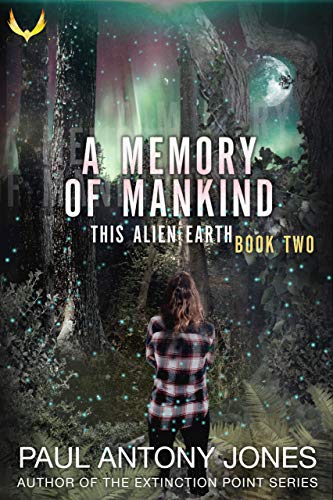
This Alien Earth #2
A Memory of Mankind
The answers are out there...
With the island of Avalon far behind them, Meredith and her companions continue their search for Candidate One in the hope of finally discovering the secrets behind why they were brought to this strange, future-version of Earth.
Wild adventures, mysterious technologies, and new friends will help Meredith on her journey. But the Adversary has its own plans for her, and soon she finds herself fighting for survival against an enemy unlike anything she has encountered before.
There is only one hope for the future of humanity. Can Meredith handle the burden? Find out in the unforgettable second installment of the This Alien Earth Series.
With the island of Avalon far behind them, Meredith and her companions continue their search for Candidate One in the hope of finally discovering the secrets behind why they were brought to this strange, future-version of Earth.
Wild adventures, mysterious technologies, and new friends will help Meredith on her journey. But the Adversary has its own plans for her, and soon she finds herself fighting for survival against an enemy unlike anything she has encountered before.
There is only one hope for the future of humanity. Can Meredith handle the burden? Find out in the unforgettable second installment of the This Alien Earth Series.
264 pages, Kindle Edition
First published December 17, 2019
About the author
Paul Antony Jones
20 books421 followersA native of Cardiff, Wales, Paul Antony Jones now resides near Las Vegas, Nevada, with his wife. He has worked as a newspaper reporter and commercial copywriter, but his passion is penning fiction. A self-described science geek, he’s a voracious reader of scientific periodicals, as well as a fan of things mysterious, unknown, and on the fringe. Paul is the author of six books, including the bestselling Extinction Point series and Toward Yesterday.
You can learn more about Paul and his upcoming releases via his blog at www.DisturbedUniverse.com or his Facebook page www.facebook.com/AuthorPaulAntonyJones/
You can learn more about Paul and his upcoming releases via his blog at www.DisturbedUniverse.com or his Facebook page www.facebook.com/AuthorPaulAntonyJones/
Ratings & Reviews
Friends & Following
Create a free account to discover what your friends think of this book!
Community Reviews
Displaying 1 - 30 of 54 reviews

May 23, 2020
Notes:
Kate Reading was great. There's a large mix of characters in the series and KR made it easy to keep track of them. Intro was great but the rest of the plot falls apart by trying to give answers. It's too bad. It has the potential to be a good YA, SF but needs more work to be plausible.
Kate Reading was great. There's a large mix of characters in the series and KR made it easy to keep track of them. Intro was great but the rest of the plot falls apart by trying to give answers. It's too bad. It has the potential to be a good YA, SF but needs more work to be plausible.

March 23, 2020
2.5 ⭐ rounded down
Second book in a lightweight adventure series about dying persons from across time and space given a second chance and transported to a fantastical world of (apparently) the far future. It's OK escapist fare, if not very original. Still, the author was reportedly terminally ill while finishing this story, so from that point of view it's a brave effort.
Second book in a lightweight adventure series about dying persons from across time and space given a second chance and transported to a fantastical world of (apparently) the far future. It's OK escapist fare, if not very original. Still, the author was reportedly terminally ill while finishing this story, so from that point of view it's a brave effort.

April 6, 2020
I have to say that finishing this book left me feeling terribly down. I couldn't shake the knowledge that the author finished it during his final days. Still, he must have hoped it wouldn't have been his final days because he left all the mysteries of the world open that would have made for a 3rd book in the series. I wanted the ending to somehow be profound. I wanted some sort of final imparted words of wisdom. After all, for all I know, this could be one of my final days if I fall to the current pandemic. But would I have anything wise to say? No. I guess the end will come whether I'm finished with everything or not. Agh. I'll miss this author's worlds, for I loved them. :-(

April 13, 2021
Just as I was losing my faith in series' of books.....
To me, this was even better than the first book in the series, which I enjoyed immensely. The author needs his readers to take wild leaps of faith. If you're willing to go along for the ride, it is a lot of fun. Imaginative scenarios, good writing, a great cast of characters and an amazing job of audiobook narration by Kate Reading all combine to make for a story that kept me steadily invested from start to finish.
In addition to creating some very unique story elements, the author also mixes in some historical elements which, unfortunately, come across as contrived and unnecessary, or sometimes as well-timed conveniences to advance the story. However, it is just one small negative to an otherwise great story.
To me, this was even better than the first book in the series, which I enjoyed immensely. The author needs his readers to take wild leaps of faith. If you're willing to go along for the ride, it is a lot of fun. Imaginative scenarios, good writing, a great cast of characters and an amazing job of audiobook narration by Kate Reading all combine to make for a story that kept me steadily invested from start to finish.
In addition to creating some very unique story elements, the author also mixes in some historical elements which, unfortunately, come across as contrived and unnecessary, or sometimes as well-timed conveniences to advance the story. However, it is just one small negative to an otherwise great story.

August 18, 2021
This was the last of the trilogy written by the author (due to cancer death). I have to say that I tore into the 1st two books. I love the references to past people, the nanotechnology and the relationships that have developed. Doesn't it just fit.... I find an author I love right after he/she passes. I thank Paul for sharing his amazing stories. I thank his family for letting the trilogy be finished. So....with that, I am on to book 3. Good reading my friends!
February 11, 2020
Too many mistakes
Not enough proofreading. I tripped over at least 10 obvious mistakes.
I didn't find this book quite as interesting as the first one, but it was still ok.
It was like the author was rushing to meet a deadline. The storytelling seemed stilted and not fluid enough, and I often thought better word choices could have been made
Not enough proofreading. I tripped over at least 10 obvious mistakes.
I didn't find this book quite as interesting as the first one, but it was still ok.
It was like the author was rushing to meet a deadline. The storytelling seemed stilted and not fluid enough, and I often thought better word choices could have been made

May 22, 2023
My favorite Sci fi series

May 2, 2020
I started this book with a heavy and broken heart.
Paul Antony Jones, the author of this book, passed away just a little after publishing this book and well, it’s really sad.
I “discovered” Paul's books last year and I ate them up in a binge. He was a great and original storyteller and he will be missed.
I don’t know if we'll ever see the end of this trilogy, I don’t really know if he got to finish the books, but know that this story is as interesting, original and entertaining as the previous book. It’s a page turner for sure.
Paul Antony Jones, the author of this book, passed away just a little after publishing this book and well, it’s really sad.
I “discovered” Paul's books last year and I ate them up in a binge. He was a great and original storyteller and he will be missed.
I don’t know if we'll ever see the end of this trilogy, I don’t really know if he got to finish the books, but know that this story is as interesting, original and entertaining as the previous book. It’s a page turner for sure.

July 7, 2020
This is the second in a series, I got the first as a free read. I had no idea where the original book was going or what the heck was going on but I was intrigued enough to finish it, actually after a few chapters I had to see what was going to happen. Of course it ended and I hastily looked for book 2. Lots of odd twists in this book, not as in-depth explanations but I cannot stop a series until the end so hopefully book three will satisfy my need to know. Unfortunately the author passed away from cancer so Im hoping the promised book three will be printed.

May 28, 2020
Fantastic
I have truly enjoyed the story thus far. Thank uou for introducing us to such wonderful characters. This installment opens up a new world, so familiar and reflecting the best of humanity. Worth reading a the author's books. May he rest well in some unknown future.
I have truly enjoyed the story thus far. Thank uou for introducing us to such wonderful characters. This installment opens up a new world, so familiar and reflecting the best of humanity. Worth reading a the author's books. May he rest well in some unknown future.
December 29, 2019
Entertaining with non-stop action.
The adventure continues with exciting and unexpected people and places.
I will really enjoy book 4 of the series.
The adventure continues with exciting and unexpected people and places.
I will really enjoy book 4 of the series.

July 22, 2020
I read this the day it became available as I have done with every book since extinction point.
Rest in peace Paul, your writing and book releases will be deeply missed.
Rest in peace Paul, your writing and book releases will be deeply missed.
August 17, 2020
Suspenseful
I always give this author high ratings due to the fact I actually finish his books! I'm pleased to tell you that if you love suspense you'll love this book.
I always give this author high ratings due to the fact I actually finish his books! I'm pleased to tell you that if you love suspense you'll love this book.

April 28, 2022
I'm honestly surprised I stuck with this book all the way to the end. Not sure if I was hoping it'd get better or just wanting to see how bad of a train wreck it would end up being. Gotta say that Kate Reading's narration probably also played a large part, she does an awesome job with an otherwise subpar book.
The TL;DR review. If you're going to write a good science fiction story you can do what you want with sci-fi bits that the audience has to just accept as a part of the premise of the story, but it's really important to get the real world aspects of the story right or your readers are gonna walk out. For example, nobody's going to buy that a crippled 80 year old grandmother character walks up 38 floors to her apartment everyday. Similarly in this story, telling us that our group of basically normal folks is breaking trail 20 miles day through an untrammeled forest (kinda like the one on the cover) is bullcrap. Or that they're going to blaze a trail up and down a 6000 foot high mountain range in just a morning (fun fact, I live close to mountain range of that scale and it took me the better part of 7 hours to run/walk the 30 miles from the top down to the bottom on a road) especially when the slope is described at times as being 45 degrees. Stupidity like this abounds in the story.
Also, I hate the protagonist with the fire of a thousand suns. Frustratingly stupid, whiny and just full of chirpy metaphors...
The TL;DR review. If you're going to write a good science fiction story you can do what you want with sci-fi bits that the audience has to just accept as a part of the premise of the story, but it's really important to get the real world aspects of the story right or your readers are gonna walk out. For example, nobody's going to buy that a crippled 80 year old grandmother character walks up 38 floors to her apartment everyday. Similarly in this story, telling us that our group of basically normal folks is breaking trail 20 miles day through an untrammeled forest (kinda like the one on the cover) is bullcrap. Or that they're going to blaze a trail up and down a 6000 foot high mountain range in just a morning (fun fact, I live close to mountain range of that scale and it took me the better part of 7 hours to run/walk the 30 miles from the top down to the bottom on a road) especially when the slope is described at times as being 45 degrees. Stupidity like this abounds in the story.
Also, I hate the protagonist with the fire of a thousand suns. Frustratingly stupid, whiny and just full of chirpy metaphors...
September 20, 2024
This series of novels makes new concepts in physics live in the imagination. Some of the characters come to life although the central character, the narrator, sometimes appears to be dense, impulsive, and unimaginative, presumably because her mind reflects the author’s judgment of the typical reader’s mind. For example, she dimly recalls that hydrogen is “dangerous.”
The writing itself, though flabby, has verve and occasional beauty, but the editing, if any, is wretched. For instance, Jones’s diction calls attention to itself. He avoids common verbs: People here do not rush. They very rarely run. Mostly they sprint, sometimes race, once dash, occasionally tear. The author does not realize that most common words can be repeated without raising an eyebrow, but repeating “sprint” makes one think of Harry Potter.
Jones, self-consciously modern, breaks schoolish rules like the stricture against using “like” as a conjunction. Even when he could easily reduce the word count by using “like” in its traditional role (“the Brimstone shook and rattled like a runaway freight train”), he goes out of his way to turn it into a conjunction: “the Brimstone shook and rattled like it was a runaway freight train.” He also loves to end sentences with weak words like prepositions (“toward the same building it had originally appeared from behind”). And forget worrying over “who” and “whom”; there are only three instances of “whom” in the entire novel.
Often his diction is downright wrong.
• He calls the purpose of a tool its “intention.”
• He thinks that an octave is a measure of loudness rather than of pitch.
• Apparently tired of “consists of,” he uses instead “comprise” (its opposite, i.e., include) and yet can’t fit it idiomatically into his sentence: “it comprises of a series of numbers.”
• Watch for “as such,” which according to Jones means simply “therefore.”
• “Instance” for “instant”
• He does not seem to know the words “differentiate” and “distinguish,” so he uses “discern” and lengthens the sentence to accommodate it: “The only thing to discern they were actually different was a couple of abandoned metal luggage carts.” Or else he uses “discriminate”: “There was nothing to discriminate this part of the mountain from any other part of it.”
• He is very confused about “lie” and “lay.” He uses the latter as both the present and the past of “lie,” and when he needs a past participle he uses “lain” improperly for “laid” (where Freuchen had lain the two women). Yet when he actually needs “lain,” he uses “lay” instead: “. . . who had, until now, still lay unconscious.” Verb conjugations are just too much for him or his proofreaders.
When two different idioms are available to say the same thing, Jones tries to combine them. Thus, “It was difficult to make out much detail” and “We could not make out much detail” are conflated: “It was difficult to make out too much detail.” And consider this classic redundancy: “The source of the radio signal is coming from there.” (The signal, not the source, was coming from there; a source is where things originate.)
His spelling is laughable:
• “Further into the opening were what looked like colossal milky-white pyramids, each as wide as a jetliner, they’re apexes pointing downward, forming a crystalline ceiling.”
• “my left bicep”
• “a peel of thunder crashed over us”
• “the ladder that lead up” (for “led”)
Some word groups lack significant words: “She slowed her pace to more of a fast jog, enough that Freuchen and I could keep up with ??” and “smaller pieces of concrete and broken red bricks which Albert dutifully followed behind Silas each time he took the stairs.” Other phrases make no sense whatever: “the translocation of almost so many humans.”
And finally, thanks to the author’s permitting initial apostrophes to be turned upside down as opening single quotation marks, few pages are free from trivial annoyances.
The writing itself, though flabby, has verve and occasional beauty, but the editing, if any, is wretched. For instance, Jones’s diction calls attention to itself. He avoids common verbs: People here do not rush. They very rarely run. Mostly they sprint, sometimes race, once dash, occasionally tear. The author does not realize that most common words can be repeated without raising an eyebrow, but repeating “sprint” makes one think of Harry Potter.
Jones, self-consciously modern, breaks schoolish rules like the stricture against using “like” as a conjunction. Even when he could easily reduce the word count by using “like” in its traditional role (“the Brimstone shook and rattled like a runaway freight train”), he goes out of his way to turn it into a conjunction: “the Brimstone shook and rattled like it was a runaway freight train.” He also loves to end sentences with weak words like prepositions (“toward the same building it had originally appeared from behind”). And forget worrying over “who” and “whom”; there are only three instances of “whom” in the entire novel.
Often his diction is downright wrong.
• He calls the purpose of a tool its “intention.”
• He thinks that an octave is a measure of loudness rather than of pitch.
• Apparently tired of “consists of,” he uses instead “comprise” (its opposite, i.e., include) and yet can’t fit it idiomatically into his sentence: “it comprises of a series of numbers.”
• Watch for “as such,” which according to Jones means simply “therefore.”
• “Instance” for “instant”
• He does not seem to know the words “differentiate” and “distinguish,” so he uses “discern” and lengthens the sentence to accommodate it: “The only thing to discern they were actually different was a couple of abandoned metal luggage carts.” Or else he uses “discriminate”: “There was nothing to discriminate this part of the mountain from any other part of it.”
• He is very confused about “lie” and “lay.” He uses the latter as both the present and the past of “lie,” and when he needs a past participle he uses “lain” improperly for “laid” (where Freuchen had lain the two women). Yet when he actually needs “lain,” he uses “lay” instead: “. . . who had, until now, still lay unconscious.” Verb conjugations are just too much for him or his proofreaders.
When two different idioms are available to say the same thing, Jones tries to combine them. Thus, “It was difficult to make out much detail” and “We could not make out much detail” are conflated: “It was difficult to make out too much detail.” And consider this classic redundancy: “The source of the radio signal is coming from there.” (The signal, not the source, was coming from there; a source is where things originate.)
His spelling is laughable:
• “Further into the opening were what looked like colossal milky-white pyramids, each as wide as a jetliner, they’re apexes pointing downward, forming a crystalline ceiling.”
• “my left bicep”
• “a peel of thunder crashed over us”
• “the ladder that lead up” (for “led”)
Some word groups lack significant words: “She slowed her pace to more of a fast jog, enough that Freuchen and I could keep up with ??” and “smaller pieces of concrete and broken red bricks which Albert dutifully followed behind Silas each time he took the stairs.” Other phrases make no sense whatever: “the translocation of almost so many humans.”
And finally, thanks to the author’s permitting initial apostrophes to be turned upside down as opening single quotation marks, few pages are free from trivial annoyances.

May 14, 2020
A good sequel and continuation of Meredith's story. The story is told in first person, bit I never find that first person changes much in regards to how much you are invested in the character, and you do become invested in certain characters.
One or two characters seen a little flat, mainly a new enemy that is introduced, but I'll say no more and let you discover then for yourself.
I must add this though: the book is not the end of the story but sets up for a third. Sadly, I learned after finishing the book that the author, Paul Anthony Jones, had passed away. It seems unlikely that this story will be finished. I hope I'm wrong. Had I known this before reading I might not have started the books. But, I am glad that I did, and I encourage you to read them anyway.
One or two characters seen a little flat, mainly a new enemy that is introduced, but I'll say no more and let you discover then for yourself.
I must add this though: the book is not the end of the story but sets up for a third. Sadly, I learned after finishing the book that the author, Paul Anthony Jones, had passed away. It seems unlikely that this story will be finished. I hope I'm wrong. Had I known this before reading I might not have started the books. But, I am glad that I did, and I encourage you to read them anyway.
August 20, 2020
Great story
Enjoyed the second book just as much as the first. The story keeps you very involved and is a great page turner. Paul Jones is a fantastic writer and I look forward to book three in the series “This Alien Earth”.
Enjoyed the second book just as much as the first. The story keeps you very involved and is a great page turner. Paul Jones is a fantastic writer and I look forward to book three in the series “This Alien Earth”.

September 21, 2020
This is a Sci Fi book is a fun read. The characters are interesting and the plot is not predictable. I read both books in the series back to back and look forward to reading the next one when it is published.

August 11, 2022
Another great book.
A Memory of Mankind is pure fantasy (probably... LOL). Don't read it until you read the first book which is where you meet the lovable and unforgettable characters. I cannot wait to read book 3!!!!!!
A Memory of Mankind is pure fantasy (probably... LOL). Don't read it until you read the first book which is where you meet the lovable and unforgettable characters. I cannot wait to read book 3!!!!!!
March 20, 2023
I enjoyed it. Lots of clever plot points, great characters, and a pleasing cameo from another series! Readers really need to have read the previous book in this series though. I'm continuing straight on with the next one.
October 8, 2023
Excellent read
I'm so invested in this story and there are twists and turns throughout this book. Never a dull moment really. Some of it technical that it can almost be plausible in real life. Great series so far.
I'm so invested in this story and there are twists and turns throughout this book. Never a dull moment really. Some of it technical that it can almost be plausible in real life. Great series so far.

May 26, 2026
Idk man this one got way too sciencey…for me. And I love Sci Fi…just felt like the story got bagged down for all the details about every multiversal universe ending theory…yeesh.
Gonna finish this trilogy but I don’t have high expectations!
Gonna finish this trilogy but I don’t have high expectations!

May 17, 2020
took me a long time to catch up and remember book 1.
not such a fun read.
not such a fun read.
June 16, 2020
A could not put down book
From the moment started reading this book,I never wanted to put it down. It was that interesting. I would recommend this book to everybody
From the moment started reading this book,I never wanted to put it down. It was that interesting. I would recommend this book to everybody
October 25, 2020
Enjoyable
I just love the different way this story is told. A good read that keeps you interested. I wonder what the future holds!
I just love the different way this story is told. A good read that keeps you interested. I wonder what the future holds!
January 5, 2021
As good as the first book in the series. On to book 3.

March 29, 2021
Not as good as the first in the series, but enjoyed it and will read the third one. One of the characters from his other book series (red rain) had a cameo appearance in this book!

April 21, 2021
As good as the first.

April 23, 2021
Paul Antony Jones creates a wonderful mysterious world with a multitude of suprises

May 4, 2021
Interesting continuation but cant help feeling this could have been part of book 2. Some good ideas but just feels lacking something.
Displaying 1 - 30 of 54 reviews