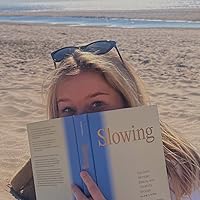
A small guide for those seeking a life of beauty, simplicity, and sustainability.
In this simple and inspiring lifestyle handbook, Mary Kingsley - novelist, wife, mother, homesteader and co-founder of Lady Farmer - briefly discusses the history of humanity's relationship with the natural world, how that relationship has shifted, and how the concept of "slow living" can return health to ourselves and our planet. This guide not only includes an exploration of the damage done by our fast-food, fast-fashion, fast-everything culture, but offers simple ways each of us can help to heal that damage.
Though she lives and works on a small farm herself, the information Kingsley provides in this handy guide can be implemented in city and suburb, helping all of us feel more connected and less out of step with our environment. The Lady Farmer Guide to Slow Living includes stories, tips, recipes, resources, ideas, and questions to get you thinking about your own relationship to the planet, what you eat, what you wear, where you live, and how you live. It even contains three weeks of daily thought exercises to lead you in the process.
The Lady Farmer Guide to Slow Living is the perfect introduction for anyone looking to live a slower, more connected, and more harmonious life on Planet Earth.
Mary E. Kingsley was born and raised in northeastern Tennessee, surrounded by the hills of southern Appalachia. She now lives in Washington DC with her husband, two cats and a dog. When not writing she enjoys spending time with friends and family, yoga, gardening, occasional painting, paper making, and photography. Angel is her first novel.
This was a nice, simple book about sustainability and lifestyle changes you can make to be more cognizant of your impact of the planet. I liked it because of the advice it gave, particularly the 21 day challenge at the end. I do wish that there was more information on individual actions that can be taken to be kinder to the planet, though. 4 stars.
This book changed my life because it really made me think about my habits in my space, kitchen, and closet and how to change them. I read this during the pandemic lockdown and it really helped me reflect on what facets of my life I am interested in changing for the better.
Really lovely and basic introduction to slow living. I personally would have liked more depth but I will be coming back to this for the resources section and I am currently going through the 21 day journal prompts. I really appreciate the reflections at the end of each chapter, that is what sets this apart from other slow living content I have read.
“Start small. Do what you can. Avoid judgement of yourself and others.”
I don’t think this will win any awards but it’s a darling little intro for those interested in slowing down, and living more sustainably. Section 2 on slow fashion almost lost me though. It felt a little bit more geared towards educating the reader on what lady farmer is doing to produce sustainable fabrics.. I don’t know. Just felt gimmicky while the rest of the sections felt natural.
As a whole this gives nice starter points to think on, and how to move toward a more conscious and sustainable lifestyle. For such a short read it still provided enough for me to digest and reflect on for hours after, bringing up some points for healthy debating and conscious choice making in my home. A helpful 21 day “challenge” concludes, for those who like to check things off of lists.
This was an eye-opening read. It will wake up any reader to the dangers of not living sustainably, and suggests practices that we can accustom to our every day lives. Ultimately, by questioning the sources of items used in our daily routines, as well as offering ways to reduce stress on ourselves mentally, physically, emotionally, and our environment have all been dissected in this well-researched text.
Awareness to 3 particular areas of sustainability are discussed in this piece: 1) Food & Food Sources 2) Clothing 3) Spaces/Housing
I personally resonated deeply with the chapters on food, food sources, and food consumption. The addition of easy home-made recipes was a lovely touch and have been noted in my personal records to try at home (especially the fermenting of harvested backyard foods that I am excited to try).
I do with that it offered more ways to live sustainably (more recipes & daily practices), though I think the last portion with daily offerings of slow-living shifts was a nice touch.
My only critique of this book is that much of these discussions/suggestions towards moving to a more sustainably-lived life doesn't take into account the financial obligations associated with this movement. For example, not everyone can afford to spend money on ethically-sourced/humane food or clothing (which usually has a significant increase in price compared to other products). Not everyone can afford a home with land to grow their own food. There are smaller scaled steps one can take to achieving these ends, but the footprint of the overall picture would be tremendously small and most-likely, not sustainable in themselves.
Despite my critique, I would still recommend this book to others and I resonated with the material.
Looking to develop an ED or become paralyzed with indecision about literally every aspect of your waking life? Then you will enjoy this anxiety bomb. I'm really surprised that this book was released as recently as 2020. It very much reads like a compilation of blog posts from the early 2010s, when the destructive environmental impact of fast fashion and mass production were relatively new topics in the public consciousness. I'm not crazy about using buzzwords, but I do feel that fear-mongering is the correct term when a book spends more time describing problems than it does discussing concrete, actionable steps toward remedying said problems through one's day-to-day actions. Some case studies, for example, would have been an excellent addition to the "solution" part of each section of the book. There was exactly one part of the book that I liked, which was the 3-week journaling exercise at the end. Considering the fact that similar journaling exercises can be found online, however, it hardly makes up for the rest of the book's shortcomings. I want to note that I think the author's intentions were probably good; just executed very poorly.
I wanted to like this, I really did, but it reads like a serious of items pinned on a "Homesteading" Pinterest board. If I were approaching the idea of slow/sustainable living as someone who had just heard of the concept, this would be a very good introduction, but as someone who wanted a little more substance, this book fell short. So maybe it's me, as the wrong audience, and not the book itself.
I got this slim book for free with Indigo birthday discounts, and I’m glad I didn’t actually pay for it. It’s got some excellent points but because I’ve read so much in this realm it really just scratched the surface of so many things. I liked the section on different fabrics and their sustainability. I also found the way some points were worded to really hit home. But, if you’re not new to the slow living and sustainability world, this won’t provide many new insights.
This book is a sweet introduction to slow living and gives lots of room for reflection. While I enjoyed the first and last sections, the middle section on slow fashion fell flat for me. The focus was more on what Lady Farmer was doing and less on what I could do. But overall, the book gives a basic overview on how to cultivate a slow and gentle life 🌸
I love the idea of slow living. I think when I read books like this I get a little down because so much of it is currently unattainable and it feels like why am I trying at all of the little things. But I like the idea of being a lady farmer and being as sustainable as I can be. So here I go.
not a great deal of new substance (or it could be i've already read several of the authors referenced in the resources). we have reflected and incorporated many of these ideas into our thinking and daily lives. this could be a helpful read for those folks just beginning to look for other options.
It was a good read to help me see that living fast and furious is just leaving a nasty trail of trash and waste behind me. This book gives some little practical things we can do to start us in the right direction to help ourselves, others, and our planet.
Want to start slow loving? This is the book te start it with! It’s all about consciousness and how to start living clean in every aspect of life. Not to heavy, but it have me sparks of enthusiasm about a lot of subjects to practice slow living more.