

What do you think?

Petit Traité de la philosophie naturelle
Naturalist and philosopher Kathleen Dean Moore meditates on connection and separation in these twenty-one elegant, probing essays. Using the metaphor of holdfasts—the structures that attach seaweed to rocks with a grip strong enough to withstand winter gales—she examines our connections to our own bedrock.
“When people lock themselves in their houses at night and seal the windows shut to keep out storms, it is possible to forget, sometimes for years and years, that human beings are part of the natural world,” she writes. Holdfast passionately reclaims an awareness of the natural world, exploring the sense of belonging fostered by the communal howls of wolves; the inevitability of losing children to their own lives; the fear of bears and love of storms; the sublimity of life and longing in the creatures of the sea; her agonizing decision when facing her father’s bone-deep pain. As Moore travels philosophically and geographically—from Oregon’s shores to Alaska’s islands—she leaves no doubt of her virtuosity and range.
The new afterword is an important statement on the new responsibilities of nature writers as the world faces the consequences of climate change.
“When people lock themselves in their houses at night and seal the windows shut to keep out storms, it is possible to forget, sometimes for years and years, that human beings are part of the natural world,” she writes. Holdfast passionately reclaims an awareness of the natural world, exploring the sense of belonging fostered by the communal howls of wolves; the inevitability of losing children to their own lives; the fear of bears and love of storms; the sublimity of life and longing in the creatures of the sea; her agonizing decision when facing her father’s bone-deep pain. As Moore travels philosophically and geographically—from Oregon’s shores to Alaska’s islands—she leaves no doubt of her virtuosity and range.
The new afterword is an important statement on the new responsibilities of nature writers as the world faces the consequences of climate change.
192 pages, Paperback
First published June 1, 1999
About the author
Kathleen Dean Moore
44 books167 followersEnvironmental philosopher Kathleen Dean Moore writes about moral, spiritual, and cultural relationships to the natural world. In 2000 she founded the Spring Creek Project at Oregon State, which brings together the practical wisdom of the environmental sciences, the clarity of philosophy, and the emotive power of the written word to re-imagine humankind’s relation to the natural world. In addition to her philosophical writing for professional journals, Moore is the author of several books of nature essays, including Wild Comfort: The Solace of Nature; Riverwalking; and The Pine Island Paradox, winner of the Oregon Book Award.
A graduate of Wooster College (1969), Moore earned her M.A. (1972) and Ph.D. (1977) from the University of Colorado, Boulder, in the philosophy of law, with a focus on the nature of forgiveness and reconciliation. At Oregon State, she teaches environmental ethics, the philosophy of nature, and a variety of courses for OSU’s new master’s program in environmental leadership. She is also co-author of a new Environmental Humanities Initiative, which integrates science and humanities to provide leadership for complex times.
A graduate of Wooster College (1969), Moore earned her M.A. (1972) and Ph.D. (1977) from the University of Colorado, Boulder, in the philosophy of law, with a focus on the nature of forgiveness and reconciliation. At Oregon State, she teaches environmental ethics, the philosophy of nature, and a variety of courses for OSU’s new master’s program in environmental leadership. She is also co-author of a new Environmental Humanities Initiative, which integrates science and humanities to provide leadership for complex times.
Ratings & Reviews
Friends & Following
Create a free account to discover what your friends think of this book!
Community Reviews
Displaying 1 - 30 of 34 reviews

June 10, 2012
This is my second time reading this fine essays by one of my favorite local authors. Favorite quote: "When people lock themselves in their houses at night and seal the windows shut to keep out storms, it is possible to forget, sometimes for years and years, that human beings are part of the natural world.'
August 11, 2014
It's taken an unusually long time for me to finish this book, but it's a book to read slowly, and savor. The essay on the song of the canyon wren just struck me as so true and lovely. As the essays progress, the author's children grow up and leave home, and the sadness and wonder of that rang true as well. Not at all sentimental, just very thoughtful.

November 1, 2012
Several essays really stood out which is what I'm looking for in reading a book like this(something relatable to my experiences). The essay "the song of the canyon wren" described something I've known my entire life, even as a child, but have never shared nor even knew how to put it into words! Moore says it perfectly for me... Finding the (Real Church) in "Incoming Tide" is momentous and something I've known for quite awhile and am always trying to share with others through my art and conversation. Then too, a couple of hilarious essays about a run-in with a moose and my favorite "The man with a stump where his head should be"!
May 21, 2017
Holdfast opens with a call to pay attention to and honor connections, a call that seems all the more urgent as division, disruption, and separation seem to rule the day. In a series of essays, Moore offers insightful explorations of connections in ecosystems, in human-nature interactions, and in human relationships and how all of these dimensions reflect on each other. Most of the essays start with a personal experience, usually in a lake, forest, or other natural setting. That experience creates a launching point for exploration of larger questions.
A professor of philosophy at Oregon State University, Moore is adept at wrestling with big questions. The opening essay deals with the granddaddy of philosophical questions - the purpose of life. From the vantage point of a marshy lake at dusk, brought to life through the sounds of the marsh creatures, Moore offers one eloquently simple possible answer that life yearns for nothing so much as to continue to be, to love being alive. Other essays address questions such as How can we find a sense of connection when so much in our lives is constantly changing? How do our perceptions and memories shape our beliefs? and Where do we find the sacred? A common theme throughout many of the essays is family, particularly addressing changing relationships between parents and children as the children, and the parents, grow and age.
The essays are arranged in three parts, the first and third relating to “Connection,” and sandwiched in between, a set dealing with “Separation.” The arrangement is helpful, as the essays on Connection tend to be more hopeful, while the Separation essays are more melancholy. I found engaging elements in nearly all of the essays that prompted me to think more deeply about the topics being addressed. Among my favorites were “Howling with Strangers,” about finding connections with people and with wolves in a cold, dark night; “Field Notes for an Aesthetic of Storms,” exploring the beauty and the fear bound together in storms and why we find them so compelling, “The Song of the Canyon Wren,” wondering why the experience of beauty sometimes strikes us with a sense of hollowness, and “Incoming Tide,” describing an Easter morning on the beach and experiences of holiness.
I found that my path and Moore’s have a remarkable degree of overlap, with most of the essays rooted in Oregon (where I did my PhD) and Minnesota (my childhood and current home). The places Moore talks about are, therefore, near and dear to me. That recognition undoubtedly makes the essays even more compelling for me than for people who don’t have these places in their blood. But the questions and the insights are universal, and the places are described so as to bring them to life even for someone not familiar with them.
The reprint edition I read closes with a powerful afterword on Moore’s shifting sense of the call of the nature essayist. She describes how her sense of purpose has evolved from finding an insight in an experience of nature and explicating that in an essay (of the sort in this volume). Witnessing the continued destruction of natural places and the planet itself, finding and expressing a love for the world no longer seems sufficient. That love has taken on a fierceness and a need to protect, and a drive to seek the words that might turn the tide of destruction. I look forward to reading her more recent Great Tide Rising: Towards Clarity and Moral Courage in a time of Planetary Change, which seems to be a part of that pursuit.
A professor of philosophy at Oregon State University, Moore is adept at wrestling with big questions. The opening essay deals with the granddaddy of philosophical questions - the purpose of life. From the vantage point of a marshy lake at dusk, brought to life through the sounds of the marsh creatures, Moore offers one eloquently simple possible answer that life yearns for nothing so much as to continue to be, to love being alive. Other essays address questions such as How can we find a sense of connection when so much in our lives is constantly changing? How do our perceptions and memories shape our beliefs? and Where do we find the sacred? A common theme throughout many of the essays is family, particularly addressing changing relationships between parents and children as the children, and the parents, grow and age.
The essays are arranged in three parts, the first and third relating to “Connection,” and sandwiched in between, a set dealing with “Separation.” The arrangement is helpful, as the essays on Connection tend to be more hopeful, while the Separation essays are more melancholy. I found engaging elements in nearly all of the essays that prompted me to think more deeply about the topics being addressed. Among my favorites were “Howling with Strangers,” about finding connections with people and with wolves in a cold, dark night; “Field Notes for an Aesthetic of Storms,” exploring the beauty and the fear bound together in storms and why we find them so compelling, “The Song of the Canyon Wren,” wondering why the experience of beauty sometimes strikes us with a sense of hollowness, and “Incoming Tide,” describing an Easter morning on the beach and experiences of holiness.
I found that my path and Moore’s have a remarkable degree of overlap, with most of the essays rooted in Oregon (where I did my PhD) and Minnesota (my childhood and current home). The places Moore talks about are, therefore, near and dear to me. That recognition undoubtedly makes the essays even more compelling for me than for people who don’t have these places in their blood. But the questions and the insights are universal, and the places are described so as to bring them to life even for someone not familiar with them.
The reprint edition I read closes with a powerful afterword on Moore’s shifting sense of the call of the nature essayist. She describes how her sense of purpose has evolved from finding an insight in an experience of nature and explicating that in an essay (of the sort in this volume). Witnessing the continued destruction of natural places and the planet itself, finding and expressing a love for the world no longer seems sufficient. That love has taken on a fierceness and a need to protect, and a drive to seek the words that might turn the tide of destruction. I look forward to reading her more recent Great Tide Rising: Towards Clarity and Moral Courage in a time of Planetary Change, which seems to be a part of that pursuit.

December 24, 2017
Okay but not a patch on Ellen Meloy. There is great passion here and subtle writing in much of the book, but... Just a bit too breathless, and again like most nature writers totally myopic when it comes to the hypocrisies involved in crying over dying starfish suffering as climate change warms their sea home, and then taking the family home to cook a roast beef dinner, not making the connection with how that dinner via animal agriculture is the main cause of climate change. I can’t properly respect nature writing that professes to love the ecological world when the nature writer’s personal practices are so destructive.

April 14, 2018
This book is written as a series of very short personal essays. Several of them are powerful but very abbreviated—as if she cuts off mid-sentence, mid-thought just as it is getting interesting (to the reader).

April 4, 2021
Another beautifully evocative collection of nature writing from Kathleen Dean Moore.
"I know what it's like to stand at the edge of the lake, looking out together, and feel love so lasting and strong I could swear it is made of granite and wind across water."
Indeed...
"I know what it's like to stand at the edge of the lake, looking out together, and feel love so lasting and strong I could swear it is made of granite and wind across water."
Indeed...

September 5, 2021
“Try to go infinitely deep into any piece of the distance of time. If there is eternal life, a friend says, it will not be in the length of your life, but in its depth…I don’t think there is any limit to the depth of each moment, and I am going to try to live in a way that plumbs those depths, to live thickly, expanding the reach of my moment down into the mire of detail and up into the damp and cry-filled air.”
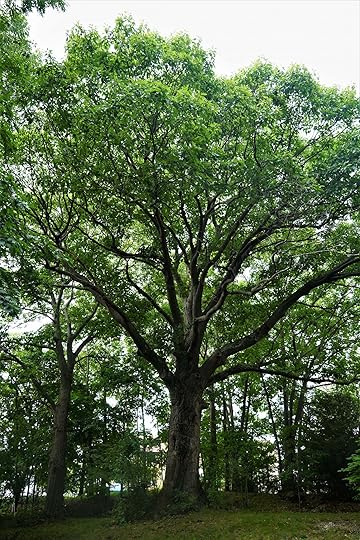
Small book of essays, holding some space for wisdom for how we can be grounded in what we define as home so that we can never lose hope and fight the good fight, however that is defined for you. I spent some time in my childhood home, or outside of it, among the trees that have grown every higher in the 25 years I have been gone, and among the wildness of formerly manicured yards and garden plots. I can never live there as much as I wish I could live there forever. My niece says it looks like a forest, and it does. The giant oak tree towers over the house, about three times it size. The yard is like a forest floor or meadow with native grasses and plants and some invasive ones that my mom had excavated to tame but now flourish now she is gone. And they are so unexpectedly beautiful, the kind that catches at your throat and takes your breath. That land is my holdfast, and the anchor of me.
Holdfast: a rootlike structure, as of algae and other simple plants, for attachment to the substrate. Rachel Carson. In the green, light-shot sea along the Oregon coast, bullwhip kelp lean toward land on the incoming tides and swirl seaward as the water falls away, never letting go of their grip on the ocean floor. What keeps each plant in places is a holdfast, a fist of knobby fingers that stick to rock with a glue the plant makes from sunshine and salt water, an invisible bond strong enough to hold against all but the worst winter gales. The holdfast is a structure biologists don’t entirely understand. Philosophers have not even begun to try. I resolve to study holdfasts. What will be cling to, in the confusion of the tides? What structures of connection will hold us in place? How will we find an attachment to the natural world that makes us feel safe and fully alive, here, at the edge of water?
We realized too late that we never taught our students what ducks know without knowing, that “we must love life before loving its meaning,” as Dostoyevsky told us. We must love life, and some meaning may grow from that love…What is it all for, this magnifying-glass-in-the-sun focus on being, this marshland, this wetness, this stewpot, this great splashing…the colors, the plumage, the effort, the noise, the complexity? Nothing, I think, except to continues. This is the testimony of the marsh: Life directs all its power to one end, and that is to continue to be. A marsh at nightfall is life loving itself. Nothing more. But nothing less, either, and we should not be fooled in to thinking this is a small thing.
You can’t take the planet for granted; it could all be otherwise. There must be worlds spinning on the far side of Jupiter where field guides are futile, where nothing is this or that, but rather nothing at all or everything at once. Imagine a simple world where everything is one kind of thing, evenly distributed, like red cinders blown out of a red cinder cone onto an even plain, so when the wind blows, it plays a single endless note. Imagine a planet where no two things are ever the same and there are infinitely many things…or imagine a world where chaos never yielded to creation, a world forever unsorted, spinning in that glare that is all light combined. These are worlds that rationality can’t conquer.
I have sought out storms all my life, without thinking much about why. Long before we knew better, my sisters and I played with lightning on the crest of the Rocky Mountains, reaching our hands towards rocks. The closer we came, the more furiously the rocks buzzed with electricity. We skipped and spun mindlessly in the electric charges, creating music with our bodies…what reed in the human spirit vibrates with the violence of storms?
The thrill of the storm…doesn’t purr, it crackles. I asked Frank if the excitement could be physical. He studies chemicals in the brain, so he might know. Maybe it’s’ the sudden drop in air pressure, I suggested. Released from the weight of the atmosphere, all your cells expand and life and your spirits lighten. You have to breathe harder to get enough oxygen, and nothing seems quite fastened down… All the elements of beauty can be found in the way light strikes a wheat field under purple thunderheads; clarity and lucidity, a kind of shine and smoothness, unity and diversity…the opposite of beauty is not ugliness. The opposite of beauty is sublimity, the blow-to-the-gut awareness of chaotic forces unleashed and uncontrolled, the terror- and finally the awe. To experience the sublime is to understand, with an insight so fierce and sudden it makes you flinch, that there is power and possibility in the universe greater than anyone can imagine. The sublime blows out the boundaries of human experience.
Storms are our wilderness. A few generations ago, people looked to wild lands for the experience of the sublime…But now we tidy up the wild places and manage the mountains for science pleasure…the same landscape is merely beautiful now…if people are looking for wilderness now, all they need to do is turn their faces to the sky. Philosophers…use the phrase “that greater than which nothing can be conceived.” Our ancestors spoke to storms with magical words, prayed to them… dancing to the very edge of what is alien and powerful… we may have lost the dances, but we carry with us a need to approach the power of the universe…
THE LOVE OF BEAUTY IS A LONGING FOR THE HOMELAND OF THE SOUL- PLOTINUS
In forests or huckleberry patches, I’ll be hiking along under the hemlocks and suddenly the light will stream in sideways and every leaf lights up and I’m stopped in midstride, overwhelmed with how beautiful the forest has become…sometimes the natural world gives you a gift so beautiful, so precious, that all you can do is stand there and cry. But I never actually though of this as religion. All the same, the thought is an interesting one, and now I’m trying to look around me a little differently, keep an open mind.
Small book of essays, holding some space for wisdom for how we can be grounded in what we define as home so that we can never lose hope and fight the good fight, however that is defined for you. I spent some time in my childhood home, or outside of it, among the trees that have grown every higher in the 25 years I have been gone, and among the wildness of formerly manicured yards and garden plots. I can never live there as much as I wish I could live there forever. My niece says it looks like a forest, and it does. The giant oak tree towers over the house, about three times it size. The yard is like a forest floor or meadow with native grasses and plants and some invasive ones that my mom had excavated to tame but now flourish now she is gone. And they are so unexpectedly beautiful, the kind that catches at your throat and takes your breath. That land is my holdfast, and the anchor of me.
Holdfast: a rootlike structure, as of algae and other simple plants, for attachment to the substrate. Rachel Carson. In the green, light-shot sea along the Oregon coast, bullwhip kelp lean toward land on the incoming tides and swirl seaward as the water falls away, never letting go of their grip on the ocean floor. What keeps each plant in places is a holdfast, a fist of knobby fingers that stick to rock with a glue the plant makes from sunshine and salt water, an invisible bond strong enough to hold against all but the worst winter gales. The holdfast is a structure biologists don’t entirely understand. Philosophers have not even begun to try. I resolve to study holdfasts. What will be cling to, in the confusion of the tides? What structures of connection will hold us in place? How will we find an attachment to the natural world that makes us feel safe and fully alive, here, at the edge of water?
We realized too late that we never taught our students what ducks know without knowing, that “we must love life before loving its meaning,” as Dostoyevsky told us. We must love life, and some meaning may grow from that love…What is it all for, this magnifying-glass-in-the-sun focus on being, this marshland, this wetness, this stewpot, this great splashing…the colors, the plumage, the effort, the noise, the complexity? Nothing, I think, except to continues. This is the testimony of the marsh: Life directs all its power to one end, and that is to continue to be. A marsh at nightfall is life loving itself. Nothing more. But nothing less, either, and we should not be fooled in to thinking this is a small thing.
You can’t take the planet for granted; it could all be otherwise. There must be worlds spinning on the far side of Jupiter where field guides are futile, where nothing is this or that, but rather nothing at all or everything at once. Imagine a simple world where everything is one kind of thing, evenly distributed, like red cinders blown out of a red cinder cone onto an even plain, so when the wind blows, it plays a single endless note. Imagine a planet where no two things are ever the same and there are infinitely many things…or imagine a world where chaos never yielded to creation, a world forever unsorted, spinning in that glare that is all light combined. These are worlds that rationality can’t conquer.
I have sought out storms all my life, without thinking much about why. Long before we knew better, my sisters and I played with lightning on the crest of the Rocky Mountains, reaching our hands towards rocks. The closer we came, the more furiously the rocks buzzed with electricity. We skipped and spun mindlessly in the electric charges, creating music with our bodies…what reed in the human spirit vibrates with the violence of storms?
The thrill of the storm…doesn’t purr, it crackles. I asked Frank if the excitement could be physical. He studies chemicals in the brain, so he might know. Maybe it’s’ the sudden drop in air pressure, I suggested. Released from the weight of the atmosphere, all your cells expand and life and your spirits lighten. You have to breathe harder to get enough oxygen, and nothing seems quite fastened down… All the elements of beauty can be found in the way light strikes a wheat field under purple thunderheads; clarity and lucidity, a kind of shine and smoothness, unity and diversity…the opposite of beauty is not ugliness. The opposite of beauty is sublimity, the blow-to-the-gut awareness of chaotic forces unleashed and uncontrolled, the terror- and finally the awe. To experience the sublime is to understand, with an insight so fierce and sudden it makes you flinch, that there is power and possibility in the universe greater than anyone can imagine. The sublime blows out the boundaries of human experience.
Storms are our wilderness. A few generations ago, people looked to wild lands for the experience of the sublime…But now we tidy up the wild places and manage the mountains for science pleasure…the same landscape is merely beautiful now…if people are looking for wilderness now, all they need to do is turn their faces to the sky. Philosophers…use the phrase “that greater than which nothing can be conceived.” Our ancestors spoke to storms with magical words, prayed to them… dancing to the very edge of what is alien and powerful… we may have lost the dances, but we carry with us a need to approach the power of the universe…
THE LOVE OF BEAUTY IS A LONGING FOR THE HOMELAND OF THE SOUL- PLOTINUS
In forests or huckleberry patches, I’ll be hiking along under the hemlocks and suddenly the light will stream in sideways and every leaf lights up and I’m stopped in midstride, overwhelmed with how beautiful the forest has become…sometimes the natural world gives you a gift so beautiful, so precious, that all you can do is stand there and cry. But I never actually though of this as religion. All the same, the thought is an interesting one, and now I’m trying to look around me a little differently, keep an open mind.

December 10, 2015
I enjoyed this collection of nature essays by Kathleen Dean Moore, but I was a bit jealous, too. I wish I had written them. Then again, would you ever find me kayaking in the open ocean? Camping in the deep woods on the edge of a river? Watching an sea storm at dawn? No, you would not. On the other hand, I might go to an event where I could hear wolves howl or volunteer to teach in "the only place like this." In her last essay, she compares the nature essayist to an osprey, who might catch hold of something with his talons that he can neither raise nor release it. He might be pulled under and drowned. "Dragged through green water behind the finning fish, the dead osprey's wings slowly spread, and the flight feathers rudder as if the bird were riding light winds." She goes on to say that she believes that "this is exactly the work of the nature essayist. Like the osprey, the essayist pays hungry and patient attention to a particular a particular set of surfaces -- what the writer sees and hears on a mountain lake or canoe route, or in a sea-storm at dawn. Meanwhile, she watches avidly for the moment when something below the surface will reveal itself in the shadow it casts. And when it does, the essayist's work is to dive for it, to seize the shadow in a strong grip and bring it to light as it thrashes and splashes for its very life."

June 24, 2013
Her writing reminds me somewhat of that of Loren Eiseley. Very open-ended; she doesn't necessarily give answers to the questions she raises, but uses life experiences to further explore them. The chapters are organized into 3 sections: Connection, Separation, then Connection again.
I loved her description of the song of a canyon wren: "The song of the canyon wren is the sound of falling water. Its bright tones drop off the canyon rim and fall from ledge to ledge a step at a time, sliding down a pour-off, bouncing onto a sandstone shelf, then dropping to the next layer of stone and down again - a falling scale, eight tones, a liquid octave of birdsong in the hard, sun-cut canyon."
I loved her description of the song of a canyon wren: "The song of the canyon wren is the sound of falling water. Its bright tones drop off the canyon rim and fall from ledge to ledge a step at a time, sliding down a pour-off, bouncing onto a sandstone shelf, then dropping to the next layer of stone and down again - a falling scale, eight tones, a liquid octave of birdsong in the hard, sun-cut canyon."

September 17, 2009
I bought this book about 10 years ago and read 3/4 of it. For some reason, I wasn't engaged and set it aside. Starting over from the beginning, this time the book spoke to me. I admire Moore's ability to articulate her personal relationship to landscape, people, and the process of life. Where I tend to report what I see, Moore interpretes how she feels about what she sees, a far more interesting dynamic.

May 16, 2015
Kathleen Dean Moore writes beautifully, and her love of the outdoors resonates with me. I liked the influence of philosophy in her writing, as she is a professor of philosophy. However the influence of Dylan Thomas was at times too much, it sounded just like him. This is the second book we've read in my natural history book club. Everyone loved the book. Although I enjoyed it, one or two of the essays would have been enough for me. I guess it was just too much of the same.

May 10, 2016
There are some beautiful essays in this book, and some just seem like random thoughts. Still, she writes poignantly about nature. Her most recent book, Great Tide Rising, is a far more cohesive, powerful book. I highly recommend her as a writer.
April 7, 2008
Essays on nature, life and motherhood and how they all are intertwined. I loved it. The author is a philosophy at OSU.

August 12, 2008
I love these essays. So thoughtful and true. Had to re-read during this stressful scientific reading part of my life as an escape. Nice.

October 3, 2008
A philosophic naturalists view of the world, and what makes us feel safe and at home. A book filled with wonder and comfort.
February 10, 2011
Fabulous book on appreciating the natural world and all it holds for us and future generations.
Read
July 13, 2011I really enjoyed the Prometheus Moth excerpt from the text. It was very relatable and I would like to read the entire book at some point.
July 18, 2012
Second only to Riverwalking, another gem by my one of my favorite writers.
February 19, 2013
A nice set of essays that combine philosophy and nature. A book for thoughtful reading.
January 31, 2016
Essays that explore relationships of all kinds--with the natural world, the people we love, the people we lose. Weaves together natural history, personal reflection, humor.

March 26, 2016
I didn't read the whole thing but what I did read was pretty boring. That doesn't necessarily mean it's bad writing. It's just not my taste.

April 19, 2019
Holdfasts are real things: "structures that attach seaweed to rocks with a grip strong enough to withstand winter gales" (according to the back cover blurb). I just wish I could have held fast to this particular collection of essays. Maybe if I'd looked at the biography of the author a little more carefully I would have thought twice: a Distinguished Professor of Philosophy....
To Kathleen Dean Moore's credit, she doesn't debate "shall" versus "will," or "should" versus "ought" as my freshman year philosophy professor did (later I learned he was stoned most of the time). But while I was expecting more insight into the natural world (the book's label "Winner of the Sigurd Olson Nature Writing Award" led me to believe I would), I found these essays to be a little bit of that, mixed with some personal narrative, laden with a philosophical analysis that--ironically--left me feeling as though we'd skimmed some topics, without going very deep.
So I'm not sure what to make of this collection, other than these are some nicely written essays that lead to a final plea that we all "stand in defense of this green and beloved world," which was likely a more radical call to action in 1999 when she wrote it than it is today.

December 31, 2021
This was one of those books that I bought for a college class but then we only read like 3 essays in it. It was a really nice book of nature writing, and I love the metaphor of the holdfast. I felt a little lost in all of the very beautiful nature writing (which is just the nature of nature writing I think), and there wasn't much about this book that really grabbed me. But I enjoyed it. It was warm and comforting, a good wintertime book.

November 1, 2021
"Nous sommes sur une terre domestiquée : défrichée, hersée, nivelée, chimiquement testée, neutralisée, fertilisée, semée afin de produire une moisson unique de pousses, elles-mêmes sélectionnées pour croître à même hauteur et former des épis au même moment. ....
La domestication des animaux. La domestication de la terre. Comment pourrons-nous résister à la domestication des esprits ? "
La domestication des animaux. La domestication de la terre. Comment pourrons-nous résister à la domestication des esprits ? "

September 29, 2025
This book made me really sit and reflect on things , it should be read slowly at a beautiful place outside .. on top of a mountain , sitting on a chair while listening to the loons by a lake , or peering at the autumn colors as a hawk flies above while in a hammock . Savor it , go outdoors and soak in the beauty

September 29, 2021
These essays cast a spell of gorgeous language and beautiful scenery as Moore explores the natural world and the wonder of her children growing up. I love her knowledge and comfort in nature, especially by the sea and would love to stay immersed in these essays forever.
August 24, 2023
Doux et poétique, il lie la vie et la nature à travers l'autrice qui parle de sa propre expérience, à travers ses yeux de jeune fille à ceux d'une femme d'âge mûr. Le livre se lit en une heure max et se prête à un instant de quiétude et de contemplation.

February 16, 2025
Kathleen Dean Moore writes gorgeous essays with piercing prose, based on precise observation and imbued with clarity of thought. My mind comes to attention whenever I start to read her work. I find it both inspiring and nourishing to follow as she ponders connections to nature, people, and place.
January 4, 2022
Fantastic nature and philosophical writing. Every essay was different and compelling.
Displaying 1 - 30 of 34 reviews