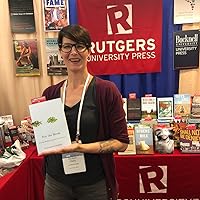
How redesigning your syllabus can transform your teaching, your classroom, and the way your students learn
Generations of teachers have built their classes around the course syllabus, a semester-long contract that spells out what each class meeting will focus on (readings, problem sets, case studies, experiments), and what the student has to turn in by a given date. But what does that way of thinking about the syllabus leave out--about our teaching and, more importantly, about our students' learning?
In Syllabus, William Germano and Kit Nicholls take a fresh look at this essential but almost invisible bureaucratic document and use it as a starting point for rethinking what students--and teachers--do. What if a teacher built a semester's worth of teaching and learning backward--starting from what students need to learn to do by the end of the term, and only then selecting and arranging the material students need to study?
Thinking through the lived moments of classroom engagement--what the authors call "coursetime"--becomes a way of striking a balance between improv and order. With fresh insights and concrete suggestions, Syllabus shifts the focus away from the teacher to the work and growth of students, moving the classroom closer to the genuinely collaborative learning community we all want to create.
William Germano is vice president and publishing director at Routledge. He has been editor in chief at Columbia University Press, where he also served as humanities editor.
If you want to read a 200-page teaching philosophy statement, you would do very well to consult this book. There are nuggets of utility, but they are buried under a mountain of passionate exhortations to JUST. TRY. HARDER. Spend more time thinking about each class period, spend more time thinking about how the assignments in your course are sequenced—do they build on one another—spend more time writing down how each class and each assignment worked, spend more time emailing students who don't show up to class, spend more time planning how peer-to-peer feedback will work, etc. etc.
The authors do acknowledge that many teachers in higher education don't have any time to spare, but whenever they do make this admission, they quickly pivot to an encomium to pedagogy such as, "For this moment, it's worth recovering, in the word professor, its original sense of professing belief. Teachers are believers first, instructors second" (46). Or, after a gratuitously complete disquisition on the various OED definitions of the verb "assign," this bit of earnest twaddle: "To be assigned is, in some ways, to become, to be granted a role and maybe even to be granted the fulfillment of a destiny" (109).
Teaching is hard enough without someone telling you how important it is. The people who don't already believe that are the people who will never bother picking up a book on pedagogy; for those of us who do believe in the importance of teaching, a few simple tips from experienced pros would be enough.
I'm so sorry I wasted my time and money on this nonsense. It's more of the crap that made me retire from teaching, and it's conspicuously short on specific examples (only W.H. Auden's syllabus is included--and it stands in stark contrast to the jargon-du-jour nonsense that fills the rest of the book).
This is a good pedagogy book to read before returning to in-person teaching this fall 2021. It's a good reminder to keep student learning front and center, and to change common practices as needed in order to keep students learning. The most useful chapters, to me, were 5 and 6.
I may be the wrong audience since I've been teaching for awhile. It felt like this book very lightly covered a lot of important elements of syllabus creation without getting into much detail or saying anything concretely useful. Definitely some good things, but could have been condensed.
I bought this book because I was expecting a theoretical or historical account of the syllabus as a genre -- what kind of document the syllabus is, how it's evolved over time, what controversies are associated with it, etc. But this book is really not about syllabi at all. Instead it's just a very basic introduction to teaching, in which the syllabus occasionally serves as a unifying theme. It seems to be intended for novice teachers, but I would hesitate to recommend this book even for that audience, because the authors fail to make any concrete recommendations or give any concrete examples. They say you should use your syllabus to do such-and-such, but they don't explain *how*, and they don't give any examples of syllabi or teaching practices that succeed in fulfilling their recommedations. For an experienced teacher like me, this book is a complete waste of time.
Just wonderful. Germano seamlessly weaves together his personal education philosophy -- which closely aligns with my own -- in a paean to the love/hated class syllabus.