

What do you think?

臺灣漫遊錄
「我們一起吃遍臺島吧!」──青山千鶴子(日本九州小說家)
「這個世間,再也沒有比自以為是的善意更難拒絕的燙手山芋了。」――美島愛三(臺灣總督府臺中市役所職員)
「我只說一次,聽好了。我不幫日本人做菜。」――阿盆師(漳州出身傳奇女總鋪師)
「帝國與支那的戰爭演變到現在──哎呀,未來的臺島,或許不需要翻譯家吧。」――王千鶴(公學校國語科教師)
【內容說明】
從瓜子、米篩目、麻薏湯,到生魚片、壽喜燒,再到鹹蛋糕、蜜豆冰,小說宛如一場筵席,將青山千鶴子來臺一年的春夏秋冬,寫進這場筵席裡,有臺式小點,有日式大菜,更有多元血統的料理,比如入境便隨之風味流轉的咖哩。在次第端上的菜色中,這位小說總舖師悄悄加入了幾味,那是人與人之間因背負著不同的生命文化而舌尖異化般的,難以描摹的滋味。
昭和十三年,青山千鶴子的半自傳小說《青春記》改編為電影在臺上映,在婦人團體日新會推廣之下反應熱烈,受邀來臺巡迴演講。青山千鶴子出身富紳家族,因母親早逝送往長崎分家養育,旅居臺中時,日新會推薦一位臺灣大家族庶出的女子王千鶴擔任通譯。在全然不同文化教養下長大的兩人,因而有機會一起遊歷縱貫鐵道沿線城市。她們曾經留宿臺北鐵道飯店、臺南鐵道飯店,甚或延伸搭乘糖鐵、地方支線,飽覽各城鎮風光。每至一處,街道攤販、駄菓子舖、𥴊仔店、喫茶店,或者洋食店、餐廳、旅館,走到哪裡吃到哪裡。這一趟縱貫鐵道美食之旅,實屬難得,是兩位女子相遇於婚姻之前,以自由凝佇的時光片刻。在味蕾滿足之餘,彼此交流了文化與思想,青山千鶴子才知道,曾任公學校教師的王千鶴,有著當翻譯家的願望。或許是身為女子的共鳴,青山千鶴子理解女性要擁有獨立的職涯極為不易,何況王千鶴並沒有雄厚的背景與家人的支持,便心生助其一臂之力的念頭。
然而,戰爭的嚴峻日漸逼來……兩人是否能如願走向自己希冀的命運?
絕版已久《臺灣漫遊錄》完整重譯版全新問世,有著傳奇性色彩。青山千鶴子返日後將旅臺期間的專欄「臺灣漫遊錄」改編為小說。透過她的眼睛,我們得以窺見日本帝國對待殖民地臺灣、日本內地人與臺灣本島人相處的第一手細節,乃至於當年男性之於女性命運的差異,女性做為一個獨立的個體,意欲擁有獨立的職業身分與思考,卻將面臨的種種困難與考驗。
「這個世間,再也沒有比自以為是的善意更難拒絕的燙手山芋了。」――美島愛三(臺灣總督府臺中市役所職員)
「我只說一次,聽好了。我不幫日本人做菜。」――阿盆師(漳州出身傳奇女總鋪師)
「帝國與支那的戰爭演變到現在──哎呀,未來的臺島,或許不需要翻譯家吧。」――王千鶴(公學校國語科教師)
【內容說明】
從瓜子、米篩目、麻薏湯,到生魚片、壽喜燒,再到鹹蛋糕、蜜豆冰,小說宛如一場筵席,將青山千鶴子來臺一年的春夏秋冬,寫進這場筵席裡,有臺式小點,有日式大菜,更有多元血統的料理,比如入境便隨之風味流轉的咖哩。在次第端上的菜色中,這位小說總舖師悄悄加入了幾味,那是人與人之間因背負著不同的生命文化而舌尖異化般的,難以描摹的滋味。
昭和十三年,青山千鶴子的半自傳小說《青春記》改編為電影在臺上映,在婦人團體日新會推廣之下反應熱烈,受邀來臺巡迴演講。青山千鶴子出身富紳家族,因母親早逝送往長崎分家養育,旅居臺中時,日新會推薦一位臺灣大家族庶出的女子王千鶴擔任通譯。在全然不同文化教養下長大的兩人,因而有機會一起遊歷縱貫鐵道沿線城市。她們曾經留宿臺北鐵道飯店、臺南鐵道飯店,甚或延伸搭乘糖鐵、地方支線,飽覽各城鎮風光。每至一處,街道攤販、駄菓子舖、𥴊仔店、喫茶店,或者洋食店、餐廳、旅館,走到哪裡吃到哪裡。這一趟縱貫鐵道美食之旅,實屬難得,是兩位女子相遇於婚姻之前,以自由凝佇的時光片刻。在味蕾滿足之餘,彼此交流了文化與思想,青山千鶴子才知道,曾任公學校教師的王千鶴,有著當翻譯家的願望。或許是身為女子的共鳴,青山千鶴子理解女性要擁有獨立的職涯極為不易,何況王千鶴並沒有雄厚的背景與家人的支持,便心生助其一臂之力的念頭。
然而,戰爭的嚴峻日漸逼來……兩人是否能如願走向自己希冀的命運?
絕版已久《臺灣漫遊錄》完整重譯版全新問世,有著傳奇性色彩。青山千鶴子返日後將旅臺期間的專欄「臺灣漫遊錄」改編為小說。透過她的眼睛,我們得以窺見日本帝國對待殖民地臺灣、日本內地人與臺灣本島人相處的第一手細節,乃至於當年男性之於女性命運的差異,女性做為一個獨立的個體,意欲擁有獨立的職業身分與思考,卻將面臨的種種困難與考驗。
368 pages, ebook
First published March 31, 2020
About the author
Yáng Shuāng-zǐ
9 books213 followersAssociated Names:
* Yáng Shuāng-zǐ
* 楊双子 (Traditional Chinese)
* Yáng Shuāng-zǐ
* 楊双子 (Traditional Chinese)
Ratings & Reviews
Friends & Following
Create a free account to discover what your friends think of this book!
Community Reviews
Displaying 1 - 30 of 4,425 reviews
![Profile Image for s.penkevich [hiatus-will return-miss you all].](https://i.gr-assets.com/images/S/compressed.photo.goodreads.com/users/1735525095i/6431467._UX200_CR0,11,200,200_.jpg)
November 21, 2024
‘When somebody’s offering you food, they’re telling you a story,’ food documentarian and chef Anthony Bourdain once said, ‘presumably, it's a proud reflection of their culture, their history, often a very tough history.’ Through the cuisine and cultural landscapes of pre-WWII Taiwan, Yáng Shuāng-zǐ’s Taiwan Travelogue begins to unfold a story where the relationship between women—a Japanese author and her Tawianese translator and guide—becomes a commentary on imperialism, power dynamics, and the ways even the best of intentions can betray an unconscious bias. A lot of food will be eaten along the way. Winner of the National Book Award for Translation, and rightfully so as Taiwan Travelogue is a metafictional marvel of fine-tuned precision and metaphor with a multitude of layers originally presented in Mandarin as a robust and modern retranslation by Yáng Shuāng-zǐ, forged from archival documents and earlier translations of a rediscovered 1954 Japanese novel by Aoyama Chizuko. Despite a bit of controversy (more on that in a bit), the approach opened another layer as a quandary around how fiction can reveal truths while simultaneous distorting it. This brilliant English translation by Lin King adds a further set of translator footnotes and gives Western audiences an opportunity to enjoy this breathtaking examination of food, culture, colonialism and the complexities of friendships across political divides where even those who pride themselves on progressive thinking find themselves causing harm.
‘Is there something good to eat around here?’
Guided by her local translator, Chizuru, whom she affectionately nicknames Chi-Chan due to their too-similar names in the Japanese, Aoyama Chizuko spends much of her time in Taiwan immersed in the local cuisine. Invited by the Taiwan government for a lecture tour on her novel and the subsequent film adaption of it, Aoyama aims to experience Taiwan like a local and Chi-Chan is happy to help in order to practice language before she will be married to a Japanese man (a “Mainlander”). But as the two begin to grow closer, Aoyama’s eagerness for friendship is often met with a resistance she can’t quite sort out. While the blurbs hinted at a queer romance, any queer desires here are rather subtle (but present) with the growing disconnect adding a texture of tension that chaffs into rather incisive socio-political commentary.
‘The idea of using my pen as a weapon for war – ha!’
Written as a culmination of her trip alongside travelogue pieces she was sending back home for publication in the Japanese press, the novel serves as a subversion to the aims of her government that wanted to use her trip to highlight the Empire and those under its rule. It serves as an excellent examination on the artist's role in society and how artists can, regrettably, become agents of propaganda.
This also sets up Aoyama’s perception of herself early on as one of progressive thinking, someone not afraid to criticize her own government and who is always wielding her voice to speak up on behalf of women. ‘When it comes to hurdles face by women, there is no distinction between Mainland and Island,’ she states, or ‘there is nothing I dislike more than social etiquette at the expense of reason,’ she says about her desire to never marry a man, and it is key to the novel that Aoyama is someone who finds herself as oppositional to oppressive forces and an ally to those under them. So it is inconceivable to her why Chi-chan resists considering each other friends, Chi-chan who’s professional face she describes like that of a ‘noh mask,’ or ‘the perfect seamless mask,’ where ‘behind the mask, Chi-chan’s heart was far away.’ This element of ‘something unreadable’ in her face is a rather delightful wordplay considering, due to cultural divide, Aoyama cannot read or speak Chi-chan’s language and that Chi-chan’s role as translator always gives her an upper hand.
‘Let me put it this way: had arrows showered down on us instead of flowers, I would have shielded Chi-chan’s body with my own.’
Translation is at the heart of this novel which is fictionalized as a rediscovered text that has now gone through multiple translations. Theres something playful about the format that includes footnotes from each translator, both the fictional ones and the “real” translator into the English, Lin King, who also adds to these layers and provides her own afterword along with the series of fictional afterwords. It’s like a matroyshka-doll of translation and metafiction, one that caused a bit of controversy when Yáng Shuāng-zǐ initially published it with Aoyama Chizuko listed as the author and herself as the translator. She quickly confessed to the mystery, though less over the confusion about it being a fake found text and more because of personal matters. Because Yáng Shuāng-zǐ is also not the author’s real name, but a shared pseudonym between Yang Ruoci (the author) and her sister Yang Ruohui who passed away just before Yang Ruoci began writing the novel and questions if Yang Ruohui was involved began to bother the family.
In an article from Open Book (it is unfortunately not in English and I had to use Google translated to read it), Yáng Shuāng-zǐ admits that there were clues hidden inside the text—such as a recurring character from her novels with her sister—that is was not a literary game not unlike Umberto Eco’s The Name of the Rose in which Eco claims it is merely his translation of a French translation of a Latin text written by an aging monk, Adso of Melk, in 14th-century Italy. Zhuang Ruilin, the editor-in-chief of Spring Mountain Publishing House who published the novel commented that ‘it is a great irony’ to take a fictional work and make a ‘moral question of whether it is deceptive or not’ (quotation translated with Google Translate). This parallels the questions the “translators” in the afterwords wrestle with about why Aoyama would choose to publish a fictional novel of her travels with Chizuro.
Sure, it is not a “true” story or rediscovered novel, but as Albert Camus once wrote ‘fiction is the lie through which we tell the truth.’ Or did he? While this quote is often cited as Camus, digging through the internet turns up no sources. A fictional quote, perhaps, but one that tells a sort of truth and has been harnessed for such a purpose even if it is, in fact, fiction (perhaps for the truth seekers we could use Pablo Picasso’s words ‘art is a lie that makes us realize truth’). Regardless, translator Lin King found the neta-structure made for ‘more room for translation,’ that allowed it to be more academic and precise as she said in an interview for Electric Literature.
Though there is another element that I found particularly engrossing in that the fictionalized “history” of the text having gone back and forth between languages opens a window of thought on how culture is translated, assimilated, or erased under colonialism or cultural transactions. As Annie Brisset writes in the essay Translation and Cultural Identity found in The Translation Studies Reader:
While I might not say “elevates,” it is indicative of how translation “reterritorializes” the language and, in terms of this novel where it moves between the languages of colonized and colonizers in the various fictional “translations,” it becomes a subtle commentary on the shifting of power and gaze. In her afterword, King sums this up quite effectively while discussing her communications with the Japanese translator of Taiwan Travelogue, Miura Yuko, to check her Japanese transliterations of names and places:
This is rather charming to me and is certainly a great argument for why this was deserving of the National Book Award in translation.
‘The absurd thing about humanity is that we only feel pain when we’re on the receiving end.’
Returning to the story, there is much culture embedded into the discussions on food. While I’m certain I missed much of it, not being very well versed in food in general, there are still some poignant moments such as the discussion on how curry was ‘an umbrella term that English colonizers had coined to refer to all Indian dishes that used a large number of spices,’ of the Taiwanese ingredient sandwiched between Japanese ones to form a new food that nudges the colonialism theme. Or discussions on how an additional cost of poverty is time as shown in the jute soup or homemade bah-sò. But once Aoyama begins saying things like ‘the Empire’s coercive methods are unpleasant, but the beautiful sakura are innocent of any crime,’ the reader starts to wonder if her progressive ideas might have blindspots where her enjoyment of the Japanese and Taiwanese fusion foods never cause her to pause and ask ‘do the Islanders take pleasure in these changes?’ Throughout the novel her insatiable appetite is described by her, lovingly, as her ‘monster,’ yet perhaps it also bears a metaphorical resemblance to imperialism:
Yet, when we witness the two women and their closeness, we also see how ‘the monster in my stomach had been starved not of food, but of love, of respect,’ and Chi-chan’s resistance to their friendship only exacerbates her agony.
‘What was the definition of friendship, anyhow? I had long lost sight of the answer.’
There is a real irony to Aoyama having stated early on that ‘the key lay in our awareness and our actions.’ What may be well meaning could come across poorly especially when there is an imbalance of power. ‘Taiwan was a fascinating place to observe in terms of the interplay between Japanese and local cultures,’ Aoyama observed, postulating that the ‘differences revealed their respective upbringings.’ Which could be arguably a commentary on how people displayed evidence of respective cultures, but as Mahzarin R. Banaji argues in the book Blindspot: Hidden Biases Of Good People:
Is it possible Aoyama, even in her criticisms of—and stated opposition to—imperialism, betrays an unconscious bias to give grace to colonial evidence when it doesn’t disrupt her worldview? And even when she admires the food and the ‘Island’s flavors,’ simply due to her status as part of the colonizing culture is it less ‘appreciating them for being delicious, but more for being exotic.’ Even her travelogue with the expressed intent of not promoting Empire is still ‘written sporadically and casually from the gaze of a Mainland traveler,’ something she inherently cannot escape (which gets into Edward W. Said’s arguments on why a culture should be given voice to explain itself instead of centering literature that has a colonial gaze). It is similar to the ways in which allyship gets criticized for either centering itself or falling into the trap of wanting to be an ally to the extent that they cannot tell where their unintentional blindspots can be harmful.
‘ The so-called wonderful things are only wonderful to Mainlanders.’
Things take quite a turn once the fissures of friendship are exposed. ‘I was but another citizen of the world with all its earthly flaws,’ she must admit, ‘unaware even of the subconscious conceit and prejudice in my heart.’ We begin to understand why Aoyama can be ‘quite an open book’ while Chi-chan must remain behind her ‘mask’ due to power structures beyond them as well as an employer/employee relationship they can’t bridge. Is Aoyama’s desire to give protection and aid a reflection on their real relationship or a desire to protect the idea of Chi-chan she has created in her gaze and ‘not the real me’ of Chi-chan’s own reality? In an interview, author Yang asks ‘if our values are so different, can we really be friends?’ regarding her Chinese friends in the present due to a political climate around them and wanted to express this in the novel. While the ending may be ‘too tragic a conclusion to draw,’ it feels real and jabs right at the heart of sorrow to better show how colonialism can put people at odds even when best intentions try to get past them.
“Even assistance offered out of goodwill is simply another form of arrogance–is that so?”
It took a moment before he replied through the smoke.
“There is nothing in the world more difficult to refuse than self-righteous goodwill.”
Returning to the words of Anthony Bourdain, ‘Food is everything we are. It's an extension of nationalist feeling, ethnic feeling, your personal history, your province, your region, your tribe, your grandma. It's inseparable from those from the get-go.’ A book that will certainly be a treat for foodies and readers with a penchant for subtle political commentary, Taiwan Travelogue is a brilliant exploration of what Bourdain expressed and how even a desire to appreciate food can bear the gaze of colonialism. It is all the more tragic when it interferes with the desires of the heart as well. I really enjoyed Taiwan Travelogue, both as a story and as an artifact of literature that manages to be a work of art and ideas beyond the mere words on the page. Brilliantly translated and wonderfully executed, this was a worthy award winner.
4.5/5
‘Is there something good to eat around here?’
Guided by her local translator, Chizuru, whom she affectionately nicknames Chi-Chan due to their too-similar names in the Japanese, Aoyama Chizuko spends much of her time in Taiwan immersed in the local cuisine. Invited by the Taiwan government for a lecture tour on her novel and the subsequent film adaption of it, Aoyama aims to experience Taiwan like a local and Chi-Chan is happy to help in order to practice language before she will be married to a Japanese man (a “Mainlander”). But as the two begin to grow closer, Aoyama’s eagerness for friendship is often met with a resistance she can’t quite sort out. While the blurbs hinted at a queer romance, any queer desires here are rather subtle (but present) with the growing disconnect adding a texture of tension that chaffs into rather incisive socio-political commentary.
‘The idea of using my pen as a weapon for war – ha!’
Written as a culmination of her trip alongside travelogue pieces she was sending back home for publication in the Japanese press, the novel serves as a subversion to the aims of her government that wanted to use her trip to highlight the Empire and those under its rule. It serves as an excellent examination on the artist's role in society and how artists can, regrettably, become agents of propaganda.
‘The Empire’s Southern Expansion Movement and so-called National Spirit Mobilization Movement had taken shape as imperial assimilation movements here in the colonies. Were they not, in essence, brute acts of erasing the distinctions of individual cultures? I couldn’t help but feel resistance and disgust whenever I considered the matter seriously.’
This also sets up Aoyama’s perception of herself early on as one of progressive thinking, someone not afraid to criticize her own government and who is always wielding her voice to speak up on behalf of women. ‘When it comes to hurdles face by women, there is no distinction between Mainland and Island,’ she states, or ‘there is nothing I dislike more than social etiquette at the expense of reason,’ she says about her desire to never marry a man, and it is key to the novel that Aoyama is someone who finds herself as oppositional to oppressive forces and an ally to those under them. So it is inconceivable to her why Chi-chan resists considering each other friends, Chi-chan who’s professional face she describes like that of a ‘noh mask,’ or ‘the perfect seamless mask,’ where ‘behind the mask, Chi-chan’s heart was far away.’ This element of ‘something unreadable’ in her face is a rather delightful wordplay considering, due to cultural divide, Aoyama cannot read or speak Chi-chan’s language and that Chi-chan’s role as translator always gives her an upper hand.
‘Let me put it this way: had arrows showered down on us instead of flowers, I would have shielded Chi-chan’s body with my own.’
Translation is at the heart of this novel which is fictionalized as a rediscovered text that has now gone through multiple translations. Theres something playful about the format that includes footnotes from each translator, both the fictional ones and the “real” translator into the English, Lin King, who also adds to these layers and provides her own afterword along with the series of fictional afterwords. It’s like a matroyshka-doll of translation and metafiction, one that caused a bit of controversy when Yáng Shuāng-zǐ initially published it with Aoyama Chizuko listed as the author and herself as the translator. She quickly confessed to the mystery, though less over the confusion about it being a fake found text and more because of personal matters. Because Yáng Shuāng-zǐ is also not the author’s real name, but a shared pseudonym between Yang Ruoci (the author) and her sister Yang Ruohui who passed away just before Yang Ruoci began writing the novel and questions if Yang Ruohui was involved began to bother the family.
In an article from Open Book (it is unfortunately not in English and I had to use Google translated to read it), Yáng Shuāng-zǐ admits that there were clues hidden inside the text—such as a recurring character from her novels with her sister—that is was not a literary game not unlike Umberto Eco’s The Name of the Rose in which Eco claims it is merely his translation of a French translation of a Latin text written by an aging monk, Adso of Melk, in 14th-century Italy. Zhuang Ruilin, the editor-in-chief of Spring Mountain Publishing House who published the novel commented that ‘it is a great irony’ to take a fictional work and make a ‘moral question of whether it is deceptive or not’ (quotation translated with Google Translate). This parallels the questions the “translators” in the afterwords wrestle with about why Aoyama would choose to publish a fictional novel of her travels with Chizuro.
‘A novel is a piece of amber, one that coagulates both the “real” past and the “made-up” ideals. It is something that can be visited again and again in its unparalleled beauty.’
Sure, it is not a “true” story or rediscovered novel, but as Albert Camus once wrote ‘fiction is the lie through which we tell the truth.’ Or did he? While this quote is often cited as Camus, digging through the internet turns up no sources. A fictional quote, perhaps, but one that tells a sort of truth and has been harnessed for such a purpose even if it is, in fact, fiction (perhaps for the truth seekers we could use Pablo Picasso’s words ‘art is a lie that makes us realize truth’). Regardless, translator Lin King found the neta-structure made for ‘more room for translation,’ that allowed it to be more academic and precise as she said in an interview for Electric Literature.
‘Because there was already a “translator” in the story, the structure allowed me to interject myself as a translator in the text in a way that’s not normally done in English-language translations, where there tends to be an emphasis on “seamlessness” that makes readers forget that they’re reading a translation at all.
Though there is another element that I found particularly engrossing in that the fictionalized “history” of the text having gone back and forth between languages opens a window of thought on how culture is translated, assimilated, or erased under colonialism or cultural transactions. As Annie Brisset writes in the essay Translation and Cultural Identity found in The Translation Studies Reader:
‘Translation becomes an act of reclaiming, of recentering of the identity, a reterritorialozing operation. It does not create a new language, but it elevates a dialect to the status of a National and cultural language.’
While I might not say “elevates,” it is indicative of how translation “reterritorializes” the language and, in terms of this novel where it moves between the languages of colonized and colonizers in the various fictional “translations,” it becomes a subtle commentary on the shifting of power and gaze. In her afterword, King sums this up quite effectively while discussing her communications with the Japanese translator of Taiwan Travelogue, Miura Yuko, to check her Japanese transliterations of names and places:
‘A Taiwanese translator, while bringing the book to the ultimate colonial language of English, has struggled to determine how the Japanese colonial government would have pronounced Taiwanese terms and therefore consulted the Japanese translation of a Taiwanese novel that claims to be a Taiwanese translation of a Japanese novel.’
This is rather charming to me and is certainly a great argument for why this was deserving of the National Book Award in translation.
‘The absurd thing about humanity is that we only feel pain when we’re on the receiving end.’
Returning to the story, there is much culture embedded into the discussions on food. While I’m certain I missed much of it, not being very well versed in food in general, there are still some poignant moments such as the discussion on how curry was ‘an umbrella term that English colonizers had coined to refer to all Indian dishes that used a large number of spices,’ of the Taiwanese ingredient sandwiched between Japanese ones to form a new food that nudges the colonialism theme. Or discussions on how an additional cost of poverty is time as shown in the jute soup or homemade bah-sò. But once Aoyama begins saying things like ‘the Empire’s coercive methods are unpleasant, but the beautiful sakura are innocent of any crime,’ the reader starts to wonder if her progressive ideas might have blindspots where her enjoyment of the Japanese and Taiwanese fusion foods never cause her to pause and ask ‘do the Islanders take pleasure in these changes?’ Throughout the novel her insatiable appetite is described by her, lovingly, as her ‘monster,’ yet perhaps it also bears a metaphorical resemblance to imperialism:
‘Whenever I start craving something, anything, my stomach burns with this insatiable greed until I get my hands on whatever it is. That’s the monster in me.’
Yet, when we witness the two women and their closeness, we also see how ‘the monster in my stomach had been starved not of food, but of love, of respect,’ and Chi-chan’s resistance to their friendship only exacerbates her agony.
‘What was the definition of friendship, anyhow? I had long lost sight of the answer.’
There is a real irony to Aoyama having stated early on that ‘the key lay in our awareness and our actions.’ What may be well meaning could come across poorly especially when there is an imbalance of power. ‘Taiwan was a fascinating place to observe in terms of the interplay between Japanese and local cultures,’ Aoyama observed, postulating that the ‘differences revealed their respective upbringings.’ Which could be arguably a commentary on how people displayed evidence of respective cultures, but as Mahzarin R. Banaji argues in the book Blindspot: Hidden Biases Of Good People:
‘You don't choose to make positive associations with the dominant group, but you are required to. All around you, that group is being paired with good things. You open the newspaper and you turn on the television, and you can't escape it.’
Is it possible Aoyama, even in her criticisms of—and stated opposition to—imperialism, betrays an unconscious bias to give grace to colonial evidence when it doesn’t disrupt her worldview? And even when she admires the food and the ‘Island’s flavors,’ simply due to her status as part of the colonizing culture is it less ‘appreciating them for being delicious, but more for being exotic.’ Even her travelogue with the expressed intent of not promoting Empire is still ‘written sporadically and casually from the gaze of a Mainland traveler,’ something she inherently cannot escape (which gets into Edward W. Said’s arguments on why a culture should be given voice to explain itself instead of centering literature that has a colonial gaze). It is similar to the ways in which allyship gets criticized for either centering itself or falling into the trap of wanting to be an ally to the extent that they cannot tell where their unintentional blindspots can be harmful.
‘ The so-called wonderful things are only wonderful to Mainlanders.’
Things take quite a turn once the fissures of friendship are exposed. ‘I was but another citizen of the world with all its earthly flaws,’ she must admit, ‘unaware even of the subconscious conceit and prejudice in my heart.’ We begin to understand why Aoyama can be ‘quite an open book’ while Chi-chan must remain behind her ‘mask’ due to power structures beyond them as well as an employer/employee relationship they can’t bridge. Is Aoyama’s desire to give protection and aid a reflection on their real relationship or a desire to protect the idea of Chi-chan she has created in her gaze and ‘not the real me’ of Chi-chan’s own reality? In an interview, author Yang asks ‘if our values are so different, can we really be friends?’ regarding her Chinese friends in the present due to a political climate around them and wanted to express this in the novel. While the ending may be ‘too tragic a conclusion to draw,’ it feels real and jabs right at the heart of sorrow to better show how colonialism can put people at odds even when best intentions try to get past them.
“Even assistance offered out of goodwill is simply another form of arrogance–is that so?”
It took a moment before he replied through the smoke.
“There is nothing in the world more difficult to refuse than self-righteous goodwill.”
Returning to the words of Anthony Bourdain, ‘Food is everything we are. It's an extension of nationalist feeling, ethnic feeling, your personal history, your province, your region, your tribe, your grandma. It's inseparable from those from the get-go.’ A book that will certainly be a treat for foodies and readers with a penchant for subtle political commentary, Taiwan Travelogue is a brilliant exploration of what Bourdain expressed and how even a desire to appreciate food can bear the gaze of colonialism. It is all the more tragic when it interferes with the desires of the heart as well. I really enjoyed Taiwan Travelogue, both as a story and as an artifact of literature that manages to be a work of art and ideas beyond the mere words on the page. Brilliantly translated and wonderfully executed, this was a worthy award winner.
4.5/5
April 7, 2026
Novels like this are difficult to rate because they use a clever, almost deceptive approach to tackle heavy themes. In this book, the line between fact and fiction is so meticulously blurred that you have to actively unlearn the narrator’s sense of superiority within the text just to uncover the truth.
Taiwan Travelogue comes across as a metafictional masquerade that disguises itself as a rediscovered historical artifact. Although written by Yang Shuang-zi in 2020, the book is framed as a ‘found’ Japanese travelogue from 1938, passed down through decades of fictional translations and academic notes. By layering the story with fake and contradictory afterwords and footnotes, Yang forces us to act as detectives, questioning the bias of the fictional Japanese author, Aoyama, and searching for the truths buried beneath the colonial narrative. It is essentially a story-within-a-story that uses a fake history to reveal how power, memory, and language actually shaped Taiwan’s past.
The relationship between Aoyama and her Taiwanese interpreter, Chien-ho, is what makes this so intriguing. For those aware of Taiwan’s history under Japanese colonisation, seeing the oppressor and the oppressed in this bittersweet, amiable, yet distant relationship is fascinating. Initially, Aoyama views Taiwan as a beautifully rich island; she admires the food and culture, yet remains intellectually arrogant and self-righteous. She condemns Japan’s military expansion while simultaneously commending them for ‘improving’ Taiwanese cuisine. However, this isn’t poor characterisation — it is an incisive analysis of the ‘polite coloniser’ which, I believe, is found in many other occupied nations.
In this world, food is politics. A newly renovated temple with Japanese lanterns isn’t just architecture, it becomes a dreaded symbol for the local Taiwanese. Cherry blossoms on a foreign island aren't just aesthetic, they are a reminder of home for the coloniser, but a reminder of being owned for the colonised. We don’t even get to see Chien-ho’s perspective until years later, when she acts as a translator for Aoyama’s published travelogue. There, another reality unfolds, forcing us to ask: how much of Aoyama’s account was real? To what extent was the record merely a biased performance?
Had it not been for Aoyama’s arrogance, perhaps their relationship wouldn't have been so fractured. Yet, in this narrative of contradictions, we are reminded that history is often just a one-sided memory, translated by those in power while completely omitting the voices of those who were treated as guests in their own home.
4.2 stars
Taiwan Travelogue comes across as a metafictional masquerade that disguises itself as a rediscovered historical artifact. Although written by Yang Shuang-zi in 2020, the book is framed as a ‘found’ Japanese travelogue from 1938, passed down through decades of fictional translations and academic notes. By layering the story with fake and contradictory afterwords and footnotes, Yang forces us to act as detectives, questioning the bias of the fictional Japanese author, Aoyama, and searching for the truths buried beneath the colonial narrative. It is essentially a story-within-a-story that uses a fake history to reveal how power, memory, and language actually shaped Taiwan’s past.
The relationship between Aoyama and her Taiwanese interpreter, Chien-ho, is what makes this so intriguing. For those aware of Taiwan’s history under Japanese colonisation, seeing the oppressor and the oppressed in this bittersweet, amiable, yet distant relationship is fascinating. Initially, Aoyama views Taiwan as a beautifully rich island; she admires the food and culture, yet remains intellectually arrogant and self-righteous. She condemns Japan’s military expansion while simultaneously commending them for ‘improving’ Taiwanese cuisine. However, this isn’t poor characterisation — it is an incisive analysis of the ‘polite coloniser’ which, I believe, is found in many other occupied nations.
In this world, food is politics. A newly renovated temple with Japanese lanterns isn’t just architecture, it becomes a dreaded symbol for the local Taiwanese. Cherry blossoms on a foreign island aren't just aesthetic, they are a reminder of home for the coloniser, but a reminder of being owned for the colonised. We don’t even get to see Chien-ho’s perspective until years later, when she acts as a translator for Aoyama’s published travelogue. There, another reality unfolds, forcing us to ask: how much of Aoyama’s account was real? To what extent was the record merely a biased performance?
Had it not been for Aoyama’s arrogance, perhaps their relationship wouldn't have been so fractured. Yet, in this narrative of contradictions, we are reminded that history is often just a one-sided memory, translated by those in power while completely omitting the voices of those who were treated as guests in their own home.
4.2 stars
March 17, 2026
NOW WINNER OF THE INTERNATIONAL BOOKER PRIZE 2025
Not my favourite choice, it was actually the 5 out 6 in my preferences. I never seem to guess or to like the winner (with few exceptions such as Diop). However, thorough this prize I found a few of my favourite writers: Labatut, Sagasti, Melchor etc.
Shortlisted for the International Booker Prize 2026 Book 1/6
Book 1/13 of the Longlist
Novel translated into English from Mandarin by Lin king
Audiobook narrated by Sarah Skaer
I think I can sum up the novel in one sentence: a Taiwanese cookbook sprinkled with musings about colonialism, unequal power dynamics and spiced with a little queer love story. I am a big foodie, but even for me , there was way too much page count about all the dishes you can find in Taiwan, complete with the recipe. It made me hungry at first, but later I just wanted to get to the other subjects the author discusses.
Taiwan Travelogue is set in 19358, before WW2, when the island was part of Japan. The novel is presented as a translation of a long lost novel written by Aoyama Chizuko. The book includes Translation notes and a forward to the Mandarin or Japanese editions, which are all imagined. The novel was written in 2020 by the 2 Taiwanese twin sisters, collectively known as Yáng Shuāng-zǐ. Unfortunately one of the sisters has passed away.
To go back to the plot, Aoyama Chizuko is a young Japanese famous writer, who decides to travel to Taiwan for a year and to write a book about what she experiences there. Her sponsors offers her a local interpreter and guide, Chizuru, nicknamed Chi Chan by the writer. Chizuko tries to befriend Chi Chan, but encounters resistance instead. It becomes slowly clear that they are not equal in the eyes of the society and that will plague their relationship. Even if good intentioned, the author cannot escape prejudice, and many times comes out as a bit ignorant. The character will grow as the novel progresses, so I suppose the fact that she was very annoying in the beginning was intentional.
I changed my idea about the audiobook. I initially thought the narration was quite good. I appreciated that I got the learn the pronunciations correctly. The narrator is specialised in Japanese novels, so I hope she researched her work well. After some thought, I relasied that one thing that annoyed me about the novel, was the infantilised voice of the narrator. I ma not sure if it was intentional, but it was annoying. Another drawback of the audiobook is that it was incomplete. It does not contain the above mentioned fake translation notes and forwards, which I considered that made the novel more interesting. Actually, it gave meaning to the whole book, so i think it was a mistake to cut those parts. I am glad I also had the print version and realised they were missing from the narration.
Not my favourite choice, it was actually the 5 out 6 in my preferences. I never seem to guess or to like the winner (with few exceptions such as Diop). However, thorough this prize I found a few of my favourite writers: Labatut, Sagasti, Melchor etc.
Shortlisted for the International Booker Prize 2026 Book 1/6
Book 1/13 of the Longlist
Novel translated into English from Mandarin by Lin king
Audiobook narrated by Sarah Skaer
I think I can sum up the novel in one sentence: a Taiwanese cookbook sprinkled with musings about colonialism, unequal power dynamics and spiced with a little queer love story. I am a big foodie, but even for me , there was way too much page count about all the dishes you can find in Taiwan, complete with the recipe. It made me hungry at first, but later I just wanted to get to the other subjects the author discusses.
Taiwan Travelogue is set in 19358, before WW2, when the island was part of Japan. The novel is presented as a translation of a long lost novel written by Aoyama Chizuko. The book includes Translation notes and a forward to the Mandarin or Japanese editions, which are all imagined. The novel was written in 2020 by the 2 Taiwanese twin sisters, collectively known as Yáng Shuāng-zǐ. Unfortunately one of the sisters has passed away.
To go back to the plot, Aoyama Chizuko is a young Japanese famous writer, who decides to travel to Taiwan for a year and to write a book about what she experiences there. Her sponsors offers her a local interpreter and guide, Chizuru, nicknamed Chi Chan by the writer. Chizuko tries to befriend Chi Chan, but encounters resistance instead. It becomes slowly clear that they are not equal in the eyes of the society and that will plague their relationship. Even if good intentioned, the author cannot escape prejudice, and many times comes out as a bit ignorant. The character will grow as the novel progresses, so I suppose the fact that she was very annoying in the beginning was intentional.
I changed my idea about the audiobook. I initially thought the narration was quite good. I appreciated that I got the learn the pronunciations correctly. The narrator is specialised in Japanese novels, so I hope she researched her work well. After some thought, I relasied that one thing that annoyed me about the novel, was the infantilised voice of the narrator. I ma not sure if it was intentional, but it was annoying. Another drawback of the audiobook is that it was incomplete. It does not contain the above mentioned fake translation notes and forwards, which I considered that made the novel more interesting. Actually, it gave meaning to the whole book, so i think it was a mistake to cut those parts. I am glad I also had the print version and realised they were missing from the narration.

February 1, 2025
brilliant. a nesting-doll examination of colonial power, deceptively wrapped up in a simple fanfic-like story of two girls eating, reading, and flirting. kudos to the translator—"a taiwanese translator brings the book to the ultimate colonial language of english by consulting the japanese translation of a taiwanese novel that claims to be a taiwanese translation of a japanese novel"

March 7, 2026
I feel so sad to say but I found this so boring and dull. There was no sense of character or chemistry between the two main women in the novel which is why I was really excited to read it. Their relationship felt quite flat and I think this was due to the quite conservative writing style which didn’t really move of captivate me. The endless descriptions of food got quite boring and the book feels quite bloated - I wish it had more of a plot and more of a focus on the two women with some of the unnecessary parts cut out. The ending I did like and the use of meta fiction was really interesting, especially the layers of translation, but I did overall find this book to be quite disappointing and difficult to keep pushing through.

June 11, 2024
If you love my reviews, I’d love for you to support my bookstagram, where I make fun book recs to help you discover new releases and translated literature!
https://www.instagram.com/ambershelf/
I read this book first in Mandarin. And then I read the English translation (ARC kindly gifted by the publisher) very slowly while comparing to the mandarin version.
This is a brilliant, if not somewhat confusing (in the best way), metafiction. If you’d prefer to figure out the structure of what is real or not yourself, please don’t read the following. From my discussions with fellow readers who’ve read the English translation, I feel it might be helpful to explain the structure of the book, if not at the expense of potentially spoiling the fun.
TAIWAN TRAVELOGUE is metafiction at its finest. In the original mandarin version, it’s disguised as a lost Japanese novel set pre WW2 in Taiwan during Japanese colonization that is retranslated into Mandarin by a Taiwanese author. Therefore, there is a foreword and multiple “translator’s notes”—which again, are all fake and written by Yang alone. In the English version, the last translator’s notes penned by Lin King is the only actual translator’s notes (as she’s the one who translated the texts from mandarin to English).
So why the layers of disguise? Apparently in the first edition published in Taiwan, there’s quite an uproar as some people purchased TAIWAN TRAVELOGUE thinking it’s nonfiction translated from Japanese. And the fact that it’s fictional makes things feel “less genuine.” Yang brilliantly uses this meta fictional structure to ask the readers to confront their biases. Why would one consider a travelogue written through the eyes of the colonizer more “authentic”? In the later (fake) “translator’s notes”, Yang also incorporates the changing Taiwanese political landscape as yet another layer of why some texts might be left out. This raises the question of what is real and what is not. And perhaps the most important perspective that books, regardless of fictional or not, is always written through some biases.
Another aspect of TAIWAN TRAVELOGUE I absolutely adore is the discussions about power dynamics that digs deeper beyond the overwritten tropes of colonization vs subjugation through physical violence. Yang writes a beautiful and delicate tale about two good natured women who want to form a deep friendship through food and adventures. Can they be true friends? This sentence beautifully sums up how subtle and delicate power imbalances can be, “There is nothing in the world more difficult to refuse than self-righteous goodwill.” If there can never be true friendship between the oppressed and oppressor, what else can there be? Yang doesn’t give us a direct answer, but encourages the readers to consider other possibilities than an us vs them binary.
One can tell how much research Yang did in incorporating historical Taiwanese food and culture. The immersive food writing evokes a deep sense of nostalgia in me, and made me so incredibly hungry! If you’re a foodie, TAIWAN TRAVELOGUE will for sure make your mouth water. I read an interview of Yang where she mentioned the title of each chapter—Taiwanese food—can still all be found in present day Taiwan. I love the considerations she gives to such details, and can’t wait to embark on my own Taiwan food tour.
You can read more about the interview in mandarin here: https://www.openbook.org.tw/article/p...
This is a brilliantly profound work of literature that I think will suit any reader. Those who just want to have fun time reading about historical Taiwan, those who enjoy food writing, those who love books that play with structure and make you doubt what you’ve read, those who love themes of power imbalance in relationships but are a tad tired of the white man x woman of color tropes 🤣
Now longlisted for the NBA translated lit, I can see TAIWAN TRAVELOGUE winning the prize for its unique structure, themes of authenticity/objectivity in literature, and King’s fantastic translation—which requires her to know THREE languages, Taiwanese, Mandarin, and Japanese!
https://www.instagram.com/ambershelf/
I read this book first in Mandarin. And then I read the English translation (ARC kindly gifted by the publisher) very slowly while comparing to the mandarin version.
This is a brilliant, if not somewhat confusing (in the best way), metafiction. If you’d prefer to figure out the structure of what is real or not yourself, please don’t read the following. From my discussions with fellow readers who’ve read the English translation, I feel it might be helpful to explain the structure of the book, if not at the expense of potentially spoiling the fun.
TAIWAN TRAVELOGUE is metafiction at its finest. In the original mandarin version, it’s disguised as a lost Japanese novel set pre WW2 in Taiwan during Japanese colonization that is retranslated into Mandarin by a Taiwanese author. Therefore, there is a foreword and multiple “translator’s notes”—which again, are all fake and written by Yang alone. In the English version, the last translator’s notes penned by Lin King is the only actual translator’s notes (as she’s the one who translated the texts from mandarin to English).
So why the layers of disguise? Apparently in the first edition published in Taiwan, there’s quite an uproar as some people purchased TAIWAN TRAVELOGUE thinking it’s nonfiction translated from Japanese. And the fact that it’s fictional makes things feel “less genuine.” Yang brilliantly uses this meta fictional structure to ask the readers to confront their biases. Why would one consider a travelogue written through the eyes of the colonizer more “authentic”? In the later (fake) “translator’s notes”, Yang also incorporates the changing Taiwanese political landscape as yet another layer of why some texts might be left out. This raises the question of what is real and what is not. And perhaps the most important perspective that books, regardless of fictional or not, is always written through some biases.
Another aspect of TAIWAN TRAVELOGUE I absolutely adore is the discussions about power dynamics that digs deeper beyond the overwritten tropes of colonization vs subjugation through physical violence. Yang writes a beautiful and delicate tale about two good natured women who want to form a deep friendship through food and adventures. Can they be true friends? This sentence beautifully sums up how subtle and delicate power imbalances can be, “There is nothing in the world more difficult to refuse than self-righteous goodwill.” If there can never be true friendship between the oppressed and oppressor, what else can there be? Yang doesn’t give us a direct answer, but encourages the readers to consider other possibilities than an us vs them binary.
One can tell how much research Yang did in incorporating historical Taiwanese food and culture. The immersive food writing evokes a deep sense of nostalgia in me, and made me so incredibly hungry! If you’re a foodie, TAIWAN TRAVELOGUE will for sure make your mouth water. I read an interview of Yang where she mentioned the title of each chapter—Taiwanese food—can still all be found in present day Taiwan. I love the considerations she gives to such details, and can’t wait to embark on my own Taiwan food tour.
You can read more about the interview in mandarin here: https://www.openbook.org.tw/article/p...
This is a brilliantly profound work of literature that I think will suit any reader. Those who just want to have fun time reading about historical Taiwan, those who enjoy food writing, those who love books that play with structure and make you doubt what you’ve read, those who love themes of power imbalance in relationships but are a tad tired of the white man x woman of color tropes 🤣
Now longlisted for the NBA translated lit, I can see TAIWAN TRAVELOGUE winning the prize for its unique structure, themes of authenticity/objectivity in literature, and King’s fantastic translation—which requires her to know THREE languages, Taiwanese, Mandarin, and Japanese!
August 4, 2026
Long par moments mais ce livre transpire d’intelligence, d’humour et d’histoire
Trop trop belle réflexion sur nos sociétés post-coloniales et la façon dont nous regardons les anciennes colonies
C’était passionnant et je suis dans l’obligation d’aller à Taïwan pour goûter tous les plats cités
Trop trop belle réflexion sur nos sociétés post-coloniales et la façon dont nous regardons les anciennes colonies
C’était passionnant et je suis dans l’obligation d’aller à Taïwan pour goûter tous les plats cités

April 23, 2026
When I started reading Taiwan Travelogue, it reminded me of a slice of life manga. Characters move through richly detailed scenes, led by food, travel, and fleeting encounters. The Japanese novelist Chizuru Aoyama comes to colonial Taiwan in search of experience, tastes, and feelings, something she cannot quite name. Still, whatever she’s after, it has to be real and authentic.
Aoyama turns out to be a glutton not only for food but also for sensations, new experiences, and people. She reminded me of Kaonashi (No-Face) from Spirited Away: seemingly harmless at first, yet driven by an incessant, all-consuming hunger.
My gluttony isn’t limited to exquisite or expensive foods either - whenever I start craving something, anything, my stomach burns with this insatiable greed until I get my hands on whatever it is. That’s the monster in me.
She is guided by a Taiwanese woman with a similar name, Ông Tshian-hóh (Ō Chizuru in Japanese), whom she affectionately calls Chi-chan, at least at first for that reason. As they travel together, their bond deepens, but Aoyama starts to sense a strange resistance from Chi-chan. This resistance becomes more obvious to the reader, even if Aoyama doesn’t fully understand it herself.
Aoyama wants to see Taiwan through the eyes of a local. She speaks out against imperialism, sexism, and other injustices, but in a very selective way, basically one that suits her agenda and personal tastes, whether it comes to cuisine or her petite guide. Her curiosity is genuine, yet it is also shaped by entitlement, by a need to consume and possess what fascinates her.
There is nothing in the world more difficult to refuse than self-righteous goodwill.
The story balances playful banter between characters and subtle, meaningful undertones. Under this manga-ish, lightweight facade, the novel unfolds through metafiction, translation, and shifting narrative frames. Imagine something like W. G. Sebald in conversation with Banana Yoshimoto.
Taiwan Travelogue frames itself as a “found artefact” translated from Japanese, whereas in fact it was written in Mandarin Chinese and translated into English and Japanese (and has indeed been a popular book there). So, with this double or triple translation layering in mind, it creates a fascinating effect: at times, I found the prose slightly stiff, as if filtered through an imagined Japanese original. Yet, after all, I didn’t feel like it was a flaw but rather a deliberate creative texture.
What a task for a translator! Japanese uses different levels of formality, so the translator had to decide which one Aoyama would use in each scene. This adds another layer of guessing: who is Aoyama at any given moment? Or how does she express herself? Most of the Taiwanese place names are given in Japanese, probably to reflect Aoyama’s native language and the language of the coloniser.
The book’s world really comes alive in its footnotes, especially when read alongside the main text. They expand, contradict, and complicate what’s on the page, while the editor’s and translator’s notes add yet another interpretive layer.
Is there something good to eat around here?
Food is everywhere, and it is never just food. Taiwan’s layered colonial history is reflected in its cuisine: each ruling power attempts to impose its own culture, to overwrite what came before. Yet food resists erasure. It becomes an archive, an accumulation of histories that cannot be fully suppressed.
Each chapter is named after a dish, and the culinary scenes are descriptive, but I didn’t find them to be random at all. They are lush, precise, and deeply embedded in the narrative. The way something is prepared, the ingredients used or obtained, and the act of eating itself, all reflect shifts in culture, power, and identity. And since we are travelling and some of us are writing a travelogue, places and landscapes also play an important part here. I enjoyed returning to the map of Taiwan at the beginning of the novel. Even more intriguingly, at times, food mirrors emotional states, and at others, it reveals what remains unsaid.
There is also a strong suggestive tension between Aoyama and Chi-chan. Aoyama’s appetite extends beyond the culinary, she seems to crave not only Taiwan but also her petite guide. The novel never states this directly, yet certain gestures and moments of consumption are very evocative and carry an unmistakable charge. Desire begins to echo colonial logic here: the impulse to take in, to absorb, to possess. Chi-chan, meanwhile, remains more elusive. To Aoyama, she is at first almost angelic, then increasingly demonic and unreadable “like wearing a Noh mask.” Only gradually does something of her interiority begin to surface.
Both women are also very knowledgeable about classical poetry, and although the meaning or connections sometimes went over my head, these allusions add another layer of resonance.
Leaving behind a home environment where one’s habits have settled into old, tired ways and spending one’s days somewhere else, trying to find some feeling in the mere act of being alive in this world. In this sense, travelling is a way of cleansing one’s body and mind - starting afresh.
Life has been but a dream to me. Eyes that could not see; ears that could not hear. Such had been my state of being.
Perhaps I encountered Taiwan Travelogue at the right moment in my life, but it resonated deeply with me. For anyone shaped by histories of conflict, its undeniable tensions, its negotiations of power, identity, and memory linger long after the final page.
Novel is a piece of amber, one that coagulates both the “real” past and the “made-up” ideals. It is something that can be visited again and again in its unparalleled beauty.
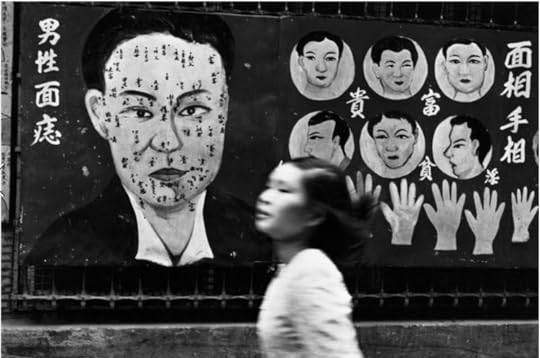
Photography by Chang Chao-Tang
4.5/5 Not quite a perfect five, but one that lingers.
Aoyama turns out to be a glutton not only for food but also for sensations, new experiences, and people. She reminded me of Kaonashi (No-Face) from Spirited Away: seemingly harmless at first, yet driven by an incessant, all-consuming hunger.
My gluttony isn’t limited to exquisite or expensive foods either - whenever I start craving something, anything, my stomach burns with this insatiable greed until I get my hands on whatever it is. That’s the monster in me.
She is guided by a Taiwanese woman with a similar name, Ông Tshian-hóh (Ō Chizuru in Japanese), whom she affectionately calls Chi-chan, at least at first for that reason. As they travel together, their bond deepens, but Aoyama starts to sense a strange resistance from Chi-chan. This resistance becomes more obvious to the reader, even if Aoyama doesn’t fully understand it herself.
Aoyama wants to see Taiwan through the eyes of a local. She speaks out against imperialism, sexism, and other injustices, but in a very selective way, basically one that suits her agenda and personal tastes, whether it comes to cuisine or her petite guide. Her curiosity is genuine, yet it is also shaped by entitlement, by a need to consume and possess what fascinates her.
There is nothing in the world more difficult to refuse than self-righteous goodwill.
The story balances playful banter between characters and subtle, meaningful undertones. Under this manga-ish, lightweight facade, the novel unfolds through metafiction, translation, and shifting narrative frames. Imagine something like W. G. Sebald in conversation with Banana Yoshimoto.
Taiwan Travelogue frames itself as a “found artefact” translated from Japanese, whereas in fact it was written in Mandarin Chinese and translated into English and Japanese (and has indeed been a popular book there). So, with this double or triple translation layering in mind, it creates a fascinating effect: at times, I found the prose slightly stiff, as if filtered through an imagined Japanese original. Yet, after all, I didn’t feel like it was a flaw but rather a deliberate creative texture.
What a task for a translator! Japanese uses different levels of formality, so the translator had to decide which one Aoyama would use in each scene. This adds another layer of guessing: who is Aoyama at any given moment? Or how does she express herself? Most of the Taiwanese place names are given in Japanese, probably to reflect Aoyama’s native language and the language of the coloniser.
The book’s world really comes alive in its footnotes, especially when read alongside the main text. They expand, contradict, and complicate what’s on the page, while the editor’s and translator’s notes add yet another interpretive layer.
Is there something good to eat around here?
Food is everywhere, and it is never just food. Taiwan’s layered colonial history is reflected in its cuisine: each ruling power attempts to impose its own culture, to overwrite what came before. Yet food resists erasure. It becomes an archive, an accumulation of histories that cannot be fully suppressed.
Each chapter is named after a dish, and the culinary scenes are descriptive, but I didn’t find them to be random at all. They are lush, precise, and deeply embedded in the narrative. The way something is prepared, the ingredients used or obtained, and the act of eating itself, all reflect shifts in culture, power, and identity. And since we are travelling and some of us are writing a travelogue, places and landscapes also play an important part here. I enjoyed returning to the map of Taiwan at the beginning of the novel. Even more intriguingly, at times, food mirrors emotional states, and at others, it reveals what remains unsaid.
There is also a strong suggestive tension between Aoyama and Chi-chan. Aoyama’s appetite extends beyond the culinary, she seems to crave not only Taiwan but also her petite guide. The novel never states this directly, yet certain gestures and moments of consumption are very evocative and carry an unmistakable charge. Desire begins to echo colonial logic here: the impulse to take in, to absorb, to possess. Chi-chan, meanwhile, remains more elusive. To Aoyama, she is at first almost angelic, then increasingly demonic and unreadable “like wearing a Noh mask.” Only gradually does something of her interiority begin to surface.
Both women are also very knowledgeable about classical poetry, and although the meaning or connections sometimes went over my head, these allusions add another layer of resonance.
Leaving behind a home environment where one’s habits have settled into old, tired ways and spending one’s days somewhere else, trying to find some feeling in the mere act of being alive in this world. In this sense, travelling is a way of cleansing one’s body and mind - starting afresh.
Life has been but a dream to me. Eyes that could not see; ears that could not hear. Such had been my state of being.
Perhaps I encountered Taiwan Travelogue at the right moment in my life, but it resonated deeply with me. For anyone shaped by histories of conflict, its undeniable tensions, its negotiations of power, identity, and memory linger long after the final page.
Novel is a piece of amber, one that coagulates both the “real” past and the “made-up” ideals. It is something that can be visited again and again in its unparalleled beauty.
Photography by Chang Chao-Tang
4.5/5 Not quite a perfect five, but one that lingers.

March 4, 2026
Winner of the 2026 International Booker Prize
Winner of 2024 National Book Award for Translated Literature
Surely Aoyama and Chi- chan would be tickled by this: a Taiwanese translator, while bringing the book to the ultimate colonial language of English, has struggled to determine how the Japanese colonial government would have pronounced Taiwanese terms and therefore consulted the Japanese translation of a Taiwanese novel that claims to be a Taiwanese translation of a Japanese novel. Oh dear oh dear oh dear!
The English novel Taiwan Travelogue is a translation by Lin King of an original by Yáng Shuāng-zǐ.
However, one key element of the fascination of the novel lies in the set-up of the original novel, which itself at first purported to be a translation of a Japanese-language original novel by (the purely fictional) Aoyama Chizuko.
In the meta-fictional conceit of the novel (no spoilers need - this is simply the basic set up):
A Japanese author, Aoyama Chizuko, became famous in the 1930s when her part-autofictional novel A Record of Youth was adapted into a film.
In 1938, she travelled to Taiwan, then a Japanese colony, for an extended book tour but also a cultural visit.
To support her travels, she published accounts of her travels, serialised in the Japanese press as Taiwan Travelogues.
She spent much of her year on the island with a local interpreter, and assistant, Ông Tshian ho̍h (Mandarin: Wáng Chiēn- hò, Japanese: Ō Chizuru - all three 王千鶴), who she referred to informally as Chi-chan.
In 1954, 15 years after her return to Japan she self-published a novelistic memoir of her time on the island, called My Taiwan Travelogue with Tshian- ho̍h.
Her daughter, Aoyama Yōko, had the novel republished in 1970, fulfilling her mother's deathbed wish, adding an Afterword of her own.
in 1976, Aoyama Yōko tracked down Ông Tshian ho̍h, now in the US, via her daughter Wú Chèng- měi, providing her with a copy of the book. Ông Tshian ho̍h translated the book privately (without even her daughter's knowledge) adding her own Translator's Note.
In 1987, Ông Tshian ho̍h revealed her translation and asked her daughter to find a Taiwenese publisher for it, although this proved difficult. Eventually in 1990, after her mother's death, and after discussion with Aoyama Yōko, Ông Tshian ho̍h's daughter, Wú Chèng- měi arranged for self-funded and self-edited publication in a limited release, under the title A Japanese Woman Author’s Taiwan Travelogue, also adding an Editor's Note of her own.
In 2015, (the real-life) Yáng Shuāng-zǐwas (fictionally) provided with a copy of both the Japanese original and the first translation by a scholar Hiyoshi Sagako, a Taiwanese born Japanese person (the word that I would use to describe myself,灣生, is pronounced wānshēng in Mandarin Chinese, wansei in Japanese, and uansing in Taiwanese Hokkien, as she explains in his Introduction).
Yáng Shuāng-zǐ(also rendered as Yáng Jò-hūi in Taiwanese Hokkien) re-translated the book in a New Mandarin Chinese Edition, which was published in 2020, with her Translator's Note.
Lin King's English translation, the book I read, is, meta-fictionally of Yáng Shuāng-zǐ's re-translation of Aoyama Chizuko's novel, rather than directly from the Japanese original, and comes with his own Translator's Note, albeit one where she decided not to maintain the meta-fictional pretence than the Japanese original actually existed. And the resulting book within the novel contains footnotes from the author Aoyoma and the two modern-day translators Yáng and King.
The novel we're reading contains the Introduction, the Afterword, the Editor's Note, and all three Translator's Notes.
Confused? You should be!
As for the novel within the novel itself:
Aoyama, due to some historic issues fictionalised in A Record of Youth, has become a gourmand with an almost insatiable appetite. Her desire on spending a long period in Taiwan is not to see the recommended sights, and take part in official banquets, but to get to know the country as someone living there, in particular the food:
Traveling is living in a foreign place. As in, experiencing all four seasons of normal life in a foreign place. Leaving behind a home environment where one’s habits have settled into old, tired ways and spending one’s days somewhere else, trying to find some new feeling in the mere act of being alive in this world. In this sense, traveling is a way of cleansing one’s body and mind—starting afresh.
At first assigned an uptight Japanese person as a translator she complains when he accidentally-on-purpose fails to fulfil her request to try various street food, steering her instead to official banquets. After complaining, she is re-assigned Ō Chizuru, and the two women spend their time keeping official duties to a minimum while Chi-chan takes Aoyama on a culinary tour of Taiwan's rich cuisine. Aoyama also consciously rejects the nationalistic spirit that was originally behind her tour:
The Empire’s Southern Expansion Movement and so- called National Spirit Mobilization Movement had taken shape as imperial assimilation movements here in the colonies. Were they not, in essence, brute acts of erasing the distinctions of individual cultures? I couldn’t help but feel resistance and disgust whenever I considered the matter seriously.
The descriptions of the food they consume are vivid and mouthwatering, with an emphasis on their preparation as well as their consumption. And also abundant - not a novel to read if food-porn isn't your thing. To pick just one example:
Fresh powdered peanuts; fish floss from the market; ink- black seaweed to be shredded right before the dish was served; two varieties of Taiwanese pickled cabbage, sour and salted; bean sprouts, garlic chives, fresh cabbage, wild rice shoots, bamboo shoots, lotus roots, soybeans, and whole peanuts, all of which were to be boiled. Some of this had to be julienned, whereas the beans and nuts were individually shelled. There was river shrimp, which had to be gutted, cleaned, boiled, and peeled. Braise- dried tofu, Taiwanese sausage, and pork were to be sautéed at specific temperatures and cut into slices. Carrots and burdock roots were to be peeled and stewed in a mixture of soy sauce and sugar. Cucumber, celery, scallions, garlic sprouts, and cilantro, which did not need to be cooked, still had to be washed thoroughly.
I could not help sneaking glances as Chi-chan worked. “I love eggs. Can we add eggs? Omelet- style or shredded, anything.” “Yes.” She oiled and heated the wok, beat some eggs with salt, poured the mixture into the wok through a funnel, and used long chopsticks to swirl the eggs that floated up to the surface so that they dispersed in tiny, foam- like pieces. The pieces quickly browned, and Chi- chan removed the wok from the heat. I was enthralled. “It’s like an egg version of tempura crust!” “We call it egg crisp. It’s an important component in traditional Taiwanese cooking— never the main character, but an indispensable supporting character in many dishes.” “And all the steps it takes to make it! How extravagant!”
I also drank my favourite Taiwanese oolong while I read the novel: The light notes of Taiwan’s fragrant oolong are, without a doubt, the best possible companion to the nectar of lychee. One sip of tea, two bites of lychee— this burst of perfection on my palate was enough to make me plagiarize Soshoku- sensei: “In Taiwan, all seasons are spring / fruit grows anew day after day. The promise of daily lychee / would make me an unwilling busy tourist .. is it not much better to eat lychee here like this than to visit Kappan Mountain or whatnot? Sweating through our clothes just to catch a glimpse of a sight that humans have arbitrarily dubbed ‘famous’ can make us forget that we are surrounded by wonderful things every day.”
But while the food takes up much of the page count, the novel's real plot is the relationship between the two women, which from Aoyama's perspective is one of deep friendship and between equals, but which the reader, and eventually she, realises looks very different to Ông Tshian ho̍h, given the colonial status gap between them, as well as Aoyama's subconscious subjectivity.
Brilliantly done and a book I hope to see on the shortlist.
International Booker judges citation
‘On a government-sponsored tour of 1930s colonised Taiwan, a Japanese author with an insatiable appetite develops complex feelings towards her local interpreter. Despite the instant spark between the two women, the power imbalance inherent in their relationship proves difficult to navigate. With sumptuous food writing, laugh-out-loud dialogue and metafictional twists, this novel was impossible to put down. Taiwan Travelogue pulls off an incredible double act: it succeeds as both a delicious romance and an incisive postcolonial novel.’
National Book Awards judges citation
In Taiwan Travelogue, Yáng Shuāng-zi takes us on a metafictional voyage through the cuisines, customs, and landmarks of Taiwan under Japanese rule. A translation of a novel disguised as a translation of a rediscovered text, this is a sweeping tale of colonialism and impossible friendship. Lin King’s careful English rendering demonstrates the power of small choices to reveal the stories nested within official narratives and the palimpsest of influences that make up many formerly colonized nations.
Winner of 2024 National Book Award for Translated Literature
Surely Aoyama and Chi- chan would be tickled by this: a Taiwanese translator, while bringing the book to the ultimate colonial language of English, has struggled to determine how the Japanese colonial government would have pronounced Taiwanese terms and therefore consulted the Japanese translation of a Taiwanese novel that claims to be a Taiwanese translation of a Japanese novel. Oh dear oh dear oh dear!
The English novel Taiwan Travelogue is a translation by Lin King of an original by Yáng Shuāng-zǐ.
However, one key element of the fascination of the novel lies in the set-up of the original novel, which itself at first purported to be a translation of a Japanese-language original novel by (the purely fictional) Aoyama Chizuko.
In the meta-fictional conceit of the novel (no spoilers need - this is simply the basic set up):
A Japanese author, Aoyama Chizuko, became famous in the 1930s when her part-autofictional novel A Record of Youth was adapted into a film.
In 1938, she travelled to Taiwan, then a Japanese colony, for an extended book tour but also a cultural visit.
To support her travels, she published accounts of her travels, serialised in the Japanese press as Taiwan Travelogues.
She spent much of her year on the island with a local interpreter, and assistant, Ông Tshian ho̍h (Mandarin: Wáng Chiēn- hò, Japanese: Ō Chizuru - all three 王千鶴), who she referred to informally as Chi-chan.
In 1954, 15 years after her return to Japan she self-published a novelistic memoir of her time on the island, called My Taiwan Travelogue with Tshian- ho̍h.
Her daughter, Aoyama Yōko, had the novel republished in 1970, fulfilling her mother's deathbed wish, adding an Afterword of her own.
in 1976, Aoyama Yōko tracked down Ông Tshian ho̍h, now in the US, via her daughter Wú Chèng- měi, providing her with a copy of the book. Ông Tshian ho̍h translated the book privately (without even her daughter's knowledge) adding her own Translator's Note.
In 1987, Ông Tshian ho̍h revealed her translation and asked her daughter to find a Taiwenese publisher for it, although this proved difficult. Eventually in 1990, after her mother's death, and after discussion with Aoyama Yōko, Ông Tshian ho̍h's daughter, Wú Chèng- měi arranged for self-funded and self-edited publication in a limited release, under the title A Japanese Woman Author’s Taiwan Travelogue, also adding an Editor's Note of her own.
In 2015, (the real-life) Yáng Shuāng-zǐwas (fictionally) provided with a copy of both the Japanese original and the first translation by a scholar Hiyoshi Sagako, a Taiwanese born Japanese person (the word that I would use to describe myself,灣生, is pronounced wānshēng in Mandarin Chinese, wansei in Japanese, and uansing in Taiwanese Hokkien, as she explains in his Introduction).
Yáng Shuāng-zǐ(also rendered as Yáng Jò-hūi in Taiwanese Hokkien) re-translated the book in a New Mandarin Chinese Edition, which was published in 2020, with her Translator's Note.
Lin King's English translation, the book I read, is, meta-fictionally of Yáng Shuāng-zǐ's re-translation of Aoyama Chizuko's novel, rather than directly from the Japanese original, and comes with his own Translator's Note, albeit one where she decided not to maintain the meta-fictional pretence than the Japanese original actually existed. And the resulting book within the novel contains footnotes from the author Aoyoma and the two modern-day translators Yáng and King.
The novel we're reading contains the Introduction, the Afterword, the Editor's Note, and all three Translator's Notes.
Confused? You should be!
As for the novel within the novel itself:
Aoyama, due to some historic issues fictionalised in A Record of Youth, has become a gourmand with an almost insatiable appetite. Her desire on spending a long period in Taiwan is not to see the recommended sights, and take part in official banquets, but to get to know the country as someone living there, in particular the food:
Traveling is living in a foreign place. As in, experiencing all four seasons of normal life in a foreign place. Leaving behind a home environment where one’s habits have settled into old, tired ways and spending one’s days somewhere else, trying to find some new feeling in the mere act of being alive in this world. In this sense, traveling is a way of cleansing one’s body and mind—starting afresh.
At first assigned an uptight Japanese person as a translator she complains when he accidentally-on-purpose fails to fulfil her request to try various street food, steering her instead to official banquets. After complaining, she is re-assigned Ō Chizuru, and the two women spend their time keeping official duties to a minimum while Chi-chan takes Aoyama on a culinary tour of Taiwan's rich cuisine. Aoyama also consciously rejects the nationalistic spirit that was originally behind her tour:
The Empire’s Southern Expansion Movement and so- called National Spirit Mobilization Movement had taken shape as imperial assimilation movements here in the colonies. Were they not, in essence, brute acts of erasing the distinctions of individual cultures? I couldn’t help but feel resistance and disgust whenever I considered the matter seriously.
The descriptions of the food they consume are vivid and mouthwatering, with an emphasis on their preparation as well as their consumption. And also abundant - not a novel to read if food-porn isn't your thing. To pick just one example:
Fresh powdered peanuts; fish floss from the market; ink- black seaweed to be shredded right before the dish was served; two varieties of Taiwanese pickled cabbage, sour and salted; bean sprouts, garlic chives, fresh cabbage, wild rice shoots, bamboo shoots, lotus roots, soybeans, and whole peanuts, all of which were to be boiled. Some of this had to be julienned, whereas the beans and nuts were individually shelled. There was river shrimp, which had to be gutted, cleaned, boiled, and peeled. Braise- dried tofu, Taiwanese sausage, and pork were to be sautéed at specific temperatures and cut into slices. Carrots and burdock roots were to be peeled and stewed in a mixture of soy sauce and sugar. Cucumber, celery, scallions, garlic sprouts, and cilantro, which did not need to be cooked, still had to be washed thoroughly.
I could not help sneaking glances as Chi-chan worked. “I love eggs. Can we add eggs? Omelet- style or shredded, anything.” “Yes.” She oiled and heated the wok, beat some eggs with salt, poured the mixture into the wok through a funnel, and used long chopsticks to swirl the eggs that floated up to the surface so that they dispersed in tiny, foam- like pieces. The pieces quickly browned, and Chi- chan removed the wok from the heat. I was enthralled. “It’s like an egg version of tempura crust!” “We call it egg crisp. It’s an important component in traditional Taiwanese cooking— never the main character, but an indispensable supporting character in many dishes.” “And all the steps it takes to make it! How extravagant!”
I also drank my favourite Taiwanese oolong while I read the novel: The light notes of Taiwan’s fragrant oolong are, without a doubt, the best possible companion to the nectar of lychee. One sip of tea, two bites of lychee— this burst of perfection on my palate was enough to make me plagiarize Soshoku- sensei: “In Taiwan, all seasons are spring / fruit grows anew day after day. The promise of daily lychee / would make me an unwilling busy tourist .. is it not much better to eat lychee here like this than to visit Kappan Mountain or whatnot? Sweating through our clothes just to catch a glimpse of a sight that humans have arbitrarily dubbed ‘famous’ can make us forget that we are surrounded by wonderful things every day.”
But while the food takes up much of the page count, the novel's real plot is the relationship between the two women, which from Aoyama's perspective is one of deep friendship and between equals, but which the reader, and eventually she, realises looks very different to Ông Tshian ho̍h, given the colonial status gap between them, as well as Aoyama's subconscious subjectivity.
Brilliantly done and a book I hope to see on the shortlist.
International Booker judges citation
‘On a government-sponsored tour of 1930s colonised Taiwan, a Japanese author with an insatiable appetite develops complex feelings towards her local interpreter. Despite the instant spark between the two women, the power imbalance inherent in their relationship proves difficult to navigate. With sumptuous food writing, laugh-out-loud dialogue and metafictional twists, this novel was impossible to put down. Taiwan Travelogue pulls off an incredible double act: it succeeds as both a delicious romance and an incisive postcolonial novel.’
National Book Awards judges citation
In Taiwan Travelogue, Yáng Shuāng-zi takes us on a metafictional voyage through the cuisines, customs, and landmarks of Taiwan under Japanese rule. A translation of a novel disguised as a translation of a rediscovered text, this is a sweeping tale of colonialism and impossible friendship. Lin King’s careful English rendering demonstrates the power of small choices to reveal the stories nested within official narratives and the palimpsest of influences that make up many formerly colonized nations.

Read
February 3, 2026Слухайте, таку цікаву перекладацьку стратегію надибала при читанні, просто в захваті, ніяк не натішуся! Дуже сподіваюся, що це перекладуть українською (і дуже цікаво, яким шляхом піде українська перекладачка, бо не конче таким же, як англійська) (АПД: Сафран анонсували український переклад) - але тим, хто читає англійською й любить подумати про переклад і/чи постколоніальний стан, можна читати англійський переклад.
Отже, хорошим перекладом зазвичай вважають той текст, з якого не видно, що він переклад. Голоси в голові більшості перекладачів кажуть: ані синтаксис, ані риторичні шаблони, ані лексика не мусять підказувати читачеві, що текст було створено якоюсь іншою мовою.
Але ось як звучить “Тайванський тревелог” Yáng Shuāng-zǐ у перекладі Лін Кінг - а це дуже ефективний переклад, якщо не хочете вірити на слово мені, врахуйте, що він отримав 2024 National Book Award for Translated Literature:
Чи от, скажімо, якщо щось у західному стилі - кімната у західному стилі, їжа у західному стилі, дім у західному стилі - то в тексті щоразу уточнюють Western-style room абощо (тому що в оригіналі, як ми здогадуємося, це не громіздке уточнення, а одне слово, оце “західне” - просто додатковий символ у 洋室 чи там 洋食). І так далі, і таке інше. З тексту не просто видно, що він переклад - з тексту дуже чітко видно, що це може бути тільки переклад з японської: звертання у третій особі й рівні формальності передають ввічливий стиль-кейго, “Thank you so much for your trouble”, ймовірно, було “お疲れ様”, постійні підтвердження в діалогах, припускаємо, були “соу дес” чи ще чимось таким.
А от у чому прикол: насправді оригінал - не японською, а мандаринською. Я не знаю, чи в оригіналі теж є оцей ефект нездоланної моторошної долини сенсів між тим, що було сказано, і тим, що може бути почуто, тексту з акцентом - але навіть якщо є, то його напевно досягали іншими засобами, бо, підозрюю, японська і мандаринська мають інші відмінності, не такі, як в японської з англійською. Тобто оця вся розкіш спотикання й неперекладності - це величезна робота Лін Кінг, перекладачки на англійську.
Й от чому тема неперекладності там важлива:
Головна героїня, молода японська авторка, у переддень Другої світової війни перебуває на піку слави. Її намагаються запросити на Тайвань (у той час - японську колонію), щоб вона писала романи чи мандрівні нотатки в рамках пропагандистського апарату, який обслуговує плани експансії Японії на південь. Вона не хоче бути частиною мілітаристського імперського дискурсу, тож, приїхавши на Тайвань, пише щось геть інше: ніжну історію на межі дружби і любові з її острівною перекладачкою, спробу почути тихий людський голос попри шелест бюрократичних паперів і брязкання зброї, зустріч не на правах колонізатора й колонізованого, а на правах просто двох самотніх вразливих людей, які розділяють дуже людське - їжу. Чи бодай їй так здається. Бо з різних ієрархічних щаблів, звичайно, відкривається дуже різна панорама.
Коли вона (японською) жартує про свій монструозний апетит - а вона всю дорогу їсть якісь місцеві страви - з другого боку культурного діалогу це може виглядати таки як монструозна зажерливість колонізатора. Вона може радіти, що імена в неї і в її перекладачки починаються з одного ієрогліфа (Чідзуко і Чідзуру відповідно), і вигадувати пестливу пестливу форму імені на знак дружби, але співзвучність є лише тоді, якщо читати знаки на японський манір, бо мандаринською це звучить як Chiēn-hò, а на хоккіені Tshian-hóh (не питайте мене, як це вимовляється) - отже, це не дружба, це стирання ідентичності. На цій владній дистанції взагалі не може бути дружби, а може бути тільки постійний і досить безнадійний процес перекладу. Людина з колонізованої культури - завжди перекладачка проти власної волі, змушена існувати між двох мов і культур, пояснювати реалії свого життя і своєї культури людям при владі, ресурсах і зброї. І те, що англомовний переклад раз у раз наголошує на неперекладності, нагадує про те, що будь-які наші знання в такій ситуації завжди не безпосередні, там є медіатори, репліки просіяні крізь владні відносини.
Це сучасний тайванський роман 2020 року, але видавали його як містифікацію - як свіжий переклад давнього японського тексту, втраченого на кілька десятиліть, з післямовами від імені доньок головних героїнь, які пояснюють видавничу історію, і передмовою теж фіктивної літературознавиці-японки, народженої на Тайвані (і за цим явно стоїть якась місцева дискусія про ідентичності, про яку я можу лише здогадуватися, бо не знаю регіону: “I did not learn until the Taiwanese publisher asked me to write an introduction that the museum staff had described me to Ms. Yáng as a “Japanese scholar.” When I heard this, I did not know whether to feel amused or offended. The word that I would use to describe myself, 灣生, is pronounced wānshēng in Mandarin Chinese, wansei in Japanese, and uansing in Taiwanese Hokkien. Being catalogued as simply “Japanese” seemed to exclude me from Taiwan entirely .... the wānshēng are homeless, casteless ghosts. However, there are perspectives to which only ghosts are privy”).
Напевно, зі знанням регіону читається ще феєричніше - хоча авторка (емпірична) дуже милосердна й досить багато пояснює в примітках. От, наприклад, головна героїня намагається переконати, що прірва між культурами здоланна:
А от мила анекдотка про культуру поза політикою, я посміялася)) Героїня-японка намагається намацати колоніальні образи:
Загалом, страшенно симпатична книжечка.
Отже, хорошим перекладом зазвичай вважають той текст, з якого не видно, що він переклад. Голоси в голові більшості перекладачів кажуть: ані синтаксис, ані риторичні шаблони, ані лексика не мусять підказувати читачеві, що текст було створено якоюсь іншою мовою.
Але ось як звучить “Тайванський тревелог” Yáng Shuāng-zǐ у перекладі Лін Кінг - а це дуже ефективний переклад, якщо не хочете вірити на слово мені, врахуйте, що він отримав 2024 National Book Award for Translated Literature:
“Whenever Aoyama-sensei is traveling, there will be a local government staff member assigned to be your guide ... While you are in Taichū, I will have the privilege of acting as your interpreter and guide.”
“Thank you so much for your trouble.” After a beat, I asked, “If Mishima-san is to act as my guide, may I also ask you general questions about the Island?”
Чи от, скажімо, якщо щось у західному стилі - кімната у західному стилі, їжа у західному стилі, дім у західному стилі - то в тексті щоразу уточнюють Western-style room абощо (тому що в оригіналі, як ми здогадуємося, це не громіздке уточнення, а одне слово, оце “західне” - просто додатковий символ у 洋室 чи там 洋食). І так далі, і таке інше. З тексту не просто видно, що він переклад - з тексту дуже чітко видно, що це може бути тільки переклад з японської: звертання у третій особі й рівні формальності передають ввічливий стиль-кейго, “Thank you so much for your trouble”, ймовірно, було “お疲れ様”, постійні підтвердження в діалогах, припускаємо, були “соу дес” чи ще чимось таким.
А от у чому прикол: насправді оригінал - не японською, а мандаринською. Я не знаю, чи в оригіналі теж є оцей ефект нездоланної моторошної долини сенсів між тим, що було сказано, і тим, що може бути почуто, тексту з акцентом - але навіть якщо є, то його напевно досягали іншими засобами, бо, підозрюю, японська і мандаринська мають інші відмінності, не такі, як в японської з англійською. Тобто оця вся розкіш спотикання й неперекладності - це величезна робота Лін Кінг, перекладачки на англійську.
Й от чому тема неперекладності там важлива:
Головна героїня, молода японська авторка, у переддень Другої світової війни перебуває на піку слави. Її намагаються запросити на Тайвань (у той час - японську колонію), щоб вона писала романи чи мандрівні нотатки в рамках пропагандистського апарату, який обслуговує плани експансії Японії на південь. Вона не хоче бути частиною мілітаристського імперського дискурсу, тож, приїхавши на Тайвань, пише щось геть інше: ніжну історію на межі дружби і любові з її острівною перекладачкою, спробу почути тихий людський голос попри шелест бюрократичних паперів і брязкання зброї, зустріч не на правах колонізатора й колонізованого, а на правах просто двох самотніх вразливих людей, які розділяють дуже людське - їжу. Чи бодай їй так здається. Бо з різних ієрархічних щаблів, звичайно, відкривається дуже різна панорама.
Коли вона (японською) жартує про свій монструозний апетит - а вона всю дорогу їсть якісь місцеві страви - з другого боку культурного діалогу це може виглядати таки як монструозна зажерливість колонізатора. Вона може радіти, що імена в неї і в її перекладачки починаються з одного ієрогліфа (Чідзуко і Чідзуру відповідно), і вигадувати пестливу пестливу форму імені на знак дружби, але співзвучність є лише тоді, якщо читати знаки на японський манір, бо мандаринською це звучить як Chiēn-hò, а на хоккіені Tshian-hóh (не питайте мене, як це вимовляється) - отже, це не дружба, це стирання ідентичності. На цій владній дистанції взагалі не може бути дружби, а може бути тільки постійний і досить безнадійний процес перекладу. Людина з колонізованої культури - завжди перекладачка проти власної волі, змушена існувати між двох мов і культур, пояснювати реалії свого життя і своєї культури людям при владі, ресурсах і зброї. І те, що англомовний переклад раз у раз наголошує на неперекладності, нагадує про те, що будь-які наші знання в такій ситуації завжди не безпосередні, там є медіатори, репліки просіяні крізь владні відносини.
Це сучасний тайванський роман 2020 року, але видавали його як містифікацію - як свіжий переклад давнього японського тексту, втраченого на кілька десятиліть, з післямовами від імені доньок головних героїнь, які пояснюють видавничу історію, і передмовою теж фіктивної літературознавиці-японки, народженої на Тайвані (і за цим явно стоїть якась місцева дискусія про ідентичності, про яку я можу лише здогадуватися, бо не знаю регіону: “I did not learn until the Taiwanese publisher asked me to write an introduction that the museum staff had described me to Ms. Yáng as a “Japanese scholar.” When I heard this, I did not know whether to feel amused or offended. The word that I would use to describe myself, 灣生, is pronounced wānshēng in Mandarin Chinese, wansei in Japanese, and uansing in Taiwanese Hokkien. Being catalogued as simply “Japanese” seemed to exclude me from Taiwan entirely .... the wānshēng are homeless, casteless ghosts. However, there are perspectives to which only ghosts are privy”).
Напевно, зі знанням регіону читається ще феєричніше - хоча авторка (емпірична) дуже милосердна й досить багато пояснює в примітках. От, наприклад, головна героїня намагається переконати, що прірва між культурами здоланна:
“Chi-chan, just like you have long been aware that I have another side of me that is arrogant and self-important, I have long been aware that you have another side to you that is secretive, unforthcoming, and perfectly capable of lying with a straight face—a masterful actor. It is this masterful actor whom I regard as my best friend.”
“…”
“What to do if the cuckoo does not sing?”
“In the style of Ieyasu? If the cuckoo does not sing, wait for it.”
А примітка пояснює, що відповідей на це питання за означенням кілька, і є страшніші: The question “What to do if the cuckoo does not sing?” comes from a famous Sengoku-period anecdote that delineates the respective personalities of Oda Nobunaga, Toyotomi Hideyoshi, and Tokugawa Ieyasu. Hideyoshi’s answer was, “If the cuckoo does not sing, coax it”; Ieyasu’s answer was, “Wait for it”; and Nobunaga’s answer was, “Kill it.”
А от мила анекдотка про культуру поза політикою, я посміялася)) Героїня-японка намагається намацати колоніальні образи:
“It’s brutish, isn’t it, to transplant Mainland sakura and force them upon the Island’s soil? You think so, too, don’t you?”
“I never said that, Aoyama-san.”
“But I was watching your face closely on the train, and I don’t believe I misread your expression.”
“…”
“It’s true that the Empire’s coercive methods are unpleasant, but the beautiful sakura are innocent of any crime.”
Загалом, страшенно симпатична книжечка.
March 20, 2026
On the surface level, this is a literal travelogue of a Japanese author, Aoyama Chizuko, accompanied by her interpreter, Ō Chizuru (named Ông Tshian-hóh in Taiwanese), as she hurtles through Japanese-colonized Taiwan. Travelogues usually put me to sleep, so I consider it a huge win for this novel to have fascinated me so much.
The true brilliance of the novel is revealed slowly, with the main character becoming more and more unlikable as the story progresses. This was a nuanced tale about colonialism, how it affects culture, language, power dynamics, and even food, and you start to see why this was billed as a bittersweet story about the love between the two women.
The real heartrending piece happens at the end of the novel, as the onion peels of the translation notes detail how this book was apparently published and republished in different languages. It's metafiction done incredibly well, converting a profoundly simple, tragic tale into a poignant, russian doll love letter to lovers of literature, and the relationship of the translator to the original novel itself.
Longlist for The International Booker Prize 2026 1/13 (I'm never getting through them all)
The true brilliance of the novel is revealed slowly, with the main character becoming more and more unlikable as the story progresses. This was a nuanced tale about colonialism, how it affects culture, language, power dynamics, and even food, and you start to see why this was billed as a bittersweet story about the love between the two women.
The real heartrending piece happens at the end of the novel, as the onion peels of the translation notes detail how this book was apparently published and republished in different languages. It's metafiction done incredibly well, converting a profoundly simple, tragic tale into a poignant, russian doll love letter to lovers of literature, and the relationship of the translator to the original novel itself.
Longlist for The International Booker Prize 2026 1/13 (I'm never getting through them all)
Read
March 3, 2026More nuanced review will follow at some stage, but for now:
If somebody would ask me what was this book about, I would say it was a novel set in Taiwan in the period of Japanese occupation that took a shape of an onion with the pilling layers of meta-textual reflections on translation, of creative footnotes, of a narrative focused on the power dynamics between the colonisers and the colonised presented through a budding affection between two young women. And this all would be true; but if you decide to read it, be prepared that around two thirds of your time will be spent reading about making food, eating food, talking about food, the names of the dishes and occasional politics around food.
If somebody would ask me what was this book about, I would say it was a novel set in Taiwan in the period of Japanese occupation that took a shape of an onion with the pilling layers of meta-textual reflections on translation, of creative footnotes, of a narrative focused on the power dynamics between the colonisers and the colonised presented through a budding affection between two young women. And this all would be true; but if you decide to read it, be prepared that around two thirds of your time will be spent reading about making food, eating food, talking about food, the names of the dishes and occasional politics around food.

October 16, 2024
I lost my patience with this pretty early on
------
Thanks to graywolfpress for the gifted arc
Taiwan Travelogue is an interesting one in that most people don't mention the framing device for this novel; I’m wondering if it's because it gets too convoluted, it's not really needed, or it gets lost in translation*.
The book is presented as a new Mandarin translation of a lost 1954 novel by Japanese author Aoyama Chizuoko, who was invited by the Japanese controlled Taiwan government in 1938 for a lecture tour. This framing caused a controversy in Taiwan when the book was released in 2020, as it listed Yang as the translator and mentioned previous translations and editions. I guess people really wanted to read about Taiwan through a colonialist’s eyes since they felt cheated when they found out the truth. I actually love all the meta-ness found here and how it allowed Lin King to include translator’s notes throughout the book in the English translation. The framing is also important since we find out through reading that Aoyama is writing dispatches from her trip to newspapers and magazines, so why did she write a fictitious account of her trip so many years later? It also reminds us that history is always biased.
Aoyama travels and eats her way through Taiwan with her interpreter, and just generally amazing and way too accommodating person (not only does she translate for her, but cooks the most elaborate dinners or schedules outings for Aoyama), Ō Chizuru, who she nicknames Chi-chan. Through their relationship and the food they eat we see the power imbalance between ‘mainlanders’ and ‘islanders’, between colonizer and oppressed; but we also see them enjoying themselves or at least trying to. While there are obvious tensions in this friendship, and can you really be friends with differing values, Yang keeps a light hand, subtly showing us the effects of colonialism that aren’t always negative (Aoyama sticks her foot in her mouth plenty of times).
I should have loved this book, but unfortunately I lost my patience with the central relationship and metaphor. Honestly, Aoyama comes off as an annoying tourist looking for an “authentic” experience while still making complaints. The chapters became repetitive with so much food description, Aoyama always asking if there’s good food somewhere, and Chizuru proclaiming she can’t keep up with her. The conversation on power dynamics was much more interesting to me.
I wonder how much is lost in translation and I don't mean through King’s wonderful work but the historical context of Japan’s colonization of Taiwan, what the years immediately preceding WWII were like, and what the tensions between Taiwan and China are like now.
Some random thoughts:
Using the foreigner/colonizer pov to describe all the food and sites
Before 2000, the Taiwanese government made sure that the period between 1895 and 1945 was represented as one of absolute oppression by the Japanese. This censorship is mentioned in one of the afterwords (yes! There are more than one!)
Even though the book is set almost 100 years ago, we could be talking about the same issues today and I don’t just mean the annoying tourist with a guide book. The political tensions between China and Taiwan are mirrored here, as well as the idea of ethnic ‘purity’.
The fact that this was a ‘fake’ translation of a Japanese book that then was translated into Japanese book, which King used to double check certain words in her English translation delights me.
------
Thanks to graywolfpress for the gifted arc
Taiwan Travelogue is an interesting one in that most people don't mention the framing device for this novel; I’m wondering if it's because it gets too convoluted, it's not really needed, or it gets lost in translation*.
The book is presented as a new Mandarin translation of a lost 1954 novel by Japanese author Aoyama Chizuoko, who was invited by the Japanese controlled Taiwan government in 1938 for a lecture tour. This framing caused a controversy in Taiwan when the book was released in 2020, as it listed Yang as the translator and mentioned previous translations and editions. I guess people really wanted to read about Taiwan through a colonialist’s eyes since they felt cheated when they found out the truth. I actually love all the meta-ness found here and how it allowed Lin King to include translator’s notes throughout the book in the English translation. The framing is also important since we find out through reading that Aoyama is writing dispatches from her trip to newspapers and magazines, so why did she write a fictitious account of her trip so many years later? It also reminds us that history is always biased.
Aoyama travels and eats her way through Taiwan with her interpreter, and just generally amazing and way too accommodating person (not only does she translate for her, but cooks the most elaborate dinners or schedules outings for Aoyama), Ō Chizuru, who she nicknames Chi-chan. Through their relationship and the food they eat we see the power imbalance between ‘mainlanders’ and ‘islanders’, between colonizer and oppressed; but we also see them enjoying themselves or at least trying to. While there are obvious tensions in this friendship, and can you really be friends with differing values, Yang keeps a light hand, subtly showing us the effects of colonialism that aren’t always negative (Aoyama sticks her foot in her mouth plenty of times).
I should have loved this book, but unfortunately I lost my patience with the central relationship and metaphor. Honestly, Aoyama comes off as an annoying tourist looking for an “authentic” experience while still making complaints. The chapters became repetitive with so much food description, Aoyama always asking if there’s good food somewhere, and Chizuru proclaiming she can’t keep up with her. The conversation on power dynamics was much more interesting to me.
I wonder how much is lost in translation and I don't mean through King’s wonderful work but the historical context of Japan’s colonization of Taiwan, what the years immediately preceding WWII were like, and what the tensions between Taiwan and China are like now.
Some random thoughts:
Using the foreigner/colonizer pov to describe all the food and sites
Before 2000, the Taiwanese government made sure that the period between 1895 and 1945 was represented as one of absolute oppression by the Japanese. This censorship is mentioned in one of the afterwords (yes! There are more than one!)
Even though the book is set almost 100 years ago, we could be talking about the same issues today and I don’t just mean the annoying tourist with a guide book. The political tensions between China and Taiwan are mirrored here, as well as the idea of ethnic ‘purity’.
The fact that this was a ‘fake’ translation of a Japanese book that then was translated into Japanese book, which King used to double check certain words in her English translation delights me.

December 3, 2024
food descriptions were pretty fun to read, as well as the translator’s notes and nuances. as a traveler’s account of pre-WW2 colonial taiwan, I found the novel super interesting, but on the fiction side of things there was pretty much only the one (not very new nor deeply explored) point: even the well-intentioned colonizer can never see past her biases — that’s about all the nuance that exists in the interpersonal relationship between the narrator and her translator.
I could see what the author was going for, in trying to explore female friendship (+ more than friendship?) as a microcosm of empire and imperialism, but it felt like the dynamic was cemented at the beginning and never evolved, and the whole book was just waiting for the narrator to realize she’s a dirty colonizer instead of raising additional interesting questions or complexities. we hear almost no “true thoughts” from the narrator’s translator, which flattens her character into more of a plot device than a real person.
actually if this were nonfiction, written at that time, I would find it far more interesting and subversive, but knowing that it’s fiction written in 2020 makes me feel as though a lot more could’ve and should’ve been done with it, because I think the topic has a lot of potential.
I could see what the author was going for, in trying to explore female friendship (+ more than friendship?) as a microcosm of empire and imperialism, but it felt like the dynamic was cemented at the beginning and never evolved, and the whole book was just waiting for the narrator to realize she’s a dirty colonizer instead of raising additional interesting questions or complexities. we hear almost no “true thoughts” from the narrator’s translator, which flattens her character into more of a plot device than a real person.
actually if this were nonfiction, written at that time, I would find it far more interesting and subversive, but knowing that it’s fiction written in 2020 makes me feel as though a lot more could’ve and should’ve been done with it, because I think the topic has a lot of potential.

March 19, 2026
This is a novel about how good intentions are not enough. They often blind us to the perspective of the other. The person who most needs to understand is generally the last to know.
Set in 1930s colonial Taiwan under Japanese rule, the novel follows Aoyama Chizuko, a Japanese woman writer who arrives in Taiwan to research and compose a culinary travelogue. She is assigned a local Taiwanese guide and companion, a young woman who shares the characters in her name, Ō Chizuru, whom she affectionately calls Chi-chan. The two travel together across the island, eating their way through regional food culture while forming an intimate, but charged, relationship. One woman is writing about the Taiwanese culture. The other is being written about and knows it. The narrative tension is provided by who holds the pen, and who serves as the subject.
It is a character-driven literary novel that weaves in colonial politics into every interaction. The power imbalance between Aoyama and Chi-chan becomes more obvious to the reader as the story goes on, but Aoyama seems oblivious to it. She wants Chi-chan to be her good friend and keeps treating her the way she would expect to treat any of her Japanese friends, but Chi-chan always appears reluctant, wearing her “Noh face.” Food functions almost as a third character. The travelogue structure gives the novel sensory richness, with specific dishes discussed in detail for each location and culture. It could also serve as a metaphor for colonialists consuming the targets of their greed.
The main part of the story takes place in 1938, when Taiwan had been under Japanese occupation for 43 years and the Sino-Japanese War had begun. There is a definite hierarchy at work in colonial rule, with the Japan-born Japanese occupiers on top and the local Taiwanese at the bottom. The value of the locals, in colonial eyes, depends on their usefulness to the empire.
The structure is metafictional. The conceit is that it is a modern Chinese translation of a rediscovered 1950s Japanese novel based on a series of 1930s travelogues written by the (fictional) author Aoyama. It was republished in 1970 with an Afterword by the author’s daughter. Those supplement chapters are essential and without them, the story would feel incomplete. The book is a fully fabricated documentary history, and the layers carry real political weight.
The most striking element is a subsequent Chinese translation in 1987 authored by the Taiwanese companion at an older age. The woman who spent the novel as Aoyama's subject eventually becomes the document's translator. She takes back the pen, thus gaining authority over the document that objectified her. That's not just a clever structural twist. All of this plays out in the novel's Forewords, Afterwords, and translators' notes.
It also means the layers of translation aren't incidental. They are the point. Every act of rendering Taiwan for an outside readership is itself a colonial or post-colonial gesture, and Yáng Shuāng-zǐ is making readers experience it. Aoyama is sympathetic, and yet has blind spots, similar to those of us who claim to be open-minded, accepting, and “not prejudiced.” We rarely consider how our gaze looks from the other side.
Aoyama has turned down a project to produce literature for the Japanese government’s expansion plans, so she sees herself one of the “good guys.” Her act of conscience effectively inoculates her, in her own mind, against any further introspection. She's decided she's enlightened, and that conclusion closes her mind to further inquiry.
Aoyama doesn't understand why Chi-chan is reluctant to be her good friend as opposed to someone who is working for her. Chi-chan's excellence in her role (preparing food and conducting elaborate detours) is both genuine care and something Aoyama can't fully recognize because she's already decided the relationship is something it isn't. This is a symptom of her privilege. Chi-chan cannot afford to be oblivious. She is acutely aware of exactly what the relationship is and what the power imbalances are. Aoyama sees their relationship as two women getting to know each other, while Chi-chan is dealing with something far more constrained and consequential.
Apparently, I could write a book about this book. I am not a foodie at all, but I managed the food sections by viewing them as a metaphor for the colonial power devouring the culture of the oppressed. The writing is direct and accessible, but the layers of translation and the meaning of those layers require mental focus. I will be pondering the implications of this book for a long time.
4.5
Set in 1930s colonial Taiwan under Japanese rule, the novel follows Aoyama Chizuko, a Japanese woman writer who arrives in Taiwan to research and compose a culinary travelogue. She is assigned a local Taiwanese guide and companion, a young woman who shares the characters in her name, Ō Chizuru, whom she affectionately calls Chi-chan. The two travel together across the island, eating their way through regional food culture while forming an intimate, but charged, relationship. One woman is writing about the Taiwanese culture. The other is being written about and knows it. The narrative tension is provided by who holds the pen, and who serves as the subject.
It is a character-driven literary novel that weaves in colonial politics into every interaction. The power imbalance between Aoyama and Chi-chan becomes more obvious to the reader as the story goes on, but Aoyama seems oblivious to it. She wants Chi-chan to be her good friend and keeps treating her the way she would expect to treat any of her Japanese friends, but Chi-chan always appears reluctant, wearing her “Noh face.” Food functions almost as a third character. The travelogue structure gives the novel sensory richness, with specific dishes discussed in detail for each location and culture. It could also serve as a metaphor for colonialists consuming the targets of their greed.
The main part of the story takes place in 1938, when Taiwan had been under Japanese occupation for 43 years and the Sino-Japanese War had begun. There is a definite hierarchy at work in colonial rule, with the Japan-born Japanese occupiers on top and the local Taiwanese at the bottom. The value of the locals, in colonial eyes, depends on their usefulness to the empire.
The structure is metafictional. The conceit is that it is a modern Chinese translation of a rediscovered 1950s Japanese novel based on a series of 1930s travelogues written by the (fictional) author Aoyama. It was republished in 1970 with an Afterword by the author’s daughter. Those supplement chapters are essential and without them, the story would feel incomplete. The book is a fully fabricated documentary history, and the layers carry real political weight.
The most striking element is a subsequent Chinese translation in 1987 authored by the Taiwanese companion at an older age. The woman who spent the novel as Aoyama's subject eventually becomes the document's translator. She takes back the pen, thus gaining authority over the document that objectified her. That's not just a clever structural twist. All of this plays out in the novel's Forewords, Afterwords, and translators' notes.
It also means the layers of translation aren't incidental. They are the point. Every act of rendering Taiwan for an outside readership is itself a colonial or post-colonial gesture, and Yáng Shuāng-zǐ is making readers experience it. Aoyama is sympathetic, and yet has blind spots, similar to those of us who claim to be open-minded, accepting, and “not prejudiced.” We rarely consider how our gaze looks from the other side.
Aoyama has turned down a project to produce literature for the Japanese government’s expansion plans, so she sees herself one of the “good guys.” Her act of conscience effectively inoculates her, in her own mind, against any further introspection. She's decided she's enlightened, and that conclusion closes her mind to further inquiry.
Aoyama doesn't understand why Chi-chan is reluctant to be her good friend as opposed to someone who is working for her. Chi-chan's excellence in her role (preparing food and conducting elaborate detours) is both genuine care and something Aoyama can't fully recognize because she's already decided the relationship is something it isn't. This is a symptom of her privilege. Chi-chan cannot afford to be oblivious. She is acutely aware of exactly what the relationship is and what the power imbalances are. Aoyama sees their relationship as two women getting to know each other, while Chi-chan is dealing with something far more constrained and consequential.
Apparently, I could write a book about this book. I am not a foodie at all, but I managed the food sections by viewing them as a metaphor for the colonial power devouring the culture of the oppressed. The writing is direct and accessible, but the layers of translation and the meaning of those layers require mental focus. I will be pondering the implications of this book for a long time.
4.5

May 6, 2024
If you removed all the gratuitous dialogue, exposition, and description of food you would have a very short book

Read
March 14, 2026I thought the metafictional elements of this book were interesting; the idea that the book we are reading is a ‘rediscovered manuscript’ of a mid-20th century text being presented to us as a translation by the ‘author’ was cool.
This structure creates many layers for examining history: how we interpret it, the things that are not said or that get pushed to the background when you are retelling something or sharing it with a new, foreign audience. Then this is literally a translation from Mandarin Chinese to English (at least the edition I read since I don’t speak Mandarin). Such a fascinating way to explore colonization, cultural power dynamics, and relationships between people from varying backgrounds.
But I found that the story itself became quite repetitive and a bit boring after about the halfway mark.
Each chapter didn’t really do enough for me to move the story along or deepen themes that I understood from pretty early on in the book. I liked the food descriptions too, but after a while those also bogged down the story for me because they just don’t do much outside of hitting home the same points again and again.
I think if this book had been shorter I would’ve enjoyed it more. Especially because I found the ‘revelation’ at the end to be quite obvious, so if it had come sooner I think I wouldn’t have been so bored of the story and been happier with the ending, despite its obviousness from early on.
Worth reading for the colorful descriptions and interesting insight into Taiwanese history and culture though!
This structure creates many layers for examining history: how we interpret it, the things that are not said or that get pushed to the background when you are retelling something or sharing it with a new, foreign audience. Then this is literally a translation from Mandarin Chinese to English (at least the edition I read since I don’t speak Mandarin). Such a fascinating way to explore colonization, cultural power dynamics, and relationships between people from varying backgrounds.
But I found that the story itself became quite repetitive and a bit boring after about the halfway mark.
Each chapter didn’t really do enough for me to move the story along or deepen themes that I understood from pretty early on in the book. I liked the food descriptions too, but after a while those also bogged down the story for me because they just don’t do much outside of hitting home the same points again and again.
I think if this book had been shorter I would’ve enjoyed it more. Especially because I found the ‘revelation’ at the end to be quite obvious, so if it had come sooner I think I wouldn’t have been so bored of the story and been happier with the ending, despite its obviousness from early on.
Worth reading for the colorful descriptions and interesting insight into Taiwanese history and culture though!
May 27, 2026
⭐️⭐️⭐️⭐️
Framed as a fictional travel memoir, this beautifully layered novel follows a Japanese writer and her Taiwanese interpreter as they journey through Taiwan — through food, language, memory, desire, and the lingering shadows of history.
What worked most for me was the way the book uses food and language as emotional bridges. Meals, conversations, and moments of translation carry so much intimacy and unspoken longing. The evolving friendship between the two women feels quiet, restrained, and deeply human.
It’s the kind of novel that moves gently but leaves an ache behind — thoughtful, atmospheric, and emotionally rich in ways that linger long after the final page. ❤️🌺
Framed as a fictional travel memoir, this beautifully layered novel follows a Japanese writer and her Taiwanese interpreter as they journey through Taiwan — through food, language, memory, desire, and the lingering shadows of history.
What worked most for me was the way the book uses food and language as emotional bridges. Meals, conversations, and moments of translation carry so much intimacy and unspoken longing. The evolving friendship between the two women feels quiet, restrained, and deeply human.
It’s the kind of novel that moves gently but leaves an ache behind — thoughtful, atmospheric, and emotionally rich in ways that linger long after the final page. ❤️🌺

July 13, 2026
The 2026 International Booker Prize winner!
Shining a light on the colonial rule of Japan over Taiwan, a female author must not just deal with her treatment by men and authorities but also find her position in relation to her excellent local translator
You know what the best cure for anger is?
Food.
Is there something good to eat around here?
Set in Taiwan occupied by Japan, visited by a female author on a book tour, Taiwan Travelogue is a book that makes hungry to try all the delectable local recipes described.
The book of the main character, which got a movie rendition, is a called A record of youth, about a rich woman who finds her calling as an author. She has an upbeat, impulsive personality, striving for justice and inclusion but unwittingly offending and condescending the "islanders" she works with on a day to day basis.
This is already driven by sentences like: When Japan received Taiwan, which contrast to her criticism on the Southern Expansion policy, something no person from Taiwan could do without repercussions. The tempo of the novel is meandering, with some detective work halfway through in a high school for girls and a distancing between the main characters in the second part. I did wonder how much the high school girls story or the main characters relationship was queer coded, which adds another layer to the hierarchies existent between the persons navigating the novel in 1938.
Overall the question Yáng Shuāng-zǐ asks is if someone from Taiwan and from Japan could truly be friends in the context of the pan-Asiatic prosperity sphere and the hierarchy between peoples it enforced. The answer is ambiguous and makes you reflect on for instance how Western tourists engage now with foreign cultures, making this still a highly relevant book, even though I would have liked a bit more story and development during the novel. Finally what is lurking unsaid over the whole narrative is a feeling of how food and general pleasures are kind of a representation of a fleeting, ephemeral world on the brink of war.
Quotes:
The nation shattered, mountains and rivers remain.
Luck is also a kind of skill
What a tease you are
This is much too difficult for a simpleton like me
Shining a light on the colonial rule of Japan over Taiwan, a female author must not just deal with her treatment by men and authorities but also find her position in relation to her excellent local translator
You know what the best cure for anger is?
Food.
Is there something good to eat around here?
Set in Taiwan occupied by Japan, visited by a female author on a book tour, Taiwan Travelogue is a book that makes hungry to try all the delectable local recipes described.
The book of the main character, which got a movie rendition, is a called A record of youth, about a rich woman who finds her calling as an author. She has an upbeat, impulsive personality, striving for justice and inclusion but unwittingly offending and condescending the "islanders" she works with on a day to day basis.
This is already driven by sentences like: When Japan received Taiwan, which contrast to her criticism on the Southern Expansion policy, something no person from Taiwan could do without repercussions. The tempo of the novel is meandering, with some detective work halfway through in a high school for girls and a distancing between the main characters in the second part. I did wonder how much the high school girls story or the main characters relationship was queer coded, which adds another layer to the hierarchies existent between the persons navigating the novel in 1938.
Overall the question Yáng Shuāng-zǐ asks is if someone from Taiwan and from Japan could truly be friends in the context of the pan-Asiatic prosperity sphere and the hierarchy between peoples it enforced. The answer is ambiguous and makes you reflect on for instance how Western tourists engage now with foreign cultures, making this still a highly relevant book, even though I would have liked a bit more story and development during the novel. Finally what is lurking unsaid over the whole narrative is a feeling of how food and general pleasures are kind of a representation of a fleeting, ephemeral world on the brink of war.
Quotes:
The nation shattered, mountains and rivers remain.
Luck is also a kind of skill
What a tease you are
This is much too difficult for a simpleton like me
July 13, 2026
This will be a modern classic in the next 25-50 yesrs

September 8, 2025
Reading a book about a childishly ignorant* Japanese colonizer/foodie and not outright hating it wasn't on my 2025 bingo card
*don't worry, she gets schooled
*don't worry, she gets schooled

April 11, 2026
I'm not a massive foodie, but I have grown to understand the cultural impact and importance of a meal. I have laughed and cried at Crying in H Mart as much as you have, after all.
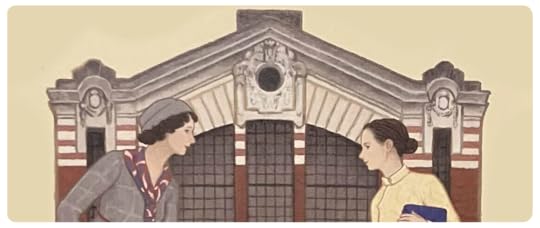
Taiwan Travelogue however, made me question all my openness towards food-literature. It's supposed to be a story of love between two women: In May 1938, a young novelist named Aoyama Chizuko sails from her home in Japan to Taiwan where she meets a Taiwanese woman who is hired as her interpreter. Together, they travel the country and explore the food while discussing language, history and power.
It's quite a nested way of telling a story. Yáng Shuāng-zǐ isn't afraid to play with form, but unfortunately she also doesn't care about entertaining the reader. The novel is presented to us as a translation of a long-lost story written by the protagonist in Japanese and now brought to us by a translator who has added their footnotes and thoughts. Imagining this to be a book with its own history makes it feel richer and more rooted in reality, but:
It's about as gripping as reading a cookbook front to back. The food talk felt distracting, because it just makes up the vast majority of this book. As a foreigner, most of these dishes were unknown to me and were difficult to place and picture. You might call this ignorance on my part — of course I could've looked each one up and educated myself, but I quickly became overwhelmed and ... bored. Even though I did understand that food here represents power and identity.
It's particularly frustrating because this could have been fun. Chizuko becomes infatuated with her translator Chizuru, who pushes back though. It takes us time to figure out what is going on between the two, but we understand their tension way before Chizuko herself realises what is happening between them. I did enjoy their relationship and the way their dynamic mirrors colonial mindsets.
The cultural exploration isn't actually that deep. Every chitchat the characters would have during their meals felt like a relief to me, because for at least a page or two I would get a break from food descriptions, but ultimately I was a little disappointed with how the novel commented on colonialism. I suppose I was expecting new insights, but the main message conveyed is that colonisers will always fall victim to their biases. I'm not entirely sure if this was done on purpose — the implications felt so banal that it made the novel actually feel like an artefact from the early 20th-century, but considering this is a contemporary piece of fiction, I don't think this goes very far in its analysis.
I think there are intriguing and worthwhile ideas in here, but I'd be lying to you if I said I had any fun reading this.
Taiwan Travelogue however, made me question all my openness towards food-literature. It's supposed to be a story of love between two women: In May 1938, a young novelist named Aoyama Chizuko sails from her home in Japan to Taiwan where she meets a Taiwanese woman who is hired as her interpreter. Together, they travel the country and explore the food while discussing language, history and power.
It's quite a nested way of telling a story. Yáng Shuāng-zǐ isn't afraid to play with form, but unfortunately she also doesn't care about entertaining the reader. The novel is presented to us as a translation of a long-lost story written by the protagonist in Japanese and now brought to us by a translator who has added their footnotes and thoughts. Imagining this to be a book with its own history makes it feel richer and more rooted in reality, but:
It's about as gripping as reading a cookbook front to back. The food talk felt distracting, because it just makes up the vast majority of this book. As a foreigner, most of these dishes were unknown to me and were difficult to place and picture. You might call this ignorance on my part — of course I could've looked each one up and educated myself, but I quickly became overwhelmed and ... bored. Even though I did understand that food here represents power and identity.
It's particularly frustrating because this could have been fun. Chizuko becomes infatuated with her translator Chizuru, who pushes back though. It takes us time to figure out what is going on between the two, but we understand their tension way before Chizuko herself realises what is happening between them. I did enjoy their relationship and the way their dynamic mirrors colonial mindsets.
The cultural exploration isn't actually that deep. Every chitchat the characters would have during their meals felt like a relief to me, because for at least a page or two I would get a break from food descriptions, but ultimately I was a little disappointed with how the novel commented on colonialism. I suppose I was expecting new insights, but the main message conveyed is that colonisers will always fall victim to their biases. I'm not entirely sure if this was done on purpose — the implications felt so banal that it made the novel actually feel like an artefact from the early 20th-century, but considering this is a contemporary piece of fiction, I don't think this goes very far in its analysis.
I think there are intriguing and worthwhile ideas in here, but I'd be lying to you if I said I had any fun reading this.
September 3, 2024
《臺灣漫遊錄》獲得2026年布克國際獎後,我翻出了2024年剛讀完後寫下的心得,看了一眼便感到自己的膚淺,於是昨日去書店買了英文版,打算擇日挑戰。翻出我當時的心得,我發現當時讓我覺得「煩躁」的點都是作者精心設計的結果,像是書中以青山的故事為主,因為她是來自日本本島的作家,擁有極高的權力,更可以任性地提出要求。另外,虛構作者的爭議其實也讓這本書更為有趣,而從書中的推薦序便可看見作者的各種巧思,只能說我當時太專注於飲食部分,忘記將眼光放遠來讀這本書了。
2024/09
很喜歡書裡描述台灣景致與飲食的部分,但拿掉飲食書書寫後,就剩主角青山千鶴子與王千鶴兩人的故事,缺乏王千鶴視角的故事讓整本小說有點流於表面,啊,還有虛構部分的爭議,晚點再來補充。
2024/09
很喜歡書裡描述台灣景致與飲食的部分,但拿掉飲食書書寫後,就剩主角青山千鶴子與王千鶴兩人的故事,缺乏王千鶴視角的故事讓整本小說有點流於表面,啊,還有虛構部分的爭議,晚點再來補充。

August 31, 2026
Some journeys are measured in miles; this one is measured in flavors, languages, and the silences between two women who never fully belong to the same world.
Taiwan Travelogue feels deceptively gentle. On its surface, it is a culinary journey through colonial Taiwan, rich with fragrant markets, elaborate banquets, mountain railways, and meticulously described dishes. But beneath every meal, I sensed another hunger—the longing to be seen beyond nationality, gender, and the identities history insists upon.
What captivated me most was its atmosphere. The island emerges like a place suspended between beauty and occupation, where landscapes bloom with astonishing abundance while power quietly dictates who gets to tell the story. Even the act of tasting becomes political; every recipe carries memory, every ingredient seems to preserve a vanished world.
The relationship at the heart of the novel moved me in its restraint. Affection grows not through declarations, but through shared observations, translated words, and the intimate ritual of eating together. It reminded me how closeness often exists in what remains unspoken.
I finished this book with the lingering feeling of leaving a city after rain—its streets still shimmering, its scents impossible to forget. Taiwan Travelogue is as much a feast for the senses as it is a quietly devastating reflection on identity, desire, and the histories hidden inside ordinary meals.
Taiwan Travelogue feels deceptively gentle. On its surface, it is a culinary journey through colonial Taiwan, rich with fragrant markets, elaborate banquets, mountain railways, and meticulously described dishes. But beneath every meal, I sensed another hunger—the longing to be seen beyond nationality, gender, and the identities history insists upon.
What captivated me most was its atmosphere. The island emerges like a place suspended between beauty and occupation, where landscapes bloom with astonishing abundance while power quietly dictates who gets to tell the story. Even the act of tasting becomes political; every recipe carries memory, every ingredient seems to preserve a vanished world.
The relationship at the heart of the novel moved me in its restraint. Affection grows not through declarations, but through shared observations, translated words, and the intimate ritual of eating together. It reminded me how closeness often exists in what remains unspoken.
I finished this book with the lingering feeling of leaving a city after rain—its streets still shimmering, its scents impossible to forget. Taiwan Travelogue is as much a feast for the senses as it is a quietly devastating reflection on identity, desire, and the histories hidden inside ordinary meals.

March 25, 2026
Two things to know about this book:
1) There are way too many descriptions and lists of food dishes. We get it.
(But then those descriptions began to lull me, kind of put me into a comfortable rhythm, I came to enjoy them lol)
2) The main character is extremely annoying and it can feel torturous being inside of her head
(this character trait eventually serves a purpose— an intentional stylistic choice in order to explore themes of colonialism, appropriation, and power dynamics)
Sticking with this book turned out to be a rewarding choice. Be patient and it’ll take you places.
1) There are way too many descriptions and lists of food dishes. We get it.
(But then those descriptions began to lull me, kind of put me into a comfortable rhythm, I came to enjoy them lol)
2) The main character is extremely annoying and it can feel torturous being inside of her head
(this character trait eventually serves a purpose— an intentional stylistic choice in order to explore themes of colonialism, appropriation, and power dynamics)
Sticking with this book turned out to be a rewarding choice. Be patient and it’ll take you places.
January 30, 2025
I am particularly fond of novels that couch themselves as older works, especially when they sustain the conceit with as many layers as this does. I did not initially appreciate the importance of the several invented translators’ and scholar’s notes in framing the narrative. I recognized right away that these were part of the fiction; I simply did not appreciate how much they contributed to the book until I was partway through. I found it helpful to return to the fictional introduction after I finished the body of the narrative. I don’t think I have ever read a work that so effectively deploys the conceit of a rediscovered historical manuscript. Its brilliance took my breath away.
This is fundamentally a novel about colonizing. It is magnificently layered and nuanced. Set in Taiwan, which has been colonized by a succession of empires, it explores what it means to be colonized, questions when a colonized people becomes a new people with a culture of its own, and exposes the many layers of (often unconsciously) assumed superiority that inhabit the mind of a colonizer. The novel’s focus on the relationship between Chizuku (Aoyama) and Chizuru (Chi-chan) expands the focus of power dynamics of colonizer/colonized power dynamics beyond geopolitical boundaries into the subtleties of human relationships. One of my takeaways is that Yáng is uncovering some of the many ways that even the most personal relationships are often about the power inequity between the participants, and that power inequity in effect stems from and reinforces the same kind of assumptions as colonizing. In fact, I think it’s not going too far to say that such power inequities are indeed a kind of colonizing. As a woman in a still patriarchal society (and one that is currently being wrenched back into an even more white and patriarchal vision than all but a tiny minority of us are willing to inhabit), I recognized the same colonizing mentality in many of my own experiences with other people. Men, most obviously, but even in my friendships with other women. Maybe it’s because I grew up and lived much of my life in a corner of American fundamentalist Christianity whose culture is about power (who is right, who is wrong, who gets to decide; who has standing) and have experienced this struggle for top-dog power even among my female friendships that I especially appreciated the nuanced way Yáng unpacks this aspect of colonizing.
I am a white American, a descendant of colonizer/settlers, of slaveholders, of non-slaveholders who failed to question the race-based slavery that undergirds our country’s world economic power, of a handful of immigrants who came in the middle third of the 19th century because they wanted to enjoy the economic prosperity that race-based slavery instituted. I was already aware of some of the dynamics of my own society’s colonizing past, of my family’s role in it, and of some ways that past and the assumptions that enable it have colonized my own mind. I’m also aware (though less well-informed about the specifics) of the colonizing that American empire has done in the world. I’ve done a lot of work of trying to decolonize my own mind, and yet I realize that all too often I am like Aoyama: ignorant of my own assumptions and too ready to impose them on others. True, all of us are ignorant of many of our own assumptions. This is one reason I gravitate to literary fiction—not the only reason, but an important one—for the mirror it holds up to me to see things about myself and the people around me that I cannot see from my own standpoint. This made me sympathize with Aoyama, even as I ground my teeth at her actions and attitudes.
I liked the subtleties of Aoyama’s character. She is blind to her own faults, but it seems important to recognize that she is standing in 1938, in the middle of Japan’s brutal conquest of China and on the threshold of its going to war with other world powers in pursuit of bigger empire, and she explicitly uncomfortable with and unwilling to support the idea that Japan is inherently culturally superior or entitled to conquer whatever territory it desires, however willingly she accepts its colonizing of Taiwan. As comfortable as she is with colonizing Taiwan, she recognizes that its own culture matters. Yet she still thinks of it as something other, something exotic, something she can mine for her own pleasure and unreasonable appetite. Framing her this way helps us to more clearly see the imperial impulse that guides her relationship with Chi-chan. I see. I want. I try to take, because I am entitled to take whatever I want. She has enough awareness to realize she cannot command Chi-chan’s true affections, but not enough to see that she is trying to command it. It seems to me that she is in a small but not unimportant way a resister, and yet her resistance to the imperial project is undercut by her own failure to question her assumptions.
I particularly loved the symbolism of Aoyama’s insatiable appetite.
I know next to nothing about Taiwan, and not a whole lot about Japan, so am sure that quite a bit of the dynamic between Chizuko and Chizuru went over my head. I am not even sure what names I should use to refer to these two characters, because I do not know enough about the dynamics of Hokkien, Taiwanese, Japanese Island, and Japanese Mainland culture, to say nothing of the languages and translations needed to navigate this complexity. Here is another aspect of colonizing: how should I, an outsider, refer to individuals who are deeply embedded in these overlapping but far from equal cultures? I’ve done my best to navigate this. I have not wanted to use only the names by which the narrator refers to herself and her translator, but those are the names by which we almost exclusively know them in the narrative (though not in the fictional scholarly apparatus). Colonizing affects more than the colonized: it affects how everyone else in the world sees them. If I have failed to navigate this with due respect to Ông Tschian-hóh, mostly called Chizuru or Chi-chan throughout the narrative, I apologize. There is also a lot of attention the to class structure within Mainland and Island culture, particularly centering on the fact that Chizuru is the daughter of a concubine whereas Chizuku is a full member of an ancient Japanese family (although not of its senior branch). I know just enough to know that these are important distinctions with ramifications for the narrative without being able to fully appreciate them.
Finally, concerning Aoyama’s infatuation with Chizuru: it was unclear to me how much this was a tale of queer love, a tale of deep friendship, a tale of power determined to have its own way. Perhaps the answer is that it is all three. I’m not sure, but I wanted to acknowledge the question.
This is fundamentally a novel about colonizing. It is magnificently layered and nuanced. Set in Taiwan, which has been colonized by a succession of empires, it explores what it means to be colonized, questions when a colonized people becomes a new people with a culture of its own, and exposes the many layers of (often unconsciously) assumed superiority that inhabit the mind of a colonizer. The novel’s focus on the relationship between Chizuku (Aoyama) and Chizuru (Chi-chan) expands the focus of power dynamics of colonizer/colonized power dynamics beyond geopolitical boundaries into the subtleties of human relationships. One of my takeaways is that Yáng is uncovering some of the many ways that even the most personal relationships are often about the power inequity between the participants, and that power inequity in effect stems from and reinforces the same kind of assumptions as colonizing. In fact, I think it’s not going too far to say that such power inequities are indeed a kind of colonizing. As a woman in a still patriarchal society (and one that is currently being wrenched back into an even more white and patriarchal vision than all but a tiny minority of us are willing to inhabit), I recognized the same colonizing mentality in many of my own experiences with other people. Men, most obviously, but even in my friendships with other women. Maybe it’s because I grew up and lived much of my life in a corner of American fundamentalist Christianity whose culture is about power (who is right, who is wrong, who gets to decide; who has standing) and have experienced this struggle for top-dog power even among my female friendships that I especially appreciated the nuanced way Yáng unpacks this aspect of colonizing.
I am a white American, a descendant of colonizer/settlers, of slaveholders, of non-slaveholders who failed to question the race-based slavery that undergirds our country’s world economic power, of a handful of immigrants who came in the middle third of the 19th century because they wanted to enjoy the economic prosperity that race-based slavery instituted. I was already aware of some of the dynamics of my own society’s colonizing past, of my family’s role in it, and of some ways that past and the assumptions that enable it have colonized my own mind. I’m also aware (though less well-informed about the specifics) of the colonizing that American empire has done in the world. I’ve done a lot of work of trying to decolonize my own mind, and yet I realize that all too often I am like Aoyama: ignorant of my own assumptions and too ready to impose them on others. True, all of us are ignorant of many of our own assumptions. This is one reason I gravitate to literary fiction—not the only reason, but an important one—for the mirror it holds up to me to see things about myself and the people around me that I cannot see from my own standpoint. This made me sympathize with Aoyama, even as I ground my teeth at her actions and attitudes.
I liked the subtleties of Aoyama’s character. She is blind to her own faults, but it seems important to recognize that she is standing in 1938, in the middle of Japan’s brutal conquest of China and on the threshold of its going to war with other world powers in pursuit of bigger empire, and she explicitly uncomfortable with and unwilling to support the idea that Japan is inherently culturally superior or entitled to conquer whatever territory it desires, however willingly she accepts its colonizing of Taiwan. As comfortable as she is with colonizing Taiwan, she recognizes that its own culture matters. Yet she still thinks of it as something other, something exotic, something she can mine for her own pleasure and unreasonable appetite. Framing her this way helps us to more clearly see the imperial impulse that guides her relationship with Chi-chan. I see. I want. I try to take, because I am entitled to take whatever I want. She has enough awareness to realize she cannot command Chi-chan’s true affections, but not enough to see that she is trying to command it. It seems to me that she is in a small but not unimportant way a resister, and yet her resistance to the imperial project is undercut by her own failure to question her assumptions.
I particularly loved the symbolism of Aoyama’s insatiable appetite.
I know next to nothing about Taiwan, and not a whole lot about Japan, so am sure that quite a bit of the dynamic between Chizuko and Chizuru went over my head. I am not even sure what names I should use to refer to these two characters, because I do not know enough about the dynamics of Hokkien, Taiwanese, Japanese Island, and Japanese Mainland culture, to say nothing of the languages and translations needed to navigate this complexity. Here is another aspect of colonizing: how should I, an outsider, refer to individuals who are deeply embedded in these overlapping but far from equal cultures? I’ve done my best to navigate this. I have not wanted to use only the names by which the narrator refers to herself and her translator, but those are the names by which we almost exclusively know them in the narrative (though not in the fictional scholarly apparatus). Colonizing affects more than the colonized: it affects how everyone else in the world sees them. If I have failed to navigate this with due respect to Ông Tschian-hóh, mostly called Chizuru or Chi-chan throughout the narrative, I apologize. There is also a lot of attention the to class structure within Mainland and Island culture, particularly centering on the fact that Chizuru is the daughter of a concubine whereas Chizuku is a full member of an ancient Japanese family (although not of its senior branch). I know just enough to know that these are important distinctions with ramifications for the narrative without being able to fully appreciate them.
Finally, concerning Aoyama’s infatuation with Chizuru: it was unclear to me how much this was a tale of queer love, a tale of deep friendship, a tale of power determined to have its own way. Perhaps the answer is that it is all three. I’m not sure, but I wanted to acknowledge the question.

October 1, 2024
Thank you to Graywolf Press and NetGalley for the free e-ARC in exchange for an honest review
Recipe for TAIWAN TRAVELOGUE (serves 2):
- 8 cups descriptions of food (chopped, diced, mashed, sliced, julienned, cubed, stir-fried, roasted, boiled, broiled, simmered, pan-fried, let to rest, blended, churned, folded, mixed, fermented)
- 2 tablespoons commentary on power dynamics in colonial systems
- 1 dash of lesbian romantic longing
Sprinkle with meta-commentary about translation just before serving.
TAIWAN TRAVELOGUE was one of my most highly anticipated new releases this year. While it didn’t quite meet my sky-high expectations, it still offers some great food (heh) for thought in its reflections on the nuances of translation and colonialism, and its National Book Award shortlisting will hopefully bring it more to your attention.
TAIWAN TRAVELOGUE is disguised as a long-lost text written by a Japanese novelist, Aoyama Chizuko, who visits Taiwan during the years of Japanese occupation (first half of the 20th century), guided by the capable hands of her local interpreter, whom she calls Chi-chan. Aoyama, who has a ravenous appetite, is amazed by all of her new culinary experiences. However, the graceful Chi-chan, whom she has come to regard as more than a friend, seems unwilling to reciprocate her effusive declarations of affinity. Why?
I am Taiwanese, but I’m not a foodie. There are a lot of descriptions of food, often dumped in endless pages of conversations between Aoyama and Chi-chan, that had my eyes glazing over. If you’re a more patient reader than me, you’ll probably appreciate this thorough portrait of Taiwanese cuisine more. In my opinion, though, this was a maybe-not-quite-so-successful ruse at hiding the book’s much more interesting (to me) commentary about colonialism and power dynamics.
Aoyama-san, our first-person narrator, is… a lot to take. If she sounds familiar as you’re reading, it’s because she’ll remind you of present-day tourists who swan into a place, simultaneously requesting a menu of “the local flavors” while complaining about hygiene of operating a food stall on the side of a busy road. Here is where I loved TAIWAN TRAVELOGUE and would die for it. Yang Shuang-zi wrote this nearly 100 years after Aoyama’s timeline and it’s still relevant today.
Power differences between individuals as a result of their differing countries’ relationship with one another are uncomfortable to talk about. Like Aoyama-san, many of us would prefer to pretend as if we are no different from the maid who cleans our house weekly, the local tour guide on our overseas trips, or the driver we hire for our day trips because there is no public transportation. (Side note: If you want to read more about this topic, I highly recommend Justin Farrell’s Billionaire Wilderness: The Ultra-Wealthy and the Remaking of the American West.) This is why we call them our “friends” and end up feeling weird that we are expected to tip them. Friends don’t have to tip friends, right?
But we are different. Throughout TAIWAN TRAVELOGUE, Aoyama receives Chi-chan’s above-and-beyond service to her as if it’s her due (as another character commented, Chi-chan’s actions of cooking for Aoyama “far exceeded the responsibilities of an interpreter”). As they travel around Taiwan, Aoyama makes blithe comparisons between Mainland (Japanese) and Islander (Taiwanese) aspects, sometimes extolling the virtues of Islander flavors in an exoticizing way, other times tactlessly commenting on the ways in which the Mainland’s “investments” into the Island have made things better for the local population.
It’s cringe, but it’s also recognizable. It takes nearly 300 pages to get there, but it’s a searing depiction of colonial/imperial power dynamics like I’ve never read before.
As a bonus, the “disguise” of the book as a re-published travelogue of a deceased Japanese writer, that has been translated into Chinese, into English, back into Japanese, etc., creates an opportunity for some clever metacommentary about translation in the “afterwords.”Lin Kang, the translator, also adds her own afterword!
Overall, too many descriptions of food for my taste, but with some great themes for deep discussion.
Recipe for TAIWAN TRAVELOGUE (serves 2):
- 8 cups descriptions of food (chopped, diced, mashed, sliced, julienned, cubed, stir-fried, roasted, boiled, broiled, simmered, pan-fried, let to rest, blended, churned, folded, mixed, fermented)
- 2 tablespoons commentary on power dynamics in colonial systems
- 1 dash of lesbian romantic longing
Sprinkle with meta-commentary about translation just before serving.
TAIWAN TRAVELOGUE was one of my most highly anticipated new releases this year. While it didn’t quite meet my sky-high expectations, it still offers some great food (heh) for thought in its reflections on the nuances of translation and colonialism, and its National Book Award shortlisting will hopefully bring it more to your attention.
TAIWAN TRAVELOGUE is disguised as a long-lost text written by a Japanese novelist, Aoyama Chizuko, who visits Taiwan during the years of Japanese occupation (first half of the 20th century), guided by the capable hands of her local interpreter, whom she calls Chi-chan. Aoyama, who has a ravenous appetite, is amazed by all of her new culinary experiences. However, the graceful Chi-chan, whom she has come to regard as more than a friend, seems unwilling to reciprocate her effusive declarations of affinity. Why?
I am Taiwanese, but I’m not a foodie. There are a lot of descriptions of food, often dumped in endless pages of conversations between Aoyama and Chi-chan, that had my eyes glazing over. If you’re a more patient reader than me, you’ll probably appreciate this thorough portrait of Taiwanese cuisine more. In my opinion, though, this was a maybe-not-quite-so-successful ruse at hiding the book’s much more interesting (to me) commentary about colonialism and power dynamics.
Aoyama-san, our first-person narrator, is… a lot to take. If she sounds familiar as you’re reading, it’s because she’ll remind you of present-day tourists who swan into a place, simultaneously requesting a menu of “the local flavors” while complaining about hygiene of operating a food stall on the side of a busy road. Here is where I loved TAIWAN TRAVELOGUE and would die for it. Yang Shuang-zi wrote this nearly 100 years after Aoyama’s timeline and it’s still relevant today.
Power differences between individuals as a result of their differing countries’ relationship with one another are uncomfortable to talk about. Like Aoyama-san, many of us would prefer to pretend as if we are no different from the maid who cleans our house weekly, the local tour guide on our overseas trips, or the driver we hire for our day trips because there is no public transportation. (Side note: If you want to read more about this topic, I highly recommend Justin Farrell’s Billionaire Wilderness: The Ultra-Wealthy and the Remaking of the American West.) This is why we call them our “friends” and end up feeling weird that we are expected to tip them. Friends don’t have to tip friends, right?
But we are different. Throughout TAIWAN TRAVELOGUE, Aoyama receives Chi-chan’s above-and-beyond service to her as if it’s her due (as another character commented, Chi-chan’s actions of cooking for Aoyama “far exceeded the responsibilities of an interpreter”). As they travel around Taiwan, Aoyama makes blithe comparisons between Mainland (Japanese) and Islander (Taiwanese) aspects, sometimes extolling the virtues of Islander flavors in an exoticizing way, other times tactlessly commenting on the ways in which the Mainland’s “investments” into the Island have made things better for the local population.
It’s cringe, but it’s also recognizable. It takes nearly 300 pages to get there, but it’s a searing depiction of colonial/imperial power dynamics like I’ve never read before.
As a bonus, the “disguise” of the book as a re-published travelogue of a deceased Japanese writer, that has been translated into Chinese, into English, back into Japanese, etc., creates an opportunity for some clever metacommentary about translation in the “afterwords.”Lin Kang, the translator, also adds her own afterword!
Overall, too many descriptions of food for my taste, but with some great themes for deep discussion.

September 13, 2025
Eat (and flirt) your way around Taiwan. Sweet, delicate and delectable with a bitter-sweet aftertaste.
It is cleverly layered to build a complex flavour. Taiwanese cuisine and travel seem to be the main ingredients, but these are spiced with friendship and love, and then marinated in a blend of cultures, colonisation, power and discrimination, and finally, with the prologue and afterwords, the whole dish is glazed with meta issues about the nature of fiction and non-fiction.
THE AUDIOBOOK IS ABRIDGED, WITH NO WARNING! I only discovered this half way through the audiobook - I became very puzzled why the blurb described the novel as “Disguised as a translation of a rediscovered text”, as there is no hint of this in the audiobook. Turns out the audiobook is missing the crucial prologue and the five afterwords, as well as all the footnotes. Luckily I found a text copy and immediately read the prologue, and then afterwards, the afterwords. I can live without the footnotes.
On the positive side, the audiobook gives a delightful performance of the enthusiastic writer and her demure translator. Also, you get the correct pronunciations of the various languages (I hope it’s correct!)
It is cleverly layered to build a complex flavour. Taiwanese cuisine and travel seem to be the main ingredients, but these are spiced with friendship and love, and then marinated in a blend of cultures, colonisation, power and discrimination, and finally, with the prologue and afterwords, the whole dish is glazed with meta issues about the nature of fiction and non-fiction.
THE AUDIOBOOK IS ABRIDGED, WITH NO WARNING! I only discovered this half way through the audiobook - I became very puzzled why the blurb described the novel as “Disguised as a translation of a rediscovered text”, as there is no hint of this in the audiobook. Turns out the audiobook is missing the crucial prologue and the five afterwords, as well as all the footnotes. Luckily I found a text copy and immediately read the prologue, and then afterwards, the afterwords. I can live without the footnotes.
On the positive side, the audiobook gives a delightful performance of the enthusiastic writer and her demure translator. Also, you get the correct pronunciations of the various languages (I hope it’s correct!)

July 17, 2026
I was promised food porn, it delivered in spades. Very specific to a place (Taiwan) but touching some rich fantastic cuisines, besides Taiwanese itself mainland Japan and some varieties of mainland China. Food porn density, incredibly memorable. I kept stopping to google things.
Otherwise, it is a story of a well meant, but naïve young person of a colonizer nation arriving at a colony enthusiastic about its charms and falling for the charming inescrutable accommodating exotic asian local woman serving as translator. With the twist the colonizer doing the falling in love part is herself an asian woman, a young Japanese writer. In all, it is very well told, the voice charming but letting ambiguity pass through, and Taiwanese story was certainly fascinating.
This is a book with a weird, onion like meta structure. There is the narrative, and then there are footnotes, from fictional translators and even from the real translator into english. There are prologues and afterwords, establishing its (fake) historical authenticity and giving clues to the "what after" of the main characters, and if I understand correctly how many layers of the onion varies with edition and translation. Honestly, I thought the extra layers too much, too extraneous as useless as the dry outer layers of an onion (maybe some taiwanese cuisine would be able to make use of even that?). Maybe too on the nose, telling too much rather than showing - I preferred the kernel (I am not even sure if the last chapter really is an extra or not, but it fits well).
I liked it a lot, very interesting but it missed somehow being a great book for me. 4 stars and that, for once, I am very sure of. But OMG as food porn if you are into eastern asian cooking, all the stars.
Otherwise, it is a story of a well meant, but naïve young person of a colonizer nation arriving at a colony enthusiastic about its charms and falling for the charming inescrutable accommodating exotic asian local woman serving as translator. With the twist the colonizer doing the falling in love part is herself an asian woman, a young Japanese writer. In all, it is very well told, the voice charming but letting ambiguity pass through, and Taiwanese story was certainly fascinating.
This is a book with a weird, onion like meta structure. There is the narrative, and then there are footnotes, from fictional translators and even from the real translator into english. There are prologues and afterwords, establishing its (fake) historical authenticity and giving clues to the "what after" of the main characters, and if I understand correctly how many layers of the onion varies with edition and translation. Honestly, I thought the extra layers too much, too extraneous as useless as the dry outer layers of an onion (maybe some taiwanese cuisine would be able to make use of even that?). Maybe too on the nose, telling too much rather than showing - I preferred the kernel (I am not even sure if the last chapter really is an extra or not, but it fits well).
I liked it a lot, very interesting but it missed somehow being a great book for me. 4 stars and that, for once, I am very sure of. But OMG as food porn if you are into eastern asian cooking, all the stars.

March 7, 2021
「這個世間,再也沒有比自以為是的善意更難拒絕的燙手山芋了。」
看這本書之前便知道這本書似乎有某些爭議,但又怕被暴雷,結果就在一個還不知道爭議點到底是什麼的情況下看完了這本書。
看完後心情甚為複雜,一方面我為書中兩個主要人物的互動感受到一些感傷,而另一方面則是上網查了爭議到底是什麼後,心情真的有點複雜。
(關於爭議的部分可能有點暴雷,會在後面描述)
最開始閱讀這本書時,我是帶著好奇的態度,想去看一個日治時期的女性作家來臺的所見所聞。我很少閱讀關於描繪飲食的書籍,而這本書讓我感受到其中一個很大的樂趣,在於每一章節都是以當時的食與臺灣文化之間細膩的結合,也讓我看見好多現在在臺灣的美食是如何在歷史中被傳承下來。不同地區文化的歷史脈絡也呈現在一個恰到好處的狀態(由於我歷史真的很差,太深入的內容我實在承接不起,所以這樣的強度對我而言剛剛好XD)。隨著青山千鶴子的旅程,我好像也因此得到機會去揣摩日治時期的光景,像是以前在課本中學過的公學校、小學校的區別:每個人說話的用字遣詞如本島人、內地人的用法,都隨著當時的歷史而有所不同,感受到其中各種歷史的訊息,是閱讀本書很大的樂趣之一。
「權力不對等其實比一般人想的更加幽微,也更無所不在。」
而本書另一大重點便是身為殖民者與被殖民者之間的權力,是否真的可能在這樣的結構中出現深入的情誼。在日籍作家青山千鶴子與臺灣妾室女譯者王千鶴旅臺的過程中,各種經歷之間的權力結構時不時會因著兩人受到不同的待遇而提點讀者。
享受權利福利者,無法理解被支配者的想法。雖然可以感覺到身為日本人的青山千鶴子不斷地表現出他想接納臺灣文化中的特殊性,卻又在字裡行間將權力者在上位的態度表露出來,最終導致兩個人之間雖然互相珍視與對方的情誼,卻又存在著巨大的橫溝,最後變成傷害。
「多數的日子,並非愉快或不愉快可以二分的。」
看完兩人關係在因為權力結構之下造成身份上的差異,進而分開,加上青山之養女所述的後記,與年邁的王千鶴及其女在譯後的補充。雖然這些加筆都未破兩人當年互動最後的結局,以及當年的真實想法,卻隱約可以感受到一股遺憾之情與過去結構的束縛。這些旁人之見,也透露了作者新增的第十二章,或許只是想彌補兩人間當初未能被青山千鶴子理解的遺憾。在看完了整本書後,的確會想再從頭好好地看一次王千鶴小姐在其中的各種反應,這些描寫是很細膩而讓人在意的。
「———您說的沒錯。儘管做不到毫無保留地敞開心門,我內心裡懷抱的這份情感,還是真實的。」
考量到當年的文化背景下出版這本書的確有他的困難,也曾述這本書為了出版曾經過刪減,看到現在這本書可以在現代,脫離臺日殖民與被殖民之間的關係性下(雖然至目前仍是留有許多傷害),對於女性之間抱持一種友達以上的接納度也提高一些的時刻,的確會很認同加筆註解的人們所述,至今社會的氛圍好似終於有了個開口,可以將這份未盡的情誼好好地重新被看見與理解。
.
.
(以下有爭議雷,請斟酌是否閱讀)
.
.
.
看完這本書時我其實還蠻被兩人的情誼動容,也在心中想好要尋找一下日方當年出版時的一些訊息或心得。
然而上網查了一下其他人的心得文後,才知道原來爭議的部分就是——這是一本小說,不是翻譯文學,卻透過設計造成這本書好像是珍貴的史料下細膩的產物,讓人誤以為內容都是曾經存在部分真實的。
真相是從頭到尾,包含序言、各個人物在後面的加注與發言、註記的作者、書底列舉的史料,全都是作者所設計的一環。
老實說,知道了這件事情的當下,心中對於這本書的感覺從感動變成有點衝擊。
我也思考了一下到底讓我覺得打擊的部分是什麼。
我想其中一個部分,大概是我開始不知道在書中曾經感受到的文化到底是否是真實。
雖然無法否認作者用心的考察,以及書中那些看起來很貼心的譯者註記內容,但他的存在是由考據而生,還是當事人主體去訴說,對我而言仍有差異。
而另一方面,或許我真切地希望,那兩人未能在相遇之時開花結果的羈絆是存在的;在那樣的年代,真的存在過試圖跨越權力結構,去理解臺灣文化的人存在(縱使在本書的主軸中,這位日籍主角仍是無意識地將權力結構帶入生活中)。
回想起來這樣的設計可以說是作者與出版社極大的巧思,也是出版一本書中相當特殊的一種設計。
但也著實了影響讀者在理解這本書的過程中,
要帶著什麼樣的角度去觀看,或是被什麼樣的角度吸引進而閱讀。
即使一開始就理解他是一本小說,對我而言這本作品也會是非常誘人,令我想推薦的的作品。
雖然出版方亦澄清這本書的設計,是想在其中帶來另一種挑戰。最後在讀者的回饋下,雖已修改封面的作者名稱、以及拿掉封底的史料列表,並加註虛構翻譯(?)的事實。我雖然看到書封的作者欄只列楊本人,書內的結構仍然讓我感覺好似真實存在的史料,仍然在最後被這件事情感受到極大的衝擊(看來我屬於那沒有理解蛛絲馬跡的一群XD)。
作者這樣的設計,好似也從另一種形式,回扣到這本書之外,作者與讀者間的權力不對等,
身為讀者在閱讀一本書時,到底該對內文帶著多少審視與懷疑的眼光,才能合理呢?
作為創作者和出版社,要為自己的宣傳與內容的真實性,負責到什麼程度呢?
而這本書這樣設計的真相帶來的結果,這是否也算是一種給讀者的燙手山芋呢?
或許每個人感受到的答案也會是很不同的吧。
看這本書之前便知道這本書似乎有某些爭議,但又怕被暴雷,結果就在一個還不知道爭議點到底是什麼的情況下看完了這本書。
看完後心情甚為複雜,一方面我為書中兩個主要人物的互動感受到一些感傷,而另一方面則是上網查了爭議到底是什麼後,心情真的有點複雜。
(關於爭議的部分可能有點暴雷,會在後面描述)
最開始閱讀這本書時,我是帶著好奇的態度,想去看一個日治時期的女性作家來臺的所見所聞。我很少閱讀關於描繪飲食的書籍,而這本書讓我感受到其中一個很大的樂趣,在於每一章節都是以當時的食與臺灣文化之間細膩的結合,也讓我看見好多現在在臺灣的美食是如何在歷史中被傳承下來。不同地區文化的歷史脈絡也呈現在一個恰到好處的狀態(由於我歷史真的很差,太深入的內容我實在承接不起,所以這樣的強度對我而言剛剛好XD)。隨著青山千鶴子的旅程,我好像也因此得到機會去揣摩日治時期的光景,像是以前在課本中學過的公學校、小學校的區別:每個人說話的用字遣詞如本島人、內地人的用法,都隨著當時的歷史而有所不同,感受到其中各種歷史的訊息,是閱讀本書很大的樂趣之一。
「權力不對等其實比一般人想的更加幽微,也更無所不在。」
而本書另一大重點便是身為殖民者與被殖民者之間的權力,是否真的可能在這樣的結構中出現深入的情誼。在日籍作家青山千鶴子與臺灣妾室女譯者王千鶴旅臺的過程中,各種經歷之間的權力結構時不時會因著兩人受到不同的待遇而提點讀者。
享受權利福利者,無法理解被支配者的想法。雖然可以感覺到身為日本人的青山千鶴子不斷地表現出他想接納臺灣文化中的特殊性,卻又在字裡行間將權力者在上位的態度表露出來,最終導致兩個人之間雖然互相珍視與對方的情誼,卻又存在著巨大的橫溝,最後變成傷害。
「多數的日子,並非愉快或不愉快可以二分的。」
看完兩人關係在因為權力結構之下造成身份上的差異,進而分開,加上青山之養女所述的後記,與年邁的王千鶴及其女在譯後的補充。雖然這些加筆都未破兩人當年互動最後的結局,以及當年的真實想法,卻隱約可以感受到一股遺憾之情與過去結構的束縛。這些旁人之見,也透露了作者新增的第十二章,或許只是想彌補兩人間當初未能被青山千鶴子理解的遺憾。在看完了整本書後,的確會想再從頭好好地看一次王千鶴小姐在其中的各種反應,這些描寫是很細膩而讓人在意的。
「———您說的沒錯。儘管做不到毫無保留地敞開心門,我內心裡懷抱的這份情感,還是真實的。」
考量到當年的文化背景下出版這本書的確有他的困難,也曾述這本書為了出版曾經過刪減,看到現在這本書可以在現代,脫離臺日殖民與被殖民之間的關係性下(雖然至目前仍是留有許多傷害),對於女性之間抱持一種友達以上的接納度也提高一些的時刻,的確會很認同加筆註解的人們所述,至今社會的氛圍好似終於有了個開口,可以將這份未盡的情誼好好地重新被看見與理解。
.
.
(以下有爭議雷,請斟酌是否閱讀)
.
.
.
看完這本書時我其實還蠻被兩人的情誼動容,也在心中想好要尋找一下日方當年出版時的一些訊息或心得。
然而上網查了一下其他人的心得文後,才知道原來爭議的部分就是——這是一本小說,不是翻譯文學,卻透過設計造成這本書好像是珍貴的史料下細膩的產物,讓人誤以為內容都是曾經存在部分真實的。
真相是從頭到尾,包含序言、各個人物在後面的加注與發言、註記的作者、書底列舉的史料,全都是作者所設計的一環。
老實說,知道了這件事情的當下,心中對於這本書的感覺從感動變成有點衝擊。
我也思考了一下到底讓我覺得打擊的部分是什麼。
我想其中一個部分,大概是我開始不知道在書中曾經感受到的文化到底是否是真實。
雖然無法否認作者用心的考察,以及書中那些看起來很貼心的譯者註記內容,但他的存在是由考據而生,還是當事人主體去訴說,對我而言仍有差異。
而另一方面,或許我真切地希望,那兩人未能在相遇之時開花結果的羈絆是存在的;在那樣的年代,真的存在過試圖跨越權力結構,去理解臺灣文化的人存在(縱使在本書的主軸中,這位日籍主角仍是無意識地將權力結構帶入生活中)。
回想起來這樣的設計可以說是作者與出版社極大的巧思,也是出版一本書中相當特殊的一種設計。
但也著實了影響讀者在理解這本書的過程中,
要帶著什麼樣的角度去觀看,或是被什麼樣的角度吸引進而閱讀。
即使一開始就理解他是一本小說,對我而言這本作品也會是非常誘人,令我想推薦的的作品。
雖然出版方亦澄清這本書的設計,是想在其中帶來另一種挑戰。最後在讀者的回饋下,雖已修改封面的作者名稱、以及拿掉封底的史料列表,並加註虛構翻譯(?)的事實。我雖然看到書封的作者欄只列楊本人,書內的結構仍然讓我感覺好似真實存在的史料,仍然在最後被這件事情感受到極大的衝擊(看來我屬於那沒有理解蛛絲馬跡的一群XD)。
作者這樣的設計,好似也從另一種形式,回扣到這本書之外,作者與讀者間的權力不對等,
身為讀者在閱讀一本書時,到底該對內文帶著多少審視與懷疑的眼光,才能合理呢?
作為創作者和出版社,要為自己的宣傳與內容的真實性,負責到什麼程度呢?
而這本書這樣設計的真相帶來的結果,這是否也算是一種給讀者的燙手山芋呢?
或許每個人感受到的答案也會是很不同的吧。
Displaying 1 - 30 of 4,425 reviews