I am considering what I want when I leave this mortal coil. Buried, burnt, or bound?
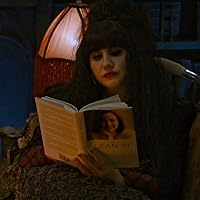
Megan Rosenbloom’s Dark Archives: A Librarian's Investigation into the Science and History of Books Bound in Human Skin was published in 2020. Back then, it used current DNA technology to find out if all the reputed human skin bound books were truly what they were claimed to be. A macabre subject for some, but as one who completed an indentured apprenticeship as a bookbinder in the 1970s, this was going to be right up my alley. It certainly brought back memories of language and technique; how could I forget "half rough sheep" when (badly) binding Queensland government department account books?
The truth of the matter is that there were few books actually bound in human skin. Megan has written a book about her team’s investigations into these volumes, which turned out to be few and far between. In fact, most often, what was claimed to be human skin was just the usual calf or sheep. In the end, Megan presented a breezy read that served as a bridge between the investigations of a rare book librarian, a fascinating look at the 19th-century anatomist, and her "death-positive" approach to life.
The tendency of Dark Archives to descend into medical "rabbit holes" will not be for everyone who takes the title at face value. While the title suggests a focus on bibliography, the narrative frequently heads towards a history of clinical detachment and the death-positive movement.
The chapter "The Long Shadow of the Night Doctors" was particularly interesting. Here, Megan explores the systematic dehumanisation of enslaved people and the poor in the USA, who were targeted by body snatchers to fuel medical education. While this context is essential to understanding the source of the material, the connection to specific anthropodermic volumes can feel stretched. The books often serves as a prop to discuss the broader, more chilling reality of medical exploitation.
However, this "rabbit hole" was, in my opinion, a necessity. In the 19th century, the "printer" (the doctor) was often the "supplier" (the anatomist). You cannot discuss the leather without discussing the donor, even if that discussion occasionally leaves the human skin bound books behind.
I had never heard of Peptide Mass Fingerprinting (PMF). What a useful tool! It has advanced considerably in the years since Megan and her team made use of it. Before the advent of PMF, the "truth" of a human-skin book was based on visual follicle patterns or, more often, sensationalised labels. PMF has acted as a "clean-up" tool for history. It has stripped away the theatrical horror from books like the Dale Carnegie volume at Temple University or the "negro at a Baltimore Hospital" pocketbook, proving them to be nothing more than pig or sheepskin. The science can confirm the species (Hominidae vs. Sus scrofa), but it remains "colourblind." Science can tell us a book is human, but it cannot verify the race or skin colour of the victim because tanning destroys the DNA markers required for phenotyping.
The book also serves as a linguistic bridge to the past. The story of William Burke and the chapter "Echoes of Tanner’s Close" reminds us how some social history develops common slang. The term "burke" finds its roots in the era of smothering and body selling. It meant to murder someone by smothering them to leave the body intact for sale to doctors. My father used it as a gentler, derogatory slang for silliness, but my research found that his version was likely a variation of the Cockney rhyming slang "Berk" (short for Berkshire Hunt) and not about murder. I know my dad and others used that term without giving a thought to its roots.
I was fascinated by Megan’s visit to an artisan tannery and her description of the revolting smell. As a youth in the late '70s, I had a girlfriend who lived in Stafford in suburban Brisbane. When I first went to her house, I noticed an incredibly awful smell in the area. It was the local tannery. She and her family had become immune to it. Recalling that, I thought to myself that history isn't just in books; it’s in the air we breathe and smell, and the words we use. (The "rabbit holes" I go down!)
Ultimately, Dark Archives is a study of intent. Why did doctors feel the need to bind books in the skin of their patients? Why did collectors forge labels claiming skin belonged to a revolutionary hero or a slave? It was revealed that even when the physical object is a fraud, the intent was real. Megan's work is a useful reminder that the most permanent thing about these books isn't the skin; it’s the yarns we tell to justify our treatment of one another.
Finally, there was a fascinating discussion about what one can do with their body after death. Megan discussed Californian law, and I noticed a "mirror" situation between what Queensland and California offer the dead. Both have evolved strict frameworks to ensure that the era of grave robbing can never return. The "No Property" rule in a corpse ensures that human remains do not become "objects." While Megan explores the fringe desire to preserve tattoos or bind one's own skin into a book, the laws in both Queensland and California are a rigid barrier against what one may want to do after death. These laws prioritise institutional control and public dignity over individual autonomy. That means being "bound" is out for me personally. That is a pity, really as I would have liked to have been a permanent record on my son’s bookshelf.
Bury or burn it is!