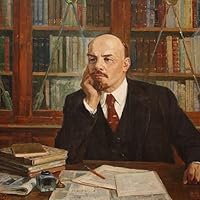
With the help of Friedrich Engels, German philosopher and revolutionary Karl Marx wrote The Communist Manifesto (1848) and Das Kapital (1867-1894), works, which explain historical development in terms of the interaction of contradictory economic forces, form many regimes, and profoundly influenced the social sciences.
German social theorist Friedrich Engels collaborated with Karl Marx on The Communist Manifesto in 1848 and on numerous other works.
The Prussian kingdom introduced a prohibition on Jews, practicing law; in response, a man converted to Protestantism and shortly afterward fathered Karl Marx.
Marx began co-operating with Bruno Bauer on editing Philosophy of Religion of Georg Wilhelm Friedrich Hegel (see Democritus and Epicurus), doctoral thesis, also engaged Marx, who completed it in 1841. People described the controversial essay as "a daring and original piece... in which Marx set out to show that theology must yield to the superior wisdom." Marx decided to submit his thesis not to the particularly conservative professors at the University of Berlin but instead to the more liberal faculty of University of Jena, which for his contributed key theory awarded his Philosophiae Doctor in April 1841. Marx and Bauer, both atheists, in March 1841 began plans for a journal, entitled Archiv des Atheismus (Atheistic Archives), which never came to fruition.
Marx edited the newspaper Vorwärts! in 1844 in Paris. The urging of the Prussian government from France banished and expelled Marx in absentia; he then studied in Brussels. He joined the league in 1847 and published.
Marx participated the failure of 1848 and afterward eventually wound in London. Marx, a foreigner, corresponded for several publications of United States. He came in three volumes. Marx organized the International and the social democratic party.
People describe Marx, who most figured among humans. They typically cite Marx with Émile Durkheim and Max Weber, the principal modern architects.
Bertrand Russell later remarked of non-religious Marx, "His belief that there is a cosmic ... called dialectical materialism, which governs ... independently of human volitions, is mere mythology" (Portraits from Memory, 1956).
A large part of the book “The Holy Family” had to be dedicated to the novel “Mysteries of Paris,” which had been very successful in various political circles, including among the Critics. This work is not a production by Bauer’s group but by a Frenchman named Eugène Sue. By portraying the life and misery of the city’s workers, the book gained sympathy among people on the left. On the right, he appealed by pointing to philanthropy and generosity as a way out of social problems. Marx criticized in “Mysteries of Paris,” which he analyzed very closely, the sentimental appeal that turned away from revolutionary solutions to workers’ issues. Instead, he left the causes of misery untouched and gave prominence to the wealthy, who were seen as potential saviors through charitable actions.
The Holy Family is oft-overlooked, and wrongly so. It is an excellent trouncing of philosophical idealism, and a large portion of it is devoted to explaining the materialist basis for a morality whose central principle is human beings and their needs, interests, and capacity to expand their powers. The last few chapters are a great example of the application of Marxist aesthetics and literary criticism.
ليس الكتاب ببعيد عن الأسلوب ولا الغاية التى نجدها فى كتاب الإيديولوجية الألمانية والحقيقة أن العائلة المقدسة سابق فى كتابته ونشره على الإيديولوجية الا أن اسبقية قراءة أى منهم لا تختلف فى شىء لأن ماركس فى كلا الكتابين - وهما من أوائل أعماله وهذا له دلالته - يهاجم بالسخرية العنيفة الفلسفة المثالية المطلقة الألمانية فى شخص أصحابها من المحافظين وأشباه الثوريين والإشتراكيين وهم لديه لا يختلفون فى شىء فجميعهم يثورون ويحافظون ويبنون قلاعهم فى الخيال لا أكثر وهم أبعد ما يكونوا عن عالم الواقع وعن حل مشاكله بشكل فعال نتيجة لإغفال دراسة الاسباب الواقعية للمشكلات وإقتصارهم على البحث المجرد عن وحدة المتناقضات فى مقولات فكرية ولا شىء غير ذلك وقد ذكرت بعض أمثال هؤلاء فى التعليق على الإيديولوجية الألمانيه وكان أبرز المغضوب عليهم هناك هو ماكس شترنر تلميذ المُضَطهد من ماركس فى العائلة المقدسة ألا وهو برونو باور والذى بتأسيسة لجريدة تهدف للدخول الى عالم السياسة من وجهة نظر المثالى برونو والذى تجعل فلسفته المثالية الفكر السياسى محافظا وبطريقة سلبية وهو الامر الذى يناقض الفكر المادى والثورى لدى ماركس وهو يظهر مدى تفاهة فكر المحافظين المتطرفين فى مثاليتهم . ويبدو ماركس فى العملين وكأنه يمهد أرضية الفكر الألمانى للتحول من الفكر المثالى الى المادية ومن الفكر المحافظ البرجوازي الى الفكر الثوري الشيوعي .
Flawed, overly literary, and somewhat boring like many of the early Marx/Engels humanist works. Extremely important for historiography and intellectual development, and exceedingly interesting on that front. I wish there was more Marxist secondary literature on this work in particular, far too ignored but a bit too obtuse to get a total grip on in the first reading.
When Marx became editor of the Rheinische Zeitung (Rhine Gazette) in 1842 he opposed the publication of pretentious articles from Young Hegelians, who he felt had lost touch with reality and become absorbed in abstract philosophical disputes. With Engels, Marx had abandoned idealism for materialism and abandoned revolutionary democratism for communism. At the same time, the Bauer brothers and their fellow thinkers [The Holy Family] were moving towards a reactionary idealism, according to which only selected individuals, vehicles of the “spirit” of “pure criticism,” are the makers of history, in which the mass – the people – serve as inert ballast.
Marx and Engels decided to devote this, their first joint work, to exposure of these pernicious reactionary ideas and to a defence of their new, materialistic outlook. It includes a lot of characteristically Punch and Judy point scoring with writers of the time which I found dull but a chapter reviewing the Enlightenment from Descartes to the French Revolution was rewarding to read, albeit far too brief, several discussions of “The Jewish Question” brought out valuable comments on the nature of religious and civil freedom, while much of the extensive critique of idealist “critical” thinking and practice seems to me – and I know all too little – well worth placing alongside 21st Century Marxist critiques of postmodernism, ‘Post Marxism’ and “cultural studies”. After all, just how current is it to proclaim “The certainty prevailing at present is uncertainty”? If [post]modern critics of Marx wish to make progress, they really should try to improve on the theories which Marx and Engels examined and arguably demolished two centuries ago.
Quotes
If from real apples, pears, strawberries and almonds I form the general idea “fruit,” if I go further and imagine that my abstract idea “fruit” derives from real fruit, is an entity existing outside me, is indeed the true essence of the pear, the apple, etc., then, in the language of speculative philosophy, I am declaring that “fruit” is the substance of the pear, the apple, the almond, etc. I am saying, therefore, that to be a pear is not essential to the pear, that to be an apple is not essential to the apple, that what is essential to these things is not their real being, perceptible to the sense, but the essence that I have abstracted from them and then foisted onto them, the essence of my idea – “Fruit.” [Ch V p78]
Anybody can see in two minutes through the mystery of the speculative joking and learn to practise it himself. We would give brief directions in this respect. Problem: You must construe for me how man becomes master over beasts. Speculative Solution: Given half a dozen animals, such as the lion, the shark, the snake, the bull, the horse and the pug. From these six animals abstract the category “Animal”. Imagine “Animal” to be an independent being. Consider the lion, the shark, the snake, etc. as disguises, incarnations, of “Animal.” Just as you made your imagination, the “Animal” of your abstraction, a real being, now make real animals beings of abstraction in your imagination. You see that “Animal,” which in the lion tears man to pieces, in the shark swallows him up, in the snake stings him with venom, in the bull tosses him with its horns and in the horse kicks him, only barks at him when it presents itself as a pug. … When a child or a childish man runs away from a pug, the only thing is for the individual no longer to agree to play the silly comedy. The individual X take this step in the most unprejudiced way in the world by using a bamboo cane on a pug. You see how “Man,” through the agency of the individual x and the pug, has become master over “Animal” and consequently over animals. And in “Animal” as a pug has defeated the lion as “Animal.” [Ch V p101]
As early as 1789 Loustalot’s journal gave the motto: The great appear great in our eyes Only because we kneel Let us rise” But to rise it is not enough to do so in thought and to leave hanging over our real sensual head the real palpable yoke that cannot be subtlized away with ideas. Yet Absolute Criticism has learned from Hegel’s Phenomenology at least the art of changing real objective chains that exist outside me into mere ideal, mere subjective chains existing in me, and thus to change all exterior palpable struggles into pure struggles of thought. [ChVI p111]
Herr Bruno already achieves much for the comprehension of the present social situation by his remark: “The certainty prevailing at present is uncertainty.” If Hegel says that the prevailing Chinese certainty is “Being,” the prevailing Indian certainty is “Nothingness,” etc., Absolute Criticism joins him in the “pure” way when it resolves the character of the present time in the logical category “Uncertainty,” all the purer as “Uncertainty,” like “Being” and “Nothingness,” belongs to the first chapter of speculative logic, the chapter on “Quality.” [ChVI p121]
Speculative philosophy, to be exact, Hegel’s philosophy, must transpose all questions from the form of human common sense to the form of speculative reason and change the real question into a speculative one to be able to answer it. Having distorted my question on my lips and put its own question on my lips like the catechism, it could naturally have a ready answer to all my questions, also like the catechism. [ChVI p121]
Society behaves just as exclusively as the state, only in a more polite form: it does not throw you out, but it makes it so uncomfortable for you that you go out of your own free will.” [Ch VI p129]
If “criticism” seems to clash with psychology by not distinguishing between the will to be something and the ability to be something, it must be borne in mind that it has decisive grounds to declare such a “distinction” “dogmatism.” [Ch VI p133]
….atheism, the last stage of theism, the negative recognition of God… [Ch VI p148]
Criticism’s explanations of the general state system are no less instructive. They are confined to saying that the general system must hold together the separate, self-seeking atoms. / Speaking exactly and in the prosaic sense, the members of civil society are not atoms. The specific property of the atom is that it has no properties and is therefore not connected with beings outside it by any relations determined by its own natural necessity. The atom has no needs, it is self-sufficient, the world outside it is absolute vacuum, i.e., it is contentless, senseless, meaningless, just because the atom has all its fulness in itself. The egotistic individual in civil society may in his non-sensuous imagination and lifeless abstraction inflate himself to the size of an atom, i.e., to an unrelated, self-sufficient, wantless, absolutely full, blessed being. Unblessed sensuous reality does not bother about his imagination, each of his senses compels him to believe in the existence of the world and the individuals outside him and even his profane stomach reminds him that the world outside him is not empty, but is what really fills. Every activity and property of his being, every one of his vital urges becomes a need, a necessity, which his self-seeking transforms into seeking for other things and human beings outside him. But as the need of one individual has no self-understood sense for the other egotistic individual capable of satisfying that need and therefore no direct connection with its satisfaction, each individual has to create that connection; it thus becomes the intermediary between the need of another and the object of that need. Therefore it is natural necessity, essential human properties, however alienated they may seem to be, and interest that hold the members of civil society together, not political life is their real tie. It is therefore not the state that holds the atoms of society together, but the fact that they are atoms only in imagination, in the heaven of their fancy, but in reality beings tremendously different from atoms, in other words, not divine egoists, but egotistical human beings. Only political superstition today imagines that social life must be held together by the state, whereas in reality the state is held together by civil life. [Chapter VI p162]
A little difficult to understand, and a lot of references to things that seem obscure now, but even through that, a quite enjoyable romp through an early-ish phase in the development of Marx’s and Engels’ thinking, particularly on Idealism and how their ideas can be understood in contrast to that philosophy.
Time will tell, but my hope is that having read this will make it easier to get understand and delve deeply into Marx and Marxism going forward.
Now, on to The German Ideology, so, we’ll see how much it helps having read The Holy Family.
Definitely one of the most difficult to understand works Marx and Engels have written (although that certainly comes with the subject matter), consummating the duo's break with the backfacing idealism of Hegel (and the broader young Hegelian movement). Unlike other works authored in concert by the two, the sections each person authored are signed by their name, a practice likely abandoned later on to avoid restricting the flow of their books, although the differences of writing style between Marx and Engels should give away who authored what to anyone familiar with their works.
A few notable sections of this book are dedicated to political economy which offer the interested reader an insight into how Marx and Engels developed the labour theory of value from preceding economists and formulated their critique of capitalism. But where this book truly shines and, indeed, where the bulk of the book is concerned, is in its critique of Hegelian philosophy and the hollow idealism of Bruno Bauer (who, knowingly or unknowingly, sadly still has many partisans in the present day) who effectively makes a religion out of the state, imbuing it with almost divine qualities under which all people become atoms. The contributions of Marx and Engels on political philosophy here, offering even a gentle if grateful rebuke to Rousseau, is indispensible and surely laid the basis for their subsequent critiques of Ferdinand Lassalle, Eugen Dühring, and others. Beyond their elaborations on political philosophy and the philosophy of law, the two make an attempt to chart the history philosophy (and materialism in particular) from ancient Greece to the Enlightenment, going into detail about the contributions and errors of Descartes, Hobbes, Locke, and many other well-known philosophers. This contribution to the history of philosophy which can as well be understood as a guide or warning in reading these philosophers from the perspective of dialectical materialism is one unmatched until the time of Lenin and Stalin when a whole department of experts were put together to study this field.
On the whole, this book, although still very much reflective of that time when Marx and Engels were really beginning to lay out their philosophical worldview, offers a great wealth of information in the history of materialist philosophy and offers an excellent initial polemic of the "worship" of the state as this perpetual solver of all problems that many still see it as and gives the reader a window into the development of Marx and Engels' ideas from 1845, when they were developing, into their concrete form as seen in works such as Anti-Dühring or Capital.
I would only recommend reading this if you have a particular fascination with the early thought of Marx & Engels—particularly their break with the Young Hegelians and their first attempts to work out an argument for philosophical materialism. If that’s your cup of tea, go for this. If you really just want to understand Marx & Engels in ways that are more broadly applicable, skip this one.
This was not very good. Erratic, poorly translated, and too slight to be very meaningful. AFAICT most of the important ideas are covered (more clearly) in other works anyway.
Scrivo un'unica recensione di quest'opera e de L'ideologia tedesca perché possono essere lette di seguito, quasi come un unicum, rappresentando, accanto ai più noti Manoscritti economico-filosofici del 1844 il momento del definitivo distacco dei due pensatori dall'idealismo della sinistra hegeliana e dell'elaborazione di quello che sarebbe stato l'architrave su cui verrà eretta la grandiosa costruzione teorica marx-engelsiana, la concezione materialistica della storia. Entrambe le opere sono state scritte tra il 1844 e il 1845 come risposta polemica alle posizioni dei filosofi tedeschi della sinistra hegeliana. In particolare La sacra famiglia, o Critica della critica critica intende polemizzare con la rivista Allgemaine literatur-Zeitung che Bruno Bauer, uno degli esponenti di spicco dei giovani hegeliani, pubblicava con l'apporto dei fratelli e di alcuni altri esponenti dell'idealismo prussiano. E' questa l'opera che segna l'inizio del sodalizio tra Marx ed Engels, che si protrarrà dino alla morte di Marx e, idealmente, anche oltre. Quando, l'anno seguente, l'opuscolo venne pubblicato a Francoforte, la rivista di Bauer aveva già cessato le pubblicazioni, per cui dal punto di vista della polemica immediata esso apparve in ritardo sui tempi. L'ideologia tedesca, scritta l'anno successivo, riprende in qualche modo la polemica con Bauer e la amplia e sistematizza, rivolgendosi anche al pensiero di altri esponenti dell'idealismo post-hegeliano, in primis allo stesso Feuerbach, cui è dedicato il primo, forse più significativo, capitolo, a Max Stirner, agli esponenti del cosiddetto Vero socialismo. L'opera non fu pubblicata per contrasti con l'editore, e più tardi Marx ebbe a dire che era stata volentieri ... abbandonata alla roditrice critica dei topi, in quanto avevamo già raggiunto il nostro scopo principale, che era di veder chiaro in noi stessi. Apparirà in edizione integrale (salvo qualche pagina mangiata appunto dai topi...) solo nel 1932. Già nel titolo della prima opera, che avrebbe dovuto essere solo Critica della critica critica (La sacra famiglia fu un'aggiunta dell'editore, peraltro approvata da Marx) si intuisce una delle caratteristiche fondamentali delle opere di Marx e – in misura a mio modo di vedere minore – di Engels: la brillantezza della scrittura, la capacità di esporre la loro devastante e assoluta critica alla società ed all'inconsistenza della speculazione filosofica rivestendola con una ironia corrosiva che molte volte spinge, durante la lettura di entrambi i testi, al sorriso se non al riso sardonico. E' una caratteristica a mio avviso non secondaria rispetto al contenuto delle opere dei due immensi pensatori, perché contribuisce a rendere accessibili concetti che in alcuni casi, se non si è armati di solide basi teoretiche, si fatica a comprendere appieno. Si tenga presente che quando i due scrivono La sacra famiglia hanno rispettivamente 26 e 24 anni, che Marx si trova da pochi mesi in esilio volontario a Parigi, dopo la conclusione dell'esperienza della Gazzetta renana e la constatazione della impossibilità di proseguire, nella Germania reazionaria di Federico Guglielmo IV, un'attività pubblicistica e politica che non attirasse gli occhiuti interventi della censura, e che Engels ha appena trascorso un periodo di apprendistato nella fabbrica di famiglia in Inghilterra. Sono quindi entrambi giovani, pieni di energia, il loro pensiero è in costante evoluzione e maturazione , vivificato dal contatto con i circoli operai comunisti di Parigi e Manchester: entrambi hanno una gran fame di realtà, di conoscenza, entrambi sono pienamente consapevoli che il loro distacco dall'idealismo hegeliano li sta portando verso nuovi lidi, per giungere ai quali sarà necessario un immane sforzo di approfondimento teorico: intravedono che al pensiero filosofico si può attribuire un nuovo ruolo, un nuovo rapporto con la storia e con l'evoluzione della società, e questa visione sarà mirabilmente sintetizzata nell'ultima, celeberrima, delle Tesi su Feuerbach che Marx scriverà nel 1845: I filosofi hanno solo interpretato il mondo in modi diversi; si tratta però di mutarlo. Per approdare a questi nuovi lidi è però necessario fare i conti con l'idealismo, con Hegel, con Feuerbach e con i loro epigoni, che ancora attribuiscono al mondo delle idee e alla speculazione astratta del filosofo la funzione di motore in grado di cambiare il mondo. La sacra famiglia e, in maniera più organica, L'ideologia tedesca nascono proprio con questo obiettivo di marcare il distacco definitivo da una concezione teorica che sino a pochi anni prima era stata la loro (tra l'altro quelli che ora sono i bersagli della loro polemica erano stati in molti casi degli amici). L'importanza delle due opere non sta tanto nella polemica diretta con i pensatori post-hegeliani, che come detto in alcuni casi appariva superata già al tempo, quanto nella possibilità di ricostruire la fecondissima e rapidissima evoluzione della concezione teorica di Marx ed Engels, della loro capacità di comprendere la storia come un movimento incessante alla cui base sono lo sviluppo delle forze produttive, dei relativi rapporti sociali di produzione e la contraddizione che nelle varie fasi storiche si è stabilita tra questi e quelle. Marx ed Engels ci dicono, in forma più embrionale ne La sacra famiglia e più compiuta ed articolata ne L'ideologia tedesca, che non sono le idee che fanno la storia, ma le condizioni materiali di vita degli uomini, così come sono determinate dai rapporti che tra loro si stabiliscono essenzialmente a causa della necessità di organizzare la produzione e la distribuzione dei beni di cui gli uomini stessi necessitano. Ci dicono che tutta la storia dell'umanità, compresa la storia delle idee che essa ha prodotto e delle istituzioni politiche, religiose, giuridiche etc. che ha costruito nelle varie epoche, e compresa la forma in cui la proprietà delle cose si manifesta, può essere spiegata a partire dalle condizioni materiali di vita determinate dalle necessità della produzione. Così, ad esempio, il modo di produzione feudale, basato sulla servitù della gleba nelle campagne e sulle corporazioni artigiane nelle città, comportava una necessaria organizzazione della proprietà delle terre da parte del Signore, una organizzazione gerarchica e un diritto volti ad assicurare la perpetuazione di quell'ordine, concezioni religiose che riflettevano la visione dell'uomo che tale ordine produttivo comportava etc. Marx ed Engels ci dicono anche che lo sviluppo delle forze produttive, cioè della capacità che la società acquisisce di produrre in modo diverso, entra comunque in contraddizione con i rapporti sociali di produzione, cioè con l'organizzazione che la società si è data per regolare la produzione, e che questa contraddizione porta inevitabilmente ad un cambiamento, spesso violento, dell'organizzazione sociale, con la sostituzione del dominio di una classe con un'altra. Così, per rimanere nell'esempio precedente, le botteghe degli artigiani medievali hanno posto le basi per la nascita delle prime officine in cui prevale il lavoro salariato, e per una nuova organizzazione e divisione del lavoro tra le persone, in definitiva per la nascita di una nuova classe capitalistica borghese. L'ulteriore sviluppo di questa organizzazione della produzione non poteva avvenire nell'ambito dei rapporti sociali di produzione dati, ed è stato quindi necessario che la nuova classe borghese prendesse il potere e li cambiasse, cambiando così anche la sovrastruttura politica, istituzionale e culturale che le accompagnava. Così, come è avvenuto in passato, ad un determinato grado di sviluppo le forze produttive della società capitalistica entreranno in contraddizione con i rapporti sociali di produzione che le reggono, e l'impalcatura crollerà. L'elemento di contraddizione è identificato in Marx ed Engels nel proletariato, classe generata dalla divisione del lavoro che nella produzione capitalistica raggiunge il suo apice e che avrà il compito storico di portare l'umanità verso una società senza più classi, e quindi senza più necessità di politica, stato, religione. E' la vera e propria fondazione della Concezione materialistica della storia che La Sacra famiglia e L'ideologia tedesca ci consegnano: è a mio avviso uno dei più alti e formidabili strumenti di comprensione della realtà sociale che ancora possediamo, pur con tutte le elaborazioni teoriche intervenute in oltre 150 anni. Le aspettative rivoluzionarie di Marx ed Engels, il compito storico di liberazione assegnato al proletariato non si sono inverati, e forse a queste possono essere sostituite, o affiancate come possibilità, visioni più cupe di un esito luxemburghianamante barbarico ed apocalittico, ma l'idea di storia come movimento delle forze produttive, la lucida analisi della contraddizione tra queste e i rapporti sociali stanno lì come pilastri imprescindibili del nostro sapere comune, che solo la stupidità dei tempi e degli interessi dominanti tende a farci dimenticare. Ma, come dice un grande poeta italiano, la storia dà torto e dà ragione e non mancherà di farlo anche stavolta.
Hard to rate this one. It's like reading a hellthread on usenet or the fediverse, but only reading one side. That side DOMINATES the other side when you only read that side - I'm sure in context the opposing side might have something to say for itself. But it looks pretty conclusive -- you can judge Marx by the fruit of his ideas and the genocides and the Pol Pots and the Mao Cultural Revolution who clearly follow from him but this, this stuff he is defeating is easily capable of worse. Why do we know this? Because it is so obviously the precursor to german national socialism a la Adolph Hitler. This book reads very much as if Marx was arguing with actual nazis, nearly a century later. And *soundly* defeating them. It echoes the many, many hellthreads I've gotten myself into on the fediverse with (neo)nazis. We can look back with 2020 hindsight and see where Marx went wrong but it's interesting to see what he was up against.
But there were some differences between the modern nazis and the 19th century 'criticalists' -- the 'ideas' weren't purified (in isolation or otherwise) as much yet. And to that extent we can use them as a kind of 'what-if' stereo vision for what modern nazis think, especially given the rise of the increasingly authoritarian right in the US it can help the rest of us reason past and through their arguments in their modern form. But it is very jumbled, perhaps due to the translation or just plain german cultural weirdness -- so it's hard to piece the puzzle together as a modern reader. But that was kind of the point -- the Criticalists were all over the place, and Marx probably had to be to match them.
My translations had mention of p-freedom which I'm sure is some kind of typo but I'm keeping it.
"A Sagrada Família" é uma obra escrita por Karl Marx e Friedrich Engels, publicada em 1845. Essa obra é uma resposta crítica às ideias filosóficas de Bruno Bauer e seus seguidores, conhecidos como os "Jovens Hegelianos de Esquerda."
1. Contexto Filosófico: "A Sagrada Família" surgiu no contexto do debate intelectual entre os Jovens Hegelianos de Esquerda e Marx e Engels. Os Jovens Hegelianos estavam engajados em discussões sobre religião, filosofia e política, e Marx e Engels buscaram criticar suas ideias.
2. Crítica à Filosofia Idealista: Uma das principais críticas de Marx e Engels na obra é direcionada à filosofia idealista dos Jovens Hegelianos. Eles argumentam que essa abordagem filosófica não é adequada para a compreensão das questões sociais e econômicas concretas.
3. Materialismo Histórico: "A Sagrada Família" também introduz conceitos-chave do materialismo histórico, uma das bases do pensamento de Marx. Eles argumentam que as ideias e a cultura de uma sociedade são moldadas pelas condições materiais e econômicas em que ela existe.
4. Crítica à Religião: A obra contém críticas à religião como uma forma de alienação que desvia a atenção das condições reais de vida e da luta de classes.
5. Política e Sociedade: Marx e Engels discutem a política e a sociedade, destacando a importância da luta de classes como um motor da mudança social e enfatizando a necessidade de uma abordagem prática para a transformação social.
Em resumo, "A Sagrada Família" é uma obra que desempenhou um papel na transição do pensamento de Marx de sua fase jovem hegeliana para o desenvolvimento do materialismo histórico. Ela critica a filosofia idealista, introduz conceitos-chave do pensamento marxista e destaca a importância da análise das condições materiais e sociais na compreensão da sociedade e da política.
في انتقاد ماركس للحداثيين المنشغلين بتخصيص الموارد العقلية للنقد، يؤكد ماركس على أن توجه الحداثيين والفلسفة المتبعة من قبلهم يعزز فكرة الفصل بين الفرد وبين عاطفته، حيث أن الحب في تصورهم أشبه بالذات المنفصلة عن كينونة الإنسان، وهو ما يجعل من الإنسان العاقل معفول به بالوقت الذي يكون الحب هو الفاعل.
كشف ماركس الإشكالية في هذا التوجه؛ حيث نرى أن في تتبعه لأزمة الرجل يكشف كيف تُدان العاطفة، وإن صح القول "الذات العاطفية". حسب هذا التوجه، العاطفة، وهي مربوطة بشكلٍ وطيدٍ بحب الرجال للنساء، تسيطر على المرء وبالتالي يغدو الرجل غير قادر على إتمام المهام التي وُجد على الأرض كي يتممها، ألا وهي "إنقاذ البشرية" وما يترتب عليها من مهام سياسية من خلال النقد والمشاركة الفعالة في الفلسفة. هذا الفصل لا يقتصر على العاطفة، بل هو مطبق في كل ما هو عام وكل ما هو خاص. ماركس ينتقد المجتمع الرأسمالي ويبين أن تجشيع المجتمع للتحرر السياسي الذي يوهم الفرد أنه حر على الصعيد الخاص ما هو إلا تأكيد على الإشكالية المشار إليها أعلاه، حيث أنه في واقع الأمر الوجود الفعلي للإنسان هو عدم عزله كخاص عن العام.
في رؤية ماركس يتلاشى هذا الفصل بين الحياة العامة والحياة الخاصة، فنجد تعزيز للعاطفة التي تكوّن الشخص وتماهي الشخصي وتشابكه مع السياسة. حسب هذا التوجه، الذات الإنسانية ليست أنانية والتجارب الشخصية لا تتشكل بمعزل عن الأنظمة الاقتصادية والسياسية الواسعة، بل تعكسها. لذا فمن الممكن التوصل إلى أن النضال في الحياة الخاصة هو جزء من النضال السياسي الجمعي في الحياة العامة، وبالتالي لا تستبدل الواحدة الأخرى ومن المفترض أن لا يتناقض الحب والعاطفة والشخصي مع السياسي.
Ok, so after having read this book I have reached the conclusion that it wasn't worth my time. I liked it towards the end, it became more applicable to real life and presented ethical dilemmas that got me thinking. the majority of this book was about the old and outdated opinions of Hegelian philosophers. If you intent on educating yourself on Marxism, you may as well skip this one as I feel like there are better writings that will get you to understand Marxism. If you see philosophy as a hobby and like to read various essays from different worldviews, give it a try.
“that Criticism does not become mass in order to remain mass, but to redeem the mass from its massy massiness”
If you enjoyed that line, go ahead read this book! If you’re a normal person and that line made you want to laugh/cry please don’t.
There are some interesting thoughts throughout but the majority is full of references to the literature of the time, which I feel you would need a professional grasp on to understand the critiques. For sure, my least favorite of Marx’s works so far.
A decent book, although it would be much more enjoyable if you actually read some of the books which concern Marx's critique of Critical critique's critique of them. Some great bits of theory though.
Marx'in bizim bildigimiz Marx'a donusmesinin arifesi olan asamasi. Edebiyat uzerine olan yazilarida elestiri okumayi sevenler icin cok akici ancak sevmeyenler icin o bolumler uzun ve sıkıcı gelebilir
Li mais de 2/3 do livro e desisti. Mais de 200 páginas e só extraí cerca de 10 parágrafos interessantes. O resto do livro é polémica fora de contexto que não me acrescentou nada de importante. Talvez venda o livro.
Una buena historia en general que por momentos pierde el hilo y se hace bastante pesada para luego volver a interesarnos en sus temas centrales y luego concluir en un final a mi gusto insuficiente y poco emotivo.
Está muy bien en líneas generales, pero por pasajes se me hizo un toque embole y me costó terminarlo. Quizás alguien mayor que yo lo apreciará mejor (?)