

What do you think?

Plunder: Napoleon's Theft of Veronese's Feast
One of The Christian Science Monitor 's Ten Best Books of May
"A highly original work of history . . . [Saltzman] has written a distinctive study that transcends both art and history and forces us to explore the connections between the two.” ―Roger Lowenstein, The Wall Street Journal
A captivatingstudy of Napoleon’s plundering of Europe’s art for the Louvre, told through the story of a Renaissance masterpiece seized from Venice
Cynthia Saltzman’s Plunder recounts the fate of Paolo Veronese’s Wedding Feast at Cana , a vast, sublime canvas that the French, under the command of the young Napoleon Bonaparte, tore from a wall of the monastery of San Giorgio Maggiore, on an island in Venice, in 1797. Painted in 1563 during the Renaissance, the picture was immediately hailed as a masterpiece. Veronese had filled the scene with some 130 figures, lavishing color on the canvas to build the illusion that the viewers’ space opened onto a biblical banquet taking place on a terrace in sixteenth-century Venice. Once pulled from the wall, the Venetian canvas crossed the Mediterranean rolled on a cylinder; soon after, artworks commandeered from Venice and Rome were triumphantly brought into Paris. In 1801, the Veronese went on exhibition at the Louvre, the new public art museum founded during the Revolution in the former palace of the French kings.
As Saltzman tells the larger story of Napoleon’s looting of Italian art and its role in the creation of the Louvre, she reveals the contradictions of his character: his thirst for greatness―to carry forward the finest aspects of civilization―and his ruthlessness in getting whatever he sought. After Napoleon’s 1815 defeat at Waterloo, the Duke of Wellington and the Allies forced the French to return many of the Louvre’s plundered paintings and sculptures. Nevertheless, The Wedding Feast at Cana remains in Paris to this day, hanging directly across from the Mona Lisa .
Expertly researched and deftly told, Plunder chronicles one of the most spectacular art appropriation campaigns in history, one that sheds light on a seminal historical figure and the complex origins of one of the great museums of the world.
"A highly original work of history . . . [Saltzman] has written a distinctive study that transcends both art and history and forces us to explore the connections between the two.” ―Roger Lowenstein, The Wall Street Journal
A captivatingstudy of Napoleon’s plundering of Europe’s art for the Louvre, told through the story of a Renaissance masterpiece seized from Venice
Cynthia Saltzman’s Plunder recounts the fate of Paolo Veronese’s Wedding Feast at Cana , a vast, sublime canvas that the French, under the command of the young Napoleon Bonaparte, tore from a wall of the monastery of San Giorgio Maggiore, on an island in Venice, in 1797. Painted in 1563 during the Renaissance, the picture was immediately hailed as a masterpiece. Veronese had filled the scene with some 130 figures, lavishing color on the canvas to build the illusion that the viewers’ space opened onto a biblical banquet taking place on a terrace in sixteenth-century Venice. Once pulled from the wall, the Venetian canvas crossed the Mediterranean rolled on a cylinder; soon after, artworks commandeered from Venice and Rome were triumphantly brought into Paris. In 1801, the Veronese went on exhibition at the Louvre, the new public art museum founded during the Revolution in the former palace of the French kings.
As Saltzman tells the larger story of Napoleon’s looting of Italian art and its role in the creation of the Louvre, she reveals the contradictions of his character: his thirst for greatness―to carry forward the finest aspects of civilization―and his ruthlessness in getting whatever he sought. After Napoleon’s 1815 defeat at Waterloo, the Duke of Wellington and the Allies forced the French to return many of the Louvre’s plundered paintings and sculptures. Nevertheless, The Wedding Feast at Cana remains in Paris to this day, hanging directly across from the Mona Lisa .
Expertly researched and deftly told, Plunder chronicles one of the most spectacular art appropriation campaigns in history, one that sheds light on a seminal historical figure and the complex origins of one of the great museums of the world.
336 pages, Hardcover
Published May 11, 2021
Ratings & Reviews
Friends & Following
Create a free account to discover what your friends think of this book!
Community Reviews
Displaying 1 - 30 of 63 reviews

Read
August 20, 2021Shame on me, but I never knew or never really cared where the Lourve got its treasures. I just assumed some rich guys bought some paintings from some other rich guys.
But, no. It was Napoleon, who from the first military victories demanded art from the conquered. Every bit as artistically rapacious as those Nazis, maybe more so.
This was good, but I'd think its appeal would be to a niche audience.
But, no. It was Napoleon, who from the first military victories demanded art from the conquered. Every bit as artistically rapacious as those Nazis, maybe more so.
This was good, but I'd think its appeal would be to a niche audience.

February 17, 2022
Read this book as part of the reading group I belong to at my local Museum of Art. I didn't know that Napoleon set out to plunder so much art as he slaughtered his way thru Europe, only to be outmatched by Hitler as he in turn slaughtered his way thru Europe.
Napoleon sought to "liberate" fine art from the hands of the aristocrats and papal authorities as part of his plan to "free" Europe from its elitist past - only to become First Consul and Emperor of France. So much for equality! In France the visual arts were linked for some reason to political power so it would seem that the more art he stole the bigger his power base would become. He was very successful; he had the unquestioning support of the French Government and their citizens; he threatened and cajoled cities to surrender, demanded huge sums of money and quantities of fine art and if they refused he would unleash the fury of his Grand Army.
After the loss of five to six million lives over the twenty fives years' of French revolutionary and Napoleonic wars, the European powers got their act together at last and defeated him in the Peninsular War under the leadership of Wellington and then at Waterloo under the leadership of Wellington and Blucher.
It was good to read that the British Government supported the return of the stolen art to the Vatican and wanted the restitution of hundreds of other paintings and sculptures to their previous owners.
Shawn Callon, author of The Simon Montfort Series of Spy Novels, wrote this review.
Napoleon sought to "liberate" fine art from the hands of the aristocrats and papal authorities as part of his plan to "free" Europe from its elitist past - only to become First Consul and Emperor of France. So much for equality! In France the visual arts were linked for some reason to political power so it would seem that the more art he stole the bigger his power base would become. He was very successful; he had the unquestioning support of the French Government and their citizens; he threatened and cajoled cities to surrender, demanded huge sums of money and quantities of fine art and if they refused he would unleash the fury of his Grand Army.
After the loss of five to six million lives over the twenty fives years' of French revolutionary and Napoleonic wars, the European powers got their act together at last and defeated him in the Peninsular War under the leadership of Wellington and then at Waterloo under the leadership of Wellington and Blucher.
It was good to read that the British Government supported the return of the stolen art to the Vatican and wanted the restitution of hundreds of other paintings and sculptures to their previous owners.
Shawn Callon, author of The Simon Montfort Series of Spy Novels, wrote this review.

October 25, 2020
I read my free electronic galley copy of this book well in advance of the planned May 2021 publication date. As of this writing, no one has posted a photo of the book's subject, The Wedding at Cana by Veronese, on this Goodreads page. Here it is:
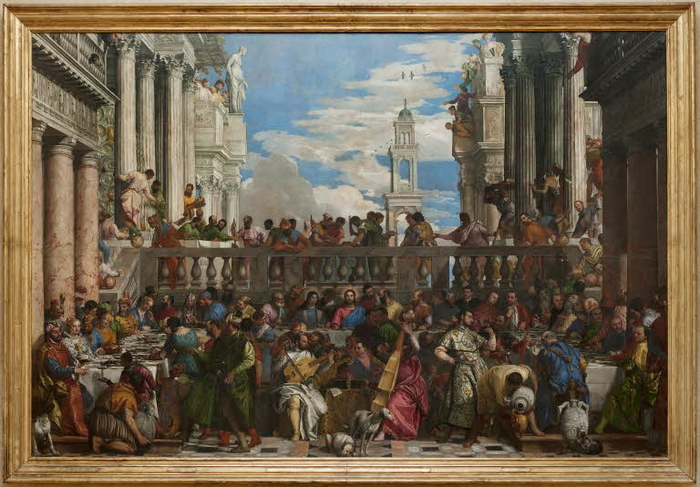
I got this photo from the website of the Louvre, where the painting hangs.
I come at this book as a history nerd, not an art nerd. However, I love to read about the intersection of art and politics. If you do too, I think you will enjoy this book. However, if your art education is limited, as mine is, you might have to show a little patience in Chapter 3. It is about how the subject painting got painted, and the specialized vocabulary comes a little hot and heavy. Sometimes explanations abut first usage (Kindle location 625: “… gesso – a white substance made of gypsum (calcium sulfate) mixed with binders of animal glue ….”), but in other places (e.g., location 644) terms like azurite and smalt defeated the dictionary residing inside my Kindle. Ditto for orpiment and realgar (location 673).
I am the type of reader who has to go to another device to check, but if you are less tightly wound than I am, you may just shrug and guess from context, probably correctly.
Similarly, when a particular painting is mention, I usually felt the need to quit the recumbent and take a look for myself. The ideal version of this book in the ideal version of this world would have beautifully-detailed reproductions included at the ready for examination (and yet, somehow, still not be outrageously expensive), but the free advance galley on my old-school black-and-white Kindle doesn't exist in that world. I must remind myself, someday after May 2021, to stop at one of the few remaining quality bookstores left standing and see if the paper copy of this book includes this feature.
Anyway, after Chapter 3, this book is about the twists and turns of fate that got the painting removed from the dining hall of an island monastery in Venice and hung in its current residence at the Louvre. The history nerd in me enjoyed the bureaucratic and political machinations which carried out Napoleon's plans to bring this work of art to Paris, and then allowed it to stay there after Napoleon fell from power, even after many other great works of art were returned to their native countries.
Irony (I): one of the British diplomats who advocated the return of Napoleon's looted art was William Richard Hamilton, who at another time was private secretary to the Earl of Elgin, of “Elgin Marbles” fame.
The painting had to come down from its perch in the Louvre on occasions when those pesky Germans were in an aggressive mood. The book makes clear that these travels and secret storages were not at all good for this now old and fragile work of art. Some seriously talented art restorers must have laid hands on it when it returned because, from all indications, it is still looking pretty good.
Irony (II): Today, the painting often looks out on a crowded sea of uninterested backs, because it faces Mona Lisa. I am ashamed to say that my memory from my long-ago trip to this room of the Louvre was of the backs of a sea of people snapping away at Mona Lisa with their pre-smartphone-era cameras, but I have no memory of The Wedding at Cana.
I hope I get to look at The Wedding at Cana with fresh eyes, some fine post-pandemic day, knowing what I know now, from this interesting book.
I wanted to post a second photo of The Wedding at Cana hanging at the Louvre. I thought the photo was really clever and enjoyable, but it is a stock photo for sale. I thought the owners of the rights might get all stroppy if I took a screenshot and reposted without surrendering the toll. The photo is delightful because it is of a modern-day crowd in the Louvre in front of the painting, photographed so it looks like the busy mob of guests formerly trapped in the painting has somehow bled through the fourth wall, assumed modern dress, and joined the spectators. See this image here.
I received a free electronic galley copy of this book from Farrar, Straus and Giroux via Netgalley. Thanks to all.
I got this photo from the website of the Louvre, where the painting hangs.
I come at this book as a history nerd, not an art nerd. However, I love to read about the intersection of art and politics. If you do too, I think you will enjoy this book. However, if your art education is limited, as mine is, you might have to show a little patience in Chapter 3. It is about how the subject painting got painted, and the specialized vocabulary comes a little hot and heavy. Sometimes explanations abut first usage (Kindle location 625: “… gesso – a white substance made of gypsum (calcium sulfate) mixed with binders of animal glue ….”), but in other places (e.g., location 644) terms like azurite and smalt defeated the dictionary residing inside my Kindle. Ditto for orpiment and realgar (location 673).
I am the type of reader who has to go to another device to check, but if you are less tightly wound than I am, you may just shrug and guess from context, probably correctly.
Similarly, when a particular painting is mention, I usually felt the need to quit the recumbent and take a look for myself. The ideal version of this book in the ideal version of this world would have beautifully-detailed reproductions included at the ready for examination (and yet, somehow, still not be outrageously expensive), but the free advance galley on my old-school black-and-white Kindle doesn't exist in that world. I must remind myself, someday after May 2021, to stop at one of the few remaining quality bookstores left standing and see if the paper copy of this book includes this feature.
Anyway, after Chapter 3, this book is about the twists and turns of fate that got the painting removed from the dining hall of an island monastery in Venice and hung in its current residence at the Louvre. The history nerd in me enjoyed the bureaucratic and political machinations which carried out Napoleon's plans to bring this work of art to Paris, and then allowed it to stay there after Napoleon fell from power, even after many other great works of art were returned to their native countries.
Irony (I): one of the British diplomats who advocated the return of Napoleon's looted art was William Richard Hamilton, who at another time was private secretary to the Earl of Elgin, of “Elgin Marbles” fame.
The painting had to come down from its perch in the Louvre on occasions when those pesky Germans were in an aggressive mood. The book makes clear that these travels and secret storages were not at all good for this now old and fragile work of art. Some seriously talented art restorers must have laid hands on it when it returned because, from all indications, it is still looking pretty good.
Irony (II): Today, the painting often looks out on a crowded sea of uninterested backs, because it faces Mona Lisa. I am ashamed to say that my memory from my long-ago trip to this room of the Louvre was of the backs of a sea of people snapping away at Mona Lisa with their pre-smartphone-era cameras, but I have no memory of The Wedding at Cana.
I hope I get to look at The Wedding at Cana with fresh eyes, some fine post-pandemic day, knowing what I know now, from this interesting book.
I wanted to post a second photo of The Wedding at Cana hanging at the Louvre. I thought the photo was really clever and enjoyable, but it is a stock photo for sale. I thought the owners of the rights might get all stroppy if I took a screenshot and reposted without surrendering the toll. The photo is delightful because it is of a modern-day crowd in the Louvre in front of the painting, photographed so it looks like the busy mob of guests formerly trapped in the painting has somehow bled through the fourth wall, assumed modern dress, and joined the spectators. See this image here.
I received a free electronic galley copy of this book from Farrar, Straus and Giroux via Netgalley. Thanks to all.

October 16, 2020
This book is incredibly interesting. The author takes on the subject of a particular painting, but also delves into the history of the time when this was acquired by Napoleon's army. It does not go into too much detail. I think she found the correct balance because if you do want more detail, you can read a book about Napoleon and his wars or about Veronese and his art.
Napoleon demanded artwork as part of the treaties he signed with conquered nations (Italy was mostly city states at the time, but you get the idea). This particular painting was affixed to a wall where it had originally been painted in a church in Venice. In order to move it, the painting was subjected to damage. This painting is still part of the Louvre collections today. Was that a spoiler? I think if you can look it up on the internet, it shouldn't count.
If you like art and history, I definitely recommend it.
I received an ARC from the publisher via NetGalley in exchange for an honest review.
Napoleon demanded artwork as part of the treaties he signed with conquered nations (Italy was mostly city states at the time, but you get the idea). This particular painting was affixed to a wall where it had originally been painted in a church in Venice. In order to move it, the painting was subjected to damage. This painting is still part of the Louvre collections today. Was that a spoiler? I think if you can look it up on the internet, it shouldn't count.
If you like art and history, I definitely recommend it.
I received an ARC from the publisher via NetGalley in exchange for an honest review.

February 2, 2023
If you love art history, Italy, and the Napoleonic era, you'll love this book. Fascinating account of Veronese's Wedding Feast at Cana, painted for the refectory at San Giorgio Maggiore in Venice but taken with other masterpieces as plunder when Napoleon overcame the Austrians and wouldn't take Venice's neutrality as an answer. So interesting to read about the history of European vultures descending on any dead or down-on-his-luck ruler, to swoop in and collect his collection. And for the first time I understood one reason Hitler wanted a lot back from the Louvre--the French had swiped them in the first place!
***2nd time through because I heard my girls wanted to visit the Louvre. Just as good as a re-read, and it made me want to visit a few places in Venice I haven't seen.
***2nd time through because I heard my girls wanted to visit the Louvre. Just as good as a re-read, and it made me want to visit a few places in Venice I haven't seen.

May 28, 2021
This was a fascinating look at the role art can play in attempting to legitimize a new government, as the French Army conquered Europe and took art back to Paris. The Louvre was to become the center of arts in Europe, under first the Directorate and then Napoleon, and their idea was that all the world could come to the museum and be inspired by Italian masters, German and Austrian masters, antique Roman statues, and any other 'great works' the army could acquire. Cynthia Saltzman focuses on the Venetian "Wedding Feast at Cana" by Veronese as a dramatic example of the plundering of famous masters, describing the creation of the famous piece in 1563, what it meant at the time in Venice, and the difficulty of removing the piece due to its incredible size. It is a masterpiece that would inspire artists for generations, but the moving of the piece, cutting it, rolling it, and reassembling it, has caused issues that restorers are still working on today. I found it especially interesting that after the end of the wars and Napoleon's final exile, the fate of the plundered artwork was still much in question and it took people like the Duke of Wellington to insist that countries get their works back. Saltzman gives the reader a synopsis of the art of the Louvre, in particular the "Wedding Feast at Cana" and the danger such artwork was in from Nazi plundering as well, and how the piece has been restored and displayed up to 2021.
Full of interesting information about artwork, Napoleon, and the political role art and culture has played in history and warfare, "Plunder" is well written, well researched, and definitely an important read for anyone interested in history and art.
I received an ARC of this book from NetGalley in exchange for an honest review
Full of interesting information about artwork, Napoleon, and the political role art and culture has played in history and warfare, "Plunder" is well written, well researched, and definitely an important read for anyone interested in history and art.
I received an ARC of this book from NetGalley in exchange for an honest review

April 7, 2026
In 1899, the Hague Convention on the Laws and Customs of War would prohibit the plunder of art and demand that warring nations protect cultural property. Article 56 states that "all seizure of, destruction or willful damage done to institutions...historic monuments, works of art and science, is forbidden, and should be made the subject of legal proceedings." After WWII, a strongly worded prohibition of" theft, pillage or misappropriation of, and any acts of vandalism directed against, cultural property" became international law with the 1954 Hague Convention. This treaty also banned the requisitioning of "movable cultural property situated in the territory of another High Contracting Party." As of 2019, 133 states had ratified the 1954 convention. However, for this to happen, Europe had to mature, and the old laws of warfare had to become history.
Italy, the cradle of European art and humanism, constantly suffered from the Greatest empires. Francis I, king of France, fought the Habsburgs in Italy, and in 1515 conquered the Duchy of Milan. There, he saw Leonardo do Vinci's "Last Supper" and had invited the artist to come to France. Meanwhile, the kings of Portugal and Prussia wanted to purchase the most famous religious painting of the Duchy of Parma. When, in 1661, Louis XIV began to transform Versailles, he sent agents to Rome to acquire antiquities. According to ledgers, at Versailles, in 1679 he had 303 boxes of marbles shipped there from Rome. As the French financial minister Colbert had written to the king "We must ensure that we have in France everything of beauty in Italy." And which Italian city was the most richest?
In XVI c., Francesco Sansovino, a historian, had observed that "in Venice there are more paintings than in all the rest of Italy." That's why throughout the seventeenth and eighteenth centuries, Europe's kings, nobles and other collectors had acquired many Venetian pictures and had them brought north - to England, the Netherlands, Germany, Austria, France and Lithuania. To slow the exodus of paintings from Venice, in 1773 the Senate forbade monasteries and churches to sell works of art without obtaining government permission first, but then Paris was shaken by revolution, and Europe unexpectedly became acquainted with an ambitious strategist eager to “liberate” the surrounding countries from the tyranny of the Ancien Régime - Napoleon. "He is rich in plans and is able to take them to completion in a straightforward manner," - Leonardo Salimbeni, a Venetian army captain described Napoleon, alerting his government to exactly what made the French general a treat.
After the French Revolution, the new government had to decide whether or how to nationalise artworks from churches, the fleeing nobility of the ancien régime, and the royal collections. With the intervention of abbot Henri Gregoire in 1794, the French revolutionary government moved to stop the vandalism and destruction of artworks by claiming them as a source of national heritage. As a result, the Louvre museum was opened on 10 August 1793. Latter, the French government planned to increase museum collections through the confiscation of foreign artworks as a show of national strength. Its appropriations were at first indiscriminate, but by 1794, the French government developed structured programs for art acquisition through its wars. With its "savant" system, exemplified by the Commission des Sciences et des Arts, experts would select which works should be taken—the system tried to reconcile imperial tribute with the French values of encyclopedism and public education. Thus, this book tells the story of the large-scale looting of artworks that began during Napoleon’s wars in Italy. The aim of all this was not only to help create an international museum in Paris, but also to conceal the losses of warfare or to demonstrate France’s power in Italy, leaving clearly visible, bleeding wounds in the occupied cities.
During the Napoleonic era, an unknown but immense quantity of art was acquired, destroyed, or lost through treaties, public auctions, and unsanctioned seizures. From the spring of 1796, the first Napoleonic campaign in Italy removed art objects of all kinds, which were sanctioned in provisions of the Treaty of Leoben, the Armistice of Cherasco, the Armistice of Bologna, and the Treaty of Tolentino, culminating with clauses in the 1797 Treaty of Campo Formio that transferred artworks from the Austria and the former Venetian Republic. Over 110 artworks were brought to France in 1796 alone. After the defeat of the Venetian Republic, there were several revolts against the occupying French armies. The resulting reprisals and confiscations were particularly harsh. Religious orders were abolished, and some 70 churches were demolished. Around 30,000 works of art were sold or went missing. The most tragic fate befell the 16th-century painting "The Wedding Feast at Cana" by Paolo Veronese, which Giacomo Barri called "a wonder of the world." The painting was cut in two and sent to the Louvre (where it remains).
The book describes the complex journey of the painting to France, its restoration and exhibition history, and how this affected the canvas itself. It tells not only the story of the removal of a single painting, but also of the cultural plundering of Italy, Prussia, Austria, and Spain—from Venice’s efforts to protect its art to the Allies’ attempts to recover stolen treasures. It is a story about the Louvre, which transformed from a royal palace into a battlefield of European culture. On October 5, Dominique Vivant, Baron Denon, the first director of the Louvre museum, said: "Europe had had to be conquered in order to fashion this trophy, Europe had had to join together to destroy it."
So, if you want to know more about European art, you must read this book.
Italy, the cradle of European art and humanism, constantly suffered from the Greatest empires. Francis I, king of France, fought the Habsburgs in Italy, and in 1515 conquered the Duchy of Milan. There, he saw Leonardo do Vinci's "Last Supper" and had invited the artist to come to France. Meanwhile, the kings of Portugal and Prussia wanted to purchase the most famous religious painting of the Duchy of Parma. When, in 1661, Louis XIV began to transform Versailles, he sent agents to Rome to acquire antiquities. According to ledgers, at Versailles, in 1679 he had 303 boxes of marbles shipped there from Rome. As the French financial minister Colbert had written to the king "We must ensure that we have in France everything of beauty in Italy." And which Italian city was the most richest?
In XVI c., Francesco Sansovino, a historian, had observed that "in Venice there are more paintings than in all the rest of Italy." That's why throughout the seventeenth and eighteenth centuries, Europe's kings, nobles and other collectors had acquired many Venetian pictures and had them brought north - to England, the Netherlands, Germany, Austria, France and Lithuania. To slow the exodus of paintings from Venice, in 1773 the Senate forbade monasteries and churches to sell works of art without obtaining government permission first, but then Paris was shaken by revolution, and Europe unexpectedly became acquainted with an ambitious strategist eager to “liberate” the surrounding countries from the tyranny of the Ancien Régime - Napoleon. "He is rich in plans and is able to take them to completion in a straightforward manner," - Leonardo Salimbeni, a Venetian army captain described Napoleon, alerting his government to exactly what made the French general a treat.
After the French Revolution, the new government had to decide whether or how to nationalise artworks from churches, the fleeing nobility of the ancien régime, and the royal collections. With the intervention of abbot Henri Gregoire in 1794, the French revolutionary government moved to stop the vandalism and destruction of artworks by claiming them as a source of national heritage. As a result, the Louvre museum was opened on 10 August 1793. Latter, the French government planned to increase museum collections through the confiscation of foreign artworks as a show of national strength. Its appropriations were at first indiscriminate, but by 1794, the French government developed structured programs for art acquisition through its wars. With its "savant" system, exemplified by the Commission des Sciences et des Arts, experts would select which works should be taken—the system tried to reconcile imperial tribute with the French values of encyclopedism and public education. Thus, this book tells the story of the large-scale looting of artworks that began during Napoleon’s wars in Italy. The aim of all this was not only to help create an international museum in Paris, but also to conceal the losses of warfare or to demonstrate France’s power in Italy, leaving clearly visible, bleeding wounds in the occupied cities.
During the Napoleonic era, an unknown but immense quantity of art was acquired, destroyed, or lost through treaties, public auctions, and unsanctioned seizures. From the spring of 1796, the first Napoleonic campaign in Italy removed art objects of all kinds, which were sanctioned in provisions of the Treaty of Leoben, the Armistice of Cherasco, the Armistice of Bologna, and the Treaty of Tolentino, culminating with clauses in the 1797 Treaty of Campo Formio that transferred artworks from the Austria and the former Venetian Republic. Over 110 artworks were brought to France in 1796 alone. After the defeat of the Venetian Republic, there were several revolts against the occupying French armies. The resulting reprisals and confiscations were particularly harsh. Religious orders were abolished, and some 70 churches were demolished. Around 30,000 works of art were sold or went missing. The most tragic fate befell the 16th-century painting "The Wedding Feast at Cana" by Paolo Veronese, which Giacomo Barri called "a wonder of the world." The painting was cut in two and sent to the Louvre (where it remains).
The book describes the complex journey of the painting to France, its restoration and exhibition history, and how this affected the canvas itself. It tells not only the story of the removal of a single painting, but also of the cultural plundering of Italy, Prussia, Austria, and Spain—from Venice’s efforts to protect its art to the Allies’ attempts to recover stolen treasures. It is a story about the Louvre, which transformed from a royal palace into a battlefield of European culture. On October 5, Dominique Vivant, Baron Denon, the first director of the Louvre museum, said: "Europe had had to be conquered in order to fashion this trophy, Europe had had to join together to destroy it."
So, if you want to know more about European art, you must read this book.

June 9, 2022
I read part of Plunder for my High Renaissance class last semester and was so intrigued that I checked the book out from my local library! This is a fascinating, thoroughly researched book. I was struck by how absolutely relevant this topic is today, as well. The argument that Napoleon employed to justify his theft - that the artwork's home country lacked the resources to adequately take care of it - is so commonly thrown around today during the debates surrounding the repatriation of objects stolen under colonialism. This idea is simply not new. I was also appalled at the treatment of the stolen picture itself; I found myself cringing at the descriptions of the canvas being physically ripped from the wall, pierced by nails, rolled, and stuffed in a crate. It was a reminder of the violence that is still present in the museum space today. Other thoughts about the book: in extracting resources from the countries he conquered, Napoleon took four main things - money, weapons, horses, and art. The first three make sense considering the military context, but the fourth...it raises a lot of questions. What is it about art that communicates power? In using art as an essential part of his political legacy, how do we interpret the works he not only stole, but transformed with his influence? Not only did Napoleon transform Paris into the art capital of the world with his plundered goods, but he also quite literally painted in oil a legacy for himself through the art of David, among others. How do we discern the truth within the artwork?
Want to Read
May 9, 2021From the Wall Street Journal: “Colour expresses something in itself. One can’t do without it; one must make use of it. What looks beautiful, really beautiful—is also right.” Thus wrote Vincent van Gogh to his brother Theo while reflecting on Paolo Veronese’s “The Wedding Feast at Cana,” which he (like so many before and after) saw on display at Paris’s Louvre museum.
But how did that Italian masterpiece get there? It was “Plunder,” to use the title of Cynthia Saltzman’s entertaining book about the painting and its history. Napoleon Bonaparte’s republican forces took it from a monastery, putting into action a motto that justified many thefts by the revolutionaries: “The fruits of genius are the patrimony of liberty.” We frown on such expropriation today, as the monks did then. But a book like this makes a reader pause: What if van Gogh did not have Veronese to learn from?
But how did that Italian masterpiece get there? It was “Plunder,” to use the title of Cynthia Saltzman’s entertaining book about the painting and its history. Napoleon Bonaparte’s republican forces took it from a monastery, putting into action a motto that justified many thefts by the revolutionaries: “The fruits of genius are the patrimony of liberty.” We frown on such expropriation today, as the monks did then. But a book like this makes a reader pause: What if van Gogh did not have Veronese to learn from?

Read
August 8, 2021Excellent history of the Louvre, Napoleon and Paris and Venice
September 29, 2022
This was a museum bookclub selection. It read too much like a textbook for me. I did learn appalling facts about France and it’s famous Louvre Museum. Shocking theft of art!

April 19, 2023
As the Russians are plundering the treasures of the Ukraine, this is a terrific look at art in the context of history. The author does a wonderful job of it, very readable.

December 5, 2021
To tell the story of how a masterpiece by Veronese, painted for a Venetian convent, ended up in Le Louvre, and why it is still there, involves mentioning the role of dozens of agents, some of them quite unknown to the lay reader (like the great painting restorer Pietro Edwards, for instance). As a result, the flow of Saltzman's narrative is constantly interrupted by potted biographies of a rather dizzying array of characters. As it's not clear to me how this pitfall could have been avoided, I wouldn't even call this a quibble but an observation. Other than that, this is a very interesting and well-told story. Although I knew both about the huge toll of Napoleon's wars on France and Europe and about the abysmal practice of art looting by victors, many details in this book shocked and angered me. The author wisely abstains from making parallels with situations in which some top-tier museums are embroiled today while giving us elements to reassess for ourselves how we feel about the restitution of contested works of art.
November 24, 2021
Extremely thorough recount of Napoleon's policy of culling and returning to Paris the best artwork in the towns the French Army conquered in Italy. It is so dense and ultimately heartbreaking to read about the process by which the French removed these works from churches and private collections to transport them, often rolled up or perched on oxcarts, etc., to Paris where they may have been cleaned or "restored" to disastrous effect that I had to skim the last third of this excellent book or I would have ended up reading it through my tears.

October 10, 2020
I received this book compliments of Farrar, Strauss and Giroux via NetGalley.
Standing before The Wedding Feast at Cana by Paolo Veronese a person might wonder how it came to be in the Louvre. Or the nuts and bolts of how such a large painting could be moved. As background Cynthia Saltzman describes the importance of art and artists in 16th century Venice, including an overview of Veronese's work there. She recounts the contract and execution of The Wedding Feast at Cana, created for a specific wall in the refectory of San Giorgio Maggiore in 1563.
Two hundred years later Napoleon Bonaparte began a military campaign in northern Italy. The French Directorate included orders to seize paintings and sculptures there and send them back to France. Venice had declared itself neutral, but we know how that goes and, despite its size (32' by 22') Cana was selected. With all the other art it was eventually transported to Paris, where the galleries at the Louvre gained popularity and stature with the additional displays.
Napoleon, of course, continued on both politically and militarily until his reign collapsed. Then much of the art was returned, but not Cana. Saltzman brings the painting's story up to the present, completing a well told history.. The book is a very interesting read, with extensive notes and bibliography.
Standing before The Wedding Feast at Cana by Paolo Veronese a person might wonder how it came to be in the Louvre. Or the nuts and bolts of how such a large painting could be moved. As background Cynthia Saltzman describes the importance of art and artists in 16th century Venice, including an overview of Veronese's work there. She recounts the contract and execution of The Wedding Feast at Cana, created for a specific wall in the refectory of San Giorgio Maggiore in 1563.
Two hundred years later Napoleon Bonaparte began a military campaign in northern Italy. The French Directorate included orders to seize paintings and sculptures there and send them back to France. Venice had declared itself neutral, but we know how that goes and, despite its size (32' by 22') Cana was selected. With all the other art it was eventually transported to Paris, where the galleries at the Louvre gained popularity and stature with the additional displays.
Napoleon, of course, continued on both politically and militarily until his reign collapsed. Then much of the art was returned, but not Cana. Saltzman brings the painting's story up to the present, completing a well told history.. The book is a very interesting read, with extensive notes and bibliography.

January 27, 2021
Thank you to NetGalley for the advanced copy.
Plunder is a great mixture of different histories. The history of The Wedding Feast at Cana, the history of Napoleon's campaigns, rule, and fall, the history of the Louvre, and art history all rolled into one. A fascinating read that exposes how the Louvre became one of the best and well-known art museums as a result of war plunder and yet celebrates how making the plundered art accessible to the public fueled the art movements of the nineteenth and twentieth centuries. This is a great book and I definitely recommend it to history lovers and art lovers.
Plunder is a great mixture of different histories. The history of The Wedding Feast at Cana, the history of Napoleon's campaigns, rule, and fall, the history of the Louvre, and art history all rolled into one. A fascinating read that exposes how the Louvre became one of the best and well-known art museums as a result of war plunder and yet celebrates how making the plundered art accessible to the public fueled the art movements of the nineteenth and twentieth centuries. This is a great book and I definitely recommend it to history lovers and art lovers.
September 19, 2021
A recount of how Napoleon stole one of the biggest and finest canvas of art in the world. The narrative leaves historical gaps and feels rushed; the book offers a glimpse into the vision of Napoleon as a man that wanted to rule it all and that understood the political value of art.

July 6, 2021
This book did something I didn't think could be done: it has given me qualms about my love for the Louvre. I've always loathed Napoleon, and knew in general how much looting of art he did for pure self-serving glory, but the details as revealed by Saltzman (former WSJ reporter and author of the excellent The Portrait of Dr. Gachet: The Story of a van Gogh Masterpiece) are specific and appalling.
Saltzman hangs the tale on the hook of Veronese's massive Wedding at Cana but includes a much wider range of art similarly commandeered by Bonaparte in his conquest of Europe: the four mighty bronze horses from San Marco in Venice; Vatican sculptures of Apollo Belvidere, the Laocoon, and the Belvedere Torso (considered the finest extant examples of classical sculpture at that time); the so-called "liberation" of paintings by Rubens from the country where he painted them, and much more. Basically, these smaller nations, principalities, duchies, et al. were told either they hand over the works selected by Bonaparte's art-expert cronies, or the Napoleonic forces would destroy them. Or Napoleon would crush them militarily first, then demand specific art works as the price of defeat. The art was gathered, packed, and carted back to Paris to be housed in the Louvre for the glory of France and (more importantly) of Napoleon (the museum was briefly renamed for him at that time). It's a long, complicated story with a multifarious cast of toadies, henchmen, conflicted experts, and desperate diplomats under the thumb of a tyrant. I lapped it up.
That said, the book suffers a bit from too many threads and too many actors being woven into a sometimes lumpy and hard-to-follow pattern. Historical background skips forward and back, and ranges from Napoleon's battles, the structure of the Venetian Republic, two different Metternichs, Josephine Beauharnais's lovers, and of course many artists and works of art in numerous countries. There are a few color photos of some of the artwork discussed, and a number of small black-and-white images that are so murky as to be hardly worth the inclusion. I did enjoy some of the images of the elegantly hand-written "shopping lists": "One painting by Titian... one painting by Paul Veronese..." Once Saltzman settles into the particular travails of the great Veronese wedding feast masterpiece, it becomes a more coherent and compelling tale. Poor wonder that it was: torn (literally) from the wall where it had hung for over 200 years, cut apart, rolled up, unrolled, relined, repaired, rehung several times... and it is still in the Louvre because it simply is too big, too old, and too fragile to travel again. It should be noted that after Napoleon's downfall, many artworks were repatriated, but a lot of them stayed put and remain in the galleries of the Louvre. When Wellington was through in Spain, it must be said, a lot of Velasquez ended up (and is still) on British walls. This art, it's a messy business.
The Veronese wedding is now forced to share a room with a picture of a muddy-skinned, smirking woman painted by someone called Leonardo. I hope this book will get a few people to turn and aim their cellphones at the sumptuous feast on the other wall.
A few interesting side notes: Bonaparte was quite excited to commission a painting by an ambitious young painter named Gros, commemorating Bonaparte's photo-op visit to a plague hospital in Jaffa (now part of Tel Aviv) while en route to Syria. Many French soldiers died of the plague. Napoleon downplayed it, called it "just a fever," and claimed that only those who were afraid would die of it, so he marched into the hospital, spoke to the suffering living among the corpses, and left again. How heartening... His great ambition, of course, was to create a united Europe, with a single set of laws, a single currency, sharing trade and culture (with him as the head of it all, of course). The one country which was to be excluded was... Britain. Huh. I guess we'll see how well this idea plays out, over two hundred years later, yes?
Saltzman hangs the tale on the hook of Veronese's massive Wedding at Cana but includes a much wider range of art similarly commandeered by Bonaparte in his conquest of Europe: the four mighty bronze horses from San Marco in Venice; Vatican sculptures of Apollo Belvidere, the Laocoon, and the Belvedere Torso (considered the finest extant examples of classical sculpture at that time); the so-called "liberation" of paintings by Rubens from the country where he painted them, and much more. Basically, these smaller nations, principalities, duchies, et al. were told either they hand over the works selected by Bonaparte's art-expert cronies, or the Napoleonic forces would destroy them. Or Napoleon would crush them militarily first, then demand specific art works as the price of defeat. The art was gathered, packed, and carted back to Paris to be housed in the Louvre for the glory of France and (more importantly) of Napoleon (the museum was briefly renamed for him at that time). It's a long, complicated story with a multifarious cast of toadies, henchmen, conflicted experts, and desperate diplomats under the thumb of a tyrant. I lapped it up.
That said, the book suffers a bit from too many threads and too many actors being woven into a sometimes lumpy and hard-to-follow pattern. Historical background skips forward and back, and ranges from Napoleon's battles, the structure of the Venetian Republic, two different Metternichs, Josephine Beauharnais's lovers, and of course many artists and works of art in numerous countries. There are a few color photos of some of the artwork discussed, and a number of small black-and-white images that are so murky as to be hardly worth the inclusion. I did enjoy some of the images of the elegantly hand-written "shopping lists": "One painting by Titian... one painting by Paul Veronese..." Once Saltzman settles into the particular travails of the great Veronese wedding feast masterpiece, it becomes a more coherent and compelling tale. Poor wonder that it was: torn (literally) from the wall where it had hung for over 200 years, cut apart, rolled up, unrolled, relined, repaired, rehung several times... and it is still in the Louvre because it simply is too big, too old, and too fragile to travel again. It should be noted that after Napoleon's downfall, many artworks were repatriated, but a lot of them stayed put and remain in the galleries of the Louvre. When Wellington was through in Spain, it must be said, a lot of Velasquez ended up (and is still) on British walls. This art, it's a messy business.
The Veronese wedding is now forced to share a room with a picture of a muddy-skinned, smirking woman painted by someone called Leonardo. I hope this book will get a few people to turn and aim their cellphones at the sumptuous feast on the other wall.
A few interesting side notes: Bonaparte was quite excited to commission a painting by an ambitious young painter named Gros, commemorating Bonaparte's photo-op visit to a plague hospital in Jaffa (now part of Tel Aviv) while en route to Syria. Many French soldiers died of the plague. Napoleon downplayed it, called it "just a fever," and claimed that only those who were afraid would die of it, so he marched into the hospital, spoke to the suffering living among the corpses, and left again. How heartening... His great ambition, of course, was to create a united Europe, with a single set of laws, a single currency, sharing trade and culture (with him as the head of it all, of course). The one country which was to be excluded was... Britain. Huh. I guess we'll see how well this idea plays out, over two hundred years later, yes?

July 28, 2021
Today’s Nonfiction post is on Plunder: Napoleon's Theft of Veronese's Feast by Cynthia Saltzman. It is 317 pages including notes and it is published by Farrar, Straus, and Giroux. The cover is a picture of the stolen painting. There is mild foul language, no sex, and no violence in this book. The intended reader is someone who is interested in art history and Napoleon. There Be Spoilers Ahead.
From the dust jacket- A captivating study of Napoleon’s plundering of Europe’s art for the Louvre, told through the story of a Renaissance masterpiece seized from Venice
Cynthia Saltzman’s Plunder recounts the fate of Paolo Veronese’s Wedding Feast at Cana, a vast, sublime canvas that the French, under the command of the young Napoleon Bonaparte, tore from a wall of the monastery of San Giorgio Maggiore, on an island in Venice, in 1797. Painted in 1563 during the Renaissance, the picture was immediately hailed as a masterpiece. Veronese had filled the scene with some 130 figures, lavishing color on the canvas to build the illusion that the viewers’ space opened onto a biblical banquet taking place on a terrace in sixteenth-century Venice. Once pulled from the wall, the Venetian canvas crossed the Mediterranean rolled on a cylinder; soon after, artworks commandeered from Venice and Rome were triumphantly brought into Paris. In 1801, the Veronese went on exhibition at the Louvre, the new public art museum founded during the Revolution in the former palace of the French kings.
As Saltzman tells the larger story of Napoleon’s looting of Italian art and its role in the creation of the Louvre, she reveals the contradictions of his character: his thirst for greatness—to carry forward the finest aspects of civilization—and his ruthlessness in getting whatever he sought. After Napoleon’s 1815 defeat at Waterloo, the Duke of Wellington and the Allies forced the French to return many of the Louvre’s plundered paintings and sculptures. Nevertheless, The Wedding Feast at Cana remains in Paris to this day, hanging directly across from the Mona Lisa.
Expertly researched and deftly told, Plunder chronicles one of the most spectacular art appropriation campaigns in history, one that sheds light on a seminal historical figure and the complex origins of one of the great museums of the world.
Review- A wonderful and engaging book about art history and Napoleon’s greed for power. Art always has had power, power to change minds, power to inspire devotion or hatred, to show who has power and who doesn’t and Napoleon understood that. When he was still a general for the French Republic, he was tasked to bring back to Paris the old masters of art, and he did just that at any cost. I have not read much about Napoleon but after this book I am more interested in learning about him and his wars. Saltzman has done great research and her notes are very good, if you wish to study further. She is also an engaging writer who knows how to explain her subject to someone who knows very little about him or the individual art pieces in this book. I would recommend this book.
I give this book a Five out of Five stars. I get nothing for my review and I borrowed this book from my local library.
From the dust jacket- A captivating study of Napoleon’s plundering of Europe’s art for the Louvre, told through the story of a Renaissance masterpiece seized from Venice
Cynthia Saltzman’s Plunder recounts the fate of Paolo Veronese’s Wedding Feast at Cana, a vast, sublime canvas that the French, under the command of the young Napoleon Bonaparte, tore from a wall of the monastery of San Giorgio Maggiore, on an island in Venice, in 1797. Painted in 1563 during the Renaissance, the picture was immediately hailed as a masterpiece. Veronese had filled the scene with some 130 figures, lavishing color on the canvas to build the illusion that the viewers’ space opened onto a biblical banquet taking place on a terrace in sixteenth-century Venice. Once pulled from the wall, the Venetian canvas crossed the Mediterranean rolled on a cylinder; soon after, artworks commandeered from Venice and Rome were triumphantly brought into Paris. In 1801, the Veronese went on exhibition at the Louvre, the new public art museum founded during the Revolution in the former palace of the French kings.
As Saltzman tells the larger story of Napoleon’s looting of Italian art and its role in the creation of the Louvre, she reveals the contradictions of his character: his thirst for greatness—to carry forward the finest aspects of civilization—and his ruthlessness in getting whatever he sought. After Napoleon’s 1815 defeat at Waterloo, the Duke of Wellington and the Allies forced the French to return many of the Louvre’s plundered paintings and sculptures. Nevertheless, The Wedding Feast at Cana remains in Paris to this day, hanging directly across from the Mona Lisa.
Expertly researched and deftly told, Plunder chronicles one of the most spectacular art appropriation campaigns in history, one that sheds light on a seminal historical figure and the complex origins of one of the great museums of the world.
Review- A wonderful and engaging book about art history and Napoleon’s greed for power. Art always has had power, power to change minds, power to inspire devotion or hatred, to show who has power and who doesn’t and Napoleon understood that. When he was still a general for the French Republic, he was tasked to bring back to Paris the old masters of art, and he did just that at any cost. I have not read much about Napoleon but after this book I am more interested in learning about him and his wars. Saltzman has done great research and her notes are very good, if you wish to study further. She is also an engaging writer who knows how to explain her subject to someone who knows very little about him or the individual art pieces in this book. I would recommend this book.
I give this book a Five out of Five stars. I get nothing for my review and I borrowed this book from my local library.

November 26, 2024
Art looting on a continental scale is a depressing subject which made me postpone reading this book several times but when I finally read it, I discovered a well-written account of Paolo Veronese’s Wedding Feast at Cana’s history from its initial commission in Venice for a Benedictine abbey, to the theft of it (and many, many more others) by the French and its subsequent travails in France until ending up being exhibited in the same salon as Gioconda.
And yes, like many other tourists, I was only interested in taking a selfie with the Louvre’s semi-smiling faded greenish attraction, and I paid little attention to Veronese’s masterpiece. Hopefully, I will be able to go back one day to properly admire it.
The book also covers Napoleon’s European-wide campaigns of art looting. He forced its defeated enemies, including Venice, Milan, Rome, Prussia, Spain, and the Austrian Netherlands to hand over treasures, including art masterpieces.
The French republican government, his enlightened general (later dictator, later Emperor) carrying the Revolution abroad, and following his fall, the returned king, academicians, and ministers didn’t see themselves as plunderers, they felt the art masterpieces belonged to them by rights more enduring than those of victory.
“The Executive Directory is convinced, Citizen General, that you see the glory of the Fine Arts as attached to that of the army you command.
Italy owes to them [the Fine Arts] a great part of its riches and its fame, but the time has come when their reign must pass to France to solidify and embellish that of liberty.”
With gallic modesty, Napoleon said - “I must make all the peoples of Europe into a single people, and Paris, the capital of the world.”
It didn’t work out quite so, but even after Napoleon’s defeat, the French used all the possible subterfuges to hang on to the looted art and somehow kept many, including the Wedding Feast at Cana, which they said it was too frail to be transported, but they somehow did transport it out of Paris several times during the Franco-Prussian and the Second World War.
The amount of savagery, betrayal, lies, and treachery used to steal neighboring nations’ art, plunder their treasures, put an end to the thousand years old Republic of Venice, made an enemy of the German people (with bloody consequences later), humiliate Netherlands, Spain, Portugal, Italy’s cities, etc, making a mockery of their motto, “ liberté, égalité, fraternité”.
And yes, like many other tourists, I was only interested in taking a selfie with the Louvre’s semi-smiling faded greenish attraction, and I paid little attention to Veronese’s masterpiece. Hopefully, I will be able to go back one day to properly admire it.
The book also covers Napoleon’s European-wide campaigns of art looting. He forced its defeated enemies, including Venice, Milan, Rome, Prussia, Spain, and the Austrian Netherlands to hand over treasures, including art masterpieces.
The French republican government, his enlightened general (later dictator, later Emperor) carrying the Revolution abroad, and following his fall, the returned king, academicians, and ministers didn’t see themselves as plunderers, they felt the art masterpieces belonged to them by rights more enduring than those of victory.
“The Executive Directory is convinced, Citizen General, that you see the glory of the Fine Arts as attached to that of the army you command.
Italy owes to them [the Fine Arts] a great part of its riches and its fame, but the time has come when their reign must pass to France to solidify and embellish that of liberty.”
With gallic modesty, Napoleon said - “I must make all the peoples of Europe into a single people, and Paris, the capital of the world.”
It didn’t work out quite so, but even after Napoleon’s defeat, the French used all the possible subterfuges to hang on to the looted art and somehow kept many, including the Wedding Feast at Cana, which they said it was too frail to be transported, but they somehow did transport it out of Paris several times during the Franco-Prussian and the Second World War.
The amount of savagery, betrayal, lies, and treachery used to steal neighboring nations’ art, plunder their treasures, put an end to the thousand years old Republic of Venice, made an enemy of the German people (with bloody consequences later), humiliate Netherlands, Spain, Portugal, Italy’s cities, etc, making a mockery of their motto, “ liberté, égalité, fraternité”.

May 28, 2021
For more reviews and bookish posts please visit: https://www.ManOfLaBook.com
Plunder: Napoleon’s Theft of Veronese’s Feast by Cynthia Saltzman is a historical account of the way Napoleon Bonaparte plundered art during his conquests for the Louvre. Ms. Saltzman is a published author, focusing on late 19th century art.
A fascinating book about Napoleon‘s war and conquests weaponizing some of Europe’s most important artworks. The focus of the book is mainly The Wedding Feast at Cana, a large painting by Paolo Veronese. The painting, commissioned in 1562 by Benedictine monks at the San Giorgio Monastery in Venice, Italy. It was considered a masterpiece of unparalleled beauty.
This book combines politics, history and art history. Besides books about art theft during World War II, I never read any others which deal with the subject. I found Plunder: Napoleon’s Theft of Veronese’s Feast by Cynthia Saltzman to be an interesting primer of the time. Fascinating as well was the effort it took for artists not only to paint, but to make their own supplies.
I read this book as a e-galley, but I often had to stop to search for the paintings mentioned in the book. We live in wonderful times where most of the most magnificent and significant artworks in history are available to view, for free, with a few stokes on the keyboard. From experience I know it’s not even close to view the originals, but for my purposes it was good enough.
Ms. Saltzman finishes the book bringing the reader to current times, in the context of the title paintings. While it still resides in the Louvre, it is displayed opposite of the Mona Lisa, and does not get the recognition it deserves. The only time it moved was during World War II when the Nazis looted artwork throughout. This painting was never meant to be moved, but it did several times and is now put together in a way which does not make it moveable at all.
This book has many facets. The subject might be just one painting, but it also tells of the history of the time, military tactics, art history, and religious and regional politics. The author managed to find a fine balance, educating and information without confusing.
Bonus points for quoting War & Peace in context.
Plunder: Napoleon’s Theft of Veronese’s Feast by Cynthia Saltzman is a historical account of the way Napoleon Bonaparte plundered art during his conquests for the Louvre. Ms. Saltzman is a published author, focusing on late 19th century art.
A fascinating book about Napoleon‘s war and conquests weaponizing some of Europe’s most important artworks. The focus of the book is mainly The Wedding Feast at Cana, a large painting by Paolo Veronese. The painting, commissioned in 1562 by Benedictine monks at the San Giorgio Monastery in Venice, Italy. It was considered a masterpiece of unparalleled beauty.
This book combines politics, history and art history. Besides books about art theft during World War II, I never read any others which deal with the subject. I found Plunder: Napoleon’s Theft of Veronese’s Feast by Cynthia Saltzman to be an interesting primer of the time. Fascinating as well was the effort it took for artists not only to paint, but to make their own supplies.
I read this book as a e-galley, but I often had to stop to search for the paintings mentioned in the book. We live in wonderful times where most of the most magnificent and significant artworks in history are available to view, for free, with a few stokes on the keyboard. From experience I know it’s not even close to view the originals, but for my purposes it was good enough.
Ms. Saltzman finishes the book bringing the reader to current times, in the context of the title paintings. While it still resides in the Louvre, it is displayed opposite of the Mona Lisa, and does not get the recognition it deserves. The only time it moved was during World War II when the Nazis looted artwork throughout. This painting was never meant to be moved, but it did several times and is now put together in a way which does not make it moveable at all.
This book has many facets. The subject might be just one painting, but it also tells of the history of the time, military tactics, art history, and religious and regional politics. The author managed to find a fine balance, educating and information without confusing.
Bonus points for quoting War & Peace in context.

February 26, 2023
If you want to learn and better understand European history and/or the history and appreciation of art, read this book. I have long wanted to know more about European history, but being the vast subject that it is, I have scarcely known where to start. I regret not having taken Western Civilization in college. I feel like I have broken off a small piece of European history to understand and fit into the larger picture. I have so much better understanding of Napoleon as a man and as a force in history, and of his campaigns throughout Europe and and Egypt. I learned so much about not only France, but Austria, Italy (or rather the city states that made up Italy at that time ), and to a lesser degree, Prussia, Spain, Germany, and Russia.
I learned so much about art. From the mechanics of weaving the canvases, building the stretchers, the scaffolding to the pigments, the details in the many people depicted, I have come to appreciate the skill, the thought, of the artist. "Veronese's ability to conjure flesh-and-blood figures moving about in space and the texture of embroidered silk and the light plain over it with no more than brushstrokes of paint seemed ...miraculous. To the modern question, 'What is art?'....the Veronese delivers a decisive answer."
I learned so much about art. From the mechanics of weaving the canvases, building the stretchers, the scaffolding to the pigments, the details in the many people depicted, I have come to appreciate the skill, the thought, of the artist. "Veronese's ability to conjure flesh-and-blood figures moving about in space and the texture of embroidered silk and the light plain over it with no more than brushstrokes of paint seemed ...miraculous. To the modern question, 'What is art?'....the Veronese delivers a decisive answer."
June 1, 2021
I enjoyed this book. Accessible for a lay person with no particular background in art. Very good explanation/description of how Veronese painted his enormous masterpiece, getting into the details of stretching a canvas - and it literally was a canvas (like from a sailboat) - and the process of obtaining and manufacturing paint and its components, especially the precious blue paint, ultramarine. Worked in some history of the Venetian Republic, Christian/Catholic religious beliefs and practices, and gave the painting and its history much needed context. Equally good was the view from 30,000 feet of Napoleon's military campaigns, and the plunder of art from not only Venice, but from all the nations he defeated. Minor quibbles - some maps would have been helpful, especially of Napoleon's Italian campaigns. More photographs of some of the masterpieces would have been helpful as well, but perhaps author could not get clearances to use them and instead had to write what the pictures portrayed. Overall, a well-paced, highly readable volume. Recommend.
June 15, 2025
Not only a unique niche study of Napoleonic history, but a well-sourced and documented history encompassing Renaissance painting, the rise and fall of Venice, and a history of the Louvre (among many other related subjects. Created by the French Revolutionary government, the Louvre became the repository of art looted or otherwise acquired pursuant to treaties the result, primarily, of Napoleon's victories in Italy, Austria and Eastern Europe. The book discusses in detail the minutiae of how Veronese's masterpiece depicting the Wedding at Cana was created, appropriated by Napoleon's forces, transferred to France and (later) protected from further depredation in subsequent wars. Initially, the French euphemized the art as a "liberation" of art, in part to share with the public and to prove that France wasn't barbaric. Later, art became a commodity and its acquisition a form of tribute demonstrative of Bonaparte's martial glory. Highly recommended.
January 24, 2025
Cynthia Saltzman’s “Plunder: Napoleon's Theft of Veronese's Feast” is perfect for Art History lovers. I have known for a while that Napoleon stole art from the Vatican (which I always thought was sacrilegious) but I didn’t know he planned many of his European conquests specifically to steal their artwork, and he was particularly fond of Venetian masterpieces. I also didn’t know that Napoleon converted the Louvre from its origins as a royal palace into the museum that it is now. After his defeat, a number of countries reclaimed their looted artwork but it was deemed that Veronese’s Feast was too fragile to move back to Venice. Saltzman was so detailed in her descriptions of the artists and their works that I skimmed over a number of descriptions to get to the action. Everyone in my book club loved this book and I think I was the only one not enthusiastic about it.
April 18, 2025
We've all been there—sitting around the table, ready to enjoy a classic card game, only to have our cards go sliding off the edge or our drinks tip over at the slightest nudge. It's frustrating, right? Well, fret no more! These anti-slip game mats are the ultimate solution to all your gaming woes. Crafted with a special rubberized backing that clings firmly to your table, they keep everything in place, even during the most intense and animated gameplay. And the top surface? It's a smooth, luxurious fabric that feels amazing to the touch and provides the perfect glide for your cards and game pieces. No more accidental spills, no more chasing after runaway cards—just pure, uninterrupted gaming bliss. Plus, they're incredibly easy to clean, so you can focus on what really matters: having a great time with your friends and family!
Please visit our website: https://boardgamemats.com
Please visit our website: https://boardgamemats.com

May 16, 2021
What visitor to Paris doesn't love the Louvre? But Cynthia Saltzman reminds us how some of the museum's treasures were acquired--through the plunder carried on during warfare, such as when Napoleon ransacked the treasures of Italy and Spain. The display of these famous masterpieces was a show of the emperor's strength. Some works were eventually returned to their home countries, but others were not. She traces the history of one particular artwork, The Wedding Feast at Cana (1563) by Paolo Veronese, from the time Napoleon removed it from the refectory of San Giorgio Maggiore in Venice to where it hangs in the Louvre to this day near the Mona Lisa.
Thanks to the publishers and NetGalley for the opportunity to review a digital ARC in exchange for an unbiased review.
Thanks to the publishers and NetGalley for the opportunity to review a digital ARC in exchange for an unbiased review.
July 4, 2021
Thanks to Netgalley and FSG for the ebook. This is a fascinating book about how Napoleon, first as a general and later as emperor, conquers most of Europe and in the peace agreements he makes these countries sign he demands land, large amounts of cash and paintings and sculptures that will be relocated to the new museum, the Louvre. That last part is the main focus of the book. The book gives you the rise and fall of Napoleon, but also gives you the history of some of the paintings taken and the artists who made them, with a more detailed account about Paola Veronese’s Wedding Feast at Cana that was taken from Venice.

December 15, 2021
Another excellent dive into the history of what happens when art is forcibly removed from its country of origin. This one focuses on one painting but is really a complete history of Napoleon's entire career focusing on his relentless drive to move as many art treasures as he could from every country he fought in. It took me awhile to read it because some of the descriptions of the damages that occurred when pieces were moved were excruciating, particularly the Veronese in question. And, frankly, there's only so much Napoleon I can take. But this book is a must for art lovers, and a very good read.
August 26, 2024
✨ReikiCrystalStore brings you precious crystals from all over the world to fill your life with energy and positive energy.
Crystals are not only beautiful decorations, but also a medium to connect to the energy of the universe, which can help us balance our body and mind, increase energy, and promote personal growth. At ReikiCrystalStore, we not only provide a variety of crystals, but also provide professional consulting services to help you choose the crystal that suits you best. Let us start a journey full of energy together!
Website: www.reikicrystalstore.com
TikTok 1: https://www.youtube.com/@reikicrystal...
TikTok 2: https://www.tiktok.com/@reikicrystals...
Crystals are not only beautiful decorations, but also a medium to connect to the energy of the universe, which can help us balance our body and mind, increase energy, and promote personal growth. At ReikiCrystalStore, we not only provide a variety of crystals, but also provide professional consulting services to help you choose the crystal that suits you best. Let us start a journey full of energy together!
Website: www.reikicrystalstore.com
TikTok 1: https://www.youtube.com/@reikicrystal...
TikTok 2: https://www.tiktok.com/@reikicrystals...
Displaying 1 - 30 of 63 reviews