Jump to ratings and reviews
Rate this book

Bunker: Building for the End Times

Rate this book
Today, the bunker has become the extreme expression of our greatest fears: from pandemics to climate change and nuclear war. And once you look, it doesn't take long to start seeing bunkers everywhere.

In Bunker, acclaimed urban explorer and cultural geographer Bradley Garrett explores the global and rapidly growing movement of 'prepping' for social and environmental collapse, or 'Doomsday'. From the 'dread merchants' hustling safe spaces in the American mid-West to eco-fortresses in Thailand, from geoscrapers to armoured mobile bunkers, Bunker is a brilliant, original and never less than deeply disturbing story from the frontlines of the way we live now: an illuminating reflection on our age of disquiet and dread that brings it into new, sharp focus.

The bunker, Garrett shows, is all around us: in malls, airports, gated communities, the vehicles we drive. Most of all, he shows, it's in our minds.

336 pages, Hardcover

First published August 4, 2020

94 people are currently reading
1420 people want to read

About the author

Bradley L. Garrett

9 books59 followers
Bradley Garrett is a cultural geographer, writer and photographer based between Los Angeles and Dublin. He holds a PhD from the University of London in the UK and has worked at the University of Oxford and the University of Sydney. He has written for the Atlantic, Guardian, Financial Times, GQ, and Vox and has published over 50 academic journal articles and book chapters. Dr Garrett's work has been featured on worldwide media outlets, including National Geographic, the Australian Broadcasting Corporation and the BBC. He has been an invited speaker on the Joe Rogan Experience, the Festival of Dangerous Ideas at the Sydney Opera House, the Google Zeitgeist annual summit in the USA, and at the Tate Modern and Barbican galleries in the UK.

Ratings & Reviews

What do you think?
Rate this book

Friends & Following

Create a free account to discover what your friends think of this book!

Community Reviews

5 stars
141 (23%)
4 stars
258 (43%)
3 stars
167 (28%)
2 stars
27 (4%)
1 star
2 (<1%)
Displaying 1 - 30 of 88 reviews
Profile Image for Will Byrnes.
1,372 reviews121k followers
August 7, 2025
Since the Cold War, bunkers had never really disappeared: the subsurface of the earth continues to be a geological-geopolitical space. What’s really different now is that, globally, bunkers are being built by a wide range of government, corporate, and private actors all over the world. Ranging from new government DUMBS (Deep Underground Military Bases) to tiny walk-in-closet panic rooms, contemporary bunkers are as ubiquitous as they are diverse.
There are plenty of us who worry about the potential for doomsday-like events, whether from natural catastrophes like an incoming space rock, the blowing of super-volcanoes, global pandemic, or unnatural ones like nuclear war, global warming, the escape of designer germs or nano-things, the rise of AI, zombie-apocalypse, apes gaining higher-level sentience, alien invasion, collapse of social order, or many, many more scenarios that threaten us all. As you may note, not all of these possibilities have remained in the layer of the theoretical. But not all of us resort to planning to bug out to a personal safe space, whether in the basement, backyard, former missile silo, or reinforced concrete underground city, to ride out the storm, or relocate permanently, whether nearby or someplace off shore, or in New Zealand, the geographic center of the USA, deep in the heart of Texas, or maybe deep below the city you already live in. Bunker is about those who do.
description
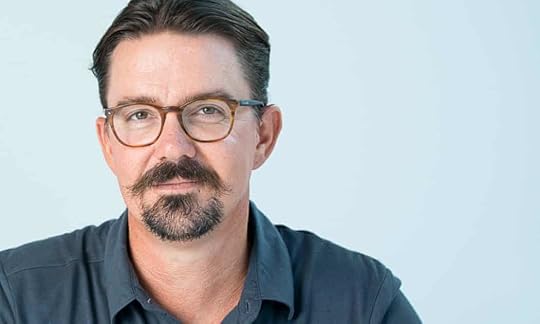
Bradley Garrett - Image from the Guardian – photo by Bill Green

Bradley Garrett has a PhD in Social and Cultural Geography from the University of London. He is best known for Explore Everything: Place-Hacking the City, which looks at hidden parts of cities. Of course, the physical research required for such undertakings required a fair bit of trespassing. (His Tedx talk addresses this in some detail). And he engaged in some for this undertaking, but, for the most part, Garrett was welcomed in his explorations this time. He is interested not only in the physical elements of bunkers, but also the socio-economic, the political, and the anthropological.
Garrett’s interest in survivalism was sparked by the discovery of a giant bunker under Corsham in Wiltshire, built by the government during the Cold War. “We went down there with crowbars and prised the doors open. We found these electric buggies, stuck a screwdriver in and hotwired them and drove them around,” he says. “It has 97km of roads, connecting radiobroadcasting stations, beds and an underground reservoir. It’s an underground city.” - from The Times vis Scribd article
Who builds them? A lot of these facilities are repurposed government sites, from missile silos to deep storage facilities. Unused subway infrastructure is a nice backup for those in large cities. Some are built by religious institutions, particularly those anticipating dark days ahead. The Church of Jesus Christ of Latter Day Saints, aka the Mormons, has a considerable plan working for preserving their culture, producing and distributing needed supplies, and helping others outside their community. They are not the only group with such a perspective.
description
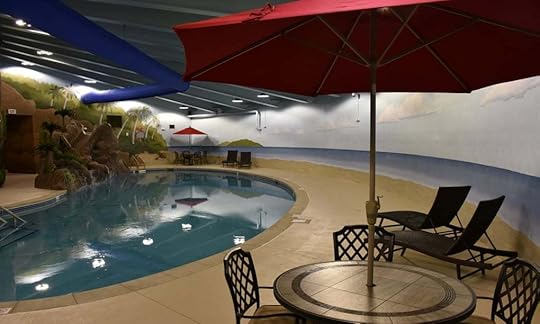
Splashing out on doom ... the pool at Larry Hall’s 60-metre Survival Condo underground bunker in Kansas - Image and descriptive text from The Guardian - Photograph: SurvivalCondo.com

What Are they for?
Survival, obviously. Short term or long. Large scale or not. Staying shielded from radiation, fire, hordes of those lacking the proper credentials. Not all missile silos have been sold off. Not all hardened supply depots are now in private hands. But states are not necessarily looking out for their actual citizenry. In the USA and UK, for example, the focus is more on Continuation of Government (COG) and securing reserve military control and capacity than protecting every Tom, Dick and buh-bye. One generic example of this is DUMBS, or Deep Underground Military Bases. There are many. This is something Doctor Strangelove certainly supported. It became clear in the 1960s, with the declassification of information about large government-built bunkers in Virginia and Vermont, bunkers intended to protect government officials, that most people were being left to their own devices. This had become official policy in the 1950s, when President Eisenhower saw a cost estimate of $300 billion to bunker-protect the entire US population from a nuclear war. He opted instead to spend $2.5 million to encourage people to build their own. Not to worry, you’ll be fine.

description
B-207 – where Garrett stayed at xPoint - image from his site

Some places are more concerned about citizens surviving. Switzerland, for example, mandates bunker shelter for 200,000 more people than the total population of the country. North Korea is the most bunkered place on the planet. Go ahead, nuke them. They will all be underground already. If KJU fantasizes that he can win a nuclear war, this is why. North Korea might actually survive a US attack. In Israel all new homes must include a bunker room. There is an interesting bit on Singapore, given its shortage of real estate, looking to protect its citizens by building geoscrapers into the ground. If they can match the grandeur of their above-ground architecture, that should be something worth seeing.

description
Milton Torres (lounging at right) quit his job in Chicago to live full-time in this bunker at the XPoint "survival community" in South Dakota. "I close the door and stay in there for a few days and then I can think again," he says, as the site's developer boasts that sales of the $35,000 dwellings are up "over 600 percent" in the wake of the coronavirus pandemic - Image and descriptive text from the New York Post

In addition to the sites noted above, some private entities build hardened concrete structures into, although not necessarily entirely under, the ground. These would be the larger, communal sorts of facilities for dozens to maybe 150 people, which can be rather nice. Others can be grandiose tin cans that offer a few people little more than a temporary and ill-informed sense of security buried in their back yard, or a place in which serial killers can stash their victims and nefarious supplies. Lower tiers of bunkering include panic rooms and hardened basements.

description
Image from the film Parasite

Another tier altogether is mobile bunkers, mega-vehicles that would be at home in any Mad Max Movie. Although people sometimes let their paranoia fuse with their mechanical creativity with dire results. One fellow made himself a killdozer and took out his considerable rage on the town he felt had done him wrong, Kranby, CO.

Who wants them?
Governments have a particular need to keep on keeping on. In the private marketplace, preppers come in all shapes and sizes, well, maybe not all. Mostly in the range from InfoWars fans to almost-InfoWars fans among the rank and file of believers. But there is a considerable representation of the very wealthy, for whom the large sums required for a serious bunker are not an impediment. Larger in numbers are those more fringy sorts, who have been breathlessly waiting for the Second Coming, the Fourth Turning, the general collapse of western civilization or things of that nature, doomsteaders. There are also, I was surprised to learn, some preppers who were more rational about it all,
I got the sense that these preppers were operating on a variation of Pascal’s wager: the precept that even if the existence of a higher power is unlikely the potential upsides of believing in one are so vast that we might as well. If these preppers were right about some, or just one, of their theories, then they all just might survive a cataclysm—it’s a payoff for faith that costs little in the present. [Well, it is actually pretty clear that the cost is considerable, but maybe not for the very wealthy.]
Who sells them?
One of the primary subjects Garrett addresses is people who sell. Doomsday capitalists promote the notion that the big shitstorm is certainly coming. We just do not yet know exactly when, and don’t you want to be prepared? As if doomsday capitalists was not catchy enough, Garrett has settled on dread merchants for this group. They are a colorful crew, with high representation by real estate salesmen. Some are actually legit. They are fun to read about, a Damon-Runyon-esque collection.

Where Are they?
Garrett covers considerable territory in his global bunker scan. That is not to say that he visited everywhere he writes of. He spent time in South Dakota, Texas, Utah, Tennessee, Kansas, the DC Area, West Virginia, Australia, Bath, in the UK, Berlin, and Thailand, mostly looking at actual bunker sites or prospective sites, but also meeting with developers, and preppers related to the whole bunker industry. He also writes about places he has not visited, at least not for this project, including Moscow, North Korea, Montana and others. But I would bet that there are bunkers, bunker enthusiasts, and bunker-promoters pretty much everywhere.

When did this begin?
As long as there have been people, there have been reasons to hunker in a bunker, whether to keep away from cave bears, saber toothed cats or raiders from the next community over. Garrett does not go that far back, but he does make use of his academic licks to offer up a fascinating history of bunker-building through the ages, as far back as Roman-era Anatolia and Pompei. The contemporary push to dig in exploded with the nuclear bomb. He does point out that we are increasingly looking to protect ourselves from a hostile world.
By the year 2000, a third of all new homes in the United States were being built in gated communities: a kind of social-contract failure architecture in which every community must fend for itself.
So, is it safe?
I was very excited to read this book on learning of its availability. I am totally thrilled to have been given the chance. I knew next to nothing about the whole prepper culture and global bunker spread previously. Gap filled. It is clear that Garrett is sympathetic with the mindset of many of the preppers, the saner ones, anyway. While I expect that most of us see most preppers are paranoids, it is clear that there are many who are not, who view prep-culture and arranging for a bunker if the world goes sideways as a sort of insurance policy, a smart investment, just in case, particularly for those with considerable means. You will learn a lot about a subculture that is unfamiliar, and maybe appreciate some perspectives that you had not really ever considered. I had a bit of discomfort with the author, who I take to be a Libertarian sort, particularly when he gleefully announces that he has no intention of paying off his student loans. (page 88) And there is the odd political analysis that seemed a bit too much. But, really, those did not at all take away from the upside of learning all that Garrett has to teach us.

So yeah, you might want to hunker down in a safe place for a few hours. Make sure you have plenty of water, or whatever might be your beverage of choice, enough chow to last you for the entirety of your reading session, make sure the doors and power supply are properly secured, switch on a light, get comfortable and dig in. What you unearth will repay your investment.
“I know that in the after time I’ll just kill, which is why I don’t want to shoot this pistol, I can’t break that seal yet,” Blake said, pulling it from the shoulder holster. “When the time comes, though, I won’t feel remorse, I won’t feel bad, I’ll kill anybody that gets in my way. I’ll kill anybody that tries to get in this facility, and I won’t think twice about it. There won’t be any conversation, just action. The only thing stopping me doing that now are the consequences—in the after time there will be no consequences. What there will be is survival.

Review posted – September 25, 2020

Publication dates
----------August 4, 2020 - hardcover
----------August 3, 2021 - trade paperback

I received a copy of this book from Scribner in return for a review that dug beneath the surface of the book, which I tried to do. Can I come out now?

And thanks to MC. You know who you are.

==========In the summer of 2019 GR reduced the allowable review size by 25%, from 20,000 to 15,000 characters. In order to accommodate the text beyond that I have moved it to the comments section directly below.

description
2,827 reviews73 followers
October 12, 2020

3.5 Stars!

The tone and feel of this book is very much along the lines of Jon Ronson or Louis Theroux, but with an illicit twist or two. Garrett takes his usual themes of offbeat exploration and social geography and ventures into some new and bizarre realms with some really compelling results.

This is a book drenched in paranoia. Garrett gives us plenty to dwell and worry upon citing many of the long-hidden scenarios and military incompetences that brought the world terrifyingly close to the brink of all out nuclear warfare.

We see that Americans tend to do extremism that bit more er extreme than the rest of the world.
Not only does the US contain millions of militia members, but they are likely to be on higher alert or increase in numbers during Democrat presidencies. Apparently annual survival food sales in the States total around $400 million. PrepperCon (I promise this is real) is the largest convention in the world for survivalists and of course this is held in the US.

It’s hard to ignore the connection between survivalists and religion, the extreme Christian right in America and the LDS (Latter Day Saints) Preppers have many chilling habits and beliefs that are way off beam. But the kind of people drawn to such bizarre faiths seem to enjoy the dramatic idea of a rapture-esque showdown or scenario which results in getting to play really expensive war games, regardless of how far-fetched that may seem.

Who knew that everyone’s favourite American (that Trump guy) had so many bunkers in so many places?...We meet so many other memorable and unhinged character within these pages, people like Bo Gritz, and his Almost Heaven project, Gritz was apparently the inspiration for Rambo and Hannibal from the A-Team?... We learn about other outfits like xPoint and the people behind them. And of course the disasters involving the notorious David Koresh and the Branch Davidians at Waco, and Timothy McVeigh and the Oklahoma bombing, shows just how bad things can get when this mindset is allowed to escalate and take shape in other ways.

We also hear about many “projects” from many “companies” around the world, which turn out to be nothing more than the stuff of total fiction and far off fantasy, but there is obviously a market big enough to support the lies and opportunists involved in these hair brained schemes of bunkers costing tens or hundreds of millions of dollars.

This book reminded me of a good guy I used to work with a few years back who was a bit of an end of the world type. I mind when he invited me round to his house for dinner and then took me outside to show me his bunker of sorts. It was a low budget project and very much a work in progress compared to the ones featured in here, but it was interesting to experience and it did contain glow worms and sand bags unlike the ones in here.

So this is another really enjoyable outing from Garrett and as well as being entertaining and thought provoking, this is one of those books which does leave you feeling just a little bit more uneasy and uncomfortable than you did before.
Profile Image for Jeremy Anderberg.
565 reviews70 followers
July 28, 2021
Hot dang I loved this book.

Each chapter finds Garrett exploring a different aspect of end times “prepping”: Communities build out of fields of Cold War bunkers, an underground ultra-luxury “geoscraper” constructed inside an abandoned missile silo featuring million-dollar apartment, government bunker-building for continuity of government (which has accelerated in recent years), the PrepperCon conference for all things survival, companies that build tube-like corrugated bunkers for your backyard, and more.

Throughout, Garrett tackles the philosophical underpinnings of prepping culture. Are these people crazy? Are they on to something? What lies underneath this belief in a coming apocalypse?

"Bunker" is truly one of my favorite reads of the year so far. It’s partly a niche cultural tour (which I always love), partly an easy-reading philosophical exploration, and a little bit of a revealing, beautifully written memoir about what happens when you spend too much time living with the end of the world always in mind.
Profile Image for Nick.
286 reviews16 followers
July 11, 2024
Bunker is the kind of book, based on title and cover art alone, you don't read in public. Honestly, this book is probably often sold short because its imagery and its subtitle - "What it Takes to Survive the Apocalypse" - will make you think of some conspiracy theorist who probably also bought out every can of tuna, every box of spaghetti, and every roll of toilet paper during the COVID pandemic. It's far from that! It is, instead, a years-in-the-making investigation into the "prepper" communities around the world, and it's actually rather fascinating.

"All prepping, in the end, is born from hope: after all, only those who believe there will be a future prepare for one."

An estimated 1% of the U.S. population (or 3.7 million people) are preppers on some scale. There's good reason for that. The coronavirus pandemic quickly demonstrated how fragile our way of modern life is. Our supply chains, travel and trade systems, and even our social norms collapsed in a matter of weeks. Even the "doomsday clock," invented by atomic scientists, was set to 23:58:20 in 2020, the closest its ever been to symbolic doom given the likelihood of human-induced global catastrophe, largely driven by the threat of nuclear war and our ever-accelerating climate crisis.

Preppers believe contemporary life is the sum result of a consensus that is quickly eroding, and eroding to such a point that it warrants planning for the seemingly inevitable. Some of those people are ready to close the airtight seal and "bunker down."

While many of the profiles in Bunker are, for lack of a better term, outlandishly nuts, there's logic in: (i) recognizing your own mortality, and (ii) taking precautionry steps to further your likelihood of survival. In fact, societies that can capably evacuate, invacuate or otherwise sustain life in spite of catastrophe have one very big strategic advantage: likelihood of continuity.

"The human story to date is that we're smart enough to dominate our habitat and then engineer our own destruction. The next chapter of that story will be about whether we're smart enough to engineer our survival."

Consider this piece of history...

The Federal Civil Defense Administration (predecessor to FEMA) under President Truman found that 30% of those who perished after the atomic bombing of Nagasaki could've survived had they had fallout shelters.

When Eisenhower became President, a study showed that creating shelters for America's population would've run up a tab to the tune of $300 billion.

What did Eisenhower's administration do? It spent $2.5 million (or .00083% of that $300 billion price tag) on policy advertisement encouraging citizens to build their own shelters.

And when Kennedy became president, the United States government doubled-down on the policy of save yourself. Bunker author Bradley Garrett rather astutely argues that the the decade leading into the early 1960s was a culturally significant moment, it marking the moment "when the state abandoned its duty to protect citizens from perceived enemies."

Now, clearly there's sense in not funding the creation of public shelters on the cost scale of our annual gross domestic product, but the decision not to also came at a price. When a state tells its citizens that its very preservation depends on its citizens saving themselves, the state becomes superfluous.

In other words: you are on your own.

So, is it any wonder that private citizens are buying into communities with subterranean reinforced concrete bunkers? Is it any wonder that one of our own presidents made Commander in Chief decisions from his own private bunker at Mar-a-Lago? Or that citizens who saw our disastrous response to the natural disaster that was Hurricane Katrina believe FEMA stands for "Foolishly Expecting Meaningful Aid"?

Bunker is a fascinating study of the prepper community, not only in the sometimes outlandish ways they prep, but for their reasons for doing so in the first place.

4 out of 5
Profile Image for Matthew Royal.
242 reviews14 followers
March 25, 2021
Garrett comes across as a rational skeptic, able to discern between reasonable folk and eccentrics. I've always been fascinated with the idea of having a secret passage, an underground house, a private island with an office 20 stories deep, and the prepping industry is designed to sell accessories for those dreams by fanning literally any fears. Who knew that Oppidum was cash-strapped vaporware?

Missing from the message of most preppers is what happens "after." A fair question to ask them for when the world collapses is "and then what?"

The most compelling messages I see in this book are from the Mormons. I love that they've already built their post-apocalyptic communities -- they've built pre-apocalyptic communities that have resource resilience at the individual and community levels.

The best outlet for your prepper impulses is to build more resilience into your life: keep a pantry, figure out how you would make breakfast without any power or water, have an emergency plan and a basic emergency kit, build relationships with your neighbors and provide mutual support, participate in community disaster relief programs.
1 review
August 19, 2020
The dread merchant that populate this book are at times comical, if not for the seriousness of what they're preparing for. The preppers, people who buy into the community, seem in contrast to be nice people who are simply nervous about the possibility of future disasters. This is no how-to guide, it's a story about the interplay between these two groups. There are certainly some lesson to be learned, but what really makes the book wonderful are the stories and characters. It's so rich it almost reads like fiction.
Profile Image for Torrie Shaw.
248 reviews1 follower
July 31, 2024
This was the strangest combination of memoir and research. It wasn't terrible, it just wasn't as exciting as I imagined it would be.
Profile Image for Luanne Ollivier.
1,958 reviews111 followers
August 31, 2020
Well, this is one for the times isn't it? Bradley Garrett actually started writing Bunker: Building For The End Times before Covid 19 hit, but finished it during the pandemic.

Pandemic. Apocalypse. Social breakdown. Political anarchy. What will you do or think you can do, to keep you and your loved ones safe? Are you prepped for any emergency? Many are - in many different ways. Here's a fact for you - in the US alone, 3.7 million Americans call themselves preppers.

Garrett takes us across the world exploring bunkers, bunker communities, preppers, bug out plans, kits and vehicles, conventions, and so much more. I was quite frankly astounded at the number of people and the lengths they are going to feel ready. The level of preparedness runs the gamut from extra groceries to full on in the ground communities.

Garrett meets with those who are selling safety, recounts the history of prepping, explores sites, and so much more. Garrett has an impressive background and it shows - the book is thoroughly researched and very well written.

There's lots of food for thought here - especially in these times. I do know one person who identifies as a prepper. They have goods for at least a year and a bug out plan. Who's to say what's going to be needed? Those that can afford it will certainly be at the head of the line. I was astounded by the dollar figures being floated. And based solely on some of the interviews included, there are many in the bunker community that I would say have some mental health issues.

Bunker was really interesting to listen to - informative and thought provoking.

I chose to listen to Bunker. Initially I thought the author would be the reader, but it was instead award winning narrator Adam Sims. His voice has a nice edge to it and I thought it suited the subject of the book really well. He captures the emotions and nuances of the work. His voice is clear, easy to understand and pleasant to listen to.
Profile Image for Federico Castillo.
154 reviews10 followers
February 9, 2021
At some point towards the end of the book it gets a little awkward when the author realizes that most people are selling smoke. Lots of chasing dead ends around the world. While the existential anxiety is real, there are in reality very few actual bunkers ready for the apocalypse.

Maybe they are well hidden, but at least the commercial enterprises, if they are serious about making money, should have more to show. I think the author does an awesome job of flying to places and say ok, pics or didn't happen. These days when a lot of journalism is done from the internet, reading reviews, hyping tweets, chasing followers, there are less old school journalist that go to each city council and sit on the back. This guy took all those articles about dread merchants and went deep to see what's real.

Interesting takes from the prepper community in light of the covid pandemic. We are often quick to dismiss right wingers spouting about the end of the world as nutty people. But some of the crazies were more prepared for a pandemic that we give them credit for. I think we all now take the collapse of civilization a wee bit more seriously.
Profile Image for Natasha.
24 reviews
June 27, 2022
Everyone seems to agree that some event, whether disruptive or cataclysmic, natural or man-made, is looming somewhere on the horizon. But the approach to disaster prepping is wildly different in different parts of the world! Prepping in the US is an individualistic pursuit, and an increasingly militant one. In contrast, a friend from Sweden told me the government has enough space in their public bunkers for every citizen (and then some some!).

After living in Salt Lake, it was no surprise that 3 of the 15 chapters took place in Utah (including the massive prepper-con which apparently took place in my old neighborhood). Equally unsurprising was the fact that the LDS church, as a major manufacturer of preserved foods, has made exorbitant profits as people panic-stock their pantries in the midst of political, environmental, and social turbulence.

I can’t say I’ll be doomsday prepping anytime soon, but having a few days of food and water on hand seems like solid advice for anyone.
Profile Image for Steven.
Author 41 books183 followers
August 12, 2020
BUNKER illuminates the details and particulars in what is often perceived as the fringes of American society among "preppers" and those cynical folks awaiting disaster.

Well written and informative, the book provides loads of information about how and why folks plan to survive expected disasters or societal downfall. Alas, this reader was left with the cynical view that--like the current sociopolitical
and economic landscapes--those with extreme financial means will most likely get their expected "safehouses" and "bunkers" while the rest of us will be left with empty promises and the only safety is in what we can procure ourselves.
Profile Image for Steven.
Author 41 books183 followers
August 10, 2020
Interesting and well-written, BUNKER provides a view into a world I've only ever seen from the fringes. And the fringes get well documented herein.

That said, I was ultimately sad by the impression left by the book's contents and reporting (if not the author's intent): Those with obscene amounts of money will get what they pay for in security and comfort, while the rest of us make do with either the preparations we can handle ourselves or get cheated by politician-level promises that have little to no backing in reality.
Profile Image for Amelia Landry.
44 reviews
February 4, 2025
This was pretty solid. I appreciate greatly the amount of work it took to research this book and how long the entire project took. He does a great job respectfully representing a controversial topic. That said, I do wish there was more analysis to his findings rather than just descriptions. I would’ve liked to see more theory incorporated but I understand that was probably intentionally avoided to make it more accessible to a lay audience.
Profile Image for Hughmungus.
40 reviews
October 9, 2025
First forray into prepping literature. Enjoyable because of the somewhat detached academic-ethnographical lense through which is was written (though not at the expense of accessibility). Follows through on the life trajectory of the protagonists which serves to de-glorify the empty promises and schizophrenia of the industry and some of its members. Not as much aussie content as I was expecting.
Profile Image for Ben.
2,737 reviews233 followers
September 11, 2020
Really well researched and written. Some really intriguing finds in this book.

Reminds me of the movie The Divide mixed with the Fallout video games.

Also reiterates the fact I want to move to Switzerland.

4.3/5
Profile Image for Caolan McMahon.
126 reviews2 followers
December 23, 2020
Garrett explores a few facilities and describes them, but this isn't a bunker manual, it's more interesting. It's a study of prepper culture by someone just domesday-curious enough to feel genuine, but with the good sense to put things in context. Think Louis Theroux interviewing domesday preppers, with a touch of urban-exploration rebelliousness, and you're on the right lines.
Profile Image for Charles.
616 reviews119 followers
April 1, 2023
A mostly pre-pandemic survey of the historical and current cultural phenomena of preppers and their private bunkers.


My dead tree version was 342-pages. It had a UK 2021 copyright. This book included: a Glossary, Notes, photographs and an Index.


Bradley Garrett is an American social and cultural geographer, writer and journalist. He’s written five books. This is the first book I’ve read by the author.


TL;DR Synopsis


Below ground shelters are as old as humanity. Garrett hung his investigation into preppers on their signature artifact The Bunker. Preppers are folks prepared for various and sundry doomsday scenarios. Garrett’s survey concentrated on private bunkers that are used by preppers and other fringe groups like militias and survivalists. He described the evolution of bunkers and their technology to the present. Most importantly, he delved into the folks who are: building, maintaining, buying and selling them.

Bunkering-up is also an international phenomenon. While Garrett traveled internationally in his survey, the largest part of his doomsday-fantasy tourism stops were in The States. The affluence of Americans and the diversity of their beliefs provided the most interesting and disturbing reading.

The Review

The prose was OK. Technically, the book was not well edited. Oddly, for an American author there were a lot of British-isms in the prose. For example, boots and bonnets in the descriptions of vehicles. They were also oddly distributed. Some chapters had none, while others had several. Better copyediting should have homogenized the prose to be either American or British.

Garrett also inserts himself into the investigation. This resulted in a peculiar mix of anthropological analysis and almost gonzo-journalism. (Some of the folks appearing had singularly peculiar, at least to me, thoughts and ideas.) I’m conflicted about the journalistic ethics of the author-in-the-story. Although, in places the book reminded me of a toned-down Hunter S. Thompson book.

The organization of the book was OK. There were 15 location-based chapters spanning the globe, a Conclusion, Coda and an Afterward. The Coda and Afterward were added to the paperback version I had. These later additions were not integrated as tightly into the narrative as the original chapters. They suffer from attempting to weave the COVID-19 pandemic into the pre-pandemic written narrative.

A photograph leads off each chapter. It’s typically either an interior or exterior shot of the bunker being discussed. I thought that a line drawing or two of the general layout of representative bunkers would have been helpful.

Modern civilian bunker building started in the “Duck and cover” days of the 1960's Cuban Missile crisis. This was when national governments abdicated protecting their entire populations in a nuclear war. Millions of folks built fallout shelters in their backyards. This was the first “Doom Boom”. Since then there have been several. The latest being spurred by the COVID-19 pandemic.

Bunkers have a wide range of capabilities demonstrating the equally wide range of preparedness. There is the town beneath-the-mountain of the United States Space Command and NORAD's Cheyenne Mountain Complex. Its designed to shrug-off nuclear attack and function for years in a nuclear-blighted U.S.. Note that the definition of 'bunker' is also elastic. Its a private or semi-private place giving physical safety during a threatening 'event'. A gated community is a form of bunker. And then there is the musty smelling, large diameter, corrugated metal tube, buried in the suburban backyard beneath at least 4-feet of earth. Its stocked with a: chemical toilet, a battery powered lantern, buckets of water doped with Clorox(tm), and cans of food, but no can opener or tampons.

Likewise, bunkers are widely distributed and mostly out-of-sight. Some are in remote locations to provide security through isolation, and others located in convenient proximity to their future occupants. The closer they are, the shorter the distance of theBug-out, the more likely its success. A bug-out is the quick retreat to the safe place you're going to escape the 'event'. Bunkers are limited occupancy accommodations. The location of most bunkers is kept secret, if an open secret, to afford for the safety of its occupants.

Garrett demonstrates that preppers come in all stripes: men (mostly) and women, liberals and conservatives, the rich and 'the rest of us', the well educated and the ill educated, evangelicals and atheists, etc..

Prepping is also a continuum. Garrett concludes that it’s a sane response to an unstable world. At the practical lower end of the scale having several weeks of food, water and fuel on-hand is just prudent. This was recently demonstrated by the COVID-19 pandemic. Still Garrett goes easy with the real crazies hyped on conspiracy theories and with mothballed: armored fighting vehicles, automatic weapons, and booby-trapped perimeters surrounding their bunkers. He spent a lot of time with them, in what reminded me of Hell's Angels: A Strange and Terrible Saga.

The most reprehensible characters in the book are the Dread Merchants. The bunker is a fantasy they offer their clients for survival, often in luxury. They market bunkers as ‘underground’ cruise ships and bullet proof insurance policies.

I personally found interesting the re-purposing of cold-war, surplus military and government bunkers for private use. These included: missile silos; command, control and communications centers; arsenals; and public fall-out shelters. Refitting these massive structures designed for nuclear war-fighting and short-term survival into long-term, secure, comfortable shelters was an expensive, complicated, architectural and engineering project. These uber-bunkers provided a stark contrast to the modest roll your own and commercially available bunkers of the majority of preppers. It was like comparing a main battle tank to a minibus.

Also of interest (to me) was a description of the psychological effects of long-term bunkering down, and the necessary preparations. The Socio-dynamics of a group living underground could be problematic. Especially, for an indeterminate amount of time. At its best, the experience could be like life on a small cruise ship. At its worst, like long-term incarceration. Garrett relates it to several studies of long duration stays in artificial environments, which include ballistic submarine deployments and simulations of interplanetary space travel.

This was a, in places, good, and sometimes amusing read for those interested in the development of the “Bunker Mentality”. However, it was also rambling, and with the author insinuating himself heavily into the narrative. Garrett becoming part of the story. I thought that somewhat tainted his objectivity.

Readers interested in a piece of apocalyptic fiction related to this, book and mentioned in it might want to read Wool Omnibus by Hugh Howey. The Silo bunker in this book is eerily similar to Chapter 14’s, Life in a Geoscraper: The Survival Condo.

Profile Image for Nick.
578 reviews28 followers
October 19, 2020
So, not only is the world going to end, but only the richest and lousiest people are going to survive it.

Bradley Garrett seems like a fairly unconventional professor who realized that instead of just breaking into secretive underground places, he could get a PhD and study them for a living. It makes him a uniquely qualified writer to talk about the modern apocalypse industry and the solutions they peddle in an uncertain world. From Mormon moms stocking food pantries to feed their communities in a disaster to a real estate developer building million-dollar survival condos in a disused nuclear missile silo, Garrett provides a window into a deeply strange world of people convinced that the end is coming and determined to survive it, even if that just means spending your final days in a sewer pipe buried in the backyard. He's scrupulously fair with his interview subjects, even the ones who appear to be snake oil salesman.

Recommended for anyone with an interest in the sociology behind prepping, or anyone who in the current unpleasantness finds the idea of retreating to a sealed luxury bunker (with a pool!) appealing.
Profile Image for RebL.
571 reviews4 followers
July 27, 2021
Roman Mars mentioned this book on the 99% Invisible podcast a few months ago, and I said to myself, THAT is a book I want to read. So I requested it from my local library, and they graciously added it to the collection. Bradley Garrett started this book in the Before Times, so it made me snicker whenever a doom merchant would mention a global pandemic, among other things, being a reason to hunker down. No spoilers: Bradley brings us up to date with a 2020 recap in the end.

This book makes a wonderful companion piece to https://www.goodreads.com/book/show/7..., which I read last year and enjoyed. "One Nation Underground" outlines the Cold War bunker/fallout shelter mentality, but "Bunker" is no doubt a thoroughly modern, Trump-era read. Two thumbs up, would recommend.
58 reviews
August 7, 2020
I have discovered that what is scarier than an apocalypse, is being stuck in a bunker with people who are mentally unstable enough to have spent their lives preparing for the event . The awful , logical continuation of that is that they are the only people left to repopulate and I definitely do not want to live in that world .
I really loved that he quoted all his measurements in metric . I found it mildly tedious that his left leaning opinions were so thinly veiled .
Profile Image for Tutankhamun18.
1,405 reviews28 followers
June 5, 2024
//2.5 stars//

I read this for my bookclub with my uni friends and I was not a fan of this book. To me it was quite boring in the way that it was written and how isolated his meetings with different types of people building and selling and buying bunkers were. Additionally there was only a short explanation of the psychology of people prepping and bunkers and I think that is acctually what I wanted to see. My three favourite chapters were: chapter 7 Escape from California: Boltholes at the Bottom of the World (as mentioned this morning), chapter 11 Community Nourishment: Utah‘s Mormon Citadel, chapter 12 PrepperCon:The Business of Survival.

My favourite part was learning about the prepping aspect of Mormon culture (Later Day Saints).
Profile Image for Garrett.
408 reviews6 followers
March 25, 2021
Well, the reader did a great job. This book is about Garrett running around and exploring bunkers, their potential inhabitants, and the people who are attempting to make a profit off them.

What I took away was this: Engauge with your community. Occupy the space as your main residence. It only seems like there are a lot of people trying to take advantage, but they are the minority.
417 reviews4 followers
December 14, 2020
I got bored after 90 pages and quit. Couldn’t figure out where it was going or what
Profile Image for Amy.
1,008 reviews53 followers
January 17, 2023
“The doomsayers are always right, eventually.”
—Bryan Walsh, End Times, 20191

That's not saying much. Even a broken clock is right twice a day, but that doesn't mean you aim to tell time with it.

So, rewind: I saw this book in a nonfiction books FB group and it looked interesting so I took it out of my library. Upon reading, I am very happy this was a library borrow, because I would have been very upset if I'd actually wasted money on it.

In fairness, the author does make some observations that are either fair and understandable, such as this interviewee from California
Rogan didn’t expect to ride out the end of the world in his panic room; he just wanted to buy himself a few hours or days. Because the house was on a relatively isolated lot, the three things he worried about were home invasion, robbery, and wildfire, all of which, ensconced in his panic room, he could wait out. “When you’re building a house worth millions,” he told me, “what’s another twenty-five or thirty grand to make sure the closet space you’re already going to have is multifunctional?” (pg. 29, kindle edition)

or are good points I hadn't known enough to think of or contemplate in this context (such some preppers' emphasis on community building to alleviate the psychological concerns associated with being shut up underground in a highly stressful situation with a lot of unknowns and people you probably don't know).

That being said, the author also has some serious shortcomings, foremost being that he keeps uncritically quoting the absolutely bonkers shit that people he interviewed told him (such as one memorable claim that 5G cell towers were spreading COVID, which is obviously wildly incorrect). That, combined with the very credulous and sympathetic framing for the entirety of the book (in the vein of 'I have no idea why the prepper community has such a terrible reputation,' even as he recounts that the current movement has its roots in David Koresh and Timothy McVeigh, whose fame attracted lots of others with similar beliefs, along with multiple quotations from different people who confided their hopes for being to act with violent or sexual impunity "after"), makes me wonder about some of his other commentary and conclusions. It's pretty clear from multiple autobiographical passages that the author also engages in some level of prepping, but if he couldn't look critically and honestly at his own community perhaps he shouldn't be claiming to have written an exposé about it.

Furthermore, while the author does examine some of the financial implications of prepping (mostly that it's insanely expensive, even for 'cheaper' options) and opines that more people aren't engaging in some level of prepping, he seems to go out of his way to ignore the biggest impact on that exact issue: that most Americans cannot afford to prep in the way that he means it. Almost two-thirds of US households survive paycheck to paycheck, and a third of households don't have enough savings to absorb an unexpected $400 expense. They're too busy with day to day survival (how to put gas in the car, pay for rent, cover groceries) to even think a buying a year's supply of emergency food for $8,000, let alone the base $25,000 buy-in for a bunker that they would still have to outfit and supply.

Additionally, I think there's a difference between disaster preparedness and apocalypse prepping that he sort of acknowledges toward the end, but doesn't actually examine. This quote is it:
“All preparedness is about an unknown event in the future,” [Wise Company's CEO Jack] Shields conceded—but, he qualified, “unknown doesn’t mean unlikely. There are few things I guarantee in life, but I guarantee these things: South Florida is going to get hit with a hurricane, there will be wildfires in the West, there will be tornadoes in the Midwest, and California will have an earthquake. I have no clue when those things will happen, but the majority of the people in the United States live in an area where some sort of a natural disaster is likely to occur within the next ten years and they need to be prepared.” (pg. 190, kindle edition)

This is a good point, and one worthy of more discussion, I think, than being passed over and never acknowledged again. That people should have some reasonable level of preparation for natural disasters that occur fairly regularly in their region is fair. However, there is a huge difference between being prepared for something like a hurricane or an earthquake and trying to prep for living in a dystopian scifi novel setting. One is reasonable and probably even possible, for most people. The other is not, especially when you take into account that it is massively expensive and all seems to be premised on the paranoid fantasies of a bunch of people who make their living fearmongering and then selling those they've instilled with dread on 'solutions.'

All in all, I didn't like this book. 'At least I borrowed it' is the best I have to say about it, but it's not a book that I would recommend.
Profile Image for Pete.
1,103 reviews79 followers
February 20, 2021
Bunker: Building for the End Times (2020) by Bradley L Garrett looks at bunkers being built to withstand a catastrophe and the people who build them and also at preppers, that is people preparing for the end time. Preppies, those who are preparing for high paying jobs in the US, are not considered due to the lack of bunkers in their apparel. Garrett is a cultural geographer who has done quite a bit of urban exploration and is now at University College Dublin.

There is an excellent episode of the design podcast Ninety-nine Percent Invisible that interviews Garrett about the book. It’s well worth a listen for anyone pondering reading the book.

Garrett meets and talks with various people who are arrange schemes to sell people space in bunkers for when a disaster hits. Garrett writes well and much of the book is an amusing ride looking at the structures they are attempting to sell. He has a look at people selling shelters that can be buried to allow people to survive for some time. He also has a look at the Berlin system of bunkers that was meant to protect some people for some time in the event of a war and looks at various plans governments had and the bunker systems that they constructed to try and preserve government.

The book covers preppers in Thailand where Garrett talks to a man building a compound for his family to handle a catastrophe. He also talks to preppers in Australia and the US, some of whom are working out ways to farm on their own hidden in the hill. Garrett also gets to ‘PrepperCon’ which is a convention for various firms in the US selling bunkers and ‘bug out’ vehicles that are set up to enable their owners to escape a city and live for some time unaided. PrepperCon is in Salt Lake City and there he looks at the Mormon culture of being prepared for a catastrophe and to help others out in such circumstances. The describes of how many Mormon’s have a month of food they could use in their basements are very interesting. Garrett also goes to a firm that makes bug out vehicles and has a look at some of their vehicles. He also visits a serious, luxury bunker near Kansas City and there is able to view an incredible construction inside a former missile silo.

The book ends with a number of the businesses being shown to be scams but with Garrett pondering the industry and the fact that it seems possible that a catastrophe could come. The book was mostly written just before Covid 19 hit and it makes an interesting addition to the story. There is also a tour of the area around Chernobyl at the end of the book.

Bunker is well worth a read, Garrett makes his trip and observations pretty amusing. As well as that the book is thought provoking. In my mother’s lifetime World War II (~70 million people deaths), The Great Chinese Famine (35-50 million), the Cultural Revolution (1-10 million), the Killing Fields of Cambodia (2 million), the AIDS epidemic (37 million) and now Covid 19 (1million+) have all happened. In addition there were times when a nuclear holocaust was definitely close. Over the lifetime of someone born in the last few years who knows what will happen.
Profile Image for Daniel.
700 reviews104 followers
January 25, 2021
Garett introduced this vast world of bunkering in this book. There had been doomsday prepares for the longest time. Governments had built huge underground bunkers for the elite in case of nuclear wars. Now they are abandoned and are sold to civilians who in turn are trying to develop them into doomsday bunkers.

Garett went to visit all of them. Unfortunately, a lot of them turned out to be just blueprints and there were just not enough demand. Some of the hyped-up events had hardly any participants. A lot of the developers do not find enough buyers and had to resort to money laundering (Trident Lake).

He calls the companies ‘dread merchants’ who are elusive about their clients in the name of secrecy. There have been claims of them building for the government but information is classified; there have been claims of billionaires building huge bunkers in New Zealand (except that no permits have been received by the local government). Therein lies the contradiction: you need to be secretive so that when apocalypse comes people won’t rush to your hideout for food and shelter; however you can’t sell real estate that you can’t show to buyers. So far, the only 2 real bunkers that he visited was Survival Condo for the rich, and Vivos Indiana for the middle class. However, since the Covid-19 pandemic struck, demand had increased for Fortitude Ranch.

There are different kinds of doomsday scenarios: nuclear, meteorite strike, pandemics, climate change and social collapse. It is very hard to be able to prepare for all of them. For example, if there is a nuclear fallout, the air will not be safe to be used so you really need water, air, energy and food to be able to ride it out.

Then there is psychological aspects of living trapped underground with people who you hardly know. At least one person described in the book was mentioning about what he may do when apocalypse comes; it involves getting rid of other people and taking their stuff (fortunately that particular tenant has been voted out, but there is no guarantee that others will not become erratic when the time comes).

Other people like the Mormons had taken another route: they intend to form self sufficient communities. Yet others prep by getting ready their mobile Jeep/SUV, stuffing them with food, water and fuel. That would probably be the best idea because one may not have the means to get to one’s bunker in the case of a real apocalypse. Will the world change to a Mad Max-style warlord controlled hell? Or will people be able to help each other to form a whole new world?

On the other hand, prepping too much takes a mental toll; pessimism pervades prepping and bunkering. One also wonders whether it will be like to live in relative safety when the world outside burns.

A fascinating book!
Profile Image for Alex Gruenenfelder.
Author 1 book10 followers
October 27, 2021
For a long time, I have been fascinated by prepper culture, and have even dreamed of the preps I'll someday have for myself. In this book, Garrett comes from a similar perspective and immerses himself in doomsday prepper culture with one main focus: bunkers.

With COVID-19 in the short term and climate change in the long term, preparing for disaster has been on people's minds even more lately and I imagine this book is popular now as a result. As Garrett writes, "Prepping often looks prudent in hindsight." One of the things I appreciated most about this book is that Garrett agrees preppers can have a point and, though he also highlights immense misinformation and conspiracy theories fueling some of the survivalists, reminds the audience that preparing for disaster is important.

Though bunkers have existed for thousands of years, it is these days largely a for-profit industry in the United States, though state subsidies have been essential to its history. The entrepreneurs in this space are motivated by many different motives and up with varied results, but they are a mostly eccentric bunch and seeking profit in what they do. Garrett spends much time with these people, whom he calls "the dread merchants," and finds many to be scammers or delusional. That being said, focusing on them feels strong in light of all of the news stories that present limited visions of for-profit bunkers with little scrutiny. Even if some of the book may align with a bunker sales pitch, it is overall a cool book of cultural geography.

Though the causes of these possible apocalypses can be scary, this book is rather optimistic. Garrett writes, counterintuitively, "All prepping is about hope for a better future." It is a reminder that paranoia can sometimes be valid, but that something must be done about it. This book is a reminder that prepping individually is not enough. Instead, we must come together as a society to fight back against issues like climate change. If you are as fascinated by survivalism or bunkers as I am, check out this book.
Profile Image for Jeff Mauch.
625 reviews4 followers
March 13, 2023
Admittedly, I have a fascination with the apocalypse and post-apocalyptic fiction, so reading a non-fiction book looking into the different ways that people are preparing for the possibility isn't a big leap for me. I dismiss most "prepping" as half-assed best and find much of what self identified "preppers" do to be ludicrous and at times silly. I'm not saying there aren't outliers here, there are, or that being prepared is necessarily a bad thing, it isn't, just that many who are doing so are doing it in bizarre ways and believe some pretty out there things.
I found Bradley Garrett's book to be an interesting read and felt he looked at each scenario with an open mind and curious disposition, even in the face of a few clearly farcical communities run by the equivalent of snake-oil salesmen. In each chapter Garrett explores a different community or aspect of prepping and whether it be retired missile silos, a company making bug out vehicles, planned communities, or prefab bunkers he asks the right questions and really gives a glimpse into each one. Sure, at times even he has to admit the unrealistic expectations of those he's interviewing and getting to know, but he does it in a way so as not to belittle anyone's beliefs...even when he probably could and should. The best part of this book is how fitting it was when he researched it and wrote it. He did most of the research and traveling for this book in the two years prior to Covid-19 and actually did the bulk of the writing during the initial year of the pandemic. I think that because of this he looks at some of what he researched with much different eyes than he would have had Covid not happened. Overall, this was a quick, but interesting read, especially with each chapter dealing with a different facet of the topic. 3/5
Profile Image for Logan Spader.
144 reviews
October 8, 2021
Bradley, I think you and I would be the best of friends if we ever met!

I was walking through my local library and spotted "Bunker" in the new arrival section. Being a pessimistic low-key prepper I picked it up with a bit of trepidation as most preppers and survivalists that I know are crazy as hell, hyper-religious, and either believe the world is flat or that 5g towers are giving us cancer. But when I learned that Bradley, the author, was a fellow urban explorer I thought this book might be a refreshing look at the world of preppers.

I was 100% correct.

First, Bradley is an incredible story teller and writes in a way that gives small tidbits of exciting information throughout the more-in-depth story that he tells in each chapter. As a man with ADHD this is the only style of book that I can read cover to cover. So thanks for that! The unravelling of the author's adventures and his skeptical viewpoints about the predictions of future catastrophes was quite unique in a world filled with dread merchants who are happy to capitalize on the latest depressing news.

I whole heartedly believe that our modern society can't possibly continue the way it is and that we will be forced to live (or die) through a black swan event. Fortunately there are concerned people like Bradley with a unique skillset (PhD, writing, urban exploration, rebellious) who can help show us how to prepare without requiring that we believe the biblical rapture is literally happening as I write these words.
Profile Image for Alba Marie.
749 reviews12 followers
June 24, 2024
Fascinating. Honestly, not a topic I'd given any thought to outside of sci-fi stories. 10 hours of audiobook exploring every aspect of preppers, from survivalists and doomsday preppers to luxury bunkers, military grade armoured vehicles, off the grid homestead preppers, fortified panic rooms, fortified ranches, even Chernoblyl, this guy seems to cover it all.

His passion for the subject combined with dogged desire to get the truth, even if that truth is disappointing, made a perfect combination. His passion and interest oozed through the pages and I couldn't help but feel fascinated and a little bit paranoid. Barrett digs deep on the subject, unafraid to poke, question and called BS.

I admired how much of himself he poured into this book about bunkers, but also how he still managed to keep his distance, able to investigate and then steer clear of the scams and posers.

I'd recommend this book to anyone with an interest in the topic, with an interest in subcultures or who likes nonfiction on quirky subjects!
Displaying 1 - 30 of 88 reviews

Can't find what you're looking for?

Get help and learn more about the design.