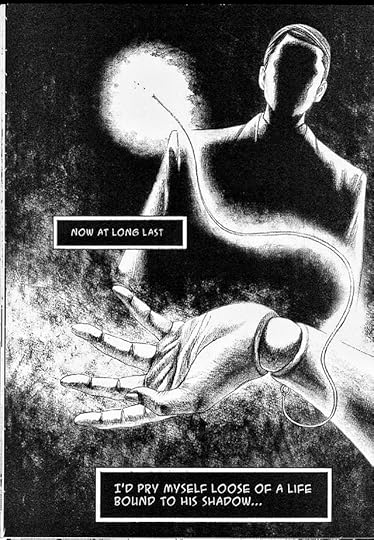
Usamaru Furuya (古屋兎丸) is a Japanese manga creator from Tokyo. His production covers a variety of art styles and genres, such as horror, humour, slice-of-life, erotica, sci-fi, always with a personal surrealistic touch. Society oppression and the human condition are common themes in his body of work. Furuya showed an interest in comics making since elementary school. He graduated from Tama Art University, where he had studied sculpture and oil painting. His manga career started in the alternative magazine 'Garo', in which he published a series of one-page comics called Palepoli (1994-1995). He then worked on Short Cuts (1996-1999), a gag manga serialised in the mainstream magazine 'Weekly Young Sunday'. Other short stories from the same period were collected in the books Garden (2000) and Plastic Girl (2000). Over the years Furuya has created work for a number of manga magazines, underground and mainstream. Among his series available in one or more Western languages are: the dystopian The Music of Marie (2000-2001); the surreal horror Lychee Light Club (2005-2006), loosely based on a play by Norimizu Ameya; the post-apocalyptic 51 Ways to Save Her (2006-2007); Genkaku Picasso (2008-2010); No Longer Human (2009-2011), adaptation of a novel by Osamu Dazai; Amane Gymnasium (2017-2020).
I appreciate the take on the alternative ending, but that was offensive to me, considering the original ending was my only light in this disturbing book. Overall, I am still commending the art style.
So that was it, the final chapter of Usamaru Furuya's manga adaptation of the infamous Japanese novel from 1948. The topics: alienation, depression, abuse, rape, drug addiction, suicide, divorce, homelessness - not a feel-good read. Furuya's storytelling is a little uneven and abrupt in places, but the dark, wild, downward-spiraling plot holds your attention anyway. Makes me curious about the original.
Humans are gross. We're all 人間失格. I don't think I'll read something that'll come close to this. The characters were well done and depicted in a realistic manner. This manga is dark and gritty. The art work is great. Recommend it highly!
If you want to know why living is infinitely harder than dying, read this. The miserable and terrifying state of a falling man condition states that. I can relate a little to the main character and I do fear the same, of becoming "No Longer Human". This tale is dark, darker than you ever imagine, it stares directly in the abyss, read only of you have ability to do so.
« haven't i had enough? do i need to suffer the world and fear humans even more before i can muster the courage to die? »
i thought i was reading junji ito's version until i finished it because i wasn't paying enough attention. it was disturbing, and the thought that junji ito could have written and drawn this changed something in me. luckily i was wrong. junji ito stays safe.
At times I felt sorry for Yozo, I wanted to hug him, and then I wanted to punch him in the face; there were things he didn't deserve, and there were other things that were entirely his fault. Thank God I believe in his love, because I don't know if I'll be like Yozo today. I've felt like him before, no longer human, and I'm afraid of people too, because I don't understand them and I feel pressure for not knowing what they expect from me. but God, I ended up crying, sad and angry, confused. someone lend him an ibuprofen.
Also, I think all the porn in this manga is unnecessary
What a masterpiece! I read 1/3rd of Junji Ito's one and while I can see why some would prefer that one more, I think I would've missed out on the true essence of the story hadn’t I read this version. Needless to say, Usamaru Furuya is an immensely talented artist and did complete justice to Osamu Dazai's semi-autobiographical novel by turning it into a brilliant manga series. Recommending it to even those who don't like or read manga.
Це без перебільшення найбільш шокуюча частина з усіх. Тут автор вже не шкодує читачів, показуючи найтемніші закутки людської душі. Це ніби "Реквієм за мрією" тільки у формі манґи
Кінець вийшов метафоричний, але мені дуже сподобався. Тепер хочеться прочитати оригінал для порівняння
I can't rate it yet 'cause it being an adaptation is confusing to me. And I still don't understand if the stars should represent my appreciation for a piece or my supposedly objective rating, which are quite different. Anyway.
I didn't read the novel so idk if the writing is any different here, I'm going to fix this. What I most liked about this series is that there were no philosophical ramblings, except for tiny parentheses: facts were sufficiently eloquent. Wasn't it the best choice, given the meaning of it all? We didn't need a constant stream of consciousness or honest conversations to understand what was going on in the protagonist's head, which implies the author made a good job at introducing the character to us; and, even though we came to know details about his childhood only towards the end of this volume, nothing essentially changed - his reality only became sharper to our eyes. This manga is basically a pile of intertwining climatic threads and it doesn't feel like a question at all: everything is consequential, there is a strong sense of causality here; even though the protagonist doesn't acknowledge it, the reader does.
I read a review which said that this is a superficial work on deep matters. I can't disagree more, since additions weren't needed to convey the message. Here is a lifelong struggle to attach meaning to a reality which is only perceived at a superficial level by the protagonist, who can only give superficial answers to his questions and never ever tries to face things directly, going for circumnavigations (it's rather funny to visualize this since, even on a less visual level, the progression of the story is that of a spiral). Did I give it away, now?
The art and the panneling are good, but they could have been better to serve their purpose, so I can't consider this a masterpiece. I appreciated that the art is parallel to the writing: internal symbols are limited to the peaks, when we're accelerating down the spiral, so that, overall, objective reality in its rawness always has the final word, without neglecting the inside but rather complementing and completing it. Considering that the attempt to depict psychosis, internal conflicts, delusions was successful, I needed to make this positive remark.
депресивна і відверта історія про, як не дивно, крах людини 😁
тут описуються 10 років з життя хлопця, який не може зрозуміти сенс свого існування. Він ненавидить свого батька. Йому огидні люди та й він сам. І як ви думаєте, чим він намагається припинити свої страждання? 🌚
починаючи з першого тому сюжет швидко набирає обертів, і в кінці влітає в зону турбулентності.
історія мені дуже сподобалась, тому буду ще читати оригінальний роман Осаму Дадзая
The rating is purely based on how I feel about this as an adaptation. I think this is a slightly better adaptation than Junji Ito's, but definitely still think really questionable choices were made here. Most notably, I think skipping over The First Notebook and half of The Second Notebook from the novel was a huge mistake, and made this version of Yozo far more vapid and shallow than the original. I also was not a fan of this ending, personally, but your mileage may vary.
Phenomenal take on the original story and beautiful art to follow, a dark and twisted tale that parallels / amplified the mental health struggles of many people.
Osamu Dazai is considered a classic in Japanese literature. I have had no idea, because I didn’t study Japanese literature. Also, the book I want to talk about today is the manga adaptation of the same novel, No Longer Human. So, please bear in mind I am not familiar with the original content and anything I say may not be completely correct.
No Longer Human by Usamaru Furuya, adapted from the same novel by Osamu Dazai, deals with some unknown mental disorders that are possibly what makes us human. The title of the novel is actually ironic in that the same thing that alienates us is the only thing that makes us human.
The protagonist in this novel/manga is an arrogant, narcissistic guy, who at the same time hates himself for not being able to interact with other people at a simple level, without overthinking everything. It’s an oversimplification on my part. There are some explanations for his tendencies because of parents demanding perfection. The only thing Oba Yoza, our protagonist, understood in childhood is that humans (and him) should hide anything less than perfection.
After repressing his identity during college years, Oba managed to find a way of living by seducing women and using them to pay for his life, in a surprising twist of reverse gold digger.
No Longer Human is a story of alienation, depression, and suicide, therefore plenty of triggers. And yet, on some strange level, I empathized with Oba. The lack of meaning, the search for an identity, the constant criticism from society, these are actually things that make us humans.
Oba Yoza couldn’t cope with these demands and turned them inside out, perverted them, and became alienated in the process. Easily addicted, first to women, then to drugs, Oba became a tragic figure who wants to die but is too afraid to fully commit to suicide. Despised by society, judged by his friends, he becomes one of the creatures among us that are no longer human. Ignored and despised, they delve into the corners of our polished society, where nobody asked for their story and don’t want to give them a chance to explain their actions.
It seems that I gave away the plot, yet in these types of novel the plot is not important. There is no psychological twist here, no science fiction, no mystery. It’s a simple slice of life that deals with heavy topics that we prefer to ignore. After all, there is a side of us who wants to rebel, to take advantage of others, to give up and seek refuge in activities that would make us no longer human. We hide that part and keep going on, for various reasons.
Yet a slight change or a missed opportunity and who knows what our lives would become? The human mind is frail. Can we cure extreme narcissism? Or should we ignore it? Should we treat people who don’t even want to help themselves as no longer human?
No Longer Human is an interesting attempt to explore the dirty hidden secrets of humanity, to explore the dark side and try to understand it. Reading it, I was shocked and outraged by the choices the protagonist keeps making. He never made the right choice. And yet, these things happen. One wrong decision spiraled into another and another. It’s easy to judge when I’m here, comfortable reading a book.
I heard there is another manga adaptation by Jinto Ito that gained more attention. Or if you want to read something about an anti-hero or an unlikeable protagonist, I recommend even the original novel. These books are usually hard to read because two reasons. Firstly, it’s hard to empathize with the protagonist. And two, if you empathize with him or her, then you may find yourself being revolted by this idea.
واو يا الأحداث كنت خاطئًا تمامًا في قول ان الامور تتحسن، نهاية مأساوية جدًا وصراحة أنا ماقرات الرواية الاصلية للكاتب اوسامو دازاي والي مبنيه إحداث المانجا عنها صراحة انصدمت لما عرفت انه يوزو هوا اوسامو دازاي وإنه الكاتب اقتباس من الرواية خاصته لم يعد بشريًا في هذا المانجات قصته حياته المأسوية والسوداوية التي الكاتب يقول إنه الرواية الحقيقية ابشع منه بكثير ، مانجا مليئة بالكآبة وسببت لي ألم في العقل بسبب هذا الأحداث البشعة والمقززه كلها لازلت في صدمة من القصه واو الحمدلله علي نعمة الإسلام ، من داهية الي داهيه من بدايته حياته لحد أخر لحظة.
صراحة كاتب المانجا شيء وقح منه يستغل فضائح لكسب الشهرة قصه روائي يابانى مشهور ويعتبر من أبرز الروائيين في اليابان ويمكن في العالم حتا
لكن هذا إلحق لاينفي القصه الرهيبة وكيف تخليك تقلب صفحة ورا صفحة عشان تشوف النهاية.
عمل عظيم وحزين ويستحق القراءة بالطبع اذا كنت لاتمانع مشاهدة عمل مثل هذا يجمع بين الحزن والكآبة والتقزز والرهاب الاجتماعي ورهاب البشر ويجمع أمراض نفسية وأفعال محرمة في ديننا الاسلام.
عمل عظيم ولكن لا أنصح به إذا كنت في حالة اكتئاب لإنه ببساطة ستزداد حالتك للاسوء بسببه.
This entire review has been hidden because of spoilers.
wow... just wow... I knew it would be difficult, I knew it would be hella dark but it still surprised me at how much... I truly belive the manga version made the themes a little easier for me to digest since my imagination didn't need to work overtime around the difficult scenes. It talks about the sad truth of mental health disorders, addiction, and the general lack of empathy someone like yozo had... This book will stick with me for a while
I had high hopes for this edition, as I had heard that this deviated from the original ending of the book. As I turned the last page whilst having my fingers crossed, what I met instead of satisfaction was sheer disappointed.
Furuya has chosen to give this book such a sickeningly different ending, dipped in hope that Osamu Dazai would've cringed at it if he had had the misfortune of seeing this come into existence.
A few pages are worth sharing as images here, but other than that it was a pretty disappointing ride.
Wouldn't recommend it. And because of that ending, I'm thinking of going back and changing my reviews for the earlier two volumes in this installment. But I guess I'll let them be. Anyways, save yourself a disappointment and read the Junji Ito one, like I'm going to next. I have my fingers crossed for that one as well, let's see what it has in store for me.
Probably my favourite junji ito, the ending fucked me up, i had to have a moment where i stopped reading and just processed how ito adapted this story, not only was his imagery fucking crazy but the ability to show the desperation in human beings whilst also just showing such sullen faces is amazing, everyone needs to get on this
3.5 yıldız. Uyuşturucu bağımlılığını anlatırken mangayı/çizimi avantaja çevirmişler. O yönden orijinal hikayeye göre daha hoşuma gitti. Orijinal hikayede bize hikayeyi anlatan ana karakter olduğundan dolayı, uyuşturucu bağımlılığı sırasıda dısarıdan nasıl göründüğü ile ilgili çok bir fikrimiz yok. Manga daha iyi olmuş sanki.
This entire review has been hidden because of spoilers.
Чому я очікувала чогось глибшого від книжки, яка називається «Крах людини»?! Якщо маєте бажання до саморуйнування, знищення себе, найближчих людей, спільноти, творчості, в яку вкладали зусилля, доброти інших - це проста інструкція, яка залишить вас з відчуттям гниття людяності і спотворенням цінності життя
¿Le tienen miedo a la humanidad, no la comprenden? ¿No se sienten parte de la sociedad? Una excelente adaptación al manga de un libro de por si fantástico y deprecioso ♥. Ahora sólo falta ver la película.