What do you think?
Rate this book


448 pages, Hardcover
First published January 26, 2021
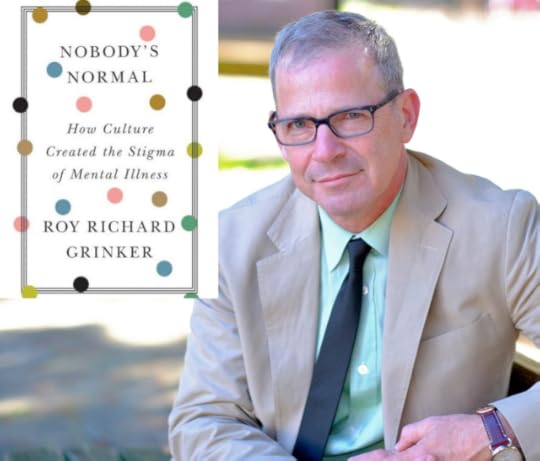
"...Indeed, it is impossible to imagine that there is anyone unconnected to mental illness. In the twenty-first century, many of the people we most admire—celebrities like Lady Gaga and swimmer Michael Phelps, for example—speak publicly about their own emotional struggles. Also, in comparison to their parents, millennials are more willing to disclose a diagnosis and seek treatment. Many people, like my daughter Isabel, who is autistic, even celebrates forms of differences that just a few decades ago were a mark of shame."
"This book chronicles the many cultural and historical threads that have brought us to the present, a time when societies throughout the world are challenging the stigma that has, for centuries, shadowed mental illnesses.
We haven’t put it into words, but most of the people I encounter, even in low-income countries with inadequate health care, sense that something positive is happening. Although 60 percent of people with a mental illness in the United States still receive no mental health treatment,1 mental illness is fast becoming a more accepted and visible part of the human condition."
"In any given year, nearly 20 percent of American adults—more than 60 million people—meet the criteria for a mental illness.2 Many of these conditions are mild, short-term, and self-limiting. But others have serious consequences. Anorexia nervosa, perhaps the most fatal of all, has a mortality rate of as high as 10 percent, by some measures.3 Suicide, almost always associated with mental illnesses, is the third leading cause of death among American teenagers, and most who die never received any mental health care. In 2013, a Centers for Disease Control and Prevention (CDC) survey of American high school students nationwide showed that more than 13 percent said they had at some time in their lives created a plan to commit suicide, and 17 percent “seriously considered suicide.”4 But many felt too ashamed to tell anyone in their family. Every year, mental illnesses account for at least 12 percent of the total disease burden worldwide, and many people with serious mental illnesses and intellectual disabilities in lowincome countries like South Sudan, Somalia, and Uganda are condemned to a life of confinement and abuse in their villages.5"
"...When someone is homeless, our first thought is that the person has failed as an individual rather than to question the historical legacies of discrimination and inequality. When a person does not fit a preexisting or assigned sex or gender, our first thought is that the person has a mental or physical disease rather than to question our definitions of normality."
"By the early 1800s, according to historians, 'in moral discourse there was hardly any overlap between the active resolute male and the emotional, nurturing, malleable female. Woman was constructed as 'other' in a more absolute sense than ever before.'"Did he forget about the Salem Witch trials? No, he acknowledged that they happened and that women were unfairly targeted on the basis of their womanhood, but he also repeatedly states that 'otherness' was not stigmatized, at leas in Western culture, before the Industrial Age. Is he not he aware that women couldn't hold property in colonial America, nor could they vote? Women were 'othered' well before the 1800s, Roy.