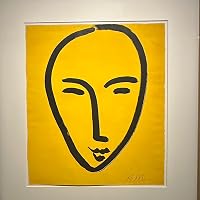
С именем Анри Матисса (1869—1954) связана целая эпоха в истории европейского искусства. Пабло Пикассо охарактеризовал творчество своего соперника одной фразой: «Матисс всегда был единственным и неповторимым». Впервые жизнеописание открывает нам Матисса не безмятежным и уверенным в себе, а сомневающимся, страдающим, не понятым публикой и собственными родными; не опасным анархистом и дикарем, а воспитанным, умным, образованным человеком, любящим поэзию и умеющим рассуждать об искусстве лучше любых критиков. Практичный и консервативный в жизни, романтический и бунтарский в творчестве — таким предстает реформатор искусства XX века, художник, сумевший упростить живопись, в интеллектуальном бестселлере британского биографа Хилари Сперлинг, удостоенной за свой труд престижной литературной премии «Whitebread», ставшем в 2006 году в Англии «Книгой года» и переведенном на многие языки.
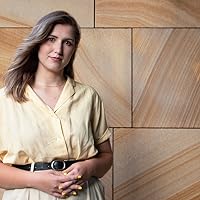
Hilary Spurling, CBE, FRSL (born 1940) is an English writer, known as a journalist and biographer. She won the Whitbread Prize for the second volume of her biography of Henri Matisse in January 2006. Burying The Bones: Pearl Buck in China was published in March 2010.
She is married to playwright John Spurling, and has three children (Amy, Nathaniel and Gilbert) and two grandchildren.
This lengthy volume. I removed one star due to repetition of some key ideas again and agai, specially regarding Matisses's artwork: Almost every painting is described as a revolution. Almost at every turn Matisse is on the brink of becoming the most acclaimed artist of the twentieth century as if we needed to be constantly reminded (convinced?, I remain a sceptic). Almost every chapter starts by describing hardship and incomprehension stared down by sheer stubbornness and dedication and rewarded by frantic collecting. Almost every painting's analysis is the same..either the figures are lost in a decorative scheme or the subject is reduced to its most essential features. This doesn't stop the writer from attributing highly specific anecdotal significance to most works. Wether it is his son Pierre oppressed by a piano lesson or Henri's possible repressed sexual yearning towards his student Olga Meerson, his highly synthesized pieces seem to be loaded with petty drama considering the aims stated by the artist himself of making art that is comfortable. Matisse's art as a refuge from a troubled world becomes more apparent towards the very end as well as his position at odds with other artists swept by political or sensual distractions like Picasso. I personally think Matisse was a terrible draftsman but somehow the book has managed to both gloss over it and make it seem less important, a mere glitch where the aims were loftier and more pressing. One thing that baffles me is that these paintings took enormous effort and time on occasion but when one looks at them it is hard to decide what part of the process was so strenuous when clearly the act of painting them didn't seem spectacularly loaded with technical challenges. I would understand that coming up with the perfect composition might take some trying but the author seems to accept readily that the act of painting itself took months at face value. Picasso produced at dizzying speed with unwavering confidence surpassing in boldness anything that came his way. By contrast, Matisse seems to have been giving birth every time he grabbed a brush-at least from this account. Matisses's compositions are not particularly difficult even when his approach to painting was "something else" so what did take months? As many artist biographies, this one pays no attention to technique, materials or work methods, my main complaint remains that it could have been a lot shorter if repetition of events and ideas hadn't been so pervasive. On the plus side, Matisse's everyday family life receives luscious attention and care. In that area, this biography is flawless.Matisse appears as the centre of his family, devoted to his art above all and at the expense of all, including wife and children. Marguerite's ordeals were a shock to me and probably deserve their own book. One suspects that Matisse would have amounted to nothing if it hadn't been enabled by the wonderful women in his life who managed every little aspect of his affairs so he could paint in concentrated stupor. Amelie in particular stands out as the one that placed all bets on him only to be sidetracked in the very end over the presence of Lydia Delectorskaya.
Долго выбирал что-то стоящее в ЖЗЛ от иностранных авторов, и кроме двух книг ничего не нашел. Остальные пишут по 10 биографий в год, я воспитан так, что то что десять лет пишется это биография, а остальное халтура.
Этот Матисс на самом деле сокращенно-совмещенная версия двух книг Хилари Сперлинг The Unknown Matisse, 1869-1908 (1998) и Matisse the Master: The Conquest of Colour, 1909-1954 (2005), которые для переиздания в бумажном переплете Matisse: The Life (2009) были лишены источников, и сокращены письма.
Русский перевод делался биографом Щукина - Наталией Семеновой, которая и знакома со Сперлинг. Все цитаты и письма были переведены с французского, а не с английского перевода. Кстати наше издание отличается в лучшую сторону от сокращенного, потому что Семенова с разрешения Сперлинг вставляла обратно некоторые вырезанные письма из двухтомника.
Событий очень много и читается интересно, но вторая часть намного интересней и живей (и именно вторая книга была удостоена разных премий включая Whitbread (ныне Costa) Book Of The Year), поэтому закончил книгу быстрее, чем начал.
Неплохо было бы больше разбираться в Матиссе, потому что представленных в книге картин - мало, и приходилось гуглить, что имелось ввиду, а знатокам творчества будет проще.
Spurling achieves a difficult task in writing a faithful biography of Matisse. He was so overwhelmingly obsessed and committed to being an artist, it crowds out other parts of his life. What comes across is an uncompromising driven artist, who constantly was looking for new inspiration and mediums to express himself. He is a hard task master on all who come across him, including his family. But the person on whom he vents most of his challenge is on himself. One of the many interesting things you learn is the reception his works received on first showing. People would openly ridicule his work. He was just ahead of his time.
Love Love Love this book!! It captures so much angst of the artist..something I can closely identify with as well as the notion that regardless of audience or of art world acceptance...you must paint your truth.
It took me three attempts before I was able to finish this one. It's not Spurling's fault, she writes well and her research is impressive, it's just that Matisse, as great an artist as he was, was not a particularly interesting person. Most of the book is him complaining about his nerves or about a variety of physical ailments (mostly related to his nerves), and the same goes for his family. You'd be much better off buying a nice catalog of his beautiful work.
An excellent biography, which won the Whitbread prize for non fiction in the year it was published. You almost feel you know the artist personally by the end of the book. He was a man of huge commitment to his work and of integrity in his dealings with others. On a detail, it was also interesting to read the account of what happened to him and his family during the two world wars.
Matisse: The Life condenses into one shorter volume Hilary Spurling's two longer biographies of the flamboyant painter, The Unknown Matisse, which described his early life, and Matisse the Master: The Conquest of Colour 1909-1954. This new book is, she writes, the "short, sharp, clear portrait I should have liked to write in the first place". Spurling's biographies of the artist have received considerable acclaim, with Matisse the Master winning Whitbread book of the year in 2005.
This is partly because, somewhat amazingly, these books constitute the first biography of the artist. This, combined with thorough research from private papers, means that Spurling's work has cut through much of the guesswork over Matisse's life. Written in clear, straightforward prose, it tells the story of the seed-merchant's son who shocked his father by becoming an artist; of the scandals and difficulties which shaped his life; and of the people who supported and inspired him to move from Flemish grey to pioneering Mediterranean colourist extraordinaire. Jo Littler. The Guardian 9 May 2009
This should have been a great book. It certainly has the two main ingredients for a successful biography: scholarship/research and storytelling. However, this - more often than not - clearly reads like a summary of another work, which can be off-putting. It suffers from all the editorial shortcomings usually associated with abridged editions: continuity errors, strange repetitions, too many facts crammed in without much discrimination or the necessary wider context to fully explain the author's assertions. All the lifting-and-shifting & cutting-and-pasting from the extended editions turned into an overwhelming narrative, particularly in the first half of the book. I was also surprised at the sheer volume of trivia and insignificant details included in here, and I grew tired of Spurling's grand statements describing every single experience or encounter Matisse had as pivotal and life-changing.
In addition, there isn't much in here resembling critical analysis of Matisse's work. Spurling does talk about the artworks, but it's mainly on a descriptive level (to be fair, this changes somewhat towards the end).
I thought for the most part it managed to balance the emotiveness of Matisse's art with the more typically biographical detail. I did feel like the detail could have been cut down a little as it began to drag a little towards the end, at least for me personally
I did find it interesting how much of a non-event in a sense the second war was for Matisse, at least directly. While some of his immediate family members got involved in the resistance he seemed pretty much left to his own devices which surprised me
I found this really hard to read. It felt sometimes that putting the book in a blender wouldn't make any difference. Facts! piled in. Anyway, I'm glad to have read it and now tons of information influences my appreciation of his art.
Very interesting book that depicts the struggle of artists, the effect of love and war on their art. This book takes you through this very interesting timeline of Matisses life explaining his art through this timeline.
I won't lie, this was a slog to get thru at 548 pages. But the description of the scenery of his travels was really poetic and the bits about his personal life were full of heart. I'm sure someone who is a bit more of an art historian would appreciate the level of detail when discussing his pieces.
Matisse the Life is one probably of the best and complete biography ever written about worldwide famous artist Henry Matisse. I found this book illuminating: it helped me demystifying the artist of Matisse and understand his life as it had really been. In the book, I liked the way the life and the career of the artist responded to the social and historical events (three dramatic wars, etc). However, I believe the book tend to be very boring for many different parts. The story of his life is often interrupted but detailed descriptions about his works that are not my main interest as they do not focus in his biography. Moreover, Matisse life is so boring: the artist most his life among his family without any exiting experiences. By the way this biography helped me clarify my thoughts about the artist: my conclusion is that Matisse is not my favourite artist - there are really few works of him that I like. Thanks to this book, I won't ever read anything about my Matisse and especially about his work in my life again.