

What do you think?

Dedalus #1
Daedalus
Tras sus obras maestras Agujero negro y Vista final ,
Charles Burns regresa con una inquietante trilogía de tintes autobiográficos. Este podría ser el Retrato del artista adolescente de Charles Burns, pues resulta difícil no ver en Brian Milner, el protagonistade Laberintos , al alter ego del autor. En este primer volumen empezaremos a Brian es un adolescente tímido, prodigiosamente dotado para el dibujo, que está obsesionado con el cine de terror y que debe luchar día tras día contra sus miedos interiores. Cuando recibe, sin esperarla, la cálida atención de Laurie, una muchacha de su edad, las fronteras entre la realidad y la imaginaciónempezarán a confundirse. Con Laberintos , el maestro Burns vuelve a sus raí historias de amor insanas, películas de serie B y un paseo por la encrucijada ominosa donde se dan cita la ciencia ficción, el terror y los kaiju japoneses. «Soy un extraterrestre comprimido, sentado a otra mesa, en otro mundo». La crítica ha dicho...
«Una alhaja por derecho propio. […] Una impecable creación de uno de los gigantes indiscutibles del cómic de autor. Y merece ser tratada como tal. Se lee con reverencia, con asombro… y con un poco de dentera, que sin grima Burns no es Burns».
Alejandro Jiménez Cid, diario16 «Qué soledad, melancolía e inquietud dominan sus tebeos. […] Hay que añadir, por lo menos, un talento deslumbrante y peculiar, un sello personalísimo, así como una atmósfera que algunos han definido como el terror de la cotidianeidad. Psicoanálisis, sueños, nostalgia, traumas. Todo ello regresa en Laberintos ».
Tommaso Koch, El País «Burns está en una plenitud gloriosa como dibujante. […] Es todo un espectáculo asistir a su dominio ya absoluto del color. […] Solo por eso, hay momentos en los que no querrías encontrar la salida de este Laberintos ».
Xavi Serra, Rockdelux «Entre lo onírico y el realismo sucio, Laberintos es de lo mejor que ha firmado Burns en mucho tiempo, y en edición de lujo. Como para perdérselo».
Javier Cavanilles, Plaza «Un relato de carácter autobiográfico e introspectivo que oscila entre el romance, el thriller psicológico y el homenaje al cine de terror».
France Culture «Un libro enigmático y, como suele suceder con Burns, desasosegante».
Télérama «Imágenes potentes que invaden la mente del lector, como si tuviera acceso a undepósito primitivo y subterráneo del que extraer figuras que pertenecen a un ominoso inconsciente colectivo».
Libération «La verdadera protagonista de Laberintos es la fantasí el autor explora sus meandros como si fueran una dimensión paralela e independiente de la realidad.»
Fumettologica «¿Volver a ser joven? Vale. Lo que nadie promete es que vaya a ser bonito, sino más bien lo contrario. Así es y así funciona Laberintos , por cortesía de Charles Burns».
Timur Vermes, Spiegel «Nadie sabe representar la atribulación adolescente como lo hace Charles Burns».
Der Tagesspiegel
Charles Burns regresa con una inquietante trilogía de tintes autobiográficos. Este podría ser el Retrato del artista adolescente de Charles Burns, pues resulta difícil no ver en Brian Milner, el protagonistade Laberintos , al alter ego del autor. En este primer volumen empezaremos a Brian es un adolescente tímido, prodigiosamente dotado para el dibujo, que está obsesionado con el cine de terror y que debe luchar día tras día contra sus miedos interiores. Cuando recibe, sin esperarla, la cálida atención de Laurie, una muchacha de su edad, las fronteras entre la realidad y la imaginaciónempezarán a confundirse. Con Laberintos , el maestro Burns vuelve a sus raí historias de amor insanas, películas de serie B y un paseo por la encrucijada ominosa donde se dan cita la ciencia ficción, el terror y los kaiju japoneses. «Soy un extraterrestre comprimido, sentado a otra mesa, en otro mundo». La crítica ha dicho...
«Una alhaja por derecho propio. […] Una impecable creación de uno de los gigantes indiscutibles del cómic de autor. Y merece ser tratada como tal. Se lee con reverencia, con asombro… y con un poco de dentera, que sin grima Burns no es Burns».
Alejandro Jiménez Cid, diario16 «Qué soledad, melancolía e inquietud dominan sus tebeos. […] Hay que añadir, por lo menos, un talento deslumbrante y peculiar, un sello personalísimo, así como una atmósfera que algunos han definido como el terror de la cotidianeidad. Psicoanálisis, sueños, nostalgia, traumas. Todo ello regresa en Laberintos ».
Tommaso Koch, El País «Burns está en una plenitud gloriosa como dibujante. […] Es todo un espectáculo asistir a su dominio ya absoluto del color. […] Solo por eso, hay momentos en los que no querrías encontrar la salida de este Laberintos ».
Xavi Serra, Rockdelux «Entre lo onírico y el realismo sucio, Laberintos es de lo mejor que ha firmado Burns en mucho tiempo, y en edición de lujo. Como para perdérselo».
Javier Cavanilles, Plaza «Un relato de carácter autobiográfico e introspectivo que oscila entre el romance, el thriller psicológico y el homenaje al cine de terror».
France Culture «Un libro enigmático y, como suele suceder con Burns, desasosegante».
Télérama «Imágenes potentes que invaden la mente del lector, como si tuviera acceso a undepósito primitivo y subterráneo del que extraer figuras que pertenecen a un ominoso inconsciente colectivo».
Libération «La verdadera protagonista de Laberintos es la fantasí el autor explora sus meandros como si fueran una dimensión paralela e independiente de la realidad.»
Fumettologica «¿Volver a ser joven? Vale. Lo que nadie promete es que vaya a ser bonito, sino más bien lo contrario. Así es y así funciona Laberintos , por cortesía de Charles Burns».
Timur Vermes, Spiegel «Nadie sabe representar la atribulación adolescente como lo hace Charles Burns».
Der Tagesspiegel
64 pages, Hardcover
First published January 1, 2019
About the author
Charles Burns
104 books1,146 followersCharles Burns is an American cartoonist and illustrator.
Burns grew up in Seattle in the 1970s. His comic book work rose to prominence in Art Spiegelman and Françoise Mouly magazine 'RAW' in the mid-1980s. Nowadays, Burns is best known for the horror/coming of age graphic novel Black Hole, originally serialised in twelve issues between 1995 and 2004. The story was eventually collected in one volume by Pantheon Books and received Eisner, Harvey, and Ignatz awards in 2005. His following works X'ed Out (2010), The Hive (2012), Sugar Skull (2014), Last Look (2016) and Last Cut (2024) have also been published by Pantheon Books, although the latter was first released in France as a series of three French comic albums.
As an illustrator, Charles Burns has been involved in a wide range of projects, from Iggy Pop album covers to an ad campaign for Altoids. In 1992 he designed the sets for Mark Morris's restaging of The Nutcracker (renamed The Hard Nut) at the Brooklyn Academy of Music. He illustrated covers for Time, The New Yorker, and The New York Times Magazine. He was also tapped as the official cover artist for The Believer magazine at its inception in 2003.
Burns lives in Philadelphia with his wife and daughters.
Burns grew up in Seattle in the 1970s. His comic book work rose to prominence in Art Spiegelman and Françoise Mouly magazine 'RAW' in the mid-1980s. Nowadays, Burns is best known for the horror/coming of age graphic novel Black Hole, originally serialised in twelve issues between 1995 and 2004. The story was eventually collected in one volume by Pantheon Books and received Eisner, Harvey, and Ignatz awards in 2005. His following works X'ed Out (2010), The Hive (2012), Sugar Skull (2014), Last Look (2016) and Last Cut (2024) have also been published by Pantheon Books, although the latter was first released in France as a series of three French comic albums.
As an illustrator, Charles Burns has been involved in a wide range of projects, from Iggy Pop album covers to an ad campaign for Altoids. In 1992 he designed the sets for Mark Morris's restaging of The Nutcracker (renamed The Hard Nut) at the Brooklyn Academy of Music. He illustrated covers for Time, The New Yorker, and The New York Times Magazine. He was also tapped as the official cover artist for The Believer magazine at its inception in 2003.
Burns lives in Philadelphia with his wife and daughters.
Ratings & Reviews
Friends & Following
Create a free account to discover what your friends think of this book!
Community Reviews
Displaying 1 - 30 of 42 reviews

January 2, 2022
I read this in Dutch, as this is only available in a couple of languages, and English isn't among them.
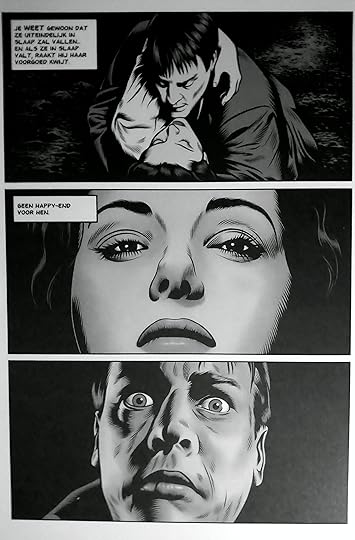
The art is the star, as you might expect from Burns - the story is enigmatic, and the book sort of ends in what feels like the middle of the story. There's a Strange Boy character, which doesn't instantly thrill me, but let's see where this goes in following volumes.
A couple of notes on the Dutch translation: it isn't great. I haven't read the original English dialogue of course, but I think the English used is more conversational, and it has been translated quite faithfully, pretty much word for word, and that just doesn't work with Dutch. Dutch has the tendency to naturally sound kind of arch, so what is more conversational in English will sound stilted in Dutch, and you get a translation where nobody speaks like an actual person. This is never going to happen, but my advice would be to take the translation as it is now, and quite rigorously rewrite it to sound more like real people talk.
3.5 stars
The art is the star, as you might expect from Burns - the story is enigmatic, and the book sort of ends in what feels like the middle of the story. There's a Strange Boy character, which doesn't instantly thrill me, but let's see where this goes in following volumes.
A couple of notes on the Dutch translation: it isn't great. I haven't read the original English dialogue of course, but I think the English used is more conversational, and it has been translated quite faithfully, pretty much word for word, and that just doesn't work with Dutch. Dutch has the tendency to naturally sound kind of arch, so what is more conversational in English will sound stilted in Dutch, and you get a translation where nobody speaks like an actual person. This is never going to happen, but my advice would be to take the translation as it is now, and quite rigorously rewrite it to sound more like real people talk.
3.5 stars

February 22, 2020
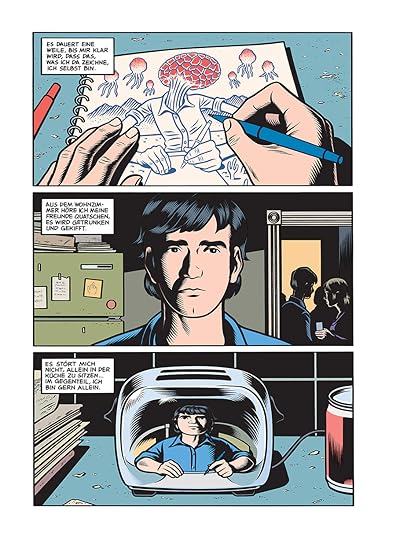
DAIDALOS ist Charles Burns´ Porträt des Künstlers als junger Mann und es fällt schwer, im Protagonisten Brian Milner kein Alter Ego von Burns zu sehen. Brian begegnet uns in diesem ersten Band als ein zeichnerisch begabter Heranwachsender, der auf Horrorfilme versessen ist und mit seinen eigenen Ängsten im Alltag konfrontiert wird. Er ist ein Einzelgänger, der im Umgang mit anderen Menschen unbeholfen ist und für den die Grenzen zwischen Wirklichkeit und Imagination fließend sind.

Auf einer Party lernt er Laurie kennen, mit der er sich später verabreden und "Invasion of the Body Snatchers" im Kino ansehen wird.

Die entseelten Klone des Films, die wie Menschen aussehen, es aber nicht sind, sind für Brian ein Bild, das die Bedrohung und Fremdheit perfekt ausdrückt, die er im Umgang mit anderen Menschen spürt.
Eine Coming of Age=Geschichte eines Künstlers also, der von den verrückten Bildern in seinem Kopf umgetrieben wird und nur schwer Anschluss an Gleichaltrige findet. Sie wäre nur halb so interessant, wenn sie nicht auf diese ganz spezielle Art ins Bild gesetzt wäre, die Burns eigen ist.
Mit klaren Linien und ohne jegliche Spielereien gezeichnet, wirken die makellosen Bilder flächig und auf den ersten Blick schnell überschaubar. Doch wie in einem Film von David Lynch ist schnell klar, dass sich hinter der Oberfläche Schrecknisse und Dämonen verbergen.
Mit Black Hole hat sich Burns in meinen Comic=Pantheon eingeschrieben, mit DAIDALOS sichert er sich diesen Platz.
Zum neuen Buch von Charles Burns gibt es übrigens einen aktuellen Beitrag auf DLF:
https://www.deutschlandfunk.de/comic-...
Auf einer Party lernt er Laurie kennen, mit der er sich später verabreden und "Invasion of the Body Snatchers" im Kino ansehen wird.
Die entseelten Klone des Films, die wie Menschen aussehen, es aber nicht sind, sind für Brian ein Bild, das die Bedrohung und Fremdheit perfekt ausdrückt, die er im Umgang mit anderen Menschen spürt.
Eine Coming of Age=Geschichte eines Künstlers also, der von den verrückten Bildern in seinem Kopf umgetrieben wird und nur schwer Anschluss an Gleichaltrige findet. Sie wäre nur halb so interessant, wenn sie nicht auf diese ganz spezielle Art ins Bild gesetzt wäre, die Burns eigen ist.
Mit klaren Linien und ohne jegliche Spielereien gezeichnet, wirken die makellosen Bilder flächig und auf den ersten Blick schnell überschaubar. Doch wie in einem Film von David Lynch ist schnell klar, dass sich hinter der Oberfläche Schrecknisse und Dämonen verbergen.
Mit Black Hole hat sich Burns in meinen Comic=Pantheon eingeschrieben, mit DAIDALOS sichert er sich diesen Platz.
Zum neuen Buch von Charles Burns gibt es übrigens einen aktuellen Beitrag auf DLF:
https://www.deutschlandfunk.de/comic-...

May 8, 2021
In various European languages, Charles Burns is serializing his latest comic (which will presumably be called either “Daedalus” or “Dedalus” "Labyrinths"* in English) in the form of slim hardcover albums – something like the traditional Franco-Belgian format. It now seems that he’s going to wait until the series is finished before releasing an English edition, so I’ve given up waiting to read it in the original language, and I’ve started reading it in French.
This first volume is very much the beginning of a story – not in any way standalone or self-contained – so it’s not really possible to write a proper review. With that caveat, this album is absolutely brilliant. The art is simply stunning, with incredible use of colour and an ingenious mix of styles; this may be the best-looking comic I’ve ever read. What’s more, the story so far is totally engrossing: it’s a slow burn, heavy with mystery and tension, and it has a definite surreal bent. There’s no way of knowing where it’s headed, but I love every page of it so far.
I don’t want to jinx it, but this is setting up to be just as good as Black Hole, if not better – and that’s the highest praise I can give, as Black Hole is one of my absolute favourites.
*I originally wrote in this review that the English title is likely to be either “Daedalus” or “Dedalus”. I've since realized that the French name for the Greek mythological figure Daedelus is actually "Dédale", with no s, and that in French the word "dédales" (with an s) means "labyrinths". It seems that I'm not the only person to have made this mistake, as the German version of this comic is being published under the title "Daidalos", which can only refer to Daedalus. However, the Italian and Spanish versions are "Labirinti" and "Laberintos" respectively, confirming that the English title is probably "Labyrinths".
This first volume is very much the beginning of a story – not in any way standalone or self-contained – so it’s not really possible to write a proper review. With that caveat, this album is absolutely brilliant. The art is simply stunning, with incredible use of colour and an ingenious mix of styles; this may be the best-looking comic I’ve ever read. What’s more, the story so far is totally engrossing: it’s a slow burn, heavy with mystery and tension, and it has a definite surreal bent. There’s no way of knowing where it’s headed, but I love every page of it so far.
I don’t want to jinx it, but this is setting up to be just as good as Black Hole, if not better – and that’s the highest praise I can give, as Black Hole is one of my absolute favourites.
*I originally wrote in this review that the English title is likely to be either “Daedalus” or “Dedalus”. I've since realized that the French name for the Greek mythological figure Daedelus is actually "Dédale", with no s, and that in French the word "dédales" (with an s) means "labyrinths". It seems that I'm not the only person to have made this mistake, as the German version of this comic is being published under the title "Daidalos", which can only refer to Daedalus. However, the Italian and Spanish versions are "Labirinti" and "Laberintos" respectively, confirming that the English title is probably "Labyrinths".

February 2, 2023
Muy buena historia de Burns con ese toque raro y misterioso de sus comics. Me he quedado con unas ganas tremendas de ver como acaba esto.
January 26, 2024
Critique pour les trois tomes.
J'adore Burns et j'attendais qu'il sorte en langue originale mais ça a pas l'air d'être parti pour ça donc je les ai tous lus back à back d'une traite. Le dessin reste à l'égale de Burns, la narration joue encore avec l'inquiétante étrangeté et l'onirisme lynchien comme la trilogie X'ed out mais pour la première fois, je commence à trouver que Burns se répète un peu et que l'histoire est un peu maladroite. Ça parle beaucoup de cinéma donc j'y ai quand même trouvé mon compte
J'adore Burns et j'attendais qu'il sorte en langue originale mais ça a pas l'air d'être parti pour ça donc je les ai tous lus back à back d'une traite. Le dessin reste à l'égale de Burns, la narration joue encore avec l'inquiétante étrangeté et l'onirisme lynchien comme la trilogie X'ed out mais pour la première fois, je commence à trouver que Burns se répète un peu et que l'histoire est un peu maladroite. Ça parle beaucoup de cinéma donc j'y ai quand même trouvé mon compte

December 20, 2021
Strano forte! Ma voglio leggere il secondo!

March 19, 2020
Mit »Daidalos« wage ich den ersten Schritt in die kunstvolle Welt des amerikanischen Comic-Talentes Charles Burns, in der er in gewisser Weise eine autobiografische Geschichte niederschreibt.
Die klaren Bilder des Künstlers bestechen durch eine geradlinige Strichführung und durch die Verwendung kräftiger Farben erzeugt Burns eine besonders starke und emotionsgeladene Sogkraft.
Im Mittelpunkt des ersten Bandes steht die Betrachtung einer Szene, die das Kennenlernen und Betrachten der einzelnen Charaktere ermöglicht und dabei die Gefühls- und Körperbetonte Zeit des Heranwachsens mit Aliens und Splatter-Horror zu einer grotesken Geschichte verschwimmen lässt. Brian Milner, der Held des Comics, verfügt über eine introvertierte Persönlichkeit, und so zieht er sich auf einer Party lieber zurück, um sich seinen Zeichnungen und seiner Selbstbetrachtung zu widmen. Dort begegnet er der überaus attraktiven Laurie, die die Hauptrolle im nächsten Tennage-Horror-Filmprojekt von sich und seinen Freunden übernehmen wird.
Die Anziehungskraft der überbordenden Gefühle wird hier in kuriose und farbenprächtige Bilder gekleidet, in der Brian Milners Fantasie, Träume und die Realität geradezu nahtlos ineinander übergehen. Dabei spielt seine Selbstwahrnehmung eine große Rolle und diese schickt uns mit außerirdisch anmutenden Zeichnungen in eine karge Wüste, die auch von seiner Vorliebe für Horror-Filme wie Don Siegels »Invasion of the Body Snatchers« aus dem Jahre 1956 geprägt ist.
Bei dem Titelgebenden Helden »Daidalos« handelt es sich um den berühmten Erfinder und Künstler aus der griechischen Mythologie, der für den Entwurf und das Bauwerk des Labyrinths für den Minotaurus verantwortlich war und schließlich vom kretischen König Minos mit seinem Sohn Ikarus selbst in das Labyrinth eingesperrt wurde. Charles Burns hat es wohl darauf angelegt Parallelen zu dem antiken Künstler zu ziehen, es bleibt allerdings noch spannend, inwieweit diese im nächsten Band noch weitergeführt werden.
Fazit
Das Lesen dieser Geschichte fühlt sich an, als wäre man mitten in ein Kaleidoskop geraten. Eine einnehmende Mischung aus Science-Fiction und Coming-of-Age!
Die klaren Bilder des Künstlers bestechen durch eine geradlinige Strichführung und durch die Verwendung kräftiger Farben erzeugt Burns eine besonders starke und emotionsgeladene Sogkraft.
Im Mittelpunkt des ersten Bandes steht die Betrachtung einer Szene, die das Kennenlernen und Betrachten der einzelnen Charaktere ermöglicht und dabei die Gefühls- und Körperbetonte Zeit des Heranwachsens mit Aliens und Splatter-Horror zu einer grotesken Geschichte verschwimmen lässt. Brian Milner, der Held des Comics, verfügt über eine introvertierte Persönlichkeit, und so zieht er sich auf einer Party lieber zurück, um sich seinen Zeichnungen und seiner Selbstbetrachtung zu widmen. Dort begegnet er der überaus attraktiven Laurie, die die Hauptrolle im nächsten Tennage-Horror-Filmprojekt von sich und seinen Freunden übernehmen wird.
Die Anziehungskraft der überbordenden Gefühle wird hier in kuriose und farbenprächtige Bilder gekleidet, in der Brian Milners Fantasie, Träume und die Realität geradezu nahtlos ineinander übergehen. Dabei spielt seine Selbstwahrnehmung eine große Rolle und diese schickt uns mit außerirdisch anmutenden Zeichnungen in eine karge Wüste, die auch von seiner Vorliebe für Horror-Filme wie Don Siegels »Invasion of the Body Snatchers« aus dem Jahre 1956 geprägt ist.
Bei dem Titelgebenden Helden »Daidalos« handelt es sich um den berühmten Erfinder und Künstler aus der griechischen Mythologie, der für den Entwurf und das Bauwerk des Labyrinths für den Minotaurus verantwortlich war und schließlich vom kretischen König Minos mit seinem Sohn Ikarus selbst in das Labyrinth eingesperrt wurde. Charles Burns hat es wohl darauf angelegt Parallelen zu dem antiken Künstler zu ziehen, es bleibt allerdings noch spannend, inwieweit diese im nächsten Band noch weitergeführt werden.
Fazit
Das Lesen dieser Geschichte fühlt sich an, als wäre man mitten in ein Kaleidoskop geraten. Eine einnehmende Mischung aus Science-Fiction und Coming-of-Age!

August 24, 2021
Charles Burns may be my favourite cartooniste ever. He seems to be the closest equivalent of David Lynch in the graphic novel medium -- but of course, though this comparison has been made many times, it is also rather insulting, as Burns is very much his own thing. Still, there are obvious similarities. For instance, both have a wonderful ability to suggest that apparently quiet scenes hide huge tension and strangeness. Burns' heavily inked characters and objects always seem to contain depths of darkness.
After the somewhat burroughsian, disjointed narrative of X'ed out, we seem to come back to something closer to Black Hole. Here, as in his famous masterpiece, Burns wonderfully captures adolescence (or post-adolescence) as a time of obsessive desire, budding love for weird culture (schlocky sf/horror in the case of Burns) and the vague but strong feeling that there's a lot of strange stuff out there, in our immediate surroundings. And, of course, the intuition that these three things are somehow mysteriously related.
So, why "only" 4 stars? Well, because this first episode rather reads like a prologue. Nothing very strange (I mean, for Burns standards) happens so far. Sure, Brian seems curiously disconnected from the people around him (except when he sees a film), Laurie seems to have undisclosed emotional baggage, and there are some hints that much, much more is going on. Still, it's rather early to tell. These 4 stars may very well retroactively transform themselves into 5 stars once I can read the whole story, but so far... (Luckily, the second episode will be published in a few days)
After the somewhat burroughsian, disjointed narrative of X'ed out, we seem to come back to something closer to Black Hole. Here, as in his famous masterpiece, Burns wonderfully captures adolescence (or post-adolescence) as a time of obsessive desire, budding love for weird culture (schlocky sf/horror in the case of Burns) and the vague but strong feeling that there's a lot of strange stuff out there, in our immediate surroundings. And, of course, the intuition that these three things are somehow mysteriously related.
So, why "only" 4 stars? Well, because this first episode rather reads like a prologue. Nothing very strange (I mean, for Burns standards) happens so far. Sure, Brian seems curiously disconnected from the people around him (except when he sees a film), Laurie seems to have undisclosed emotional baggage, and there are some hints that much, much more is going on. Still, it's rather early to tell. These 4 stars may very well retroactively transform themselves into 5 stars once I can read the whole story, but so far... (Luckily, the second episode will be published in a few days)

January 12, 2020
Étrange débout pour une série... Je ne suis sûre d'avoir tout compris. Mais j'en lirais sûrement le tome 2.
(Estranho começo para um série... Eu não tenho certeza de ter entendido tudo. Mas, eu lerei com certeza o volume 2)
(Estranho começo para um série... Eu não tenho certeza de ter entendido tudo. Mas, eu lerei com certeza o volume 2)

August 4, 2025
«No mires a cámara… ¡Lo que tienes que hacer es seguir mirándome a mí!»
La invasión de los ladrones de cuerpos, de la mano de Charles Burns. No se ha hecho nada así nunca… ¡Editad el integral en España!
La invasión de los ladrones de cuerpos, de la mano de Charles Burns. No se ha hecho nada así nunca… ¡Editad el integral en España!

March 23, 2022
Charles Burns = one of my favorite comic book writers and illustrators
Super cool story about the subconscious and conscious life of an intricate teenager.
Super cool story about the subconscious and conscious life of an intricate teenager.

May 24, 2020
Graphically impressive first part of what looks like a serie about Brian. Strange and bizarre atmosphere, some auto-biographical allusion also I guess. A psychological thriller drawn and written literally from within...

March 1, 2020
Trop court! Vite vite, le tome 2 svp! J’adore le style graphique et l’univers étrange de Charles Burns.

April 14, 2021
Ce premier tome ne sert qu'à présenter l'intrigue, et encore. Même à la fin, on n'en sait pas plus sur Brian ou Laurie ou ce qu'il va leur arriver, à part que ça va être quelque chose de bizarre. En tout cas, le dessin est magnifique.
This entire review has been hidden because of spoilers.

November 17, 2024
Tohle nemělo vyjít ve třech knihách, to je naprostý nesmysl. Mělo to být v jedné knize a na tenčích papírech. Je sice pravda, že na použitém papíru vypadá ten tisk a barvy hodně dobře, ale je to zbytečně tlusté. Nicméně, přečetl jsem to celé najednou, a tak to budu hodnotit jako jeden celek. Jinak to ani nemá smysl.
Anotace jednotlivých knih je hodně zavádějící. Kdybych měl Burnsovo Bludiště popsat jedním slovem, tak bych řekl, že je zádumčivé. Začít si něco s holkou, navíc úplně poprvé, není vůbec jednoduché. A teď si představte, že jste navíc maniodepresivní fanoušek starých hororů. Pak to není jednoduché pro vás, ani pro toho druhého. A o tomto to celé je. O vztazích, o starých hororech, o lásce k filmům a v neposlední řadě o kreativitě.
Hodnotit to není jednoduché. Příběhová linka není úplně zřejmá a konec není uspokojivý. Ale tak nějak mě to bavilo. Nejsem z toho nadšený, ale pracuje to se zvláštní atmosférou a donutí vás to se alespoň na chvíli zamyslet. Přispívá k tomu i osobitá kresba, která se zdá na první pohled zjednodušující, ale zároveň je plná detailů a emocí.
Anotace jednotlivých knih je hodně zavádějící. Kdybych měl Burnsovo Bludiště popsat jedním slovem, tak bych řekl, že je zádumčivé. Začít si něco s holkou, navíc úplně poprvé, není vůbec jednoduché. A teď si představte, že jste navíc maniodepresivní fanoušek starých hororů. Pak to není jednoduché pro vás, ani pro toho druhého. A o tomto to celé je. O vztazích, o starých hororech, o lásce k filmům a v neposlední řadě o kreativitě.
Hodnotit to není jednoduché. Příběhová linka není úplně zřejmá a konec není uspokojivý. Ale tak nějak mě to bavilo. Nejsem z toho nadšený, ale pracuje to se zvláštní atmosférou a donutí vás to se alespoň na chvíli zamyslet. Přispívá k tomu i osobitá kresba, která se zdá na první pohled zjednodušující, ale zároveň je plná detailů a emocí.

July 28, 2023
2/5
M'han agradat moltíssim les parts d'homenatge al cinema clàssic, i les vinyetes que tenen a veure amb la pel·lícula que en Brian té al cap m'han semblat interessants. Els elements bizarros sorprenen al principi, després ja no tant. I pel que fa a la relació dels dos nois, la trobo típicament tronada i m'importa zero. El dibuix, a més, no és massa del meu estil.
Entenc que es tracta d'una saga, però dubto molt que segueixi donant-li una oportunitat.
M'han agradat moltíssim les parts d'homenatge al cinema clàssic, i les vinyetes que tenen a veure amb la pel·lícula que en Brian té al cap m'han semblat interessants. Els elements bizarros sorprenen al principi, després ja no tant. I pel que fa a la relació dels dos nois, la trobo típicament tronada i m'importa zero. El dibuix, a més, no és massa del meu estil.
Entenc que es tracta d'una saga, però dubto molt que segueixi donant-li una oportunitat.

April 8, 2024
This is a review for the full series (3 parts). I read the Dutch translation.
Charles Burns presents another teenage drama, bordering on semi-autobiographical male fantasy, depicting an emotionally challenged boy struggling to express his feelings for a pretty redhead. Mixed with Burns' signature blend of creepy B-film horror, the story isn't that engaging or original and has a somewhat lame ending. However, Burns' iconic artwork compelled me to see the story through to its end.
Charles Burns presents another teenage drama, bordering on semi-autobiographical male fantasy, depicting an emotionally challenged boy struggling to express his feelings for a pretty redhead. Mixed with Burns' signature blend of creepy B-film horror, the story isn't that engaging or original and has a somewhat lame ending. However, Burns' iconic artwork compelled me to see the story through to its end.

February 17, 2022
Carino, lo stile di Charles Burns è sempre lo stesso e a colori rende bene. Lo stile di scrittura è molto fluido, la lettura scorre in modo molto piacevole con tavole ben scandite e informazioni dosate in modo perfetto.
Purtroppo in questo volume succede poco o niente, sembra semplicemente un'introduzione un po' troppo lunga a qualcosa che non si sa cosa sarà.
Purtroppo in questo volume succede poco o niente, sembra semplicemente un'introduzione un po' troppo lunga a qualcosa che non si sa cosa sarà.
April 22, 2022
Great art style, was digging the whole vibe but didn't really know what this story want's to be. Is it just autobiographical, is it sci-fi horror, is it a slice of life kinda story? Maybe the second part will answer my questions, although I'm not sure if I'm going to read it. The ending was really open, but didn't felt like an end

April 16, 2024
Off to a promising start. The art as usual is stellar, and Burns is up to his usual schlocky weirdness mixed with teenage angst shenanigans. Read this in the Dutch translation and I agree with other reviewers here that the prose could have been made less stilted. Will definitely be picking up further volumes.

May 14, 2020
Probablement l’œuvre la plus auto-biographique de Charles Burns. Les illustrations sont soignées au possible le récit ne ce dévoile quasiment pas, et j'en redemande encore please mister Burns unleashed your darkest fantasy, i'm in love with you pen.

December 11, 2021
I haven't tried to translate the text via Google into English, but the illustrations are excellent throughout, and clearly something weird is afoot, involving a beautiful young woman, a handsome but befuddled average joe, and a thing that looks like a cross between a brain and a jellyfish.

August 24, 2024
Extrañísimo y tremendamente magnético. Como siempre, la introducción a los mundos de Charles Burns debe ser como un salto a ciegas y dejarse llevar. De momento, muchas piezas y un bellísimo homenaje a La invasión de los ladrones de cuerpos (la original).

December 5, 2024
Library only had books 1 and 2 (out of 3), so I am going to have to suspend my reading of this until I get my hands on a complete edition. No judgement on story yet but its very pretty to look at.

June 2, 2025
Výtvarne pôsobivé, s nádychom hollywoodskych filmov z prvej polovice 20. storočia v kombinácii s jemným štýlom klasických marvelovských komiksov. Príbehovo však nejasné, psychoidné a za mojou hranicou tolerancie bizarna.
March 21, 2026
Pinta genial esta nueva historia del gran Charles Burns. El tomo es cortísimo. Aparte del ansia de seguir la historia, no me creo disposición de escribir la reseña hasta que no me lea el resto de tomos.

May 8, 2020
Přijde mi to jako klasický Burnsův bizár. Teenage hrdinové, nejasná "divnost". Vůbec netuším, kam se to bude ubírat a dost se těším.

October 2, 2020
3.5.. mais où est la suite? Ça finit trop soudainement.

Displaying 1 - 30 of 42 reviews