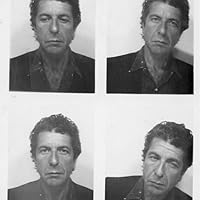
The Brazilian educator Paulo Freire is among most the influential educational thinkers of the late 20th century. Born in Recife, Brazil, on September 19, 1921, Freire died of heart failure in Sao Paulo, Brazil on May 2, 1997. After a brief career as a lawyer, he taught Portuguese in secondary schools from 1941-1947. He subsequently became active in adult education and workers' training, and became the first Director of the Department of Cultural Extension of the University of Recife (1961-1964).
Freire quickly gained international recognition for his experiences in literacy training in Northeastern Brazil. Following the military coup d'etat of 1964, he was jailed by the new government and eventually forced into a political exile that lasted fifteen-years.
In 1969 he was a visiting scholar at Harvard University and then moved to Geneva, Switzerland where he assumed the role of special educational adviser to the World Congress of Churches. He returned to Brazil in 1979.
Freire's most well known work is Pedagogy of the Oppressed (1970). Throughout this and subsequent books, he argues for system of education that emphasizes learning as an act of culture and freedom. He is most well known for concepts such as "Banking" Education, in which passive learners have pre-selected knowledge deposited in their minds; "Conscientization", a process by which the learner advances towards critical consciousness; the "Culture of Silence", in which dominated individuals lose the means by which to critically respond to the culture that is forced on them by a dominant culture. Other important concepts developed by Freire include: "Dialectic", "Empowerment", "Generative Themes/Words", "Humanization", "Liberatory Education", "Mystification", "Praxis", " Problematization", and "Transformation of the World".
This was a randomly picked up book from the library. It is short, and sweet, and just a collection of odds-and-ends, but I found it endearing and surprisingly intimate. One of the chapters that will stay with me for a long time was where Paulo engaged in a conversation with 7th and 8th grade students about the nature of reading difficult things. I have always found Freire to be such an inspirational thinker, but it was here that I also saw his way of relating to others. I deeply enjoyed reading the talks that were transcribed here.
This was put together posthumously by his wife, and the writings about Freire's life and legacy also added a special quality to this volume. This is a wonderful book to read if you are an educator and need encouragement, particularly as we encounter ever more turbulent times. Freire reminds us that our work is always, and must be, political. And that the struggle is a part of what makes the journey worthwhile.
Some quotations I liked:
There is no tomorrow without a project, without a dream, without utopia, without hope, without creative work, and work toward the development of possibilities, which can make the concretization of that tomorrow viable. It is in that sense that I have said on different occasions that I am hopeful not out of stubbornness, but due to an existential imperative. p. 26
In other words, in the world there are always hidden things; in life, there are always hidden things, and one of the roles of the educator is to draw attention to those things. Sometimes it is not even necessary to show the hidden thing, but rather it is about helping the student to know that there are hidden things for him or her to discover. p. 35
The education I speak about is an education of now, and it is an education of tomorrow. it is an education that must set us, permanently, on a questioning, a remaking, and an inquiring of ourselves. It is an education that does not accept, in order to be good, that it should suggest sadness to the learners. I believe in the serious and rigorous education that makes me joyous and happy. I disbelieve completely in an education that, in the name of rigor, makes the world ugly. I do not believe, not in any way, in the relationships between seriousness and ugliness. As if, for example, it were necessary to write ugly in order to write rigor or rigorously. If one writes what is more beautiful, soon they’ll be saying, “that is not scientific.” I only write ugly when I am not capable, which I am not competent. That education for freedom, the education linked to human rights in that perspective, has to be encompassing, totalizing; it has to do with critical knowledge of the real and with the joy of living. It does not only have to do with rigorousness of analysis on how society moves, how it progresses, gets along, but it has also to do with the feast that is life itself. p. 69-70
For this reason, I am a thinker of education. I do not enjoy saying that I am a thinker of the field, because it becomes a bit aristocratic. However, in reality, that is what I have been, a thinker of education, who cannot dissociate thinking from doing. p. 74
There is no reality that is because it has to be. Reality can and must be mutable; it must be transformable. p. 84
I would like, therefore, to share with you a soul full of hope. To me, without hope there is no way we can even start thinking about education. In fact, the matrixes of hope are matrixes of the very educability of beings, of human beings. It is not possible to be unfinished beings, such as we are, conscious of that inconclusiveness, and not seek. Education is precisely that seeking movement, that permanent search. p. 87
That is what is important for us to hold on to, important for us to keep. In spite of everything, in spite of any failure! We must even know that failures or suffering are part of the search for efficacy. There is no efficacy that does not trip up on bumps toward success. It is necessary to work through failures and turn them into accomplishment. p. 88
This is a collection of formerly unpublished writings and speeches of Freire collected posthumously by his wife. The pieces are short and more colloquial, but don't break any new ground. They show Freire to be the "people-person" he was. Some of the themes running thru this essays are as follows - social change is difficult, but possible - education can't do everything to bring about social change, but can do something - all education is political - History as possibility and the future as problematic not determined - Hope in education is essential; thus the title "Daring to Dream"
A mi entender, “ser” en el mundo significa transformar y retransformar el mundo y no adaptarse a él (44)
Nuestra lucha de hoy no significa que necesariamente conquistaremos cambios, pero sin esta lucha de hoy tal vez las generaciones futuras tendrían que luchar mucho más. La historia no termina en nosotros: sigue adelante (49)
(…) no hay aquí que no sea también ahora (…) (56)
(…) todo mañana que se piense y para cuya realización se luche implica necesariamente sueños y utopía (…)
El menosprecio por la lengua y la cultura que el niño trae a la escuela - por parte de quien las considera erradas - termina haciendo que ese niño introyecte la certeza de su incompetencia (77)
Y, tratando de amar, nunca dejé de conocer (81)
Y todo porque pretendí y porque propuse que la alfabetización, en tanto introducción a la antropología, debía ser simultáneamente una lectura del mundo y una lectura del texto (93)
La postura democrática difiere de la autoritaria sólo en el hecho de que la intervención democrática involucra al otro también como sujeto de la intervención misma (115)
El objetivo de toda práctica formativa es ir más allá de donde se está. Esa es, precisamente, la posibilidad de la práctica educativa: la de moverse hacia. Eso es lo que llamamos direccionalidad de la educación. Y esa direccionalidad- que forma parte de la naturaleza del ser de la educación - le impide ser neutra (115)
Soy direccionado en la medida en que tengo un sueño, en la medida en que tengo una utopía (116)
Si los docentes fueran menos elitistas, si tuvieran una formación ideológica menos elitista y más próxima a los intereses populares, podrían enseñar la sintaxis dominante con suma facilidad (…). Propongo que la enseñanza de la sintaxis dominante parte del reconocimiento de la validez de la sintaxis popular (118)
Quiero decir: la niña y el niño convivirán con un cuerpo docente que no se cree propietario del saber, sino reproducir del saber y motor de la creación del saber en los niños (118)
Creo que, para oponernos al discurso neoliberal del desistimiento del ser, tendríamos que reencarnar en Berégère y gritar “Soy hombre, y porque soy hombre, no acepto transformarme en puto objeto” (121)
En los años setenta, sobre todo con las teorías de Althusser, pero no solo con las suyas, abrazamos la idea radicalísima de que la educación era, pura y exclusivamente, la reproducción de la ideología dominante (…). Ahora por fin hemos descubierto que, si bien la educación reproduce, no se limita exclusivamente a reproducir. Esa es otra tarea de los educadores progresistas que no se convirtieron al discurso neoliberal: desmitificar la reproducción (121-122)
No existe prioridad que no se exprese en presupuesto (128)
La formación es una experiencia permanente que jamás se interrumpe (128)
Creo que la libertad no se autentica sin el límite de la autoridad (132)
A mi entender el problema no es la deserción, sino la expulsión. (…). En el fondo, la escuela no fue capaz de evitar que el adolescente no encontrara nada, ningún sentido en ella (135)
Si las mujeres oprimidas eligen luchar exclusivamente contra los hombres oprimidos, dado que los dos grupos integran la categoría de los oprimidos, es probable que te consigan romper la relación opresor-oprimido específica entre hombres y mujeres. Pero se tratará de una lucha parcial y, tal vez, tácticamente incorrecta (148)
Todo quehacer educativo es siempre un quehacer político (162)
El racismo es o viene siendo una de las mejores “trampas” de que se sirve el capitalismo para encubrir su carácter de clase (171)
(…) las minorías de este país tendrán que descubrir que solo en la unidad dentro de la diversidad es posible confrontar a la único minoría: la clase dominante de este país (171)
¿Cómo podría olvidar mis orígenes, renunciar a mis raíces, si son ellas las que dan significado real a mis andanzas por el mundo? (173)
Es un texto, quizá introductorio, que está conformado por ensayos, cartas y entrevistas realizadas o con presencia, de Freire.
Este es un libro particular. Creo que efectivamente cautivó mi atención porque considero que mucho de lo que está escrito en sus páginas, si bien, hace ya décadas, aún llena de sentido el como se observa esa (para algunos) utópica esperanza de que la educación sea considerada como un elemento fundamental en las sociedades.
Es interesante como la recopilación que lleva acabo Ana María Araujo logra dar con parte esencial de la mirada que Freire tenía de la educación. Una que no se encerraba en paradigmas tradicionales, sino que más bien y tal como dice el titulo, llama a una reinvención y capacitación constante para les docentes.
Ahora bien, no creo que sea una lectura solo para quienes nos interesa el área de la educación, sino que también para quienes forman parte también de alguna comunidad educativa desde los diversos roles que está implica.
Carece de un lenguaje muy técnico, por lo que con mayor fuerza, creo que hace que sea un texto de lectura ligera y rápidas.
Un buen recurso para inicarse en la teoría de la pedagogía crítica de Freire, más allá de la Pedagogía del oprimido. Esta selección de testimonios, ensayos, entrevistas y cartas muestra la cara crítica del pedagogo, pero también la más humana y sensible a los sentimientos que nos hacen navegar por la vida como seres que sienten.
La visión crítica, pero positiva, de un posible cambio es, en la teoría freireriana, un acto colectivo, pero también individual. El autor repite consistentemente que no es posible vivir sin el sueño posible, y que los maestros y maestras tenemos la función de desarrollar un acto político, estético y del conocimiento.
La perspectiva de la historia también me ha hecho reflexionar sobre los propios procesos en la educación, que tiene que contextualizarse: la historia es una posibilidad.
"La escuela no lo puede todo, pero puede algunas cosas" ❤
the warmth I felt while reading the conversation with students chapter.
this book is the Paulo freire book that I took the least notes on, with the majority of them being in ch 1 and the last 2 chapters. maybe because the ideas of the social relations of production and history as possibility I've read in his other books and it didn't offer me any newer insights.
A series of unfinished essays or talks, these were not meant to be published works. The ideas are often glimpses of transcendence, but the execution makes the bulk of the text difficult if not inaccessible.
Le entré por las ideas sobre educación y política y me han conmovido sobre todo las reflexiones más personales de sus cartas. No sé si ha sido la mejor manera de acercarme a su obra.