Challenges the belief that the Neandertal was the first true human species, revealing the existence of humans fifty thousand years earlier and considering why the Neandertal species died out
James Shreeve is the author of The Neandertal Enigma: Solving the Mystery of Modern Human Origin and coauthor of Lucy’s Child: The Discovery of a Human Ancestor. His articles have appeared in The Atlantic Monthly, Discover, National Geographic, Science, Smithsonian, and other publications. He has been a fellow of the Alfred P. Sloan Foundation and of the Alicia Patterson Foundation. Shreeve lives in South Orange, New Jersey.
A nonfiction book can run a danger of sounding like a textbook, or it can become an adventure of the discovery of something interesting and fun. James Shreeve achieves exactly the latter - making it fascinating to the point that it is really worth reading even if the knowledge and the science concerning Neandertals has moved on quite impressively in the decades since his book was published.
Neandertals have undergone quite a shift in our view of them, from half-beast stooping brutes on the low rungs of the ladder to H. sapiens sapiens (since *of course* we selfishly have to be the evolutionary pinnacle) to our evolutionary cousins not inferior to us but just simply unlucky in the survival game of dice. The camps are (or were) divided on whether to see the similarities (‘hey, they are just like us!’) or differences among us (‘no, they are their own species and don’t force human traits on others, puh-lease’) — and Shreeve really loves showing the contrasts and clashes not just between the views but between the scientists with larger-than-life personalities clashing over their theories and beliefs. Plus the hot at the time idea of Mitochondrial Eve and all the feathers that got ruffled as a result is fascinating to read.
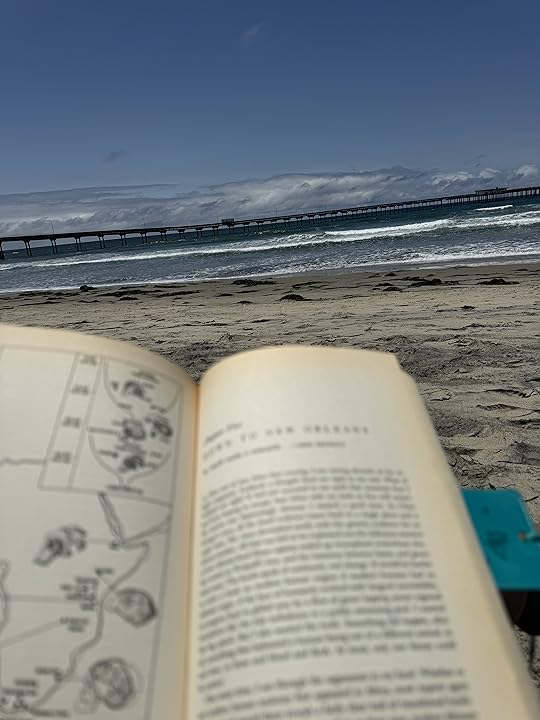
It’s fun reading not just for the educational value but as a highly entertaining drama of scientists getting on each other’s nerves, really. Ah, all those egos… they made for a great cold beach read.
What I found interesting here is that behind all the theories about Neandertals there seems to be the main focus on where we, H. Sapiens squared, come from, the existential questions of what our cousin species origins and fate mean to us, a bit self-centeredly and in that very human. It’s a much “us” as “them” enigma, and although by the end of the book no debates were won, it’s worth all the pages.
"Behold, Esau my brother is a hairy man, and I am a smooth man." ~Genesis 27:11
1995 - James Shreeve's subtitle, Solving the Mystery of Modern Human Origins, is misleading. Shreeve doesn't provide a definitive solution, instead he puts forth a plethora of possibilities. 369 pages of hypotheses. Neandertals. Who were they? What were they? When did they live? Where did they live? Why did they disappear?
"The great tragedy of science - the slaying of a beautiful hypothesis by an ugly fact." ~Thomas Huxley
Shreeve's narrative circles in on itself in a manner that will either enthrall you or confound you, depending on your level of enthusiasm. To fully understand the theories you have to examine the theorists, the physical anthropologists, and to do that Shreeve has to lay out the history and hierarchy of the field. The result is ethnographic, a cultural anthropology of physical anthropology. The battles fought over an idea are almost as interesting as the idea itself.
"The first rule of anthropology is that if everybody believes what you've said, you've probably got it wrong." ~Owen Lovejoy
This is not only the best book I've read on human origins, but lands in the top five of all science writing I've encountered as well. Shreeve is clever enough to know that science is first and foremost a human endeavor, and accompanied by the same pride, vanity, competitiveness and genius as any other pursuit. He uses this to make the scientists he profiles here entirely relatable.
All this is greatly enhanced by his instincts as a writer. He begins the book in a crowded French cafe, packed with people who've been chased inside by the rain. His companion pulls a piece of skull out of his backpack, unswaddles it from the t-shirts it's wrapped in, and pointedly ignores it for twenty minutes while making idle chitchat with the author, stirring his coffee, eating his croissant. Strangers pressed in around them gradually take notice, but being cool people, try to pretend to ignore it. Snack completed, he picks the skull up, points out some interesting anatomical features, and coolness gives way to undisguised curiosity as people start jamming their way across the cafe to eavesdrop. A brilliant opening.
From the beginning, Neanderthals have sparked controversy. "If this is the earliest man," opines one researcher in the 1800's, "then the earliest man was a freak." The Neanderthal-as-idiot camp is led by the Frenchman Broule, while the English and Italians point to its larger-than-modern-human braincase and controversial evidence of gentleness within the tribes. Though much has been learned since, there are still those who consider them gentle creatures wiped out by bloodthirsty H. sapiens sapiens. Others write off their family structure as 'cave-bound females and visiting firemen.' ("He goes too far," splutters a Frenchman, as the tables have now turned and the French are pro-Neaderthal, "this.....this I simply cannot believe".)
So with all the internecine bickering keeping it fun, he sneaks in enormous amounts of erudition, starting with methods of classical anthropology, which involves everything from earthmovers to tweezers, and moving on to 'parsimony trees' of genetic evolution. Here, now, is where the real fights start -- between the sunburnt crews picking through old bones vs. pasty, fluorescently-lit Harvard and Berkeley scientists typing up software -- software! to understand Neanderthals!-- to work backwards from living populations.
This is all great fun, and I learned a whole hell of a lot, and I love this book.
Shreeve, a science writer, interviews dozens of paleoanthopologists and archaeologists about the origin of humanity. I thought Shreeve did an excellent job of melding together all the differing viewpoints--he presents the various theories in an understandable way, and also made the overall tale fascinating as he built the case for his own personal theory. I thought the book was incredibly well written--just imagining the volume of material Shreeve had to work with, I'm impressed by the book's structure, elegance, and coherence.
As I read, I was reminded of Unholy Business by Nina Burleigh: Burleigh also did exhaustive research on her topic, but her book was simply not synthesized as well as Shreeve's. Shreeve traveled and interviewed people the way Burleigh did, but Burleigh's personal travel narrative got in the way of her story, while Shreeve's was just an undercurrent--you just think "now he's in South Africa" and keep going, while with Burleigh I kept trying to detangle her travel and figure out what she was up to. Shreeve's writing was much more seamless, much more entertaining. Both topics were intriguing to me, but Shreeve's is by far a better book.
I was fascinated by the subject of the Neandertal and early modern humans, which is why I picked this book up; as I read, I became fascinated also with Shreeve's fascination. He does an excellent job of drawing the reader in to what he can't stop thinking about. Overall, a really enjoyable read.
Don’t let the title fool you. Shreeve didn’t solve the mystery of modern human origins. In fact, after reading this, I’m more confused now than when I started. The book examines the theories and evidence from dozens of professionals, most of whom seem to have differing points of view on how and where it all began. It is “science-y” in places, but overall the book reads more like a novel than a scientific publication. The battles rage on in the halls of academia and in the pages of scientific journals. I do find the debates and all the supporting research fascinating. Makes me want to get out there and do some digging myself! I didn’t realize hominids had been inhabitants of our planet for so long (millions of years) and that more than one group lived at the same time in history. We all have seen the diagram of the ascendancy of modern man from an ape-like ancestor as a straight time line. Not so and not so simplistic an explanation will do. Where, if anywhere, the Neanderthal fits into our ancestry remains an enigma.
Why didn't Neandertal survive? This well researched and clearly presented analysis reviews Paleo-anthropological findings looking for differences that separate Neandertal from Cro-magnon man. The author has interviewed countless experts in the field and has a clear, deep understanding of the subject. The book is written with humor and practical examples that greatly aid the non-scientifically inclined readers without talking down to us. Highly recommended for someone interested in the evolution of man.
Written by a Science Writer, NOT a scientist. The difference? Palatability. An excellent read both for the entertainment value as well as the educational. I guess not everybody would find it that enthralling, but for those of us who want to know more about those who paved the way...I cannot recommend this book highly enough. Not only did it serve as a great read, but it also turned me on to several other scientists who's names I had not heard before, and who's books I now own.
Written with a novelist's command of plot and characterization, the author attempts to decide at what point in our journey from tree dweller to condo dweller we became human. Confidently asserting that the first primates who walked upright were "merely animals", he laters decides that the first anatomically modern humans hadn't quite made it, either. He discerns the genesis of humanity in the late paleolithic, about 50 thousand years ago, with the invention of politics. It was about that time that the cro-magnons started travelling extensively, gaining a competitive advantage over their more sedentary peers, as well as the neandertals, from the information they gained. This endeavor favored people better at figuring out what the guy from the next valley might think or do. Evolution thus favored those with the self knowledge that could be used to understand others whom they have never met before.
Although he doesn't think the Neandertals had this ability, he seems to think of them as a kind of human: one much more conservative, more passive, more contented, more honest, and perhaps "they could listen to the booming rhythms of the wind, the earth, and each other's heartbeats, and be transported".
This one took me a long time to read, since I've been picking it up and putting it down for months, but I did really appreciate it. There's something different about the way that Shreeve puts scholars into conversation with each other through narrative, drawing on personalities, interviews, and published work. It makes the mess of scholarship make sense. And I didn't actually mind his insertion of his own opinions into the narrative of scholarship, even though I'm usually averse to that. He's not an anthropologist, for sure, but his opinions aren't uneducated, and they're actually really useful when it's about synthesizing multiple different points of view. Scientists are famously reluctant to make broad statements, with some exceptions (looking at you, Binford), but as a science writer Shreeve can do that.
The only thing that irked me is that his concluding chapter sort of spat in the face of all the very careful work he'd done in the rest of the book to portray Neandertals and other non-sapiens human species as sophisticated and just as human as the rest of us. His (mostly baseless) suggestion that Neandertals lived in a sort of utopia where there would be "none of the heated, sustained hated and aggression of war, no oppression of one folk by another" (341) and where everybody is attuned to nature and each other in some sort of psychic intimacy is at best naive and at worst horribly patronizing. If we want to imagine a Neandertal society that is equally as sophisticated and intelligent as ours without defining it by what it lacks, or by what it didn't have that we do-- as Shreeve suggests (339)-- then I think we have to try a lot harder than projecting our own fantasies onto the past.
It would be harder to write a book on modern human origins if modern humans had no definite origins, if the face of humanity evolved with languid inevitability, its progress kept in global snc by a flow of genes lapping across regional boundaries like the tidy turbulence in a public swimming pool. I wanted the big splash. But I also wanted the truth. Something did happen, after all, something that fashioned a human being out of a different animal, in real time, in bone and blood and flesh. At most, only one theory could be correct. p107
So, maybe reality is untestable. Erik Trinkaus quoted at the beginning of chapter 5
In this rather thorough if somewhat scrappy and by now quite dated research into the origins of our species, James Shreeve has gone to an awful lot of trouble to seek out and verify if possible all of the clues. No armchair journalist, he seems indefatigable as he clambers about the caves and the museums that host the fossils, setting up appointments in remote archaeological sites, becoming familiar with the latest theories and controversies, chasing down all the key players in universities and research facilities all over the world.
I began to wonder whether...there really is an entrenched political content in the way we look at the past. p141
From scraps of bone and flakes of stone, people have spent decades excavating and attempting to reconstruct deep history. With the addition of new dating techniques like electron spin resonance, amino-acid racemization, oxygen isotope analysis and thermoluminescence, scientists are able to examine things like mitochondrial records, DNA and other minute traces preserved by circumstance. When art and sophisticated weaponry start to show up in the fossil record, it is considered evidence that some cultural divide has been crossed from proto to fully human. What role did language play in this evolution?
Negotiations demand language, but language also demands a socialclimate conducive to co-operative relationships in the first place. p311
JS attempts here to tease out from the profusion of conflicting theories a most likely scenario for what happened to the Neandertal. Were they ancestors or a separate species? Were they driven to extinction or did they assimilate? No doubt several new theories have been offered and replaced since the publication of this book in 1995, but by this account, it seems that a definitive answer may not be possible.
Most archaeologists...begin by assuming that Neandertals were "watered down versions of ourselves", and then frame their hypothesis accordingly- a path of reasoning that can only circle back on itself and end up "proving" what was assumed on the first place....It is only by actively dismantling the initial assumption that one can even hope to get at the true nature of Middle Paleolithic behaviour. p154
So what can we assume? Not much, except that our lineage as a species goes back much farther than we can recognize. Different challenges create different social structures and different values. The only sure thing is that everything changes except, perhaps the drive to survive. That we have managed to do so for so long gives us some hope that we can survive the present too.
Nicely illustrated, written with a subdued flamboyance and a chatty egalitarianism, in my system this would be 5/7. GR rules but think 3.5
The dust jacket says this book is: "like sitting down with a wonderful storyteller in the cave where stories began". This is not true. You are wrong, Jonathan Weiner, author of "The Beak of the Finch". This book has many interesting points to raise, but it also gets bogged down in needless anecdotes and digressions. The reason I bought it (at a used book store in my hometown) was because I don't feel like I know anything about human origins or neandertals and this seemed like a good place to start. And there are really interesting bits of information, about the first evidence of art, and body decoration, and where it came about, and the first hunting tools that weren't just sharp rocks. And it's so interesting to speculate about why humans moved the way they did, why they seemed to have this need to constantly travel until they lived everywhere on the globe. But the author is always shifting gears and describing ANOTHER archeological site he visited, and the people he talked to there, and how he lay on his back and looked at the ceiling of the cave and tried to imagine how the cavemen felt. Yeesh. He did this at least a half dozen times. And it's very hard to keep all these archeologists straight. I wished he would get back to the actual history talk. He can't expect me to remember each guy and which theory he subscribes to when there are dozens of archeologists in the book. Also, the author of this book uses the word "turd" every time he wants to bring up poop. Which is a lot, as apparently there are a lot of fossilized "turds" out there. I understand if turd is your favorite word for poop. But I think excrement or feces is better in a scientific work, right? I mean, at least work those other two words in. It just sounds stupid if you use turd every time, you sound like you're in eighth grade. So anyway, this book has some very compelling parts, but it will also put you to sleep if you aren't careful. I thought I was just falling asleep because I was reading it in bed. So I tried reading on the subway and the Long Island Rail Road. Fell asleep there too. I recommend this book to people who aren't scared to skip ahead when it gets dull.
We don't have a heck of a lot of material from which to learn the prehistory of modern humans and other hominids, and it is unclear, what the material we do have actually means. For example, sets of stone tools used in the south of France over tens of thousands of years fall into four distinct clusters. Were there four distinct Neandertal tribes each with its own style? Or did everybody make and use one set of tools in one environment and another in another environment? Or is the dating incorrect and the sets of tools fall into a sequence? Anatomically modern humans and Neandertals coexisted in modern-day Israel for tens of thousands of years but there are no skeletons with hybrid features. Were there physiological constraints on interbreeding? There are two species of hyraxes that live next to each other but do not interbreed because the males have radically different penis shapes: was it also true of the Neandertals and the anatomically modern humans? What is clear is that the Neandertals were displaced by behaviorally modern humans, who appeared about 50 thousand years ago and created art, more sophisticated tools, could plan for the future and presumably spoke a language; one Upper Paleolithic burial contained 10,000 ivory beads, each taking approximately 1 hour to make; neither Neandertals nor the anatomically modern humans who lived before could have come up with anything like this. A sophisticated bone harpoon from Africa has been dated to much earlier that 50 thousand years ago, but this dating is not universally accepted.
This is a long and fascinating book about our best known ancient ancestors. Who were the Neandertals? How were they related to other early species of hominids (human-like primates) and how was it that modern humans succeeded where Neandertals died out? When in fact did Neandertals die out?
The early part of the book covers in detail a lot of the academic controversies and arguments in Neandertal research (as in often seemingly verbatim discussions!) and I found it a bit annoying, though it was certainly fascinating. Later on though there are fewer such discussions and the book becomes more narrative and becomes more fascinating with every page.
Did Neandertals have the capacity to develop societies like those we see in the world today? Were they held back by a lack of language? A lack of higher reasoning capacity? Were the Neandertals actually living in a state of total oneness with nature? What would the world look like today if the Neandertals had prospered and modern humans like us had died out?
This book explores all these issues and more, looking at the traces of Neandertal lives that have been left in caves in southern Europe and beyond. It's out of date (published in 1995, it was one of my recent second hand book finds!) but its still a brilliant and interesting introduction to our ancestors.
I enjoyed this book, although I was annoyed by the prose style which was flippant and silly in many places. I much prefer books about science to be written in a straight forward expository manner. Reading it 20 years after publication, the author could not give an account of the balance of thought today on the issue the book addresses, namely are we descended from the Neanderthals. At the time it was not known that have about 5% of Neanderthal DNA due to interbreeding with ourselves, the so-called Cro-Magnon people who came out of Africa some 70-80,000 years ago, having all descended from a single African woman now referred to as "Eve."
I think the book is very well written, but withhold five stars because I don't find the content as valuable as books that I have rated more highly. One reviewer on Amazon said it best: "A book about the overabundance of guess-work involved in the fields of paleontology, & anthropology, plus a very humorous look at the inflated egos of the scientists involved. Reading this book makes you realize that there are so many questions that we will never be able to answer with any certainty. An enjoyable read, nonetheless."
An engaging introduction to the sum of Neanderthal research/theory as of a few years ago, and almost as interesting for the look at the people involved in describing early human life and how they arrive at their ideas - so you get a look at the different views of Neanderthals as well as how scientists work. The science in context.
The journalist surveys the existing literature and experts on what we know about Neandertal man and what happened to this species. It was fascinating that this species came to a dead end 30,000 years ago.
I thought this book was pretty good. While I felt the narrative language at times felt a little contrived for a book on a scientific topic, I still found it quite informative about what we do (and don't) know about Neandertals.
Bought in paperback in a Canadian bookstore and was hooked enough that I spent most of my visit to relatives on their back porch, pencil in hand. My first encounter with the idea of mitochondrial DNA was in this book. It's been almost 20 years since I read it, and I still remember the depiction of how they created sharp tools out of rocks, and how difficult it was for modern people to try to do the same thing. Fascinating and vivid. It changed my conception of the distant past.
The first is the story of the Neandertals: who they were, what they did, where they came from and where they went, who were their predecessors, successors and neighbors, and what kind of world they inhabited. The field is continually refreshed by new archaelogical and genetic studies. The author, not a scientist but a writer, amasses and organizes the facts in an interesting and skillful way and writes rather well about the science. The approach is largely chronological, tracking the history of archaeological discoveries in the field. There is a very occasional clumsiness or loose end, but this story fascinated me, and I recommend it to anyone with a healthy curiosity about our humanness. These Neandertals, our cousins, survived and reproduced continually for a quarter million years through ice ages and other catastrophies until somehow disappearing about 35,000 years ago, after the appearance of fully moderm humans in Europe. We have yet a very long way to go to match that record of success.
The second story tells how the archaeological evidence was discovered and about scientists who collected and evaluate it. To anyone not familiar with the usual professional squabbles in any field or with the dialectic that characterizes good science, this second story should be instructive, even if the personalities don't always spring to life.
The third story tells of the author's experiences in meeting and interviewing the scientists. The writing here is unfortunate (in a published book) and seems different in character from the rest, as though the author had farmed out this descriptive task to a middling high schooler. No adjective, comma or figure of speech is safe. Editors may have failed the author in this regard. While you can scan some of it, your eye will catch an important word, and then you must go back and read again. This wears heavily on the patience. As the book proceeds, there is ever less of this writing. Anyway it takes up only the smaller part of the book.
Reduced to schillings and pence, how does it add up? Five stars for Story 1, three stars for Story 2, and one star for Story 3. So three stars. But forewarned is forearmed: if you are reading this, then two stars more, one more for the book and one for you. I could do with one, also, I'm sure.
I am glad I read the book. There is some new science since the book was published, but you can catch up on that: check Wikipedia for "Denisova hominin". The new evidence suggests, among other things, that Neandertals did mate with modern humans, contributing about 4% of their DNA to the modern but non-African human genome and further suggests that adaptive selective pressures may account for its retention.
This is a fascinating, in-depth exploration of human origins that attempts to answer the question of what happened to the Neandertals. Were they the ancestors of modern humans, or did they die out as they were replaced by homo sapiens sapiens? Science writer James Shreeve did exhaustive research, traveling to locations around the world and speaking with researchers investigating everything from fossils and ancient tools to cave paintings to mitochondrial DNA. He tells the story of what he learned in clear, engaging prose that kept me fully absorbed for the first half to two-thirds of the book. I was going to give the book a full four stars, but I lost a bit of steam in the final few chapters, where I felt Shreeve got a bit bogged down, but that may have been due to the nature of the research covered in the later sections.
The book's subtitle is a bit misleading, as Shreeve never does solve the mystery of what happened to the Neandertals. However, the book was published more than 25 years ago, so there is a lot of more recent research that was not available at the time. For example, scientists now know that the average person of European or Asian ethnicity living today has about two percent Neandertal DNA, and that about 20 percent of the overall Neandertal genome survives in modern humans. This would seem to negate the idea that Neandertals evolved into modern humans and support the theory that the Neandertals ultimately died out, but not before substantial interbreeding with modern humans took place.
Despite the fact that some aspects of the book are now a bit dated, The Neandertal Enigma remains a fascinating journey into humanity's ancient past.
Some very interesting facts embedded in the meandering narrative which is as much about human evolution and anthropology as it is specifically about Neanderthals.
I would have preferred that the main points and facts have been extracted into a long periodical article rather than a book-length disquisition.