

What do you think?

Very Short Introductions #062
شوبنهاور: مقدمة موجزة
يعد شوبنهاور أكثر الفلاسفة المقروئين من بين الفلاسفة الألمان و يقدم هذا الكتاب شرحا بليغ الإيجاز لمذهبه الميتافيزيقي، مركزا على الجوانب الأصيلة من فكره، التي ألهمت كثيرا من الفنانين و المفكرين بمن فيهم نيتشه و فاجنر و فرويد و فتجنشتاين
و يواجه كريستوفر جاناواي رؤية شوبنهاور العنيدة التي تذهب الى أن اللاوجود سيكون مفضلا عن الوجود لدى الفرد البشري، و دعواه بأن إنكار الذات الورع، أي الفرار من الإرادة ، هو وحده ما يمكن أن يجعل للحياة قيمة
و يواجه كريستوفر جاناواي رؤية شوبنهاور العنيدة التي تذهب الى أن اللاوجود سيكون مفضلا عن الوجود لدى الفرد البشري، و دعواه بأن إنكار الذات الورع، أي الفرار من الإرادة ، هو وحده ما يمكن أن يجعل للحياة قيمة
167 pages, Unknown Binding
First published January 1, 1994
About the author
Christopher Janaway
33 books20 followersChristopher Janaway (BA, DPhil Oxford) is a philosopher and author. Before moving to Southampton in 2005, Janaway taught at the University of Sydney and Birkbeck, University of London. His recent research has been on Schopenhauer, Nietzsche and aesthetics. Janaway currently lectures at the University of Southampton, including a module focusing on Nietzsche.
Ratings & Reviews
Friends & Following
Create a free account to discover what your friends think of this book!
Community Reviews
Displaying 1 - 30 of 83 reviews

October 4, 2014
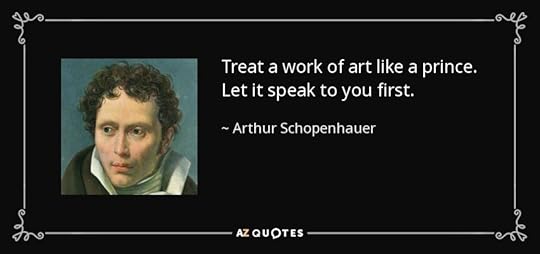
Christopher Janaway’s little book on the life and philosophy of 19th century German thinker Arthur Schopenhauer makes for a most engaging and thought-provoking read. Indeed, if you are interested in literature and the arts or would like have a deeper understanding of the challenges in life we all face yet are generally put off by philosophers and philosophy, this book is for you. By way of example, here are some Janaway and Schopenhauer quotes along with my comments.
“Humanity is poised between the life of an organism driven to survival and reproduction, and that of a pure intellect that can rebel against its nature and aspire to a timeless contemplation of a ‘higher’ reality." ---------- Schopenhauer is an atheist as opposed to a traditional theist within the monotheistic Western tradition (he very much appreciated the wisdom of both the Upanishads and Buddhism). He viewed life as not created or guided by some all-knowing God but propelled by an irrational force he calls ‘the will’. This being the case, ordinary existence is an alternating between frustration and boredom. But do not despair! There is the possibility of escape: literature, music, the arts and aesthetic experience.
“Although thoroughly conservative himself, Schopenhauer regarded the political state merely as a convenient means for protecting property and curbing the excesses of egoism; he could not stomach Hegel’s representation of the state as ‘the whole aim of human existence’. Hegel was also an appalling stylist, who seemed to build abstraction upon abstraction without the breath of fresh air provided by common-sense experience, and Schopenhauer – not alone in this – found his writing pompous and obscurantist, even dishonest.” ---------- Here is one of the keys to the appeal of Schopenhauer’s writing. He is clear and approachable, a great literary stylist and essayist, at the opposite end of the literary spectrum from the vast majority of academic philosophers with their dense, obscure, technical language and convoluted syntax, forever quoting and referring to other equally dense, obscure, dry thinkers.
“Nevertheless, in talking so bluntly about sexuality, and in making it such a cornerstone of his philosophy, he is again unusually forward-looking for his day, Sex is ever-present in our minds, according to Schopenhauer, ‘the public secret which must never be distinctly mentioned anywhere, but is always and everywhere understood to be the main thing. . . . It is the ultimate goal of almost all human effort; it has an unfavorable influence on the most important affairs, interrupts every hour the most serious occupations.” ---------- Going back to Aristotle and ancient Greek philosophy, humans are defined as the ‘rational animal’. Schopenhauer didn’t buy it. He could see that having reason doesn’t free us from our constant preoccupation with sex; in fact, with our capacity for imagination, we humans are, in a way, even more bound to sex than other animals. With this thinking, Schopenhauer anticipates Sigmund Freud and the development of psychoanalysis.
“Schopenhauer belongs to a tradition which equates aesthetic experience with a ‘disinterested’ attitude towards its object, and is often cited as one of the chief proponents of such a view. The idea is that to experience something aesthetically, one must suspend or disengage all one’s desires toward it, attending not to any consideration of what ends, needs, or interests it may fulfill, but only to the way it presents itself in perception. In Schopenhauer’s case, aesthetic experience must always be an extraordinary episode in any human being’s life.” ---------- This is the prime reason generations of artists, writers and musicians have been moved and influenced by Schopenhauer. His emphasis on artistic transformation, creative imagination and the truth and dignity of aesthetic experience made a powerful imprint on Guy de Maupassant, Friedrich Nietzsche, Richard Wagner and Thomas Mann, to name several.
Sidebar: When once asked what philosopher I would recommend on the topic of aesthetics, I suggested Schopenhauer. I also suggested to start an aesthetics journal where you can make daily entries of your own aesthetic experiences of art, music, performance, reading, nature, and everyday encounters with the world: faces of people, driving a car, drinking coffee, etc.. The idea is to continually open yourself to experiencing the world aesthetically - a powerful path to self-transformation.
Janaway also writes on Schopenhauer’s metaphysics, epistemology ( theory of knowledge) , ethics and ideas on topics like the body, character and the self as well as how the great German thinker envisions a certain kind of mystical detachment as a way to salvation. I restricted my review to Schopenhauer's philosophy of art since this is the area of his thinking that was most influential, particularly among writers, artists and musicians. A philosopher deserving our attention, to be sure, and Janaway’s book is a great place to start.

April 2, 2015
Read primarily to get a better fix on Mann. But Schopie is so fascinating. I am hooked now. Can't see how I am going to avoid reading W&R.

December 17, 2014
This entire review has been hidden because of spoilers.

March 14, 2015
A very detailed look at Schopenhauer's philosophy. The author's admirable quality to let Schopenhauer himself make his case and only insert commentary when needed is to be greatly lauded. This is not to imply that the book is an easy read; the chapters on metaphysics are especially difficult to trudge through, but worth it I think, as the reader begins to understand one of the most unique voices in philosophy.

September 10, 2016
Chapter 1: Schopenhauer's life and works
Chapter 2: Within and beyond appearance
Chapter 3: The world as will and representation
Chapter 4: Will, body, and the self
Chapter 5: Character, sex, and the unconscious
Chapter 6: Art and ideas
Chapter 7: Ethics: seeing the world aright
Chapter 8: Existence and pessimism
Chapter 9: Schopenhauer's influence
Chapter 2: Within and beyond appearance
Chapter 3: The world as will and representation
Chapter 4: Will, body, and the self
Chapter 5: Character, sex, and the unconscious
Chapter 6: Art and ideas
Chapter 7: Ethics: seeing the world aright
Chapter 8: Existence and pessimism
Chapter 9: Schopenhauer's influence
October 12, 2025
The author states in his preface that his aim is: “to give a sympathetic but critical account of Schopenhauer’s philosophy.” Janaway summarizes Schopenhauer’s philosophy of life as follows:
“Existence for Schopenhauer’s is a purposeless, painful striving, driven by an unconscious force that we cannot control. Release from this existence comes from losing one’s individuality, in aesthetic experience, in compassion for the world, and in self-denial.”
This seems to be a rather complete description of Schopenhauer’s thought.
Janaway points out that Schopenhauer’s notion of ‘will’ is not easy to define.
“Humanity is poised between the life of an organism driven to survival and reproduction and that of a pure intellect that can rebel against its nature and aspire to a timeless contemplation of a ‘higher’ reality.”
This is actually very familiar. It is found in Plato and Book X of Aristotle’s Nicomachean Ethics. Schopenhauer was very much influenced by the works of Plato and Kant and later the Upanishads.
He believed that empirical consciousness, limited as it was to the phenomena of time, space and causality, was something inferior which we should aspire to escape from, if possible. Only if there was a” better consciousness’ could human beings find anything that was of true value.”
“Schopenhauer thinks that the world of material things which we experience and can investigate in science must be cast aside as of no genuine worth by comparison with the timeless vision open to artists and saints.”
Schopenhauer is a metaphysical idealist, following Kant’s idealism:
“If we wish to preserve our entitlement to knowledge concerning the world of things that occupy space and time and follow causal laws the solution is to accept that they do not lie outside our consciousness.
Schopenhauer is offering his own kind of secular religion. He does not offer us the equivalent of guilt as found in Christianity. But he does offer us a position similar to salvation, as it were. We can never be satisfied in any of our strivings, except through aesthetic experience and self-abnegation. My actions are of no value and do nothing to improve my life. This strikes me as similar to the notion that we can only be saved by God’s grace.
Janaway’s little book is a very good introduction to its subject. He spends no time on Schopenhauer’s later thought on women, or noise. He is focused on the ideas in his “The World as Will and Representation,” its insights and some of its flaws.
“Existence for Schopenhauer’s is a purposeless, painful striving, driven by an unconscious force that we cannot control. Release from this existence comes from losing one’s individuality, in aesthetic experience, in compassion for the world, and in self-denial.”
This seems to be a rather complete description of Schopenhauer’s thought.
Janaway points out that Schopenhauer’s notion of ‘will’ is not easy to define.
“Humanity is poised between the life of an organism driven to survival and reproduction and that of a pure intellect that can rebel against its nature and aspire to a timeless contemplation of a ‘higher’ reality.”
This is actually very familiar. It is found in Plato and Book X of Aristotle’s Nicomachean Ethics. Schopenhauer was very much influenced by the works of Plato and Kant and later the Upanishads.
He believed that empirical consciousness, limited as it was to the phenomena of time, space and causality, was something inferior which we should aspire to escape from, if possible. Only if there was a” better consciousness’ could human beings find anything that was of true value.”
“Schopenhauer thinks that the world of material things which we experience and can investigate in science must be cast aside as of no genuine worth by comparison with the timeless vision open to artists and saints.”
Schopenhauer is a metaphysical idealist, following Kant’s idealism:
“If we wish to preserve our entitlement to knowledge concerning the world of things that occupy space and time and follow causal laws the solution is to accept that they do not lie outside our consciousness.
Schopenhauer is offering his own kind of secular religion. He does not offer us the equivalent of guilt as found in Christianity. But he does offer us a position similar to salvation, as it were. We can never be satisfied in any of our strivings, except through aesthetic experience and self-abnegation. My actions are of no value and do nothing to improve my life. This strikes me as similar to the notion that we can only be saved by God’s grace.
Janaway’s little book is a very good introduction to its subject. He spends no time on Schopenhauer’s later thought on women, or noise. He is focused on the ideas in his “The World as Will and Representation,” its insights and some of its flaws.

July 3, 2018
Kudos to Janaway for writing a solid introduction to one of the most influential and stupid philosophers of the nineteenth century; it makes me wonder who'll get that honor for the twentieth. Heidegger? Wittgenstein? Probably Whitehead. The lesson seems to be that if your thought is meager enough to be taken up by a large number of novelists and poets, you'll end up looking like a bit of a fool. Everything of value in Schopenhauer can be found in the Buddhist tradition. His bizarre decision to combine Plato with Kant shows only that Schopenhauer didn't understand either of them. One very valuable thing that I learned from this book is to take Nietzsche more seriously than I already did; falling for this claptrap so hard, but then seeing so clearly the dullness of it all took tremendous strength of mind.
Of course, I can understand why one might be a pessimist. I'm just not sure you need so much bullshit metaphysics to justify it; walking down the street generally does it for me.
Janaway does a wonderful job, as I said, and I do recommend this as a solid work in the history of philosophy. But good lord, he makes it easy to see why everyone went to Hegel's supposedly incomprehensible lectures instead of Schopenhauer's surely beautiful one: Hegel wasn't a complete nutter.
Of course, I can understand why one might be a pessimist. I'm just not sure you need so much bullshit metaphysics to justify it; walking down the street generally does it for me.
Janaway does a wonderful job, as I said, and I do recommend this as a solid work in the history of philosophy. But good lord, he makes it easy to see why everyone went to Hegel's supposedly incomprehensible lectures instead of Schopenhauer's surely beautiful one: Hegel wasn't a complete nutter.

February 16, 2016
I continue my wonderful readings of the "Very Short Introduction to..." books with this illuminating little book on Arthur Schopenhauer.
Schopenhauer was born in 1788, two hundred years after Thomas Hobbes. If you read my review of "A Very Short Introduction to Free Will" you will know that Hobbes was a pioneer in breaking free of the theological view of man. He insisted that human beings are just another form of animal life and Schopenhauer follows the same path.
For Schopenhauer, we are driven by our will and our will is only the pressure of life present in any living creature that drives it to reproduce and fulfill other less necessary drives. Whatever we may think about why we act, beneath it all we are completely physical beings different from other animals only in our ability to imagine reasons for our actions that allow us to claim individual motivation. To Schopenhauer, we live under a delusion that makes us blind to the unity of all life.
Schopenhauer believes, in accord with Buddhism, that the only way to escape the misery of endless desire without satisfaction is to calm the restless, craving mind through meditation. His pessimistic view of life will not admit that there can be real happiness, at best there can only be calm endurance until death brings eternal peace.
His pessimism extends so far as to deny that existence is better than non-existence and I disagree. There can be joys in life, equally true back in the first half of the 19th century when he lived, so the idea that nothing at all is better than life astounds me. Perhaps the prison inmate, wrongfully convicted and sentenced to a life of incarceration, or a slave destined for nothing but hard labor could sympathize with Schopenhauer's view. For the rest of us, isn't being able to love and be loved, or to take pleasure in one's children more than adequate to offset the loss of everything in death?
Nevertheless, Schopenhauer's cold, clear view of reality that has not a word to say about God is refreshing for the time in which it was expressed. Though he was born several decades after Jefferson and Adams, I believe they would have found much of what he wrote congenial to their Deist thoughts of God setting the world in motion and then letting things take care of themselves from then on.
Schopenhauer was precocious in his view of the unconscious, writing of how much lies below and contradicts the reasons we consciously give for our behavior. His thinking aligns with that of Darwin far before Darwin and with Freud far before Freud at a time when early science was mapping out the physical world and new ideas were tumbling from minds that questioned what had been handed down from history.
Yet even Schopenhauer was blind to the equality of women, dismissing them as obviously inferior to men. Nobody can completely escape their times...or their ego!
Christopher Janaway has done a fine job writing this book. The editors of the "Very Short..." series must also be commended for insuring the readability of all the works that compose it. Philosophy in particular has a reputation for being difficult to penetrate (though Schopenhauer is a notable exception) yet I have had no trouble following the ideas in all of the series books I have read to date.
Schopenhauer was born in 1788, two hundred years after Thomas Hobbes. If you read my review of "A Very Short Introduction to Free Will" you will know that Hobbes was a pioneer in breaking free of the theological view of man. He insisted that human beings are just another form of animal life and Schopenhauer follows the same path.
For Schopenhauer, we are driven by our will and our will is only the pressure of life present in any living creature that drives it to reproduce and fulfill other less necessary drives. Whatever we may think about why we act, beneath it all we are completely physical beings different from other animals only in our ability to imagine reasons for our actions that allow us to claim individual motivation. To Schopenhauer, we live under a delusion that makes us blind to the unity of all life.
Schopenhauer believes, in accord with Buddhism, that the only way to escape the misery of endless desire without satisfaction is to calm the restless, craving mind through meditation. His pessimistic view of life will not admit that there can be real happiness, at best there can only be calm endurance until death brings eternal peace.
His pessimism extends so far as to deny that existence is better than non-existence and I disagree. There can be joys in life, equally true back in the first half of the 19th century when he lived, so the idea that nothing at all is better than life astounds me. Perhaps the prison inmate, wrongfully convicted and sentenced to a life of incarceration, or a slave destined for nothing but hard labor could sympathize with Schopenhauer's view. For the rest of us, isn't being able to love and be loved, or to take pleasure in one's children more than adequate to offset the loss of everything in death?
Nevertheless, Schopenhauer's cold, clear view of reality that has not a word to say about God is refreshing for the time in which it was expressed. Though he was born several decades after Jefferson and Adams, I believe they would have found much of what he wrote congenial to their Deist thoughts of God setting the world in motion and then letting things take care of themselves from then on.
Schopenhauer was precocious in his view of the unconscious, writing of how much lies below and contradicts the reasons we consciously give for our behavior. His thinking aligns with that of Darwin far before Darwin and with Freud far before Freud at a time when early science was mapping out the physical world and new ideas were tumbling from minds that questioned what had been handed down from history.
Yet even Schopenhauer was blind to the equality of women, dismissing them as obviously inferior to men. Nobody can completely escape their times...or their ego!
Christopher Janaway has done a fine job writing this book. The editors of the "Very Short..." series must also be commended for insuring the readability of all the works that compose it. Philosophy in particular has a reputation for being difficult to penetrate (though Schopenhauer is a notable exception) yet I have had no trouble following the ideas in all of the series books I have read to date.

June 19, 2009
For being a short introduction, the author sure repeated himself a lot. It was a pretty quick read, though, and now I know something more about Schopenhauer than that he was a pessimist. The funny thing is, I enjoyed his negativity before I was familiar with the metaphysical system upon which he supported it, but now it's hard for me to separate his pessimistic conclusions from his metaphysics, and I'm just not buying it. I've never thought too much of Plato's eternal forms or Ideas (except as poetically reimagined by William Blake), I'm no believer in Kant's noumenal vs. phenomenal worlds (which, incidentally, Janaway talks about in this book without explicitly naming them - strange), so naturally Schopenhauer's fusion of the two doesn't do much for me. I'm kinda disappointed, because I wanted to like him better.

October 13, 2024
I have a feeling that the author didn't actually like Schopenhauer, and so I don't feel I got the best reading of him. But at least I was introduced to some of his main concepts. That's somehow how these Very Short Introduction books work; they don't always give the best or fairest interpretation of a thinker but they allow you a foot in the door so that you can then learn how to correct the mistakes. In the words of Hegel, "In order to proceed rightly you must proceed wrongly" . Or something along those lines.

March 14, 2020
لمده شهر حتي الآن أمكث في كل مكان أفكرُ في فلسفة ذاك الألماني العظيم ومازال يلزمني وقت فوق الوقت وتحليل صادق بعد القراءة لهذا العقل الفذ

October 19, 2017
I now stand weary at the end of the road; The jaded brow can hardly bear the laurel. And yet I gladly see what I have done, Ever undaunted by what others say.
Always loved Schopenhauer. The most readable of all those unreadable 19th century German philosophers. This book was helpful in digesting his actual philosophy, which I've tried to skirt as much as possible, preferring his essays and aphorisms and shorter writings. In fact, I often think of him alongside Strindberg and Lovecraft, writers whose biographies I generally enjoy more than their written work. And while I've finally tracked down a copy of David Cartwright's biography of Schopenhauer, I will say that I do like his actual writing, it's just that a lot of it flies over my head.
I was finally able to grab a better sense of what Schopenhauer means by Will, in particular how it's something everything in nature possesses, without, like, anthropomorphizing rocks or whatever:
Sick burn on Hegelian though:
He wins gold in the first part of a Danish essay contest, but LOL at the second part:
The will exists outside of space-time:
His idea about the individuals desire and pursuit of sex was really interesting, I think maybe there's something interesting here that could be used to pushback on the atomization of society:
Platonism:
Schopenhauer on art's need for genius (his aphorism about genius and targets is good too and I always LOL when I see it on inspirational posters):
His stuff on art was always the most accessible to me, although this book helped me with that too: I always think of music as being the highest art for Schopenhauer because with others (narrative) arts, you're subordinating your will to an artist's will, but with music you're escaping the will altogether. I think his argument is more complicated than that, though.
Hmm
Salvation:
Always loved Schopenhauer. The most readable of all those unreadable 19th century German philosophers. This book was helpful in digesting his actual philosophy, which I've tried to skirt as much as possible, preferring his essays and aphorisms and shorter writings. In fact, I often think of him alongside Strindberg and Lovecraft, writers whose biographies I generally enjoy more than their written work. And while I've finally tracked down a copy of David Cartwright's biography of Schopenhauer, I will say that I do like his actual writing, it's just that a lot of it flies over my head.
I was finally able to grab a better sense of what Schopenhauer means by Will, in particular how it's something everything in nature possesses, without, like, anthropomorphizing rocks or whatever:
Sick burn on Hegelian though:
He wins gold in the first part of a Danish essay contest, but LOL at the second part:
The will exists outside of space-time:
His idea about the individuals desire and pursuit of sex was really interesting, I think maybe there's something interesting here that could be used to pushback on the atomization of society:
Platonism:
Schopenhauer on art's need for genius (his aphorism about genius and targets is good too and I always LOL when I see it on inspirational posters):
His stuff on art was always the most accessible to me, although this book helped me with that too: I always think of music as being the highest art for Schopenhauer because with others (narrative) arts, you're subordinating your will to an artist's will, but with music you're escaping the will altogether. I think his argument is more complicated than that, though.
Hmm
Salvation:

December 30, 2024
Schopenhauer wrote that "The art of not reading is an important one", and I quite agree. I doubt, however, that Schopes and I would be in full agreement on what, exactly, it is important not to read. In particular, I tend to think that in the field of philosophy, there is far too much focus on the history of philosophy - endlessly studying and rehashing the thoughts of a handful of dudes who died long before anyone currently living was born and thus lacked the benefits of a recent education - and too little on developments within the past few decades. Even the best introduction to Schopenhauer (which this may well be) would still have as its subject matter a jackass of a philosopher whose main work (The World as Will and Representation) was first published over two centuries ago. Janaway frequently confirms my biases, pointing out inconsistencies in and objections to Schopenhauer's claims, which Schopenhauer isn't around to address. He also points out ways in which Schopenhauer's ideas were novel at the time and influenced later thinkers, but however important that may make Schopenhauer in the history of philosophy, it doesn't provide strong reason to pay attention to Schopenhauer today. Where Schopenhauer was on to something, relatively recent thinkers have done better, and I'd recommend just reading them instead. For example, Azathoth* has much in common with what Schopenhauer called 'will', but the former concept is scientifically grounded, and we now know far more about it than we did in Schopenhauer's time - see, e.g., The Selfish Gene. Derek Parfit has written more convincingly on the metaphysics of personal identity and its relation to ethics in Reasons and Persons.
Since people do, unfortunately, continue to discuss Schopenhauer today regardless of how much sense it makes to do so, it can help to have some context for such discussion, and this book at least seems a much better way to get it than reading Schopenhauer directly.
*I flatly refuse to call it 'evolution', since that term has accumulated too much positive connotation. Azathoth is The Enemy, and I will not give it good PR. I think Schopes would approve of my stance on this issue.

August 4, 2021
This is a very accessible—and often critical—introduction to a very interesting philosopher. Janaway does a great job balancing detailed exposition of the more opaque philosophical bits in Schopenhauer's work and introducing the reader to Schopenhauer in his own words. Fascinating discussion on the metaphysics of compassion (99-102).
Janaway rightly points out that Schopenhauer's arguments for pessimism fail. I wonder how damning this is for his whole project, though, given how these arguments emerge as his final reflections in "The World as Will and Representation." Janaway points out we can adopt a more moderate pessimism from Schopenhauer ("life itself has no purpose, that suffering is always part of it, and that its end may sometimes be welcome" (117)). But this is a far cry from Schopenhauer's very extreme pessimism. The wisdom of Ecclesiastes reflects this moderate form of pessimism, though it, of course, refracts us above mere life under the sun.
Janaway rightly points out that Schopenhauer's arguments for pessimism fail. I wonder how damning this is for his whole project, though, given how these arguments emerge as his final reflections in "The World as Will and Representation." Janaway points out we can adopt a more moderate pessimism from Schopenhauer ("life itself has no purpose, that suffering is always part of it, and that its end may sometimes be welcome" (117)). But this is a far cry from Schopenhauer's very extreme pessimism. The wisdom of Ecclesiastes reflects this moderate form of pessimism, though it, of course, refracts us above mere life under the sun.

November 12, 2023
Schopenhauer: A Very Short Introduction (1994) by Christopher Janaway is a very solid introduction to the life and work of Schopenhauer. Janaway is a lecturer of Philosophy.
The book starts with Schopenhauer’s early life and his path to philosophy. The book then explores Schopenhauer’s thought. In particular his reading of Kant and his reaction to that. Schopenhauer’s exploration of human thought and how will and desire is the master of reason in some way echo Hume’s thought. Schopenhauer’s major work ‘The World as Will and Representation’ is thoroughly described. Finally the book discusses the impact of Schopenhauer on Nietzsche, Wagner, Wittgenstein and others.
Schopenhauer : A Very Short Introduction does a good job of describing the ideas and importance of Schopenhauer.
The book starts with Schopenhauer’s early life and his path to philosophy. The book then explores Schopenhauer’s thought. In particular his reading of Kant and his reaction to that. Schopenhauer’s exploration of human thought and how will and desire is the master of reason in some way echo Hume’s thought. Schopenhauer’s major work ‘The World as Will and Representation’ is thoroughly described. Finally the book discusses the impact of Schopenhauer on Nietzsche, Wagner, Wittgenstein and others.
Schopenhauer : A Very Short Introduction does a good job of describing the ideas and importance of Schopenhauer.

June 4, 2025
If the Laughing Buddha is all mirth and bellyfuls of bliss, Schopenhauer might well be his gloomy cousin from the west—the Frowning Buddha.
I bring this up because Schopenhauer’s philosophy carries a thread of Buddhist influence, alongside elements drawn from Hinduism, Plato, and Kant. This short introduction's commentary seems to criticise this syncreticism, but I immensely respect Schopenhauer's conviction to assimilate philosophies of such different kinds. Surely Schopenhauer was on the right track.
On the right track, yes, yet often missing the mark. The abstract Schopenhauer-blueprint (including the will, object/subject, Representation as illusion) is great, but when "Schopie" begins to connect and categorize these ideas, they lose their strength. His attempts at psychology are easily overshadowed. Not to mention the obvious criticisms around extreme pessimism and sexism.
I bring this up because Schopenhauer’s philosophy carries a thread of Buddhist influence, alongside elements drawn from Hinduism, Plato, and Kant. This short introduction's commentary seems to criticise this syncreticism, but I immensely respect Schopenhauer's conviction to assimilate philosophies of such different kinds. Surely Schopenhauer was on the right track.
On the right track, yes, yet often missing the mark. The abstract Schopenhauer-blueprint (including the will, object/subject, Representation as illusion) is great, but when "Schopie" begins to connect and categorize these ideas, they lose their strength. His attempts at psychology are easily overshadowed. Not to mention the obvious criticisms around extreme pessimism and sexism.
July 16, 2022
Schopenhauer is a strange dude.

Read
April 21, 2025estes alemães vão avariar-me o cérebro
August 13, 2026
more readable than most but still unnecessarily obtuse

May 11, 2024
Very good introduction. Helped me understand Schopenhauer’s thought as well as how he has been received by others.
August 11, 2020
This is one of the best VSIs I've read. The only VSI that has come close to this was Peter Singer on.. Hegel and Marx, which will make Schopenhauer very sad indeed. There is a comprehensiveness of philosophical occupation, lucidity of ideas, and connective matrix of context, that often seems like asking for too much from a VSI making me feel guilty about whiny complainy 2-3 star reviews but then somehow get served up like in this book here, without any seeming correlation with the complexity and vastness of the topic at hand. That Schopenhauer was a 'seminal' thinker comes across so clearly in this overview, bringing into the European zeitgeist strikingly original ideas and the language needed to communicate difficult phenomenological paradoxes that make for the most interesting and compelling philosophy of Nietzsche, Wittgenstein, Freud and Jung.
It's interesting to me that this famously miserable, gloomy and pessimistic man came across as none of these things. It is possible the VSI has distilled a idea-centric version of the man that is therefore unfettered by his negativity, but I find the more interesting possibility the fact that cultural relativism of the industrialized developed West added a layer of pessimism atop ideas that an Oriental like myself fails to find. Raised on a diet of karma, nirvana, maya, atman, undesirable reincarnation and final release from existence, the 2 big symptoms of his pessimism (life is suffering, non-existence is preferable, this is the worst possible world) seem eminently a matter of fact to me, worthy of neither optimism nor pessimism labels. With the benefit of evolutionary psychology, genetics, and neuroscience, we have the luxury of validating Schopenhauer's ideas of objectified will and putting to rest the perception that these ideas are pessimistic gateway drugs to nihilism. If anything, Schopenhauer's anti-romantic philosophy of consciousness is so much easier to reconcile with modern anthropology than the optimism of Hegel/Marx putting the human species on a special pedestal destined for divine ends, that it is surprising he and Nietzsche are more closely associated with the Nazi cultural phenomenon than Hegel and Marx are.
Notes
Quite amazing how recent blogposts are prescient of concepts from this book: Existence must contain suffering, better not to have existed at all. Meseeks.
Would be cool to have a genealogy of philosophy, showing Mendelian recessive and dominant genes that combine to form various philosophies. Schopenhauer + ? = Nietzsche. Hegel + ? = Marx. ? -> Hegel + Schopenhauer.
Kant: difference between empirical world and thing in itself. Part of world that follows cause effect etc, is known to us as empirical (appearance)
Schopenhauer accepted former (representation) and clarified latter (will).
Conflated ding an sich with platonic form
Leibniz: there are no self standing things. All have reason.
Four sufficient reasons: physical (causal). Logical. Math properties. Motive/moral.
We don't perceive space or time, only matter and change in matter.
Whole world as wille zum Leben, blind striving. To preserve and propagate
He says will is not force. But is it inertia?
Judgment reason perception are all representation. Will is bodily motive, drive, striving.
Body is just objectified will. Teeth and intestine are objectified hunger. Hebitald are objectified sexual impulse.
Subject knows. Object is known. So nject not part of the world. Kant's apperception. Know that alone to be Brahman and not what they here worship
Intellect, sighted old man, on strong shoulders of the will. Who's in charge?
Repression: Will has certain desires. Intellect doesn't want to accept because ashamed, dissonance.
Madness: Intellect wants to process knowledge. Will doesn't allow. gaps are arbitrarily filled.
Kant on sublime tragedy: watch danger from a safe place. Schop: no true satisfaction in life, so not worth attachment.
Emotions tend to be about something. But in music we can grasp emotion directly, without any representation.
Will leads to striving. Lack. Suffering. Pain which is positive, leads to satisfaction a neutral negative proportional to the pain and suffering endured. No will without lack.
Worst possible world. Arranged to be capable of continuing. Worse world would not continue to exist, hence we're the worst.
Since all desire is mediated by the will, we oscillate between suffering (lack) and temporary satisfaction. Can there be pleasure if we dissociate desire from will such that there is no lack?
Aesthetic experience as separating intellect from the will and approaching objective pleasure
All of us are objectified will. But there is possibility of true knowledge, disconnected from will: Mobius strip of duality. We are behavior-machines. Then our subjective mind became smart enough to observe patterns from this behavior, thus mind body duality was born. Then superego, as many minds working together creates patterns we call society and sociology, but these are still only patterns of the will. Then we extracted patterns of behavior where will has the lowest hold, like art and aesthetic experience. We then extracted patterns out of art and other will-free actions, and found to our dismay, that they followed natural principles that underpinned the will. The last turtle on the back of the first.
The true province of genius is perceptive imagination not conceptual thinking. Art structured around a proposition or by rational plan is dead, thus David Lynch vs MCU or any preachy art.
3 ethical incentives: egoism, malice, and compassion, present in varying degrees to give motives and action
'materialism is the philosophy of the subject that forgets to take account of itself'.
I do not consciously decide what I wish to happen in a particular situation, but at a certain outcome I feel 'a jubilant, irresistible gladness, diffused over my whole being ... to my own astonishment
this longing and this pain of love cannot draw their material from the needs of an ephemeral individual. On the contrary, they are the sighs of the spirit of the species ... The species alone has infinite life, and is therefore capable of infinite desire, infinite satisfaction, and infinite sufferings. But these are here imprisoned in the narrow breast of a mortal; no wonder, therefore, when such a breast seems ready to burst, and can find no expression for the infinite rapture or infinite pain with which it is filled.
When Kant later tries to show how ethics requires an idea of God, Schopenhauer is reminded of a conjuror who, to our great surprise, pulls out of the hat something which he had planted there all along
The language in which Kant speaks here has biblical overtones, and, to the atheist Schopenhauer, the very idea of an absolute command either trades surreptitiously on the assumption of an absolute being who may issue it, or it is unfounded.
individuation to be 'mere phenomenon' rather than ultimately part of reality.
the conception of the world as composed of separate individuals is Maya - 'i.e. illusion, deception, phantasm, mirage' (B, 209), while knowledge of the deeper, more correct, non-individuating view is expressed in the Sanskrit tat tvam asi: this art thou
they will, they know what they will, and they strive after this with enough success to protect them from despair, and enough failure to preserve them from boredom and its consequences.
The first, the affirmation of the will to life, is the outlook of someone who would, as it were, stand on the earth with 'firm, strong bones':
At the end of The World as Will and Representation he writes not of 'those who have denied the will', but of 'those in whom the will has turned and denied itself'
Aesthetic contemplation, artistic genius, a life of philanthropy and justice, asceticism, and renunciation of the will, all are supreme values awaiting some human individuals, at least. The individual who escapes from the will achieves nothing less than 'salvation', which seems to be a state whose value is unassailable. All of this is true; but it conflicts with 'pessimism' only if you think pessimism is the view that nothing is of any value at all. It does not conflict with Schopenhauer's views that non-existence would have been preferable and that the world is the worst possible world.
To read Nietzsche without a knowledge of Schopenhauer is to lose a recurring subtext and one of the key points of orientation in his often bewildering progress.
It's interesting to me that this famously miserable, gloomy and pessimistic man came across as none of these things. It is possible the VSI has distilled a idea-centric version of the man that is therefore unfettered by his negativity, but I find the more interesting possibility the fact that cultural relativism of the industrialized developed West added a layer of pessimism atop ideas that an Oriental like myself fails to find. Raised on a diet of karma, nirvana, maya, atman, undesirable reincarnation and final release from existence, the 2 big symptoms of his pessimism (life is suffering, non-existence is preferable, this is the worst possible world) seem eminently a matter of fact to me, worthy of neither optimism nor pessimism labels. With the benefit of evolutionary psychology, genetics, and neuroscience, we have the luxury of validating Schopenhauer's ideas of objectified will and putting to rest the perception that these ideas are pessimistic gateway drugs to nihilism. If anything, Schopenhauer's anti-romantic philosophy of consciousness is so much easier to reconcile with modern anthropology than the optimism of Hegel/Marx putting the human species on a special pedestal destined for divine ends, that it is surprising he and Nietzsche are more closely associated with the Nazi cultural phenomenon than Hegel and Marx are.
Notes
Quite amazing how recent blogposts are prescient of concepts from this book: Existence must contain suffering, better not to have existed at all. Meseeks.
Would be cool to have a genealogy of philosophy, showing Mendelian recessive and dominant genes that combine to form various philosophies. Schopenhauer + ? = Nietzsche. Hegel + ? = Marx. ? -> Hegel + Schopenhauer.
Kant: difference between empirical world and thing in itself. Part of world that follows cause effect etc, is known to us as empirical (appearance)
Schopenhauer accepted former (representation) and clarified latter (will).
Conflated ding an sich with platonic form
Leibniz: there are no self standing things. All have reason.
Four sufficient reasons: physical (causal). Logical. Math properties. Motive/moral.
We don't perceive space or time, only matter and change in matter.
Whole world as wille zum Leben, blind striving. To preserve and propagate
He says will is not force. But is it inertia?
Judgment reason perception are all representation. Will is bodily motive, drive, striving.
Body is just objectified will. Teeth and intestine are objectified hunger. Hebitald are objectified sexual impulse.
Subject knows. Object is known. So nject not part of the world. Kant's apperception. Know that alone to be Brahman and not what they here worship
Intellect, sighted old man, on strong shoulders of the will. Who's in charge?
Repression: Will has certain desires. Intellect doesn't want to accept because ashamed, dissonance.
Madness: Intellect wants to process knowledge. Will doesn't allow. gaps are arbitrarily filled.
Kant on sublime tragedy: watch danger from a safe place. Schop: no true satisfaction in life, so not worth attachment.
Emotions tend to be about something. But in music we can grasp emotion directly, without any representation.
Will leads to striving. Lack. Suffering. Pain which is positive, leads to satisfaction a neutral negative proportional to the pain and suffering endured. No will without lack.
Worst possible world. Arranged to be capable of continuing. Worse world would not continue to exist, hence we're the worst.
Since all desire is mediated by the will, we oscillate between suffering (lack) and temporary satisfaction. Can there be pleasure if we dissociate desire from will such that there is no lack?
Aesthetic experience as separating intellect from the will and approaching objective pleasure
All of us are objectified will. But there is possibility of true knowledge, disconnected from will: Mobius strip of duality. We are behavior-machines. Then our subjective mind became smart enough to observe patterns from this behavior, thus mind body duality was born. Then superego, as many minds working together creates patterns we call society and sociology, but these are still only patterns of the will. Then we extracted patterns of behavior where will has the lowest hold, like art and aesthetic experience. We then extracted patterns out of art and other will-free actions, and found to our dismay, that they followed natural principles that underpinned the will. The last turtle on the back of the first.
The true province of genius is perceptive imagination not conceptual thinking. Art structured around a proposition or by rational plan is dead, thus David Lynch vs MCU or any preachy art.
3 ethical incentives: egoism, malice, and compassion, present in varying degrees to give motives and action
'materialism is the philosophy of the subject that forgets to take account of itself'.
I do not consciously decide what I wish to happen in a particular situation, but at a certain outcome I feel 'a jubilant, irresistible gladness, diffused over my whole being ... to my own astonishment
this longing and this pain of love cannot draw their material from the needs of an ephemeral individual. On the contrary, they are the sighs of the spirit of the species ... The species alone has infinite life, and is therefore capable of infinite desire, infinite satisfaction, and infinite sufferings. But these are here imprisoned in the narrow breast of a mortal; no wonder, therefore, when such a breast seems ready to burst, and can find no expression for the infinite rapture or infinite pain with which it is filled.
When Kant later tries to show how ethics requires an idea of God, Schopenhauer is reminded of a conjuror who, to our great surprise, pulls out of the hat something which he had planted there all along
The language in which Kant speaks here has biblical overtones, and, to the atheist Schopenhauer, the very idea of an absolute command either trades surreptitiously on the assumption of an absolute being who may issue it, or it is unfounded.
individuation to be 'mere phenomenon' rather than ultimately part of reality.
the conception of the world as composed of separate individuals is Maya - 'i.e. illusion, deception, phantasm, mirage' (B, 209), while knowledge of the deeper, more correct, non-individuating view is expressed in the Sanskrit tat tvam asi: this art thou
they will, they know what they will, and they strive after this with enough success to protect them from despair, and enough failure to preserve them from boredom and its consequences.
The first, the affirmation of the will to life, is the outlook of someone who would, as it were, stand on the earth with 'firm, strong bones':
At the end of The World as Will and Representation he writes not of 'those who have denied the will', but of 'those in whom the will has turned and denied itself'
Aesthetic contemplation, artistic genius, a life of philanthropy and justice, asceticism, and renunciation of the will, all are supreme values awaiting some human individuals, at least. The individual who escapes from the will achieves nothing less than 'salvation', which seems to be a state whose value is unassailable. All of this is true; but it conflicts with 'pessimism' only if you think pessimism is the view that nothing is of any value at all. It does not conflict with Schopenhauer's views that non-existence would have been preferable and that the world is the worst possible world.
To read Nietzsche without a knowledge of Schopenhauer is to lose a recurring subtext and one of the key points of orientation in his often bewildering progress.

September 8, 2021
Overall, a decent book. The author presents a nice progression of Schopenhauer's thought, starting from his doctoral dissertation (On the Fourfold Root of the Principle of Sufficient Reason), which is fundamental to understanding his entire system, then going through papers on ethics and freedom of the will, before delving into The World as Will and Representation. The arguments are laid out fairly clearly.
However, as other reviewers noticed, Janaway is way too harsh in his opinions towards Schopenhauer, going as far as to say that his system is "untenable"! It's fine to make known the points with which philosophers struggle with and don't accept, or some which are considered to be errors by today's scholars, but surely there are better ways than this. I think it would be better to inspire the reader to go deeper into Schopenhauer's philosophy to discover what other great figures mentioned at the very end of the book saw in it, without frequently claiming that the system "doesn't work".
The concept of "Will" is not explained to my satisfaction, as there is a debate whether it should be understood as a physicalist force or something like energy from physics or as a minimally conscious drive. The former view seems to be taken by Bryan Magee and Christopher Janaway, the latter by Julian Young and Frederick C. Beiser, as far as I understand at least. This is a very subtle point, but it's very important.
However, as other reviewers noticed, Janaway is way too harsh in his opinions towards Schopenhauer, going as far as to say that his system is "untenable"! It's fine to make known the points with which philosophers struggle with and don't accept, or some which are considered to be errors by today's scholars, but surely there are better ways than this. I think it would be better to inspire the reader to go deeper into Schopenhauer's philosophy to discover what other great figures mentioned at the very end of the book saw in it, without frequently claiming that the system "doesn't work".
The concept of "Will" is not explained to my satisfaction, as there is a debate whether it should be understood as a physicalist force or something like energy from physics or as a minimally conscious drive. The former view seems to be taken by Bryan Magee and Christopher Janaway, the latter by Julian Young and Frederick C. Beiser, as far as I understand at least. This is a very subtle point, but it's very important.

August 11, 2026
A good read, also a challenging one. His is a pessimistic philosophy, and it demanded “will”(power) to absorb and process his core philosophy to a level of rudimentary understanding. Read sentence by sentence, sometimes with several repeats, the drier, arcane framework of Schopenhauer’s concept of “will” as the essential “thing in itself” seemed to partially flesh out for me. Yet, this way-station is a necessary stop on the journey to an understanding of western philosophy as it stood in 1800s Europe. Now, did Schopenhauer’s Will become Freud’s Id?

November 11, 2010
Operari sequitur esse.
What gives to everything tragic the characteristic tendency to the sublime, is the dawning of the knowledge that the world and life can afford us no true satisfaction, and are therefore not worth our attachment to them.
Every satisfied desire gives birth to a new one. No possible satisfaction in the world could suffice to still its craving, set a final goal to its demands, and fill the bottomless pit of its heart.
Everything in life proclaims that earthly happiness is destined to be frustrated, or recognized as an illusion.
Nothing else can be stated as the aim of our existence except the knowledge that it would be better for us not to exist.
What gives to everything tragic the characteristic tendency to the sublime, is the dawning of the knowledge that the world and life can afford us no true satisfaction, and are therefore not worth our attachment to them.
Every satisfied desire gives birth to a new one. No possible satisfaction in the world could suffice to still its craving, set a final goal to its demands, and fill the bottomless pit of its heart.
Everything in life proclaims that earthly happiness is destined to be frustrated, or recognized as an illusion.
Nothing else can be stated as the aim of our existence except the knowledge that it would be better for us not to exist.

September 8, 2019
Schopenhauer covered quite a lot of ground. Some, I find hard to assess, perhaps because I lack access to his predecessors in Indian philosophy. The parts which strike me as most original and persuasive is his aesthetics. His insights into psychology must have seemed quite shocking in their time, but they make little impression today for the simple reason that they have become conventional.
For all of Schopenhauer's professed commitment to rationalism, he does at times indulge in a kind of mysticism. He'd be a stronger philosopher if he were to consider his subject in the context of man's natural endowments.
For all of Schopenhauer's professed commitment to rationalism, he does at times indulge in a kind of mysticism. He'd be a stronger philosopher if he were to consider his subject in the context of man's natural endowments.

October 18, 2020
كتاب موجز عن الفيلسوف الألماني آرتور شوبنهاور، يعرض لحياته ولأهم ما قدمه من أفكار فلسفية كان لمؤلَفَه العالم إرادةً وتمثلًا النصيب الأكبر منها، إذ يضعنا إزاء فكرتين: التمثل وهو ظاهر الوجود، والإرادة التي هي جوهر كل الأشياء والمتحكم الأساس الذي يعمل وفقًا لطبيعته دون هدف، فهي بالنسبة له إرادة عمياء، تتجلى في أفعالنا كما في تتجلى في طبيعة العالم. ويشاركنا كريستوفر مختلف آراء شوبانهاور حول الفن والأخلاق والشخصية الإنسانية، كذلك أفكار الوجود والعدم والموت والخلاص، وغيرها بما في ذلك موقفه المتشائم..
كتاب متميز صادر عن المركز القومي للترجمة تأليف كريستوفر جاناواي وترجمة سعيد توفيق. 🤍
كتاب متميز صادر عن المركز القومي للترجمة تأليف كريستوفر جاناواي وترجمة سعيد توفيق. 🤍

April 11, 2007
Janaway's introduction to Schopenhauer is a great outline of an extremely influential but difficult 19th century philosopher. Like the other Very Short Introductions, Janaway gives a brief biography and outline of Schopenhauer's work. He also illustrates the enormous influence that Schopenhauer had on late 19th century though, especially on Nietzsche and Freud (the latter concealing his intellectual debt to old Arthur, according to Janaway.)

July 9, 2017
Please give my review a helpful vote on Amazon - https://www.amazon.com/review/R1OGZFO...
I came to this book with a particular interest and a set of expectations.
My interest was in attempting to determine what, if any, effect Schopenhauer had on forming the philosophy of Adolf Hitler. Numerous books attest to Hitler's early interest in Schopenhauer. Hitler carried a volume of Schopenhauer with him through World War I and would quote long passages of Schopenhauer throughout his life. Ernst Hanfstaengl affirms that Hitler turned to Nietzsche only during the 1920s. Yet, I've never seen anything indicated how Schopenhauer played a role in Hitler's thinking. (Hanfstaengl does note that Schopenhauer actually had an ameliorating effect on Hitler, compared to Nietzsche, because of Schopenhauer's Buddhist tendencies.
The prejudices I had were that Schopenhauer was a pessimistic philosopher of minor importance compared to Nietzsche.
This book offers a good overview of Schopenhauer's life and philosophy. The discussion of Schopenhauer's philosophy is hard to follow (I listened to this as an audiobook), but that has more to do with Schopenhauer's philosophy, which the author acknowledges as being muddled and incoherent at times. Schopenhauer's most famous work divided reality between "will," the universe of subjectivity, and "representation," everything known in the outside world. "Will" is a difficult concept at best in that Schopenhauer seems to make the immaterial material:
"This account of acts of will is a decisive step for Schopenhauer, since it places the human subject firmly within the material world. If striving towards ends is setting the body in motion, then, while we will, we are rooted in the world of objects. Schopenhauer thus cannot conceive of a subject of will as being anything other than bodily. He also makes the converse claim that our bodily existence is nothing other than willing. Whenever we undergo feelings of fear or desire, attraction or repulsion, whenever the body itself behaves according to the various unconscious functions of nourishment, reproduction, or survival, Schopenhauer discerns will manifesting itself – but in a new and extended sense. What he wants to show is that ordinary conscious willing is no different in its basic nature from the many other processes which set the body, or parts of it, in motion. Admittedly, willing to act involves conscious thinking – it involves the body’s being caused to move by motives in the intellect – but it is, for Schopenhauer, not different in principle from the beating of the heart, the activation of the saliva glands, or the arousal of the sexual organs. All can be seen as an individual organism manifesting will, in Schopenhauer’s sense. The body itself is will; more specifically, it is a manifestation of will to life (Wille zum Leben), a kind of blind striving, at a level beneath that of conscious thought and action, which is directed towards the preservation of life, and towards engendering life anew."
Will then becomes the "thing in itself," and a single thing. Human life is a mere representation; the Will is everything real and death simply ends the individual life but the Will continues.
This is abstruse stuff.
Schopenhauer's pessimism was a consequence of his belief that suffering was the dispositive feature of human existence. Humans suffered in having unfulfilled wants and desires. However, fulfilling these desires and wants did no more than provide a momentary relief from suffering before some new unfulfilled desire emerged.
Schopenhauer developed a theory of aesthetics because aesthetic suspended the will of the subject. I think it may be this aspect of Schopenhauer that may have interested Hitler. Apparently, Hitler liked to talk about art. This seems like a natural fit.
For me, the most interesting part of the book was the last chapter on Schopenhauer's influences. Schopenhauer did not start a school, like Kant or Hegel, but he was extremely popular wth Germans and Austrians until about the 1920s. Wittgenstein read Schopenhauer and incorporated some of Schopenhauer's views into his philosophy. Likewise, Wagner incorporated Schopenhauer's pessimistic outlook into Tristan and Ysolde. Freud claimed that he didn't read Schopenhauer, who had anticipated his views on sublimation and sexuality, but Schopenhauer's philosophical concepts were simply "in the air." For Austrians of Wittgenstein's age - and Hitler went to school with Wittgenstein - reading Schopenhauer counted as part of what it meant to be a literate Austrian, which probably explains Hitler's interest.
This is a book with narrow appeal to those with a particular interest. It is well-written and does everything it promises by providing a "very short introduction" to the subject.
I came to this book with a particular interest and a set of expectations.
My interest was in attempting to determine what, if any, effect Schopenhauer had on forming the philosophy of Adolf Hitler. Numerous books attest to Hitler's early interest in Schopenhauer. Hitler carried a volume of Schopenhauer with him through World War I and would quote long passages of Schopenhauer throughout his life. Ernst Hanfstaengl affirms that Hitler turned to Nietzsche only during the 1920s. Yet, I've never seen anything indicated how Schopenhauer played a role in Hitler's thinking. (Hanfstaengl does note that Schopenhauer actually had an ameliorating effect on Hitler, compared to Nietzsche, because of Schopenhauer's Buddhist tendencies.
The prejudices I had were that Schopenhauer was a pessimistic philosopher of minor importance compared to Nietzsche.
This book offers a good overview of Schopenhauer's life and philosophy. The discussion of Schopenhauer's philosophy is hard to follow (I listened to this as an audiobook), but that has more to do with Schopenhauer's philosophy, which the author acknowledges as being muddled and incoherent at times. Schopenhauer's most famous work divided reality between "will," the universe of subjectivity, and "representation," everything known in the outside world. "Will" is a difficult concept at best in that Schopenhauer seems to make the immaterial material:
"This account of acts of will is a decisive step for Schopenhauer, since it places the human subject firmly within the material world. If striving towards ends is setting the body in motion, then, while we will, we are rooted in the world of objects. Schopenhauer thus cannot conceive of a subject of will as being anything other than bodily. He also makes the converse claim that our bodily existence is nothing other than willing. Whenever we undergo feelings of fear or desire, attraction or repulsion, whenever the body itself behaves according to the various unconscious functions of nourishment, reproduction, or survival, Schopenhauer discerns will manifesting itself – but in a new and extended sense. What he wants to show is that ordinary conscious willing is no different in its basic nature from the many other processes which set the body, or parts of it, in motion. Admittedly, willing to act involves conscious thinking – it involves the body’s being caused to move by motives in the intellect – but it is, for Schopenhauer, not different in principle from the beating of the heart, the activation of the saliva glands, or the arousal of the sexual organs. All can be seen as an individual organism manifesting will, in Schopenhauer’s sense. The body itself is will; more specifically, it is a manifestation of will to life (Wille zum Leben), a kind of blind striving, at a level beneath that of conscious thought and action, which is directed towards the preservation of life, and towards engendering life anew."
Will then becomes the "thing in itself," and a single thing. Human life is a mere representation; the Will is everything real and death simply ends the individual life but the Will continues.
This is abstruse stuff.
Schopenhauer's pessimism was a consequence of his belief that suffering was the dispositive feature of human existence. Humans suffered in having unfulfilled wants and desires. However, fulfilling these desires and wants did no more than provide a momentary relief from suffering before some new unfulfilled desire emerged.
Schopenhauer developed a theory of aesthetics because aesthetic suspended the will of the subject. I think it may be this aspect of Schopenhauer that may have interested Hitler. Apparently, Hitler liked to talk about art. This seems like a natural fit.
For me, the most interesting part of the book was the last chapter on Schopenhauer's influences. Schopenhauer did not start a school, like Kant or Hegel, but he was extremely popular wth Germans and Austrians until about the 1920s. Wittgenstein read Schopenhauer and incorporated some of Schopenhauer's views into his philosophy. Likewise, Wagner incorporated Schopenhauer's pessimistic outlook into Tristan and Ysolde. Freud claimed that he didn't read Schopenhauer, who had anticipated his views on sublimation and sexuality, but Schopenhauer's philosophical concepts were simply "in the air." For Austrians of Wittgenstein's age - and Hitler went to school with Wittgenstein - reading Schopenhauer counted as part of what it meant to be a literate Austrian, which probably explains Hitler's interest.
This is a book with narrow appeal to those with a particular interest. It is well-written and does everything it promises by providing a "very short introduction" to the subject.
April 3, 2026
Jag har tidigare fått höra att Schopenhauer är en hopplös pessimist. Michael Sugrue sade att Schopenhauers filosofi framförallt var ett sätt att uttrycka och rättigfärdiga sitt egna elände. Som tur är var inte detta riktigt hela bilden.
Schopenhauers stora grej är Viljan, en slags universell, ding-an-sich kraft som driver allt och orsakar det mänskliga lidande. Inte särskilt övertalande som metafysiskt system, och inte heller det mest intressanta han har att säga. Snarare hans djupa utforskande av det mänskliga tillståndet, och vilka insikter han kan nå genom att anamma det quasi-buddhistiska förhållningssättet att den materiella världen är ändlig, fylld av smärta, och i slutändan något vi inte bör klamra oss särskilt hårt fast vid: "... ordinary experience, where we strive, desire and suffer, is something to be liberated from."
Det tillåter honom att utveckla en teori om genier och konstnärer som människor som lyckas tämja Viljan, och förhöja sitt intellekt för att transcendentalt blicka utöver denna blinda kraft. Detta förklarar hur deras verk kan tyckas vara höjda över verkligheten själv. Det ger även upphov till en för mig intuitiv insikt om genier: "... the true province of genius is imaginative perception, not conceptual thinking".
Hans estetiska teorier faller ur samma premiss. Han anser att den estetiska upplevelsen är att ha en neutral inställning till det åskådade objektet: man släpper taget på begär, behov, tankar osv. Fokuset är enbart på hur objektet framträder i perceptionen. Vi blir som en spegel, och låter objektet uppta oss fullständigt. Fördelen är då att vi, stundvis, lyckas undkomma Viljan som annars genomsyrar den vardagliga erfarenheten:
When an external cause suddenly raises us out of the endless stream of Willing... the attention is now no longer directed to the motives of Willing, but comprehends things free from their relation to the Will.
Nirvana uppnås genom konst. Och utöver denna psykologiska frälsning anser Schopenhauer att det är genom åskådandet av dessa verk av genier som vi kan förnimma oss något likt de Platonska formerna; komma närmare de transcendenta sanningarna (eftersom vi fylls av ett verk som speglar verkligheten bättre än vår egna, nakna erfarenhet, då denna för det mesta blindas av Viljan).
Etiskt är han mycket kritisk mot sin stora föregångare Kant. Typ att Kants universella kategoriska imperativ nästan är teleologiska i förklädnad; att de endast gäller för fullt rationella varelser, vilket vi inte är; att hans etik är helt icke-empirisk, medans vi inte är icke-empiriska vilket begränsar dess applicerbarhet, samt att det är befängt att tro att rationalitet=godhet. För Schopenhauer är det enda universellt allmänmänskliga det lidande som uppstår ur Viljan, och enda slutsatsen vi kan dra utan att bli dogmatiska är att vi bör uppskatta och försöka förstå compassion: de nästan mystiska ögonblick när en människa handlar helt osjälviskt för att minska lidandet för någon annan (dessa ögonblick bör enligt honom inte uppstå, då Viljan styr oss mot egoism). Compassion kräver enligt Schopenhauer att man kliver ur sig själv, och slutar se andra människor som diskreta och främmande; vi är alla representationer ur samma underliggande Vilja, och blir därmed varandras jämlika.
Återkommande temat ovan är alltså att det som är gott för människan är att överge vår individualitet, och vår plats som individer i en materiell värld. Vår sanna essens är Viljan, och det är denna som ska överges. Så visst är han pessimistisk, men samtidigt tillåts det finnas vägar som leder ifrån lidandet; filosofisk meditering av genier, estetiska upplevelser och mellanmänsklig värme (compassion) ses som goda företelser. Och hans teorier om dessa berikar upplevelsen och förståelsen av den mänskliga tillvaron. Mycket filosofi är alltför svävande, abstrakt eller logiskt finurlig för att den ska kännas ha något alls med mig att göra. Då är Schopenhauer en frisk fläkt. Även om man inte köper hans idéer rakt av (vilket få har gjort) är det svårt att inte känna sig rörd och inspirerad av hans ord.
Han skriver såhär om hjärtesorg:
... this longing and this pain of love cannot draw their material from the needs of an ephemeral individual. On the contrary, they are the signs of the spirit of the species... The species alone has infinite life, and is therefore capable of infinite desire, infinite satisfaction and infinite sufferings. But these are here imprisoned in the narrow breast of a mortal; no wonder, therefore, when such a breast seems ready to burst, and can find no expression for the infinite rapture or infinite pain with which it is filled.
Schopenhauers stora grej är Viljan, en slags universell, ding-an-sich kraft som driver allt och orsakar det mänskliga lidande. Inte särskilt övertalande som metafysiskt system, och inte heller det mest intressanta han har att säga. Snarare hans djupa utforskande av det mänskliga tillståndet, och vilka insikter han kan nå genom att anamma det quasi-buddhistiska förhållningssättet att den materiella världen är ändlig, fylld av smärta, och i slutändan något vi inte bör klamra oss särskilt hårt fast vid: "... ordinary experience, where we strive, desire and suffer, is something to be liberated from."
Det tillåter honom att utveckla en teori om genier och konstnärer som människor som lyckas tämja Viljan, och förhöja sitt intellekt för att transcendentalt blicka utöver denna blinda kraft. Detta förklarar hur deras verk kan tyckas vara höjda över verkligheten själv. Det ger även upphov till en för mig intuitiv insikt om genier: "... the true province of genius is imaginative perception, not conceptual thinking".
Hans estetiska teorier faller ur samma premiss. Han anser att den estetiska upplevelsen är att ha en neutral inställning till det åskådade objektet: man släpper taget på begär, behov, tankar osv. Fokuset är enbart på hur objektet framträder i perceptionen. Vi blir som en spegel, och låter objektet uppta oss fullständigt. Fördelen är då att vi, stundvis, lyckas undkomma Viljan som annars genomsyrar den vardagliga erfarenheten:
When an external cause suddenly raises us out of the endless stream of Willing... the attention is now no longer directed to the motives of Willing, but comprehends things free from their relation to the Will.
Nirvana uppnås genom konst. Och utöver denna psykologiska frälsning anser Schopenhauer att det är genom åskådandet av dessa verk av genier som vi kan förnimma oss något likt de Platonska formerna; komma närmare de transcendenta sanningarna (eftersom vi fylls av ett verk som speglar verkligheten bättre än vår egna, nakna erfarenhet, då denna för det mesta blindas av Viljan).
Etiskt är han mycket kritisk mot sin stora föregångare Kant. Typ att Kants universella kategoriska imperativ nästan är teleologiska i förklädnad; att de endast gäller för fullt rationella varelser, vilket vi inte är; att hans etik är helt icke-empirisk, medans vi inte är icke-empiriska vilket begränsar dess applicerbarhet, samt att det är befängt att tro att rationalitet=godhet. För Schopenhauer är det enda universellt allmänmänskliga det lidande som uppstår ur Viljan, och enda slutsatsen vi kan dra utan att bli dogmatiska är att vi bör uppskatta och försöka förstå compassion: de nästan mystiska ögonblick när en människa handlar helt osjälviskt för att minska lidandet för någon annan (dessa ögonblick bör enligt honom inte uppstå, då Viljan styr oss mot egoism). Compassion kräver enligt Schopenhauer att man kliver ur sig själv, och slutar se andra människor som diskreta och främmande; vi är alla representationer ur samma underliggande Vilja, och blir därmed varandras jämlika.
Återkommande temat ovan är alltså att det som är gott för människan är att överge vår individualitet, och vår plats som individer i en materiell värld. Vår sanna essens är Viljan, och det är denna som ska överges. Så visst är han pessimistisk, men samtidigt tillåts det finnas vägar som leder ifrån lidandet; filosofisk meditering av genier, estetiska upplevelser och mellanmänsklig värme (compassion) ses som goda företelser. Och hans teorier om dessa berikar upplevelsen och förståelsen av den mänskliga tillvaron. Mycket filosofi är alltför svävande, abstrakt eller logiskt finurlig för att den ska kännas ha något alls med mig att göra. Då är Schopenhauer en frisk fläkt. Även om man inte köper hans idéer rakt av (vilket få har gjort) är det svårt att inte känna sig rörd och inspirerad av hans ord.
Han skriver såhär om hjärtesorg:
... this longing and this pain of love cannot draw their material from the needs of an ephemeral individual. On the contrary, they are the signs of the spirit of the species... The species alone has infinite life, and is therefore capable of infinite desire, infinite satisfaction and infinite sufferings. But these are here imprisoned in the narrow breast of a mortal; no wonder, therefore, when such a breast seems ready to burst, and can find no expression for the infinite rapture or infinite pain with which it is filled.
June 15, 2023
It's always worthwhile to read the man with the 🐩 even if just for enjoyment. Still, this introduction is hard to digest, at least the first half of it. Make sure you read about Kant first or you lose the most important insights.
The author is both very sympathetic and very critical. I liked this very much. Nice touch, good balance. As I mentioned before, the first half is harder to digest. This is not only because it introduces the more abstract foundations but also because it could be written more clearly.
If you want to go a step further, read The Philosophy of Schopenhauer by Bryan Magee, too.
German idealism usually gives me a hard time but Schopenhauer is special. He has a very original take on ethics (also with respect to animals) and, for me personally, he serves *indirectly* as *the* interpreter of and link to Indian philosophy, opening the door to cryptic texts a westerner can barely grasp (e.g. all vedic texts but also buddhist ones). Naturally therefore, I think both have not given enough space in the book.
I think it is undeniable that Schopenhauers connection to Indian philosophy is strong but only mentioned very briefly at some occasions, without giving it much consideration. This is unfortunate, as it might make sense of quite a few non-obvious or puzzling conclusions at which Schopenhauer arrived. I was particularly surprised that at the end of ch5, where the author discusses Schopenhauers take on the self and the world as one. The author missed the obvious resemblence to the vedic concept of Atman (loosely the universal self) and Brahman (the universal principle, the one that is). Both are one and the same in the advaita vedanta. Why is this important? Because we know Schopenhauer read the Baghavad Gita and the Upanishads before he wrote The World as Will and Representation. If you know that (and the reasons for this non-dualist view), you will be less puzzled than Janaway (even if you disagree). Moreover, Janaway mentions Maya and the illusion of duality, but dharma and moksha are not really discussed. These concepts are crucial, however, as they make sense Schopenhauers ethics in the light of Buddhist (suffering/dissatisfaction due to never ending/unfulfilled desire) and hindu thought alike. This is important because it also makes sense of Schopenhauers denial to the Will (to reach moksha). In fact, to me, Schopenhauer sometimes only makes sense with the Upanishads and the Bhagavad Gita in mind. At the same time, both these texts also only make sense to me thanks to Schopenhauer. They complement each other. This is most striking, as Schopenhauer still arrived at his conclusions in a train of thought that is in the tradition of European philosophy - mainly Kant, Berkeley, and Plato. And still he found his view mirrored in the ancient south Asian scriptures.
The author is both very sympathetic and very critical. I liked this very much. Nice touch, good balance. As I mentioned before, the first half is harder to digest. This is not only because it introduces the more abstract foundations but also because it could be written more clearly.
If you want to go a step further, read The Philosophy of Schopenhauer by Bryan Magee, too.
German idealism usually gives me a hard time but Schopenhauer is special. He has a very original take on ethics (also with respect to animals) and, for me personally, he serves *indirectly* as *the* interpreter of and link to Indian philosophy, opening the door to cryptic texts a westerner can barely grasp (e.g. all vedic texts but also buddhist ones). Naturally therefore, I think both have not given enough space in the book.
I think it is undeniable that Schopenhauers connection to Indian philosophy is strong but only mentioned very briefly at some occasions, without giving it much consideration. This is unfortunate, as it might make sense of quite a few non-obvious or puzzling conclusions at which Schopenhauer arrived. I was particularly surprised that at the end of ch5, where the author discusses Schopenhauers take on the self and the world as one. The author missed the obvious resemblence to the vedic concept of Atman (loosely the universal self) and Brahman (the universal principle, the one that is). Both are one and the same in the advaita vedanta. Why is this important? Because we know Schopenhauer read the Baghavad Gita and the Upanishads before he wrote The World as Will and Representation. If you know that (and the reasons for this non-dualist view), you will be less puzzled than Janaway (even if you disagree). Moreover, Janaway mentions Maya and the illusion of duality, but dharma and moksha are not really discussed. These concepts are crucial, however, as they make sense Schopenhauers ethics in the light of Buddhist (suffering/dissatisfaction due to never ending/unfulfilled desire) and hindu thought alike. This is important because it also makes sense of Schopenhauers denial to the Will (to reach moksha). In fact, to me, Schopenhauer sometimes only makes sense with the Upanishads and the Bhagavad Gita in mind. At the same time, both these texts also only make sense to me thanks to Schopenhauer. They complement each other. This is most striking, as Schopenhauer still arrived at his conclusions in a train of thought that is in the tradition of European philosophy - mainly Kant, Berkeley, and Plato. And still he found his view mirrored in the ancient south Asian scriptures.
Displaying 1 - 30 of 83 reviews