

What do you think?

Life Trilogy #1
Life on Earth
The nation’s greatest voice, David Attenborough, reads a brand-new edition of Life on Earth, now available as an audiobook for the first time.
David Attenborough’s unforgettable meeting with gorillas became an iconic moment for millions of television viewers. Life on Earth, the series and accompanying book, fundamentally changed the way we view and interact with the natural world, setting a new benchmark of quality, influencing a generation of nature lovers. Told through an examination of animal and plant life, this is an astonishing celebration of the evolution of life on earth, with a cast of characters drawn from the whole range of organisms that have ever lived on this planet. Attenborough’s perceptive, dynamic approach to the evolution of millions of species of living organisms takes the reader on an unforgettable journey of discovery from the very first spark of life to the blue and green wonder we know today.
Now, to celebrate the 40th anniversary of the book’s first publication, David Attenborough has revisited Life on Earth, completely updating and adding to the original text, taking account of modern scientific discoveries from around the globe. This special anniversary edition provides a fitting tribute to an enduring wildlife classic, destined to enthral the generation who saw it when first published and bring it alive for a whole new generation.
This audiobook includes wildlife sounds from BAFTA Award winning sound recordist, Chris Watson, who has worked extensively with David Attenborough on his BBC projects. A soundscape appears at the beginning of each chapter to provide a fully immersive experience of the habitat and some of the species described. A full list of the tracks, as they appear in the audiobook, is available below.
• Prologue – Acacia scrubland dawn chorus in the Masai Mara, Kenya, featuring White-browed Robin-chat.
• Chapter One, The Infinite Variety – Tropical rain forest in Panama with the calls of Montezuma oropendola.
• Chapter Two, Building Bodies – Fish and crustaceans recorded underwater on a coral reef off Seligan island, Borneo.
• Chapter Three, The First Forests – Geysir and geothermal activity at Haukadalur hot springs in Iceland. This track also features the Strokkur geysir erupting.
• Chapter Four, The Swarming Hordes – Evening insect chorus in the Conkouati forest reserve, Republic of Congo.
• Chapter Five, The Conquest of The Waters – Ocean currents through sea kelp recorded at a depth of 8m, Moray Firth, Scotland.
• Chapter Six, Invasion of The Land – Reed frog chorus at sunset, Amboseli National Park, Kenya.
• Chapter Seven, A Watertight Skin – Seawash around basking marine iguanas, Isla San Cristóbal, Galapagos.
• Chapter Eight, Lords of The Air – Springtime dawn chorus with nightingale, Hambleton wood, Rutland Water nature reserve, UK.
• Chapter Nine, Eggs, Pouches and Placentas – forest chorus along riverside platypus territory, Queensland, Australia.
• Chapter Ten, Theme and Variation – Common Pipistrelle bats echolocating after sunset, Holystone woodland, Northumberland.
• Chapter Eleven, The Hunters and The Hunted – Spotted hyena contact calls at midnight in the Masai Mara, Kenya.
• Chapter Twelve, A Life in The Trees – Black howler monkeys calling across the tree canopy at sunrise in Belize.
• Chapter Thirteen, The Compulsive Communicators – Street market, Ramnagar, Uttarakhand, Northern India.
• Epilogue – Beach habitat in mangroves with Great frigatebirds and red footed boobies, Isla Genovesa, Galapagos.
David Attenborough’s unforgettable meeting with gorillas became an iconic moment for millions of television viewers. Life on Earth, the series and accompanying book, fundamentally changed the way we view and interact with the natural world, setting a new benchmark of quality, influencing a generation of nature lovers. Told through an examination of animal and plant life, this is an astonishing celebration of the evolution of life on earth, with a cast of characters drawn from the whole range of organisms that have ever lived on this planet. Attenborough’s perceptive, dynamic approach to the evolution of millions of species of living organisms takes the reader on an unforgettable journey of discovery from the very first spark of life to the blue and green wonder we know today.
Now, to celebrate the 40th anniversary of the book’s first publication, David Attenborough has revisited Life on Earth, completely updating and adding to the original text, taking account of modern scientific discoveries from around the globe. This special anniversary edition provides a fitting tribute to an enduring wildlife classic, destined to enthral the generation who saw it when first published and bring it alive for a whole new generation.
This audiobook includes wildlife sounds from BAFTA Award winning sound recordist, Chris Watson, who has worked extensively with David Attenborough on his BBC projects. A soundscape appears at the beginning of each chapter to provide a fully immersive experience of the habitat and some of the species described. A full list of the tracks, as they appear in the audiobook, is available below.
• Prologue – Acacia scrubland dawn chorus in the Masai Mara, Kenya, featuring White-browed Robin-chat.
• Chapter One, The Infinite Variety – Tropical rain forest in Panama with the calls of Montezuma oropendola.
• Chapter Two, Building Bodies – Fish and crustaceans recorded underwater on a coral reef off Seligan island, Borneo.
• Chapter Three, The First Forests – Geysir and geothermal activity at Haukadalur hot springs in Iceland. This track also features the Strokkur geysir erupting.
• Chapter Four, The Swarming Hordes – Evening insect chorus in the Conkouati forest reserve, Republic of Congo.
• Chapter Five, The Conquest of The Waters – Ocean currents through sea kelp recorded at a depth of 8m, Moray Firth, Scotland.
• Chapter Six, Invasion of The Land – Reed frog chorus at sunset, Amboseli National Park, Kenya.
• Chapter Seven, A Watertight Skin – Seawash around basking marine iguanas, Isla San Cristóbal, Galapagos.
• Chapter Eight, Lords of The Air – Springtime dawn chorus with nightingale, Hambleton wood, Rutland Water nature reserve, UK.
• Chapter Nine, Eggs, Pouches and Placentas – forest chorus along riverside platypus territory, Queensland, Australia.
• Chapter Ten, Theme and Variation – Common Pipistrelle bats echolocating after sunset, Holystone woodland, Northumberland.
• Chapter Eleven, The Hunters and The Hunted – Spotted hyena contact calls at midnight in the Masai Mara, Kenya.
• Chapter Twelve, A Life in The Trees – Black howler monkeys calling across the tree canopy at sunrise in Belize.
• Chapter Thirteen, The Compulsive Communicators – Street market, Ramnagar, Uttarakhand, Northern India.
• Epilogue – Beach habitat in mangroves with Great frigatebirds and red footed boobies, Isla Genovesa, Galapagos.
13 pages, Audiobook
First published January 1, 1979
About the author
David Attenborough
182 books2,962 followersSir David Frederick Attenborough is a naturalist and broadcaster, who is most well-known for writing and presenting the nine "Life" series, produced in conjunction with BBC's Natural History Unit. The series includes Life on Earth (1979), The Living Planet (1984), The Trials of Life (1990), Life in the Freezer (about Antarctica; 1993), The Private Life of Plants (1995), The Life of Birds (1998), The Life of Mammals (2002), Life in the Undergrowth (2005) and Life in Cold Blood (2008).
He is the younger brother of director and actor Richard Attenborough.
Photo credit: Wildscreen's photograph of David Attenborough at ARKive's launch in Bristol, England © May 2003
He is the younger brother of director and actor Richard Attenborough.
Photo credit: Wildscreen's photograph of David Attenborough at ARKive's launch in Bristol, England © May 2003
Ratings & Reviews
Friends & Following
Create a free account to discover what your friends think of this book!
Community Reviews
Displaying 1 - 30 of 445 reviews

November 29, 2017
Leisure
What is this life if, full of care,
We have no time to stand and stare.
No time to stand beneath the boughs
And stare as long as sheep or cows.
No time to see, when woods we pass,
Where squirrels hide their nuts in grass.
No time to see, in broad daylight,
Streams full of stars, like skies at night.
No time to turn at Beauty's glance,
And watch her feet, how they can dance.
No time to wait till her mouth can
Enrich that smile her eyes began.
A poor life this is if, full of care,
We have no time to stand and stare.
William H Davies
🐯👍timeless
To live. To evil. To vile. To veil.
Or
To be?
There is no bond, worship, reverie, or nothing more special or, far greater than the bond and connection and pure Love a mother has for her child. 🐯👍
Life is precious, special and all should flourish in this garden we call Earth.
What is this life if, full of care,
We have no time to stand and stare.
No time to stand beneath the boughs
And stare as long as sheep or cows.
No time to see, when woods we pass,
Where squirrels hide their nuts in grass.
No time to see, in broad daylight,
Streams full of stars, like skies at night.
No time to turn at Beauty's glance,
And watch her feet, how they can dance.
No time to wait till her mouth can
Enrich that smile her eyes began.
A poor life this is if, full of care,
We have no time to stand and stare.
William H Davies
🐯👍timeless
To live. To evil. To vile. To veil.
Or
To be?
There is no bond, worship, reverie, or nothing more special or, far greater than the bond and connection and pure Love a mother has for her child. 🐯👍
Life is precious, special and all should flourish in this garden we call Earth.

April 15, 2019
For those of you who don't know I have been having a flare up with the Sojourns syndrome that I have the past few weeks and I've been limiting my screen time. Thank goodness for audiobooks as I must admit I'm a book addict.
I want to say how much I enjoyed listening to Life on earth written and narrated by David Attenborough. I didn't for one minute think it would be as interesting as the TV programs that I watch but it really is. As soon as I finished listening I went back to the beginning and listened again. Truly magical and I'm very tempted to listen again. Their is something about the voice of David Attenborough that brings the book to life. Worthy of far more than five stars.
I want to say how much I enjoyed listening to Life on earth written and narrated by David Attenborough. I didn't for one minute think it would be as interesting as the TV programs that I watch but it really is. As soon as I finished listening I went back to the beginning and listened again. Truly magical and I'm very tempted to listen again. Their is something about the voice of David Attenborough that brings the book to life. Worthy of far more than five stars.

October 20, 2018
It's Attenborough... obviously it's going to be amazing.
One warning: there are horrifyingly detailed scenes of reproduction in this book, more than you'd ever wanted to know in fact, and certainly best read/heard when not eating. I usually listen to audio books during my work lunch break but I was very quickly disabused of the notion that this was a good idea. We have secretions and mucus and sperm and wiggly things and all kinds of other ghastliness. I bought this 7 days ago. And I've been plant based for a week. I don't even want to hear about stamen and pollination or anything else because i'm running out of food.
So now you know....
I'm saving you from this fate.
Don't @ about 'nature'
I'm traumatised.
One warning: there are horrifyingly detailed scenes of reproduction in this book, more than you'd ever wanted to know in fact, and certainly best read/heard when not eating. I usually listen to audio books during my work lunch break but I was very quickly disabused of the notion that this was a good idea. We have secretions and mucus and sperm and wiggly things and all kinds of other ghastliness. I bought this 7 days ago. And I've been plant based for a week. I don't even want to hear about stamen and pollination or anything else because i'm running out of food.
So now you know....
I'm saving you from this fate.
Don't @ about 'nature'
I'm traumatised.

March 16, 2019
Then
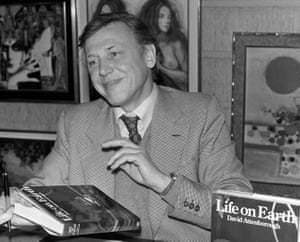
now

Much like any review of a book by Sir David Attenborough, I shall begin this, too, with declaring my love for this man. Ever since I was a little girl he taught me about plants and animals and showed me the wonders of this amazing planet. Then as now, he did so in a charming manner, delivering facts in a way any layman can understand. But he also did it with great passion that, at least in my case, was infectuous.
This book, as you can see in the pictures above, is an updated version of an older one Sir Attenborough published many years ago. And yes, I also have all the DVD boxes. The Life series focuses on the different aspects of life (duh) - mammals, birds, plants, fish etc.
Naturally, you have a better chance of getting a complete impression when watching countless DVDs with hundreds of hours of footage than when reading a book with a few photographs in it. Nevertheless, this book manages to vividly convey the astonishingly colourful displays of amphibians and birds, the raw strength of hunting mammals (especially big cats), the breathtaking grace of whales and sharks and other sea creatures, as well as the quirkiness of insects and the silent beauty of plants (even if they don't bloom).
However, in showing the different types of species that have evolved, the book also takes us on a journey through time, showing us animals that have barely needed to evolve at all as well as ones that are highly specialized. We thus see the differences that have proven successful throughout evolution (explaining natural selection and other processes) depending on where in the world you are (Australia's maruspials being the most well-known example). This also goes for plants (which many never even think about) - be it trees, shrubs, lichen, moss or flowers.
Take a look:
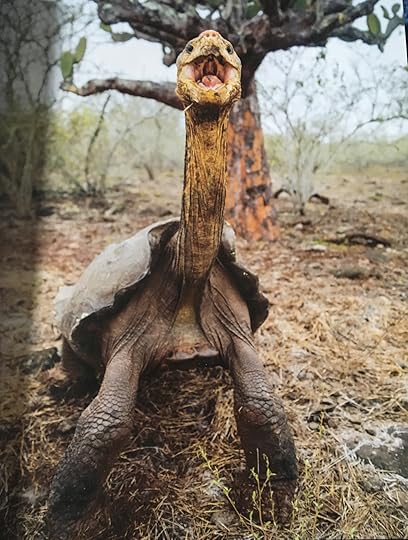
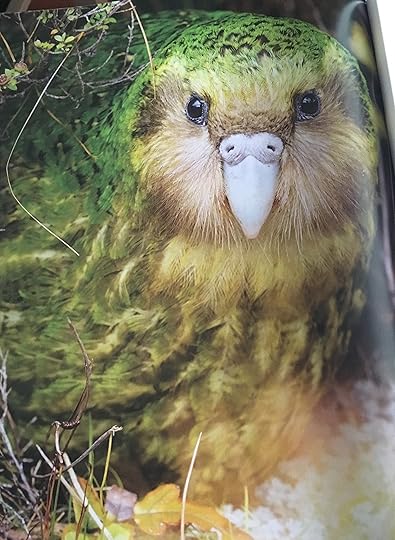
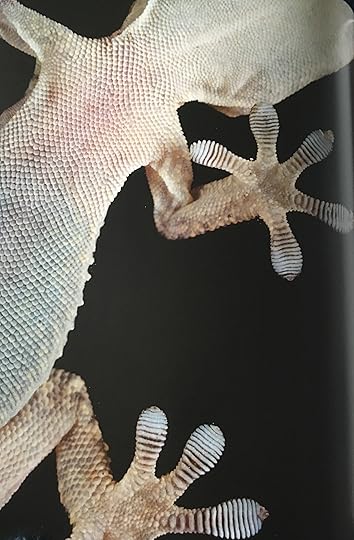

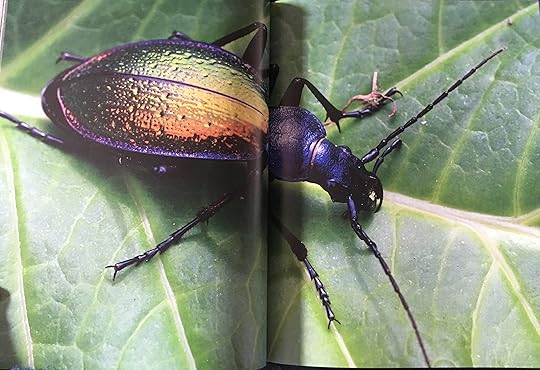
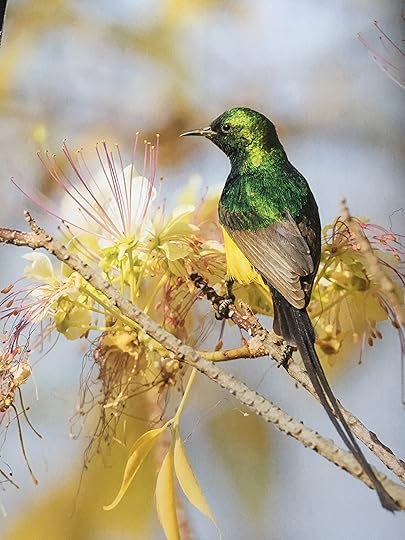
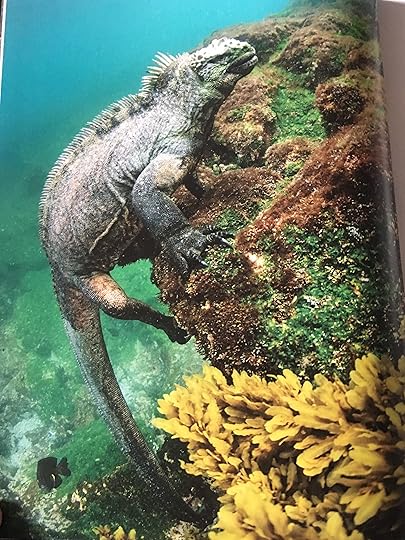
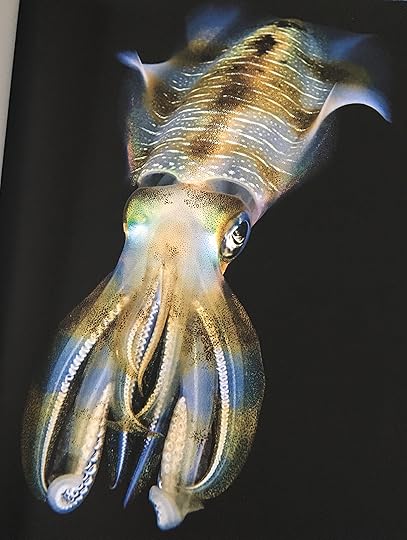
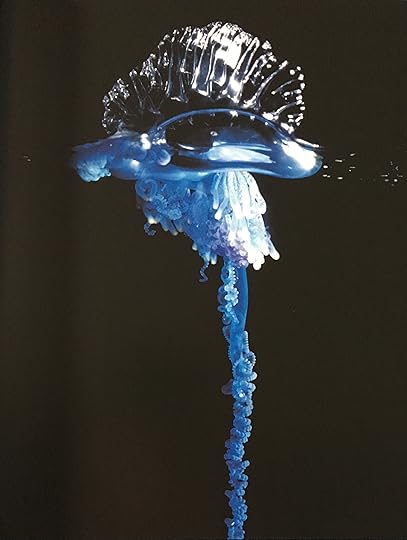
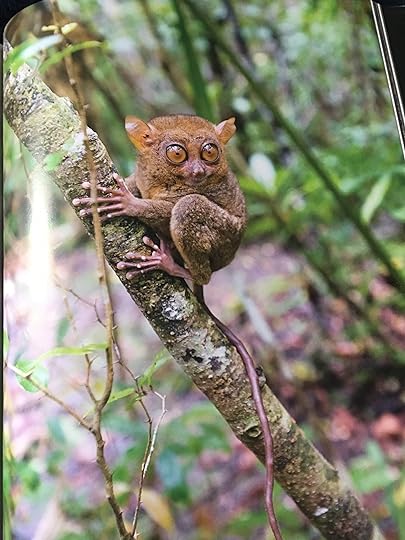
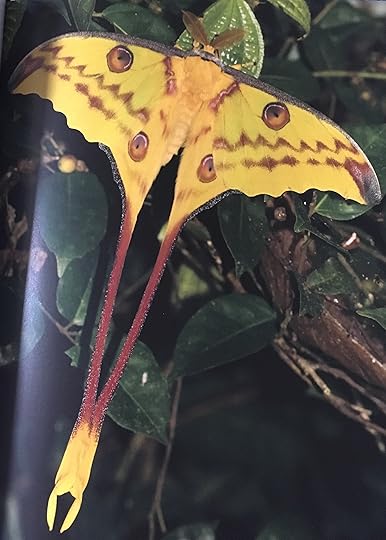
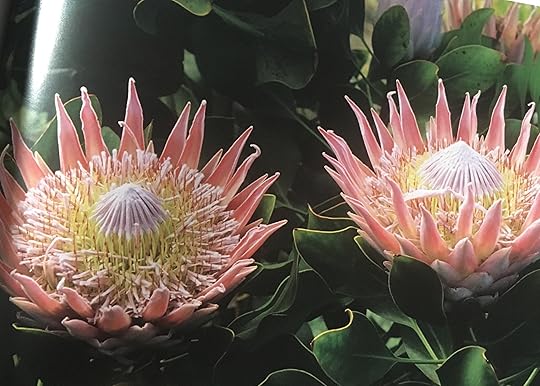
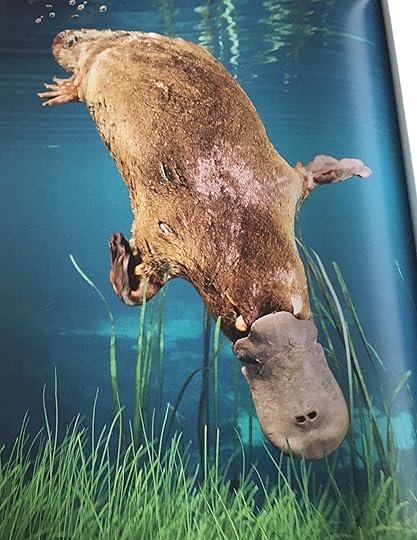
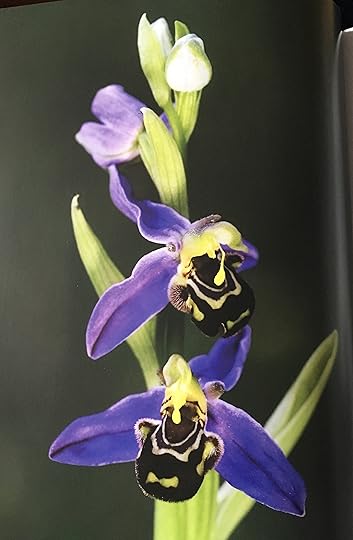
In this context, of course, Sir Attenborough also talks about slightly more special places on this planet such as New Zealand or Galápagos, telling us of how important these places were historically in shaping our modern understanding of the natural world.
He tells the readers about behaviorisms in different species, social skills, intelligence and cooperation (yes, also amongst plants).
Moreover, he makes sure nobody forgets that any place on Earth is special and that we should look closer at the natural world around us to really appreciate and protect it.
A treasure of a book that would be a very good addition to any classroom, too.
now
Much like any review of a book by Sir David Attenborough, I shall begin this, too, with declaring my love for this man. Ever since I was a little girl he taught me about plants and animals and showed me the wonders of this amazing planet. Then as now, he did so in a charming manner, delivering facts in a way any layman can understand. But he also did it with great passion that, at least in my case, was infectuous.
This book, as you can see in the pictures above, is an updated version of an older one Sir Attenborough published many years ago. And yes, I also have all the DVD boxes. The Life series focuses on the different aspects of life (duh) - mammals, birds, plants, fish etc.
Naturally, you have a better chance of getting a complete impression when watching countless DVDs with hundreds of hours of footage than when reading a book with a few photographs in it. Nevertheless, this book manages to vividly convey the astonishingly colourful displays of amphibians and birds, the raw strength of hunting mammals (especially big cats), the breathtaking grace of whales and sharks and other sea creatures, as well as the quirkiness of insects and the silent beauty of plants (even if they don't bloom).
However, in showing the different types of species that have evolved, the book also takes us on a journey through time, showing us animals that have barely needed to evolve at all as well as ones that are highly specialized. We thus see the differences that have proven successful throughout evolution (explaining natural selection and other processes) depending on where in the world you are (Australia's maruspials being the most well-known example). This also goes for plants (which many never even think about) - be it trees, shrubs, lichen, moss or flowers.
Take a look:
In this context, of course, Sir Attenborough also talks about slightly more special places on this planet such as New Zealand or Galápagos, telling us of how important these places were historically in shaping our modern understanding of the natural world.
He tells the readers about behaviorisms in different species, social skills, intelligence and cooperation (yes, also amongst plants).
Moreover, he makes sure nobody forgets that any place on Earth is special and that we should look closer at the natural world around us to really appreciate and protect it.
A treasure of a book that would be a very good addition to any classroom, too.
Did Not Finish
May 11, 2022I was really looking forward to this, but it just makes no sense to continue with the audiobook.
DNF: 21%
The problem lies mostly with myself, since a) there are a lot of terms here that are not part of my already quite rare conversations in English, which means my focus is slipping away all the time and b) I find David Attenborough's voice so relaxing that he is frequently talking me to sleep.
I reckon this is a better book in print anyway, so that's the route I'm going to go with this one.
DNF: 21%
The problem lies mostly with myself, since a) there are a lot of terms here that are not part of my already quite rare conversations in English, which means my focus is slipping away all the time and b) I find David Attenborough's voice so relaxing that he is frequently talking me to sleep.
I reckon this is a better book in print anyway, so that's the route I'm going to go with this one.

March 16, 2026
Second fiddle to the visual documentaries but still a half-decent read. It covers details about the various animals filmed in one documentary or another and has a focus on evolution and adaptation features. It was dry to be honest and I found myself drifting to animals I found interesting and reading about them or just looking at the photographs and captions of the less interesting-or oversaturated animals that feature in documentaries. Written in the 70s but updated in 2018.

January 2, 2015
(Following my reviews of Kenneth Clarke’s Civilisation and Jacob Bronowski’s Ascent of Man, this review will concentrate on the documentary and not the book.)
Like so many people, I have been captivated by nature from a very young age. Trees in particular strike me as the paragons of beauty. What painting can compare with the visual beauty of a tree? The yellow flowers of spring, the bright green of summer, the fiery reds and oranges of fall, and the skeletal limbs of winter, twisting themselves into unbelievably intricate shapes. Yet you can’t really compare the beauty of art with the beauty of nature. Art is made intentionally, in order to convey somebody’s unique vision. Art is communication. But a tree’s beauty does not communicate anything. It doesn’t exist for humans or by humans. It just is.
This quality of natural beauty is why I find it so rewarding. The pleasure is almost spiritual. You can experience beauty without thinking about your ego or anybody else’s. There is no moral to be learned, no theme to unravel, no joke to get, no political message. But the downside is that I don’t know how to react, how to express my appreciation. I can, for example, write a review of a book or a documentary. But this would be absurd to do with a tree or an animal. The best most of us can do is to mutter "How lovely!" under our breaths and then lapse into a respectful silence.
David Attenborough seems to have come up against a similar problem, and has solved it by creating his nature documentaries. Don’t try to explain or to analyze natural beauty; just film and enjoy. His voiceovers are typically not analytical, but explanatory; they help you understand what you’re looking at. Attenborough mainly does this through narration. He turns a natural scene into a story, with its own tragedies, comedies, and romances.
Life on Earth was his first program. Nowadays, David Attenborough is such a household name, and his influence on nature documentaries is so widespread, that it made the experience of seeing the young Attenborough a bit jarring. He looks spry, even sprightly. He snorkels, scuba dives, crawls through a cave, holds animals in his own hands, and tries to cut an antelope carcass with a stone tool. He’s slowed down a lot since then. But in all other respects he was and remains the same.
This program is a short history of life on earth. Attenborough takes us from bacteria, to invertebrates, to plants, insects, fish, amphibians, reptiles, mammals, and finally to us. The advantage of this sequence is that is allows Attenborough to show each progression as a response to a major challenge in the environment. Reptiles developed impermeable skin to free themselves from dependence on bodies of water. Mammals developed warm blood to be active at night. The major disadvantage of this arrangement is that it gives the impression that evolution had some sort of goal in mind, or that mammals are somehow “more evolved” than reptiles. It also neglects to emphasize the fact that, during all this time, bacteria remained by far the most widespread life form. As Stephen Jay Gould said, every age of life on earth has been the Age of Bacteria.
But Attenborough needed some way to organize the material, and this one did just fine. In any case, science isn't the focus of these programs. Attenborough does not, for example, give us a good explanation of the mechanism of evolution. He gives us the Attenborough trademark: beautiful images of animals and plants, along with thoughtful narration in his sonorous voice.
And how fantastic are these images! We see slow-motion shots of bees flapping their wings; we see colorful bacteria floating around in fluid. We see birds of paradise doing their mating dance, and brightly-colored fish darting through the great barrier reef. We swim with dolphins and fly with bats, we spy on moles crawling through tunnels and watch tadpoles developing into frogs. The sounds are no less impressive than the sights. In addition to the calls of birds, the croaks of frogs, the songs of whales, and the howls of monkeys, is the orchestral accompaniment. I don’t know how they make music for these things, but the music in this documentary was always excellent. It matches the mood of the footage and is timed to dance along with the images.
Even though the documentary is not heavy on science, I did learn a few things. It seems no matter how many of these documentaries I see, I always learn about a new species. Did you know that lungfish live in ponds in Africa and dig down into the mud to stay there during the whole dry season? And did you know about Caecilians? They are a group of amphibians, related to salamanders, who have lost their legs and which now look like giant earth worms. Life is many things, but it is certainly never dull.
But the documentary does have its weaknesses. Besides its lack of depth and its potentially misleading organization, I thought the documentary lost its momentum as it progressed. Attenborough seems to stretch his material as he approaches the final episode. The fifth episode, for example, takes us through all the sharks, rays, and boney fish, from their evolutionary beginnings to the present day. We get to see hammerheads, electric eels, flying fish, filter feeding sharks, and phosphorescent fish living in the deep sea. The eleventh episode, by contrast, mainly focuses on the relationship between African predators and their prey, cheetahs, lions, and hyenas.
Another problem was the one I outlined in my opening paragraphs. In Kenneth Clarke’s Civilisation and in Jacob Bronowski’s Ascent of Man, the two presenters offer their own personal view of their subject. The documentaries are therefore not only educational, but are genuine works of art. This program, by contrast, offers no such personal view. Attenborough is a presenter, but he is not laying forth his own unique vision of life on earth. And indeed, how could he? The beauty of nature is not something to be interpreted, but appreciated. At this task, Attenborough is superb.
Like so many people, I have been captivated by nature from a very young age. Trees in particular strike me as the paragons of beauty. What painting can compare with the visual beauty of a tree? The yellow flowers of spring, the bright green of summer, the fiery reds and oranges of fall, and the skeletal limbs of winter, twisting themselves into unbelievably intricate shapes. Yet you can’t really compare the beauty of art with the beauty of nature. Art is made intentionally, in order to convey somebody’s unique vision. Art is communication. But a tree’s beauty does not communicate anything. It doesn’t exist for humans or by humans. It just is.
This quality of natural beauty is why I find it so rewarding. The pleasure is almost spiritual. You can experience beauty without thinking about your ego or anybody else’s. There is no moral to be learned, no theme to unravel, no joke to get, no political message. But the downside is that I don’t know how to react, how to express my appreciation. I can, for example, write a review of a book or a documentary. But this would be absurd to do with a tree or an animal. The best most of us can do is to mutter "How lovely!" under our breaths and then lapse into a respectful silence.
David Attenborough seems to have come up against a similar problem, and has solved it by creating his nature documentaries. Don’t try to explain or to analyze natural beauty; just film and enjoy. His voiceovers are typically not analytical, but explanatory; they help you understand what you’re looking at. Attenborough mainly does this through narration. He turns a natural scene into a story, with its own tragedies, comedies, and romances.
Life on Earth was his first program. Nowadays, David Attenborough is such a household name, and his influence on nature documentaries is so widespread, that it made the experience of seeing the young Attenborough a bit jarring. He looks spry, even sprightly. He snorkels, scuba dives, crawls through a cave, holds animals in his own hands, and tries to cut an antelope carcass with a stone tool. He’s slowed down a lot since then. But in all other respects he was and remains the same.
This program is a short history of life on earth. Attenborough takes us from bacteria, to invertebrates, to plants, insects, fish, amphibians, reptiles, mammals, and finally to us. The advantage of this sequence is that is allows Attenborough to show each progression as a response to a major challenge in the environment. Reptiles developed impermeable skin to free themselves from dependence on bodies of water. Mammals developed warm blood to be active at night. The major disadvantage of this arrangement is that it gives the impression that evolution had some sort of goal in mind, or that mammals are somehow “more evolved” than reptiles. It also neglects to emphasize the fact that, during all this time, bacteria remained by far the most widespread life form. As Stephen Jay Gould said, every age of life on earth has been the Age of Bacteria.
But Attenborough needed some way to organize the material, and this one did just fine. In any case, science isn't the focus of these programs. Attenborough does not, for example, give us a good explanation of the mechanism of evolution. He gives us the Attenborough trademark: beautiful images of animals and plants, along with thoughtful narration in his sonorous voice.
And how fantastic are these images! We see slow-motion shots of bees flapping their wings; we see colorful bacteria floating around in fluid. We see birds of paradise doing their mating dance, and brightly-colored fish darting through the great barrier reef. We swim with dolphins and fly with bats, we spy on moles crawling through tunnels and watch tadpoles developing into frogs. The sounds are no less impressive than the sights. In addition to the calls of birds, the croaks of frogs, the songs of whales, and the howls of monkeys, is the orchestral accompaniment. I don’t know how they make music for these things, but the music in this documentary was always excellent. It matches the mood of the footage and is timed to dance along with the images.
Even though the documentary is not heavy on science, I did learn a few things. It seems no matter how many of these documentaries I see, I always learn about a new species. Did you know that lungfish live in ponds in Africa and dig down into the mud to stay there during the whole dry season? And did you know about Caecilians? They are a group of amphibians, related to salamanders, who have lost their legs and which now look like giant earth worms. Life is many things, but it is certainly never dull.
But the documentary does have its weaknesses. Besides its lack of depth and its potentially misleading organization, I thought the documentary lost its momentum as it progressed. Attenborough seems to stretch his material as he approaches the final episode. The fifth episode, for example, takes us through all the sharks, rays, and boney fish, from their evolutionary beginnings to the present day. We get to see hammerheads, electric eels, flying fish, filter feeding sharks, and phosphorescent fish living in the deep sea. The eleventh episode, by contrast, mainly focuses on the relationship between African predators and their prey, cheetahs, lions, and hyenas.
Another problem was the one I outlined in my opening paragraphs. In Kenneth Clarke’s Civilisation and in Jacob Bronowski’s Ascent of Man, the two presenters offer their own personal view of their subject. The documentaries are therefore not only educational, but are genuine works of art. This program, by contrast, offers no such personal view. Attenborough is a presenter, but he is not laying forth his own unique vision of life on earth. And indeed, how could he? The beauty of nature is not something to be interpreted, but appreciated. At this task, Attenborough is superb.
September 10, 2020
Forty years after Attenborough released his landmark BBC documentary, Life on Earth, he has released an updated version—this time, as an audiobook. When he put the finishing touches on that first effort, he was a young and spry 44 year-old, traipsing through jungles and diving with jellyfish. Now he is 94, his traipsing days most likely behind him.
In these long years, Attenborough has become an institution unto himself, the personified voice of nature for millions of people in the English speaking world. And he has done this by sticking to his original formula: beautiful shots of animals, narrated with a literary sensibility in his iconic voice, focusing on some of the most bizarre and amazing creatures we know. He is a born educator, able to weave scientific insights seamlessly into entertaining storytelling.
This book follows the basic structure and outline of that documentary—divided into 13 sections, each one examining a major branch of the tree of life. Attenborough has also stuck with the same organizing principle, using the engineering challenges posed by new environments in order to give coherence and structure to a potentially overwhelming amount of information. Though much of the information he presents is new, the general insight remains the same: that life has sprung into innumerable shapes and forms through the process of natural selection.
Experiencing Attenborough as an audiobook, without accompanying visuals, highlights his gift for descriptive language. It is effortless to visualize just what he is talking about, and quite as entertaining to follow along as any documentary. Though he seems to us, nowadays, as quite literally a force of nature, I also developed a new respect for his finely honed writerly ability. He is an international treasure.
In these long years, Attenborough has become an institution unto himself, the personified voice of nature for millions of people in the English speaking world. And he has done this by sticking to his original formula: beautiful shots of animals, narrated with a literary sensibility in his iconic voice, focusing on some of the most bizarre and amazing creatures we know. He is a born educator, able to weave scientific insights seamlessly into entertaining storytelling.
This book follows the basic structure and outline of that documentary—divided into 13 sections, each one examining a major branch of the tree of life. Attenborough has also stuck with the same organizing principle, using the engineering challenges posed by new environments in order to give coherence and structure to a potentially overwhelming amount of information. Though much of the information he presents is new, the general insight remains the same: that life has sprung into innumerable shapes and forms through the process of natural selection.
Experiencing Attenborough as an audiobook, without accompanying visuals, highlights his gift for descriptive language. It is effortless to visualize just what he is talking about, and quite as entertaining to follow along as any documentary. Though he seems to us, nowadays, as quite literally a force of nature, I also developed a new respect for his finely honed writerly ability. He is an international treasure.

November 24, 2021
If I could recommend one book to my Goodreads friends this year, "Life on Earth," read by the author David Attenborough is that book.
Listen to this book and I will guarantee you will come away with a greater respect and love for our planet and the systems of life which dwell upon it.
From the tiniest one celled organism hovering over a super hot volcanic vent in the ocean to an elephant on a grassy savannah or a business woman rushing to a meeting in Shanghai, we all belong here, and our story is wonderfully told by David Attenborrough, himself a world treasure.
Listen to this book and I will guarantee you will come away with a greater respect and love for our planet and the systems of life which dwell upon it.
From the tiniest one celled organism hovering over a super hot volcanic vent in the ocean to an elephant on a grassy savannah or a business woman rushing to a meeting in Shanghai, we all belong here, and our story is wonderfully told by David Attenborrough, himself a world treasure.

February 11, 2022
Absolutely loved this audiobook! Narrated by Sir David Attenborough himself, accompanied by beautiful atmospheric sounds related to the topics discussed. I love how he tells a story and makes the history of life on earth accessible and understandable to everyone. Great to listen to during my daily walks. Definitely recommended!

August 21, 2017
If you’re familiar with the work of David Attenborough then you know roughly what to expect here. This is basically the great naturalist’s narrative on how life on earth came about, and it’s thoroughly fascinating if you’re interested in animals – although also occasionally intimidating as well.
My copy of it is maybe forty years old, but it’s still pretty interesting and it’s all up-to-date in most areas – except for where Attenborough said there were four billion humans on the planet. It also comes with plenty of high quality imagery because he wrote the book at the same time as filming the documentary series of the same name, so he’s able to tap into the footage from the show and from other wildlife photographers. Sometimes they take up both pages of a two-page spread, which means they’re shown in fantastic quality – and that it’s easier to whizz through pages than you might first imagine.
I think the most interesting aspect of this book is actually the little things that you learn about different animals, although I find it hard to think of a specific example. But it’s cool when he tells you about the animal with the largest eyes in relation to the rest of its body (I think it was a lemur at 250 times larger in proportion than human eyes) and then you turn the page and see a photo of it.
All in all then, this book definitely isn’t for everyone – and in fact, I suspect it’s meant as more of a coffee table book than as one that you’d pick up and read from cover to cover. Nevertheless, that’s what I did and I enjoyed it, and so if you’re an animal lover or you think that biology is just fascinating, you’re going to like it. If not, you still might.
My copy of it is maybe forty years old, but it’s still pretty interesting and it’s all up-to-date in most areas – except for where Attenborough said there were four billion humans on the planet. It also comes with plenty of high quality imagery because he wrote the book at the same time as filming the documentary series of the same name, so he’s able to tap into the footage from the show and from other wildlife photographers. Sometimes they take up both pages of a two-page spread, which means they’re shown in fantastic quality – and that it’s easier to whizz through pages than you might first imagine.
I think the most interesting aspect of this book is actually the little things that you learn about different animals, although I find it hard to think of a specific example. But it’s cool when he tells you about the animal with the largest eyes in relation to the rest of its body (I think it was a lemur at 250 times larger in proportion than human eyes) and then you turn the page and see a photo of it.
All in all then, this book definitely isn’t for everyone – and in fact, I suspect it’s meant as more of a coffee table book than as one that you’d pick up and read from cover to cover. Nevertheless, that’s what I did and I enjoyed it, and so if you’re an animal lover or you think that biology is just fascinating, you’re going to like it. If not, you still might.

January 16, 2022
Attenborough recounts the history of the natural world, „from the emergence of tiny one-celled organisms in the primeval slime more than 3,000 million years ago to apelike but upright man, equally well adapted to life in the rain forest of New Guinea and the glass canyons of a modern metropolis.“
Not what I expected—which happens when you forgo reading the blurb. Not sure what I was thinking. But I didn‘t get this audiobook for the story, I got it to listen to him. David Attenborough can tell me anything and I would listen. The man is an international treasure. I love him, probably like many other people growing up on his TV documentaries about nature. In retrospect I would probably have enjoyed this more with moving pictures on a TV screen though. As in: a re-watch of his „Life“ series!
I met some interesting critters, but the book could not completely captivate me. For me it lacked narrative tension. It felt a bit like ticking off a checklist. It needed more. Still, David Attenborough…
Narrator: ★★★★★
Story: ★★★☆☆
Not what I expected—which happens when you forgo reading the blurb. Not sure what I was thinking. But I didn‘t get this audiobook for the story, I got it to listen to him. David Attenborough can tell me anything and I would listen. The man is an international treasure. I love him, probably like many other people growing up on his TV documentaries about nature. In retrospect I would probably have enjoyed this more with moving pictures on a TV screen though. As in: a re-watch of his „Life“ series!
I met some interesting critters, but the book could not completely captivate me. For me it lacked narrative tension. It felt a bit like ticking off a checklist. It needed more. Still, David Attenborough…
Narrator: ★★★★★
Story: ★★★☆☆

November 2, 2012
If, like me, you consider television to be generally a superficial medium, then you might expect the book of a TV series to be similarly insubstantial. Yet so profound and informative was "Life on Earth", and perhaps the vastness of the title is a clue, that one reviewer saw fit to proclaim that it was "quite simply, the best introduction to natural history ever written".
It is the only introduction to natural history ever read by me, and so my frame of reference is extremely narrow. But, after a slightly glazy start when the intricacies of cell structure were outlined, I found the development from invertebrate water creatures to insects, vertebrate fish to amphibians, to reptiles and birds to mammals, and finally humans, completely captivating. Particularly as I felt that I was generally aware of the transition already, to have it explained with such detail and yet also apparently such brevity was a delight.
It is the only introduction to natural history ever read by me, and so my frame of reference is extremely narrow. But, after a slightly glazy start when the intricacies of cell structure were outlined, I found the development from invertebrate water creatures to insects, vertebrate fish to amphibians, to reptiles and birds to mammals, and finally humans, completely captivating. Particularly as I felt that I was generally aware of the transition already, to have it explained with such detail and yet also apparently such brevity was a delight.

December 11, 2024
First of all, the audiobook for Life on Earth is narrated by Attenborough himself, so of course it’s delightful. The most soothing voice in the world!
Life on Earth is a chronological account of life on Earth (funnily enough) from the first one-celled organism in slime around 3,000 million years ago to ape-like but upright man. And it’s FASCINATING. Attenborough covers both plants and animals, the thread throughout being the stages of evolution.
It’s great to have Attenborough’s narration of course, but I also missed a visual aspect, especially when he’s describing different plants or animals and the parts of them that have evolved. Once something is described to me in such detail I just cannot imagine it! I’m not sure of a physical copy of the book has images, but it would certainly have been a big help!
Really interesting overall though. Goes without saying that Attenborough has a special talent for writing about such topics!!⭐️⭐️⭐️⭐️/5.
Life on Earth is a chronological account of life on Earth (funnily enough) from the first one-celled organism in slime around 3,000 million years ago to ape-like but upright man. And it’s FASCINATING. Attenborough covers both plants and animals, the thread throughout being the stages of evolution.
It’s great to have Attenborough’s narration of course, but I also missed a visual aspect, especially when he’s describing different plants or animals and the parts of them that have evolved. Once something is described to me in such detail I just cannot imagine it! I’m not sure of a physical copy of the book has images, but it would certainly have been a big help!
Really interesting overall though. Goes without saying that Attenborough has a special talent for writing about such topics!!⭐️⭐️⭐️⭐️/5.

October 14, 2014
An old book, but if you're itching to hear David Attenborough's voice in your head while you read about sea cucumbers and ancient millipedes as long as cows, then this is your book.
I most relished the chapters on invertebrates and "primitive" organisms. Also, some surprising firsts: "courtship" was first practiced by ancient scorpions, and the penis was invented by the earliest reptiles (a water-tight egg, able to stay on land without drying out, required internal fertilization).
I'm not a biologist, but I'm pretty sure some of the information on the evolution of bacteria, archaeobacteria, algae, fungus, and protists would be considered out-of-date. Also: do scientists still think the most recent land-based relative of the whale was an insectivore? And sadly: Attenborough claims that insects are so successful a species has never been exterminated by humans -- to which we can now answer the Levuana Moth, Cascade Funnel-web Spider, Rocky-Mountain Locust, and several butterflies that have gone down with the rainforests.
There are cultural hold-overs in the descriptions of sex in the book (all females are described in passive terms, all males in active), but the real stomach-squirm came at the end, when David held forth on the evolution of humans. This section is heavy on "Man the hunter" talk -- though, like many an outdated anthropologist, Attenborough also wants to use male pronouns when discussing the invention of agriculture (we are to assume that men were bravely spearing down charismatic megafauna, while the ladies did some trivial berry-picking and seed-gathering, but somehow in between kills the dudes figured out they could plant some of those seeds the women were grinding all day). The worst of it, though, is his sloppy connection between modern hunter-gatherers and earlier Homo forms, assuming "primitive" people now living in New Guinea can teach us more about European cavemen than Europeans can. Cue the patronizing romanticism that asserts hunter-gatherers live in "perfect harmony with nature," coupled with pictures of actual humans in all their "exotic" bodypaint. It's the last little chapter, and doesn't destroy the beauty of the rest of the book for me -- but Attenborough's maybe the most powerful and well-respected naturalist and conservationist alive, and his continued neocolonialist perspective (see that time he argued we shouldn't be sending food aid to Africa, because it only exacerbates overpopulation) doesn't help the movement.
I most relished the chapters on invertebrates and "primitive" organisms. Also, some surprising firsts: "courtship" was first practiced by ancient scorpions, and the penis was invented by the earliest reptiles (a water-tight egg, able to stay on land without drying out, required internal fertilization).
I'm not a biologist, but I'm pretty sure some of the information on the evolution of bacteria, archaeobacteria, algae, fungus, and protists would be considered out-of-date. Also: do scientists still think the most recent land-based relative of the whale was an insectivore? And sadly: Attenborough claims that insects are so successful a species has never been exterminated by humans -- to which we can now answer the Levuana Moth, Cascade Funnel-web Spider, Rocky-Mountain Locust, and several butterflies that have gone down with the rainforests.
There are cultural hold-overs in the descriptions of sex in the book (all females are described in passive terms, all males in active), but the real stomach-squirm came at the end, when David held forth on the evolution of humans. This section is heavy on "Man the hunter" talk -- though, like many an outdated anthropologist, Attenborough also wants to use male pronouns when discussing the invention of agriculture (we are to assume that men were bravely spearing down charismatic megafauna, while the ladies did some trivial berry-picking and seed-gathering, but somehow in between kills the dudes figured out they could plant some of those seeds the women were grinding all day). The worst of it, though, is his sloppy connection between modern hunter-gatherers and earlier Homo forms, assuming "primitive" people now living in New Guinea can teach us more about European cavemen than Europeans can. Cue the patronizing romanticism that asserts hunter-gatherers live in "perfect harmony with nature," coupled with pictures of actual humans in all their "exotic" bodypaint. It's the last little chapter, and doesn't destroy the beauty of the rest of the book for me -- but Attenborough's maybe the most powerful and well-respected naturalist and conservationist alive, and his continued neocolonialist perspective (see that time he argued we shouldn't be sending food aid to Africa, because it only exacerbates overpopulation) doesn't help the movement.
February 14, 2019
I couldn’t get enough of this book. Each chapter was full of the most extraordinary stories of some of the most intriguing life-forms that live, or have lived, in our planet. Sir David goes through each of the main classifications of species on our planet (birds, mammals, invertebrates etc.) and gives an extremely well-written and succinct yet comprehensive overview of their development, biological anatomy, and physical characteristics. Underpinning the whole book is the fundamental, yet most pressing issue of our time: the world is an extraordinarily diverse and wonderful place, but it is also delicately poised and balanced, and we have become the first species in our planet’s history to be capable of upsetting that balance. Through his wonderful natural history of our planet, to my mind, Sir David’s book is the most powerful argument that we, as a species, have a fundamental responsibility to protect and safeguard our most precious gift: the natural world. This is an absolute must-read book!

May 18, 2020
The original book and TV series has been a major influence on my life and thinking. The updated 40th anniversary edition is a beautiful book. . The story of Life on Earth...………………………..
There is grandeur in this view of life, with its several powers, having been originally breathed into a few forms or into one; and that, whilst this planet has gone cycling on according to the fixed law of gravity, from so simple a beginning endless forms most beautiful and most wonderful have been, and are being, evolved. (Charles Darwin, Origin of Species)
There is grandeur in this view of life, with its several powers, having been originally breathed into a few forms or into one; and that, whilst this planet has gone cycling on according to the fixed law of gravity, from so simple a beginning endless forms most beautiful and most wonderful have been, and are being, evolved. (Charles Darwin, Origin of Species)

June 28, 2023
While I had a little bit of trouble visualizing all of this in my head and want to visit the documentary this book is a companion to; Life on Earth was a great time! As with anything by Attenborough I learned a lot about the peculiarities of different species and will definitely check out the entire trilogy.

October 6, 2021
This book give a great holistic view of the natural world. Although I would prefer less information on micro biology, as my interests lie with more developed organisms, I appreciate the step by step style of this book in giving the levels of evolution.

January 15, 2021
Definitely, a classic story of life on earth, what I really enjoyed was how David Attenborough kept his views based strictly on science, avoiding any references to religious interpretations of life on earth. Life began on earth based on a unique combination of an environment with time. Did someone create this wonderful set of occurrences or was it by chance? DA avoids this question as there can be no scientific explanation but instead leaves the question open to its readers. But one question has been answered, the human being is in no way special or above any other animals or insects. DA attributes the rise of the humanoids to the power of communications, making it the most effective way of controlling the resources and all other animals. But he also points out that in the long history of the earth there were other animals which were far more efficient in controlling the environments till the environment changed.
Are the humanoids heading towards self-destruction? It looks like a certainty unless they are able to somehow reverse the effects of the environment changes........
Are the humanoids heading towards self-destruction? It looks like a certainty unless they are able to somehow reverse the effects of the environment changes........
December 3, 2018
I’ve become a bit addicted to listening to David Attenborough reading me audiobooks that I’m going to be disappointed when I run out of audiobooks he’s narrated.
I love this book, I’ve learned so much and I’m sure that the more that I read it, the more I will take in. David Attenborough has a way of saying very complex facts in ways that are very easy to understand and make you want to learn more and more about nature and the natural world.
I love this book, I’ve learned so much and I’m sure that the more that I read it, the more I will take in. David Attenborough has a way of saying very complex facts in ways that are very easy to understand and make you want to learn more and more about nature and the natural world.

August 16, 2024
This book was very interesting and easy to listen to, but I bought it for our road trip, and David Attenborough's voice is so soothing... we found that it is NOT the book you want to be listening to if you want to stay awake and alert while driving. It's much more of a listen-before-bed kind of book. I love his voice, but it's not for every situation.

February 28, 2025
If a supreme being does exist, and it created everything in our universe -- its processes and laws, galaxies and black holes, all biological life, from the tiniest amoeba to the enormous blue whale -- then it surely created Mr. Attenborough for the benefit of us all.
The book begins with the bubbling seas of the early earth and introduces the first multicellular entities that floated aimlessly in the currents. From there, we journey through different ecosystems, learning about the multitude of insects that crawl in the jungles, the apes that swing among the high branches, and the carnivorous predators that hunt their pray in the plains of Africa or in the tundra of the Artic.
Attenborough narrates the audiobook with his soothing voice, which made for a sublime experience. My work commute was that much more enjoyable!
As with his documentaries, he ends the work by reminding the reader/listener of our current climate crisis, due in part to our dependency of fossil fuels and deforestation in places like the Amazon rainforest.
I fear we are past the tipping point, and humanity will not last very long. I find that incredibly sad, a species that evolved to be cognizant of our place in the cosmos, and because of our unending greed and selfishness, will probably face extinction. I hope I’m wrong.
The book begins with the bubbling seas of the early earth and introduces the first multicellular entities that floated aimlessly in the currents. From there, we journey through different ecosystems, learning about the multitude of insects that crawl in the jungles, the apes that swing among the high branches, and the carnivorous predators that hunt their pray in the plains of Africa or in the tundra of the Artic.
Attenborough narrates the audiobook with his soothing voice, which made for a sublime experience. My work commute was that much more enjoyable!
As with his documentaries, he ends the work by reminding the reader/listener of our current climate crisis, due in part to our dependency of fossil fuels and deforestation in places like the Amazon rainforest.
I fear we are past the tipping point, and humanity will not last very long. I find that incredibly sad, a species that evolved to be cognizant of our place in the cosmos, and because of our unending greed and selfishness, will probably face extinction. I hope I’m wrong.

October 4, 2016
4.5/5
David Attenborough is best known for all the fantastic nature documentaries he´s been a part of, but he´s also written dozens of books that I´m so glad to have finally discovered. Life on Earth is a wonderful introduction to biology, it goes through our entire evolution in a coherent way. Yes, it´s quite simplified, but full of fascinating examples of all kinds of different life forms. The book is written in 1979, so the information is not very recent. But I don´t think any of it is wrong, species are what they were then. Though new discoveries have surely been made. I study biology at university and got a lot from Life on Earth. I learnt about so many different species and I´m sure this reading experience will be great help in my studies. The book is full of post it notes so it´s easy to return to my favourite parts. I´d recommend Life on Earth to anyone who has even the slightest interest in biology as it´s very easy to understand and just incredibly intriguing With all the threats our planet is facing it´s more important than ever to understand our nature´s biodiversity.
David Attenborough is best known for all the fantastic nature documentaries he´s been a part of, but he´s also written dozens of books that I´m so glad to have finally discovered. Life on Earth is a wonderful introduction to biology, it goes through our entire evolution in a coherent way. Yes, it´s quite simplified, but full of fascinating examples of all kinds of different life forms. The book is written in 1979, so the information is not very recent. But I don´t think any of it is wrong, species are what they were then. Though new discoveries have surely been made. I study biology at university and got a lot from Life on Earth. I learnt about so many different species and I´m sure this reading experience will be great help in my studies. The book is full of post it notes so it´s easy to return to my favourite parts. I´d recommend Life on Earth to anyone who has even the slightest interest in biology as it´s very easy to understand and just incredibly intriguing With all the threats our planet is facing it´s more important than ever to understand our nature´s biodiversity.

July 12, 2009
My old college science text... written for people who are not wildly brilliant when it comes to science. While, as others mentioned, this may not be the most up-to-date text in some regards, which is certainly important with science, it's not at all confusing and is written so that a normal human being can get it.
ETA: I do remember seeing the TV series companion to this... and the running gag in our class was that Attenborough, wonderful man that he was, could never see a body of water without actually standing in it! I fully expected to see him do a unit on domesticated farm animals and see him standing in a horse trough.
ETA: I do remember seeing the TV series companion to this... and the running gag in our class was that Attenborough, wonderful man that he was, could never see a body of water without actually standing in it! I fully expected to see him do a unit on domesticated farm animals and see him standing in a horse trough.

May 19, 2020
Absolutely brilliant.
November 10, 2020
Biology was my favourite subject in school. My mom is a marine biologist, my dad an environmental journalist. On my birthday I got a tabletop children's microscope and I loved it. My brother and I grew up going on hikes on national parks, giving elephants showers and sleeping under the stars. This book made me slightly regret my career choice of chemistry instead of biology/conservation. It made me want to go back to Indonesia's rainforests, go birdwatching, climb mountains and observe trees, knowing the Latin names of the small insects and bugs I pass.
Attenborough is THE BEST public figure in the nature-environment realm. This book is basically a short history of life on earth, based on different animal kingdoms and highlighting special creatures with backing up theories of evolution and natural selection. It is wonderfully curated for children and adults alike.
Though some parts of the book felt less interesting than others, and that most of the general history phrases and terms from the book were things we already knew or learned in middle school biology, I still really really enjoyed listening to this book. The flow was nice and extensive enough without being too surface-level or boring. Attenborough's narration and writing style is very factual but also gives a sense of intrigue.
In conclusion, I absolutely loved this book. I am definitely picking up more of his books in the future. You can just clearly tell his passion in educating humans with the beautiful nature of this Earth and how we need to conserve the environment we live in. Would highly recommend if you are in any way interested in this part of science.
Attenborough is THE BEST public figure in the nature-environment realm. This book is basically a short history of life on earth, based on different animal kingdoms and highlighting special creatures with backing up theories of evolution and natural selection. It is wonderfully curated for children and adults alike.
Though some parts of the book felt less interesting than others, and that most of the general history phrases and terms from the book were things we already knew or learned in middle school biology, I still really really enjoyed listening to this book. The flow was nice and extensive enough without being too surface-level or boring. Attenborough's narration and writing style is very factual but also gives a sense of intrigue.
In conclusion, I absolutely loved this book. I am definitely picking up more of his books in the future. You can just clearly tell his passion in educating humans with the beautiful nature of this Earth and how we need to conserve the environment we live in. Would highly recommend if you are in any way interested in this part of science.
January 9, 2018
this book is basically planet earth but without david attenborough’s tranquilizing voice accompanying it. would almost rather experience the audiobook for that reason, if he narrated it.
this book is about organisms on earth & their progression through evolution since life began. extensive knowledge, unique facts, pictures. 5 star
this book is about organisms on earth & their progression through evolution since life began. extensive knowledge, unique facts, pictures. 5 star

September 9, 2024
não acredito que finalmente acabei isto…. depois de adquirido/começado há quase 4 meses numa onda de inspiração pós- ida ao museu de história natural de Londres
also talvez me tenha inscrito numa disciplina de paleontologia por causa deste livro kkkk
amo 1 homem
also talvez me tenha inscrito numa disciplina de paleontologia por causa deste livro kkkk
amo 1 homem
January 6, 2021
amazing - a great story of how life started and evolved on earth to where we are now. would definitely recommend for anyone who wants to learn more about our planet and evolution!!!
Displaying 1 - 30 of 445 reviews