

What do you think?

Cerridwen: Celtic Goddess of Inspiration
An Authentic Guide to the Welsh Magical Bard Tradition The witch goddess Cerridwen is the focus of devotion and reverence amongst witches and Pagans around the world. This book traces Cerridwen's roots through layers of history and myth, and it provides hands-on exercises and visionary rites to help you realize her immeasurable power in your own magical practice. Based on years of intensive research by celebrated Welsh Druid Kristoffer Hughes, this wonderful work shows you how to evoke the magic of ecstatic poetry and song as you join the lineage of magical bards who have explored the secrets of Awen and Cerridwen's cauldron of inspiration. You will also discover first-ever English translations from ancient Welsh manuscripts as well as Kristoffer's powerful approach to contemplative journeying, working with sigils, and creating an altar. With rituals for initiation, affirmation, and clarity, this deeply poetic book explores the transformative energies of the goddess of witches.
352 pages, Paperback
Published March 8, 2021
About the author
Kristoffer Hughes
21 books86 followersKristoffer Hughes (Wales) is Chief of the Anglesey Druid Order, a Mount Haemus Scholar, and a member of the Order of Bards, Ovates and Druids. He is a teacher, writer, workshop leader, and guest speaker at Pagan conferences, camps, and festivals throughout the United Kingdom, Europe, and North America. Hughes has also contributed to Welsh and English television and radio. He's the author of four books and the creator of the Celtic Tarot.
Hughes is also a Death Services Professional for Her Majesty's Coroner service. He hosts frequent Amicus Mortis/Friends Death, Death Midwifery and Mortality Salience courses in person and online.
Hughes is also a Death Services Professional for Her Majesty's Coroner service. He hosts frequent Amicus Mortis/Friends Death, Death Midwifery and Mortality Salience courses in person and online.
Ratings & Reviews
Friends & Following
Create a free account to discover what your friends think of this book!
Community Reviews
Displaying 1 - 25 of 25 reviews
July 3, 2023
The awen is strong in this book because the power of inspiration was cast over me.
I started reading this as a supplement to the Bardic OBOD Course I am taking. I was feeling a draw to this idea of Cerridwen and wanted to learn more. What this book did was transform a curious mind into a full blown follower.
This isn’t just a story of a single myth. This author has taken me on a journey into the history of the Welsh Culture through their lore and language. It is beautiful. It shares the journey of the culture and Cerridwen’s journey through their many transformations through time to today. It goes deep into the stories of myth and poetry, and analyzes them from an academic perspective of the culture’s language and state of time and through a spiritual one.
The end is filled with wonderful practical applications for welcoming and working with Cerridwen today, and the ending note is nothing but inspiring to be in the awen and shine your own light to the world.
Wonderful wonderful book. Very well researched and immersive. I feel as if I took an entire college course on Her. I feel that educated. I also want to learn more of the language now.
I started reading this as a supplement to the Bardic OBOD Course I am taking. I was feeling a draw to this idea of Cerridwen and wanted to learn more. What this book did was transform a curious mind into a full blown follower.
This isn’t just a story of a single myth. This author has taken me on a journey into the history of the Welsh Culture through their lore and language. It is beautiful. It shares the journey of the culture and Cerridwen’s journey through their many transformations through time to today. It goes deep into the stories of myth and poetry, and analyzes them from an academic perspective of the culture’s language and state of time and through a spiritual one.
The end is filled with wonderful practical applications for welcoming and working with Cerridwen today, and the ending note is nothing but inspiring to be in the awen and shine your own light to the world.
Wonderful wonderful book. Very well researched and immersive. I feel as if I took an entire college course on Her. I feel that educated. I also want to learn more of the language now.

March 1, 2021
In this book Kristopher Hughes authentically honours Cerridwen through emphasising her Welsh cultural context; in so doing, he offers significant and interesting insights that are often overlooked elsewhere. Delving deep into Welsh history and literature, Hughes retrieves gems of wisdom to form a well-researched portrait of Cerridwen and one that is rich in mythology, language, and landscape. What is offered here is a sophisticated exploration of Cerridwen that seamlessly bridges the gap between scholarly inquiry and experiential gnosis. This book is an intellectual feast, uncovering Cerridwen’s complexity and leaving one with an expanded appreciation for Welsh culture and heritage!

April 19, 2021
"Cerridwen: Celtic Goddess of Inspiration" is a masterwork of brilliant scholarship and unparalleled devotion.
Every page sings with the voice of the Awen, creating a transformational song spell that could only arise from harmonizing the powerful poetic strains of Kristoffer Hughes' careful academic research, lived cultural perspective, and genuine personal experience.
Hughes has written an indispensable guide through the history of Welsh bardic traditions, practices, and lore - from the earliest written works, through to the modern day. He uses this foundation to lay out an accessible path of practice for aspiring bards and devotees of Cerridwen, while generously welcoming seekers from around the world to join him on a journey into active, respectful relationship with the deities and cultural legacies of his native Wales.
This groundbreaking book is destined to become a classic among Celtic scholars and spiritual practitioners alike. Not only does it present exercises and workings which are informed by authentic bardic practice, it also contains a precious gathering of rare primary source materials that have been translated from Middle Welsh by the author himself - some appearing in English for the very first time. What an indescribable blessing for anyone who has heard the call of Cerridwen!
This work is an immeasurable treasure that gifts non-Welsh speakers with tantalizing glimpses of the creative power and deep magic that infuses Welsh language, poetry, and song … and with those glimpses, comes an invitation to engage on a deeper level through the study of Welsh language and the forging of a practice that honors the living cultural heritage of Wales.
As befitting the Goddess who is Mother and muse of the bards, this book is an inspired - and inspirational - work of Awen.
Every page sings with the voice of the Awen, creating a transformational song spell that could only arise from harmonizing the powerful poetic strains of Kristoffer Hughes' careful academic research, lived cultural perspective, and genuine personal experience.
Hughes has written an indispensable guide through the history of Welsh bardic traditions, practices, and lore - from the earliest written works, through to the modern day. He uses this foundation to lay out an accessible path of practice for aspiring bards and devotees of Cerridwen, while generously welcoming seekers from around the world to join him on a journey into active, respectful relationship with the deities and cultural legacies of his native Wales.
This groundbreaking book is destined to become a classic among Celtic scholars and spiritual practitioners alike. Not only does it present exercises and workings which are informed by authentic bardic practice, it also contains a precious gathering of rare primary source materials that have been translated from Middle Welsh by the author himself - some appearing in English for the very first time. What an indescribable blessing for anyone who has heard the call of Cerridwen!
This work is an immeasurable treasure that gifts non-Welsh speakers with tantalizing glimpses of the creative power and deep magic that infuses Welsh language, poetry, and song … and with those glimpses, comes an invitation to engage on a deeper level through the study of Welsh language and the forging of a practice that honors the living cultural heritage of Wales.
As befitting the Goddess who is Mother and muse of the bards, this book is an inspired - and inspirational - work of Awen.
November 27, 2021
3 stars because of the great wealth of history and research that went into this, and the love the author clearly feels, but this was harder to read than my university textbooks. I could only read a couple pages at a time in one sitting, with my mind wandering after half a page.

May 7, 2023
A well researched, highly informative and inspiring read! I recently heard the call of Cerridwen and am so glad that I chose Kristoffer's book to learn more about her. As a Welsh person and longtime devotee of Cerridwen, he shares a tremendous amount of information about Welsh culture and bardic history as well as his own personal experiences of Cerridwen.
I listened to the audiobook, which was extremely helpful as I was able to hear the Welsh language pronounced properly. Kristoffer strongly encourages his non-Welsh speaking readers to try speaking the language and to memorize some short prayers to Cerridwen. The Welsh language is phonetic and a detailed guide to pronunciation is included.
The academic portion of the book is very thorough and purposeful. Kristoffer wants the reader to learn about Cerridwen in the context of Celtic and Welsh culture and history, as well to dispell some common misconceptions about her perpetuated in modern times. Yes, it was a lot to take in, but I feel very grateful for this wealth of information. We are reminded throughout the book that Cerridwen admires learning and expects her devotees to study, practice, and enjoy the crafts of the bard.
I really enjoyed all of the sigils that Kristoffer shared from his own personal practice. (There is a bonus PDF that can be downloaded if you purchase the audiobook version.) It was inspiring to hear about his own altar, rituals, and daily devotions to Cerridwen.
The book left me feeling inspired to begin a relationship with Cerridwen and able to do so in a respectful and informed way. I'm excited to learn to speak some Welsh poems and prayers in her honour!
The audiobook version was great, however I will also be purchasing either the ebook or paperback to more easily flip through. I will definitely be reading the other books written by Kristoffer Hughes.
I listened to the audiobook, which was extremely helpful as I was able to hear the Welsh language pronounced properly. Kristoffer strongly encourages his non-Welsh speaking readers to try speaking the language and to memorize some short prayers to Cerridwen. The Welsh language is phonetic and a detailed guide to pronunciation is included.
The academic portion of the book is very thorough and purposeful. Kristoffer wants the reader to learn about Cerridwen in the context of Celtic and Welsh culture and history, as well to dispell some common misconceptions about her perpetuated in modern times. Yes, it was a lot to take in, but I feel very grateful for this wealth of information. We are reminded throughout the book that Cerridwen admires learning and expects her devotees to study, practice, and enjoy the crafts of the bard.
I really enjoyed all of the sigils that Kristoffer shared from his own personal practice. (There is a bonus PDF that can be downloaded if you purchase the audiobook version.) It was inspiring to hear about his own altar, rituals, and daily devotions to Cerridwen.
The book left me feeling inspired to begin a relationship with Cerridwen and able to do so in a respectful and informed way. I'm excited to learn to speak some Welsh poems and prayers in her honour!
The audiobook version was great, however I will also be purchasing either the ebook or paperback to more easily flip through. I will definitely be reading the other books written by Kristoffer Hughes.
July 2, 2023
There is more to Cerridwen than just the figure and her story. To fully understand Cerridwen we must become familiar with the mystical literature she emerges from. This is what author Kristoffer Hughes helps us do. This book is more academic than what is expected in this genre; a refreshing difference. Hughes provides a mystical interpretation of ancient Welsh poetry from the unique perspective of someone who was born and raised within a Welsh/Celtic milieu. The Taliesin poetry and Mabinogion stories are treated with a great level of respect since they are a part of the author's identity- these stories are not simple sources to be cherry picked. If you ever hoped to find a short-list of books that make the case that a continuity of druid belief survives, this book belongs in your collection. Some chapters deserve to be expanded. I hope Hughes publishes his own annotated translation of Taliesin poems.
Read
March 29, 2022I'm not sure how to honestly rate this book any more than I can say I actually finished the very last page. To me I didn't find the information in this book flowed well together. It almost seemed as though the book was written in three different ways, the first, was a how-to guide for neo pagans (or whatever they are), the second was sort of scholarly but nothing was clearly aligned with each other and the other...I'm not sure what the mix there was. In an attempt to sum up Cerridwen (whether an actual goddess or no might be immaterial) was/is a divine feminine, there is a lot of "wombs", "womanly" "woman" etc. etc. she did a motherly thing for her son (supposedly). But when presented with her mythological story there is a very big problem with this. Now her symbol for her is a cauldron, a very womb like thing, apparently, and she has created this potion for a year and a day for her son (apparently butt ugly), but rather than stick with it like a hard toiling mother or get her daughter (she did have one?) to continue the feminine thing she gets her indentured servant and his father (grandfather? who is blind) for the last stir. Who is stirring it at this point? Then while she takes a much needed rest, standing on her feet for 1 year and six months is exhausting, the blind man who knows nothing about this (or does he? not clear) manages to push away her son (no resistance?) and puts Gwion Bach in place of the three key pops of potion. Well the odd thing is that for someone who is attempting to be scholarly Hughes doesn't mention the rather uncanny likeness that this story has to an Irish myth with Finn. Finn acts like an indentured servant cooking a rather large salmon, which unknown to him has eaten acorns that has all the world's wisdom in it. Finn isn't allowed to eat the salmon himself, but three pops of salmon grease fall on to his thumb and naturally he puts his thumb in his mouth...Nor the uncanny similarity to the story of Moses who is also put into the water by his mother. And as with all stories from the unknown past the story of Cerridwen shouldn't be taken literally. But that is exactly what Hughes does and it's sketchy for one who is attempting to be very scholarly and exactly accurate. Then again there isn't any more about Cerridwen than this myth other than a strange linkage between her and Gwydion. Now he thinks the myth of Gwydion is problematic to modern minds and yet has no issue with invoking an image of looking up or through (I forget exactly which as it is a disturbing analogy) a skirt to reveal a tantalising aspect of Cerridwen and if that isn't a rather repulsive image I don't know what is. There is more on bards and a very flimsy connection to Cerridwen, in that there is nothing very strong to suggest Cerridwen was anything to the bards at any time. With all these things in mind the further along I read the more and more tenuous threads were not really holding things together and I simply lost interest.
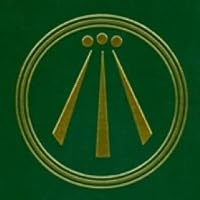
Another thing is that the outset of the premise of this book is to encourage people that felt a "connection" to what or who they think Cerridwen is to read this book, that was the element of how-to. But there was nothing to gently enquire from the reader is to what this "connection" is nor where did it come from and neither to find out what a person expects with Cerridwen, only what Hughes himself feels and thinks is his "connection" and logically what he does and says fits with everyone. I have thought to have a separation from religions and cults the idea would be to have people have different ways of using "connections" to a person (or persons) associated with a divinity and that everyone has a different path from the outset. Instead as with all these neo pagan/witchy things is that the author wants you to through a lot of money on certain objects that are meant to "represent" the goddess (or god etc.) and to be able bodied and have scads of time to go seeking out an outdoors setting and do the "connecting". These scenarios are very isolating for people that don't have the money, able bodied nor be able to devote a "space" outdoors to "connect" with their chosen divinity. Also, for the scholarly aspects that are also history resources Hughes utilised the most on men that had written many hundreds of years later and should be considered biased and therefore unreliable. Furthermore, it's very obvious that the symbol for Awen are three arms from the ancient Egyptian Aten. Many of the symbols of Aten (or Ra) are stretched out arms from the sun and the symbol for Awen looks nearly identical but three.
Another thing is that the outset of the premise of this book is to encourage people that felt a "connection" to what or who they think Cerridwen is to read this book, that was the element of how-to. But there was nothing to gently enquire from the reader is to what this "connection" is nor where did it come from and neither to find out what a person expects with Cerridwen, only what Hughes himself feels and thinks is his "connection" and logically what he does and says fits with everyone. I have thought to have a separation from religions and cults the idea would be to have people have different ways of using "connections" to a person (or persons) associated with a divinity and that everyone has a different path from the outset. Instead as with all these neo pagan/witchy things is that the author wants you to through a lot of money on certain objects that are meant to "represent" the goddess (or god etc.) and to be able bodied and have scads of time to go seeking out an outdoors setting and do the "connecting". These scenarios are very isolating for people that don't have the money, able bodied nor be able to devote a "space" outdoors to "connect" with their chosen divinity. Also, for the scholarly aspects that are also history resources Hughes utilised the most on men that had written many hundreds of years later and should be considered biased and therefore unreliable. Furthermore, it's very obvious that the symbol for Awen are three arms from the ancient Egyptian Aten. Many of the symbols of Aten (or Ra) are stretched out arms from the sun and the symbol for Awen looks nearly identical but three.

November 11, 2021
This is the in depth view I always want from those thin pagan portals books and their ilk, but never get.

July 12, 2023
This was a good book, which I "read" in audioformat. Very detailed and precise. If I ever want to revisit work on Cerridwen or awen, this will be the first book I turn to.
What I severely disliked is the whole "term X is impossible to translate from Welsh into English; Welsh is such a musical language; Welsh is a language full of meanings" bit. Not only is this kind of linguistic relativisim wrong and outdated, what's worse is that it indirectly supports trendy books like Danish hygge, Japanese kintsugi or Korean haengbok. Yes, I'm sure that Welsh has important cultural terms, but so do all languages. It is correct to point those out but it is not to take that to a degree where it's oh so interesting and so sad but foreigners "can't possibly understand". It is surprising that the book is written in that slant given that a large part of the book is very great about terms like awen and Cerridwen (or tau, or ...) in that it's meant for a broader audience and promotes the appreciated spread to other parts.
So, great and inspiring book, but could have used a more strict editor lol.
What I severely disliked is the whole "term X is impossible to translate from Welsh into English; Welsh is such a musical language; Welsh is a language full of meanings" bit. Not only is this kind of linguistic relativisim wrong and outdated, what's worse is that it indirectly supports trendy books like Danish hygge, Japanese kintsugi or Korean haengbok. Yes, I'm sure that Welsh has important cultural terms, but so do all languages. It is correct to point those out but it is not to take that to a degree where it's oh so interesting and so sad but foreigners "can't possibly understand". It is surprising that the book is written in that slant given that a large part of the book is very great about terms like awen and Cerridwen (or tau, or ...) in that it's meant for a broader audience and promotes the appreciated spread to other parts.
So, great and inspiring book, but could have used a more strict editor lol.
September 9, 2023
[no relation to the author!]
Erudite, imaginative and inspired, I have no reservation in saying that Kristoffer is my favourite author on the topics of paganism and spirituality. His work opens up the treasures of Welsh literature to those of us in the neopagan community who long to deepen our knowledge and enrich our practice. Reputable sources of information on Celtic practice are scarce, and Kristoffer, as a native Welsh speaker and devout pagan is wonderfully placed to find them.
In Cerridwen: Celtic Goddess of Inspiration Kristoffer explores the Welsh Bardic tradition, and reveals how the early Welsh poets spoke about this mysterious and potent figure. Much of this relies on the study of early Welsh poetry, but also of Welsh history, language and society. Make no mistake, this is no catalogue of simple spells, or an overwritten flight of fancy. Kristoffer is thorough, reasoning through the material with academic rigour, then fleshing out the nature of the Mam Yr Awen with intuition and imagination. Neopagans and others will be delving into this work for many years to come.
Erudite, imaginative and inspired, I have no reservation in saying that Kristoffer is my favourite author on the topics of paganism and spirituality. His work opens up the treasures of Welsh literature to those of us in the neopagan community who long to deepen our knowledge and enrich our practice. Reputable sources of information on Celtic practice are scarce, and Kristoffer, as a native Welsh speaker and devout pagan is wonderfully placed to find them.
In Cerridwen: Celtic Goddess of Inspiration Kristoffer explores the Welsh Bardic tradition, and reveals how the early Welsh poets spoke about this mysterious and potent figure. Much of this relies on the study of early Welsh poetry, but also of Welsh history, language and society. Make no mistake, this is no catalogue of simple spells, or an overwritten flight of fancy. Kristoffer is thorough, reasoning through the material with academic rigour, then fleshing out the nature of the Mam Yr Awen with intuition and imagination. Neopagans and others will be delving into this work for many years to come.

September 10, 2021
Having read Kristoffer's other books, I expected the scholarly bent to his research and writing. For me, it's not the easiest of reads and as a non-Welsh speaking person, I was a bit intimidated by his repeated suggestion to learn at least some Welsh as a way of honoring the culture and the goddess. I appreciate what Cerridwen brings to the bardic path, but I stumbled a bit by what sounded like his suggestion that she was the only source of the Awen. However, by the end of the book, he acknowledges the uniqueness of the individual journey and I felt better. The sigils were inspiring, the explanation of the Awen was also inspiring. I admit, and I mean no disrespect to the Goddess Cerridwen, I adapted some of the exercises to my own druidic path and they worked just fine. So- all this is to say that I enjoyed the book very much, I learned a lot and I would not dissuade anyone from reading it that may not be a Cerridwen devotee.
November 17, 2025
5 stars.
This book is everything it promises and more.
I listened to the book first in audio form, and while I did finish it, I felt like I didn't do the book justice. There was too much I wanted to remember and make notes on, so I bought the paperback. My copy is filled with little sticky notes because every chapter is so inspiring that it made me want to pause the book for a deep dive every couple of pages, and not because the book is lacking, but because it tells you exactly what you need to know in such a fascinating way that you just feel compelled to search for more information yourself. The book is full of sources, which doesn't help with wanting to read more and get soaked up in every chapter.
And honestly, immediately after finishing it I couldn't wait to read it again. It is a pretty heavy read in my opinion but its so worth it.
This book is everything it promises and more.
I listened to the book first in audio form, and while I did finish it, I felt like I didn't do the book justice. There was too much I wanted to remember and make notes on, so I bought the paperback. My copy is filled with little sticky notes because every chapter is so inspiring that it made me want to pause the book for a deep dive every couple of pages, and not because the book is lacking, but because it tells you exactly what you need to know in such a fascinating way that you just feel compelled to search for more information yourself. The book is full of sources, which doesn't help with wanting to read more and get soaked up in every chapter.
And honestly, immediately after finishing it I couldn't wait to read it again. It is a pretty heavy read in my opinion but its so worth it.

July 24, 2023
There are a number of things that led me to reading this book. Primarily there is the fact that I share my middle name with her, albeit with the single r instead of the double r. I did not know much about her and wanted to learn. Additionally there is my increased interest in pagan and wiccan practices. Up until now there wasn't anything I follow but this branch has become more intriguing to me and so I wanted to learn more.
I feel this book has a nice balance between information and rituals to help the reader connect to Cerridwen, and while I did not do any of the exercises at this point I do plan on purchasing the book to complete them at a later time.
It was an interesting read and it definitely has me wanting to learn more.
I feel this book has a nice balance between information and rituals to help the reader connect to Cerridwen, and while I did not do any of the exercises at this point I do plan on purchasing the book to complete them at a later time.
It was an interesting read and it definitely has me wanting to learn more.
May 30, 2021
This book has taught me a lot of new knowledge which I had not had access to before, particularly on Cerridwen and on the awen. Kristoffer Hughes knows quite a lot about this and goes into the background in some detail. There is strong coverage of Welsh words and concepts, pronunciations and a glossary. The depth of coverage of Welsh lore is great, much greater than any previous source which I have encountered. After reading this book I understand more than I did before regarding this subject. Well worth obtaining.

June 22, 2023
This is the first book that I have read from this author. I actually got this book as an audiobook. I really enjoyed this book but is very academic. The author has taken the time to research so the book is historical correct. The advantage of the audio book was hearing the correct pronunciation with the book gets into. The last part of the book specifically talks about starting a practice. The audio book came with a PDF that had different sigils that are incorporated in having a practice. I really enjoyed and recommend this book.
October 29, 2025
For those who want to read a little something about the wisdom and inspiration of Cerridwen, a figure from Welsh mythology. Kristoffer Hughes does not simply detail the story of Cerridwen, he unfolds the culture that surrounds her myth, revealing intricate influences and detailed accounts of those who have been blessed by her presence. The mother of the cauldron, Cerridwen is a pagan princess asking you to sit for a while and have a sip of something she's been brewing for centuries.

May 13, 2026
I was expecting a book about Ceridwen. It seems this book dances all around the subject and never really addresses who she is other than the mother of Awen (which is not unsubstantial). I really wanted to learn more about her directly.
Great book if you want to learn about Welsh history and folklore.
Great book if you want to learn about Welsh history and folklore.

March 31, 2023
An exhaustive (and often exhausting) study of the origins and history of Cerridwen. It was rather too dry and academic in tone for my personal liking, but I respect the author, his enthusiasm, and his work.

April 21, 2023
Enjoyed the vibe of this book. Content was my cup of tea. (I didn’t really enjoy reading it, I struggle to get through nonfiction.) Some of the practicals in here are just lovely. If you’re into a little light scholarship and singing to trees, this book is for you. 😉

January 7, 2025
Very deep and very interesting. I felt it was not as specific as I wanted but still it was loaded with information and good teaching. Don't expect a light easy read as it does get very in depth about history and other subjects as it carries you on the path of knowledge.
June 19, 2021
Mam Yr Awen. Fantastic book.

August 5, 2021
Amazing! Fantastic and inciteful from a wonderful author and person
)O(
/|\
)O(
/|\

December 20, 2022
Incredibly informative and so much information to digest. This will be a great reference book for me. I will say that it does read very "dry" in most parts, so just know this going in.

September 12, 2025
super intense. I have to return to this one for several reasons. Deep historical background from a native Welsh speaker, and yes that matters.
January 1, 2026
A wonderfully informative and well written book from start to finish
Displaying 1 - 25 of 25 reviews