“[A] spirited and deeply researched project…. [Benkemoun’s] affection for her subject is infectious. This book gives a satisfying treatment to a woman who has been confined for decades to a Cubist’s limited interpretation.” — Joumana Khatib, The New York TimesMerging biography, memoir, and cultural history, this compelling book, a bestseller in France, traces the life of Dora Maar through a serendipitous encounter with the artist’s address book.In search of a replacement for his lost Hermès agenda, Brigitte Benkemoun’s husband buys a vintage diary on eBay. When it arrives, she opens it and finds inside private notes dating back to 1951—twenty pages of phone numbers and addresses for Balthus, Brassaï, André Breton, Jean Cocteau, Paul Éluard, Leonor Fini, Jacqueline Lamba, and other artistic luminaries of the European avant-garde.
After realizing that the address book belonged to Dora Maar—Picasso’s famous “Weeping Woman” and a brilliant artist in her own right—Benkemoun embarks on a two-year voyage of discovery to learn more about this provocative, passionate, and enigmatic woman, and the role that each of these figures played in her life.
Longlisted for the prestigious literary award Prix Renaudot, Finding Dora Maar is a fascinating and breathtaking portrait of the artist.
This work received support from the French Ministry of Foreign Affairs and the Cultural Services of the French Embassy in the United States through their publishing assistance program.
3.5 When her husband bids on s vintage diary on eBay, the author is surprised when it arrives. It turns out to be an address book and after some bookish detective work she traces the book back to Dora Maar.
A very unique approach to an autobiography as she uses the book as an investigative tool to explore Dora's life. Researching the people in her book and their relationship with Dora, the author pieces together Dora's struggles as well as her accomplishments. Therefore, the reader gets a thorough picture of her life. We also learn much if the history of the time. She was associated with many if the notables of the time including Sarte and Camus.
Until reading this the only thing I knew about her was that she was Picasso's muse and mistress for a time. Never knew she was a photographer before she met Picasso and also an artist herself. Her relationship with him ended badly at great cost to her mental health.
A Publishers Weekly Pick of the Week, 18 May 2020!
Real Rating: 3.5* of five
The Publisher Says: Merging biography, memoir, and cultural history, this compelling book, a bestseller in France, traces the life of Dora Maar through a serendipitous encounter with the artist’s address book.
In search of a replacement for his lost Hermès agenda, Brigitte Benkemoun’s husband buys a vintage diary on eBay. When it arrives, she opens it and finds inside private notes dating back to 1951—twenty pages of phone numbers and addresses for Balthus, Brassaï, André Breton, Jean Cocteau, Paul Éluard, Leonor Fini, Jacqueline Lamba, and other artistic luminaries of the European avant-garde.
After realizing that the address book belonged to Dora Maar—Picasso’s famous “Weeping Woman” and a brilliant artist in her own right—Benkemoun embarks on a two-year voyage of discovery to learn more about this provocative, passionate, and enigmatic woman, and the role that each of these figures played in her life.
Longlisted for the prestigious literary award Prix Renaudot, Finding Dora Maar is a fascinating and breathtaking portrait of the artist.
This work received support from the French Ministry of Foreign Affairs and the Cultural Services of the French Embassy in the United States through their publishing assistance program.
I RECEIVED A DRC FROM THE PUBLISHER VIA NETGALLEY. THANK YOU.
My Review: A very interesting look at the inspiration of one very curious person to dig into the life of a largely forgotten figure from the fringes of art history. The discovery of the address book, the many pathways the author's curiosity led her down, the wonderfully creative way she was able to overcome spaces left in the record of the time...all very good. I enjoyed that aspect of the book.
I actively despise Dora Maar, homophobe and antisemite.
I don't want to know more about her, and am sorry that I now know what I do. If I could dig her up and kill her again, I would. The author doesn't frame her unhappiness with the discoveries she makes about the woman in such outraged terms because, one assumes in the absence of explicit statements on the subject, she isn't gay or Jewish. As a product of the modern world she shares none of Maar's unpleasant ideology, and makes it quite clear this is the case.
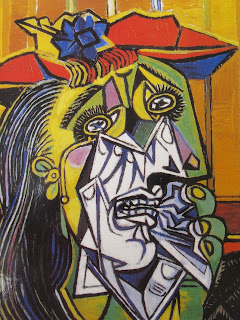
What her project did was recenter attention on Dora Maar, artist, person, woman; up to now her one piece of fame was as Picasso's mistress and muse, "The Weeping Woman" of Picasso's iconic painting: ...whose mental health was terribly damaged by him during their relationship. So, in other words, her only existence even in her mind's functioning was centered on the man Picasso. No room for Maar the suffering person. No blame attached to her "friends" populating this address book for essentially dropping her as she declined. After all, her claim to their attention waned when her connection to Picasso receded into memory. Of course it would.
Given Maar's own merits as an artist, the decline in her circle of friends wasn't as abrupt as it would've been had she not been socially acceptable before her troubles manifested themselves. The author is much more direct about blaming Maar's unpleasant personal beliefs on others than about blaming those others for exacerbating her depression by isolating her. They had scads of reasons to do so, given her unpleasantly judgmental and deeply dyed-in-the-wool fascist ideas and ideology...and no, Author Benkemoun, trying to explain that away with her desire to provoke and satirize the leftists she knew via Picasso isn't an excuse. It's not even much of an explanation. That level of indifference she displayed to the Final Solution and her framing of it as a threat to her personally as someone of Croatian ancestry smacks more of sociopathy than of some kind of artifact of depression, as is suggested in here.
What about this truly dreadful human being made you care for her so deeply, I kept asking Author Benkemoun as the pages turned. What resonated in you to this, to my eyes, justly forgotten and uncelebrated hateful person? Her femaleness? I think she, and her lover Picasso, both deserve desuetude. That it was only her lot is unjust. But let's try to use the weapons of attention to attack Picasso not re-evaluate Maar. Put him, his sexism, his abusive narcissism in the bin with her and let's move on.
czuję trochę niedosyt, ale z tych pozytywnych :p Autorka zainteresowała mnie postacią swojej bohaterki i chętnie przeczytałabym coś więcej na jej temat!
Brigitte Benkemouns Ehemann kauft sich eine Lederhülle für sein Adressbuch bei Ebay, doch als Benkemoun die Hülle aufschlägt, ist diese nicht leer, sondern enthält bereits ein kleines, vollgeschriebenes Adressbuch mit den privaten Adressen der großen Künstler des Surralismus und der modernen Kunst. Von Cocteau, Chagall und Giacometti bis Signac und Braque finden sich auf zwanzig Seiten die Namen berühmter Dichter, Maler, Künstler und Persönlichkeiten der ersten Hälfte des letzten Jahrhunderts.
Doch wem dieses Adressbuch gehört haben könnte, bleibt zunächst ein Geheimnis. Benkemoun setzt sich in den Kopf, es herauszufinden, entziffert mühselig dieses “Who is Who der Nachkriegszeit”, ist sich bald sicher, dass die Besitzerin eine Frau gewesen sein muss und stößt schließlich auf den Eintrag “Architekt Ménerbes”. Ménerbes, ein Ort im Süden Frankreichs, war lange Zeit Wohnort von Dora Maar. Die Besitzerin des Adressbuchs ist damit gefunden.
Ausgehend von den Namen und Adressen im Buch und durch die Hilfe von Zeitzeugen, Biographien, Telefonbüchern und sogar einem Grafologen zeichnet Benkemoun das Leben Dora Maars nach, die der Nachwelt vor allem durch das berühmte Porträt Picassos “Die weinende Frau” und als Geliebte Picassos in Erinnerung geblieben ist. Dabei war sie selbst Fotografin und später auch Malerin. Ihr Werk, das hat sie selbst schon erkannt, wie das folgende Zitat beweist, ist fast vollständig in Vergessenheit geraten: “Man kennt mich noch zu sehr als Picassos Geliebte, um mich als Künstlerin zu achten.”
Für die Autorin ist die Beschäftigung mit Dora Maars Leben jedoch nicht immer leicht: “Ich tue mich schwer mit ihr. Am schwierigsten ist es, sich an eine so andersartige und bisweilen so wenig sympathische Frau zu binden.” Schon früh in ihren Recherchen erfährt sie, dass Maar in ihrer Wohnung eine Ausgabe von “Mein Kampf” stehen hatte. Das Buch geht deshalb auch der Frage nach, wie eine junge Frau, die gegen den Faschismus gekämpft hat und links war, sich dieser Art von Bitterkeit und Misanthropie verschreiben konnte. Es gelingt der Autorin zu zeigen, wie Maar immer mehr in den Wahnsinn abdriftet, unter Psychosen leidet, wie sie beginnt, an Übernatürliches zu glauben, von Jacques Lacan behandelt wird und sich in einer Heilanstalt der brutalen Elektroschocktherapie unterziehen muss.
Das Buch befreit Dora Maar und ihr Werk aus der Vergessenheit und auch wenn es sie nicht von dem Schatten Picassos, der über ihrem Leben hängt, befreien kann, so ist das Bild, das der Leser nach der Lektüre von Dora Maar hat, vielschichtiger und wird ihrer Persönlichkeit gerechter. Benkemoun beschönigt oder verherrlicht ihre Protagonistin dabei nie, sondern zeigt sie mit all ihren Facetten, als Fotografin und Geliebte, aber auch als Wahnsinnige und Verrückte.
“Das Adressbuch der Dora Maar” ist ein Zeitreiseführer in die Welt der Surrealisten und in die Pariser Künstlerszene. Er gewährt tiefe Einblicke in die Beziehungen der Künstler untereinander, zeigt auf, wie sich ihre Wege kreuzen, wie Freundschaften entstehen und wieder auseinanderbrechen, schneidet Biographien an und lässt die Dichter, Maler, Fotografen und Freunde selbst zu Wort kommen. Er wird Dora Maar, ihrem Umfeld und ihrer Zeit in jeder Hinsicht gerecht und ist eine Bereicherung für jeden Leser.
I received a copy from the publisher via Netgalley in exchange for an honest review.
This book is a disappointment. The author, Benkemoun, buys her partner a “new” vintage agenda. What she didn’t expect is to find a list with telephone numbers and names from the French Surrealist scene: Picasso, Braque, Balthus, Giaccometti, Leiris, Ponge, Staël…the list goes on. The agenda belonged to no other than Dora Maar, Picasso’s ex-mistress and muse. Forever remembered as The Weeping Woman, Maar was an artist of her own right and intimately knew the snobs and hip artists of Paris.
By jumping from name to name, Benkemoun recounts the history of the people on that list, as well as their connections to Maar, unravelling the life of a complicated, depressive, bitter, sad and racist woman. As expected, the author includes the complex inter-personal webs of the people in Maar’s life and circle. What emerges is an unsurprising depiction of people that create – oftentimes – impactful art but people that are also full of themselves. People that conversed and changed art, who usually belonged to leftist circles and fought Nazis, but that were also oftentimes incredibly vain, self-centered and abusive. For anyone who knows Picasso, it comes to no surprise that his behavior towards Maar and other women was asshole-ish at best, abusive at worst. Almost every person in this book seems to enjoy actively hurting others for attention, infamy and pleasure. No doubt that many had positive aspects and could do good – some of Maar’s friends seem to have been good people who care for her and helped her the best they could – but it seems that cruelty was a sport to them. Cruelty and selfishness. If you like to read about the lives of some of the most well-known Surrealist artists and dive into gossip, this is the book for you.
Of course, the focus is on Maar and how she felt about her life. In some part, Benkemoun manages to humanize a person that has lost her own identity in society. Forever The Weeping Woman and Picasso’s former mistress, Maar was first and foremost a person of her own right. An artist that gave up her career as a photographer because Picasso couldn’t have an equal partner. After he broke up with her by making his new twenty-something mistress his official mistress, Maar seems to have fallen into a deep depressive episode. I can sympathize with a person that has lost so much to an abusive person and has to piece together a new identity after public humiliation and giving up much of herself for a man that never truly respected her.
What I cannot sympathize with is the fact that Maar was a fascist and anti-Semite. Benkemoun does everything in her power to minimize Maar’s political views, attributing her anti-Semitism to: mental illness; her Nazi father (he was a Croatian fascist); artistic provocation; a joke; her fundamentalist Catholicism; her frustration with not becoming a famous artist on her own merits. Benkemoun thinks that because Maar used to be in leftist anti-fascist circles that she also must have been not-anti-Semite and that is ridiculous. It’s obvious that the author doesn’t know how hatred of minorities works and thinks, like many, that it starts with wanting to eradicate them and not, like it actually does, with “jabs” like: “I don’t want to work with Jews” or “Jews control the world” or “Those fucking homos”, etc. etc. All things Maar has said and thought, as proven by this book. Also, anti-Semitism is also present in leftist circles, albeit less prominent but there is also discrimination amongst those who supposedly fight discrimination. I mean, even withing the LGBQT community there are people that are racist or against trans rights, so maybe she shouldn’t see this as a zero-sum game. It’s also highly likely that Maar was in those leftist circles because she was with Picasso and not because she actually believed in any of the politics. From all the evidence, it seems that she didn’t give a fuck about the Nazis and them killing Jews, she was only scared that she could be confused as one and be deported. That is all. And that is all in the book, laid out by Benkemoun, who still hesitates calling her anti-Semite until the very last page. And when she finally calls her an anti-Semite, she immediately explains her hatred as frustration. Unfounded frustration but nonetheless a result of “being scorned” by the art world that was ruled by Jewish people. This is conspiracy Nazi level stuff and it remains largely undiscussed.
There is no doubt that Maar suffered greatly because of Picasso but Maar was equally abusive to other people. Yes, I feel for her and understand that her adoration of Picasso – a repulsive person – made her suffer. Picasso messed her up big time. But Maar was also incredibly abusive, despotic, racist, homophobic, manipulative, self-aggrandizing and snobbish like pretty much anyone in her circle. Her mental illness and depression do not excuse her behavior. I can relate, as a depressive person myself and as someone that struggles to find their own career in a competitive field, to Maar’s suffering in regards to her mental health, lost identity and stagnating art but none of this is an excuse for her abhorrent behavior and views and Benkemoun wants to free Maar from her sins by being vague or giving her countless reasons for being an anti-Semite, homophobe, racist or abusive person.
I appreciate the effort of trying to making Maar a person and showing her character, positive attributes and flaws, but Benkemoun trivializes and rationalizes too much of Maar’s views, to the point of white-washing her. Only a person with immense privilege and with no skin in the game can push the negative aspects of Maar aside and say that they love this person because she was brave and strong. In essence, this book is about privilege – Maar’s, that of her circle, the men, the author, the translator. I found this book to be incredibly frustrating and disappointing because it does something I love – find a riddle and solve it with archival material and digging, digging, digging! – but turns it sour by being superficial and ultimately white-washes a person that held terrible views of marginalized people. The misogyny in this book is called out pretty consistently, but the rest? Racism? Anti-Semitism? Homophobia? Named but ultimately excused with the flimsiest of “arguments”.
If you want some gossip and drama in form of a quick and accessible read, then this is for you.
I have, more than once, found treasures on eBay. It was no surprise to me that someone would try and sell some relative's treasure as an ordinary item. But for a spouse to be wise enough to grab a purchased item (fka treasure) and recognize it for what it is? Then to write a book about it? Genius! I had to read this book.
With an artist parent, I've grown up with books, prints and histories of painters. Especially those from France or who lived in Paris. Student work, copies of copies. . .all around us as we grew up. It was lovely, and an education all on its own. The network these artists built up as they developed and evolved was something of which I was aware, and the idea of someone's 1951 contact list with notes falling out of eBay into the hands of an interested author. . .well. It answers all one's non-fiction reading needs: drama, history, fandom, mystery and am I in it? (ie 7 degrees of separation rule).
The fun-for-me part was that I knew nothing of Dora Maar. I knew of Picasso and Lee Miller, Ray Man and others, but knew nothing of Dora Maar. The author takes the reader through her process, step-by-step, showing research found and connections made. She clearly claims assumptions and proposed theories (of which there are few). With all of these a very distinct picture of Dora Maar develops, tumbled together in positive and negative space. She was a woman with mighty competition in a man's world; an artist in her own right, but robbed of that consideration by having played "muse."
Brigitte Benkemoun presents her examination and research deftly, providing a reader in 2020 of exactly what it took Dora to play in that era's whimsical playground; what alliances were required, what gains for sacrifice, what cost victory, where hides love and shines betrayal, how fleeting fame, how long the lonely, and that lifelong, ever moving "why?" when tallying up the value of worth. . . all of this pulled from a modest, ordinary address book. Brilliant!!!
4 stars, shining light on brilliance in subject and execution.
A super sincere thanks to Brigitte Benkemoun, Getty Publications and NetGalley for an ARC to read and review. It was a bright spot in an otherwise grey time.
I found this such a compelling and engaging read, and a very unusual one. It all started when Brigitte Benkemoun’s husband bought a vintage notebook on eBay and when she started to look through it she realised it was an address book containing many names that she recognised. Some further detective work revealed that the notebook had belonged to Dora Maar and the names and addresses belonged to the great and the good of Parisian artistic and avant-garde circles – from Brassai to Andre Breton, Cocteau to Lacan. Benkemoun set out on a journey of discovery to track down the addresses and in this way explores Dora Maar's life and work through her friends and acquaintances. I found it an exhilarating journey, not least because Benkemoun actually met Maar in her older reclusive years so we get a glimpse of the real woman behind the notebook. Part memoir, part cultural history, part biography, part detective tale, this is essential reading for anyone interested in that era and in Dora Maar, Picasso and their circle in particular.
I have never before read a book like this; what a unique premise for a book and what stunning research went into its completion! Although I never do this, I think some of the publishers words really do sum this up best: "Merging biography, memoir, and cultural history, this compelling book....traces the life of Dora Maar...through a serendipitous encounter with the artist's address book." or as author Francine Prose put it " Part detective story, part social history, part excellent gossip, Finding Dora Maar uses the miracle of a found address book to reconstruct the life of an important woman artist who knew everyone." So while I went into this fully expecting to get a vivid picture of the photographer and painter (and lover of Picasso) what I did not expect was the penetrating glimpses into the lives of each entry in her address book, to name a few: Breton, Cocteau, Lamba, of course Picasso, Stael, Simone de Beauvoir and countless others. For history buffs, those who enjoy real life detective work, anyone interested in French culture in the 1900s, this is a book not to be missed. This is a dense book that cannot and should not be skimmed--while there is some poetic license taken and suppositions made, the huge majority of it is well documented. Truly brilliant.
I read this for my art based book club. The author devised an interesting approach to writing this book - she talked about how each person listed in Dora Maar’s address book related to her as an artist and elaborated on their creative career. Dora led a fascinating life - mistress of Picasso, friend to some of the best modern artists such as Breton, Cocteau, Marchand, and many others. I felt like Picasso overshadowed this book - I have a clearer picture of what he was like than what Dora was like (basically, he is an even bigger jerk than I thought). This book did peak my interest in several of the artists mentioned- I will continue my own research to learn more about them.
After accidentally stumbling upon a diary which enlisted phone numbers of all reputed painters and other such famous people, it was a painstaking process to find out who the diary belonged to, what was the relations with the owner of the diary and that lead to discovery of life on an extraordinary person. I have myself read a lot about Picasso however, Dora Maar always remained a fleeting reference. I always knew her as The Weeping Woman. After reading this book you know about a person with many talents eclipsed by another over awing personality.
Dora Maar always considered her in fusion of Picasso. When he painted, she felt that she was painting. His life was her life irrespective of how many women enter even though she had an overbearing personality and influence over Picasso's work.
So many people cared for her and claimed to be in love with her, but she was in love with a person who thought little or nothing of her beyond as a muse for his paintings. The difficult life she lived due to psychosis and depression before and after Picasso's death was unexplored and certainly piques interests of the reader.
Thoughts: I felt this was really well done with one glaring omission- no pictures! This is a book all about an artist an her community of artists and th ER are no pictures of the people or their Art! Sad. Very sad. Recommended.
L’autrice retrouve dans un agenda un répertoire. Cocteau, Breton, Brassaï... elle mène l’enquête et va reconstituer l’histoire de Dora Maar à travers ses proches. Passionnant ! Je ne l’ai pas lâché !
Le pitch de départ avait de quoi m’intéresser. L’autrice tombe par hasard sur un carnet d’adresse de 1951, avec à l’intérieur les coordonnées des artistes surréalistes les plus célèbres. J’ai adoré cette enquête méticuleuse et obstinée pour retrouver la propriétaire de ce carnet, se basant sur des détails minimes. Un véritable rêve de collectionneur, de tomber sur un document aussi précieux, qui garde sa part de mystères. Je ne connaissais rien de Dora Maar et j’ai été déçue par la personne qui se révèle au fil des pages. Peut être que le format de cette biographie y est pour quelque chose, on n’apprend pas à connaître cette personnalité dès son plus jeune âge, on a très peu d’informations au final sur ses origines, son environnement familial. A l’époque de ce carnet, c’est déjà une femme meurtrie, instable psychologiquement que l’on nous présente. J’ai trouvé qu’il était difficile d’éprouver de la sympathie pour elle, malgré l’humiliation et la toxicité de sa relation avec Picasso (qui était il faut le dire le plus grand des connards). On a surtout l’image d’une femme froide, distante et méprisante et qui finira comme une vieille femme réactionnaire et profondément antisemite. Difficile alors d’éprouver la même fascination que l’autrice pour un personnage aussi insaisissable et rempli de contradictions.
Original book about Dora Maar. The author happens to get into the possession of her address book and uses it to piece Dora's life together. Still Dora remains something of an enigma while we get more info on the people surrounding her. Hence 4 stars.
Finding Dora Maar, by Brigitte Benkemoun, reconstructs the life and times of a photographer and painter who worked in France from the early 1930s onwards. Benkemoun’s route into her subject is both serendipitous and unusual: after her husband lost his prized Hermès agenda, she bought a replacement on eBay - and found Dora Maar’s 1951 address book inside! So begins two years of detective work as she investigates the people in the address book, and what they can tell us about Maar’s life and character.
I must admit, I’d never heard of Dora Maar before, but Benkemoun’s approach and enthusiasm swept me up and absorbed me into the world of Maar and the artists, writers and others she knew - and ceased to know - over the course of her adult life. The author’s use of a single object to open up a whole history is reminiscent of Gillian Tindall’s work - however, unlike Tindall’s most recent book, The Pulse Glass, Finding Dora Maar radiates positivity and excitement. I loved following Benkemoun as she had ‘eureka!’ moments and uncovered new insights into the artist. I also liked how she paid attention to who was and wasn’t listed in the book, and whether their details were up-to-date, to deduce the status of Maar’s various relationships at that particular point in time.
Maar was the model for Picasso’s Weeping Woman, and her relationship with him coloured her whole life, even after they split for good after ten years together in 1945 (Maar died in 1997). Like the women in Polly Samson’s A Theatre for Dreamers, her (willing and devoted, but still…) service to the great master stymied her own career, and in return, he treated her appallingly and steered her away from photography and towards painting. While Maar was undoubtedly talented in both areas, I feel this was a shame - I was particularly attracted by Benkemoun’s image of a young Maar making a perilous climb to capture photos of conditions inside a mine, as well as her street photography.
While Benkemoun is full of enthusiasm for her project, that doesn’t mean she isn’t uncritical of her subject - far from it, in fact. Right from the start, she’s honest about the fact that Maar had a copy of Mein Kampf on her bookshelf, and that this made her doubt whether she wanted to continue with her research. Taking a whole-life approach, Benkemoun shows that this artist who at one time was very left-wing, hung out with the Surrealists, and had a succession of gay male companions, became homophobic and anti-Semitic as she grew more pious, mentally ill and isolated in her later years.
At times, Maar reveals herself to be so unlikeable that Benkemoun finds it a relief to take a break from her to find out more about her friends - including fellow painter Jacqueline Lamba, Vicomtesse Marie Laura de Noialles and long-time confidante Nadine Effront - all women worth reading about in their own right. We learn about the dynamics, beginnings and endings of Maar’s friendships with men and women, famous and obscure. While she is not always likeable, Maar never fails to be interesting.
Finding Dora Maar is a fascinating account of serendipity, the joy of research, and a complicated woman artist who moved in the best circles.
3.5/5 stars for me. Thank you to NetGalley, Getty Publications, and author Brigitte Benkemoun for allowing me to read the e-ARC of this book in exchange for an honest review. I loved the premise of this book: the author's husband lost his wallet and is determined to find a high-quality similar replacement. After a long search, a very similar wallet becomes available on eBay! When it arrives, the author is delighted to find it's a true objet trouvée as it contains contact information for many modern artists who were creating during the 1940s. At that point, Benkemoun is on a mission to identify its owner. She diligently researches the names in the address book to determine dates, locations, and which person they might have had in common. . . Dora Maar, one of Pablo Picasso's lovers and an artist in her own right (photography and painting). Benkemoun tracks down the facts of her life as well as possible, then makes a few educated guesses where missing pieces of the history exist. The interconnectedness and also the dramatic separations of this time is fascinating and one can just imagine the ideas that flowed around their dinner tables! This is more the biography of an address book and her social interactions than Dora Maar herself as details of her life begin when she is in her 20s. Overall, a very interesting book, but it left me wanting more information about her life and her work, which was outside of the scope of this book.
What an utter treat this was! I saw a snippet about it in either the New York TImes or the New Yorker, and thought it might be fun. Besides, as an art historian with a focus on modernism, it's right up my alley. I didn't really read the review carefully; I imagined it to be something of a counterbalance to James Lord's "Picasso and Dora: a personal memoir" (1997), which I thought was mostly an exercise in self-indulgence. I hoped it might have some of the (admittedly skewed) insights of Francoise Gilot's "Life with Picasso" (1964).
It was all and none of those things.
Brigitte Benkemoun's husband, T.D. (Thierry Demaziere) misplaced his address book and it was nowhere to be found. It was a vintage Hermes folder, made with a kind of leather that is no longer used, so simply buying a new one wouldn't do. Benkemoun tracked down an approximate clone on EBay and found that the previous owner's address pages were still in it. She idly leafed through and after a few minutes realized that the most extraordinary names and numbers were written in it: Cocteau, Eluard, Breton, Brassai, Lacan, Balthus, pretty much anyone who was anybody in the Surrealist circle and mid-century Paris. (The insert was dated 1951.) Who had it belonged to.
The story of the search is delightful and of course it turns out to have belonged to Dora Maar, nee Henriette Theodora Markovitch, the "Weeping Woman" among Picasso's mistresses, the one that followed Marie-Therese Walter and preceded Francoise Gilot. (Speaking of whom, isn't it amazing that she is still painting and living in the San Diego area? As of this writing she is 97. Or maybe 98.)
What Benkemoun produces from this scrap of paper is both a memoir of search and self, and an exploration of Dora Maar through those individuals she saw fit to keep in her address book, after her mental breakdown in 1945, after her abandonment by Picasso. For those who have only ever gotten the summary of her life and art, and her locus in early 20th century modernism, that a standard text offers, there is much to delight. Maar emerges as a far more interesting character, a far greater artist, a much more significant player, than one might have thought. The book, however, may not, however, be a good read for someone with no familiarity with the cast of characters.
What I so liked about this book was that there was nearly no discussion of art. Important paintings were mentioned. Certain of Maar's photographs are briefly described. But this is not a book about art. It will not offer any critique of surrealism. It has no illustrations beyond the wonderful photo-collage in the cover design. It is a book about people, relationships, bonds that fray, break, are sometimes reknotted but always seems to maintain the charge that ran through them when whole. I found myself looking into Google Maps the check on the precise geography of addresses in Paris. Every now and then I would look up a person. Lacan for instance. He was someone whose ideas and critical methodologies I have always fled; now maybe I want to know a little bit more.
My only whine is the usual: where is the index? So many of the same figures appear in different chapters. I would have liked to go back and track a few of them. Without an index that is just impossible. Shame on you, Getty Publications. You of all people should know better.
I was incredibly taken with the premise of this book--the author bought an old address book online and when it arrived, it turned out to be the former possession of artist/photographer Dora Maar. She then uses the nature of an address book as the structural framework for what amounts to a biographical/historical peek into the life of Dora Maar and her various friends, colleagues, acquaintances, lovers, etc.
I enjoyed reading about Maar, although I recently read/reviewed another book about her, an exhibit catalogue for a retrospective of her photography. I did not feel like i learned anything new about Maar in this book, but i'd hoped that perhaps the metanarration about the serendipitous acquisition might add something to the book. And, in the original perhaps it does, but the translation makes the narrative voice of the author come off twee and disingenous in the opening chapters.
I didn't dislike reading it, but i didn't love it as much as I thought i would.
I received an ARC from #NetGalley in exchange for an honest review.
I have been trying to figure out why I can't put this book down, despite periods of intense dislike for Dora Maar, Picasso and that whole circle of intellectuals. I think that part of this is Brigitte Benkemoun's great storytelling (and her own honest ambivalence about Dora Maar and her set). But I think it's also because it's a can't-look-away story of another rising female star who was undone by a very bad romance. How many of history's brilliant, complicated women have been similarly used and discarded by "great" men, without the benefit of a powerful book like this to keep their story alive?
This book seemed to be really well-researched, but there was just something about the writing style (or maybe the translation) that just didn't draw me in. To be fair, I also am not too familiar with many of the people from that time who were mentioned in the book.
One thing I concluded-- Picasso was a rotten person. As for Dora Maar, I didn't always like her either, but at least she had a mental illness to account for some of her behavior.
Wie Puzzlestücke wird Dora Maars Leben erzählt. Dadurch blieb ich etwaz verwirrt zurück. Die Puzzleteile fügen sich für mich nicht zusammen. Es fehlen starke Bilder, mit Anknüpfungspunkten.
3,5 Sterne für ein interessantes, gut geschriebenes Buch, für das mir aber leider viel Hintergrund Wissen fehlt. Auch blieb es für mich oft zu sehr an der Oberfläche von Dora Maars Leben.
Brigitte Benkemoun’s Finding Dora Maar is a delectable feast, one that she and we are able to take through the 1951 address book of the famous photographer and painter. The story goes like this: Benkemoun’s husband loses a leather Hermès agenda, and when he learns that the style he likes isn’t produced anymore, he orders a vintage replacement from eBay. Inside the agenda is an old address book that the seller forgot to remove, and after a bit of sleuthing, the author discovers the name of its illustrious owner. Benkemoun then recounts Maar’s life through her contacts, mostly people with whom she connected with during her years as Pablo Picasso’s lover and with whom she remained friendly with into the 1950s. There are many famous people in the address book such as Jean Cocteau, Jacques Lacan, Andre Breton, Paul Eluard, Lee Miller, Jacqueline Lamba, as well as lesser known figures such as a plumber and an architect who were hired to help Maar with her house in Menerbes.
What makes the book fascinating is that Benkemoun did not really choose her subject: the address book just fell into her possession. And Dora Maar, to put it politely, was a piece of work. She was, at the end of her life, a raging anti-Semite, and Benkemoun is Jewish. So the author has to come to terms with this debacle and still try to write a text that appreciates the artist in her best years, and write a text that is also sympathetic to Maar where she deserves to be sympathized with. It is the opposite of cancel culture. It is pretty amazing that Benkemoun kept working on the project after learning of Dora Maar’s dog-eared copy of Mein Kampf, left out prominently on the coffee table to taunt Jewish visitors, on the rare occasions when she accepted them into her home.
Picasso plays a large role for obvious reasons. He is portrayed as the manipulative egotistical womanizer that he absolutely was. It’s always said that the only woman who “survived” her relationship with Picasso was Francoise Gilot. But in fact this book makes a pretty strong case that Maar did a good job of finding her way in life after their break-up, albeit with a touch of madness. At least she found the ability to keep living after Picasso’s death in 1973: his two other famous lovers, Marie-Therese and Jacqueline Roque committed suicide not long after he died. I wonder if Maar snickered after learning of their deaths. She and Picasso shared a particular taste for cruelty. Maar lived long past all of them, to 1997.
I highly recommend this book as it provides a wonderful glimpse of the great artists and creators in Paris during the Occupation and a few years after World War II. It is also a story that may never be told of our generation. Who will ever be able to retrieve our contacts and reconstruct our lives, when all of our phones are all in the landfills?
Receiving an old leather Address-Book in the mail, the Author discovers that, instead of an ideal gift for her husband, she has uncovered the 1951 Address-Book of Picasso’s Muse, Dora Maar! Maar, a gifted artist and photographer in her own right, had connections with all the French Intelligensia of her day … The old Address-Book proves this … A voyage of discovery indeed!!!
Intriguing exploration of the artistic milieu of Paris from 1920s through the 1950s. Benkemoun stumbled upon a leather-bound Hermes address book on eBay that had some startling addresses. Picasso, Braque, Brassai, Nathalie Sarraute, Jean Cocteau, Ned Rorem, Roland Penrose and many others. Sleuthing proved that it belonged to Dora Maar (19071-1997), a photographer and painter most known as the lover of Picasso who documented various stages of his painting of Guernica. Maar is a fascinating, powerful, sometimes repellent character whose early work in surrealist photography stands out. Her 2019 Pompidou retrospective showed a large amount of work, with painting dominating after 1935 when Picasso who looked down on photography persuaded her to switch to painting.
By structuring her little volume according to the contacts listed, Benkemoun permits herself a fragmented journey through incidents, personalities, gossip and legend surrounding the artists who met daily at cafes like the Deux Magot, the Catalan and the Boeuf sur le toit. THe difficulty of practicing and winning respect as a female artist combines uneasily with Maar's traumatic and lifelong grief over the breakup with Picasso who brutally dropped her in favor of the very young Francoise Gilot. Maar comes across as an articulate and cutting personality, contributing incisive aesthetic opinions to group conversation, at least until her breakdowns led to mystical preoccupations, fervent Catholicism and self-isolation. It is painful to learn that Mein Kampf sat openly on her bookshelves in later years, as she developed a bad case of anti-semitism. Yet before the war, she had ardently espoused left-wing views and hung out with anti-fascists and activists. The book offers a complicated portrait of her, much truer to the real Maar than Picasso's "Weeping Woman" series for which she modeled.
Zaczyna się dość przypadkowo, jak znalezisko z pchlego targu: stary terminarz Hermèsa skrywa coś więcej niż puste strony. W jej wnętrzu – zapisane odręcznie nazwiska i numery telefonów: Aragon, Balthus, Chagall, Cocteau, Éluard… I wreszcie to jedno, dawnej właścicielki: Dora Maar. „Szukając Dory Maar” powstała z przypadku, a przerodziła się w wyjątkowy hołd dla kobiety ukrytej za legendą Picassa.
Benkemoun nie poddaje się tej legendzie. Z uporem rekonstruuje życie fotografki, malarki z fragmentów, które zostały: adresy, fotografie, wspomnienia, listy i – co ważne – przemilczenia. Książka nie tyle „odkrywa” Maar na nowo, co rozszczelnia narrację, w której przez dekady była zamknięta – jako „ta, która płakała” na obrazie, „ta, która oszalała”, „ta, która nie potrafiła żyć bez geniusza”.
To nie jest klasyczna biografia, jest w tym coś z detektywistycznej pracy: przygląda się notatkom, tropi konteksty, próbuje zrozumieć, kim była kobieta, która zostawiła po sobie ślady w książeczce telefonicznej. Z tej mozaiki powstaje portret osoby inteligentnej, niezależnej, utalentowanej, ale także poranionej i często niezrozumiałej.
To również opowieść o tym, jak historia sztuki – zdominowana przez mężczyzn – często traktuje kobiety jak przypisy. Benkemoun pokazuje, że Dora Maar była kimś więcej niż tylko fotografką i kochanką Picassa. Była artystką z własnym głosem, która w pewnym momencie zamilkła – być może nie dlatego, że nie miała nic do powiedzenia, ale dlatego, że nikt nie chciał jej słuchać. „Szukając Dory Maar” to lektura dla tych, którzy lubią książki międzygatunkowe: trochę literacki esej, trochę dziennik śledczy, trochę feministyczna rewizja historii sztuki, która nie jest galerią martwych obrazów, ale żywą opowieścią o namiętności, miłości, traumie.




 by James Beechy(no photo)
 by Susan Grace Galassi(no photo)
 by Werner Spies(no photo)
 by
by
 Pablo Picasso
 by Laurence Madeline(no photo)


