In this exploration of the meaning of home, Annie Zaidi reflects on the places in India from which she derives her sense of identity. She looks back on the now renamed city of her birth and the impossibility of belonging in the industrial township where she grew up. From her ancestral village, in a region notorious for its gangsters, to the mega-city where she now lives, Zaidi provides a nuanced perspective on forging a sense of belonging as a minority and a migrant in places where other communities consider you an outsider, and of the fragility of home left behind and changed beyond recognition. Zaidi is the 2019/ 2020 winner of the Nine Dots Prize for creative thinking that tackles contemporary social issues. This title is also available as Open Access.
Annie Zaidi writes poetry, essays, fiction, and scripts for the stage and the screen.
She is the author of The Comeback (2025), City of Incident: A novel in twelve parts (2021), and Prelude to a Riot, which won the Tata prize for fiction (2020). She is a recipient of the Nine Dots prize (2019) for Bread, Cement, Cactus: A memoir of belonging and dislocation.
Her other books include Bantering with Bandits and Other True Tales (collection of essays, short-listed for the Crossword Book Award (non- fiction) in 2010, Gulab (novella), Love Stories # 1 to 14 (short stories), and The Good Indian Girl (co-authored with Smriti Ravindra), and Crush (poetry).
She is also the editor of 'Unbound: 2,000 Years of Indian women's Writing' and of 'Equal Halves'.
Her work has appeared in various anthologies, including Mumbai Noir; Women Changing India; India Shining, India Changing, and in literary journals like the Griffith Review, The Massachusetts Review, Big Bridge, Out of Print, and The Aleph Review.
Her work as a playwright has been performed and read in several cities. She received The Hindu Playwright Award (2018) for Untitled 1. Her radio script ‘Jam’ was named regional (South Asia) winner for the BBC’s International Playwriting Competition (2011).
She has also written and directed several short films and the documentary film, In her words: The journey of Indian women.
I received a free pre-publication copy of the Kindle format from Netgalley in return for an honest review.
This book was not what I expected. Maybe the blame is on me, but I'd suggest the publisher's blurb was somewhat misleading. It's described as a 'memoir' and that's what I'd hoped for. The problem is that a memoir should be - in my opinion - a lot more personal than this. Instead, it's more like a collection of essays about what it's like to not fit in when living in India in which the places are connected by virtue of being places that the author has lived or considers as 'home' in one way or another. The problem is, she doesn't seem to really like any of those places very much and she seems deeply reluctant to give of herself. Whenever there's the slightest hint that something is about to get personal or revealing, she pulls away from the brink and delivers a rather dry but worthy essay on something else.
The first location, a cement mining and processing village in the Aravali hills of Rajastan, was the one I found most interesting. I've seen those villages so I could clearly picture them in my mind. She tells a little about growing up in a strictly regimented community where your house is a clear indication of your family's status. Then suddenly, she diverts to writing about local indigenous people being robbed of their land to make the cement factory village and this becomes the theme that's developed throughout the rest of the book - stealing land and status from the locals, exploiting their homeland whilst pushing them aside.
There are a number of other places where Zaidi herself is in the excluded groups - either by language, religion (one parent Muslim, one Hindu gives plenty of potential for exclusion), place of birth, gender or just being the wrong sort of person in the wrong place. Part of me thinks you've got to be a bit determined to so consistently NOT fit in anywhere.
I read a lot of books on exclusion and discrimination as part of the immigrant experience. What makes this different is that all the places and people described are 'Indian' but all of them are excluded within their own countries. In a land of 1.2-1.3 billion people, that's not hard to imagine, but I would have hoped to have seen a few examples of how India is also deeply hospitable to outsiders (I'm thinking - for example - of the acceptance of the Tibetan Buddhists forced out of their homeland by China and given refuge in the Himalayan regions of India). As a Brit, it was a bit of a relief to read an angry book about India that didn't seem determined to blame my country for all the evils of the world. But Zaidi definitely comes across as a very angry woman and one with a very hard carapace to protect herself and her history from being revealed on the page.
When the book was personal and revealing, I enjoyed it. When it went off on a tirade about discrimination, I liked it less. Bring me your personal evidence, your hurt and your tears and I'll read. Bring me dry, academic research and you engage me much less.
I believe the format I received is pre-publication and so I wasn't surprised that it's riddled with typos and wordsallstrungtogetherwithoutanyspacing. That happened a LOT. There's also a fault with seemingly random subtitles thrown into the text. I assume both will be fixed long before paying customers get to see the ebook as these are deeply irrtating and distracting faults.
I'm sure there's a great writer in Zaidi but until she's willing to reveal herself, I wouldn't rush to read her again.
Absolute waste of time! It’s not a memoir by any means but a regurgitation of facts around the places she has lived. There’s no emotion involved or portrayed. There are factual mistakes like converting a sum of money in INR from the 1980s into USD using today’s conversion rates and then basing the argument on the amount being too little. The entire thing reeks of incompetence and ensures I never read anything from her ever again!
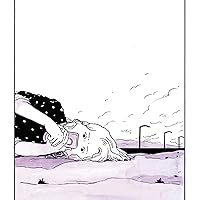
Bread, Cement, Cactus: A Memoir of Belonging & Dislocation by Annie Zaidi explores the contours of home, traversing across myriad cities in India where Annie finds parts of herself scattered in various hues and tones, and questions why where we belong matters so much. Each chapter in the book is a standalone essay, where the author craftly marries her childhood with burning contemporary issues in India. With extensive research coupled with her memories, this memoir of searching for a place to call 'home', and the ramifications of estrangement from one's own self, the confusion and anxiety sprung upon our identities, and how we carry with us tiny pieces of places we've found comfort in, help us stay afloat. . Annie's book travels to the industrial township in Rajasthan, making its way to Uttar Pradesh and Kerala and also to Mumbai, examining the past, the present and the possible future, against the prevailing political and socio-economic landscape of the country, and finally sprinkling the many years she spent in all of those cities that have shaped her into who she is today, into a solid book, that offers much to think about. With conversations with the locals, and illustrations by her mother, Yasmin Zaidi, the book offers a kaleidoscopic view of India's geography and its people. This book, a crossover of a travelogue and nonfiction, and ultimately a memoir, touches on several themes our country is grappling with. .
One of my most favorite chapters is on Partition, and the rhetorical question Annie throws at us readers; was Partition concluded in 1947, or was it initiated? Mass polarization, incitement of hate speech, and 'othering' of muslims is a reality of present day India. She laments on the changed landscape of India, its lost 'synthesis and confluence' and how the cities no longer radiate their usual charm but are replaced by a pervading gloominess.
Zaidi observes the place of women in the context of home. Which place truly, unabashedly belongs to a woman? 'If home is a place of safety, where, then, is home for women?' In a world dominated by men, the search for home eludes women. Examining the age-old traditions and customs around marriage in India, she talks about the displacement, and dispossession, women have to undergo to just exist. She says, 'A girl has to be adjustable. Pliancy was a virtue. Obstinacy was a failing. Homely was a virtue. Unrestricted mobility--going where you wanted, with or without permission--was inconceivable' We're all looking for a place to call home but if that home is now unrecognizable, where does one go? Where do we truly belong? Who gets to claim a land as theirs? This memoir forces us to question our own narratives, and come to a silent understand at the intricacies of human nature.
The book in its title says that it's a memoir of belonging and dislocation, I mostly felt these were essays more than a proper memoir, but I enjoyed reading what was offered. Annie mentions how she struggled to find a place that felt like home. Somehow this feeling resonated deep with me as throughout my life my family has moved around. Growing up when someone asked where I was from, the answer didn't come quick enough. I always had to take a moment to figure out how to answer it truthfully. Ernakulam is home.always has, always will be. So was Udhampur, Tenga, Ahmedabad, Davangere or for that matter Coorg. Each of these places have a part of my life associated with them and I have significant reminders that tie me to these places. Now I feel more home at Bangalore, maybe because that's the city where we spent the longest amount of time, where I found my independence, got a degree and learnt to navigate the adult world. I almost felt I was reading my inner struggle through her words. Along with the author, I was ecstatic too when she finally found a place to call her own. The other part of book mainly looks at the social troubles that have plagued our society. She has picked up the prejudices and mistreatment that she has faced as a Muslim woman, a single woman and otherwise too. It's honestly sad how common these issues have become today, we as a society have failed to uphold one thing and that is being a kind human to another. The religious bigotry and hate has blinded most of the people that one cannot have a rational thought without weighing in these factors that in my opinion is not how things should be. I read it for #nonfictionnovember and enjoyed it.
Thank you to Cambridge University Press and NetGalley for the Advanced Reader's Copy!
Available June 23 2020.
Like the country she lovingly describes, Annie Zaidi's "Bread Cement Cactus" is rooted in a quest for a home for the dispossessed. How strange it is, the experience of being made a stranger in your own home. Relating the personal to the political, Zaidi traces her lineage through the prominent Rajasthan and Uttar Pradesh borders. In the mere nine chapters, she interrogates the subtle, nuanced ways in which culture and politics combine to enforce power dynamics and marginalized groups. With pointed critiques and stunning prose, she takes on everything from tribal servitude, vegetarianism, language politics and graveyard sites. What seems like a relatively simple statement, for example "most Indians are vegetarians", is then challenged and broken down into power dynamics and control over food supply chain, violence, and nutritional deprivation. In today's divided political climate, "Bread Cement Cactus" is a necessary call for nuance, perspective and balance.
We often come across a question of our native place, from where do we belong? In a country where most of us are internal migrants due to livelihood, marriage or various other reasons, how do we define our home, our roots, our ancestry?
Annie, through her own predicament and persuit to define and identify a place called home, has crafted a masterpiece which highlights some of the ancient and current social diseases plaguing our nation. A fast paced, well researched book which you won't put down till you finish in one sitting, and that's exactly how I finished this book.
Is less a personal memoir, more a rumination of what the meaning of home and its loss to the marginalized in India - lower castes and tribes, minorities, women. The best parts of the book are where her personal stories come through. The rest sound rehashed Arundhati Roy, without her beautiful outrage. A book that could have been so much more.
What a book. Perhaps because I am also in the middle of figuring out what home is, or should be, but I couldn't put this down. I found the book relatable at many levels. I've lived some of the same experiences Annie Zaidi writes about. And I've also found myself asking my friends and family, and indeed myself, some of the same questions she brings up.
Read it not just as a personal memoir, but memoir of a collective, and you won't be disappointed. An important record for the times.
I liked this gut-wrenching memoir of a woman raised in Rajasthan, India by a school teacher single mother who wrote poetry. They were a rootless family and Zaidi says, “It was left to me to sift through words, memories and the land itself for answers.” Zaidi devoured books as a child. Here, she writes eloquently about the uses of language in India – as a tool for power, oppression, isolation, inclusion, and identity. She quotes Alok Rai: “language [is] an intimate possession: something that one possesses in the same measure that one is possessed by, and which is ‘tied up with the foundation of one’s being’.” She describes how the Official Hindustani she was taught in school was “a burden I bore reluctantly” because it was infused with obscure Sanskrit references. On the other hand, “The Hindi of movies, songs, friends, or contemporary poetry and fiction, was like a cosy room with a rug on the floor. Official Hindi was like sitting on a stone floor on cold winter nights.”
I was puzzled and fascinated by the dilemmas of language in India. Additional reading will be necessary. I did not realize that, while Sanskrit is highly revered by authorities, Sanskrit is claimed as a mother tongue by just 24,821 people in India. Huh? Among the 28 states in India there are 19 different “official” languages and dozens of secondary languages. Annie gives an example in the state of Chhattisgarh, which has a distinct official language spoken by 16 million people: Chhattisgarhi. However, the state’s other official language is Hindi and the state website offers information mainly in Hindi, partially in English. “There are no toggle buttons for Chhattisgarhi or Gondi.” Imagine what this does for the relationship between the people and their government. The politics of language are astounding. Zaidi describes her fluency in English and Hindi as a privilege she must set aside in order to experience her familial identity. She begins to read Nastaliq openly in public spaces, although it marks her as “the other” and writes, “I am becoming the possession of my mother’s mother’s mother tongue.”
It's tricky to approach an unfamiliar genre and arrogant to have the gall to write a review. I haven't read many memoirs. Well, at least the conventional ones. I've read a couple of poetry books that qualify as memoirs but that amounts to nothing considering the scope of this genre.
I picked up Bread, Cement, Cactus: A Memoir of Belonging and Dislocation when, after Googling the author, I came to know that she was born in Allahabad - a small rural town in the north Indian state of Uttar Pradesh. I was excited to know what she has to say about my home town without realizing that I have visited Allahabad only for holidays since 2011. 10 years have passed since I have not 'lived' full time in the city I was excited to read about. And the moment I got aware of this, the book started unfolding in front of me.
Every chapter is dedicated to a place (physical or not) the author has lived in. She seems to make different hypotheses about the definition of home by seeing herself in the backdrop of each place as it is today - goondagardi in Azamgarh, adivasi plight in J.K.Puram, Allahabad becoming Prayagraj, and so on . Every possible definition of home is explored not just through a personal lens but also though a social lens. What's happening in the place that is supposed to be my home because home is where - I was born, I grew up, I live in, I speak my mother tongue etc. This is where the memoir seems to stray from its 'objective' so to speak but this is exactly what made me like this memoir even more. It is as much about the people around you as it is about you yourself. And this what the author has managed to pull off successfully.
There's one chapter that especially stood out for me - the chapter on language where she describes her relationship with her mother tongue Urdu and how attempts have been made to alienate Urdu as a language of the enemy. The very idea that language can be one's home is in itself interesting and the author's exploration of this idea left me with ample food for thought.
Reflecting on her quest to arrive at a definition of home, the author meanders through her memories to consider the different places she inhabited. Are any of them home? Or waa there a little bit of home in all of them? Or perhaps home is around the next corner? Through this quest she ponders over language, community, societal structure, religion, etc and how they aid or impede the sense of belonging.
The writing weaves in and out of her personal and everyone's general evoking in equal parts empathy and resonance.
A book about the meaning of home, but ultimately also a book about the meaning of heart. It is a heartbreaking love letter to the India of my youth, romanticizing much that was good and laying bare much that is ugly.
I was not familiar with Annie Zaidi's work before reading this collection of personal essays (it is not a memoir). In brief, I would say that some of the essays worked while the rest faltered and failed to make an impact. Zaidi tries to weave an intersectional perspective through her experience of her family, home, and different cities of modern India but fails to create a vivid account of the contemporary society or an undercurrent of empathy. It seems to be a rushed creation where the writing style and format took precedence over the details and arguments.
The essays that worked for me are the ones rooted in her personal experiences and conversations, for instance, the entire debacle around the language, being an outsider in Mumbai, and the penultimate essay about grave politics. The author tries to put into perspective the status of the biggest minority i.e. Muslims in India but it is half-baked and the conversation around citizenship (when she is talking about the idea of home) needed a more thorough review.
I read this book for my book club and I was the only one who could complete it. I persevered because I am interested in personal essays in general. Through Zaidi's book, I got to observe and learn a certain style of writing and way of encapsulating individual, regional, and communal experiences into a brief account.
I approached Bread Cement Cactus with eagerness upon hearing Zaidi describe the premise and her life in interviews. The opening essay lives up to that promise- with metaphors and curiosities about the cement township in Rajasthan- the work of industrialism taking hold ruthlessly while expelling native, adivasi livelihoods.
In essays afterwards, as Zaidi moves to trace roots elsewhere in our expansive subcontinent, this attention to the craft begins to fray. Slowly and then repetitively, the reader is accosted with long segments recalling secondary sources- statistics, headlines, passages from fiction or non fiction that Zaidi has encountered, making up an a Wikipedia style description of the unraveling of social fabric in India. Only, I signed up to read the felt and the life lived between it.
At times, I felt like prodding- we know of the terrifying and awful things happening to the people of this nation, in newspapers, Twitter threads, human rights reports, in conversations between those who share this heartbreak. But where, then is the work of the artist- the writer or the memoirist- in adding to these worried exchanges ?
I wish for Zaidi to be these things- artsy, commemorative, creative , in every right, and I wish, one day, to know of her interiority and her world beyond these skeletal details.
The questioner asks the question ‘is there still no place like home?’ and Annie Zaidie wrote this book as the answer. By the time the book ends, the reader finds that Annie has found her home.
Annie’s quest to find a home is not that easy. Not because there is no place such as home or her home is lost. But because there is no hard and fast definition of ‘home’.
To find it, she has to go back to her childhood home which lies in a colony of no homes.
She tries to find it in the city where her grandparents lived.
She tries to find it in the city where her bloodline comes from.
She tries to find it in a language that was almost lost to her and that is almost lost to the country.
In the end, Annie manages to find a place called home. In her quest, the reader starts pondering about her home too, ‘is there still no place like home?’
Annie Zaidi does such a phenomenal work at discussing belongingness in India in the backdrop of a nation that is increasingly threatened and more guarded towards its marginalised and minority populations. The writing is succinct, and is elevated by the authors own personal anecdotes.
I am a little unfair in marking it as a three-star read which mostly comes from the fact that the work in itself isn’t as analytical as I thought it would be. At best, it helped me provide a better structure and put together the little fragments of information that I already knew.
I tried my best to get into this supposed memoir, but it felt more like a textbook or an essay. While I appreciate learning more about the historical aspects of where Zaidi lived, I wish there were more personal anecdotes rather than a listing of facts. I had high hopes for this one, as I greatly enjoy memoirs, but the narration style was not for me and I ended up not finishing the book.
A huge thank you to Netgalley and Cambridge University Press for the gifted ebook!
Highly recommended reading for ever kind of reader.
Very informative and moving book about identity, home, country and modernity. Feels so personal, even while the narrative covers some universal concerns
I think this is a great book, but I think it suffers a little from how it's positioned, by which I mean the editor of this book should have had an extended conversation with Annie Zaidi about how to go about the production of the book, how to market, think of it, etcetera.
I liked her writing.But this is not a memoir, she took it to a political, social, religious journey.Its more about facts and figures, covering the places from different angles, without much emotion. I picked the book as I thought I can relate to it as I have also spent my life in various places while growing up. A failed attempt to emulate Arundhuti Roy and Palagummi Sainath.
a series of personal essays, ruminations more than memoir, on the author’s experience of home and (un)belonging in India. her language is beautiful, full of bittersweet wisdom.
Thank you to Cambridge University Press and NetGalley for the Advanced Reader's Copy!
Available June 23 2020.
Like the country she lovingly describes, Annie Zaidi's "Bread Cement Cactus" is rooted in a quest for a home for the dispossessed. How strange it is, the experience of being made a stranger in your own home. Relating the personal to the political, Zaidi traces her lineage through the prominent Rajasthan and Uttar Pradesh borders. In the mere nine chapters, she interrogates the subtle, nuanced ways in which culture and politics combine to enforce power dynamics and marginalized groups. With pointed critiques and stunning prose, she takes on everything from tribal servitude, vegetarianism, language politics and graveyard sites. What seems like a relatively simple statement, for example "most Indians are vegetarians", is then challenged and broken down into power dynamics and control over food supply chain, violence, and nutritional deprivation. In today's divided political climate, "Bread Cement Cactus" is a necessary call for nuance, perspective and balance.
I really like the writing and th pace if the book, as it meanders through though different dimensions of home, belongingness and life. Although I felt the topics to be slightly scattered - I loved each chapter individually. Reading this book made me really ponder what is home...