

What do you think?

The Wolves of Paris
Book by Mannix, Daniel P.
235 pages, Paperback
First published January 1, 1978
About the author
Daniel P. Mannix
44 books68 followersDaniel Pratt Mannix IV was best known as an American author and journalist. His life was remarkably different from other writers of his generation. His career included times as a side show performer, magician, trainer of eagles and film maker.
The Grest Zadma was a stage name Mannix used as a magician. He also entertained as a sword swallower and fire eater in a traveling carnival sideshow. Magazine articles about these experiences, co-written with his wife, became very popular in 1944 and 1945.
As an author Mannix covered a wide variety of subject matter. His more than 25 books ranged from fictional animal stories for children, the natural history of animals, and adventurous accounts about hunting big game to sensational adult non-fiction topics such as a biography of the occultist Aleister Crowley, sympathetic accounts of carnival performers and sideshow freaks, and works describing, among other things, the Hellfire Club, the Atlantic slave trade, the history of torture, and the Roman games. His output of essays and articles was extensive.
The Grest Zadma was a stage name Mannix used as a magician. He also entertained as a sword swallower and fire eater in a traveling carnival sideshow. Magazine articles about these experiences, co-written with his wife, became very popular in 1944 and 1945.
As an author Mannix covered a wide variety of subject matter. His more than 25 books ranged from fictional animal stories for children, the natural history of animals, and adventurous accounts about hunting big game to sensational adult non-fiction topics such as a biography of the occultist Aleister Crowley, sympathetic accounts of carnival performers and sideshow freaks, and works describing, among other things, the Hellfire Club, the Atlantic slave trade, the history of torture, and the Roman games. His output of essays and articles was extensive.
Ratings & Reviews
Friends & Following
Create a free account to discover what your friends think of this book!
Community Reviews
Displaying 1 - 25 of 25 reviews

Want to Read
April 7, 2015Hard to believe no one has ever taken a better pic of the cover edition I would most like to purchase.
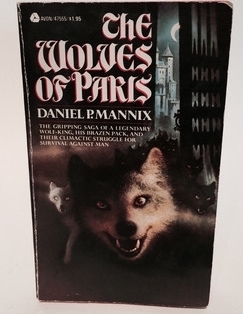
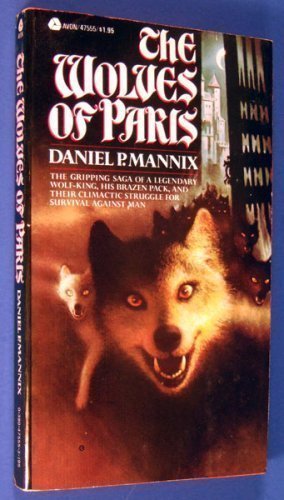

February 17, 2017
When I picked this up at a flee market a year ago, I never expected to enjoy it quite so much. I've been in love with wolves since I was first introduced to Julie of the Wolves in fifth grade, but let me just say that this is nothing like Jean Craighead George's book. What I liked about The Wolves of Paris was how in one chapter I would sympathize with Courtaud and his pack, while in the next it would be the poor peasants being mauled and eaten that I felt for; I get the sense that this is what Mannix wanted his readers to experience. There were some instances where my mouth literally dropped or I cringed because of a person/animal being killed by the wolves - the story is brutal all throughout, but these moments really hit hard. I think what really makes this book stand out to me, though, is the writing: it's very readable, but more than that, the descriptions of nature are fantastic ('autumn was fighting with summer,' 'the forests had disrobed for winter,' and these are only the examples I could find at the moment). My one real complaint would be that the last chapter underwhelmed me, because there was a big buildup to these wolves invading Paris and causing widespread pandemonium, yet it was covered in such a small span of pages that I felt cheated. Not that the events leading up to the climax weren't interesting, but I wish the story could have been lengthened out a bit since the wolves' siege of Paris is what Mannix based his story on.

January 6, 2019
I read this book originally (many times) when I was in middle and high school. The idea of wolves attacking and holding the city of Paris hostage fascinated me. I remembered this story recently when talking to a friend about wild animals and it took me only a little bit of time to find the novel and request it through interlibrary loan.
I wasn't disappointed.
The story is told mostly from the point of view of Courtaud, from his birth until his death. The time is the early 1400s, when the 100 Year War between France and England is still ongoing. The great hunts of the nobles to feed their castles have wiped out a lot of the wolves' natural prey. Enter Courtaud, whom Mannix supposes was actually part dog due to his unusual russet coloring and extreme size, as well as the noted difference of the shape of his skull and that of a normal wolf. In this story, Courtaud was the son of a wild wolf captured by a hunter and one of the alaunts. When the wolf mother is killed, Courtaud takes off, escaping with his life. Due to his lack of fear of humans, he starts out robbing them, but after escaping a wolf hunter, he takes up with a pack of wolves, eventually battling the lead wolf for the right to control the pack.
Being larger and with only a wariness, not fear, of humans, Courtaud leads his pack on to attacking animals wolves normally wouldn't, and, due to the man-made warring, the pack starts following a band of mercenaries. Their spoils become the wolves' food, indoctrinating them in the belief that man will provide - and also, that man can be food because a human wounded in battle was no match for the pack.
The wolves make their harassing way to Paris, killing cattle, sheep, and humans along the way, and take up a post outside the walls. With deaths from the plague and other issues, bodies are often thrown over the walls rather than buried, giving wolf packs in the area even more to eat. Despite numerous attempts to at least dissuade the wolves, the Parisians wake during one arctic morning to find the wolves in the city, attacking the citizens.
Based on a true story, Mannix imagines a very interesting life for Courtaud. Though some of the wolf scenarios are dated based on what we now know of wolf family behavior, the story still remains an intriguing look at a particular period of history and a creature, believed a werewolf, who held Paris between his jaws.
I wasn't disappointed.
The story is told mostly from the point of view of Courtaud, from his birth until his death. The time is the early 1400s, when the 100 Year War between France and England is still ongoing. The great hunts of the nobles to feed their castles have wiped out a lot of the wolves' natural prey. Enter Courtaud, whom Mannix supposes was actually part dog due to his unusual russet coloring and extreme size, as well as the noted difference of the shape of his skull and that of a normal wolf. In this story, Courtaud was the son of a wild wolf captured by a hunter and one of the alaunts. When the wolf mother is killed, Courtaud takes off, escaping with his life. Due to his lack of fear of humans, he starts out robbing them, but after escaping a wolf hunter, he takes up with a pack of wolves, eventually battling the lead wolf for the right to control the pack.
Being larger and with only a wariness, not fear, of humans, Courtaud leads his pack on to attacking animals wolves normally wouldn't, and, due to the man-made warring, the pack starts following a band of mercenaries. Their spoils become the wolves' food, indoctrinating them in the belief that man will provide - and also, that man can be food because a human wounded in battle was no match for the pack.
The wolves make their harassing way to Paris, killing cattle, sheep, and humans along the way, and take up a post outside the walls. With deaths from the plague and other issues, bodies are often thrown over the walls rather than buried, giving wolf packs in the area even more to eat. Despite numerous attempts to at least dissuade the wolves, the Parisians wake during one arctic morning to find the wolves in the city, attacking the citizens.
Based on a true story, Mannix imagines a very interesting life for Courtaud. Though some of the wolf scenarios are dated based on what we now know of wolf family behavior, the story still remains an intriguing look at a particular period of history and a creature, believed a werewolf, who held Paris between his jaws.

April 29, 2017
The Wolves of Paris is the fictionalised story of the terrifyingly real events that took place in France's capital during the unforgiving winter of 1450. An immense pack of wolves, lead by a huge, bold, reddish coloured wolf nicknamed Courtaud - or "bobtail", entered the city through the crumbling walls and hunted down any man, woman, or child they could.
Here, Mannix has made Courtaud a wolf-hybrid to account for his size and lack of fear when it comes to hunting men. This not only suits the story, but what we know of the real Courtaud, in terms of his size and colouration, lend this some credibility. In all likelihood though, the real Courtaud was a bona fide wolf, albeit an Iberian one, which tend to be reddish in colour.
The weaving in of the history of the 100-years-war, its affect on the landscapes and rural populations, lends the narrative considerable background, as well as considerable depth. Everything from hunting methods, to weapons, and the layout of 15th century Paris, the Ardennes, and everything in between has clearly been meticulously researched. The Courtaud of the story is raised in an unforgiving, harsh environment, both at the hands of man, and nature herself.
As the wolves learn to follow war parties in order to feast on the dead, a series of events is set in motion that escalates until Courtaud is legendary, and feared to be something unnatural. Yet we are privy to his wild nature, his zealous urge to protect his mate, and his duty to feed his pack. Mannix has gone out of his way to connect us to Courtaud and give us his point of view as best possible.
Although fiction, the book gives us great insight as to what it must have been like to live in the time Courtaud stalked the land. A good, old-fashioned 'animal POV' narrative based loosely on a real event and animal. Well worth a read.
Here, Mannix has made Courtaud a wolf-hybrid to account for his size and lack of fear when it comes to hunting men. This not only suits the story, but what we know of the real Courtaud, in terms of his size and colouration, lend this some credibility. In all likelihood though, the real Courtaud was a bona fide wolf, albeit an Iberian one, which tend to be reddish in colour.
The weaving in of the history of the 100-years-war, its affect on the landscapes and rural populations, lends the narrative considerable background, as well as considerable depth. Everything from hunting methods, to weapons, and the layout of 15th century Paris, the Ardennes, and everything in between has clearly been meticulously researched. The Courtaud of the story is raised in an unforgiving, harsh environment, both at the hands of man, and nature herself.
As the wolves learn to follow war parties in order to feast on the dead, a series of events is set in motion that escalates until Courtaud is legendary, and feared to be something unnatural. Yet we are privy to his wild nature, his zealous urge to protect his mate, and his duty to feed his pack. Mannix has gone out of his way to connect us to Courtaud and give us his point of view as best possible.
Although fiction, the book gives us great insight as to what it must have been like to live in the time Courtaud stalked the land. A good, old-fashioned 'animal POV' narrative based loosely on a real event and animal. Well worth a read.

June 24, 2020
This is one of my dozen or so favorite books of all time; given the literally thousands of books that I've read, that's more of a compliment than it might seem to a less voracious reader. Of that dozen or so, this is the ONLY one that none of my friends have ever heard of until I tell them about it. This little-known novel from 1978, virtiually unknown, holds up very well to a comparison with Jack London's "White Fang" and "Call of the Wild", two much better-known books that if bears a strong stylistic resemblance to. The events in this book are based on an actual historical series of events -- a pack of wolves terrorizing Paris and the surrounding countryside around 1440 -- but of course, all the details need to be ficionalized by the author, because there are very limited details in the historical record. The author does a remarkably good job of crafting a plausible backstory for the wolves, and filling in the details in a way that takes the legends of a supernatural werewolf leading the pack (which, it being 1440, of course there were such legends) and explaing them in a way that makes perfect sense in the natural world. His feel for the behaviors of wolves is excellent, and if his personifications of medaeival humans is somewhat stereotypical, well, those weren't the characters that the story focused on anyway. If you get the opportunity (there aren't many copies of this book extant at this point) by all means, read it. It deserves to be more widely-known than it is.

December 16, 2009
This was an interesting tale - told mostly from one wolf-mix's P.O.V. Being an older book, its look into how wolf packs operate was a bit dated. New research has emerged after this book's 1978 publication. Still, it was pretty exciting and Courtrand was certainly a sympathetic anti-hero. Other books like Dorothy Hearst's and David Clement-Davies' The Sight did a better, more entertaining and education job with the same subject matter, though the medieval setting was unique, and well-researched. I enjoyed this, but just didn't really love it. I was mostly annoyed at how this story could have been told in a better, and more thrilling, way.

July 4, 2021
3.5 - The concept of this book is so interesting. I really never even thought of historical fiction writings of actual historically famous animals so that intrigues me. I really enjoyed a lot of this book, but the hunting and tracking parts kind of got lengthy and dry. It was also, as you would expect, quite violent. But overall super interesting concept and good writing!
September 17, 2018
Like Jack London in 13th century France!
This author seems to have been inspired by London and the real life legend of the beast of Gevaudan.
W
This author seems to have been inspired by London and the real life legend of the beast of Gevaudan.
W

September 9, 2016
A great horror story from the wolves' point of view! I read most of Mannix's books -- mostly about the darker episodes of human history -- ages ago but had missed this one. I knew it was about the historical "siege of Paris" by a wolf pack and assumed incorrectly it was nonfiction. Instead, I found a broadly interpreted account of the events from a fanciful but believable lupine perspective . . . Red Fang of sorts, in 15th Century France. I don't know enough about actual wolf behavior to know how accurate the depictions of wolf instinct and intelligence are but Mannix certainly creates splendid animal characters without unduly humanizing them. This book would make a fine young adult novel, except that the events are often graphically horrendous, even disturbing. By the end, the story is a good parable for the ravages of war, wherein even beasts are reduced to new levels of bestiality and men can only survive by the most extreme countermeasures.

July 4, 2024
When left alone in their natural habitat, it is rare for wolves to ever attack humans. Most often, such attacks happen as a result of people naively trying to keep wolves as pets. Medieval French history books provide us with an outlier though. If scholars of these texts are to be believed, then a wolf led a reign of terror on Paris in the mid-15th century. The cult author Daniel P. Mannix tells this story, embellished with his own imagination, in his novel The Wolves of Paris.
As a young pup, Courtaud is introduced as a hybrid between a dog and a wolf, housed in the cellar of a citadel during the 100 Years War between England and France. The mutt is being raised to be a hunting dog in a team owned by the baron of the estate. One day, a band of Roman brigands breach the rubicon, enter the castle grounds, and slaughter all the people living there. They also kill most of the livestock and Courtaud is lucky to be spared as he escapes the violence before all the others dogs he knows die. Courtaud may be an animal, but if you think your childhood traumas compare in scale to his, you might want to reconsider.
During the winter, as the solitary Courtaud wanders alone in the Ardennes, a hunter comes after him, but after getting crushed in an avalanche, Courtaud samples his flesh, getting his first taste of human meat. This is a decisive moment in this soon-to-be outlaw’s dietary habits.
After wandering for some time in the northern mountains of France, Courtaud encounters a pack of wolves. He has to fight for his place in the pack and finally proves himself worthy after several scraps with the leader. He keeps fighting and eventually forces the alpha cane lupo to abdicate and Courtaud becomes the lord baron king of the pack. Along the way, he falls in love with a saucy young she-wolf named Silver and a wolf romance ensues. Although Mannix uses human traits to described the wolves’ behavior and point of view, there isn’t any gender identity crises here. This pack is made up of masculine men and effeminate women, by ferocious wild animal standards, without the gender confusion issues of 21st century America poisoning their thoughts. Otherwise, this section of the story goes into the lifestyles, habits, and behaviors of the wolf pack. It is almost like reading a script from a TV show on Animal Planet, but is also serves the purpose of developing Courtaud’s character.
The next big turning point comes when a band of hunters invade the forest where Courtaud and company live, hunting all the deer out of existence in order to stock their castle full of venison in preparation for the coming winter months. Since the deer are the wolves’ main source of food, the pack is brought to the brink of starvation and begin preying on people in a village to feed themselves. As horrifying as this may seem to members of the human race who don’t ordinarily think of themselves as a meal, it is clear to see that they are the cause of their own problem. Not respecting the wolf pack’s boundaries and killing off all their food results in the wolves’ retaliatory transgression into human territories as a last ditch attempt at survival. You may feel justifiable empathy for the victims, but Mannix shows how it is the human’s ignorance of nature that leads to their own demise.
The villagers then organize a hunting party to track and kill Courtaud, but eventually fail. This passage in the book can be challenging because Mannix introduces a lot of vocabulary related to the niche of hunting for sport in Europe. He puts you through a lot of trouble to learn new esoteric words that you know you will never use again unless you take up further study of the subject. It makes for awkward reading, but doesn’t last long enough to ruin the whole book.
Courtaud and the pack continue wandering in the wilderness, searching for food, until they reach the walls of Paris and occupy the hill of Montparnasse. They eat the corpses of dead bodies thrown outside the walls, attack livestock herders, linger on the sidelines of a battle in a nearby village in order to eat the men slain in the siege, and get chased off Montparnasse after losing a battle with a gang od wild boars. Eventually, they even breach the walls of Paris to find people to eat. It is a very action-driven novel punctuated by scenes explaining the desperation of hungry predators. But these predators are not portrayed as evil. They are simply acting according to their nature.
One of the great things about this novel is the way it tells the story from the wolves’ point of view. If there is any such thing as a charismatic wolf, it is embodied in the lead character of Courtaud. Mannix never overdoes this either. The language he uses to describe his version of events is sparse and simplistic, giving just enough detail for comprehension, but not so much that it becomes overdone. After all, how articulate could your average wild wolf actually be? A proper balance between accessibility and realism is maintained. We also see the human point of view, one which is not entirely unsympathetic. We can understand how they come to fear and hate Courtaud, but we also see how their shortsightedness, superstitions, Inquisition-style religious sadism, and stubborn insistence on continuing the 100 Years War make their situation a lot more dangerous than it needs to be.
Another great thing about this book is the descriptiveness. If you’re a sucker for nature writing, there is plenty to appreciate here. The atmosphere of the Ardennes is well done but the portrayal of shadowy, snow-clad forests and pastoral countrysides is even better. The gory scenes of wolves gorging themselves on deer and European homo sapiens is unsettling enough, but not overly-indulged in to the point of being campy. Again, it is another fine balance that Mannix has struck. Not all the description is great though; the prose starts slowing down towards the end of the story as if the author got tired of writing about one gruesome fight and feast after another. Thankfully he knew when to stop writing because dragging this on for too long would have turned it into a tedious bore.
Despite its brutality, The Wolves of Paris accomplishes what the author intended to do. He creates a sympathetic lead character in Courtaud, making him out to be not so much a villain but more of a force of nature doing what it needs to do out of a will to survive. Writing about a wolf from a wolf’s point of view, especially using human vernacular, is a risky undertaking. It could become pretentious, far fetched, or even cute (meant in the most derogatory sense of the word possible), but it doesn’t. Despite some clumsy and awkward passages, Daniel P. Mannix strikes all the right chords in a finely tuned balance. While not being one of the greatest novels ever written, it is a unique exercise in multiple perspectives. Obscure and underrated, let it remain that and be a secret gem for the few who venture into this territory.
As a young pup, Courtaud is introduced as a hybrid between a dog and a wolf, housed in the cellar of a citadel during the 100 Years War between England and France. The mutt is being raised to be a hunting dog in a team owned by the baron of the estate. One day, a band of Roman brigands breach the rubicon, enter the castle grounds, and slaughter all the people living there. They also kill most of the livestock and Courtaud is lucky to be spared as he escapes the violence before all the others dogs he knows die. Courtaud may be an animal, but if you think your childhood traumas compare in scale to his, you might want to reconsider.
During the winter, as the solitary Courtaud wanders alone in the Ardennes, a hunter comes after him, but after getting crushed in an avalanche, Courtaud samples his flesh, getting his first taste of human meat. This is a decisive moment in this soon-to-be outlaw’s dietary habits.
After wandering for some time in the northern mountains of France, Courtaud encounters a pack of wolves. He has to fight for his place in the pack and finally proves himself worthy after several scraps with the leader. He keeps fighting and eventually forces the alpha cane lupo to abdicate and Courtaud becomes the lord baron king of the pack. Along the way, he falls in love with a saucy young she-wolf named Silver and a wolf romance ensues. Although Mannix uses human traits to described the wolves’ behavior and point of view, there isn’t any gender identity crises here. This pack is made up of masculine men and effeminate women, by ferocious wild animal standards, without the gender confusion issues of 21st century America poisoning their thoughts. Otherwise, this section of the story goes into the lifestyles, habits, and behaviors of the wolf pack. It is almost like reading a script from a TV show on Animal Planet, but is also serves the purpose of developing Courtaud’s character.
The next big turning point comes when a band of hunters invade the forest where Courtaud and company live, hunting all the deer out of existence in order to stock their castle full of venison in preparation for the coming winter months. Since the deer are the wolves’ main source of food, the pack is brought to the brink of starvation and begin preying on people in a village to feed themselves. As horrifying as this may seem to members of the human race who don’t ordinarily think of themselves as a meal, it is clear to see that they are the cause of their own problem. Not respecting the wolf pack’s boundaries and killing off all their food results in the wolves’ retaliatory transgression into human territories as a last ditch attempt at survival. You may feel justifiable empathy for the victims, but Mannix shows how it is the human’s ignorance of nature that leads to their own demise.
The villagers then organize a hunting party to track and kill Courtaud, but eventually fail. This passage in the book can be challenging because Mannix introduces a lot of vocabulary related to the niche of hunting for sport in Europe. He puts you through a lot of trouble to learn new esoteric words that you know you will never use again unless you take up further study of the subject. It makes for awkward reading, but doesn’t last long enough to ruin the whole book.
Courtaud and the pack continue wandering in the wilderness, searching for food, until they reach the walls of Paris and occupy the hill of Montparnasse. They eat the corpses of dead bodies thrown outside the walls, attack livestock herders, linger on the sidelines of a battle in a nearby village in order to eat the men slain in the siege, and get chased off Montparnasse after losing a battle with a gang od wild boars. Eventually, they even breach the walls of Paris to find people to eat. It is a very action-driven novel punctuated by scenes explaining the desperation of hungry predators. But these predators are not portrayed as evil. They are simply acting according to their nature.
One of the great things about this novel is the way it tells the story from the wolves’ point of view. If there is any such thing as a charismatic wolf, it is embodied in the lead character of Courtaud. Mannix never overdoes this either. The language he uses to describe his version of events is sparse and simplistic, giving just enough detail for comprehension, but not so much that it becomes overdone. After all, how articulate could your average wild wolf actually be? A proper balance between accessibility and realism is maintained. We also see the human point of view, one which is not entirely unsympathetic. We can understand how they come to fear and hate Courtaud, but we also see how their shortsightedness, superstitions, Inquisition-style religious sadism, and stubborn insistence on continuing the 100 Years War make their situation a lot more dangerous than it needs to be.
Another great thing about this book is the descriptiveness. If you’re a sucker for nature writing, there is plenty to appreciate here. The atmosphere of the Ardennes is well done but the portrayal of shadowy, snow-clad forests and pastoral countrysides is even better. The gory scenes of wolves gorging themselves on deer and European homo sapiens is unsettling enough, but not overly-indulged in to the point of being campy. Again, it is another fine balance that Mannix has struck. Not all the description is great though; the prose starts slowing down towards the end of the story as if the author got tired of writing about one gruesome fight and feast after another. Thankfully he knew when to stop writing because dragging this on for too long would have turned it into a tedious bore.
Despite its brutality, The Wolves of Paris accomplishes what the author intended to do. He creates a sympathetic lead character in Courtaud, making him out to be not so much a villain but more of a force of nature doing what it needs to do out of a will to survive. Writing about a wolf from a wolf’s point of view, especially using human vernacular, is a risky undertaking. It could become pretentious, far fetched, or even cute (meant in the most derogatory sense of the word possible), but it doesn’t. Despite some clumsy and awkward passages, Daniel P. Mannix strikes all the right chords in a finely tuned balance. While not being one of the greatest novels ever written, it is a unique exercise in multiple perspectives. Obscure and underrated, let it remain that and be a secret gem for the few who venture into this territory.
February 11, 2021
I’ve wanted to read this book for nearly a decade. Since it’s out of print, I finally bought a copy off eBay. And it was worth it! Extraordinarily detailed, incredibly brutal, and filled with great historical tidbits. A bloody good time!

August 7, 2012
One of my favorite books as a kid.

April 24, 2015
This was a pretty fun read, and educational, too.

August 8, 2020
My nearly 9 yo really enjoyed this, but knocked off a star for being a bit too gory.

September 14, 2010
A book I read as a kid and really enjoyed.

Read
August 8, 2022I listened to @carl.benjamin.100 compelling segment on @lotuseaters_com about a proposal to reintroduce wolves to the countryside and he told the story of #courtaud the leader of a wolfpack that terrorised France during the Hundred Years’ War. @carlbenjamin100 is a great storyteller and I was inspired to find out more about the tale and picked up #thewolvesofparis by #danielpmannix published in 1978 it’s a fascinating combination of history, nature, hunting, warfare, survivalism and zoology. Mostly told from the perspective of the wolves it doesn’t tend to anthropomorphise the wolves too much but speaks more about the behaviour of wolves in realistic terms. Much of the story must have been given some artistic licence but it’s still a good read. At first I was concerned that this might be more of a children’s book - but if it is the children of the late 1970s were hardcore because this features graphic, realistic and brutal violence - particularly the savage attacks made by the wolves against men, women and children.
July 19, 2025
It doesn’t count as a spoiler - because we all know there are no wolves running around in Paris today - but there is no “happy ending” to this story. Nevertheless, it is a well-researched and well-told story about a world very different from the one we now live in.
The focus is on the wolves, of course, and it is expected that readers will identify with the “Wolf King” - and understand where the tradition of naming a dog “King” came from. One learns (more) about the social and family structure of wolf packs, their daily habits - and why the ‘evil power’ in “Peter and the Wolf” was the four-legged co-star. And one learns where the habits of our canine pets of today behave the way they do toward one another. And, perhaps, how a ten-pound terrier views itself as weighing 80 pounds and having three-inch teeth when confronting a larger dog.
Look elsewhere for warm, fuzzy feelings - but this book is an enjoyable read.
The focus is on the wolves, of course, and it is expected that readers will identify with the “Wolf King” - and understand where the tradition of naming a dog “King” came from. One learns (more) about the social and family structure of wolf packs, their daily habits - and why the ‘evil power’ in “Peter and the Wolf” was the four-legged co-star. And one learns where the habits of our canine pets of today behave the way they do toward one another. And, perhaps, how a ten-pound terrier views itself as weighing 80 pounds and having three-inch teeth when confronting a larger dog.
Look elsewhere for warm, fuzzy feelings - but this book is an enjoyable read.

August 13, 2023
This is a very interesting novel based on the true story about a man eating feral wolf pack led by a wolf hybrid Courtaud.
As people believed Courtaud was a lougarou or werewolf and parts of his life are fictionalized, I didn’t mind the outdated wolf behavior, since the story was well written for its time.
I thouroughly enjoyed the book, the characters, and it fits well into a horror category being both bloody and gory.
As people believed Courtaud was a lougarou or werewolf and parts of his life are fictionalized, I didn’t mind the outdated wolf behavior, since the story was well written for its time.
I thouroughly enjoyed the book, the characters, and it fits well into a horror category being both bloody and gory.
October 13, 2025
As with his other animal books, Daniel Mannix manages to skillfully put the reader into the mind of the “Wolves of Paris,” allowing them to experience his interpretation of the events that happened in 15th century France. The reader is able to learn an incredible amount about the lives of wolves and understand them in a new way, tracking how they became the “man eaters” that terrorized the city of Paris.

Did Not Finish
December 27, 2021It's well written and rich with detail but there's too much brutality and animal death for me to continue. I guess I've grown very soft over the years.

October 4, 2022
A gripping semi-fictionalized account of the pack of wolves that terrorized central France in the winter of 1450, The Wolves of Paris is split between the perspectives of the creatures themselves and the man tasked with their destruction, and will likely be of particular interest for fans of medieval history and xenofiction. [7/10]

August 3, 2021
Aside from The Fox and the Hound, The Wolves of Paris stands as one of Daniel P. Mannix’s most compelling novels, offering a departure from his usual storytelling approach. Unlike The Last Eagle and Troubled Waters, which focus solely on the daily lives of animals, or his more episodic works like The Healer, The Wolves of Paris delivers a tightly plotted narrative centered around a unique protagonist—a wolf-dog born and raised among humans who eventually rises to lead a pack and becomes a feared man-eater. This distinct storyline, set against the historical backdrop of medieval France, feels refreshing while still exhibiting Mannix’s hallmark realism and attention to detail.
In this novel, Mannix skillfully combines his usual animal realism with a more structured narrative. Like The Fox and the Hound and The Killers, The Wolves of Paris uses an escalating conflict to drive the plot. However, where those novels explore dual protagonists caught in a fatal clash, this story offers a new angle with a wolf-dog protagonist, bringing in elements of loyalty, survival, and betrayal in the face of humanity’s hostility. This unique perspective gives the book a fresh quality without sacrificing the vivid prose and meticulous research that define Mannix's work.
For readers who were drawn to Mannix through The Fox and the Hound, The Wolves of Paris serves as an excellent follow-up, especially for those seeking another well-structured plot with high stakes and moral complexity. Of all Mannix’s books, The Wolves of Paris and The Fox and the Hound stand out as his most successful in terms of narrative focus and pacing, cementing them as essential reads for fans of his realistic animal tales.
In this novel, Mannix skillfully combines his usual animal realism with a more structured narrative. Like The Fox and the Hound and The Killers, The Wolves of Paris uses an escalating conflict to drive the plot. However, where those novels explore dual protagonists caught in a fatal clash, this story offers a new angle with a wolf-dog protagonist, bringing in elements of loyalty, survival, and betrayal in the face of humanity’s hostility. This unique perspective gives the book a fresh quality without sacrificing the vivid prose and meticulous research that define Mannix's work.
For readers who were drawn to Mannix through The Fox and the Hound, The Wolves of Paris serves as an excellent follow-up, especially for those seeking another well-structured plot with high stakes and moral complexity. Of all Mannix’s books, The Wolves of Paris and The Fox and the Hound stand out as his most successful in terms of narrative focus and pacing, cementing them as essential reads for fans of his realistic animal tales.

April 16, 2025
A good book about hungry wolves.
The Wolves of Paris certainly isn’t something easy to read, per se, due to older language and the use of French terms described only once or twice yet seen multiple times paired with quick but in-depth descriptions of violence and death, but it certainly is a good one.
I enjoyed Mannix’s take on Courtaud and his depiction of the events. I did also like how even through the eyes of Courtaud, the wolf king himself, the story isn’t written in first-person or written as if the wolf has the mind or abilities of a human—regardless of what the French people thought in this era. He is a wolf, doing as a wolf will do in face of hardships. The humans that encounter him do give him human characteristics, as humans do, but Courtaud is not speaking or thinking in any human language which is appreciated. In my opinion, it really added to the fact that the book is based on a true historical event and Courtaud is based on a real Courtaud that had haunted Paris way back in old times.
With its action scenes that never seemed to stop, I could feel myself read faster with each new twist and shock. Maybe I like wolves and stories where animals outsmart humans in particularly vicious ways, but I think the way the hunts are written gives the same feeling as if the reader were running with Courtaud and his rage and fear became their own.
Overall, I definitely recommend giving The Wolves of Paris a read if you don’t mind giving a book about man-eating wolves described quite vividly and meeting a fitting, if slightly disappointing end a shot.
The Wolves of Paris certainly isn’t something easy to read, per se, due to older language and the use of French terms described only once or twice yet seen multiple times paired with quick but in-depth descriptions of violence and death, but it certainly is a good one.
I enjoyed Mannix’s take on Courtaud and his depiction of the events. I did also like how even through the eyes of Courtaud, the wolf king himself, the story isn’t written in first-person or written as if the wolf has the mind or abilities of a human—regardless of what the French people thought in this era. He is a wolf, doing as a wolf will do in face of hardships. The humans that encounter him do give him human characteristics, as humans do, but Courtaud is not speaking or thinking in any human language which is appreciated. In my opinion, it really added to the fact that the book is based on a true historical event and Courtaud is based on a real Courtaud that had haunted Paris way back in old times.
With its action scenes that never seemed to stop, I could feel myself read faster with each new twist and shock. Maybe I like wolves and stories where animals outsmart humans in particularly vicious ways, but I think the way the hunts are written gives the same feeling as if the reader were running with Courtaud and his rage and fear became their own.
Overall, I definitely recommend giving The Wolves of Paris a read if you don’t mind giving a book about man-eating wolves described quite vividly and meeting a fitting, if slightly disappointing end a shot.

February 20, 2016
The Wolves of Paris is what I have long-felt should be the way of the world-- arrogant man turned into the hunted, and forced to face that his dominion over nature is mostly in his own mind.
The plot of this book is a little like that childhood dream of giving hunted animals guns and setting them against the humans who believe it is their right to kill them-- only done more realistically. I guess after that there's no need for me to say, but just to be sure, I am 100% behind the wolves in this story. And that is because I believe there should be a natural balance in the world, but then man comes in with his wars and his weapons and his climate-changing technology and disrupts that balance. In that sense, when elements of nature do strike out against us, it is wholly deserved.
For me, this book is a reminder that we should not get so caught up in ourselves and humanity that we forget we're not the only sentient creatures out there. Wolves have to eat, and without our weaponry and fortifications, man is often the easiest prey on the market.
The plot of this book is a little like that childhood dream of giving hunted animals guns and setting them against the humans who believe it is their right to kill them-- only done more realistically. I guess after that there's no need for me to say, but just to be sure, I am 100% behind the wolves in this story. And that is because I believe there should be a natural balance in the world, but then man comes in with his wars and his weapons and his climate-changing technology and disrupts that balance. In that sense, when elements of nature do strike out against us, it is wholly deserved.
For me, this book is a reminder that we should not get so caught up in ourselves and humanity that we forget we're not the only sentient creatures out there. Wolves have to eat, and without our weaponry and fortifications, man is often the easiest prey on the market.

Want to Read
August 21, 2014Recommended by Marquise.
Displaying 1 - 25 of 25 reviews