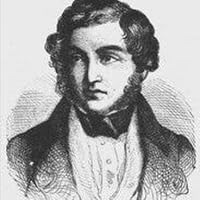
Fulcher of Chartres (c.1059 in or near Chartres - after 1128) was a priest and participated in the First Crusade. He served Baldwin I of Jerusalem for many years, and wrote a chronicle of the Crusade, writing in Latin.
3.5-Fulcher’s work is a critical source for the first crusade and the development of the crusader states (for Baldwin II, he is practically alone as an account) and all historians owe him a debt of gratitude for having written, for we would be much the poorer without it. That is its foremost merit, but there are also others. Fulcher had an eye for geography and his descriptions of the natural environment that surrounds the events is often fascinating (whether or not he cribbed this from Josephus, his own individual touch is still noteworthy). His fervent, and honestly fanatical belief means that he is willing to see history in a larger, romantic sense, which makes for exciting reading and gives a certainty of cause to the work. His talent for relaying factual information, and eye witness accounts is a major boon when many authors wrote at a considerable distance. Also interesting is his committment to the settler project of the Kingdom of Jerusalem, which means he often works as a promoter who promises new lives, old timey morals, free land, plenty of money, women easily “enticed” to marriage, and closer family ties away from the increasingly morally corrupt European heartlands. In this sense, Fulcher is immensely interesting in posing some of the core sentiments of colonialism across cultures in a very early period of time.
There are still major issues however. Fulcher loses focus to a great extent in Book III, as Baldwin II is simply not as great a figure as Baldwin I, who is the anchor of Book II (the crusading force and cause is the main anchor of Book I and Fulcher had other narratives to help him so that book is more insulated from his misgivings as an author). Earlier claims made for Fulcher’s “great learning” is nowadays severely tempered if not completely turned on their heads, as Fulcher is simply not very conservant with much in the way of wider Latin literature, and through his language and rhetoric it shows. Support for this conclusion can be found in contemporary readership as well, as the second Book I reached the west, it was rewritten by many more learned and well read authors, such as Guibert of Nogent, who loved the facts and the zeal but disliked its presentation. When William of Tyre wrote his masterpiece decades later (a work that owes much to Fulcher), it meant Fulcher was throughly in disfavor. Another more personal issue with reading Fulcher is the other side of his passion of zeal, which is his occassionally disgusting lack of human kindness, and in fact humanity. This is not to project back in time, as many contemporary medieval historians, for the crusades and otherwise, operated with a great deal of sorrow, horror and self-reflection about the horrors of earthly violence. Not our Fulcher. Reading Fulcher is to bear with a man who makes shitty jokes when a crowd of captive women are speared to death one by one as they are forced to watch each other die. This is an author who notes approvingly that the corpses of enemy civilians, the elderly, the children, and the women were burned after they were killed to make sure any money they had on (or in them) didn’t get wasted. These are not isolated incidents, and Fulcher is almost uniquely crude in his blunt liking of such events even amongst his comtemporaries. Then again perhaps, that a Fulcher got to write is a blessing to historians nonetheless, as it meant that the sentiments he represents got preserved, along with seemlier recountings.
Reading this book is like reading the news of today. All the same places in the Middle East that hit our headlines were being fought over 900 years ago.
Fulcher was an eyewitness to much that occurred. He accompanied the First Crusade and he stayed in Jerusalem after its capture. Antioch, Aleppo and Edessa were also captured and were semi-independent kingdoms distant from Jerusalem.
Many knights returned home at that point and the battles that went on, almost every year, often involved only a few hundred knights, and a couple of thousand soldiers on each side.
Just like the Israelite conquest of Canaan, the Crusaders were hampered by an inability to capture all the fortified cities on the coast. They always had to watch out for attacks from the rear when out campaigning.
From time to time Crusader leaders were captured until ransoms were paid. Sometimes alliances were then formed with the Turkish and Arab rulers who had been paid! Sometimes they did home to the Emperor in Constantinople who claimed these lands, sometimes they fought him.
These were troubled lands, they have been so again for most of the last 100 years with no end to that in sight.
An essential primary source on the First Crusade and the reigns of both Baldwin I and Baldwin II. The chronicle is an invaluable eyewitness account that, in most cases, can be relied upon for historical accuracy. Highly recommended for anyone interested in the crusades or the time period.