

What do you think?

But is it Art
In the art world at the beginning of the 21st century many strange, even shocking, things qualify as art. In this book, Cynthia Freeland explains why innovation and controversy are valued in the arts, weaving together philosophy and art theory with many thought-provoking examples. She discusses blood, beauty, culture, money, museums, sex, and politics, clarifying contemporary and historical accounts of the nature, function, and interpretation of the arts. Freeland also propels us into the future by surveying state-of-the-art web sites, along with cutting-edge research on the brain's role in perceiving art. This book engages with the big debates surrounding our responses to art and should prove a useful introduction to anyone interested in thinking about art
232 pages, Hardcover
First published January 1, 2001
About the author
Cynthia A. Freeland
14 books25 followersCynthia A. Freeland is Associate Professor of Philosophy and Director of Womens Studies at the University of Houston. She has published several essays on aesthetics and film, and is the coeditor of Film and Philosophy (1995).
Ratings & Reviews
Friends & Following
Create a free account to discover what your friends think of this book!
Community Reviews
Displaying 1 - 30 of 137 reviews

March 15, 2016

A most accessible short introduction to not only art theory but also the philosophy of art and aesthetics, Cynthia Freeland’s approach is to provide historical and cultural context for the frequently asked question: “But is it art?” As a way of sharing some of the book’s content, below are several highlights:
In the chapter Blood and Beauty we are introduced to modern artists who use blood, piss and other bodily fluids to produce their artwork. The general public finds such works disgusting, as Andres Serrano’s Piss Christ made with the artist’s own urine and a wooden crucifix.
An expert art critic defends Serrano’s work citing 1) how the artist expertly employed a sophisticated but difficult process of photography (the work’s formal, material properties), 2) the artist is Catholic and part Honduran, part Afro-Cuban, with long traditions of blood and bodily fluids as part of religious rituals (the work’s content), and 3) how Serrano is part of a long Spanish tradition with artists such as Francisco Goya painting violent bloody scenes (this art is part of a tradition).
The author counters how we are now living in a modern secular world and the community of museumgoers is much different than a community of, say, medieval Catholics or the ancient Mayan culture. Personally, I agree – people today visit a museum or gallery to see something really worth seeing, works that are visually striking, imaginative and part of a rich artistic tradition; they don’t go to museums to be disgusted, insulted or degraded. So when people witness cans of shit and the like in an art museum and hear the work justified by such reasons noted above, they say: “Yeah, yeah, yeah . . . but is it art, really?”

People today visit a museum or gallery to see something really worth seeing, works that are visually striking, imaginative and part of a rich artistic tradition.
Arthur Danto is cited as saying how in our modern world a work of art is an object that embodies a meaning. Thus, if in some way the art world sees meaning in an artist’s work, then that work is a work of art. Such a pluralist view helps us understand why artwork featuring piss and excrement or Andy Warhol Brillo Boxes or Damien Hirst’s dead shark are now accepted as art. Meanwhile, the average museumgoer listens to such theories and says: “Yeah, yeah, yeah . . . but is it art, really?
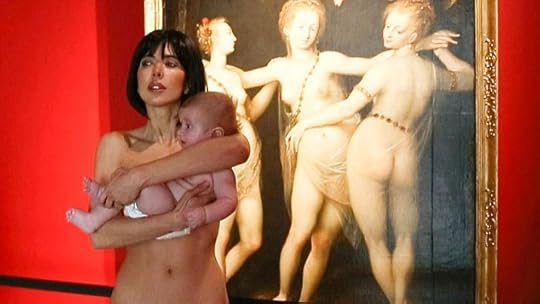
Performance artist Milo Moire walks through a gallery nude holding a baby – her performance is her art. But many people ask: “Yeah, yeah yeah . . . but it is art, really?
In 1974, an American anthropologist encouraged members of a western Mexican tribe to stick with their own traditional symbols and not include such western images as Mickey Mouse and Automobiles. Over the last forty years this has become a real issue – the modern art collector wants “traditional” art from traditional tribespeople but those tribespeople frequently love to incorporate the modern world into their art. One of my favorite examples: a New Guinea shaman was leading a lively tribe ritual encircled by many Westerners with their cameras. The shaman was wearing a black Oakland Raiders T-shirt. Westerners asks if he could take off the T-shirt so they could photo a traditional ritual. The shaman refused as he was very proud of his Raiders T-shirt. Go black and silver!
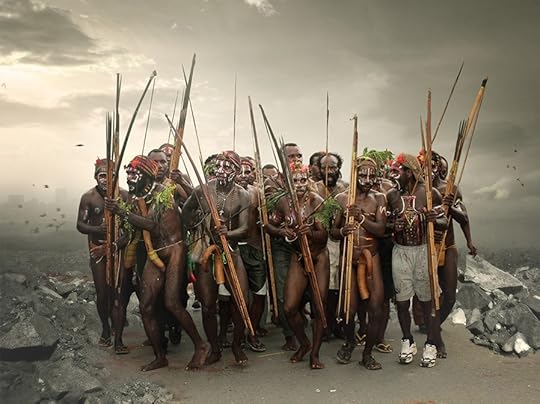
New Guinea tribesman marching as part of an elaborate ritual. Notice the guy on the right with baseball cap, basketball shorts and white sneakers. Like it or not, we are now in one global world culture. Some might ask: “Yeah, yeah, yeah . . . but is it authentic traditional art, really?”
Although many museums have attempted to reach out to a wider audience, the typical profile of a museumgoer remains a person college educated and among the higher income brackets. Some cities and communities have moved beyond the confines of museums, displaying public art for all to see.
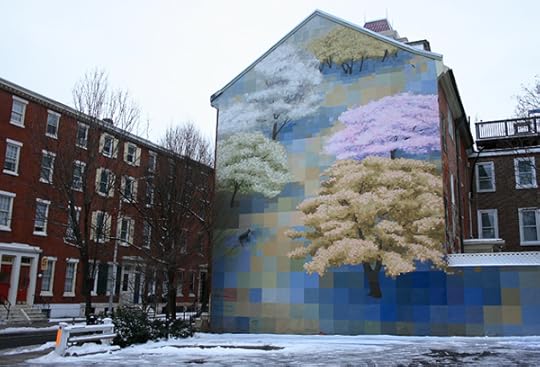
I’m proud to say my own city of Philadelphia is the city of murals, with nearly 4,000 - yes, that’s FOUR THOUSAND - murals throughout the city, created on the walls of commercial buildings or residences throughout the city, including all neighborhoods. A great way to make art a part of everybody’s everyday life.
Cynthia Freeland touches a number of other subjects that have triggered much debate over the last years and are even more pressing in our current world, topics such as gender and art in the digital age. Again, such an accessible and enjoyable book to read for anybody interested in the world of art.
July 28, 2026
نمیتونم بگم کتاب بدی بود. چون کتاب بدی نبود. کتاب خوبی بود. الحق و والانصاف کلیات رو خوب گفته بود و ترجمۀ خوبی هم داشت.
از همه بیشتر هم برام نظریۀ هنر جان دیویی جالبیت داشت که مجلوب شدم بیشتر درموردش بخونم.
و البته این بحث مرکزی و اصلی که چی هنره و چی هنر نیست که در مرکز ماجرا بود هم خوب بود.
از همه بیشتر هم برام نظریۀ هنر جان دیویی جالبیت داشت که مجلوب شدم بیشتر درموردش بخونم.
و البته این بحث مرکزی و اصلی که چی هنره و چی هنر نیست که در مرکز ماجرا بود هم خوب بود.
October 22, 2013
A very easy to read overview of a few art theories (bad on Kant; okay on Hume; good on feminism/ritual theory), and Freeland's chosen theory is a solid one as far as it goes. She has Dewey's idea that art is somehow metonymic of a 'culture' and can be understood cognitively as well as emotionally or aesthetically + institutional art theory's point that art is just what a community says art is.
But she never deals with the obvious objection: institutional art theory can only exist in modern and post-modern contexts. This is difficult to express without self-contradiction, I apologize: if art isn't cut off from everyday life (e.g., stained glass windows are set in the context of prayer rather than a museum), it makes no sense to have an institutional art theory. Now consider the social and cultural requirements for a theory of this kind, and ask yourself if this is the kind of art theory you want. Maybe it is, but maybe we want a theory that's more aspirational.
For instance, I'm worried about the effect that institutional art theory has on the future production of art: it seems to damn us to endless cycles of critique and recuperation, of shocks that are shocking for about fifteen seconds before they get commodified by those who have the money to tell the rest of us what art might be (and that includes 'shocks' like performance art that supposedly resists commodification, but in much the same way that tie-died T-shirts resisted commodification, i.e., not much). In this situation, Dewey's art is metonymic of culture bit suggests very little about our culture other than the fact that it's decadent, unimaginative, backward looking and slightly pathetic. And I'm pretty sure there's more going on than that.
Anyway, this is a thought-provoking book that you can read after lunch and before afternoon tea.
But she never deals with the obvious objection: institutional art theory can only exist in modern and post-modern contexts. This is difficult to express without self-contradiction, I apologize: if art isn't cut off from everyday life (e.g., stained glass windows are set in the context of prayer rather than a museum), it makes no sense to have an institutional art theory. Now consider the social and cultural requirements for a theory of this kind, and ask yourself if this is the kind of art theory you want. Maybe it is, but maybe we want a theory that's more aspirational.
For instance, I'm worried about the effect that institutional art theory has on the future production of art: it seems to damn us to endless cycles of critique and recuperation, of shocks that are shocking for about fifteen seconds before they get commodified by those who have the money to tell the rest of us what art might be (and that includes 'shocks' like performance art that supposedly resists commodification, but in much the same way that tie-died T-shirts resisted commodification, i.e., not much). In this situation, Dewey's art is metonymic of culture bit suggests very little about our culture other than the fact that it's decadent, unimaginative, backward looking and slightly pathetic. And I'm pretty sure there's more going on than that.
Anyway, this is a thought-provoking book that you can read after lunch and before afternoon tea.
August 31, 2021
{3.5*}
Cynithia Freeland discusses art from a philosophical point of view.
She starts with a grounding of art and aesthetic theory; referring to Aristotle, Kant, Hume, Nietzsche, Arthur Danto, John Dewey. Then she moves onto the language of art, looking at interaction and interpretations, and also goes into the relating to art from other cultures. After this Freeland presents how museums, commerce and political agendas all play a part in defining what (high) art is.
Then Freeland looks at the inclusion of art, particularly looking at women LGBTQ+ and ethnic groups, citing views from Linda Nochlin, Christine Battersby and Marcia J Citron. This is expanded further info discussions about genius and inclusivity. It wraps up with first looking at how we process and comprehend art before moving towards the digitised world.
In presenting her views, Freeland looks broader than high art, citing many movies, along with some theatre, music, photography, digital and web art and novels.
Overall, I wouldn’t say I enjoyed reading this but it left me loads to think about.
Cynithia Freeland discusses art from a philosophical point of view.
She starts with a grounding of art and aesthetic theory; referring to Aristotle, Kant, Hume, Nietzsche, Arthur Danto, John Dewey. Then she moves onto the language of art, looking at interaction and interpretations, and also goes into the relating to art from other cultures. After this Freeland presents how museums, commerce and political agendas all play a part in defining what (high) art is.
Then Freeland looks at the inclusion of art, particularly looking at women LGBTQ+ and ethnic groups, citing views from Linda Nochlin, Christine Battersby and Marcia J Citron. This is expanded further info discussions about genius and inclusivity. It wraps up with first looking at how we process and comprehend art before moving towards the digitised world.
In presenting her views, Freeland looks broader than high art, citing many movies, along with some theatre, music, photography, digital and web art and novels.
Overall, I wouldn’t say I enjoyed reading this but it left me loads to think about.

November 5, 2013
I had hoped for a lot more ...
Cynthia Freeland's small book (Oxford, $14.95, 208 tiny pages) posed the question but never delivered any kind of satisfactory answer -- though to be fair, no one has ever really come with a satisfactory practical or philosophical definition of art. For many, of course, modern art (whatever that may be) doesn't really qualify, because a) the belief is that anyone can do it; b) it's ugly; and c) it's meaningless. On the other hand, museums are full of art that many don't think of as qualifying, and the artists that make those pieces can do quite well financially.
But if you were looking for some kind of insights that might shed some light on why those questions go unanswered, this book does not contain them. Maybe someday someone will be able to articulate a definition of art that allows for medieval religious paintings, meticulous and gorgeous Hudson River School landscapes and urinals tilted on their side to all fit, but that time is definitely not now, and that book is definitely not "But Is It Art?"
Cynthia Freeland's small book (Oxford, $14.95, 208 tiny pages) posed the question but never delivered any kind of satisfactory answer -- though to be fair, no one has ever really come with a satisfactory practical or philosophical definition of art. For many, of course, modern art (whatever that may be) doesn't really qualify, because a) the belief is that anyone can do it; b) it's ugly; and c) it's meaningless. On the other hand, museums are full of art that many don't think of as qualifying, and the artists that make those pieces can do quite well financially.
But if you were looking for some kind of insights that might shed some light on why those questions go unanswered, this book does not contain them. Maybe someday someone will be able to articulate a definition of art that allows for medieval religious paintings, meticulous and gorgeous Hudson River School landscapes and urinals tilted on their side to all fit, but that time is definitely not now, and that book is definitely not "But Is It Art?"

February 12, 2022
The ritual, cultural, feminist, shock-value and other parts were those that I gained the most from; I was already at least somewhat aware of a great deal else. Nonetheless, this is good though I suppose kind of jumpy introduction to the philosophy of art and aesthetics.

March 18, 2017
Μια πολύ καλή εισαγωγή στις διάφορες θεωρίες της τέχνης, με πολύ απλή γλώσσα και χωρίς τη σνομπ κι ακατάληπτη ρητορική άλλων βιβλίων του είδους, ιδανικό είτε για εισαγωγή στο θέμα, είτε για να εμπλουτίσει κάποιος τις γνώσεις του.

Read
January 18, 2023فکر میکنم از مهم ترین کتابهایی که توی زندگیم خوندم این کتابه
March 12, 2022
Ært 🤌
Great intro to the topic for me! A bit less content than I would hope, but surveys cultural attitudes towards art, art mediums, presentation mediums, the difficulty of art and class structures and what constitutes “good art,” art’s surrounding structures vs. individual purpose and design very well
Great intro to the topic for me! A bit less content than I would hope, but surveys cultural attitudes towards art, art mediums, presentation mediums, the difficulty of art and class structures and what constitutes “good art,” art’s surrounding structures vs. individual purpose and design very well
July 27, 2019
فصل دختران چریکش برام جالب لود.

July 22, 2022
Solid but I do think the digital arts and visual media chapter has aged poorly.

January 17, 2022
As much as there is value to a small, easily readable book about art, there are various limitations that come with the format (and the author's writing, sometimes).
A great positive in the book is that it is accessible - the theories are presented in an understandable, non-pretentious way, which can help a lot of people who want to get into art analysis but don't know where to start from.
That being said, I think this is not the best book to read if you are looking for a fruitful introduction to art theory. Due to its small size, the book glosses over a lot of information that can prove useful for the novice reader. The topics are rushed, with examples thrown in here and there with no care for organisation and overall structure, it may be confusing and discouraging!
If I was rating this as an OVERVIEW of art theory I would have given it a 3, however, the work claims to be an INTRODUCTION. I understood it quite well due to my prior knowledge of the subject but I am afraid this might not be the case for the audience the book presents itself to.
Bummer, the first chapter was really good, then it just went downhill. :(
If you want a good recommendation for understanding art theory, look for John Berger's "Ways of Seeing". Now that book made a great impression on me, I still think about it so often.
A great positive in the book is that it is accessible - the theories are presented in an understandable, non-pretentious way, which can help a lot of people who want to get into art analysis but don't know where to start from.
That being said, I think this is not the best book to read if you are looking for a fruitful introduction to art theory. Due to its small size, the book glosses over a lot of information that can prove useful for the novice reader. The topics are rushed, with examples thrown in here and there with no care for organisation and overall structure, it may be confusing and discouraging!
If I was rating this as an OVERVIEW of art theory I would have given it a 3, however, the work claims to be an INTRODUCTION. I understood it quite well due to my prior knowledge of the subject but I am afraid this might not be the case for the audience the book presents itself to.
Bummer, the first chapter was really good, then it just went downhill. :(
If you want a good recommendation for understanding art theory, look for John Berger's "Ways of Seeing". Now that book made a great impression on me, I still think about it so often.
January 15, 2008
El libro me parece una sencilla y práctica introducción a la apreciación artística. Si bien me parece que los capítulos centrales están fuera de lugar - aquellos que hablan sobre la cuestión monetaria en el arte y de la Guerrilla Girls que no vienen a cuento sobre todo porque en la conclusión de sendos capítulos Freeland se opone a la visión del arte tanto desde la perspectiva económica como sexista - el capítulo introductorio y el que habla sobre las perspectivas modernas y posmodernas son interesantísimos, no sólo porque la información que brinda es útil, sino porque fomenta el deseo de conocer a los autores tratados, sobre todo Foucault y Baudrillard.
Si bien, a final de cuentas la pregunta sobre qué es el arte queda un poco en el aire, al menos Freeland nos ayuda a comprender el por qué obras grotescas como la de Damien Hirst o absurdas como las de Andy Warhol son consideradas arte.
Si bien, a final de cuentas la pregunta sobre qué es el arte queda un poco en el aire, al menos Freeland nos ayuda a comprender el por qué obras grotescas como la de Damien Hirst o absurdas como las de Andy Warhol son consideradas arte.

June 15, 2018
Chapter 2 and 6 were fairly worthwhile chapters. They went through many Art Theories with thoroughness and expanded on some complex ideas without becoming bloated. Definitely works as an excellent spring board to dive into Art Theories on a more in-depth level. I thought her sections through early Philosophers were a bit dodgy and simplistic (i.e. Plato, Aristotle, and Kant), but they would take some time to unpack to a fuller extent.
The other chapters, however, were sloppy and at times even confusing simply because her logic jumped around so much. She seems to focus on only a few specific points in History/Art History to illustrate/prove her points, which makes them flimsy.
It's not the most well-structured book on the topic I've read. Definitely does not follow a linear form of logic and comes across very scattered.
All in all, it's not the worst Art Theory text I've read, but it's also not something I'd necessarily recommend.
The other chapters, however, were sloppy and at times even confusing simply because her logic jumped around so much. She seems to focus on only a few specific points in History/Art History to illustrate/prove her points, which makes them flimsy.
It's not the most well-structured book on the topic I've read. Definitely does not follow a linear form of logic and comes across very scattered.
All in all, it's not the worst Art Theory text I've read, but it's also not something I'd necessarily recommend.

October 7, 2010
A good but very basic overview of the major theories of art. I shouldn't have expected more since it is a very small and short book (200 pages). But she is even handed in her treatment of all of the theories. I was pleased that she was able to approach multi-cultural and feminist theories of art in the same way as she presented the others, showing both their positive and negative sides. Many people seem afraid to criticize for fear of being thought racist or anti-feminist. But theories can only be strengthened if they stand up to criticism. No one can be taking a theory seriously if they avoid a critical analysis of it, rather patting it on the head condescendingly and going about their business. A very good introductory book with a lot of examples from many periods and styles of art.

April 28, 2023
don’t let the reviews saying this book is ‘accessible’ fool you—it’s still hella boring lmao. i did feel like i learned things but i also don’t actually remember a lot of what i read. however, i do think this makes a good source for future essays and other school assignments, which is what i wanted to read it for, so that’s nice.

December 29, 2024
Goes to the art museum once, has to read about the philosophy of art. I picked this up while taking an elective philosophy class at Temple and thought it was interesting enough to hold onto years later. Back then though I never read this in it's entirety so I felt the need to do that at some point (and it just so happens it took going on a date with a girl who likes art). Anyway the book gives you a lot to think about as it is a brief history and evolution of how art has been defined and generally perceived by the public. And by "the public" the author describes in detail the mainstream or well-known thinkers of the past couple hundred years or so who have theorized on what a work of art consists of. The only reason I didn't want to give this the full five stars that it might as well deserve was because, being an introduction to art theory, it mostly just skims over all the different theories and perspectives and thinkers. And by skim I mean a very detailed explanation of all those things but condensed in a short digestible book. With that said I have a ton of notes and I'm probably just going to leave them typed out as is, all discombobulated, because a proper review of a book like this would require a whole twenty page essay at minimum. I would reread the essay I did for this class but I think I lost it when my Macbook Air died of heat exhaustion out of nowhere a few years ago.
Straight from the notes app of my iPhone:
Art as vulgarity and degeneracy versus progress and moral improvement. If artwork enters into the public sphere without context of being understood through significance or beauty and so cannot be appreciated by anyone, then what are we to make of that?
Taste is subjective, but there is some sort of basis for claiming beauty. Something beautiful has purposiveness without purpose. Something objective, yet is only perceived though subjective experience.
Something that has beauty is perceived as having a rightness about it, and it creates a subjective awareness or feeling of pleasure, but that also has an objective application to the world potentially outside of that pleasure? We label an object beautiful because it promotes and internal harmony or free play of our mental faculties.
There is something to be said about appreciating something without needing to claim it for ourselves; almost like the saying if you love something let it go. Like the difference between seeing something as beautiful versus an object of desire.
Context of art is important, but maybe not always necessary in terms of interpretation since beauty is fluid and even with context and artwork will be perceived in different ways. Some positive some negative.
Art makes us confront the possibilities of human nature, something through moments of extreme crisis, and just like trauma we each have different ways of navigating those emotions.
Morality, just like beauty, is fluid.
When we are talking about beauty, because it's fluid, it can also be ugly and disturbing, but depending on the artwork, that is still it's beauty, it's ability to instigate or give rise to raw emotions or a raw emotional reaction.
Something about art imitating life has it's beauty to it, especially in tragedy. It's beautiful in it's own right when a story puts us in tears, and in the most extreme case on the brink of breaking down, and even in a story where someone who does something evil is then portrayed as something like an anti-hero, or in a sympathetic light, that, although perhaps a controversial light, makes us think not just in the ways that we haven't though before, but it forces us into a situation where we would never be in, most likely, and it forces us to think about what we would do in that situation where it is too nuanced to simply say the person was completely right or wrong, and there is beauty in that, not simply by how something looks, but how it forces us to think and react.
And on that note, when it comes to a story about someone who does something almost unexcused or unforgiveable, and yet the way the story is told we are forced to sympathize with them. It makes us think of our own flaws or mistakes whatever you want to call them in terms of indecision or jealousy. When we act, that is how we are whether it is a habit or not, in that moment, that is what we are. It doesn't have to be what we always are, but in terms of the artwork, whether it's a play or a painting, it's capturing a moment, and in that moment, a great work will make us sympathize with someone who has done evil because they are not completely evil and are perhaps just a victim of their circumstances or reacting in a way that might be irrational but relatable enough where it's not easy to simply say they are in the wrong.
Art is essentially anything that communicates some type of reaction or interpretation. I suppose it doesn't have to necessarily be emotional, but it can also just be any thought?
Art as living form (i.e. nature).
Art as a universal language breaking down barriers between cultures.
Knowing external facts in order to appreciate artwork more or at all.
Cultural appropriation through art as a misunderstanding or blindness to certain cultural aspects of artwork in their meanings that can only be understood from a certain perspective that is essentially unattainable unless you grow up in that culture, and then that appropriation turns into commercialism.
What is the role of the art museum since it essentially frames our perception of art? And also the worth of the art? Just from my experience, not knowing the price of an artwork is better, so you can actually see it as art and not as a dollar sign.
Today I don't think there is much significance whether or not a work of art is created by a man or woman, although it matters more in a historical context, especially if that artwork depicts a certain aspect of reality, past or present, but as far as the artist goes, I don't think it makes a difference in terms of the art itself, and when we talk about genius, that is almost always subjective, unless majority of the viewers of a work of art agree on some form of objective genius, which seems to be the aesthetic, but can an artwork be considered a work of genius if no one thinks it is?
When we talk about objective hierarchy in terms of our work when it comes to being beyond our personal preferences, there are still certain things that seem to be more easily appreciated because they are objectively better works of art.
Art's language isn't literal. Interpretation based on knowledge that goes beyond the need or ability to express in language. Knowledge of context and culture and our feelings toward them are hard to summarize.
"Interpretations are explanations of how a work functions to communicate thoughts, emotions, and ideas. A good interpretation must be grounded in reasons and evidence and should provide a rich, complex, and illuminating way to comprehend a work of art."
- Art communicates emotions and complex thoughts, one cannot describe language other than with words themselves.
Art is self-discovery, we find our emotions along the way. The feeling is there but we can't always make sense of them until we express ourselves, whether as creators or spectators.
What we learn from art is dependent on our aims, situations, and purposes.
The paradox of democratic critque, the public as an absent minded examiner. Is the individual just a vacant or controlled mind? Are we able to appreciate a movie if we miss out on certain aspects of meaning based on our perception?
- Tarnished auras, meaning lost forever in the democratic abyss
"The invention of print and books prompted many social changes, fostering individualism, linear thinking, privacy, repression of though and feeling, detachment, specialization, and even modern militarization. But the newer media, Mcluhan thought, will restore aspects of right-brain functioning suppressed by literacy.
- The medium is the message
- Structures of media shape our consciousness
- Where, as print media is isolated, detached individuals who read privately on their own, the new media, promote connectedness and a new internal community
- Modern social media has gone too far in the opposite direction as print media
- When the village is global, individual voices don't matter unless they are often ridiculous or "trendy"
- Mosaic?
- "The new global village with it's broad participation will restore the 'primitive' human capacities that have been lost, as we return to something more like an oral culture that is communal and emphasizes hearing, touching, and facial expressions. Electronic media will restore not just right-brain capacities for connection and insight, but also our capacities for integration and imagination."
- Homogenized monoculture dominated by market forces
- aka mind numbing
Art as hyperreal, more real than real, obscene, reality loses it's significance.
- Depictions of reality as holograms and simulation, false reality compared to what it was actually like in the moment
- Terminal reality of self, self-seduction
- Immersion into absence
Art as enhancing our awareness of ourselves and the world. Art versus science? Natural law perhaps.
Straight from the notes app of my iPhone:
Art as vulgarity and degeneracy versus progress and moral improvement. If artwork enters into the public sphere without context of being understood through significance or beauty and so cannot be appreciated by anyone, then what are we to make of that?
Taste is subjective, but there is some sort of basis for claiming beauty. Something beautiful has purposiveness without purpose. Something objective, yet is only perceived though subjective experience.
Something that has beauty is perceived as having a rightness about it, and it creates a subjective awareness or feeling of pleasure, but that also has an objective application to the world potentially outside of that pleasure? We label an object beautiful because it promotes and internal harmony or free play of our mental faculties.
There is something to be said about appreciating something without needing to claim it for ourselves; almost like the saying if you love something let it go. Like the difference between seeing something as beautiful versus an object of desire.
Context of art is important, but maybe not always necessary in terms of interpretation since beauty is fluid and even with context and artwork will be perceived in different ways. Some positive some negative.
Art makes us confront the possibilities of human nature, something through moments of extreme crisis, and just like trauma we each have different ways of navigating those emotions.
Morality, just like beauty, is fluid.
When we are talking about beauty, because it's fluid, it can also be ugly and disturbing, but depending on the artwork, that is still it's beauty, it's ability to instigate or give rise to raw emotions or a raw emotional reaction.
Something about art imitating life has it's beauty to it, especially in tragedy. It's beautiful in it's own right when a story puts us in tears, and in the most extreme case on the brink of breaking down, and even in a story where someone who does something evil is then portrayed as something like an anti-hero, or in a sympathetic light, that, although perhaps a controversial light, makes us think not just in the ways that we haven't though before, but it forces us into a situation where we would never be in, most likely, and it forces us to think about what we would do in that situation where it is too nuanced to simply say the person was completely right or wrong, and there is beauty in that, not simply by how something looks, but how it forces us to think and react.
And on that note, when it comes to a story about someone who does something almost unexcused or unforgiveable, and yet the way the story is told we are forced to sympathize with them. It makes us think of our own flaws or mistakes whatever you want to call them in terms of indecision or jealousy. When we act, that is how we are whether it is a habit or not, in that moment, that is what we are. It doesn't have to be what we always are, but in terms of the artwork, whether it's a play or a painting, it's capturing a moment, and in that moment, a great work will make us sympathize with someone who has done evil because they are not completely evil and are perhaps just a victim of their circumstances or reacting in a way that might be irrational but relatable enough where it's not easy to simply say they are in the wrong.
Art is essentially anything that communicates some type of reaction or interpretation. I suppose it doesn't have to necessarily be emotional, but it can also just be any thought?
Art as living form (i.e. nature).
Art as a universal language breaking down barriers between cultures.
Knowing external facts in order to appreciate artwork more or at all.
Cultural appropriation through art as a misunderstanding or blindness to certain cultural aspects of artwork in their meanings that can only be understood from a certain perspective that is essentially unattainable unless you grow up in that culture, and then that appropriation turns into commercialism.
What is the role of the art museum since it essentially frames our perception of art? And also the worth of the art? Just from my experience, not knowing the price of an artwork is better, so you can actually see it as art and not as a dollar sign.
Today I don't think there is much significance whether or not a work of art is created by a man or woman, although it matters more in a historical context, especially if that artwork depicts a certain aspect of reality, past or present, but as far as the artist goes, I don't think it makes a difference in terms of the art itself, and when we talk about genius, that is almost always subjective, unless majority of the viewers of a work of art agree on some form of objective genius, which seems to be the aesthetic, but can an artwork be considered a work of genius if no one thinks it is?
When we talk about objective hierarchy in terms of our work when it comes to being beyond our personal preferences, there are still certain things that seem to be more easily appreciated because they are objectively better works of art.
Art's language isn't literal. Interpretation based on knowledge that goes beyond the need or ability to express in language. Knowledge of context and culture and our feelings toward them are hard to summarize.
"Interpretations are explanations of how a work functions to communicate thoughts, emotions, and ideas. A good interpretation must be grounded in reasons and evidence and should provide a rich, complex, and illuminating way to comprehend a work of art."
- Art communicates emotions and complex thoughts, one cannot describe language other than with words themselves.
Art is self-discovery, we find our emotions along the way. The feeling is there but we can't always make sense of them until we express ourselves, whether as creators or spectators.
What we learn from art is dependent on our aims, situations, and purposes.
The paradox of democratic critque, the public as an absent minded examiner. Is the individual just a vacant or controlled mind? Are we able to appreciate a movie if we miss out on certain aspects of meaning based on our perception?
- Tarnished auras, meaning lost forever in the democratic abyss
"The invention of print and books prompted many social changes, fostering individualism, linear thinking, privacy, repression of though and feeling, detachment, specialization, and even modern militarization. But the newer media, Mcluhan thought, will restore aspects of right-brain functioning suppressed by literacy.
- The medium is the message
- Structures of media shape our consciousness
- Where, as print media is isolated, detached individuals who read privately on their own, the new media, promote connectedness and a new internal community
- Modern social media has gone too far in the opposite direction as print media
- When the village is global, individual voices don't matter unless they are often ridiculous or "trendy"
- Mosaic?
- "The new global village with it's broad participation will restore the 'primitive' human capacities that have been lost, as we return to something more like an oral culture that is communal and emphasizes hearing, touching, and facial expressions. Electronic media will restore not just right-brain capacities for connection and insight, but also our capacities for integration and imagination."
- Homogenized monoculture dominated by market forces
- aka mind numbing
Art as hyperreal, more real than real, obscene, reality loses it's significance.
- Depictions of reality as holograms and simulation, false reality compared to what it was actually like in the moment
- Terminal reality of self, self-seduction
- Immersion into absence
Art as enhancing our awareness of ourselves and the world. Art versus science? Natural law perhaps.
May 11, 2021
It's a alright introduction to the arts and arts theory, but it's 20 years old and painfully growing older. It could stand to update its gender chapter, "cultural crossings" chapter, and add an entire chapter regarding the racial caste system.

December 28, 2023
Not me adding my textbooks to Goodreads to hit my reading goal of the year. I really loved this book though and thought it was a digestible intro to art theory and aesthetics and philosophy and all that jazz. Shoutout Professor Jackson for making me read it

August 5, 2024
(9) Librazo de introduccion. El nivel de sintesis e informacion es buenisimo, creo que por ello mismo no pudo desenvolver ciertas ideas con propiedad. Pero dislumbrante

September 5, 2022
Es una buena introducción a las teorías del arte contemporáneo. Es gracioso porque al tener más o menos 20 años se imaginan que el "arte digital" iba a romper todo, hablan del "CD-ROM" y de tecnologías web como Shockwave (snif).
February 19, 2026
Το βιβλίο But Is It Art? της Cynthia A. Freeland με ενθουσίασε βαθιά. Η ανάγνωσή του ρέει με αβίαστη φυσικότητα· είναι ένα έργο που μπορεί κανείς να απολαύσει ακόμα και χωρίς προηγούμενη εξοικείωση με την ιστορία της τέχνης ή τους κανόνες της αισθητικής θεωρίας. Η Freeland προσφέρει μια φιλοσοφική προσέγγιση στην τέχνη, τοποθετώντας το αναγνωστικό κοινό στο επίκεντρο ενός στοχαστικού διαλόγου για τη φύση των έργων, την παραγωγή τους, τα θεσμικά και κοινωνικά συστήματα που τα καθιστούν ορατά, καθώς και την πολυπλοκότητα της αισθητικής αντίληψης.
Με εργαλεία από τη φιλοσοφία της τέχνης και τη θεωρία της κριτικής, το βιβλίο εξετάζει ερωτήματα διάφορα. Τι προσδιορίζει ένα αντικείμενο ως «έργο τέχνης»; Ποιος ο ρόλος της αισθητικής εμπειρίας, της δημιουργικής πρόθεσης και της κοινωνικής αναγνώρισης στην αναγνώριση και αποτίμηση της τέχνης; Πώς η πολιτισμική συγκυρία, τα μουσεία, οι γκαλερί και το θεσμικό πλαίσιο διαμορφώνουν τη σχέση του κοινού με το έργο;
Η Freeland δεν επιβάλλει κανόνες ούτε προσφέρει απόλυτες απαντήσεις· αντίθετα, ανοίγει έναν χώρο προβληματισμού, όπου η προσωπική εμπειρία και η κριτική σκέψη του αναγνώστη γίνονται αναπόσπαστο μέρος της διερεύνησης της έννοιας της τέχνης. Το βιβλίο συνδυάζει με μοναδικό τρόπο ακαδημαϊκή ακρίβεια με αναγνωστική ευχαρίστηση, μετατρέποντας τη θεωρία σε ζωντανό διάλογο και καθιστώντας το μια εμπειρία τόσο στοχαστική όσο και αισθαντική.
Πρόκειται για ένα έργο που δεν περιορίζεται σε ακαδημαϊκή μελέτη, αλλά προσκαλεί τον αναγνώστη να εξερευνήσει με ανοιχτό βλέμμα τον κόσμο της τέχνης, να αμφισβητήσει τις αυθαίρετες κατηγορίες και να συνειδητοποιήσει τη βαθύτερη δυναμική των αισθητικών του εμπειριών.
I was deeply captivated by Cynthia A. Freeland’s But Is It Art?. Its prose flows with effortless clarity, making it a work that can be savoured even without prior familiarity with art history or the conventions of aesthetic theory. Freeland offers a philosophical approach to art that places the reader at the heart of a reflective dialogue about the nature of artworks, their production, the institutional and social frameworks that render them visible, and the complexity of aesthetic perception.
Drawing on the tools of philosophy of art and critical theory, the book engages with a range of questions. What determines whether an object qualifies as an "artwork"? What roles do aesthetic experience, creative intention, and social recognition play in the identification and valuation of art? How do cultural context, museums, galleries, and institutional frameworks shape the public’s relationship with an artwork?
Freeland does not impose rules or deliver definitive answers. Instead, she opens a space for reflection, where the reader’s personal experience and critical thinking become integral to exploring the very concept of art. The book uniquely combines scholarly rigour with reading pleasure, transforming theory into a living dialogue and offering an experience that is at once contemplative and sensuous.
This is a work that transcends the boundaries of academic study, inviting readers to explore the world of art with an open gaze, to question arbitrary classifications, and to appreciate the deeper dynamics of their own aesthetic experiences.
Με εργαλεία από τη φιλοσοφία της τέχνης και τη θεωρία της κριτικής, το βιβλίο εξετάζει ερωτήματα διάφορα. Τι προσδιορίζει ένα αντικείμενο ως «έργο τέχνης»; Ποιος ο ρόλος της αισθητικής εμπειρίας, της δημιουργικής πρόθεσης και της κοινωνικής αναγνώρισης στην αναγνώριση και αποτίμηση της τέχνης; Πώς η πολιτισμική συγκυρία, τα μουσεία, οι γκαλερί και το θεσμικό πλαίσιο διαμορφώνουν τη σχέση του κοινού με το έργο;
Η Freeland δεν επιβάλλει κανόνες ούτε προσφέρει απόλυτες απαντήσεις· αντίθετα, ανοίγει έναν χώρο προβληματισμού, όπου η προσωπική εμπειρία και η κριτική σκέψη του αναγνώστη γίνονται αναπόσπαστο μέρος της διερεύνησης της έννοιας της τέχνης. Το βιβλίο συνδυάζει με μοναδικό τρόπο ακαδημαϊκή ακρίβεια με αναγνωστική ευχαρίστηση, μετατρέποντας τη θεωρία σε ζωντανό διάλογο και καθιστώντας το μια εμπειρία τόσο στοχαστική όσο και αισθαντική.
Πρόκειται για ένα έργο που δεν περιορίζεται σε ακαδημαϊκή μελέτη, αλλά προσκαλεί τον αναγνώστη να εξερευνήσει με ανοιχτό βλέμμα τον κόσμο της τέχνης, να αμφισβητήσει τις αυθαίρετες κατηγορίες και να συνειδητοποιήσει τη βαθύτερη δυναμική των αισθητικών του εμπειριών.
I was deeply captivated by Cynthia A. Freeland’s But Is It Art?. Its prose flows with effortless clarity, making it a work that can be savoured even without prior familiarity with art history or the conventions of aesthetic theory. Freeland offers a philosophical approach to art that places the reader at the heart of a reflective dialogue about the nature of artworks, their production, the institutional and social frameworks that render them visible, and the complexity of aesthetic perception.
Drawing on the tools of philosophy of art and critical theory, the book engages with a range of questions. What determines whether an object qualifies as an "artwork"? What roles do aesthetic experience, creative intention, and social recognition play in the identification and valuation of art? How do cultural context, museums, galleries, and institutional frameworks shape the public’s relationship with an artwork?
Freeland does not impose rules or deliver definitive answers. Instead, she opens a space for reflection, where the reader’s personal experience and critical thinking become integral to exploring the very concept of art. The book uniquely combines scholarly rigour with reading pleasure, transforming theory into a living dialogue and offering an experience that is at once contemplative and sensuous.
This is a work that transcends the boundaries of academic study, inviting readers to explore the world of art with an open gaze, to question arbitrary classifications, and to appreciate the deeper dynamics of their own aesthetic experiences.
Currently Reading
August 24, 2026In haar inleiding in de kunsttheorie Maar is het kunst? bespreekt C.A. Freeland verschillende kunsttheorieën. Het belang van kunsttheorie is volgens haar om als leidraad te dienen voor wat we al dan niet waarderen en om nieuwe generaties kennis te laten maken met de culturele erfenis. Bovendien moeten overdreven strenge theorieën, die omwille van een eenduidig begrip van kunst de rijke diversiteit aan kunstvormen ontkennen. Veel werk zal dan als 'slechts' vermaak, 'slechts' versiering, 'slechts' pronkzucht te boek staan. Anderzijds kan de term 'kunst' ook te losjes worden gebruikt, bijvoorbeeld om te verwijzen naar uitingsvormen die in een (historische) cultuur zijn opgekomen waarin dat begrip niet gebruikt werd en waarin de uiting in een heel ander verband is ingevoegd, zoals dat van (al dan niet religieuze) ceremonies. Zo dreigt een verwarrende vermenging van rituele cultuur en kunst plaats te vinden.
Om hierbij aan te knopen, is de eerste theorie dan ook degene die kunst gelijkstelt aan rituele schepping. Dit veronderstelt dat kunstwerken symbolische betekenis hebben die ze verkrijgen door ingevoegd te worden in een gedeeld geloofssysteem. Dit zou echter niet verklaren waarom veel kunst geen uitdrukking is van een gedeeld geloof; dat er geen gemeenschappelijke waarden mee worden uitgedrukt en dat er geen voorkennis beschikbaar is die het werk voor de toeschouwer onmiddellijk herkenbaar zou maken. Sterker nog: veel moderne kunst brengt een schokeffect voort, die gemeenschapsontwrichtend werkt. Waar rituelen lijken uit te nodigen tot conformisme, probeert moderne kunst dit vaak te doorbreken. Hoewel rituelen evengoed bevreemdend kunnen zijn voor buitenstaanders, zijn ze herkenbaar voor ingewijden. Bovendien suggereren deze rituelen doorgaans de mogelijkheid van verlossing uit de bevreemdende omstandigheden die eerst de impuls gaven tot het ritueel, zoals het overlijden van een gemeenschapslid. Kunst biedt doorgaans niet een dergelijk perspectief van verlossing, maar toont simpelweg wat er speelt. Kunst gaat in die zin weer een andere relatie aan met de moraal dan religie dat doet: de eerste vraagt in hoeverre het goede kan samenvallen met het aantrekkelijke; de tweede in hoeverre het goede kan samenvallen met het ware.
De connectie tussen kunst en ritualistiek staat in groot contrast met een andere benadering, die kunst ziet als het voorwerp van goede smaak. Een gesprekspartner (om niet te zeggen: vijand) in het boek is David Hume. Hij meende dat smaak het subjectieve niveau ontstijgt doordat opvoeding ertoe leidt tot experts onderscheidend vermogen ontwikkelen en een norm kunnen stellen voor wat voorwerp van goede smaak is. Daarmee was Hume onvoldoende bewust van het feit dat culturele diversiteit het onmogelijk maakt onomwonden te stellen wanneer er sprake is van een geslaagde opvoeding. Voor Kant gaat het echter niet om de overeenstemming van experts, maar om een universele basis in de structuur van menselijke ervaring. Het fenomeen waardoor iemand geraakt wordt als deze iets 'mooi' noemt, is dat hij of zij vrijuit kan zoeken naar de achterliggende wetmatigheid die ervoor zorgt dat de elementen zo harmonieus samenkomen. Het voorwerp suggereert doelmatigheid, zonder dat er onmiddellijk een doel aan te herkennen valt, behalve dan dat we er genoegen in scheppen het voorwerp te zien en erbij stil te staan. Daarbij is de goede waarnemer er echter alert op dat zijn of haar oordeel niet wordt besmet door allerlei secundaire gevoelens en gedachten, die bijvoorbeeld lust opwekken naar een naakt model. Het kunnen onderscheiden van het belangeloze genoegen in schoonheid van andere genoegens en overwegingen, dát is het onderscheidende kenmerk van de smaakvolle persoon. Dit heeft de latere formalisten, die kunst gelijkstellen aan de kunstzinnige vorm van een werk, geïnspireerd om de abstractie van inhoud te prijzen die moderne kunstenaars begonnen toe te passen in hun zoektocht naar het wezen van kunstzinnige expressie. Geconfronteerd met de Piss Christ van fotograaf Andres Serrano, de muziek van Gorguts en de schilderwerken van Francisco Goya moet je je echter afvragen of met deze abstractie en zelfcensuur niet de verkeerde weg is ingeslagen, als men het fenomeen kunst wil begrijpen.
Een derde theorie, en eentje die welig tiert en meestal onbereflecteerd wordt ingenomen wanneer iemand met kunstzinnige uitingen geconfronteerd wordt, is de imitatietheorie. Deze theorie heeft een lange geschiedenis die terugleidt naar de geboortegrond van filosofie als zodanig. Plato was kritisch op kunst onder de aanname dat kunst samenvalt met imitatie; Aristoteles was lovend over kunst onder dezelfde aanname. Dat heeft alles met hun respectievelijke metafysica te maken: hun opvatting van wat uiteindelijk écht is. Voor de eerste overstijgt het wezenlijke aan dingen de voorbeelden die ervan bestaan, voor de tweede brengt het wezenlijke niets anders tot uitdrukking dan datgene wat verschillende individuen hun eigenheid geeft--daarbuiten heeft het geen bestaan. De opkomst van de fotografie heeft de vraag in het bijzonder opgeroepen of het in de kunst uiteindelijk wel om imitatie te doen is en, als dat wel het geval is, imitatie waarvan dan. In de middeleeuwen kwam de nadruk te liggen op allegorie: niet representatie, maar analogie met het Schone, met goddelijke schoonheid, is wat in de kunst tot uitdrukking moet komen. Die gedachte bereikt haar hoogtepunt in de architectuur van kathedralen. Er werd gespeeld met licht, werd gezocht naar de meest bevredigende proporties en in elke nis staan verwijzingen naar Bijbelse thema's. Juist het punt dat in het christelijke verhaal gemaakt wordt van Christus' lijden, lijkt mij echter de sluimerende aanname, namelijk dat het Ware, het Schone en het Goede met elkaar zouden samenvallen, te problematiseren.
Een theorie die beter de persoonlijke aard van kunst en van de kunstenaar lijkt te begrijpen, is die van het expressionisme. Deze theorie kwam op onder de auspiciën van de romantische beweging. (...)
Ten slotte is er het contextualisme van filosoof Arthur Danto. Volgens hem is kunst datgene wat zich als zodanig laat interpreteren. Dat wil zeggen: een cultuur levert een bepaalde achtergrondtheorie, die min of meer impliciet voorschrijft wat kunst in die historische context kan zijn. Andy Warhols Brilloboxen hebben wat Danto betreft aangetoond dat in de westerse context van de laat-twintigste eeuw alles kunst kan zijn.
Om hierbij aan te knopen, is de eerste theorie dan ook degene die kunst gelijkstelt aan rituele schepping. Dit veronderstelt dat kunstwerken symbolische betekenis hebben die ze verkrijgen door ingevoegd te worden in een gedeeld geloofssysteem. Dit zou echter niet verklaren waarom veel kunst geen uitdrukking is van een gedeeld geloof; dat er geen gemeenschappelijke waarden mee worden uitgedrukt en dat er geen voorkennis beschikbaar is die het werk voor de toeschouwer onmiddellijk herkenbaar zou maken. Sterker nog: veel moderne kunst brengt een schokeffect voort, die gemeenschapsontwrichtend werkt. Waar rituelen lijken uit te nodigen tot conformisme, probeert moderne kunst dit vaak te doorbreken. Hoewel rituelen evengoed bevreemdend kunnen zijn voor buitenstaanders, zijn ze herkenbaar voor ingewijden. Bovendien suggereren deze rituelen doorgaans de mogelijkheid van verlossing uit de bevreemdende omstandigheden die eerst de impuls gaven tot het ritueel, zoals het overlijden van een gemeenschapslid. Kunst biedt doorgaans niet een dergelijk perspectief van verlossing, maar toont simpelweg wat er speelt. Kunst gaat in die zin weer een andere relatie aan met de moraal dan religie dat doet: de eerste vraagt in hoeverre het goede kan samenvallen met het aantrekkelijke; de tweede in hoeverre het goede kan samenvallen met het ware.
De connectie tussen kunst en ritualistiek staat in groot contrast met een andere benadering, die kunst ziet als het voorwerp van goede smaak. Een gesprekspartner (om niet te zeggen: vijand) in het boek is David Hume. Hij meende dat smaak het subjectieve niveau ontstijgt doordat opvoeding ertoe leidt tot experts onderscheidend vermogen ontwikkelen en een norm kunnen stellen voor wat voorwerp van goede smaak is. Daarmee was Hume onvoldoende bewust van het feit dat culturele diversiteit het onmogelijk maakt onomwonden te stellen wanneer er sprake is van een geslaagde opvoeding. Voor Kant gaat het echter niet om de overeenstemming van experts, maar om een universele basis in de structuur van menselijke ervaring. Het fenomeen waardoor iemand geraakt wordt als deze iets 'mooi' noemt, is dat hij of zij vrijuit kan zoeken naar de achterliggende wetmatigheid die ervoor zorgt dat de elementen zo harmonieus samenkomen. Het voorwerp suggereert doelmatigheid, zonder dat er onmiddellijk een doel aan te herkennen valt, behalve dan dat we er genoegen in scheppen het voorwerp te zien en erbij stil te staan. Daarbij is de goede waarnemer er echter alert op dat zijn of haar oordeel niet wordt besmet door allerlei secundaire gevoelens en gedachten, die bijvoorbeeld lust opwekken naar een naakt model. Het kunnen onderscheiden van het belangeloze genoegen in schoonheid van andere genoegens en overwegingen, dát is het onderscheidende kenmerk van de smaakvolle persoon. Dit heeft de latere formalisten, die kunst gelijkstellen aan de kunstzinnige vorm van een werk, geïnspireerd om de abstractie van inhoud te prijzen die moderne kunstenaars begonnen toe te passen in hun zoektocht naar het wezen van kunstzinnige expressie. Geconfronteerd met de Piss Christ van fotograaf Andres Serrano, de muziek van Gorguts en de schilderwerken van Francisco Goya moet je je echter afvragen of met deze abstractie en zelfcensuur niet de verkeerde weg is ingeslagen, als men het fenomeen kunst wil begrijpen.
Een derde theorie, en eentje die welig tiert en meestal onbereflecteerd wordt ingenomen wanneer iemand met kunstzinnige uitingen geconfronteerd wordt, is de imitatietheorie. Deze theorie heeft een lange geschiedenis die terugleidt naar de geboortegrond van filosofie als zodanig. Plato was kritisch op kunst onder de aanname dat kunst samenvalt met imitatie; Aristoteles was lovend over kunst onder dezelfde aanname. Dat heeft alles met hun respectievelijke metafysica te maken: hun opvatting van wat uiteindelijk écht is. Voor de eerste overstijgt het wezenlijke aan dingen de voorbeelden die ervan bestaan, voor de tweede brengt het wezenlijke niets anders tot uitdrukking dan datgene wat verschillende individuen hun eigenheid geeft--daarbuiten heeft het geen bestaan. De opkomst van de fotografie heeft de vraag in het bijzonder opgeroepen of het in de kunst uiteindelijk wel om imitatie te doen is en, als dat wel het geval is, imitatie waarvan dan. In de middeleeuwen kwam de nadruk te liggen op allegorie: niet representatie, maar analogie met het Schone, met goddelijke schoonheid, is wat in de kunst tot uitdrukking moet komen. Die gedachte bereikt haar hoogtepunt in de architectuur van kathedralen. Er werd gespeeld met licht, werd gezocht naar de meest bevredigende proporties en in elke nis staan verwijzingen naar Bijbelse thema's. Juist het punt dat in het christelijke verhaal gemaakt wordt van Christus' lijden, lijkt mij echter de sluimerende aanname, namelijk dat het Ware, het Schone en het Goede met elkaar zouden samenvallen, te problematiseren.
Een theorie die beter de persoonlijke aard van kunst en van de kunstenaar lijkt te begrijpen, is die van het expressionisme. Deze theorie kwam op onder de auspiciën van de romantische beweging. (...)
Ten slotte is er het contextualisme van filosoof Arthur Danto. Volgens hem is kunst datgene wat zich als zodanig laat interpreteren. Dat wil zeggen: een cultuur levert een bepaalde achtergrondtheorie, die min of meer impliciet voorschrijft wat kunst in die historische context kan zijn. Andy Warhols Brilloboxen hebben wat Danto betreft aangetoond dat in de westerse context van de laat-twintigste eeuw alles kunst kan zijn.

April 8, 2024
ίσως και το πιο κλασσικό ερώτημα που πολλά άτομα στην εποχή μας θέτουν: "μα είναι αυτό τέχνη;" και που η ίδια η συγγραφέας αναρωτιέται και προσπαθεί μέσω αυτού του πολύ εισαγωγικού βιβλίου να μας απαντήσει. ε, λοιπόν, μαντέψτε. δεν πρόκειται να βρείτε την απάντηση εδώ μέσα. μαλλόν γιατί δεν υπάρχει απάντηση. μαλλόν γιατί είναι τόσο περίπλοκη η φύση της τέχνης, η ερμηνεία και η ανάλυση της. μαλλόν κιόλας δεν χρειάζεται στην τελική. διότι η σημασία της τέχνης αλλάζει και εξελίσσεται ανά τα χρόνια όπως και μεις οι ίδιοι.
για να δίναμε μια κάπως σαφέστερη και δομημένη απάντηση (φυσικά τοποθετημένη και σε ένα χρονικό πλαίσιο), θα έπρεπε αρχικά να εξετάζαμε τις κοινωνικό-πολιτικές συνθήκες, τις ιστορικές, τις ανθρωπολογικές κτλ. αυτό φαντάζει απίστευτα δύσκολο. σίγουρα ενδιαφέρον, αλλά απαιτητικό. πολλοί θεωρητικοί της τέχνης (αναφέρονται και στο βιβλίο σε πολύ εισαγωγικό επίπεδο) προσπάθησαν και το έκαναν. αλλά ακόμη δεν έχουμε μία ικανοποιητική απάντηση. και το πιο πιθανό είναι να μην καταλήξουμε ποτέ σε μία που να είναι αποδεχτή από όλους.
πάντως, όσον αφορά το βιβλίο σαν βιβλίο, το θεωρώ πάρα πολύ ευκολοδιάβαστο, ό,τι πρέπει για τον απογευματινό καφέ. σου δίνει μια πολύ βασική γνώση κάποιον θεωριών και καλλιτεχνών. αναφέρει τα references και προτείνει υλικό για παραπάνω ψάξιμο (το θεωρω plus αυτό). κατά τ‘άλλα, αναφέρεται σε χιλιοειπωμένα πράγματα, και επαναλαμβάνεται χωρίς να προσφέρει κάποια φρέσκια άποψη/ανάλυση επί των θεμάτων που πραγματεύεται.
για να δίναμε μια κάπως σαφέστερη και δομημένη απάντηση (φυσικά τοποθετημένη και σε ένα χρονικό πλαίσιο), θα έπρεπε αρχικά να εξετάζαμε τις κοινωνικό-πολιτικές συνθήκες, τις ιστορικές, τις ανθρωπολογικές κτλ. αυτό φαντάζει απίστευτα δύσκολο. σίγουρα ενδιαφέρον, αλλά απαιτητικό. πολλοί θεωρητικοί της τέχνης (αναφέρονται και στο βιβλίο σε πολύ εισαγωγικό επίπεδο) προσπάθησαν και το έκαναν. αλλά ακόμη δεν έχουμε μία ικανοποιητική απάντηση. και το πιο πιθανό είναι να μην καταλήξουμε ποτέ σε μία που να είναι αποδεχτή από όλους.
πάντως, όσον αφορά το βιβλίο σαν βιβλίο, το θεωρώ πάρα πολύ ευκολοδιάβαστο, ό,τι πρέπει για τον απογευματινό καφέ. σου δίνει μια πολύ βασική γνώση κάποιον θεωριών και καλλιτεχνών. αναφέρει τα references και προτείνει υλικό για παραπάνω ψάξιμο (το θεωρω plus αυτό). κατά τ‘άλλα, αναφέρεται σε χιλιοειπωμένα πράγματα, και επαναλαμβάνεται χωρίς να προσφέρει κάποια φρέσκια άποψη/ανάλυση επί των θεμάτων που πραγματεύεται.

December 14, 2021
As the reviews on the back of this (awkwardly small/squat) book say, this is a really concise, fast paced, interesting collection of art theories through time. Aaaand I just realized that one of the reviews is from Danto himself and I’m kind of geeking out about it. If you’re an art major, a philosophy major, or a double major in History and International Affairs like me, I recommend this book that my Philosophy of Art and Beauty Professor has us read for class.
I can see why my professor didn’t have us read the last chapter about technology and art though, it’s preeeetty antiquated. It uses the word “cyber” in it. But it did make me wonder, since this book came out before social media, if Freeland’s point about film not being a democratic form of art has changed. She seemed to think websites on the “Web” (I cringe) were democratizing art.
I’ll end with this random quote I found while finishing up the book today: “As Coleridge puts it, we know a man for a poet by the fact that he makes us poets.” Lol trueeee
I can see why my professor didn’t have us read the last chapter about technology and art though, it’s preeeetty antiquated. It uses the word “cyber” in it. But it did make me wonder, since this book came out before social media, if Freeland’s point about film not being a democratic form of art has changed. She seemed to think websites on the “Web” (I cringe) were democratizing art.
I’ll end with this random quote I found while finishing up the book today: “As Coleridge puts it, we know a man for a poet by the fact that he makes us poets.” Lol trueeee

May 13, 2019
Everybody interested in art so read this, just over 200 pages, richly illustrated but raising the right questions. Summarizing the opinions about art starting with Plato and Aristotle but mostly emphasizing the last century. Unintentionally comic when the CD Rom is mentioned as the last great development in technical progress. Freeland combines philosophy and art theories with clear examples providing for clarity. Also a book one can read more than once due to the many questions it raises. Fascinating Food for Thoughts.
November 26, 2012
Excellent introduction to art theory. Covering several topics such as beauty, gender, monetary value, interpretation, &c., freeland guides you through the most important ideas that have been developed around art, often using well-known artists as examples, so you don't have to be an erudite in art history to follow her. She also uses clear, simple language to inaugerate you in the world of art history, making this an accessible book for everyone.

April 1, 2013
This was a great book in looking at art theory for someone who hasn't gone to art school. I'm writing a heroine for my new adult book and I really needed to learn more about why certain art pieces are considered ART.
This book hooked me up and wasn't crowded with a whole bunch of complex prose. There were some illustrations and just fun topics!
My favorite stuff was on artists who utilize bodily fluids in their art work. Loved it!
This book hooked me up and wasn't crowded with a whole bunch of complex prose. There were some illustrations and just fun topics!
My favorite stuff was on artists who utilize bodily fluids in their art work. Loved it!

June 18, 2015
Các lý thuyết nghệ thuật cứ ra đời nhằm giải thích và tìm ý nghĩa các tác phẩm nghệ thuật, và chả lý thuyết nào có thể giải thích thấu đáo 1 tác phẩm nếu chỉ nhìn qua 1 lăng kính.
Cái hay của cuốn sách này là nó giống như một lớp 101 nào đó nhằm gợi lên hứng thú khám phá mà không đi quá sâu vào từng ngõ ngách của các lý thuyết.
Cuốn này cũng là required reading trong lớp philosophy of art trường mình. Vì có lẽ nó giới thiệu cả Kant, Hume, Bourdieu, Nietzsche...
Cái hay của cuốn sách này là nó giống như một lớp 101 nào đó nhằm gợi lên hứng thú khám phá mà không đi quá sâu vào từng ngõ ngách của các lý thuyết.
Cuốn này cũng là required reading trong lớp philosophy of art trường mình. Vì có lẽ nó giới thiệu cả Kant, Hume, Bourdieu, Nietzsche...

July 31, 2012
I would give it 3 1/2 if possible. It was a good intro or overview, but very thinly spread. I understand a little bit more about art theory and criticism, but I'm still looking for more depth on good art vs. bad art, examples, critiques, etc. I would recommend this for anyone just starting out with understanding art theory.
Displaying 1 - 30 of 137 reviews