Adam by A.K. Stone
I am not quite sure who A.K. Stone is. The profile on Amazon describes him as “a British author, musician, and general dreamer. ‘Adam’ is his first novel, and has won the "Indie Book of the day Award" for the 6th of July 2015 from indiebookoftheday.com.” It appears to be a self-published book, which made me wary of it to begin with. I only stumbled upon Adam because I had just finished the unrelated Adam-2 by Alastair Chisholm, and it appeared in a list of similar titles on Amazon. I am now not sure what made me purchase it and give it a try, but I am glad that I did.
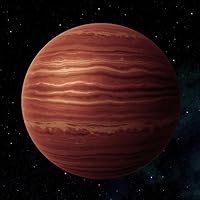
It is the beginning of the 23rd Century, and humans have progressed in technology to the point where they are able to merge artificial intelligence with biology. as well as to create sentient machines and 'robots' which are seen as individuals in their own right. With the assistance of neural implants, humans are able to acquire abilities such as telekinesis. However, ninety-nine young orphans whose origins remain unaccounted for are able to exert such powers without any aid from technology. When a one hundredth member of this group is discovered, seemingly with powers far superior to the others, the mystery deepens. Is this the next natural step in human evolution, or has this group of 'kinetics' been deliberately engineered, and if so, with what end in view?
The light-speed barrier for space travel has recently been broken, but this attracts attention from other beings inhabiting the Orion Spur, many of whom have surprisingly extreme attitudes to the existence of the AI technology which humans have come to reply on. How will the conflict between human and alien ideals be resolved, and do the apparently human ‘kinetics’ mean to help the people of Earth or betray them?
What I liked about Adam:
1. The quality of the writing is excellent (although the Kindle copy still has a few typos which could be weeded out).
2. The book is tightly plotted and does not meander. Several strands of the story are successfully maintained simultaneously, and each one is equally engaging.
3. The story does not get bogged down with technological mumbo jumbo, but instead keeps the human element to the fore.
I enjoyed the first half of the story most due to its more introspective nature and concentration on the person and experiences of Adam. The second half continues the plot development admirably, but to me felt a little more like a standard space opera. There is also a twist in the plot near the end when it is revealed that salvation for humanity has come from a completely unexpected source.
I was generally very impressed by Adam. It reads like high quality old-school science fiction, but with a very modern theme. In addition, there is no gratuitous profanity, sexual content or graphic violence, so the story is suitable for all readers of all ages to enjoy. Some of the chapters evoke the sense of wonder that is the hallmark of the best science fiction.