

What do you think?

Appropriate: A Provocation
A timely, nuanced work that dissects the thorny debate around cultural appropriation and the literary imagination. How do we properly define cultural appropriation, and is it always wrong? If we can write in the voice of another, should we? And if so, what questions do we need to consider first? In Appropriate , creative writing professor Paisley Rekdal addresses a young writer to delineate how the idea of cultural appropriation has evolved―and perhaps calcified―in our political climate. What follows is a penetrating exploration of fluctuating literary power and authorial privilege, about whiteness and what we really mean by the term empathy , that examines writers from William Styron to Peter Ho Davies to Jeanine Cummins. Lucid, reflective, and astute, Appropriate presents a generous new framework for one of the most controversial subjects in contemporary literature.
240 pages, Paperback
First published February 16, 2021
About the author
Paisley Rekdal
26 books101 followersRekdal grew up in Seattle, Washington, the daughter of a Chinese American mother and a Norwegian father. She earned a BA from the University of Washington, an MA from the University of Toronto Centre for Medieval Studies, and an MFA from the University of Michigan, Ann Arbor. She is the author of the poetry collections A Crash of Rhinos (2000), Six Girls Without Pants (2002), and The Invention of the Kaleidoscope (2007) as well as the book of essays The Night My Mother Met Bruce Lee: Observations on Not Fitting In (2000).
In reviewing The Invention of the Kaleidoscope for Barn Owl Review, Jay Robinson observed that it’s “the razor’s edge that always accompanies eros that makes the poems of Paisley Rekdal fresh, intense and ultimately irresistible.” Rekdal’s work grapples with issues of race, sexuality, myth, and identity while often referencing contemporary culture.
Rekdal has been honored with a National Endowment of the Arts Fellowship, a Pushcart Prize, a Village Voice Writers on the Verge Award, and a Fulbright Fellowship to South Korea. Her work has been included in numerous anthologies, including Legitimate Dangers: American Poets of the New Century (2006) and the 2010 Pushcart Prize Anthology.
Rekdal teaches at the University of Utah.
In reviewing The Invention of the Kaleidoscope for Barn Owl Review, Jay Robinson observed that it’s “the razor’s edge that always accompanies eros that makes the poems of Paisley Rekdal fresh, intense and ultimately irresistible.” Rekdal’s work grapples with issues of race, sexuality, myth, and identity while often referencing contemporary culture.
Rekdal has been honored with a National Endowment of the Arts Fellowship, a Pushcart Prize, a Village Voice Writers on the Verge Award, and a Fulbright Fellowship to South Korea. Her work has been included in numerous anthologies, including Legitimate Dangers: American Poets of the New Century (2006) and the 2010 Pushcart Prize Anthology.
Rekdal teaches at the University of Utah.
Ratings & Reviews
Friends & Following
Create a free account to discover what your friends think of this book!
Community Reviews
Displaying 1 - 30 of 64 reviews

February 27, 2021
"The creative life is profoundly fun. I write in order to lose myself in images and stories I can’t consciously force myself to envision, and part of the pleasure in losing myself is risk: the risk of getting something wrong, or—when it comes to memoir—maybe getting something too unpleasantly right; the risk of not knowing what I’m saying or where I’m headed; the risk of not knowing who my poems’ speakers are, maybe not even knowing who I am as an author. Writing has surprised me into insights I couldn’t have articulated except through intense creative play."
I dreaded writing this review. This is nothing against the book, but more because I don’t believe I can do it proper justice.
I probably highlighted, marked up, took notes on, and scribbled things to myself in more places in this book than not. Some in anger, some in agreement, some in confusion, quite a few in agreement, and more than a few in admiration and awe.
I dreaded it because I had legitimately no idea where to begin with it.
This book of six separate essays on cultural appropriations are all tied together in the form of Rekdal answering a question from a composite of her students about when appropriation is acceptable. If at all.
While there is simply too much thought provoking material here to cover in one review, I think one quote in particular from her gets to the essence of her argument:
“There are two essential debates lodged within the question of appropriation: one is whether it can be done, and one is whether it should be done.”
While there are those firmly lodged in the latter camp, Rekdal (and myself) are not. This is not to say that there are not serious issues to be considered anytime we step out of our own voice and experience into another. But rather than simply demanding that we all “stay in our lane” to avoid causing hurt (Rekdal points out as a Chinese/Norwegian/American woman, what lane is she expected to stay in?) exploring new voices is beneficial to a better understanding that no culture is in fact monolithic or has a singular claim to a singular voice.
More importantly the book argues, is not asking if you should step into someone else’s life, but rather why you are doing so.
A good analogy Rekdal makes is a story about a white Utah teen who went to her prom wearing a cheongsam. For Rekdal, wearing the dress itself is by itself not offensive. Wearing it could even be seen as admiration for its beauty. When the teen and her friend however started taking pictures of each other doing martial arts poses however, the meaning of the dress rapidly transforms into something else entirely. She cites an example of this kind of harmful appropriation with the singer Katy Perry:
“Katy Perry, dressed as a geisha, performing her hit song “Unconditionally” for the 2013 American Musical Awards. If you’ve seen the performance, you’ll remember that Perry was dressed as a geisha in pink and white, her stage filled with cherry-blossom branches, red lacquer bridges, taiko drummers, and black-haired girls all dressed in yukata while twirling paper fans. The only thing missing was Scarlett Johansson dressed as Hello Kitty practicing karate in a corner. The problem with this performance wasn’t that Perry took material objects from Japan as stage props, but that her performance invested these objects with racial difference itself. Katy Perry’s decision to dress as a geisha while singing a song about loving someone “unconditionally” linked Japanese characteristics and culture with unalterable devotion, an Orientalist trope of the submissive Asian female that’s existed since the late nineteenth century, due to the popularity of the 1898 short story “Madame Butterfly”…If Perry had been singing another song entirely and worn a kimono, that would have been appropriative but it wouldn’t have crossed the line into racism. Her performance and Japanese clothing visually argued that the most effective way of proving her undying devotion to a lover was by displaying herself as a Japanese woman. Because that’s how Asian women love. And that, X, is a perfect example of harmful cultural appropriation.”
In the case of non-harmful appropriation however, there is nothing inherently wrong with writing a character outside of your life experience. The question is though what will you do with them once you begin? One of the criticisms of people who appropriate voices is that they can never be fully accurate because they lack that life experience. Rekdal on the other hand argues that accuracy should never be the goal in fiction simply because how do you write an “accurate” woman? Or an “accurate” Native American? Communities are parts of society as a whole, which in turn are fragmented parts within themselves between class, gender, and economic lines. Seen as such, trying to write an “accurate” person of color is a fairly impossible task doomed to failure.
Rather a writer with a clear picture of why they are using a voice not their own and a desire to do something constructive with it is far more valuable and real than one who prizes an accuracy that will invariably devolve into stereotype. In the end:
“There is no perfect book: a work can be innovative and culturally appropriative at once, historically important and also racist, beautifully composed and morally repellant. That, to me, is the complexity that accompanies and defines human works of art.”
I love this quote because it perfectly sums up my feelings on art and literature, as well as life. All art (and isn’t life also an art form?) is messy in some way. It can be frustrating, and yes infuriating, when it doesn’t match our expectations of it. But out of this messiness also comes insight. I don’t pretend to have all the answers to these extremely complex questions, but as the book argues, shutting off debate by dictating who can write what is at best reductive and at worst a threat to the very idea of art itself. Even in the ugly, the racist, there are things to be learned about ourselves and our world.
In closing, perhaps the best thing I can say about this book is that it challenged me in a way that few books in recent memory have. There were things here that I vehemently disagreed with her about, and others where I felt we were very much on the same page. Throughout it all though, I always respected her arguments and her willingness to be upfront about the fact that the person who she is now, is not the person she was in the past, and is unlikely to be in the future. Our ideas and opinions are as fluid as the times we live in. The important thing is to be wiling to listen to those who disagree with us, even if our own thoughts remain unchanged. Maybe more than anything else, I really want to thank her for reminding me of that with this book.
I hadn’t read anything from Paisley Rekdal since she blew young me away with her memoir “The Night My Mother Met Bruce Lee” 20 years ago. I remember working at a bookstore at the time where it was the book I was recommending to everyone and anyone who was looking for that elusive “good book”. Not only was this a good book, it was challenging, intensely personal, smart, and with not a little bit of self deprecating humor.
I talked about it for months and every time I came into work I checked the shelf to see how many had been sold in my absence. It was also about a Chinese/Norwegian/American woman’s attempting to understand herself.
I think I sold one.
I truly hope this book finds the larger audience it deserves.

August 1, 2021
This was both specific and wide-ranging, commentary and thoughts on how and when writers should culturally appropriate. Rekdal addresses this head-on, too, defining appropriation, appreciation, and the varying shades of gray in terms and semantics. She comes down to some really helpful questions to guide writers, meant to highlight racial stereotypes and insensitivities for any writer -- the one that sticks with me is the simple question, "Why do you need to write this?" Interrogating that question honestly seems like it will deal with most issues for a thoughtful and considerate writer. Rekdal's own experience of life, as a biracial Asian-American who passes for white, informs all of her letters and experiences, lending her a little more credence in her caution, even. She also chronicles a wide range of controversial texts, as well, which helps a reader with specific examples. If you are a writer or if you are a person curious about the shifting boundaries between cultures and groups, it's a good, focused, and helpful read.
August 7, 2021
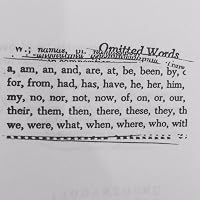
'I think the paradox of literary appropriation replicates the paradox of racial awareness in the world, which is that we each must acknowledge how our imaginations are both contained within and are kept independent from larger systems of power. We may not be free of our histories, our families, our communities, our appearance, and our health, we may not even be released from all our desires, but we are also not automatons unable to respond to the systems in which we function. Language shapes us, but as writers, we shape language. If you don’t believe you’re capable of that, X, you will remain at the mercy of other people’s representations, ensnared in the tropes, narratives, and metaphors they imagine for you.'
(from 'Appropriation and Rehabilitation', p177)
(from 'Appropriation and Rehabilitation', p177)
February 22, 2021
DNF. No issues with the points made, just that the writing was dry and repetitive and the form too long. I think it could have been condensed into a much smaller essay. I admit to not understanding the purpose of addressing the essay to a student, pseudonymously named X, in the form of "letters" rather than chapters. I also thought she picked some bad examples to illustrate her points, including questionable criticism of the work of Picasso and even more questionable apparent defense of Elizabeth Warren in relation to her fraudulent claims to native identity. Overall, I couldn't stick with the work due to these issues, but will follow up on the other books she cited in her research.
April 15, 2023
Dripping with White paternalism
Appropriate: A Provocation was written as a series of advisory letters by the author, Paisley Rekdal, Utah Poet Laureate and creative writing professor at the University of Utah, to her real or imagined undergraduate students. The first epistle was addressed to a student (identified as “X”) who had workshopped a poem in Rekdal’s class, a monologue in the voice of a Black nurse who had worked in the home of the student’s White grandmother in the American South. Rekdal leaves to the reader’s imagination just how and to what extent the piece offended. Rekdal shares in her letter to X that when she was the student’s age, she too was often unaware of implicit racial stereotypes in literature.
Rekdal tells us that X asked to be pointed to an essay that might give her a fuller understanding of where she had gone wrong trying to write across racial cultures, and one wonders if this book began as an effort to respond to X’s request: An essay that sprouted several Hydra heads and grew too unwieldy for the author to tame. Rekdal more than occasionally offers an opinion then asserts an entirely contradictory proposition a few pages or a chapter later. She struggles mightily to sort her thoughts as she writes and changes her mind often.
In concluding the introductory letter, Rekdal recounts an anecdote she had heard about two White women, mother and daughter, who were standing with a Black man (who Rekdal identifies as the poet Jericho Brown, her friend) in a buffet line, when the mother began polling others about their taste for watermelon, a plate of which was on the buffet line before them. She said to her daughter that she’d never cared for watermelon. “Then, to be friendly, she turned to Mr. Brown and began to ask if he liked watermelon, at which point the daughter burst out, ‘Oh my God, Mommy, don’t.’ The mother, realizing at that exact moment how her question might be taken, blushed and fell silent.” Brown, too, stood in stark silence, pretending to have heard nothing.
This anecdote has nothing to do with the subject of cultural appropriation in art, but Rekdal’s analysis of the encounter is enlightening in that it reveals a White paternalistic sentiment that prevails throughout the book. In my view, the offender here was the daughter, who was so hypervigilant about the prospect of being embarrassed by her mother, she blurted out, “Oh my God, Mommy, don’t [talk to a Black person about watermelon]!” Her outburst mortified everyone present. Rather than seeking to preserve Brown’s and her mother’s feelings, the daughter effectively proclaimed to all present that her mother was an unmitigated dunce for failing to have racial stereotypes foremost in her thoughts at all times; that she, the daughter, was enlightened about the Meaning of Watermelon and thus bore no guilt through her familial association; and that the only thing that mattered about Mr. Brown was his race.
I saw the mother as a friendly, benign person who was awkwardly trying to strike up a conversation with a stranger about food, a natural enough subject under the circumstances. The daughter might have held her tongue and instead offered a quiet pointer to her mother in private later, whence Jericho might have had a seat (with fellow poet Paisley, perhaps?) to share a meal and what might have been a mildly amusing anecdote. The daughter’s outburst turned innocent banter into an embarrassing social crisis. To my surprise, the daughter’s rude behavior played no part in Rekdal’s analysis of the encounter. In her view, the fault for the outcome lay entirely with the mother, whose primary social duty was not to treat Brown with the same kindness she would any stranger in like circumstances, but to “protect his dignity as a Black man.” If only the feckless old woman had possessed a greater conscious awareness of the stereotype that all Black people are ravenous for watermelon, Rekdal seems to say, the daughter’s emergency corrective action might have been obviated. Ugh!
I’d suggest to the author that she might check in with her friend Jericho. Does he really want White strangers to police themselves in every random encounter to protect his dignity as a Black man? Or would he prefer that others treat him in a friendly, unguarded manner as they might anyone else? She may be surprised to learn that her friend prefers to be treated as an adult fully able to speak for himself, not as a helpless child.
In Letter Three, the author discusses a short persona poem, “How-To,” written by the young White poet Anders Carlson-Wee, published a few years ago in the progressive political magazine The Nation:
How-To
If you got hiv, say aids. If you a girl,
say you’re pregnant––nobody gonna lower
themselves to listen for the kick. People
passing fast. Splay your legs, cock a knee
funny. It’s the littlest shames they’re likely
to comprehend. Don’t say homeless, they know
you is. What they don’t know is what opens
a wallet, what stops em from counting
what they drop. If you’re young say younger.
Old say older. If you’re crippled don’t
flaunt it. Let em think they’re good enough
Christians to notice. Don’t say you pray,
say you sin. It’s about who they believe
they is. You hardly even there.
This poem left Rekdal confused. She couldn’t discern whether the speaker’s dialect was African-American or rural Appalachian. For me, the voice was clear. I found this a perfectly serviceable little poem spoken in the voice of a street-wise Black man, perhaps homeless, probably in an urban setting, offering impromptu coaching to a small group of younger homeless people — mix of races and genders unknown — on the finer points of maximizing their panhandling take. I imagine the speaker as a proud, extroverted if not somewhat bombastic, fellow who has given similar talks to any number of strangers who have stumbled across his sidewalk soapbox. His final insight is poignant: “It’s about who they believe / they is. You hardly even there.” In other words, these folks don’t really care about you; they don’t want to hear about the details of your life. If they give you money it’s because they feel a need to reinforce their belief that they are virtuous, magnanimous.
The speaker’s dialect is Black English, aka African American Vernacular English (AAVE). There are a small handful of edits I might make if it were my poem, but that doesn’t distinguish it from virtually any poem I’ve ever read. No less an authority on Black English than linguist John McWhorter of Columbia University said of this poem in The Atlantic that it’s an entirely accurate portrayal of Black English. Rekdal cites anonymous social media pundits who conclude that Carlson-Wee flubbed it, but fails to note McWhorter’s authoritative opinion at all.
Of course one cannot discern all the details of speaker, audience and setting from the four corners of the poem. This is a sonnet of barely over one hundred words, not a painting or a novel. Each reader must interpret the poem to complete the picture, and the picture need not look the same to all readers.
Rekdal predictably enough concludes that the poem fails. “If this poem were spoken by an African American [and it is, of course] I might imagine some crucial bit of information was still missing, which is that – for some passersby – there is no performance that can activate empathy, because it won’t see or respond to Black poverty.” Really? Because one can imagine some random passerby who isn’t brought to mawkish tears over the speaker’s lifelong suffering as an impoverished Black man, the poem is no good? More sentimentality, is that the prescription? Isn’t the absence of empathy among passersby the speaker’s very point? One wonders whether Rekdal would impose such a burden on the poem if the poet were Black. After all, would a Black poet be duty-bound to elicit a particular emotion from the reader or to present the speaker in a favorable light, or in any particular way at all? This man is, after all, one person, not representative of everyone in his demographic.
Is race necessarily the speaker’s defining characteristic? Why should it be? It certainly wasn’t for me. I enjoy his swaggering presence as he dispenses pearls of wisdom to his captive audience. The business community in American cities (the panhandlees in this poem) is far from racially homogenous. The homeless population is equally diverse. A reader might well understand the speaker’s advice to be more about class than race.
I believe Rekdal would be squeamish about the portrayal of a poor, uneducated Black character by any White writer. Many educated White people (and even some Black) believe incorrectly that Black English isn’t a legitimate language, that it has no cognizable grammar, that any depiction of Black English in dialogue is tantamount to minstrel-show mockery. Certainly a writer could intentionally or out of ignorance misuse the dialect in a jumbled, exaggerated, mocking way to depict racial stereotypes, but Carlson-Wee gets the language right and gives the speaker a believable and interesting voice. His poem is not disrespectful in the least.
Nevertheless, the poet and the poetry editor of The Nation, Harvard professor Stephanie Burt, were torched on Twitter when the poem was published in 2018, and, under threat of cancelation by an angry mob of tin-eared readers, they issued letters of apology for the poem. The former (retired) poetry editor of the magazine, Grace Schulman, was appalled. In a letter published by The New York Times (“The Nation Magazine Betrays a Poet — and Itself”), Schulman wrote, “During the 35 years that I edited poetry for The Nation magazine, we published the likes of W.S. Merwin, Pablo Neruda, May Swenson, Denise Levertov, James Merrill and Derek Walcott. They wrote on subjects as varied as lesbian passion and nuclear threats. Some poems, and some critical views, enraged our readers and drove them to drop their subscriptions. But never did we apologize for a poem we published. We saw it as part of our job to provoke our readers — a mission we took especially seriously in serving the magazine’s absolute devotion to a free press.”
Absolute devotion to free speech was not so long ago championed more or less universally in America by journalists, artists, academics, and the population at large, across the political spectrum. Our Constitution placed free speech in first position in our Bill of Rights for good reason: Without freedom of speech, none of our other rights can be accessed or protected. But in recent years on college campuses, a sentiment has taken root that offensive or provocative words are harmful, and a desire to protect the safety of students from psychic injury now takes precedence. Rekdal concludes: “[W]hile I question the use of dialect in ‘How-To,’ I wouldn’t [necessarily] argue against [a White writer] using dialect or Black English in another work.” She found herself unable, however, to cite a single example she finds acceptable.
Midway through the book, after much analysis of art (paintings, novels, poems, etc.) authored by White artists depicting persons of color, all of which Rekdal finds problematic to a greater or lesser degree, she finally states her radical thesis: “[Y]ou should not write outside your subject position because we do not have equality in the world or in the publishing system.” In case you’re not wearing your decoder ring, “you” means White people, “we” means people of color, and writing “outside your subject position” means writing a character of color. By “equality in the world,” Rekdal does not mean equal opportunity to participate and compete for college admission, jobs, fellowships, artistic prizes, etc., but literal, statistical equal representation in artistic and economic outcomes. She calls this Marxist thesis an “argument” and states that she finds it not only persuasive but “irrefutable.” That’s one way of stifling debate – assert right up front that your position is unassailable – but of course this is not how intellectual discourse progresses.
While her thesis statement does not make explicit reference to race, Rekdal makes abundantly clear that hers is a race-based manifesto, and later reveals that its injunction against cultural appropriation is a one-way street. White writers may not ethically write Black or Latinx characters, but writers of color are not only ethically permitted but strongly encouraged to write White characters. She actually endorses the Jim Crow-era notion that Black people are endowed with special “powers of clairvoyance” to read the minds of White people. Black people in her view are not only children requiring White protection, but magical as well.
I find the author’s conception of Black people condescending and frankly racist. By this I don’t mean to say Rekdal is herself a racist. She is a poet and an educator, full of good intentions, who is burdened by certain racist ideas. Ibram X. Kendi, a historian at Boston University and author of Stamped from the Beginning: The Definitive History of Racist Ideas in America, proposes a working standard for testing ideas for racism: “My definition of a racist idea is a simple one: it is any concept that regards one racial group as inferior or superior to another racial group in any way.” I also don’t mean to say Rekdal is irredeemable. She is a talented writer, and she demonstrates throughout her book that her ideas on race are nascent and in flux.
Rekdal assumes the role of protector of writers of color but does not appear to identify as one herself. The daughter of a Norwegian father and Chinese-American mother, she has written several books of poetry and has for many years been ensconced in English departments at large American universities. I’m as unclear as she is to what extent she has benefited from White privilege, but she certainly has lived a protected, insular existence. I’ve met in my entire life not a single person outside of academia who shares her extreme White paternalistic views. She sees no irony in assuming authority to speak as a representative of others “outside her subject position.”
Appropriate: A Provocation was written as a series of advisory letters by the author, Paisley Rekdal, Utah Poet Laureate and creative writing professor at the University of Utah, to her real or imagined undergraduate students. The first epistle was addressed to a student (identified as “X”) who had workshopped a poem in Rekdal’s class, a monologue in the voice of a Black nurse who had worked in the home of the student’s White grandmother in the American South. Rekdal leaves to the reader’s imagination just how and to what extent the piece offended. Rekdal shares in her letter to X that when she was the student’s age, she too was often unaware of implicit racial stereotypes in literature.
Rekdal tells us that X asked to be pointed to an essay that might give her a fuller understanding of where she had gone wrong trying to write across racial cultures, and one wonders if this book began as an effort to respond to X’s request: An essay that sprouted several Hydra heads and grew too unwieldy for the author to tame. Rekdal more than occasionally offers an opinion then asserts an entirely contradictory proposition a few pages or a chapter later. She struggles mightily to sort her thoughts as she writes and changes her mind often.
In concluding the introductory letter, Rekdal recounts an anecdote she had heard about two White women, mother and daughter, who were standing with a Black man (who Rekdal identifies as the poet Jericho Brown, her friend) in a buffet line, when the mother began polling others about their taste for watermelon, a plate of which was on the buffet line before them. She said to her daughter that she’d never cared for watermelon. “Then, to be friendly, she turned to Mr. Brown and began to ask if he liked watermelon, at which point the daughter burst out, ‘Oh my God, Mommy, don’t.’ The mother, realizing at that exact moment how her question might be taken, blushed and fell silent.” Brown, too, stood in stark silence, pretending to have heard nothing.
This anecdote has nothing to do with the subject of cultural appropriation in art, but Rekdal’s analysis of the encounter is enlightening in that it reveals a White paternalistic sentiment that prevails throughout the book. In my view, the offender here was the daughter, who was so hypervigilant about the prospect of being embarrassed by her mother, she blurted out, “Oh my God, Mommy, don’t [talk to a Black person about watermelon]!” Her outburst mortified everyone present. Rather than seeking to preserve Brown’s and her mother’s feelings, the daughter effectively proclaimed to all present that her mother was an unmitigated dunce for failing to have racial stereotypes foremost in her thoughts at all times; that she, the daughter, was enlightened about the Meaning of Watermelon and thus bore no guilt through her familial association; and that the only thing that mattered about Mr. Brown was his race.
I saw the mother as a friendly, benign person who was awkwardly trying to strike up a conversation with a stranger about food, a natural enough subject under the circumstances. The daughter might have held her tongue and instead offered a quiet pointer to her mother in private later, whence Jericho might have had a seat (with fellow poet Paisley, perhaps?) to share a meal and what might have been a mildly amusing anecdote. The daughter’s outburst turned innocent banter into an embarrassing social crisis. To my surprise, the daughter’s rude behavior played no part in Rekdal’s analysis of the encounter. In her view, the fault for the outcome lay entirely with the mother, whose primary social duty was not to treat Brown with the same kindness she would any stranger in like circumstances, but to “protect his dignity as a Black man.” If only the feckless old woman had possessed a greater conscious awareness of the stereotype that all Black people are ravenous for watermelon, Rekdal seems to say, the daughter’s emergency corrective action might have been obviated. Ugh!
I’d suggest to the author that she might check in with her friend Jericho. Does he really want White strangers to police themselves in every random encounter to protect his dignity as a Black man? Or would he prefer that others treat him in a friendly, unguarded manner as they might anyone else? She may be surprised to learn that her friend prefers to be treated as an adult fully able to speak for himself, not as a helpless child.
In Letter Three, the author discusses a short persona poem, “How-To,” written by the young White poet Anders Carlson-Wee, published a few years ago in the progressive political magazine The Nation:
How-To
If you got hiv, say aids. If you a girl,
say you’re pregnant––nobody gonna lower
themselves to listen for the kick. People
passing fast. Splay your legs, cock a knee
funny. It’s the littlest shames they’re likely
to comprehend. Don’t say homeless, they know
you is. What they don’t know is what opens
a wallet, what stops em from counting
what they drop. If you’re young say younger.
Old say older. If you’re crippled don’t
flaunt it. Let em think they’re good enough
Christians to notice. Don’t say you pray,
say you sin. It’s about who they believe
they is. You hardly even there.
This poem left Rekdal confused. She couldn’t discern whether the speaker’s dialect was African-American or rural Appalachian. For me, the voice was clear. I found this a perfectly serviceable little poem spoken in the voice of a street-wise Black man, perhaps homeless, probably in an urban setting, offering impromptu coaching to a small group of younger homeless people — mix of races and genders unknown — on the finer points of maximizing their panhandling take. I imagine the speaker as a proud, extroverted if not somewhat bombastic, fellow who has given similar talks to any number of strangers who have stumbled across his sidewalk soapbox. His final insight is poignant: “It’s about who they believe / they is. You hardly even there.” In other words, these folks don’t really care about you; they don’t want to hear about the details of your life. If they give you money it’s because they feel a need to reinforce their belief that they are virtuous, magnanimous.
The speaker’s dialect is Black English, aka African American Vernacular English (AAVE). There are a small handful of edits I might make if it were my poem, but that doesn’t distinguish it from virtually any poem I’ve ever read. No less an authority on Black English than linguist John McWhorter of Columbia University said of this poem in The Atlantic that it’s an entirely accurate portrayal of Black English. Rekdal cites anonymous social media pundits who conclude that Carlson-Wee flubbed it, but fails to note McWhorter’s authoritative opinion at all.
Of course one cannot discern all the details of speaker, audience and setting from the four corners of the poem. This is a sonnet of barely over one hundred words, not a painting or a novel. Each reader must interpret the poem to complete the picture, and the picture need not look the same to all readers.
Rekdal predictably enough concludes that the poem fails. “If this poem were spoken by an African American [and it is, of course] I might imagine some crucial bit of information was still missing, which is that – for some passersby – there is no performance that can activate empathy, because it won’t see or respond to Black poverty.” Really? Because one can imagine some random passerby who isn’t brought to mawkish tears over the speaker’s lifelong suffering as an impoverished Black man, the poem is no good? More sentimentality, is that the prescription? Isn’t the absence of empathy among passersby the speaker’s very point? One wonders whether Rekdal would impose such a burden on the poem if the poet were Black. After all, would a Black poet be duty-bound to elicit a particular emotion from the reader or to present the speaker in a favorable light, or in any particular way at all? This man is, after all, one person, not representative of everyone in his demographic.
Is race necessarily the speaker’s defining characteristic? Why should it be? It certainly wasn’t for me. I enjoy his swaggering presence as he dispenses pearls of wisdom to his captive audience. The business community in American cities (the panhandlees in this poem) is far from racially homogenous. The homeless population is equally diverse. A reader might well understand the speaker’s advice to be more about class than race.
I believe Rekdal would be squeamish about the portrayal of a poor, uneducated Black character by any White writer. Many educated White people (and even some Black) believe incorrectly that Black English isn’t a legitimate language, that it has no cognizable grammar, that any depiction of Black English in dialogue is tantamount to minstrel-show mockery. Certainly a writer could intentionally or out of ignorance misuse the dialect in a jumbled, exaggerated, mocking way to depict racial stereotypes, but Carlson-Wee gets the language right and gives the speaker a believable and interesting voice. His poem is not disrespectful in the least.
Nevertheless, the poet and the poetry editor of The Nation, Harvard professor Stephanie Burt, were torched on Twitter when the poem was published in 2018, and, under threat of cancelation by an angry mob of tin-eared readers, they issued letters of apology for the poem. The former (retired) poetry editor of the magazine, Grace Schulman, was appalled. In a letter published by The New York Times (“The Nation Magazine Betrays a Poet — and Itself”), Schulman wrote, “During the 35 years that I edited poetry for The Nation magazine, we published the likes of W.S. Merwin, Pablo Neruda, May Swenson, Denise Levertov, James Merrill and Derek Walcott. They wrote on subjects as varied as lesbian passion and nuclear threats. Some poems, and some critical views, enraged our readers and drove them to drop their subscriptions. But never did we apologize for a poem we published. We saw it as part of our job to provoke our readers — a mission we took especially seriously in serving the magazine’s absolute devotion to a free press.”
Absolute devotion to free speech was not so long ago championed more or less universally in America by journalists, artists, academics, and the population at large, across the political spectrum. Our Constitution placed free speech in first position in our Bill of Rights for good reason: Without freedom of speech, none of our other rights can be accessed or protected. But in recent years on college campuses, a sentiment has taken root that offensive or provocative words are harmful, and a desire to protect the safety of students from psychic injury now takes precedence. Rekdal concludes: “[W]hile I question the use of dialect in ‘How-To,’ I wouldn’t [necessarily] argue against [a White writer] using dialect or Black English in another work.” She found herself unable, however, to cite a single example she finds acceptable.
Midway through the book, after much analysis of art (paintings, novels, poems, etc.) authored by White artists depicting persons of color, all of which Rekdal finds problematic to a greater or lesser degree, she finally states her radical thesis: “[Y]ou should not write outside your subject position because we do not have equality in the world or in the publishing system.” In case you’re not wearing your decoder ring, “you” means White people, “we” means people of color, and writing “outside your subject position” means writing a character of color. By “equality in the world,” Rekdal does not mean equal opportunity to participate and compete for college admission, jobs, fellowships, artistic prizes, etc., but literal, statistical equal representation in artistic and economic outcomes. She calls this Marxist thesis an “argument” and states that she finds it not only persuasive but “irrefutable.” That’s one way of stifling debate – assert right up front that your position is unassailable – but of course this is not how intellectual discourse progresses.
While her thesis statement does not make explicit reference to race, Rekdal makes abundantly clear that hers is a race-based manifesto, and later reveals that its injunction against cultural appropriation is a one-way street. White writers may not ethically write Black or Latinx characters, but writers of color are not only ethically permitted but strongly encouraged to write White characters. She actually endorses the Jim Crow-era notion that Black people are endowed with special “powers of clairvoyance” to read the minds of White people. Black people in her view are not only children requiring White protection, but magical as well.
I find the author’s conception of Black people condescending and frankly racist. By this I don’t mean to say Rekdal is herself a racist. She is a poet and an educator, full of good intentions, who is burdened by certain racist ideas. Ibram X. Kendi, a historian at Boston University and author of Stamped from the Beginning: The Definitive History of Racist Ideas in America, proposes a working standard for testing ideas for racism: “My definition of a racist idea is a simple one: it is any concept that regards one racial group as inferior or superior to another racial group in any way.” I also don’t mean to say Rekdal is irredeemable. She is a talented writer, and she demonstrates throughout her book that her ideas on race are nascent and in flux.
Rekdal assumes the role of protector of writers of color but does not appear to identify as one herself. The daughter of a Norwegian father and Chinese-American mother, she has written several books of poetry and has for many years been ensconced in English departments at large American universities. I’m as unclear as she is to what extent she has benefited from White privilege, but she certainly has lived a protected, insular existence. I’ve met in my entire life not a single person outside of academia who shares her extreme White paternalistic views. She sees no irony in assuming authority to speak as a representative of others “outside her subject position.”

December 29, 2021
Overall, a very smart and direct look at what appropriation is, how it works, and when/if it is ever ethical. But the very careful, methodical voice drove me kind of to distraction, as did the second-person letter convention, which never quite disappeared as much as I would have liked it to.

August 27, 2021
I found the frame annoying (letter to a student) and the content a little tedious but it's probably good for confused white people to read.

July 13, 2025
Rehashes FB/Twitter lit world discourse c. 2015-2020, much of which I was unfortunately online for. The most interesting chapter is the one on racial hoaxes, in which the author attempts to reconcile liking the poetry of a white American man masquerading as a Japanese atomic bomb survivor; the author’s philosophy on this seems to differ substantially from George Saunders's, who believes all moral failures in literature to fundamentally be aesthetic/technical failures. Otherwise, the discussion on whether/in what circumstances cultural appropriation is okay very quickly becomes reductive and vague (i.e. stories with appropriative elements should avoid “painful stereotypes” and reach for “truth” that “get[s] the larger story right”).

August 11, 2021
Useful, clear, well-researched, but pretty academic/dry

April 21, 2021
Super fascinating exploration of appropriation, mostly in literature. Rekdal raises more questions than she answers, which seems right for this thorny issue.
I am moderating a panel with Rekdal and two others this week, so I look forward to a lively conversation!
I am moderating a panel with Rekdal and two others this week, so I look forward to a lively conversation!

April 4, 2021
I admire this book from stem to stern. It's a complex presentation of complex issues--thoughtful, timely, challenging, thorough. I'll be re-reading it again soon to help me deepen my practices as teacher and artist. A must-read for those of us trying in our many flawed ways to "lead" workshops.

August 2, 2023
Very thoughtful discussions around cultural appropriation. The writer provided plenty of examples over the years, and what it might mean. There are a lot of nuances in the discussion, and there are no definitive answers or rules on how to approach transcultural characters in your writing.
Definitely recommend this book to anyone that's interested in this topic. Or to any writers really.
"Literature is the expression of conflicting human desires, and reading is the activation of these conflicts, the dynamic engagement with word and idea.
Perhaps I might define and identify a work of literature, then, not by whether or not it increases my empathy for others, but whether it unsettles me without a clear resolution. And perhaps I might consider myself a critical reader not because I read Pulitzer Prize-winning novels, but because I'm someone who refuses to be soothed."
"the creative life is profoundly fun. I write in order to lose myself in images and stories I can't consciously force myself to envision, and part of the pleasure in losing myself is risk: the risk of getting something wrong, or--when it comes to memoir -maybe getting something too unpleasantly right; the risk of not knowing what I'm saying or where I'm headed; the risk of not knowing who my poems' speakers are, maybe not even knowing who I am as an author. Writing has surprised me into insights I couldn’t have articulated except through intense creative play. "
Definitely recommend this book to anyone that's interested in this topic. Or to any writers really.
"Literature is the expression of conflicting human desires, and reading is the activation of these conflicts, the dynamic engagement with word and idea.
Perhaps I might define and identify a work of literature, then, not by whether or not it increases my empathy for others, but whether it unsettles me without a clear resolution. And perhaps I might consider myself a critical reader not because I read Pulitzer Prize-winning novels, but because I'm someone who refuses to be soothed."
"the creative life is profoundly fun. I write in order to lose myself in images and stories I can't consciously force myself to envision, and part of the pleasure in losing myself is risk: the risk of getting something wrong, or--when it comes to memoir -maybe getting something too unpleasantly right; the risk of not knowing what I'm saying or where I'm headed; the risk of not knowing who my poems' speakers are, maybe not even knowing who I am as an author. Writing has surprised me into insights I couldn’t have articulated except through intense creative play. "
April 8, 2022
I'm a white male writer who somewhat regularly writes outside my own experience. Sometimes I feel bad about it, and defensive of what I'm doing. I also really like Rekdal's poetry and trust her as a thoughtful person about craft, so I wanted this book to do something-- either give me absolution for what I was doing or to help me think about it more deeply, to give me broad lanes to drive down when I did appropriate. Or maybe to make me quick it altogether. And there was a lot in this book to chew over, though maybe not as much as I wanted.... I got to a point where I think I should just read The Racial Imaginary by Loffreda and Rankine, because as much as Rekdal's takes on some classic and contemporary writing were more spicy than you usually get, they maybe weren't developed enough to really work through some of these issues?
I found the format, letters to a young poet style, kind of annoying. I think, while not a student, I'm otherwise the target for these letters, and still, I felt like the X she was writing towards was a straw man that wasn't real enough for me.
I got a lot out of this in the end. It just kind of bugged me.
I found the format, letters to a young poet style, kind of annoying. I think, while not a student, I'm otherwise the target for these letters, and still, I felt like the X she was writing towards was a straw man that wasn't real enough for me.
I got a lot out of this in the end. It just kind of bugged me.

June 22, 2021
This book is so brilliant and a must-read for creative writers and particularly creative writing instructors. Rekdal does detailed, thorough, honest, invigorating, insightful, amazing work examining the benefits and risks of appropriation. One of the most riveting books of--theory? does this qualify as theory? literary criticism? nonfiction--whatever it is, I learned a lot and acquired some language and frameworks through which to discuss the difficult issue of cultural appropriation in literature (and culture). Thank you so much, Paisley Rekdal!!!
March 7, 2025
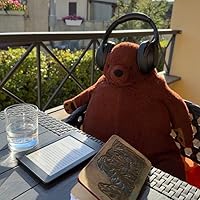
4.25 - “At heart, the risk with turning race into a metaphor is that it can essentialize racial identity. It suggests there must be something authentic and unchangeable about our bodily differences, an argument that has been — ironically — shared by both segregationists and racial progressives alike when they demand we each ‘stay in our lanes,’ a phrase I find particularly bemusing, because as a third generation Asian American woman who is racially half-Chinese and half-White, where exactly am I supposed to drive?”(42).
Paisley Rekdal the writer and woman that you are…
Paisley Rekdal the writer and woman that you are…

May 25, 2025
I'm not sure how I felt about this... this is an important conversation but I feel that it is significantly more nuanced than the author lets on. The solution to solving centuries of oppression is not through barring white men from publishing books- though I agree that what they are writing about and from what perspective may be policed. But POLICED BY WHO?

March 29, 2022
This was like walking into your favorite professor's office, having a nice cup of tea or coffee, and talking the afternoon away. It gave me so much food for thought, and I would encourage any other aspiring writers to read this.

March 5, 2021
This is an important book every writer--and reader, and everyone generally--should read. Rekdal struggles honestly with what cultural appropriation means, when or if it is ever appropriate, how we can recognize our own appropriative tendencies. Her analysis helped me clarify and articulate my own thinking. I've been looking forward to reading it ever since I heard she was writing this, and I'm glad to have it now. I'll be rereading it many times.

May 20, 2024
After some thought I’ve decided to write this. It’s not the best book but it does bring up some intense thoughts. As a writer and someone who wants to do publishing, this book made me think of all the obstacles I might face. It was slightly scary to consider. I rated it so low because the setup of letters wasn’t my favorite. I didn’t like that it was written to no one and that it was faked. I would have preferred a more in depth look at the topics she presented.

December 17, 2023
Though this book poses as a nuanced take on the controversial topic of Cultural Appropriation, it proves itself to be too superficial in that it addresses none of the deeper issues at stake. Essentially, the book boils down to a repeatedly subjective insistence that, although not all appropriation is racist or bad, very few examples are ever perfect enough, except for this one or that one, which I, the author, happen to arbitrarily like. The author uses copious slatherings of what John Berger would call "mystification" to either tear down texts she thinks dislikes or build up those which she likes. The most ironic thing about the book is that its best chapter, about authorial hoaxes, essentially undoes her entire thesis, which is little more than musings that fear to stray from her conveniently a priori list of comfortably dogmatic progressive statements about racism and power and structures.
This introduction so far hints at what I found most disappointing, namely the shallowness of the analysis of the situation. The author made far too many unstated assumptions, and thus her analysis got trapped in the same dead ends that all politically-stagnant partisan topics inevitably do. Perhaps the most glaring assumption Rekdal makes is that the extremely recent Copyright / Authorship / Intellectual Property trend in media is actually eternal and indisputable. She pretends to discuss some premodern examples such as the Illiad and Shakespeare which have become ubiquitous, but I was disappointed that she did not explore any diversity of perspectives on publishing, authorship, ownership, or storytelling. Ironically, for someone so concerned about "whiteness" and the alleged evils of "western colonialism," Rekdal proved herself to be incapable of viewing storytelling and publishing in any way other than a contemporary, white, academic, western way. A myriad of alternatives come to mind, such as indigenous storytelling, oral cultures and their juxtaposition with written cultures, premodern cultures or post-modern approaches, theological lenses, etc.
Unfortunately, at the heart of contemporary publishing is an extremely toxic cult of originality which has arguably produced the worst "art" ever conned off onto people. The exclusivity it demands operates from a bizarre scarcity mentality. This feels especially out of place now, at precisely the time when people have such unprecedented and easy access to self-publishing; instead of freely sharing ideas we hide knowledge and beauty behind paywalls rather than boldly sharing it with others. For someone who allegedly wants to dismantle systems of oppression (and thus, presumably, private property), it seems absolutely bonkers that she doesn't see how the publishing landscape we inhabit is not only an exception to the historical rule, but as exceptionally capitalistic, individualistic, selfish, and inhospitable.
With such a major historical and cultural omission, Rekdal's analysis cannot but get lost in the weeds, missing the forest for the trees, so to speak. I'm largely uninterested in her particular, subjective take on which works are appropriative in a haram way according to contemporary progressive politics. As her own smugness at the downfall of Tony Hoagland betrays, the landscape is changing too quickly to say anything of lasting importance at this resolution; one must zoom out to say anything of import. By the way, Tony Hoagland wasn't swept under the rug because "the conversation has moved on" or "he has become irrelevant" or somesuch drivel; rather Hoagland was a dishonest shithead who proved himself incompetent to maturely engage in difficult conversations. I would not be so quick to dance on his grave, as this book likely will not last long given its lack of depth.
Speaking of which, the other most glaring issue with the book is its inability to successfully pierce the issue of "truthfulness" in literature. Rekdal lands close to the right answer by invoking Shelley's Defense of Poetry, but it's actually Sidney's Defence of Poesy (the names are close, so I understand the confusion) which most directly treats the sub-debate at stake underneath the issue of appropriation. It seems that Rekdal's (and by extension, most people's) view of literature is that it must be as close to journalism as possible, without making that research evident (like "American Dirt" does so clunkily). I would argue that this totally misses the point of literature, and I have Roland Barthes, Sir Philip Sidney, and Plato on my side. In Barthes' essay "Diseases of Costume," he argues that to get caught up in the minutia of "is that costume historically accurate?" is to completely miss the point of theater, which exists somewhere in the region of entertaining, enlightening, and otherwise lifting the viewer up, rather than informing them about historical particulars. This ties in nicely with Sidney, who, echoing Plato, points out that poetry transcends historical reportage, which is mired in particulars (and even then is almost always inaccurate, partial, inflected with bias, or worse), whereas poetry, even when not "literally" or "historically" true, can actually be even "truer" in a moral, sense, which in his (and my) opinion is more important. I agree with him that poetry is actually also much more honest when it doesn't claim such pretensions as literal "truth," whereas history so often claims a modernistic/scientific absolutism totally foreign to premodern peoples of all locales.
Which direction, then, can we go to escape this swamp? I would suggest my own inroad into the topic, which I discovered totally on accident on Instagram. Some woman of doubtful musical taste (a celebrity or model) was flaunting a black band shirt of some band she likely didn't listen to. The comment section was ablaze with metalheads complaining. Counter-complainers dismissed these complaints with the accusation of "gatekeeping," and I spectated above the fray. What I realized were the parallels between this and people who complain about cultural appropriation. Metalheads see themselves as a musical minority, whose entire musical taste gets regularly dismissed, caricatured, and otherwise insulted in popular media. Thus, metalheads in a sense have a right to be cautious about who claims to represent them, which is essentially what wearing a band t-shirt means: you are advertising this band, presumably because you listen to them. The more obscure the band t-shirt, the more clout you get.
From this I realized two things: not only is this the same train of thought racial minorities use when defending a musical genre/piece of clothing/etc. that they find being misused, but cultural appropriation is something with much wider application than just race. This was another major assumption that Rekdal never questioned, and as a result it significantly limited her thinking on the topic. Though yes, racially-inflected cultural appropriation is probably the most painful to endure (at the end of the day, a metalhead will be just fine if a Kardashian wears a Metallica shirt, but a Native American might feel quite a bit more dehumanized if someone flaunts their war bonnet for aesthetic reasons). I want to make clear I'm not equating the two. I do, however, think that they meet at an interesting nexus, such as with Anthrax's classic song "Indians." They have a right to play and sing this for several reasons: their lead singer is Native American, their other songs show a concern for respect/justice, and their punk roots are very antifascist/antiracist. They have not only racial capital but also aesthetic justification to sing about the topic. In short, it fits their vibe, and their personnel. The song also just fucks. WAR DANCE.
This introduction so far hints at what I found most disappointing, namely the shallowness of the analysis of the situation. The author made far too many unstated assumptions, and thus her analysis got trapped in the same dead ends that all politically-stagnant partisan topics inevitably do. Perhaps the most glaring assumption Rekdal makes is that the extremely recent Copyright / Authorship / Intellectual Property trend in media is actually eternal and indisputable. She pretends to discuss some premodern examples such as the Illiad and Shakespeare which have become ubiquitous, but I was disappointed that she did not explore any diversity of perspectives on publishing, authorship, ownership, or storytelling. Ironically, for someone so concerned about "whiteness" and the alleged evils of "western colonialism," Rekdal proved herself to be incapable of viewing storytelling and publishing in any way other than a contemporary, white, academic, western way. A myriad of alternatives come to mind, such as indigenous storytelling, oral cultures and their juxtaposition with written cultures, premodern cultures or post-modern approaches, theological lenses, etc.
Unfortunately, at the heart of contemporary publishing is an extremely toxic cult of originality which has arguably produced the worst "art" ever conned off onto people. The exclusivity it demands operates from a bizarre scarcity mentality. This feels especially out of place now, at precisely the time when people have such unprecedented and easy access to self-publishing; instead of freely sharing ideas we hide knowledge and beauty behind paywalls rather than boldly sharing it with others. For someone who allegedly wants to dismantle systems of oppression (and thus, presumably, private property), it seems absolutely bonkers that she doesn't see how the publishing landscape we inhabit is not only an exception to the historical rule, but as exceptionally capitalistic, individualistic, selfish, and inhospitable.
With such a major historical and cultural omission, Rekdal's analysis cannot but get lost in the weeds, missing the forest for the trees, so to speak. I'm largely uninterested in her particular, subjective take on which works are appropriative in a haram way according to contemporary progressive politics. As her own smugness at the downfall of Tony Hoagland betrays, the landscape is changing too quickly to say anything of lasting importance at this resolution; one must zoom out to say anything of import. By the way, Tony Hoagland wasn't swept under the rug because "the conversation has moved on" or "he has become irrelevant" or somesuch drivel; rather Hoagland was a dishonest shithead who proved himself incompetent to maturely engage in difficult conversations. I would not be so quick to dance on his grave, as this book likely will not last long given its lack of depth.
Speaking of which, the other most glaring issue with the book is its inability to successfully pierce the issue of "truthfulness" in literature. Rekdal lands close to the right answer by invoking Shelley's Defense of Poetry, but it's actually Sidney's Defence of Poesy (the names are close, so I understand the confusion) which most directly treats the sub-debate at stake underneath the issue of appropriation. It seems that Rekdal's (and by extension, most people's) view of literature is that it must be as close to journalism as possible, without making that research evident (like "American Dirt" does so clunkily). I would argue that this totally misses the point of literature, and I have Roland Barthes, Sir Philip Sidney, and Plato on my side. In Barthes' essay "Diseases of Costume," he argues that to get caught up in the minutia of "is that costume historically accurate?" is to completely miss the point of theater, which exists somewhere in the region of entertaining, enlightening, and otherwise lifting the viewer up, rather than informing them about historical particulars. This ties in nicely with Sidney, who, echoing Plato, points out that poetry transcends historical reportage, which is mired in particulars (and even then is almost always inaccurate, partial, inflected with bias, or worse), whereas poetry, even when not "literally" or "historically" true, can actually be even "truer" in a moral, sense, which in his (and my) opinion is more important. I agree with him that poetry is actually also much more honest when it doesn't claim such pretensions as literal "truth," whereas history so often claims a modernistic/scientific absolutism totally foreign to premodern peoples of all locales.
Which direction, then, can we go to escape this swamp? I would suggest my own inroad into the topic, which I discovered totally on accident on Instagram. Some woman of doubtful musical taste (a celebrity or model) was flaunting a black band shirt of some band she likely didn't listen to. The comment section was ablaze with metalheads complaining. Counter-complainers dismissed these complaints with the accusation of "gatekeeping," and I spectated above the fray. What I realized were the parallels between this and people who complain about cultural appropriation. Metalheads see themselves as a musical minority, whose entire musical taste gets regularly dismissed, caricatured, and otherwise insulted in popular media. Thus, metalheads in a sense have a right to be cautious about who claims to represent them, which is essentially what wearing a band t-shirt means: you are advertising this band, presumably because you listen to them. The more obscure the band t-shirt, the more clout you get.
From this I realized two things: not only is this the same train of thought racial minorities use when defending a musical genre/piece of clothing/etc. that they find being misused, but cultural appropriation is something with much wider application than just race. This was another major assumption that Rekdal never questioned, and as a result it significantly limited her thinking on the topic. Though yes, racially-inflected cultural appropriation is probably the most painful to endure (at the end of the day, a metalhead will be just fine if a Kardashian wears a Metallica shirt, but a Native American might feel quite a bit more dehumanized if someone flaunts their war bonnet for aesthetic reasons). I want to make clear I'm not equating the two. I do, however, think that they meet at an interesting nexus, such as with Anthrax's classic song "Indians." They have a right to play and sing this for several reasons: their lead singer is Native American, their other songs show a concern for respect/justice, and their punk roots are very antifascist/antiracist. They have not only racial capital but also aesthetic justification to sing about the topic. In short, it fits their vibe, and their personnel. The song also just fucks. WAR DANCE.

March 3, 2021
I do believe that every writer, creator, and reader who has ever worried about cultural appropriation (or/and especially those who have not worried about this), should read this book.

April 11, 2021
A dense discussion of the idea of cultural appropriation, written from the viewpoint of a literature professor trying to help her writing students understand the idea of appropriation in works of art. I wanted to get a better understanding of the subject. I'm not sure I really gained it, because the subject is so complicated, much more so than I thought. Most of the instances of cultural appropriation that I'm familiar with involve music - Paul Simon's Graceland album and the controversy around his relationship with the South African musicians who played on it, or the use of black southern blues genres in the immensely popular rock music of the 50s-70s, or even U2's 'Rattle and Hum.' Rekdal's examples are almost all literature, although she does briefly discuss Graceland (the musicians were given a broad audience and treated with respect but Simon made almost all the money). While it is intensely difficult for white people to write non-white characters, she emphatically doesn't say we should all 'stay in our lane,' if for no other reason than how publishing is controlled almost entirely by white people. Important questions for her are 'what' and 'why' - what is it you are 'appropriating' (which isn't always a negative, she tries to make the word broader and not just include disrespectful use) and why is it necessary or important? what are you trying to accomplish? Have you really tried to learn and understand what life would have been like for the person you're representing in the place you're putting them? Are you stereotyping them? I am supremely oversimplifying her discussion, and I think I'd need to read it again slowly to really understand it - in the end I didn't feel any more sure that I could justify feeling that a given thing was or wasn't offensive appropriation, but if I were a writer I'd want to have this book around to look into if I ever considered attempting anything to which this would be relevant.

May 13, 2025
Overall an engaging book. Requires a careful reading. Kept my attention throughout. Nuanced.
Main takeaway: Appropriation is not necessarily a bad thing—should not be used as a label to automatically discredit—and is inevitable in a multicultural society and interconnected world. In short, cultural appropriation can be a lazy accusation.
I found myself in strong disagreement with Rekdal’s reading of Hemingway’s short story “Indian Camp.” She seems to confuse the father’s attitude with Hemingway’s own. She interprets the boy’s loss of curiosity as disregard, rather than a response to feeling repulsed by the shocking nature of the story’s events. She interprets the anonymity of the Indian characters as dehumanizing, whereas I believe Hemingway intended to convey the boy’s perception of them as mysterious others. I think she is too quick to condemn good old Hemingway and in the process misses the story’s deeper layers. But this does not detract from the book’s main points, which are consistently well made. In fact, it inspired me to go back and give “Indian Camp” several careful reads, a process I thoroughly enjoyed.
I kept expecting her to address the phenomenon of white poets writing under Native American pen names. But I guess that particular form of appropriation is so blatantly egregious that it doesn’t lend itself to teaching points.
Main takeaway: Appropriation is not necessarily a bad thing—should not be used as a label to automatically discredit—and is inevitable in a multicultural society and interconnected world. In short, cultural appropriation can be a lazy accusation.
I found myself in strong disagreement with Rekdal’s reading of Hemingway’s short story “Indian Camp.” She seems to confuse the father’s attitude with Hemingway’s own. She interprets the boy’s loss of curiosity as disregard, rather than a response to feeling repulsed by the shocking nature of the story’s events. She interprets the anonymity of the Indian characters as dehumanizing, whereas I believe Hemingway intended to convey the boy’s perception of them as mysterious others. I think she is too quick to condemn good old Hemingway and in the process misses the story’s deeper layers. But this does not detract from the book’s main points, which are consistently well made. In fact, it inspired me to go back and give “Indian Camp” several careful reads, a process I thoroughly enjoyed.
I kept expecting her to address the phenomenon of white poets writing under Native American pen names. But I guess that particular form of appropriation is so blatantly egregious that it doesn’t lend itself to teaching points.
June 3, 2021
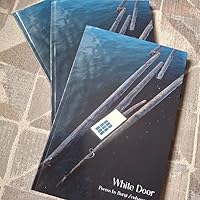
Reading Appropriate was a very interactive experience for me, with lots of underlining, and thoughts and questions in the margins. The approachable tone of the letter format, the author's openness to explore and revise (hers and others') propositions, and the absence of any claim on exhaustiveness nor ultimate authoritativeness invite a reader to fully participate and speak to the author's intellectual honesty. I understand this text as a launching pad for further study and as such truly helpful. I would also say that the text--probably because of the letters' implied addressees (the author's students)--veers into the didactic at times with a heavy focus on consistency and logic and thus runs the risk of ending up in unproductively neutral territory in places. I'm wondering if Appropriate, more than an introduction into a tangled and charged subject matter, is a response (a very valid one to be sure!) to *how* we've come to discuss appropriation in the literary community. While the author's contribution to that discourse uncovers the complexities and intricacies of appropriation it is also a testimony itself to the fraughtness of that discourse.

July 16, 2021
Nobody I've read in the ongoing discussions about race and cultural appropriation has written so shrewdly and with such enormous compassion as Rekdal has here. She drives steadily toward nuance and discomfort, distrustful of dogmatism even as it might affirm her own feelings and political/identity positions she's continually candid about. Rekdal is one of the sharpest minds we've got. Ranking this up there with Nelson's THE ART OF CRUELTY and Dewey's ART AS EXPERIENCE as req'd reading for every writer alive.

February 28, 2021
Fantastic, highly recommend. Rekdal examines appropriation through an incisive lens and with a depth that I truly admire. This and Craft in the Real World by Matthew Salesses make great companions in the discussion of writing and the dynamics of power inside and outside of texts. Writers should not pass on either.

May 24, 2021
Consider me provoked! in a good way! Lots to think about here (and a remarkably measured and thoughtful writing style for a book subtitled "a provocation").

April 4, 2022
Even though this book is very much tied to the moment (and that may already be changing), it is a very important discussion of the issues of appropriation and colonialism that have roiled the understanding of our literature. The author recognizes this possible ephemerality, and remarks on it a couple of times. But whatever happens, the place we come to will not be the same as the place we left, and this book will be a milestone along the road to change.
Rekdal is particularly good at giving useful definitions, ones worth coming back to as the discussions continue. For instance, here, early on -- "the term 'appropriation' simply means the sue of a preexisting object or image that you've repurposed without fundamentally changing it."
And here's another important quote nearer the end of the book -- one that tries to add depth to Rekdal's critique of writing/reading as an act of empathy-- "I've argued against thinking of reading as a fundamentally empathetic or moral endeavor. And yet reading does hold social value. I believe literature should make readers more self-conscious and flexible, self-critical, and also open-minded. Good reading should make me resistant to demagoguery. In that sense, if I don't believe reading is a moral endeavor, I do believe it is a critical skill with moral effects, and that these effects become more pronounced the more carefully I attend to my reading. So perhaps we should take reading and writing with some moral seriousness: how can literature make us see more complexity, more nuance, more differentiation in humans, not less."
(And one of the nice things about that quote is that it expands the process from the purely pedagogical, which I find a limitation on much of the book, although an understandable limitation given Rekdal's position and purpose)
But as much as I admire this book, I do have quibbles and genuine disagreements.
First, because she is so good at defining things, I wish she had spent a little more time making the distinction between appropriation and influence. She has a couple of good paragraphs early on, but then doesn't much bring the word "influence" back in. But that is a difficult and nuanced difference. Still, given the example of her wonderful clarity in so much of the rest of the book, I've got to think she would be wonderful and useful on these less loaded questions of influence.
She does accept some criticisms from the general culture from time to time, and I find that a bit easy. For instance, she dismisses Picasso's "Les Demoiselles d'Avignon" out of hand because of the use of African masks. She just dismisses the painting without any obvious thinking or research about it. That accepted criticism has been so loud that it is pretty easy to repeat without thinking through. Without thinking about the influence of El Greco in the shape of the bodies, of Cezanne in the composition of the painting, of ancient Iberian statues in the 3 faces on the left side of the painting. This is clearly "influence," and seldom gets discussed. The two figures who have faces taken from African and Melanesian models are the ones that are understood and usually remembered from the painting, by those who want to read this painting as "appropriation." But it seems to me that the other, and much more dominant, European influences, change our reading of the other masks. I think the case that can be made is that this painting is a marriage of influences rather than appropriation.
I also disagree with her completely in her interpretation of Hemingway's short story "Indian Camp." She does recognize that possibility of a different interpretation in the figure of the father (and certainly of the Uncle), but she doesn't follow that small crack of light seen through a partially open door. My reading pushes that door wide open and I think Hemingway's intention becomes very clear then. It was a critique of the racism of his father and uncle, and an effort to understand the world differently, even as Nick Adams is confronted with his own mortality for the first time. But that's a big argument, and I probably couldn't convince her (or my friend David Treuer, whom she quotes) no matter how much time I had. (I also think that the collection that story first appeared in, "In Our Time," is one of the great anti-war books in American literature -- decidedly a minority opinion)_.
So, yes, I have some significant differences of opinion with Rekdal, but that doesn't change my admiration for the book. The fact that I had to re-examine and expand some of my own opinions is all to the good, and I suspect that would please her. That might even be her intention.
Rekdal is particularly good at giving useful definitions, ones worth coming back to as the discussions continue. For instance, here, early on -- "the term 'appropriation' simply means the sue of a preexisting object or image that you've repurposed without fundamentally changing it."
And here's another important quote nearer the end of the book -- one that tries to add depth to Rekdal's critique of writing/reading as an act of empathy-- "I've argued against thinking of reading as a fundamentally empathetic or moral endeavor. And yet reading does hold social value. I believe literature should make readers more self-conscious and flexible, self-critical, and also open-minded. Good reading should make me resistant to demagoguery. In that sense, if I don't believe reading is a moral endeavor, I do believe it is a critical skill with moral effects, and that these effects become more pronounced the more carefully I attend to my reading. So perhaps we should take reading and writing with some moral seriousness: how can literature make us see more complexity, more nuance, more differentiation in humans, not less."
(And one of the nice things about that quote is that it expands the process from the purely pedagogical, which I find a limitation on much of the book, although an understandable limitation given Rekdal's position and purpose)
But as much as I admire this book, I do have quibbles and genuine disagreements.
First, because she is so good at defining things, I wish she had spent a little more time making the distinction between appropriation and influence. She has a couple of good paragraphs early on, but then doesn't much bring the word "influence" back in. But that is a difficult and nuanced difference. Still, given the example of her wonderful clarity in so much of the rest of the book, I've got to think she would be wonderful and useful on these less loaded questions of influence.
She does accept some criticisms from the general culture from time to time, and I find that a bit easy. For instance, she dismisses Picasso's "Les Demoiselles d'Avignon" out of hand because of the use of African masks. She just dismisses the painting without any obvious thinking or research about it. That accepted criticism has been so loud that it is pretty easy to repeat without thinking through. Without thinking about the influence of El Greco in the shape of the bodies, of Cezanne in the composition of the painting, of ancient Iberian statues in the 3 faces on the left side of the painting. This is clearly "influence," and seldom gets discussed. The two figures who have faces taken from African and Melanesian models are the ones that are understood and usually remembered from the painting, by those who want to read this painting as "appropriation." But it seems to me that the other, and much more dominant, European influences, change our reading of the other masks. I think the case that can be made is that this painting is a marriage of influences rather than appropriation.
I also disagree with her completely in her interpretation of Hemingway's short story "Indian Camp." She does recognize that possibility of a different interpretation in the figure of the father (and certainly of the Uncle), but she doesn't follow that small crack of light seen through a partially open door. My reading pushes that door wide open and I think Hemingway's intention becomes very clear then. It was a critique of the racism of his father and uncle, and an effort to understand the world differently, even as Nick Adams is confronted with his own mortality for the first time. But that's a big argument, and I probably couldn't convince her (or my friend David Treuer, whom she quotes) no matter how much time I had. (I also think that the collection that story first appeared in, "In Our Time," is one of the great anti-war books in American literature -- decidedly a minority opinion)_.
So, yes, I have some significant differences of opinion with Rekdal, but that doesn't change my admiration for the book. The fact that I had to re-examine and expand some of my own opinions is all to the good, and I suspect that would please her. That might even be her intention.

October 2, 2025
Actual rating 3.75/5 stars
Semantics aside, this is a well-thought-out series of epistolary essays to an amalgam of Rekdal’s students and colleagues under the mass pseudonym X. It breaks down superficially simple cases of appropriation in literature, revealing more nuanced conundrums lying beneath the surface. That said, I am of the opinion that sometimes Rekdal eschews the obvious and correct answers to yes/no questions for the sake of rhetorical points—maybe I’m missing the forest for the trees, but the sleight sits wrong with me. I suspect part of my dissatisfaction is generational, as I am (substantially?) younger than the author, and my subsection of Generation Z often takes a more absolutist stance on politically charged topics such as this than prior generations.
While I disagree with some of the finer points of the book’s conclusions, getting into them would involve a level of nuance/nitpicking inappropriate (heh) for a Goodreads review. Suffice to say that I still agree in broad strokes with the letters/essays’ points. Nonetheless, I can’t recommend this book for everyone, for two main reasons. One reason is that Rekdal often uses highly abstract and academic language that may be difficult for those without a social justice or creative writing background to process, but then again, I could be easily underestimating those readers. The other reason is that due to the conceit of the letters’ recipient “X” being a person in academia concerned with their work being appropriative, this book is in my opinion unlikely to convince skeptics/critics of the basic concept of appropriation sometimes being a bad thing that they are in error; there is an element of preaching to the choir for the broad strokes of the book’s argument, even if down in the weeds there is plenty of education to be had here.
In conclusion, this is worthwhile read for its intended audience, and a starting point for a broader and even deeper conversation on the topic—a provocation, if you will, the book’s subtitle being well-earned.
Disclaimer: I received my copy of this book after participating in a Zoom seminar with the author via my college in the late stages of the COVID-19 lockdowns. A creative writing professor I had that semester brought the talk to my classmates’ and my attention after I submitted a piece to the class that everyone—myself included—considered culturally appropriative, some with significant vitriol. I’m going to try my best to separate my personal experiences from the text itself and its arguments.
This is a complicated book, involving a lot of critical thinking on a contentious topic in the culture wars, specifically on subject appropriation, mostly considering racial appropriation in literature, although it also touches on class, gender, orientation, and religion, as well as some forays into visual art, fashion, and music.
One thing to note is that Rekdal uses a broad definition of appropriation, encompassing both positive and negative examples into a single word. Personally, I consider this a small mistake, and would have preferred if she used a different term, maybe “appreciation”, for what she considered positive examples. While it would regrettably give ground to far-right apologists of negative appropriation in semantic arguments, in my opinion the ability to more easily differentiate appropriately (heh) between positive/well done examples vs. negative/poorly done/bigoted ones outweighs what will mostly be fringe Internet arguments. As-written, there is a certain slipperiness to the term, switching from one kind to the other a little too easily, and while part of Rekdal’s argument is that appropriation exists on a spectrum and not a binary, the fluidity in which she tosses the term around created confusion for me as a reader at times.Semantics aside, this is a well-thought-out series of epistolary essays to an amalgam of Rekdal’s students and colleagues under the mass pseudonym X. It breaks down superficially simple cases of appropriation in literature, revealing more nuanced conundrums lying beneath the surface. That said, I am of the opinion that sometimes Rekdal eschews the obvious and correct answers to yes/no questions for the sake of rhetorical points—maybe I’m missing the forest for the trees, but the sleight sits wrong with me. I suspect part of my dissatisfaction is generational, as I am (substantially?) younger than the author, and my subsection of Generation Z often takes a more absolutist stance on politically charged topics such as this than prior generations.
While I disagree with some of the finer points of the book’s conclusions, getting into them would involve a level of nuance/nitpicking inappropriate (heh) for a Goodreads review. Suffice to say that I still agree in broad strokes with the letters/essays’ points. Nonetheless, I can’t recommend this book for everyone, for two main reasons. One reason is that Rekdal often uses highly abstract and academic language that may be difficult for those without a social justice or creative writing background to process, but then again, I could be easily underestimating those readers. The other reason is that due to the conceit of the letters’ recipient “X” being a person in academia concerned with their work being appropriative, this book is in my opinion unlikely to convince skeptics/critics of the basic concept of appropriation sometimes being a bad thing that they are in error; there is an element of preaching to the choir for the broad strokes of the book’s argument, even if down in the weeds there is plenty of education to be had here.
In conclusion, this is worthwhile read for its intended audience, and a starting point for a broader and even deeper conversation on the topic—a provocation, if you will, the book’s subtitle being well-earned.
November 9, 2023
APPROPRIATE PRESENTS ITSELF as a series of letters to a student in one of Rekdal's writing workshops. The student (who, we learn in the book's postscript, is a fictional composite, not an actual student) has submitted a piece in which she writes both from the perspective of her grandmother and from that off her grandmother's Black caretaker. The other students in the workshop had some hard things to say about the writer's presuming to write from the perspective of the Black character. The student turns to Rekdal for some answers as to what is okay and what is not okay in writing from or about identities the writer does not belong to. Rekdal's letters are a careful, detailed, and expansive (194 pages) answer to this question.
Rekdal revisits many of the more familiar examples of appropriation of an identity not the artists's own: William Styron's Confessions of Nat Turner, Jeanine Cummins's American Dirt, Dana Schulz's painting Open Casket, Anders Carlson-Wee's "How-To." These analyses go along familiar lines; Rekdal does have some fresh and interesting things to say, though, about the poems of "Araki Yasusada," the Hiroshima survivor whose poems were likely in fact the work of American poet Kent Johnson (1955-2022).
She never says so in so many words, but the book seems mainly about staying out of trouble. The book's format immediately called to my mind Rilke's Letters to a Young Poet, evoking a comparison that could hardly go in Rekdal's favor. Rilke's short book is a classic discussion of the rewards and hazards of a life devoted to artistic creativity. A quick taste:
"You must think that something is happening with you, that life hs not forgotten you, that it holds you in its hand; it will not let you fall. Why do you want to shut out of your life any agitation, any pain, any melancholy, since you really do not know what these states are working upon you?"
Rekdal, by contrast, tends to fall into the soporific cadences of an MLA resolution:
"If we've become attuned to how politicians and writers use metaphor as ways to promote policies that have substantial negative effects, we've also used metaphor to contradict them. Our rejections of their appropriations have compelled us, generation by generation, to reimagine more nuanced and realistic language around bodily difference."
I daresay this book will inspire many fewer people to commit themselves to making art than Rilke's did. Even though the book is subtitled "A Provocation," it;'s hard to imagine anyone really being provoked by it.
Rekdal revisits many of the more familiar examples of appropriation of an identity not the artists's own: William Styron's Confessions of Nat Turner, Jeanine Cummins's American Dirt, Dana Schulz's painting Open Casket, Anders Carlson-Wee's "How-To." These analyses go along familiar lines; Rekdal does have some fresh and interesting things to say, though, about the poems of "Araki Yasusada," the Hiroshima survivor whose poems were likely in fact the work of American poet Kent Johnson (1955-2022).
She never says so in so many words, but the book seems mainly about staying out of trouble. The book's format immediately called to my mind Rilke's Letters to a Young Poet, evoking a comparison that could hardly go in Rekdal's favor. Rilke's short book is a classic discussion of the rewards and hazards of a life devoted to artistic creativity. A quick taste:
"You must think that something is happening with you, that life hs not forgotten you, that it holds you in its hand; it will not let you fall. Why do you want to shut out of your life any agitation, any pain, any melancholy, since you really do not know what these states are working upon you?"
Rekdal, by contrast, tends to fall into the soporific cadences of an MLA resolution:
"If we've become attuned to how politicians and writers use metaphor as ways to promote policies that have substantial negative effects, we've also used metaphor to contradict them. Our rejections of their appropriations have compelled us, generation by generation, to reimagine more nuanced and realistic language around bodily difference."
I daresay this book will inspire many fewer people to commit themselves to making art than Rilke's did. Even though the book is subtitled "A Provocation," it;'s hard to imagine anyone really being provoked by it.
Displaying 1 - 30 of 64 reviews