The Occupation had a hangover, but still the Occupation went to work.Tokyo, July 1949, President Shimoyama, Head of the National Railways of Japan, goes missing just a day after serving notice of 30,000 job losses. In the midst of the US Occupation, against the backdrop of widespread social, political and economic reforms - as tensions and confusion reign - American Detective Harry Sweeney leads the missing person's investigation for General MacArthur's GHQ.Some men go mad, some men go missing .Fifteen years later and Tokyo is booming. As the city prepares for the 1964 Olympics and the global spotlight, Hideki Murota, a former policeman during the Occupation period, and now a private investigator, is given a case which forces him to go back to confront a time, a place and a crime he's been hiding from for the past fifteen years. Some men do both .Over twenty years later, in the autumn and winter of 1988, as the Emperor Showa is dying, Donald Reichenbach, an aging American, eking out a living teaching and translating, sits drinking by the Shinobazu Pond in Ueno, knowing the final reckoning of the greatest mystery of the Showa Era is down to him.
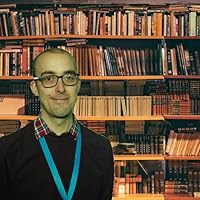
David Peace was born in 1967 and grew up in Ossett, near Wakefield. He left Manchester Polytechnic in 1991, and went to Istanbul to teach English. In 1994 he took up a teaching post in Tokyo and now lives there with his family.
His formative years were shadowed by the activities of the Yorkshire Ripper, and this had a profound influence on him which led to a strong interest in crime. His quartet of Red Riding books grew from this obsession with the dark side of Yorkshire. These are powerful novels of crime and police corruption, using the Yorkshire Ripper as their basis and inspiration. They are entitled Nineteen Seventy-Four, (1999), Nineteen Seventy-Seven (2000), Nineteen Eighty (2001), and Nineteen Eighty-Three (2002), and have been translated into French, Italian, German and Japanese.
In 2003 David Peace was named by Granta magazine as one of twenty "Best Young British Novelists." His novel GB84, set during the 1984 miners' strike, was published in 2005.
Good to see David Peace is back on track. His last two novels have been disappointing. This is the final book of his trilogy of post-war Japanese true crime stories. Here his subject is the mysterious death in 1949 of Shimoyama Sadanori, the first director of the Japanese National Railways. Shimoyama was found dismembered on the railway tracks of a Tokyo suburb after he had been forced to make 30,000 railway workers redundant.
There are three narrators, picking up the case at different times. For the Japanese the Shimoyama affair is the equivalent of the Kennedy assassination. Officially his death was registered as a suicide. But it's a deeply murky and baffling affair at the onset of the Cold War which reeks of sinister governmental organisation. But which government? Peace tells the story with great artistry and his usual incantatory prose style, his mesmerising flair with language.
Si tratta del terzo libro della cosiddetta “Tokyo trilogy”, che non è una vera trilogia perché i romanzi sono indipendenti e hanno in comune solo l’ambientazione nella Tokyo del periodo postbellico. “Tokyo riconquistata”, a sua volta diviso in tre parti, si svolge dapprima nell’epoca sopra citata per poi riprendere nel 1964, anno delle Olimpiadi nella capitale giapponese, infine nel 1988 con la nazione ormai in lutto per l’imminente decesso del vecchio Imperatore.
Lo stile tipico di Peace, febbrile e martellante con ripetizioni ossessive, sembra attenuato nella prima parte più attenta a dettagli e dialoghi comprensibili che richiamano un’indagine poliziesca del genere Hammett. Qui si trova anche il nucleo narrativo di tutto il romanzo, costituito dalla morte violenta di Shimoyama, Presidente delle Ferrovie del Giappone, un fatto storico paragonabile per il Giappone all’assassinio di JFK o al caso Moro per il profondo impatto sul sentimento della popolazione e per l’intreccio fra politica, malaffare e ingerenze internazionali. Un caso per affrontare il quale Peace (che vive e lavora a Tokyo da decenni) ha consultato un numero sbalorditivo di fonti e testimonianze.
Lungo tutta la narrazione si dibatte fra le ipotesi contrapposte del suicidio (la tesi ufficiale) o dell’omicidio politico, ma l’impostazione di Peace è chiaramente votata a quest’ultima soluzione e la controversia si sposta sul livello di interferenza dei servizi americani ancora impegnati, al tempo dell’omicidio, nell’occupazione del paese sconfitto e in via di ricostruzione.
Purtroppo dopo questo avvio promettente, il racconto si ingarbuglia e confonde alla maniera che Peace adottò nella sua opera più nota, la quadrilogia dello Yorkshire, finché soprattutto nell’ultima parte il caos a tratti rende la lettura quasi incomprensibile, per i salti temporali, l’alternarsi improvviso del protagonista e della voce narrante, il contesto deducibile (quando è deducibile…) solo da riferimenti indiretti.
I protagonisti delle tre sezioni del romanzo, l’agente americano Sweeney, il detective giapponese Murota, il vecchio traduttore/spia americano Reichenbach, sono tipici esemplari della penna di David Peace, nevrotici, alcoolisti, spesso violenti, psicotici e dal codice morale instabile, simili ai personaggi di James Ellroy il maestro del genere cui Peace evidentemente si ispira. Il caso Shimoyama funge da detonatore del loro già instabile equilibrio psicofisico e ne mette in luce la fragilità emotiva sotto la patina di duri e coriacei passati attraverso tragiche esperienze.
La nevrosi dei protagonisti si esprime anche in estenuanti escursioni lungo le strade, le stazioni, i quartieri della città, per raggiungere le diverse mete o in apparenza senza senso, con andirivieni, accessi improvvisi ai treni per seminare fantomatici pedinatori che non vediamo mai e probabilmente non esistono se non nella mente paranoica dei personaggi. Ovviamente (Durrenmatt docet) il caso Shimoyama diventa un’ossessione psicotica per gli investigatori portandoli all’autolesionismo e alle soglie della follia o anche più in là.
"Una muerte provocada por causas no naturales sin esclarecer aún nos lleva a plantearnos si existe el crimen perfecto. David Peace, como hizo en las dos primeras partes de la Trilogía de Tokio (Tokio, año cero y Ciudad ocupada), parte de sucesos reales que sucedieron en el Japón ocupado por las fuerzas aliadas al término de la Segunda Guerra Mundial para recrear la atmósfera donde vencedores y vencidos «convivieron».
En la historia más reciente de Japón (los hechos ocurrieron entre los meses de julio y agosto de 1949), la primero desaparición y después muerte de Sanadori Shimoyama, presidente de la red nacional de ferrocarriles de Japón, junto con el atropello provocado por un tren sin maquinista en la estación de Mitaka (Tokio) y el descarrilamiento de un tren de pasajeros de Matsukawa (Fukushima) ꟷlos llamados «Tres Grandes Misterios de los Ferrocarriles Nacionales Japoneses»ꟷ provocaron pánico en un país ocupado en el que ya nadie confiaba en nadie, y en el que a día de hoy no se han presentado conclusiones concluyentes.
La novela se divide en tres períodos con sendos antihéroes intentando descubrir qué le ocurrió a Shimoyama, hombre ya con un fatídico sino al ser el encargado de ser la persona responsable de despedir a 30.000 empleados justo el día anterior a que todo empezara." Amatulláh Hussein
Evidently the event in this novel was just as big in Japan as the JFK assassination was here in the United States. Pretty compelling mystery in book form. I’m also a fan of Peace’s style but overall the book just ended up in the slightly above average category among his novels which I’ve read.
This was a gift, and initially interested me. Post-war Japan is not an everyday subject in the UK (not like the ubiquitous self-congratulatory stuff about the War in Europe). I've not read anything else by David Peace, and perhaps if I'd read this as the third part of the trilogy it would have frustrated me less. I wanted it to be more of a documentary, and less of an impressionistic overview of a society which seemed as if it might be more interesting than the book. It made me feel as if I was short of information (Korean gangsters, communist threats, post-war resentment, societal change-these were all referenced but fell short of proper exposition). Then there is the self-conscious literary style. This may be thoroughly appealing to some folk, but I found myself feeling, after only a short while, that the book would be more informative, and therefore more engaging, if only there was less repetition and less use of the Homeric epithet. I don't think it a bad book, but it won't tempt me to other works in Peace's oeuvre in a hurry.
A book you have to concentrate on - 3 different parts, 3 different ways of telling the tale. Blinked and missed how the characters ended up as they did at the end of part 2. Took some getting used to his repetitive style and can imagine it might get on the nerves of some.
I've been waiting a long time to read the final part of the Tokyo Trilogy, as with most of Peace's work it's not an easy read but rewarding if you stick with it. While you could read it as a stand alone novel the references back to the previous two books make it sensible to read those first if possible.
Tokio Redux no es una novela negra al uso, en eso coincidimos, es una obra que utiliza el crimen como entrada a la derrota de un país, la ocupación extranjera, la manipulación política y la imposibilidad de alcanzar una verdad limpia cuando la historia ha sido escrita por los vencedores. David Peace construye una atmósfera densa, opresiva y obsesiva, donde el misterio importa menos como resolución que como eco persistente de una sociedad herida.
Su mayor fuerza reside en el estilo: una prosa repetitiva, martilleante, casi hipnótica, que busca reproducir el desgaste psicológico de personajes atrapados entre la culpa, el miedo y la corrupción. Sin embargo, eso mismo puede convertirse en su principal límite, porque la insistencia narrativa termina por lastrar el ritmo y diluir parte de la tensión propia del thriller. DESESPERA. La intriga queda relegada frente al experimento estilístico y lector.
Lo más interesante de la novela quizá no sea descubrir quién cometió el crimen, sino observar cómo el poder transforma a las personas, cómo los supuestos héroes se erosionan hasta mostrar sus sombras, y cómo la verdad histórica se vuelve siempre esquiva. No es una lectura cómoda ni redonda, pero sí singular, ambiciosa e inquietante. Una novela que se admire más de lo que se disfruta, pero que deja una huella clara por su personalidad literaria.
Ho iniziato questa trilogia nel 2011. Oggi la finisco. L'autore ci ha messo dieci anni a partorire il terzo volume per la gran mole di documentazione necessaria, da far tradurre, consultare. I tre casi a cui sono ispirati i romanzi sono fatti realmente accaduti, di crime giapponese in anni cupi. Gli anni del dopoguerra, dal primo violento e sporco periodo dell'occupazione americana, in Tokyo anno zero, fino alla guerra fredda della fine degli anni 40 del terzo volume. Uno stile ossessivo e ripetitivo che a volte mi ha estenuato ma che mi ha regalato un mondo con un'atmosfera in scala di grigi davvero interessante. Fatto per essere scritto. Sayonara.
A satisfying final novel in David Peace's trilogy about unsolved crimes committed in Tokyo in the years immediately following the end of the Second World War.
La premisa es interesantísima: una muerte misteriosa en 1949 consume las vidas de tres detectives, en tres épocas distintas, que intentarán esclarecerla. Así, tenemos tres novelas cortas, ambientadas en 1949, en 1964 y en 1988, y cada una retroalimenta a las demás.
Por desgracia, la ejecución no acompaña.
El libro se sustenta en una prosa pesada y machacona, de frases cortas que repiten conceptos o que mencionan hasta el más mínimo detalle de lo que hacen los personajes. Personajes, por cierto, que no siempre realizan acciones comprensibles. Es especialmente molesto en la primera novela, varias de cuyas secciones terminan en puntos suspensivos cuando se va a desvelar un dato clave, que se oculta así al lector.
Además, y de esto tiene más culpa la editorial que el autor, este libro es el tercero de una trilogía, pero la editorial lo ha editado el primero. Y vaya que si se nota. Al margen de las citas literales de los libros previos (sí, las hay), no he dejado de tener la sensación de haber llegado a la mitad de la película y de estar perdiéndome capas de significado.
Having interrupted his Tokyo trilogy for 12 years and two other books, long enough for the optics of a Yorkshireman writing books set in Japan to change quite a lot, David Peace finally wraps it up. One of the novel's time-jumps, which might once have seemed like tidy chunks of years, is only a little longer than the delay in its arrival – though that said, the section set around a previous Tokyo Olympics could be argued to have arrived at just the right time. Not that he's ever exactly been a writer to chase after topicality. The initial incident, the real-life death of Sadanori Shimoyama, the first president of Japanese National Railways, is perfect Peace material – a mysterious and gory death, a day after America's national celebration and in a country they were occupying, while the dead man was in the middle of sacking 100,000 of his own employees*. The establishment are keen to pin the crime on disaffected (ex-)employees, trade unionists, or Reds – three categories they consider more or less synonymous, and this provides a handy opportunity to put them all in their place. The detective protagonist, though, has that inconvenient terrier habit of digging where he's not supposed to...
In the sections set in later years, the case has become a great unsolved, a sort of Japanese equivalent to our own Ripper obsession (the parallel is even made explicit when we're told that a shadowy group "are not to be blamed for nothing"). But for some reason it seems to lack the same forceful, incantatory power as Year Zero, Occupied City, or earlier Peace in general, gesturing in that direction yet not really getting further than being a fairly good crime novel stripped of the expectation of justice. The repetition is still there, whether the 'shu-shu pop-po' of the trains, or the way initial protagonist Harry Sweeney is Harry Sweeney over and over, when another writer would have cut to one or the other name for most of the scene, and even an incidental player such as Joe the barman gets all three of those words each time. But somehow it now feels more like a writer being paid by the word than that old black magic. Maybe reading on screen rather than paper didn't help; Hell, I remember the first time I encountered Peace was a reading, and that didn't do it for me at all either, so perhaps whatever spell he normally casts depends on the ink for its effect? And some of the characters' names are pushing Dickens territory: Captain Jack Stetson, Dick Gutterman, Donald Reichenbach? Still, by the end, it's accumulated a portion of that terrible inexorability for which we come to Peace: "But he has, they have, it's all come back, is back, returns, always, already returned..."
*Nobody ever really explains how the railways even have that many spare employees to start with.
Bueno... Me alegro profundamente de tener que reconocer que mi impresión inicial era sumamente equivocada. Aunque de lectura lenta y estilo denso, cimentado en la reiteración, la historia de esta obra se revela fascinante, con una estupenda descripción de Japón en tres épocas capitales y, a la par, dispares de su historia reciente.
No dejaré de recomendar esta novela a cualquier abante del género 'noir'. Bien merece la pena...
Me recomendaron "empezar" la trilogía por el final y eso he hecho, no sé si ese ha sido el error pero me he encontrado todo el rato desconectada de una historia que no iba conmigo, a pesar de lo bien históricamente que se encuentra escrita la historia.
I read #TokyoRedux twice; the first time to get the lay of the land, the second time to sink my teeth into it. For those of you who have never read David Peace, he has a unique style which creates tension through violence but is written with almost lyrical prose. The result is a reading experience which is simultaneously jarring and hypnotic - the perfect combination for #Tokyo Redux, the fictitious rendering of one of Japan’s most notorious unsolved murders or suicides.#Tokyo Redux is the concluding book in The Tokyo Trilogy ( the first two Tokyo Year Zero, followed by Occupation City ) which deal with violent crime in Tokyo during The American Occupation of Japan after World War 2. But Tokyo Redux is a trilogy onto itself : 3 separate parts labeled as Books representing 3 different suspense genres but all written in the same mesmerizing style Mr. Peace is noted for. It’s quite a feat. As is said :”…this case, this is different.Yes, it sinks its teeth into you,but then it sucks and drains the blood from you, takes away your perspective,your senses, and your reason. That’s why they call it the ‘Shimoyama Disease’,because it infects you, occupies and possesses you “. A tour de force, David Peace’s Tokyo Redux will haunt you and leave you breathless
In many ways this is the apotheosis of everything David Peace has been going for his whole career: to illustrate hideous truths about who we are now through immersion in the filth of who we were then. All filtered through the examination of historical crimes—some solved, others maddeningly unsolved.
The various literary tics Peace has developed dont overwhelm this book as they have past novels. His love of poetic repetition remains, but we knew that would happen, so whatever—the point is it never gets in the way of the story. (For example: In the second volume of the Tokyo Trilogy, OCCUPIED CITY, the prose is Peace’s most audacious but it often makes the story even more elliptical than he likely ever aimed to make it. The final volume of the Red Riding Quartet is similarly almost-oblique; it makes it seem like Peace either didn’t know the answers to all the questions he raised or couldn’t be arsed to answer them.)
TOKYO REDUX is a different beast. It’s a return to a three-protagonist structure that Peace and plenty of other crime novelists have employed, most notably James Ellroy: Harry Sweeney investigates the mysterious death of Tokyo railway baron Sadanori Shimoyama right after it happens, in 1949, and boozes and fights his way into hell. Murota Hideki, an arguably corrupt ex-cop turned sleazy PI, follows threads in 1964 that lead to…well, i shouldn’t say, but it’s about as overtly supernatural as Peace has ever gotten. And in 1988 an intelligence officer turned literary academic and translator, Donald Reichenbach, reveals inadvertently a potential solution to the Shimoyama mystery as he languishes in grief, beer, guilt and memory.
I would say you /can/ read this as a standalone book, because its plot connections to TOKYO YEAR ZERO and OCCUPIED CITY are fairly minimal and this book won’t really spoil those. TOKYO REDUX is Peace’s most well-crafted novel ever, so if you want to jump in here to get a taste now, I can’t blame you. Alongside the collective (of oblique) triumph of the Quartet, there’s none of his work I’d recommend more. But you should give the whole Tokyo trilogy a try, whether you do so in linear order or not.
(Recensione di tutta la trilogia) La Trilogia di Tokyo è una saga letteraria thriller ambientata nella capitale del Giappone negli anni appena successivi alla conclusione della seconda guerra mondiale, durante l'occupazione americana del paese. Ogni capitolo è ispirato ad un fatto reale di cronaca avvenuto in Giappone in quegli anni: in Tokyo Anno Zero, l'ispettore Minami indaga sugli omicidi di due donne, trovate morte nella periferia di Tokyo; nel seguito Tokyo Città Occupata, il delitto al centro del romanzo è l'avvelenamento di dodici dipendenti di una banca; nel capitolo conclusivo, Tokyo Riconquistata, ambientato su tre piani temporali, il mistero è la sparizione del presidente delle Ferrovie giapponesi. I delitti al centro dei romanzi sono però un pretesto per parlare di questo argomento: la distruttività della guerra e gli effetti devastanti di essa sulle persone. Esempio calzante di ciò è l'ispettore Minami, personaggio dalla psiche distrutta, tormentato dai ricordi del conflitto e delle persone che ha perso. La trilogia è anche caratterizzata dall'uso di tecniche stilistiche, diverse per ogni capitolo: il primo libro è caratterizzato da continue onomatopee e frasi ripetute da Minami, che riflettono il suo stato mentale, nel secondo Peace sperimenta con diversi generi letterari (lettera, monologo, articoli di giornale,...) e con l'elemento dei fantasmi e delle sedute spiritiche, mentre nel terzo esce dal periodo del dopoguerra, con capitoli ambientati anche nel 1964 e nel 1988, alcuni di essi in un certo senso metaletterari. Vi consiglio questa serie se ne cercate una che tratta il tema del trauma della guerra su diversi livelli, mentre ve la sconsiglio se volete dei thriller puri e non siete in vena di libri "pesanti".
A stirring and evidently well-researched stream of consciousness film-noir retelling of an infamous murder case in postwar Japan. The author obviously knows Japan well, with numerous inside references and occasional Japanese-language terms tossed in. But I question the characterization of the definitively-American investigators, as the author is clearly British. A few scatological references were quite unamerican. We only gradually surmise that the key American investigator actually speaks (and possibly reads) Japanese -- with little explanation how that could be. Perhaps that was explained in earlier books of the trilogy? I certainly enjoyed the Japanese references, not just the language, but particularly the descriptions of the zeitgeist both during Occupation and then during the deathwatch of Hirohito (never of course named directly). However, the stream of consciousness writing style I found quite trying. The book starts out with a rather straight narrative style then shifts to a repetitive staccato inelegant expression of the protagonist's state of mind. Did I miss something when I skimmed through paragraphs of repeated expletives and simple observations that did not advance the plot? Sure, I taught Crime And Punishment, so sometimes the narrative style brilliantly reflects the character's motivations and growth. But this is a story of an unsolved murder, not a psychological artwork. Still, I had not known much about this case before; I will remember it now.
It’s been almost twelve years since Occupied City, the second instalment in David Peace’s Tokyo trilogy, was published in 2009. For fans of this ambitious author it’s been a long wait, but Peace certainly delivers a humdinger which, according to the author, was in part delayed by the sheer volume of material about the case it’s based on.
The final part of David Peace's Tokyo trilogy, set in post-WW2 Japan at the time of the American occupation and the tense jostling to determine the future direction of the country. Like the other books in the series, this focusses on the investigation of an actual crime from the time, on this occasion the murder or suicide of the head of the Japanese Railways in 1949, President Shimoyama. The 10 year delay in getting this final instalment out is explained in the post-script due to the volume of material and diverse opinions Peace decided to trawl through to create the story with his usual adherence to veracity, a level of detail that adds to the claustrophobic and clammy atmosphere of the book. The plot springs forwards to 1964 as Tokyo prepares for the imminent Olympic Games (as they are doing again right now) and to 1988 at the time of the emperor's death to try and tie up elusive loose ends that refuse to come together. It reads like a John Le Carre plot written by James Ellroy, which is a good thing.
David Peace returns to post-war Japan in Tokyo Redux, the third and final novel in the Tokyo Trilogy. Like the previous books in the series it draws heavy inspiration from real historical events, this time centering on the disappearance and most likely murder of the President of the Japanese National Railways after he had to lay off 30,000 workers during the U.S. occupation of Japan. The book unfolds across three distinct timelines;1949, 1964, and 1988. It begins with an American investigator in Occupied Tokyo, then shifts to a private detective revisiting the case 15 years later, and finally follows an American teacher living in Japan 20 years after the detective afterward who potentially uncovers the missing pieces of the mystery. On paper it really sounds like a compelling, generational conspiracy.
I had many of the same issues here that I did with the previous two books in the trilogy. Peace's signature style; his repetition completely drains the intrigue from what is otherwise a insanly fascinating mystery. I can understand what he's trying to achieve, the repetitiveness is meant to create a feeling of obsession, paranoia, and psychological pressure that the characters may have been feeling during their quest to investigate the murder, but after three books in the series with this same prose, it simply became exhausting rather than immersive to the experience.
By the final 15% of the novel, I found myself forcing my way through it in a rush to finish, mind you I been reading this for more than 2 months trying to finish but genuinely just did not want to pick up the book because of the experience reading it. There is a sentence near the end that stretches across roughly four or five pages, i understand the intention behind why you would ever have a sentence that long and can see how it is meant to heighten tension and disorientation, by that point I was already tired and fatigued by the writing style, so it had the opposite effect and only made the ending more difficult to get through.
I also felt the novel never fully delivers on the promise of its generational mystery in a way. The synopsis makes it sound like these three timelines will gradually collide into one gripping conspiracy, but the connections between them are so understated that they never felt particularly impactful or exciting. Some of my disconnect may come from not being familiar with every real person and historical incident Peace references, but I also think a work of historical fiction should be able to stand on its own without requiring that background knowledge. Combined with Peace's deliberately abstract and repetitive prose, those connections never feel as if they're allowed to be there on their own.
That research is perhaps the novel's greatest strength. The extensive notes and references at the end make it obvious how meticulously Peace has reconstructed post-war Japan and woven real events into his fiction. I have nothing but respect for the amount of work that went into the trilogy; however I don't think David Peace's style is for me simply put. I can admire the research and the historical depth while also admitting that the prose consistently kept me physically away and dreading each time i would force myself to read this book. For readers who enjoy experimental, noir this trilogy may be incredibly rewarding BUT for me however it never quite overcame its own stylistic choices.
Terzo ed ultimo libro della "Trilogia di Tokyo", David Peace decide di raccontare, dopo più di un decennio di ricerche fatte, un cold case, una morte che a numerose ombre tutt'oggi e che per importanza viene paragonato all'assassinio di Kennedy o all'assassinio di Aldo Moro.
Siamo nel luglio del 1949, quando a Tokyo scompare misteriosamente il Presidente delle Ferrovie Nazionali, Sadanori Shimoyama in quei tempi al centro di numerose minacce di morte poiché potenziale esecutore del licenziamento di migliaia di dipendenti delle ferrovie. L’uomo viene presto ritrovato morto, a nord, sui binari della linea Jōban, dilaniato dal passaggio di un treno: suicidio o assassinio politico?
Sullo sfondo c'è sempre Tokyo, ma questa volta non è una sola: raccontata in tre fasi e tre momenti storici diversi assistiamo all'evoluzione e la rinascita della popolazione e della Nazione. Si inizia nel 1949, il Giappone ancora si sta riprendendo dal Secondo Dopo Guerra ed è ancora sotto l'occupazione americana. La scomparsa di Sadanori Shimoyama è appena avvenuta e ad indagare sul caso c'è Harry Sweeney.
Saltiamo in avanti di quindi anni, è il 1964 e Tokyo si prepara a celebrare le Olimpiadi provando a superare il periodo buio vissuto fino a pochi anni prima. Qui seguiamo Murota Hideki, ex poliziotto che nel tentativo di scoprire che fine abbia fatto lo scrittore Kuroda Roman, inciampa nel caso Shimoyama. Infine andiamo nel 1988, il Giappone è in lutto, sta porgendo l'ultimo saluto all'Imperatore e dando il benvenuto ad una nuova era. In quest'ultima parte è Donald Reichenbach, un traduttore e professore tormentato da un oscuro passato e dalla verità, ad essere la voce narrante di questa storia.
Tre linee temporali collegate dalla morte di Sadanori Shimoyama, da tre estati calde ed inclementi e tre uomini irrequieti. David Peace mantiene una scrittura frenetica, sebbene meno psicotica e martellante, restituendo l'oppressione che vivono i protagonisti e la popolazione e raccontando le varie teorie attorno a questa morte che ha segnato il Giappone e la sua storia.
I don’t know what to say really. This trilogy wrecked me.
And to think, I wouldn’t have picked it up if not for journalist Max Read’s suggestion.
I read the last three books of David Peace’s Red Riding Quartet last year and you can look at the tag to see the progression on my reviews. I appreciated what he was doing. I even liked large parts of it. It demands a reread. But Peace, a Yorkshire native, is too close to the action. That was a personal story and even heavily fictionalized, I don’t know if there’s enough distance from the familiar Broken White Men that guys like Peace (and me and so many others) have been trained to write about with rapt fascination.
But this series…whew.
I reviewed Tokyo Year Zero at length; it’s one of my favorite reads of 2023 and maybe my favorite of this series. I gave Occupied City three stars and I’m regretting that. It was a frustrating read but a good one and I know I’ll love it again with the familiarity of structure and story.
This one brings it home with the hammer hitting the nail firmly and cleanly. I mean…whoo buddy.
Telling the real life murder of Shimoyama Sadamori in three different decades, Peace continues his examination of postwar rebuilding in Tokyo, broadening the scope for the last two to the 1964 Olympics and the 80s when Japan’s economy was at an all-time high. The first two stories feature your typical Broken Man detectives—one Japanese, the other American. The brokenness of the characters is the point and beside the point: they’re used to tell the story. And in typical Peace fashion, they get close to peeking behind the curtain without seeing it. All they’re left with is rumor, innuendo and suspicious characters in the battered-but-rebuilding city of Tokyo.
The third story…can’t say a word about it. There’s just no way. It would spoil the whole thing. It’s just…it’s brutal. But in the Peace-ian way of truths revealed.
These books…I don’t have more words. This review will have to suffice for now. Damn.
I wanted to love this, I really did. Crime and mystery and bloody truths in Japan? Hell yeah! Except the story left me confused, with a migraine, and dreading picking it up to continue where I left off.
I don't consider myself having a short attention span. Minor attention problems yes, but nothing diagnosed. Stories I enjoy often suck me in completely, but Peace's ruthless writing style kept me acutely aware of everything in my surroundings. I was lost in the words (in a bad way) because some paragraphs were so meaty, so stuffed with endless repetition that I would unknowingly skip sentences because they all looked the same. Everything is described in excruciating detail that you don't feel part of the scene, rather a ghost seeing everything in extreme closeups, playing out in 0.25x speed. Line breaks are far and few, dialogue had no quotation marks. A unique style, certainly. But not one I can find any entertainment or enjoyment in.
The story itself is confusing. When I wasn't suffocated by the writing in each page, begging Peace to get on with it, I was lost on how everything linked together. Granted, I read this 2 years back and couldn't force myself to even finish the last act. The only things I remember are some murmur of Korean gangs, the Shimomoya case, cheating and something about a stinky river. So maybe it was tied together neatly with a pretty bow, but nothing about this story is neat or pretty.
It's been a long wait for fans of David Peace's excellent series of crime novels set in post-war Tokyo, but this final instalment doesn't disappoint. As always, the plot is based on real events, this time, the grisly murder of a railway official in a case that was never officially solved. The author skillfully weaves together a multi-layered conspiracy theory involving CIA black ops, jaded cops and local gangsters, finally hinting at a solution to the mystery that is dark and shocking enough to explain the secrecy that has always shrouded the case. As always, Peace's prose is as distinctive as it is readable. No other author I know writes like this: a kind of prose poetry which has clearly been crafted with great care, which surprises you with its stylistic innovations, but which is always cunningly employed to draw you deeper into the unfolding story. This really is crime fiction with a difference from an author who is not afraid to take risks in his writing but who has a knack for finding a compelling story and making you believe in it. You don't have to read the first two parts of the trilogy to enjoy this one; they're largely unrelated, but you might well find that you can't resist them once you finish this one.
This book, like all three in the Tokyo trilogy, is not an easy read. There's a lot of "noise" and you have to sift the facts and reality out of the inner dialog and minutiae of slogging on; the despair, the good from the bad, if any. It's a lot like reading a life experience, unedited. But it is so worthwhile to read David Peace because while you're being led to watch the man behind the curtain, you have to pay attention or the truth will elude you. Some of his books have been made into movies and there was a scene of corrupt policemen interrogating a suspect in the movie I saw that I will never forget and in a way that scene summed up a lot about how I feel reading David Peace's work. Once I found him, I continued to seek him out and will be a fan for life. Tokyo Redux could be read as a standalone, but it's a fitting end to the other two books, each of which could stand alone and each of which has a different rhythm. You have to be a reader to appreciate this trilogy, but for myself, I can't recommend it highly enough.
I believe it took Peace 10 years to write this installment and it might be my favorite in the series. (Truth be told I read it over a longer period of time than I usually do but I don't think that had anything to do with the prose or content). I was familiar with the the historical crime-as I was with the previous two novels. But that being said I am always impressed with the amount of research he does to make the novel as authentic as possible to the time period it takes place in. For me that is a major attraction to his novels, I find postwar Japan a fascinating period as it was a kind of rebirth in Japan-certainly one of the defining periods of the country's history. This novel seems more conventional stylistically, thus, easier to follow and the most accessible of the trilogy in my opinion. And I like the fact that he included a hybrid character based on Edward Seidensticker and Donald Richie as well as other foreign characters to give the outsider perspective on the event.