

What do you think?

Welcome to the Museum
Fungarium
Attention all mushroom lovers! Step into the world of fungi and learn all about these strange and fascinating life-forms.
Illustrator Katie Scott returns to the Welcome to the Museum series with exquisite, detailed images of some of the most fascinating living organisms on this planet—fungi. Exploring every sort of fungi, from the kinds we see on supermarket shelves to those like penicillium that have shaped human history, this collection is the definitive introduction to what fungi are and just how vital they are to the world's ecosystem.
Illustrator Katie Scott returns to the Welcome to the Museum series with exquisite, detailed images of some of the most fascinating living organisms on this planet—fungi. Exploring every sort of fungi, from the kinds we see on supermarket shelves to those like penicillium that have shaped human history, this collection is the definitive introduction to what fungi are and just how vital they are to the world's ecosystem.
75 pages, Kindle Edition
First published July 9, 2020
About the author
Katie Scott
61 books52 followersKatie Scott studied illustration at Brighton University and has since worked with the BBC, the New York Times,Universal Records, and Phaidon Press. She lives and works in London.
Ratings & Reviews
Friends & Following
Create a free account to discover what your friends think of this book!
Community Reviews
Displaying 1 - 30 of 94 reviews

May 28, 2021
En este último año me obsesioné bastante con el mundo de los hongos, y cada vez que encuentro algo sobre el tema lo disfruto muchísimo. Fungarium es la combinación entre lo estético y lo informativo. Si bien es una introducción muy básica al mundo fungi, creo que es ideal para todos los que amamos los hongos. Me pasé toda la lectura buscando fotos reales y ampliando la información de cada cosa que aparecía en las páginas de este libro, quizá por eso me demoré tanto en leer un libro tan breve. Tiene ilustraciones alucinantes. Lo disfruté muchísimo.

October 24, 2022
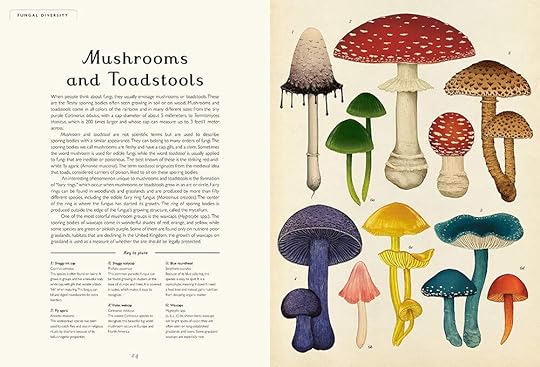
When I first saw this book (and the others from the same series) at the bookstore, I thought it was meant for young kids; so I was elated when I found out that these are aimed to an adult public as well. I'm always happy when I find an adult picture book - plus, I am a huge mushroom nerd. I wanted to make sure that this was not a cover-buy or, in general, that I wasn't just buying this because it looks good (which it does, o so much), so I decided to read the kindle version first. And, well, I didn't really like it.
The illustrations are gorgeous, of course, but there isn't even the smallest attempt at least some sense of proportion; plus - even thought this is a completely personal problem, I admit it - I find that this kind of encyclopaedic books work much better with actual photos than with drawings. After all, wouldn't it be much easier to recognize a fungus in real life if you firstly saw it in a photo compared to a drawing, no matter how beautiful and accurate? I understand that recognizing fungi in the wild is not the main aim of the book, but I still feel like I would have learned much more from real life photos.
Speaking of learning, I feel like I learned almost nothing from this book: the text felt sometimes waaay to scientific and technical (especially considering that it's targeted mainly to middle grade readers), and sometimes oversimplified. Overall, it gave off a sense of non-cohesiveness, and the illustrations of something incredibly pretty but also not really useful.
It's with great sadness in my heart that I give up my original project of collecting all the books in this series for my library. Oh well, maybe reading another volume will change my mind.

June 19, 2022
Skaisti un izglītojoši. Sēņu pasaule ir aizraujoša un ļoti neparasta, tagad zinu par to mazliet vairāk. Man personīgi visinteresantākās bija nodaļas par skudru - sēņu mijiedarbību un par sēņu milzīgo nozīmi cilvēku dzīvēs (sākot no zilā pelējuma siera un gailenēm, beidzot ar vielām, kas ļauj ražot ļoti svarīgas zāles, lai glābtu dzīvības).

April 21, 2021
Tekst trudny, raczej nie dla dzieci. Ilustracje cudowne.

January 27, 2021
Interesting but sometimes too technical for my liking. I bought this mainly for the beautiful illustrations though and I was not disappointed there. 3* for the text, 5* for the illustrations.

July 24, 2026
J'adore les beaux dessins, j'adore les champignons DONC j'adore ce livre. J'aimerais les avoir tous dans la collection :D

December 15, 2023
Fungarium c'est un beau (et grand) documentaire que j'ai croisé à la librairie l'Exèdre. J'ai finalement réussi à l'avoir en PEB à ma bibliothèque puisqu'on ne l'avait pas (tu peux être sûr que j'ai fait une demande d'achat).
Ne laissez pas les images ou la grosseur du livre vous tromper. Ce n'est pas du tout un document pour les tout-petits ou les jeunes enfants. Je dirais même qu'il s'adresse aus jeunes qui sont au secondaire et plus. C'est un excellent livre d'introduction aux champignons. Le livre couvre plusieurs sujets en passant par leurs écosystèmes, leurs espèces et les caractéristiques qui font d'un champignon, un champignon. Les images sont sublimes et nous donnent envie d'en savoir plus. Il y a beaucoup de termes parfois très techniques, mais, en général, le livre fait un bon travail de vulgarisation. J'ai rarement croisé un documentaire portant sur les champignons qui est aussi accessible et plaisant à découvrir. On sent le respect que les auteurs ressentent envers ces éléments qui ne sont pas tout à fait animal ni tout à fait végétal. À découvrir absolument!
Ne laissez pas les images ou la grosseur du livre vous tromper. Ce n'est pas du tout un document pour les tout-petits ou les jeunes enfants. Je dirais même qu'il s'adresse aus jeunes qui sont au secondaire et plus. C'est un excellent livre d'introduction aux champignons. Le livre couvre plusieurs sujets en passant par leurs écosystèmes, leurs espèces et les caractéristiques qui font d'un champignon, un champignon. Les images sont sublimes et nous donnent envie d'en savoir plus. Il y a beaucoup de termes parfois très techniques, mais, en général, le livre fait un bon travail de vulgarisation. J'ai rarement croisé un documentaire portant sur les champignons qui est aussi accessible et plaisant à découvrir. On sent le respect que les auteurs ressentent envers ces éléments qui ne sont pas tout à fait animal ni tout à fait végétal. À découvrir absolument!

December 19, 2021
Przepiękne ilustracje i niesamowita wiedza w pigułce. Chociaż w tekstach pełno trudnych słów, są bardzo ładnie, wielokrotnie wyjaśniane. Super przydatnie tez brzmią odsyłacze do innych stron książki, gdy wzmianka dotyczy tematu, który był rozwinięty w innej części książki. Jedyne, co mam do zarzucenia tej pozycji, to absurdalnie duży format, chyba około A3. Książka nie mieści się na żadnych moich półkach, musiałam ją postawić bokiem. Ale może taki był zamysł, że ta pięknie ilustrowana książka powinna stać w widocznym miejscu, na wierzchu?
September 8, 2020
A stunningly pretty book, much credit to illustrator Katie Scott (though a clearer presentation of scale would have been appreciated), that tries to walk a fine line of educational/interesting/and compact but can't quite find the right formula. The terminology is often too technical, with vary superficial coverage of many subjects that will overwhelm a reader. It is a lovely book, but I don't think it is really optimal as an introductory to the Fungi world.

May 3, 2021
What a pleasure to have another of the "Welcome to the Museum" books. This series is simply marvelous. Large books, packed with wonderful illustrations and informative text that entertains and educates.
Fungarium: Welcome to the Museum is a wonderful introduction for older elementary and middle school students to fungi.
Frankly, the book covers an amazing amount of information that, in my opinion, would give superb educational facts for older students in the study of biology. I was really surprised to learn a bit about the complexity of the plant, animal, and fungi world and dependence on each other and especially the intricate association of fungi to the others.
A fine book to grace library shelves of all types.
I received a complimentary copy to facilitate a review. Opinions are mine, alone and are freely given.
Fungarium: Welcome to the Museum is a wonderful introduction for older elementary and middle school students to fungi.
Frankly, the book covers an amazing amount of information that, in my opinion, would give superb educational facts for older students in the study of biology. I was really surprised to learn a bit about the complexity of the plant, animal, and fungi world and dependence on each other and especially the intricate association of fungi to the others.
A fine book to grace library shelves of all types.
I received a complimentary copy to facilitate a review. Opinions are mine, alone and are freely given.
May 2, 2025
Piękne ilustracje i ciekawy format. Jednakże jak na książkę dla dzieci jest napisana trudnym językiem - pojawia się bardzo dużo pojęć, które potem nie są definiowane, jakbyśmy mieli już je znać intuicyjnie. Sprawia to, że wiele słów się po prostu 'pomija' przy czytaniu. Taka sytuacja była w pierwszej połowie książki.
Druga połowa była lepiej przyswajalna.
Z jednej strony jest tu mało informacji, nie są one pogłębione (co jest zrozumiałe, z uwagi na to, że to książka dziecięca), ale z drugiej strony mam wrażenie, że jest wysoki próg wejścia, że musimy mieć już jakaś wiedzę na temat grzybów🙈🙈
Jest to dość frustrujące, bo to nie jest moja pierwsza książka o grzybach i wiem, że jakby była moją pierwszą książką o grzybach, to niewiele bym zrozumiała i czułabym niedosyt i zniechęcenie🙈
Druga połowa była lepiej przyswajalna.
Z jednej strony jest tu mało informacji, nie są one pogłębione (co jest zrozumiałe, z uwagi na to, że to książka dziecięca), ale z drugiej strony mam wrażenie, że jest wysoki próg wejścia, że musimy mieć już jakaś wiedzę na temat grzybów🙈🙈
Jest to dość frustrujące, bo to nie jest moja pierwsza książka o grzybach i wiem, że jakby była moją pierwszą książką o grzybach, to niewiele bym zrozumiała i czułabym niedosyt i zniechęcenie🙈

Read
September 9, 2020#prekladatelskemiminko

November 4, 2022
I thoroughly enjoyed everything from the information to the graphics! Highly recommended 😊

December 14, 2022
❤️🍄🌿Jestem zachwycona! Dawno nie przeczytałam tak pięknej wizualnie i treściowo książki z zakresu biologii. Jestem pod ogromnym wrażeniem, bo jest niezwykle interesująca. Przeczytałam ją przed sprawdzianem z biologii rozszerzonej i naprawdę dzięki niej informacje z podręcznika zdecydowanie lepiej mi się przyjęły i istota grzybów wydała się niesamowicie fascynująca

January 14, 2025
Idk how much information I really absorbed, but the pictures were cool

July 23, 2022
The pictures were gorgeous but I found the text rather uninspiring.

December 15, 2023
Ta guay. Muy bonito. Pero hay veces que es demasiado técnico con nombres científicos y palabros, cuando en teoría es un libro más casual.
January 30, 2023
Just beautiful
January 3, 2021
Who isn't excited about fungus? Unfortunately too many people, which is why I am so pleased that this book exists. A favourite Christmas present, this has left be with the New Year's resolution of becoming the best amateur mycologist I can be - something I had forgotten mattered to me so much despite a favourite series of unfortunate events book being The Grim Grotto (no spoilers on that one here - that is for another time).
Fungarium, much like the other compendiums from the Welcome To The Museum series, is stunningly illustrated and full of well researched, scintallating facts that will prove fascinating and useful in turn. Learn here about how fungus works, how mushroom is technically not a true scientific term, and about how fungus is one of those kingdoms we know so little on that we have discovered roughly only around 5% of what scientists believe to be the true number of fungus species on planet earth.
Coming away from this book, I am as always left thinking about just how much we don't know as human beings. This is so important in humbling us as a species and reminding us of our role on this planet - to protect it, to keep it alive and to understand it the best we can in order to help do so. There is nothing which beats discovering and comprehending something new, as learning all about spores and plant/fungus compromises evidences, and it is this we need to replicate going forwards into the future.
If you want to learn something new through a read that is challenging, detailed and full of gallery worthy prints, this is the one for you - you won't regret it!
Fungarium, much like the other compendiums from the Welcome To The Museum series, is stunningly illustrated and full of well researched, scintallating facts that will prove fascinating and useful in turn. Learn here about how fungus works, how mushroom is technically not a true scientific term, and about how fungus is one of those kingdoms we know so little on that we have discovered roughly only around 5% of what scientists believe to be the true number of fungus species on planet earth.
Coming away from this book, I am as always left thinking about just how much we don't know as human beings. This is so important in humbling us as a species and reminding us of our role on this planet - to protect it, to keep it alive and to understand it the best we can in order to help do so. There is nothing which beats discovering and comprehending something new, as learning all about spores and plant/fungus compromises evidences, and it is this we need to replicate going forwards into the future.
If you want to learn something new through a read that is challenging, detailed and full of gallery worthy prints, this is the one for you - you won't regret it!

October 9, 2023
Fungarium is just a fairly enjoyable, very pretty book which contains plenty of fungal factoids amidst some quite intimidating jargon. This is definitely not a beginner or children's read, as there are a lot of concepts here that are quite advanced for what one woud assume to be a coffee table book. While you don't need a PhD to understand it - as the ideas are very well set out and grouped together logically - it requires a good deal of concentration to parse. The biggest drawback to Fungarium is just its sheer size, easily larger than A3. If this is intended as a coffee table book, then good lord you best have the biggest coffee table I've ever seen because it's just huge. This does mean that the fantastic art is given its due but its the very opposite of portable. Overall, it's a decent, intermediate mycological manual that's definitely worth thumbing through over the course of a few hours.

May 17, 2021
3.5 This is a tough one. The illustrations are absolutely amazing and I spent lots of time looking at the pictures but the text reads like a high school (or even college) textbook. It is VERY text dense and technical. I'm not exactly sure what age group this was written for.

Read
April 4, 2021Oversize, impressive, lushly illustrated. I liked how it was organized. The text veered a bit technical at times.

April 22, 2021
On the front of this stunning oversized book - a perfect gift to celebrate Earth Day - a sticker reads “Welcome to the Museum.” Indeed, as you turn the pages, you will feel as if you have stepped into the magical world of a museum devoted to fungi that has somehow come right into your house.
An Introduction by Professor David Hawksworth of the Royal Botanic Gardens in London points out that fungi are critical to the maintenance of our food supply, health, ecosystems, and global atmospheric chemistry. The author, Dr. Ester Gaya, also of the Royal Botanic Gardens, then tells you what to expect in pages of this “museum”:
“Tour the galleries and learn why fungi are more related to animals than plants. Discover how they evolved. Find out about their amazing variety of shapes and colors, some of them alien-like, almost monstrous, and disgustingly smelly, others incredibly beautiful.”
This portfolio-like volume is divided into four “galleries”: fungal biology, fungal diversity, fungal interactions, and fungi and humans. You receive some background generally on the subject of each gallery, and then details on specific features of taxonomic sub-groups. [For example, in the fungal diversity section, there are separate “exhibits” on cap fungi, mushrooms and toadstools, bracket fungi, gasteromycetes, and foliicolous fungi.] In addition, each gallery showcases an ecosystem common to these life forms. [For fungal diversity, the habitat featured is temperate forests.]
What you learn about fungi is incredibly fascinating. For example, of the estimated 2.2 to 3.8 million different species of fungi on Earth, fewer than 5 percent have been identified! They are so diverse, and full of surprises. A lichen, for example, is actually made up of two different organisms functioning as a single, stable unit: a fungus, and an alga or cyanobacterium, which is it's source of food. Sort of like mating with a grocery store owner. Pretty clever!
In the gallery devoted to interactions between fungi and humans, you’ll see illustrations of which fungi are poisonous, which are edible - at least 350 species of fungi are collected for food! - and which are used for drugs. It is surprising to learn how many “wonder drugs” come from fungi, including not only antibiotics but immunosupressants and statins.
The information in this book is excellent, but what will entrance you the most will probably be the exquisite and detailed illustrations by Katie Scott. Her drawings are initially made with pen and ink and then colored digitally.
As a bonus, the publisher has created a fungi fact sheet for homeschooling activities. You can download it here.
Nota Bene: This book is part of the outstanding Welcome to the Museum Series, which are uniformly excellent. There are quite a few, some of which include: Planetarium, Dinosaurium, Botanicum, Historium, and Animalium.
Evaluation: This unusual book, part of a book/museum series, is marketed for kids 8-12, but I would identify it instead as a coffee table book for all ages.
An Introduction by Professor David Hawksworth of the Royal Botanic Gardens in London points out that fungi are critical to the maintenance of our food supply, health, ecosystems, and global atmospheric chemistry. The author, Dr. Ester Gaya, also of the Royal Botanic Gardens, then tells you what to expect in pages of this “museum”:
“Tour the galleries and learn why fungi are more related to animals than plants. Discover how they evolved. Find out about their amazing variety of shapes and colors, some of them alien-like, almost monstrous, and disgustingly smelly, others incredibly beautiful.”
This portfolio-like volume is divided into four “galleries”: fungal biology, fungal diversity, fungal interactions, and fungi and humans. You receive some background generally on the subject of each gallery, and then details on specific features of taxonomic sub-groups. [For example, in the fungal diversity section, there are separate “exhibits” on cap fungi, mushrooms and toadstools, bracket fungi, gasteromycetes, and foliicolous fungi.] In addition, each gallery showcases an ecosystem common to these life forms. [For fungal diversity, the habitat featured is temperate forests.]
What you learn about fungi is incredibly fascinating. For example, of the estimated 2.2 to 3.8 million different species of fungi on Earth, fewer than 5 percent have been identified! They are so diverse, and full of surprises. A lichen, for example, is actually made up of two different organisms functioning as a single, stable unit: a fungus, and an alga or cyanobacterium, which is it's source of food. Sort of like mating with a grocery store owner. Pretty clever!
In the gallery devoted to interactions between fungi and humans, you’ll see illustrations of which fungi are poisonous, which are edible - at least 350 species of fungi are collected for food! - and which are used for drugs. It is surprising to learn how many “wonder drugs” come from fungi, including not only antibiotics but immunosupressants and statins.
The information in this book is excellent, but what will entrance you the most will probably be the exquisite and detailed illustrations by Katie Scott. Her drawings are initially made with pen and ink and then colored digitally.
As a bonus, the publisher has created a fungi fact sheet for homeschooling activities. You can download it here.
Nota Bene: This book is part of the outstanding Welcome to the Museum Series, which are uniformly excellent. There are quite a few, some of which include: Planetarium, Dinosaurium, Botanicum, Historium, and Animalium.
Evaluation: This unusual book, part of a book/museum series, is marketed for kids 8-12, but I would identify it instead as a coffee table book for all ages.

January 31, 2021
Coś PIĘKNEGO! Całkowity zachwyt! Nie maiła pojęcia, że to jest takie arcydopracowane. Wydanie zwala z nóg. Wielki format, przepiękny papier, ilustracje wprost niewiarygodnie wspaniałe, dopracowane do perfekcji i moc informacji, o których nie miałam pojęcia. Ta książka robi wrażenie i nie da się obok nie przejść obojętnie.
"Fungarium", to najnowsza pozycja z serii W Muzeum (dostępne są "Botanicum", "Animalium", "Planetarium", "Dinozaurium" - wszystkie oczywiście ukazały się nakładem Wydawnictw Dwie Siostry). Ja niestety poprzednich nie posiadam, ale z tej jestem ogromnie szczęśliwa. Okazało się, że o grzybach wiedziałam mniej niż mało... ale to nic, bo teraz już wiem więcej. Dostałam w końcu Złoty Bilet do Muzeum Grzybów.
Chcę wszystkich oświecić, czyli poinformować, że nie jest to książka wyłącznie dla dzieci. "Fungarium" zapewni "FUN" przedstawicielom każdej grupy wiekowej - nie żartuję. To idealna książka na prezent, dla np. babci, która kocha zbierać grzyby, lub taty, ze smykałką do wiedzy encyklopedycznej, młodsza siostra pokocha ilustracje, a starszy brat poczyta razem z rodzeństwem i będzie tłumaczył trudniejsze fragmenty... to też dobra książka dla wrednej ciotki, która chce otruć wrednego wujka (żart oczywiście - to żart!).
Katie Scott rewelacyjnie odmalował nam grzyby rozmaitych kształtów i kolorów. To świat wielce barwny, fascynujący i wręcz magiczny. Jest też tajemniczy... okazuje się bowiem, że na tę chwilę ludzie poznali tylko 5% gatunków grzybów, a szacuje się, że istnieje ich aż 2,2-3,8 miliona! Nieźle co?
Jedne z najpiękniejszych ilustracji przedstawiają leśne ekosystemy. Tak też mamy lasy strefy umiarkowanej, lasy tropikalne, a także np. ekosystem górski. Możemy poznać z bliska nie tylko grzyby jadalne, czy trujące, ale również takie przedziwne jak pasożyty roślin, grzyby o leczniczym działaniu i np. grzyby entomopatogeniczne (brzmi odjechanie, choć to nie są miłe grzybki, oj nie, nie - wiedzą o tym chociażby owady).
Ta książka ma same zalety. Jest ona z gatunku tych, którymi możemy się chwalić, ze względu na ich wyjątkową urodę i z tych, dzięki którym możemy się popisywać wiedzą w towarzystwie... lub po prostu w lesie - dla własnego bezpieczeństwa i pysznego obiadku.
Zachęcam do nabycia 'Fungarium", bo to książka na zawsze, na lata i na pokolenia. Ma wielką wartość, już ze względu na samo wydanie, ale nie możemy zapominać o informacjach, jakie nam przekazuje i o wartości sentymentalnej, o którą już musimy sami zadbać.
Złoty Bilet to Muzeum Grzybów czeka właśnie na Ciebie
8/10
seria W Muzeum
Wydawnictwo Dwie Siostry
"Fungarium", to najnowsza pozycja z serii W Muzeum (dostępne są "Botanicum", "Animalium", "Planetarium", "Dinozaurium" - wszystkie oczywiście ukazały się nakładem Wydawnictw Dwie Siostry). Ja niestety poprzednich nie posiadam, ale z tej jestem ogromnie szczęśliwa. Okazało się, że o grzybach wiedziałam mniej niż mało... ale to nic, bo teraz już wiem więcej. Dostałam w końcu Złoty Bilet do Muzeum Grzybów.
Chcę wszystkich oświecić, czyli poinformować, że nie jest to książka wyłącznie dla dzieci. "Fungarium" zapewni "FUN" przedstawicielom każdej grupy wiekowej - nie żartuję. To idealna książka na prezent, dla np. babci, która kocha zbierać grzyby, lub taty, ze smykałką do wiedzy encyklopedycznej, młodsza siostra pokocha ilustracje, a starszy brat poczyta razem z rodzeństwem i będzie tłumaczył trudniejsze fragmenty... to też dobra książka dla wrednej ciotki, która chce otruć wrednego wujka (żart oczywiście - to żart!).
Katie Scott rewelacyjnie odmalował nam grzyby rozmaitych kształtów i kolorów. To świat wielce barwny, fascynujący i wręcz magiczny. Jest też tajemniczy... okazuje się bowiem, że na tę chwilę ludzie poznali tylko 5% gatunków grzybów, a szacuje się, że istnieje ich aż 2,2-3,8 miliona! Nieźle co?
Jedne z najpiękniejszych ilustracji przedstawiają leśne ekosystemy. Tak też mamy lasy strefy umiarkowanej, lasy tropikalne, a także np. ekosystem górski. Możemy poznać z bliska nie tylko grzyby jadalne, czy trujące, ale również takie przedziwne jak pasożyty roślin, grzyby o leczniczym działaniu i np. grzyby entomopatogeniczne (brzmi odjechanie, choć to nie są miłe grzybki, oj nie, nie - wiedzą o tym chociażby owady).
Ta książka ma same zalety. Jest ona z gatunku tych, którymi możemy się chwalić, ze względu na ich wyjątkową urodę i z tych, dzięki którym możemy się popisywać wiedzą w towarzystwie... lub po prostu w lesie - dla własnego bezpieczeństwa i pysznego obiadku.
Zachęcam do nabycia 'Fungarium", bo to książka na zawsze, na lata i na pokolenia. Ma wielką wartość, już ze względu na samo wydanie, ale nie możemy zapominać o informacjach, jakie nam przekazuje i o wartości sentymentalnej, o którą już musimy sami zadbać.
Złoty Bilet to Muzeum Grzybów czeka właśnie na Ciebie
8/10
seria W Muzeum
Wydawnictwo Dwie Siostry

October 20, 2021
Los hongos están de moda, aunque siento que es más por el tema de las drogas y su carácter lúdico, y menos por las razones que me gustarían.
Admito que compré este libro por sus hermosas ilustraciones y terminé enamorándome del contenido, aunque en un par de ocasiones lo llegué a sentir demasiado inundado de un vocabulario muy especializado. Resumo brevemente algunas cosas que captaron mi curiosidad:
- Aunque los hongos son un grupo de organismos (reino) que no pertenece ni a las plantas ni a los animales, contrariamente a lo que podríamos pensar, están más emparentados con estos últimos. Contienen quitina, que es similar a la queratina del cabello y piel de los humanos; no producen sus nutrientes, como las plantas y la fotosíntesis, sino que deben engullirlos de materia orgánica. ¿Quizá por eso serán tan recurridos en las dietas vegetarianas?
- Los humanos vivimos en una eterna relación de amor-odio con ellos. Gracias a ellos tenemos productos como el café, chocolate, quesos, bebidas fermentadas, vinagre y entre una larga lista de productos. Gracias a ellos la madera y las hojas muertas se degradan. Nuestro correcto funcionamiento del sistema digestivo depende de muchos de ellos y lo que es más, por el lado de la farmacéutica les estamos tremendamente agradecidos puesto que algunos de los medicamentos más importantes que tenemos provienen de ellos y siguen estudiándose para encontrar otros nuevos. Por el otro lado, luchamos para evitar que maten los cultivos, que echen a perder nuestra comida o que sencillamente muramos envenenados por ellos.
- Los líquenes son posiblemente una de las relaciones más exitosas que existen en la naturaleza y se deben a una asociación entre un hongo y un alga o cianobacteria. De esta relación, el hongo, por decirlo de una manera, se hace del poder de la fotosíntesis y se beneficia de los azúcares producidos en esta relación.
- Hay en el mundo de los hongos un verdadero apartado de terror. Los hongos no solo pueden infectar o enfermar a otros organismos, como los insectos, sino que en algunas ocasiones pueden liberar sustancias químicas capaces de manipular el cerebro de ellos y tomar el control de su cuerpo al más parecido estilo "zombi".
- Por otro lado, los humanos no son los únicos que han cultivado y cuidado los hongos para su beneficio. Curiosamente encontramos granjas donde se cultivan hongos, en nidos de termitas y hormigas.
Admito que compré este libro por sus hermosas ilustraciones y terminé enamorándome del contenido, aunque en un par de ocasiones lo llegué a sentir demasiado inundado de un vocabulario muy especializado. Resumo brevemente algunas cosas que captaron mi curiosidad:
- Aunque los hongos son un grupo de organismos (reino) que no pertenece ni a las plantas ni a los animales, contrariamente a lo que podríamos pensar, están más emparentados con estos últimos. Contienen quitina, que es similar a la queratina del cabello y piel de los humanos; no producen sus nutrientes, como las plantas y la fotosíntesis, sino que deben engullirlos de materia orgánica. ¿Quizá por eso serán tan recurridos en las dietas vegetarianas?
- Los humanos vivimos en una eterna relación de amor-odio con ellos. Gracias a ellos tenemos productos como el café, chocolate, quesos, bebidas fermentadas, vinagre y entre una larga lista de productos. Gracias a ellos la madera y las hojas muertas se degradan. Nuestro correcto funcionamiento del sistema digestivo depende de muchos de ellos y lo que es más, por el lado de la farmacéutica les estamos tremendamente agradecidos puesto que algunos de los medicamentos más importantes que tenemos provienen de ellos y siguen estudiándose para encontrar otros nuevos. Por el otro lado, luchamos para evitar que maten los cultivos, que echen a perder nuestra comida o que sencillamente muramos envenenados por ellos.
- Los líquenes son posiblemente una de las relaciones más exitosas que existen en la naturaleza y se deben a una asociación entre un hongo y un alga o cianobacteria. De esta relación, el hongo, por decirlo de una manera, se hace del poder de la fotosíntesis y se beneficia de los azúcares producidos en esta relación.
- Hay en el mundo de los hongos un verdadero apartado de terror. Los hongos no solo pueden infectar o enfermar a otros organismos, como los insectos, sino que en algunas ocasiones pueden liberar sustancias químicas capaces de manipular el cerebro de ellos y tomar el control de su cuerpo al más parecido estilo "zombi".
- Por otro lado, los humanos no son los únicos que han cultivado y cuidado los hongos para su beneficio. Curiosamente encontramos granjas donde se cultivan hongos, en nidos de termitas y hormigas.

January 2, 2024
This oversized, full-color book is a joy to peruse: the illustrations are detailed, thoughtfully composed (e.g. a cross-section showing all the different ways fungi can associate with plant cells), and slightly stylized so that they sometimes reminded me of Ernst Haeckel's scientific illustrations or other old scientific engravings.
The organization of the book is ecologically minded, with sections on biology, diversity, and interactions with other organisms (including, but definitely not limited to, humans). The authors touch on some of the most interesting bits of fungus biology: the entomophagous fungi that eat insects from the inside out and turn them into zombies, the way a mushroom develops, why we can't grow chanterelles, how fungi affect soil, and, of course, poisonous and edible mushrooms. As an enthusiastic but amateurish mycophile, I knew a fair amount of the information already but was glad to see simplified explanations of things like fungal sexual reproduction (and you thought human sexuality was complicated). I was truly delighted to learn about foliiculous fungi that grow on plant leaves without parasitizing them. Fungarium is a wealth of interesting and accurate information on fungi, presented in well-illustrated and fairly easy-to-read 1-2 page long snippets.
Fairly - as the authors do not shy away from specialized vocabulary and detail, which makes sense as most of them are academic researchers. It might seem excessive to your average 10-year-old or adult reader, but there are definitely going to be some people who appreciate the extra info and knowledgeability (a perk of having PhDs as authors!) and will slurp it down. I, for one, wish I'd had this book growing up instead of the woefully inadequate Charlie Brown Encyclopedia. Fungarium actually does feel a bit like wandering around a museum devoted to fungi, stopping at the bits that interest you the most.
Please note that most of the species mentioned in this book are European, but in North America we have many of the same genera and even some species crossover due to cosmopolitan species and introductions (the fly agaric, Amanita muscaria, is one such import).
I recklessly bought two others in this series (Botanicum and Oceanarium) for their covers as well, and they're next while I contemplate buying the rest of the series.
The organization of the book is ecologically minded, with sections on biology, diversity, and interactions with other organisms (including, but definitely not limited to, humans). The authors touch on some of the most interesting bits of fungus biology: the entomophagous fungi that eat insects from the inside out and turn them into zombies, the way a mushroom develops, why we can't grow chanterelles, how fungi affect soil, and, of course, poisonous and edible mushrooms. As an enthusiastic but amateurish mycophile, I knew a fair amount of the information already but was glad to see simplified explanations of things like fungal sexual reproduction (and you thought human sexuality was complicated). I was truly delighted to learn about foliiculous fungi that grow on plant leaves without parasitizing them. Fungarium is a wealth of interesting and accurate information on fungi, presented in well-illustrated and fairly easy-to-read 1-2 page long snippets.
Fairly - as the authors do not shy away from specialized vocabulary and detail, which makes sense as most of them are academic researchers. It might seem excessive to your average 10-year-old or adult reader, but there are definitely going to be some people who appreciate the extra info and knowledgeability (a perk of having PhDs as authors!) and will slurp it down. I, for one, wish I'd had this book growing up instead of the woefully inadequate Charlie Brown Encyclopedia. Fungarium actually does feel a bit like wandering around a museum devoted to fungi, stopping at the bits that interest you the most.
Please note that most of the species mentioned in this book are European, but in North America we have many of the same genera and even some species crossover due to cosmopolitan species and introductions (the fly agaric, Amanita muscaria, is one such import).
I recklessly bought two others in this series (Botanicum and Oceanarium) for their covers as well, and they're next while I contemplate buying the rest of the series.

October 7, 2021
Series Title: Welcome to the Museum
Personal Note: JNF Resource
Use this as an addition to storytime. Do not read the entire book; rather, share spacific pages to increase visual literacy.
Description: 63 pages : color illustrations ; 38 cm.
General Note: "Curated by Katie Scott and Ester Gaya" --Cover.
Contents: Entrance. Welcome to Fungarium ; The tree of life -- Fungal biology. What is a fungus? Sexual reproduction ; Asexual reproduction ; Spores ; Growth ; Ecosystem : mountains -- Fungal diversity. Cup fungi ; Mushrooms and toadstools ; Bracket fungi ; Gasteromycetes ; Foliicolous fungi ; Ecosystem : temperate forests -- Fungal interactions. Mycorrhizas ; Mycorrhizal networks ; Lichens ; Entomogenous fungi ; Ants and termites -- Fungi and humans. Early mycologists ; Plant pathogens ; Poisonous fungi ; Edible fungi ; Wonder drugs ; Ecosystem: tropical forests -- Library.
Ester Gaya is a senior research leader at Royal Botanic Gardens in Kew, England. She began her career in mycology in Spain and lived in the US before settling in the UK. She has spent the past twenty years researching fungi and is especially fascinated by lichens and their evolutionary process.
Katie Scott graduated from University of Brighton in 2011. Her work draws influences from traditional medical and botanical illustration, both in aesthetic and subject matter. It also plays with the ideas of scientific uncertainty and speculation, fabricating the inner and outer workings of the world. Her illustrations depict a familiar yet fantasy vision of plants, humans, and minerals.
Additional Resource: https://namyco.org/
Personal Note: JNF Resource
Use this as an addition to storytime. Do not read the entire book; rather, share spacific pages to increase visual literacy.
Description: 63 pages : color illustrations ; 38 cm.
General Note: "Curated by Katie Scott and Ester Gaya" --Cover.
Contents: Entrance. Welcome to Fungarium ; The tree of life -- Fungal biology. What is a fungus? Sexual reproduction ; Asexual reproduction ; Spores ; Growth ; Ecosystem : mountains -- Fungal diversity. Cup fungi ; Mushrooms and toadstools ; Bracket fungi ; Gasteromycetes ; Foliicolous fungi ; Ecosystem : temperate forests -- Fungal interactions. Mycorrhizas ; Mycorrhizal networks ; Lichens ; Entomogenous fungi ; Ants and termites -- Fungi and humans. Early mycologists ; Plant pathogens ; Poisonous fungi ; Edible fungi ; Wonder drugs ; Ecosystem: tropical forests -- Library.
Ester Gaya is a senior research leader at Royal Botanic Gardens in Kew, England. She began her career in mycology in Spain and lived in the US before settling in the UK. She has spent the past twenty years researching fungi and is especially fascinated by lichens and their evolutionary process.
Katie Scott graduated from University of Brighton in 2011. Her work draws influences from traditional medical and botanical illustration, both in aesthetic and subject matter. It also plays with the ideas of scientific uncertainty and speculation, fabricating the inner and outer workings of the world. Her illustrations depict a familiar yet fantasy vision of plants, humans, and minerals.
Additional Resource: https://namyco.org/
April 15, 2021
Fungarium is a fun-tastic frolic through the endless field of fungi! This amazingly detailed book will capture the imagination of budding fungi fans and may help to create the next generation of mushroom hunters! The text offers just enough in-depth precise information to be able to expand a young scientist’s mind, but the artwork is what really brings this book alive. The illustrations are fascinating, with some fungi looking like sea creatures while others look like eyeballs. This book is superbly brought together and belongs on every STEAM shelf. It must be included in art book sections too as the drawings are worthy of hanging in a museum and offer hours of exploration. This irresistible, oversized introduction to fungi is a beautiful coffee table book that children and adults will enjoy exploring. I cannot wait to share this with my mushroom loving friends! Some are to eat and some are definitely not, but the plethora of well laid out information along with the gorgeous illustrations offer an immersive exquisitely illustrated trip to the fungal kingdom.

July 23, 2026
I thought these were children's books?
This reads like a dang high school or maybe lower level college textbook. It starts dropping scientific terms without any definitions, plus the context requires an understanding of the topic. If you have a basic knowledge of mycology you might be alright but if not, this is a very tedious and downright boring read.
The illustrations are beautiful but not to scale. They are numbered in swirly, very pale font that is difficult to read. They are also out of order. The text with explanations for each numbered drawing is different than the illustrations, like an advent calendar. You'll have say drawings 1, 4, and 7 next to each other. The highlight of the book (for me) was the little bits of mushroom trivia in the explanations but you only get a single or two at best.
The book is arranged in a bizarre order starting with mushroom reproduction, then moving to shapes, then a few sets of mushrooms by geographical type of location. I appreciate the idea behind this but I don't think I would have read this as a child.
This reads like a dang high school or maybe lower level college textbook. It starts dropping scientific terms without any definitions, plus the context requires an understanding of the topic. If you have a basic knowledge of mycology you might be alright but if not, this is a very tedious and downright boring read.
The illustrations are beautiful but not to scale. They are numbered in swirly, very pale font that is difficult to read. They are also out of order. The text with explanations for each numbered drawing is different than the illustrations, like an advent calendar. You'll have say drawings 1, 4, and 7 next to each other. The highlight of the book (for me) was the little bits of mushroom trivia in the explanations but you only get a single or two at best.
The book is arranged in a bizarre order starting with mushroom reproduction, then moving to shapes, then a few sets of mushrooms by geographical type of location. I appreciate the idea behind this but I don't think I would have read this as a child.

April 13, 2021
First published in Big Picture Press in the UK, Fungarium has seven authors, and is illustrated by Katie Scott. The opening intrigues: "Fungi are probably the least known and most misunderstood organisms on Earth. More closely related to animals than to plants, they are critical to the maintenance of our food supply, health, ecosystems, and global atmospheric chemistry. They also exhibit an amazing variety of adaptations and forms." Professor David L. Hawksworth CBE - Royal Botanic Gardens, Kew, London. There is a table of contents and an index and an amazing array of illustrations and explanations. I have a friend who is an amateur mycologist and I've been 'mushroom hunting' with her to try to learn. This particular area of science is complex and it seems that scientists are still learning about new fungi and new relationships. The illustrations are clear and gorgeous!
Thanks to Candlewick Press for this copy!
Thanks to Candlewick Press for this copy!
Displaying 1 - 30 of 94 reviews