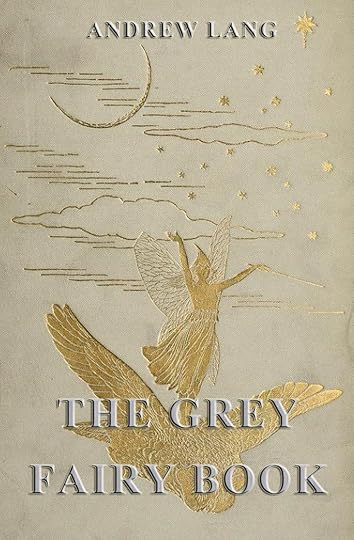
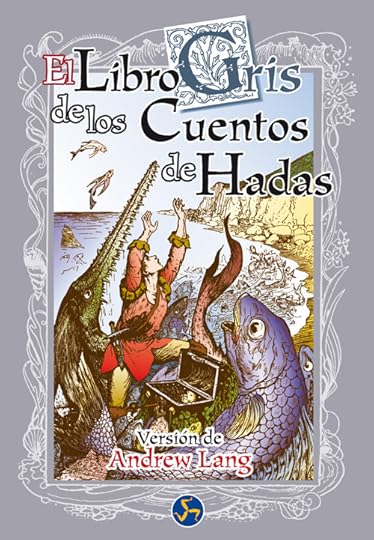
An international collection of children's fairy "Some of the first, and best, stories we ever hear in our lives" (The Washington Post).
First published in 1900 by renowned Scottish folklorist Andrew Lang, this classic anthology of fairy tales is part of the series known as the Fairy Books of Many Colors. It contains the best English translations of thirty-five imaginative stories from the oral and written traditions of France, Germany, Italy, Lithuania, Greece, parts of Africa, and other regions. Guaranteed to enchant and entertain children of all ages, The Grey Fairy Book includes such enduring tales as "Donkey Skin," "The Partnership of the Thief and the Liar," "What Came of Picking Flowers," "The Magician's Horse," "The Dog and the Sparrow," "The White Wolf," and "The Twin Brothers."
"The old favorite series on which most of us were brought up--and our parents before us . . . Andrew Lang and his associates managed to break the stranglehold of the pious sentimentality handed out to children by collecting--from all over the world--fairy tales of all people, and bringing out the volumes we all know and love." --Kirkus Reviews
Tales of the Scottish writer and anthropologist Andrew Lang include The Blue Fairy Book (1889).
Andrew Gabriel Lang, a prolific Scotsman of letters, contributed poetry, novels, literary criticism, and collected now best folklore.
The Young Scholar and Journalist Andrew Gabriel Lang, the son of the town clerk and the eldest of eight children, lived in Selkirk in the Scottish borderlands. The wild and beautiful landscape of childhood greatly affected the youth and inspired a lifelong love of the outdoors and a fascination with local folklore and history. Charles Edward Stuart and Robert I the Bruce surrounded him in the borders, a rich area in history. He later achieved his literary Short History of Scotland.
A gifted student and avid reader, Lang went to the prestigious Saint Andrews University, which now holds a lecture series in his honor every few years, and then to Balliol College, Oxford. He later published Oxford: Brief Historical and Descriptive Notes about the city in 1880.
Moving to London at the age of 31 years in 1875 as an already published poet, he started working as a journalist. His dry sense of humor, style, and huge array of interests made him a popular editor and columnist quickly for The Daily Post, Time magazine and Fortnightly Review. Whilst working in London, he met and married Leonora Blanche Alleyne Lang, his wife.
Interest in myths and folklore continued as he and Leonora traveled through France and Italy to hear local legends, from which came the most famous The Rainbow Fairy Books. In the late 19th century, interest in the native stories declined and very few persons recounting them for young readers. In fact, some educationalists attacked harmful magical stories in general to children. To challenge this notion, Lang first began collecting stories for the first of his colored volumes.
Lang gathered already recorded stories, while other folklorists collected stories directly from source. He used his time to collect a much greater breadth over the world from Jacob Grimm, his brother, Madame d'Aulnoy, and other less well sources. Lang also worked as the editor, often credited as its sole creator for his work despite the essential support of his wife, who transcribed and organised the translation of the text, to the success.
He published to wide acclaim. The beautiful illustrations and magic captivated the minds of children and adults alike. The success first allowed Lang and Leonora to carry on their research and in 1890 to publish a much larger print run of The Red Fairy Book, which drew on even more sources. Between 1889 and 1910, they published twelve collections, which, each with a different colored binding, collected, edited and translated a total of 437 stories. Lang, credited with reviving interest in folklore, more importantly revolutionized the Victorian view and inspired generations of parents to begin reading them to children once more.
Last Works Lang produced and at the same time continued a wide assortment of novels, literary criticism, articles, and poetry. As Anita Silvey, literary critic, however, noted, "The irony of Lang's life and work is that although he wrote for a profession... he is best recognized for the works he did not write," the folk stories that he collected.
Yet another installment in Lang's Fairy Books, The Grey Fairy Book didn't have quite as many great stories as some others, but there were enough unusual or engaging ones to keep my interest. My favorites were:
Donkey-Skin The Goblin Pony An Impossible Enchantment The Partnership of the Thief and the Liar The Goat-Faced Girl The Little Gray Man Herr Lazarus and the Draken The Story of the Queen of the Flowery Isles The Story of the Three Sons of Hali(not my absolute favorite, but Sumi was kind of a neat character) The Story of the Fair Circassians The Sunchild The Street Musicians(a.k.a. the Musicians of Bremen, one of my favorite fairy tales) The Ogre(having a nice ogre in one of these tales is quite a refreshing change!)
Always fascinating discoveries -Ketke's storehouse gets raided in fine style this time around as does Cabinet des Fees. Always maddening omissions -where the Hell did The Sunchild come from? Always amazing that this series was aimed at AND LOVED BY children.
A great collection of fairy tales edited by Andrew Lang. The stories come from several countries including Lithuania, Africa, Germany, France, and Greece. The collection includes 35 stories.
July 2023 reread: This one will never be high on my list of favorite fairy books, but it does have some enjoyable stories.
The Magician's Horse is one of those male Cinderella variants. It is not too interesting, but I do like stories in which animals help the heroes/heroines.
The Queen of the Flowery Isles shows the destructiveness of jealousy. It also features a helpful animal in the form of a prince enchanted as a dog. The most magical part is the time the princess spends with him in the cave and garden.
The Ogre is similar to Father Grumbler from Brown Fairy, except that the hero actually seems to learn from his mistakes. I think this is one of the only tales in which the ogre is kind, an aspect I really like.
Long, Broad, and Quickeye is another gifted companion tale I love. I had forgotten that The Simpleton is a similar tale but with more companions.
I mostly love An Impossible Enchantment for the magical tower in the sea. The description of the animal hunting party at the beginning is also well done. But the romance is meh.
The Unlooked For Prince is mostly a variation of King Kojata from Green Fairy. I read through it quickly as I was not overly absorbed.
Cannetella reminds me of King Thrushbeard, but in this one the husband is cruel. The ending is suspenseful, especially paired with H.J. Ford's illustrations. I do not think that the story tells readers to always be obedient but to avoid excessive pride.
The Partnership of the Thief and the Liar is another entertaining trickster tale with very different scenarios than others, such as The Master Thief.
What Came of Picking Flowers is mildly enjoyable and not very memorable. It has the kidnapped princess and quest to kill the kidnapper by finding the animal that holds his life formula.
I am conflicted about The Story of Dschemil and Dschemila. Dschemil abandons Dschemila when she has a donkey head, repents, and then hides her away so no one will see her. He seems to become more faithful, but at the same time, he still seems rather selfish. It would be different if he concealed her to shield her from ridicule, but that does not seem to be the case. Either way, I enjoy the story.
The Goat-Faced Girl has the common theme of gratitude, but the fairy in the form of a giant lizard and her punishment of a goat face make the story unique.
Laughing Eye and Weeping Eye, or the Limping Fox is yet another story in which an animal helps the hero, who keeps messing up through disobedience. I always like these types of stories, as common as they are, because they suggest that mistakes do not guarantee a bad outcome.
Udea and Her Seven Brothers would be a decent story if not for the "negro and negress" characters. These terms and the fact that the only black characters are evil makes for very uncomfortable reading.
Although I enjoy The Bear, I do not understand why the prince gets away with mistreating the princess while she is the bear. I feel the same way about Kari Woodengown.
Prunella is a short but fantastic tale about helping someone out of love for them and not out of expectation of a reward.
Donkey Skin reminds me of The Coat of All Colors from Grimm. The father wanting to marry his adopted daughter is very strange by modern standards, but I enjoy the Cinderella aspect of the story.
The Goblin Pony has a magical atmosphere with the moon, sea, and goblin horse, but there is not much to the story other than warning us to heed warnings.
*** 2014: Favorites:
Donkey Skin (though I wouldn't let a donkey be slain for me) The Goblin Pony An Impossible Enchantment Dschemil and Dschemila The Goat-Faced Girl What Came of Picking Flowers The Story of the Queen of the Flowery Isles The White Wolf Bobino The Jackal and the Spring The Bear (though the prince really did not deserve her) The Sunchild The Unlooked for Prince Cannetella A Fairy's Blunder Long, Broad, and QuickEye Prunella
I literally loathed Mohammed With the Magic Finger for all the unjustified killing, and some other stories were too violent or brutal for me, like the dervish drowning the pigs in the Fair Circassians.
Halfway through this "series" at last. It's taken me a long time but I enjoy seeing stories from different cultures and finding inspiration from stories I think have the potential for retellings. I do have to say that many of the stories rely on similar tropes so they seem like the same story over and over again, just with small variations, but there are some unique ones as well.
I didn't like this one as much as some of the other books, because many of the stories were just okay for me. They didn't wow me, and there were quite a few that disappointed me. There were also some that I really disliked, mostly because there was so much unnecessary killing and violence against innocent people and creatures. I don't mind if the people were bad or deserved it, but I think some of the deaths were uncalled for within the stories because these characters didn't do anything wrong, and it made me dislike the protagonists.
In my edition at least two of the stories were not listed in the table of contents and it appears that one story, The Bear, is missing altogether, unless it also wasn't listed and I just missed it somehow. From what I saw online this is supposed to have 35 stories and mine only had 34. I found no new favorites in this book, so I'll just skip to the ones I thought were good.
Good: An Impossible Enchantment Cannetella Long, Broad, and Quickeye Prunella The Goat-faced Girl The Magician's Horse The Story of Bensurdatu The Story of Dschemil and Dschemila The Story of the Queen of the Flowery Isles The Street Musicians The Sunchild The Unlooked for Prince The White Wolf What Came of Picking Flowers
Okay: A Fairy's Blunder Bobino Donkey Skin Fortunatus and His Purse Herr Lazarus and the Draken Janni and the Draken The Daughter of Buk Ettemsuch The Dog and the Sparrow The Jackal and the Spring The Little Gray Man The Ogre The Partnership of the Thief and the Liar The Simpleton The Story of the Fair Circassians- This one was a bit long and I didn't really understand it because I got completely lost in the middle. I did like the beginning though. The Story of the Three Sons of Hali- This one was far too long for me and I didn't end up finishing it. I got a bit confused and bored and wanted to move on. I think it also connects to the previous story and they might have been in the wrong order in my edition because this one just randomly ends. I think The Story of the Fair Circassians was meant to be after this one but it was listed before. The Twin Brothers Udea and her Seven Brothers
Didn't like: Laughing Eye and Weeping Eye, or the Limping Fox- This one irked me in particular because it uses a plot device that I can't stand, which is the character doing exactly what they are specifically told not to do multiple times, repeatedly making the same mistake even though bad things happen as a result. I've seen it a few other times and I'm just tired of it, but the ending to this one was rushed and I didn't enjoy it at all. Mohammed with the Magic Finger- This I think takes the cake for the worst story I've read from one of these books. There is so much unnecessary killing and all the characters are pretty horrible, including the protagonist. He is incredibly dishonest and unlikeable. It also felt like the story dragged on for too long, which did not help my mood. I don't plan on ever rereading this particular story. The Goblin Pony- This was another horrible one, and then it just randomly ended and I didn't see the point of it other than as a moral story to tell children to listen to their elders but there was nothing enjoyable about it.
I got this a year ago along with The Olive Fairy Book. Unfortunately for me, my copy doesn't include illustrations and on some of the pages the quotation marks are messed-up. (It probably came from a cheapo publishing house.) Despite that, I still enjoyed the book quite a bit. There's a wide variety of sources included, which I like too.
My favorite stories: - An Impossible Enchantment (the best one in the collection IMO) - Fortunatus and his Purse - The Goat-Faced Girl - The Story of the Queen of the Flowery Isles - Udea and her Seven Brothers - The Sunchild - The Daughter of Buk Ettemsuch (also really love this one) - Cannetella - A Fairy's Blunder
There were a few stories that were a too confusing (like The Three Sons of Hali and The Story of the Fair Circassians - which are actually two parts of one story) or that I flat-out disliked (like Mohammed with the Magic Finger). But all in all, a good collection.
"Prunella"'s source unidentified. The source for this tale can be from oral traditions, and others from French, German or Italian collections.
*spoiler*
Seven years old girl used to pick ripe plums from a wild plum tree. Each morning the child would pick one, and put it into her pocket to eat at school. For this reason she was called Prunella.
The tree belonged to A witch, one day she caught her and she dragged Prunella into her house.
Prunella grew up into a very beautiful girl and the witch became jealous. The witch gives her tasks she cannot finish and is helped by young Bensiabel, the son of the witch.
Bensiabel is in love with Prunella and saves her life several times and finally by accident kills the witch (his mother) trying to save Prunella.
Prunella became Bensiabel's wife, and they lived happily ever after.
This one has a fair variety. A number of Arabic -- or arabesque -- ones, some of which I recognized from a more literal translation (this turns ghouls into witches and ogres). Some prolonged literary ones, which were not to my taste. I particularly liked "The Story of Bensurdatu", "The Magician's Horse," "the White Wolf," "The Bear," and "Laughing Eye and Weeping Eye." All which I think I have read before as variants earlier in the series. Interesting to see what twists are put on them. (It features "Donkey Skin." Bowdlerized, of course.)
Uneven collection, with some good fairy tales. I loved 'An Impossible Enchantment' and 'Queen of the Flowery Isles.' I always enjoy Andrew Lang's charming Victorian writing.
2.5 stars. so never mind he saved your life multiple times, he has to go and commit murder for you before you give him a chance?... Not my favorite of the books I've read so far. It's fairly redundant in the stories told and would be totally offensive nowadays. But I'm not worried about the political correctness of the stories. I was already familiar with some of them. Not all of them and I think I really only liked a couple. Okay maybe not since I can't really remember the names of the ones I think I liked. Overall it's an okay book, but guys it's copyrighted 1967 or 1900 so I mean even with the reprints you're still going to have the original stories. So don't get on your high horses about women's rights and racial issues. They're there in the stories. Please get over it, just be happy that we're more enlightened now and we have some excellent authors nowadays who rewrite fairy tales and add dept, complexity and brains to our princess's, princes and other characters. Generally, usually...well they try to. Like I said not the best collection in the series, but it is always interesting to go back and look at older version of fairy tales and see how different the stories were told when compared to today's standard. And people think the instalove in our YA books are bad,they've got nothing on these characters.
Ho iniziato la raccolta di fiabe di Andrew Lang dal sesto volume della celebre serie dei libri “colorati” dedicati al Mondo Fatato, ritrovando alcuni racconti molto conosciuti e ricchi di simbolismi, tra cui ad esempio quello che apre la raccolta, 𝘗𝘦𝘭𝘭𝘦 𝘥'𝘢𝘴𝘪𝘯𝘰 (da cui è stato anche tratto un bellissimo film nel 1970).
Nonostante le aspettative elevate, devo riconoscere che la lettura non mi ha pienamente coinvolta: numerose narrazioni risultano piuttosto ripetitive e, sebbene vadano interpretate nel contesto culturale dell’epoca, alcune problematicità intrinseche alle storie emergono con una forza tale da risultare dissonanti per il lettore contemporaneo. A complicare la lettura poi, l’edizione da cui ho letto presentava numerosi refusi, come anche alcune imprecisioni o errori di traduzione (o questa è stata la mia impressione, dandomi l'idea di una cura un po' superficiale del volume).
Ciononostante, ritengo che il volume possa costituire un contributo prezioso per chi desidera approfondire o arricchire la propria comprensione del folklore e della mitologia fiabesca, offrendo senz'altro alcuni spunti interessanti per un'analisi comparativa del genere.
This was my "waiting-room" book, so I read it over the course of a few months. Although I can't remember all the tales, I know I enjoyed most of them.
Some are a bit light on plot. Three obstacles and a wedding is the most common structure; the predictability is comforting.
The emphasis on beauty=good person=instant love really struck me as... I wouldn't say odd, because I sort of expected it... as naive? Although this was turned on its head quite spectacularly in one of the tales .
Long, Broad and Quickeye stands out as being a story about superheroes (think The Fantastic Four), which was really cool.
The last story, Prunella, is also quite sweet.
Overall, it was interesting to read mostly-forgotten fairy tales, even if some of the tales were a bit clumsy.
This is a collection of stories that were, for me, almost all readable but not striking, and perfectly described by the two-star description: 'It was okay'! It's too bad a large portion of the book is taken up with 'The Story of the Three Sons of Hali' and 'The Story of the Fair Circassians', which turned out to be two parts of the same excessively long and nonsensical yarn. Apart from that, it was an easy and not unpleasant read, and I found two favourites in this one: 'The Bear', which is an interesting variation on the 'Cinderella' theme, and 'Prunella', which is a version of the 'Baba Yaga' story with a focus on the romance between the girl and the witch's son, whom I thought a very welcome addition to the cast of characters.
The Grey Fairy Book is part of a 12 book series that was a big part of my childhood and pivotal to my joy of reading. Very similar to Grimm's Fairy Tales. Or Harry Potter or The Chronicles of Narnia, but maybe for a slightly younger age. The series starts with the Blue Fairy Book which has some of the more recognizable stories like Beauty and the Beast, Little Red Riding-Hood, The Little Glass Slipper, and Rumpelstiltzkin. The Grey has less known but still great stories. They are the perfect bedtime story when your kids outgrow Where The Wild Things Are but maybe still too young for a whole novel. The length of each story varies but most can be read in less than 10 minutes.
Not one of the stronger of Lang's collections, but there's a lot of good stuff here.
Some endings that would stress small children, but perhaps in an useful way .
Of the tales which do not have much representation elsewhere, Libya offers numerous entries via Märchen und Gedichte aus der Stadt Tripolis. These stories may go a lot towards explaining why Libya is a mess.
Also several stories (though not all) where the ogre is good, or at least helpful - not something you will often find.
I'm working my way through the color fairy books. As usual, these are in turn, charming, scary and in some cases pretty deeply disturbing. The emphasis on beauty and instant attraction is here. Sometimes life is carelessly discarded particularly animal life. People get sage advice disregard it and that often brings disaster. Sometimes though there are second chances. There is often comradery and value places on good friends. I'm not sure how many I'd read to younger children but it's a lovely glimpse into history and cultures.
This Bihar an exotic fairy tales from various countries tries. They were interesting enough, for the most part. But none were really great. This is a decent reading you're curious about other cultures ' film tales. But that's it. None of these would be stories is feel the need to retell.
Hoo boy. This was another collection with stories which do not age well. The phrases "the negro" and "The Jew" were used in several stories in this collection. There are a few stories of note which were entertaining but others like Mohammend with the magic finger (holy crap that character was a psychopath) are better left forgotten. 10 down and 2 more collections to go.
I enjoyed The Grey Fairy Book more than The Olive Fairy Book, which was the last one I happened to read. But it is marred by the inclusion of some ugly racism in a few tales, and some casual misogyny. "Aren't all fairy tales inherently misogynistic?" I don't know...probably. But not usually in ways that bother me, I guess. There is obviously some repetition as well.
This collection had many tales of which I was unfamiliar. There are other collections which I may have enjoyed more, but as Albert Einstein said: "If you want your children to be intelligent, read them fairly tales. If you want them to be more intelligent, read them more fairy tales."
I was looking for a story from my childhood called long broad and sharp sight. Loved reading some very bizarre stories. Very of their time and in the original language, some of which might be offensive in today's times.
Unfortunately this collection was tainted by extreme violence, racism and misogyny. I appreciate the attempt to represent a variety of cultures and stories but the end result is that the pleasure of reading is diminished.
I've been giving five stars to all the Fairy Books, but I think this one has had the most unique mix of original and creative stories that I wasn't familiar with of the ones I read so far. I hope the other six are as interesting as this one was.