A lucid and compelling case for a new American stance toward the Islamic world.
What comes after jihad? Outside the headlines, believing Muslims are increasingly calling for democratic politics in their undemocratic countries. But can Islam and democracy successfully be combined? Surveying the intellectual and geopolitical terrain of the contemporary Muslim world, Noah Feldman proposes that Islamic democracy is indeed viable and desirable, and that the West, particularly the United States, should work to bring it about, not suppress it.
Encouraging democracy among Muslims threatens America's autocratic Muslim allies, and raises the specter of a new security threat to the West if fundamentalists are elected. But in the long term, the greater threat lies in continuing to support repressive regimes that have lost the confidence of their citizens. By siding with Islamic democrats rather than the regimes that repress them, the United States can bind them to the democratic principles they say they support, reducing anti-Americanism and promoting a durable peace in the Middle East.
After Jihad gives the context for understanding how the many Muslims who reject religious violence see the world after the globalization of democracy. It is also an argument about how American self-interest can be understood to include a foreign policy consistent with the deeply held democratic values that make America what it is. At a time when the encounter with Islam has become the dominant issue of U.S. foreign policy, After Jihad provides a road map for making democracy work in a region where the need for it is especially urgent.
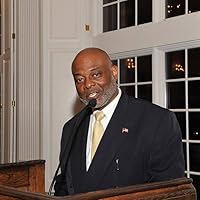
Noah Feldman is an American author and professor of law at Harvard Law School.
Feldman grew up in Boston, Massachusetts, where he attended the Maimonides School. He graduated from Harvard College in 1992, ranked first in the College, and earned a Rhodes Scholarship to Oxford University, where he earned a D.Phil in Islamic Thought in 1994. Upon his return from Oxford, he received his J.D., in 1997, from Yale Law School, where he was the book review editor of the Yale Law Journal. He later served as a law clerk for Associate Justice David Souter on the U.S. Supreme Court.
In 2001, he joined the faculty of New York University Law School (NYU), leaving for Harvard in 2007. In 2008, he was appointed the Bemis Professor of International Law. He worked as an advisor in the early days of the Coalition Provisional Authority in Iraq following the 2003 invasion of the country. He regularly contributes features and opinion pieces to The New York Times Magazine and is a senior adjunct fellow at the Council on Foreign Relations.
Noah Feldman does what many refuse to: advocate for the right of Muslim nations to construct a form of government which will be organic and sufficiently serve the societies in which they function. If for nothing else, his admittance that an American form of democracy which has had the time to develop for centuries is often unfairly compared to the burgeoning systems which have not been free of foreign influence is a reminded that all of us need from time to time. Even if I do not agree that democracy is necessarily the best and most viable option for civilizing societies, the fact that Feldman is so open about the form that democracy may take is commendable.
This one dips into places (like Egypt, Turkey) where I have colleagues from but know precious little about their histories. This author does it all succinctly. Who is in power, how do they stay there, will they remain?
Author explores is democracy possible? he is cautiously optimistic even though America may not like immediate results.
_After Jihad_ by Noah Feldman is focused on answering one crucial question facing American foreign policymakers today; can democracy flourish in Muslim countries?
Feldman wrote that the attacks of Al-Qaeda and others are the "last, desperate gasp" of a tendency towards violence that has lost widespread support in Islamic lands. Many Muslims stand ready to embrace democracy; it is only their governments and to some extent Western policy that stands in the way. Violent jihad has failed, with revolutionary states having only been achieved in Iran, Sudan, and Afghanistan and the only other places where such jihadists enjoy any real popular support is in areas seen as fighting wars of liberation (such as in Chechnya and Kashmir).
Washington policymakers have shied away from pressing for democratic reforms in the Muslim world for a variety of reasons, notably for a need to rely on existing Muslim allies in the war on terror, the risks of instability that democratization may pose, particularly as it might affect oil prices, and the fear that free and fair elections in several countries will bring to power violent, anti-American Islamist groups.
The author argued that this sort of thinking is flawed, that support of dictators may be of benefit in the short-term but is not beneficial in the long-term. In addition, Islam and democracy are both more flexible than is generally thought; that they are what he called "mobile ideas," ideas that can appeal to and be adapted by diverse peoples living in very different countries and societies. Any fear that Islamists may rise to power is realized when those groups are repressed, as reversing the democratic success of Islamic groups in Algeria for instance produced a civil war and similar actions could serve to alienate Islamic groups in Morocco, Pakistan, and Turkey, groups that worked within the system but repression of which runs the risk of turning them into a violent opposition.
Feldman divided the book into three parts. In part one he sought to show how Islam and democracy are much more compatible than many think. He felt it was a false dichotomy to say that the only options in the Muslim world are either a secular state or an Islamist state; a range of options are possible; a pure Islamist state relying only on classical Islamic law is only one possibility, and even if it did rely on shari'a law could still be considered democratic if shari'a law was chosen by the majority in that country and the basic rights of non-Muslims were respected. Too often to stay in power and gain the support of secular people in their own country and of the West autocrats have emphasized that they are the only alternative to Islamist rule, and again, this is a false dichotomy. Even if Islamists do come to power there is reason to show - by the example of Iran - that many people after a few cycles of Islamic government might start to look for something more secular. Also, Islamic groups are not by definition anti-American (the Northern Alliance in Afghanistan was very pro-American for instance and even Islamic groups in Turkey have been more concerned with meeting EU requirements for membership and infrastructure improvements, not exactly anti-Western activity).
Potential democratic readings already exist in the Qur'an. Both Islam and democracy share a universal belief in the principle of basic human equality, a very good starting point. The first rulers of the Islamic community adopted the title "caliph" (Arabic khalifa), which means a delegate or replacement (whether for the dead Prophet or a stand-in for God), with the Qur'an strongly implying that the caliph was to be selected by the people, that the people retain some power to displace the caliph, that he governed with the consent of the Muslim community, that he administered but did not create Islamic law (and thus was bound by that same law), and he was compelled by the Qur'an to engage in consultation (shura), though admittedly the Qur'an was rather vague on the exact nature of shura.
Feldman answered a number of objections to any synthesis of Islam and democracy. Among them, the necessity of the separate of church and state (there is no separation of church and state in the United Kingdom), the problem of a state-sanctioned imposition or support of Islamic values (Western governments endorse values by awarding medals, proclaiming holidays, and sponsoring the arts and have laws governing many aspects of family life; broadly this is the same as might exist in any Islamic democracy), the role of non-Muslims in a Muslim state (Jews and Christians held prominent positions in many places and eras, from Medina in the Prophet's lifetime to medieval Muslim Granada and beyond), and the harshness of punishments for hudud, crimes such as theft, which requires the thief loses his hand (in reality these punishments are rarely meted out and the standard of proof is often too high to reach; hudud standards for adultery requires four eyewitnesses in good standing of the act itself, difficult to produce).
In part two, he evaluated how Islam and democracy are interacting in many nations in the Muslim world, surveying the various types of regime found in Islamic lands. For those worried that civil society - vital to democracy - does not exist in the Muslim world they need only look at the web of social services and charitable institutions provided in Egypt (and increasingly in Pakistan), not by the government but by Islamic organizations. Islam he felt was unfairly blamed for the mixed success of democracy in Pakistan; it had arguably more to do with poverty, the vast disparity of wealth, low literacy rates, a too-powerful military, and other factors.
In part three Feldman argued that the United States (and the West) must change their policies towards the Muslim world, that it should encourage rather than impede democracy, that this would serve long term American interests, promote peace in the Middle East, and that it is simply the right thing to do.
Noah Feldman is an excellent writer ho is an excellent source of Islamic history, and politics. If there is a word that describes "After Jihad " is a great book that is used as background information for many experts in Middle Eastern politics. This was recommended reading for my doctoral class in Modern Islamic Movements.
A good book on Mideast politics, despite being almost outdated by the passage of years so far. I agree with Feldman on the logic, but I do differ with him on his conclusion, but overall I enjoyed the book.
I enjoyed his points about the lack of synthesis in Islam when it comes to democracy and forms of government. There are no leaders in Islam. Islam has key issues to overcome in various factions prior to receiving legitimate recognition. This goes especially for Turkey. He speculated that these countries lack the incentives to becoming democracy. They probably aren't ready for it I guess. He did say that Sharia law and democracy are compatible though. It was not the best but interesting.