

What do you think?
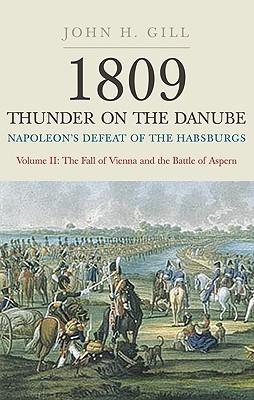
1809: Thunder on the Danube #2
1809 Thunder on the Danube: Napoleon's Defeat of the Habsburgs Volume II: The Fall of Vienna and the Battle of Aspern
In the second volume of this epic work, John H. Gill traces Napoleon's progress as he sought to complete his victory over the Habsburgs. The war had erupted on April 10th with Austria's invasion of Germany and Italy. After just two weeks, Napoleon had battered the Habsburg Archduke Charles in a series of bruising defeats. returncharacterreturncharacterThis volume begins with a Napoleon astride the Danube at Regensburg. He faced a critical strategic choice - whether to pursue the injured Austrian main army into Bohemia or march directly for Vienna, the seat of Habsburg power.returncharacterreturncharacterAfter electing to target Vienna, his troops defeated the Austrians in the brutal Battle of Ebelsberg, allowing him to enter the city on May 13th. But meanwhile, on the far side of the Danube, he suffered a dramatic loss at the grueling, two-day Battle of Aspern. While his Danube forces recovered from this setback, the Emperor cleared trouble from his strategic flanks.returncharacterreturncharacterGill describes in vivid detail the hopeful Habsburg invasion of Italy, led by the 27-year-old Archduke Johann, and the fierce French counter-offensive under Napoleon's stepson, Eugene de Beauharnais (also 27). In a series of encounters across Italy, Eugene rebounded from initial defeat to advance triumphantly into Austrian territory, shattering and scattering Johann's army. In the wake of Aspern, while the Austrians vacillated, Napoleon gathered every man, horse and gun around Vienna, setting the stage for the gigantic spectacle of the Battle of Wagram, the final chapter in the story of the 1809 war.
448 pages, Hardcover
First published December 20, 2008
About the author
John H. Gill
21 books13 followersA retired U.S. army colonel and an associate professor at the Near East-South Asia Center for Strategic Studies in Washington, DC, he has also published on military history and contemporary security issues relating to India, Pakistan, and other South Asian countries.
Ratings & Reviews
Friends & Following
Create a free account to discover what your friends think of this book!
Community Reviews
Displaying 1 - 8 of 8 reviews

September 16, 2017
Detailed look at Napoleon's second campaign against Austria in 1809. This is the second volume in the series, concentrating on the set-up to Aspern-Essling, the battle itself, and the battles in Italy.
Personally, I found the descriptions of the hard fought battles at Aspern-Essling to be the most interesting. France's measure of difficulty in this battle gave Austria and potential allies some hope in their fight against France. Unfortunately for them, it didn't last long. This is a sad battle to read about because two of my favorite French generals were killed, just two of many in these long years of struggle.
The fight in Italy gave Viceroy Eugene his chance to force the Austrians out of Italy after some initial difficulties. Napoleon's step-son went on to become one of Napoleon's more reliable commanders. The final volume in the series will deal with more battles against Austria, including Napoleon's last victory at Wagram.
I would probably rate this book 3.5 stars, rounded up to 4. It was good, but dry compared to the first volume.
Personally, I found the descriptions of the hard fought battles at Aspern-Essling to be the most interesting. France's measure of difficulty in this battle gave Austria and potential allies some hope in their fight against France. Unfortunately for them, it didn't last long. This is a sad battle to read about because two of my favorite French generals were killed, just two of many in these long years of struggle.
The fight in Italy gave Viceroy Eugene his chance to force the Austrians out of Italy after some initial difficulties. Napoleon's step-son went on to become one of Napoleon's more reliable commanders. The final volume in the series will deal with more battles against Austria, including Napoleon's last victory at Wagram.
I would probably rate this book 3.5 stars, rounded up to 4. It was good, but dry compared to the first volume.

May 29, 2023
Book two of John Gill's continues straight on from the first volume, with the Austrian army in strategic disarray after Eggmühl and covers up to the end of the Battle of Aspern-Essling on May 22, 1809.
Unlike the previous book, he then steps back and looks at the campaign in Italy, starting with Archduke Johann's invasion and early victories, and ending with his retreat back out of Italy in mid-May after the Battle of the Piave.
This expanded scope is welcome, but I wish it had been inserted earlier. Even better, the maps in this volume are much improved from the ones in the first book. Those were horrible to actually use, while these are much better at depicting the geography in question.
Better yet, while these problems with the first volume are addressed, the quality of writing and descriptions are exactly at the high levels of before. This obviously one work under three covers and, with improvements, continues straight through with his description of events in the summer of 1809.
Unlike the previous book, he then steps back and looks at the campaign in Italy, starting with Archduke Johann's invasion and early victories, and ending with his retreat back out of Italy in mid-May after the Battle of the Piave.
This expanded scope is welcome, but I wish it had been inserted earlier. Even better, the maps in this volume are much improved from the ones in the first book. Those were horrible to actually use, while these are much better at depicting the geography in question.
Better yet, while these problems with the first volume are addressed, the quality of writing and descriptions are exactly at the high levels of before. This obviously one work under three covers and, with improvements, continues straight through with his description of events in the summer of 1809.

April 11, 2009
Detailed hard core military history of the run up to and the battle of Aspern&Essling (Napoleon vs. Archduke Charles). The campaign in Italy Prince Eugene vs. Archduke Johann is also covered. The book contains orders of battle for all minor and major battles.
August 23, 2012
A little cumbersome at the start, but great summary of aspern- Elsing. Really looking forward to the 3rd volume. Mr gill really has a gift with detailing battles and the environments, both politically and geographically, that surround them :)

March 20, 2026
Napoleon surveying the defeats he had inflicted on the Austrian army under Archduke Charles proclaimed to his army “in one month we will be in Vienna!”(p1). Napoleon was to proclaim this on the 24th April 1809 and this was if anything to prove to be pessimistic with Vienna to fall on the 13th May. But it was also overly optimistic as the fall of Vienna was not to be the end of the war, and hard fights including the Battle of Aspern were yet to come for Napoleon’s army. John H Gill’s 1809 Thunder on the Danube Volume II The Fall of Vienna and the Battle of Aspern provides a comprehensive account of the middle part of the campaigns in the 1809 war between Habsburg Austria and Napoleonic France.
Pros
Intimately follows the campaign
Oh those maps!
Cons
Suffers from middle book in the series syndrome
Structural issues
This is the middle book of the Thunder on the Danube trilogy. The first half of the book follows Napoleon’s campaign up the Danube to Vienna with the various minor battles and engagements as Austrian General Hiller retreats in front of him. We also follow Archduke Charles’ main Austrian army as it retreats into Bohemia and then seeks to re-enter the fight by marching towards Vienna. This leads towards the main Battle of the book at Aspern as Napoleon seeks to cross the Danube. The second half follows the fortunes of the Austrian and French armies in Italy, commanded by Archduke Johann and Prince Eugene respectively, as the Danube campaign is ongoing, and the interactions between the two campaigns.
In terms of a book tracing the course of a Napoleonic campaign this has to be one of the best. The movements of the armies, and often individual components, are clearly laid out along with what the armies needed to do to advance or retreat over particular bits of land. The perspectives of the commanders and their ideas are clearly explained. And the terrain and conditions are not neglected either. Logistics, supply and morale are perhaps less extensively covered but still sufficiently to show the relative impacts on the two armies. Through these elements Gill provides a detailed account of the campaign and builds in all the major, and pretty much all minor engagements as well. The engagements themselves are told in a readable style, albeit mostly from the perspective of the commanders. The only criticism that could be given here is that there is little provided in the way of perspectives and views from the common soldier.
I am like a cat who got the cream with regards to the maps, there are so many, they are wonderfully clear, and they are in the right place in the text! This makes them excellent for using naturally alongside the narrative with very little effort (no need to keep finding the right map or jumping between pages breaking the flow).
However, The Fall of Vienna and the Battle of Aspern really does suffer a serious bout of middle book in the series syndrome. Gill has clearly conceived of the three books as being all together as if they form one book and as a result there isn't an introduction or conclusion there would normally be, so very little context, it is assumed you read book one. To a certain extent this is completely fair, why would you read a book on the middle of a campaign? But since this has an excellent account of the Battle of Aspern, and this is how the book is billed, then it does seem plausible that there will be some who are reading for that battle and not the campaign who will therefore have little of the wider context of the battle that would be normal.
Essentially the same problem coming up in another way is the treatment of the Italian campaign. Unlike the Danube campaign the whole campaign is in this book, so it covers the time of the first book as well, this would probably work fine if reading the books one after the other, but not so well with a big gap given the interdependencies between the campaigns. The campaign itself is as excellently described as the Danube campaign. But having it in does make me wonder about the other minor campaigns that are mentioned but with very little detail; in the Tyrol, and in Poland. When reading the previous book I had assumed that, going by the name Thunder on the Danube, all of these were being ignored and this was a series just about the Danube campaign. But with the Italy campaign included here those two other minor side campaigns stand out in their absence, perhaps this is to come in the third book.
Difficult to rate this kind of book, just on consideration of how the campaign is told it is very good. However as a standalone book there are serious problems. It is difficult to rate it on the basis of the whole series when I have not yet read the conclusion so my three stars, which is perhaps a bit harsh, is on the basis of it being on its own. Hopefully I can reflect the whole series in the final book’s rating when I get around to reading it.
As you will have gathered from the above, go read the first book first. The exception would be if you are looking for an account of one of the battles covered and are not bothered that it may lack some of the broader context.
Pros
Intimately follows the campaign
Oh those maps!
Cons
Suffers from middle book in the series syndrome
Structural issues
This is the middle book of the Thunder on the Danube trilogy. The first half of the book follows Napoleon’s campaign up the Danube to Vienna with the various minor battles and engagements as Austrian General Hiller retreats in front of him. We also follow Archduke Charles’ main Austrian army as it retreats into Bohemia and then seeks to re-enter the fight by marching towards Vienna. This leads towards the main Battle of the book at Aspern as Napoleon seeks to cross the Danube. The second half follows the fortunes of the Austrian and French armies in Italy, commanded by Archduke Johann and Prince Eugene respectively, as the Danube campaign is ongoing, and the interactions between the two campaigns.
In terms of a book tracing the course of a Napoleonic campaign this has to be one of the best. The movements of the armies, and often individual components, are clearly laid out along with what the armies needed to do to advance or retreat over particular bits of land. The perspectives of the commanders and their ideas are clearly explained. And the terrain and conditions are not neglected either. Logistics, supply and morale are perhaps less extensively covered but still sufficiently to show the relative impacts on the two armies. Through these elements Gill provides a detailed account of the campaign and builds in all the major, and pretty much all minor engagements as well. The engagements themselves are told in a readable style, albeit mostly from the perspective of the commanders. The only criticism that could be given here is that there is little provided in the way of perspectives and views from the common soldier.
I am like a cat who got the cream with regards to the maps, there are so many, they are wonderfully clear, and they are in the right place in the text! This makes them excellent for using naturally alongside the narrative with very little effort (no need to keep finding the right map or jumping between pages breaking the flow).
However, The Fall of Vienna and the Battle of Aspern really does suffer a serious bout of middle book in the series syndrome. Gill has clearly conceived of the three books as being all together as if they form one book and as a result there isn't an introduction or conclusion there would normally be, so very little context, it is assumed you read book one. To a certain extent this is completely fair, why would you read a book on the middle of a campaign? But since this has an excellent account of the Battle of Aspern, and this is how the book is billed, then it does seem plausible that there will be some who are reading for that battle and not the campaign who will therefore have little of the wider context of the battle that would be normal.
Essentially the same problem coming up in another way is the treatment of the Italian campaign. Unlike the Danube campaign the whole campaign is in this book, so it covers the time of the first book as well, this would probably work fine if reading the books one after the other, but not so well with a big gap given the interdependencies between the campaigns. The campaign itself is as excellently described as the Danube campaign. But having it in does make me wonder about the other minor campaigns that are mentioned but with very little detail; in the Tyrol, and in Poland. When reading the previous book I had assumed that, going by the name Thunder on the Danube, all of these were being ignored and this was a series just about the Danube campaign. But with the Italy campaign included here those two other minor side campaigns stand out in their absence, perhaps this is to come in the third book.
Difficult to rate this kind of book, just on consideration of how the campaign is told it is very good. However as a standalone book there are serious problems. It is difficult to rate it on the basis of the whole series when I have not yet read the conclusion so my three stars, which is perhaps a bit harsh, is on the basis of it being on its own. Hopefully I can reflect the whole series in the final book’s rating when I get around to reading it.
As you will have gathered from the above, go read the first book first. The exception would be if you are looking for an account of one of the battles covered and are not bothered that it may lack some of the broader context.

August 7, 2022
Basically a book of two halves - not counting the full third of the book given over (as with Vol. I) to very thorough OOBs etc, in the appendices - the first half picks up post Abensberg, with the bloody fight at Evelsburg a major feature, followed by Napoleon's drive on Vienna and the citys capitulation.
Bonaparte, ever desirous of a swift end to a war he hadn't wanted in the first place, then encounters his own misfortune, when his hastily constructed pontoon bridges are damaged. Because of this he fails to deliver adequate reinforcements to his spearhead, leaving himself stranded on the Lobau/Mühlau bridgehead with insufficient troops, culminating in his first serious reversal after years of victories, at the battle of Aspern-Essling.
A second smaller 'half' then details the events in Northern Italy, as Archduke Johann and Viceroy Eugene come to blows. Again it's reiterated, as on p. 269 that 'Vienna's choice of war under the circumstances prevailing in 1809 was an error of grand-strategic magnitude.' The excellent standard of volume one is maintained, and the level of detail remains obsessively impressive, if at times a little overwhelming. For me the centrepiece of this volume is Gill's brilliant blow-by-blow account of Aspern-Essling, which is really gripping stuff.
As with the firs volume, upon finishing this I was eager to get stuck into the next one!
Bonaparte, ever desirous of a swift end to a war he hadn't wanted in the first place, then encounters his own misfortune, when his hastily constructed pontoon bridges are damaged. Because of this he fails to deliver adequate reinforcements to his spearhead, leaving himself stranded on the Lobau/Mühlau bridgehead with insufficient troops, culminating in his first serious reversal after years of victories, at the battle of Aspern-Essling.
A second smaller 'half' then details the events in Northern Italy, as Archduke Johann and Viceroy Eugene come to blows. Again it's reiterated, as on p. 269 that 'Vienna's choice of war under the circumstances prevailing in 1809 was an error of grand-strategic magnitude.' The excellent standard of volume one is maintained, and the level of detail remains obsessively impressive, if at times a little overwhelming. For me the centrepiece of this volume is Gill's brilliant blow-by-blow account of Aspern-Essling, which is really gripping stuff.
As with the firs volume, upon finishing this I was eager to get stuck into the next one!

May 12, 2025
This volume was more interesting. Good account of the battle of Aspern and operations in Italy in particular.

January 1, 2016
A good continuation to Gill's trilogy. This volume didn't contain the political machinations of the first. If I could summarize it in one line it would be: The Austrians thinking the French would need a day or two to rest were surprised when they didn't.
Displaying 1 - 8 of 8 reviews